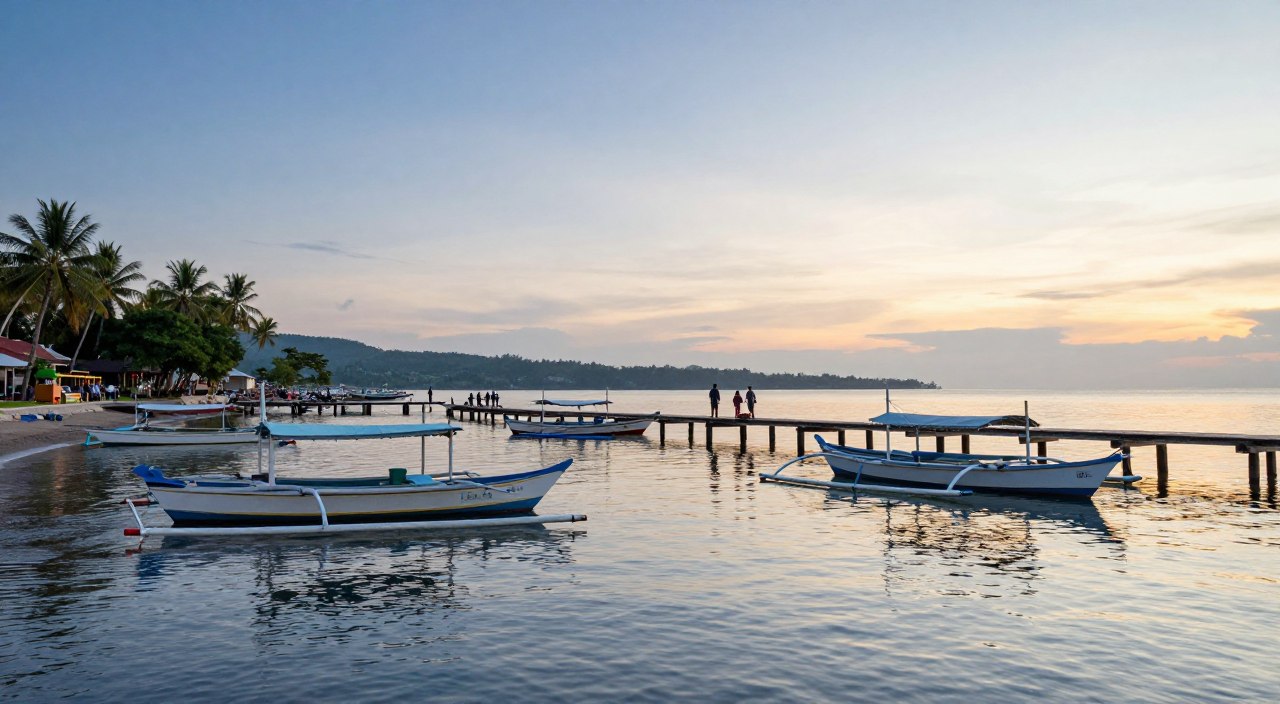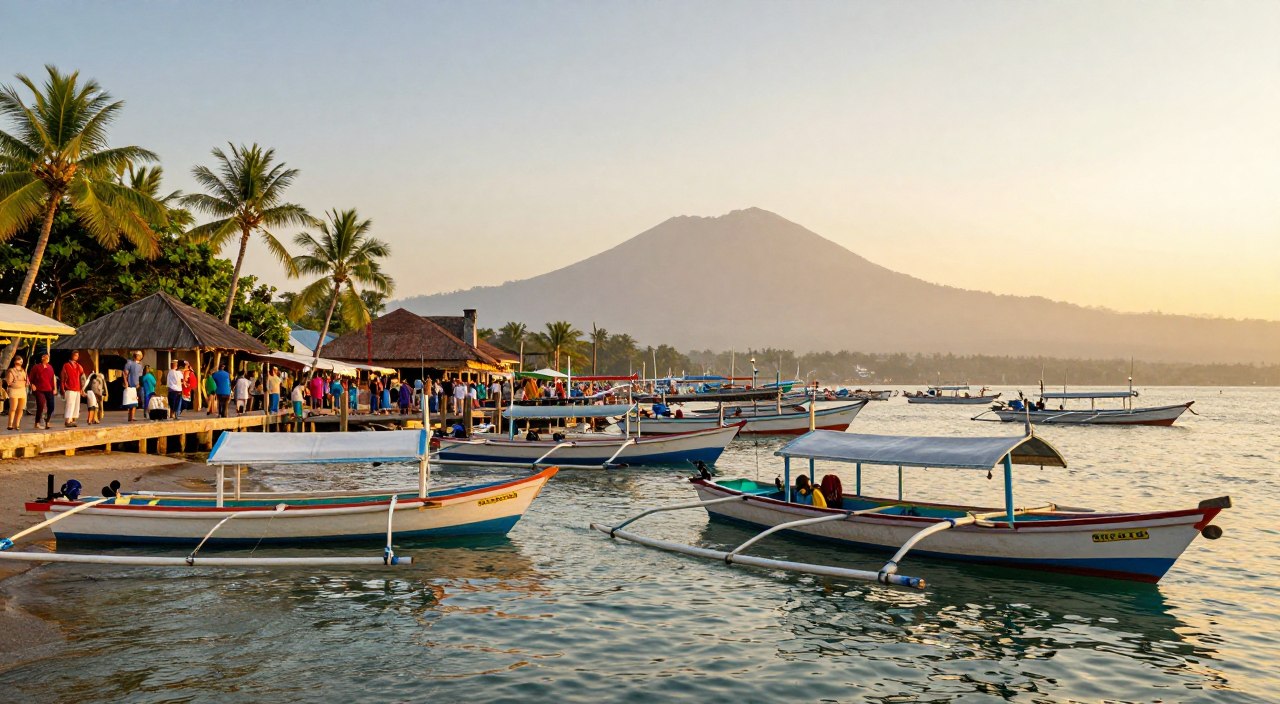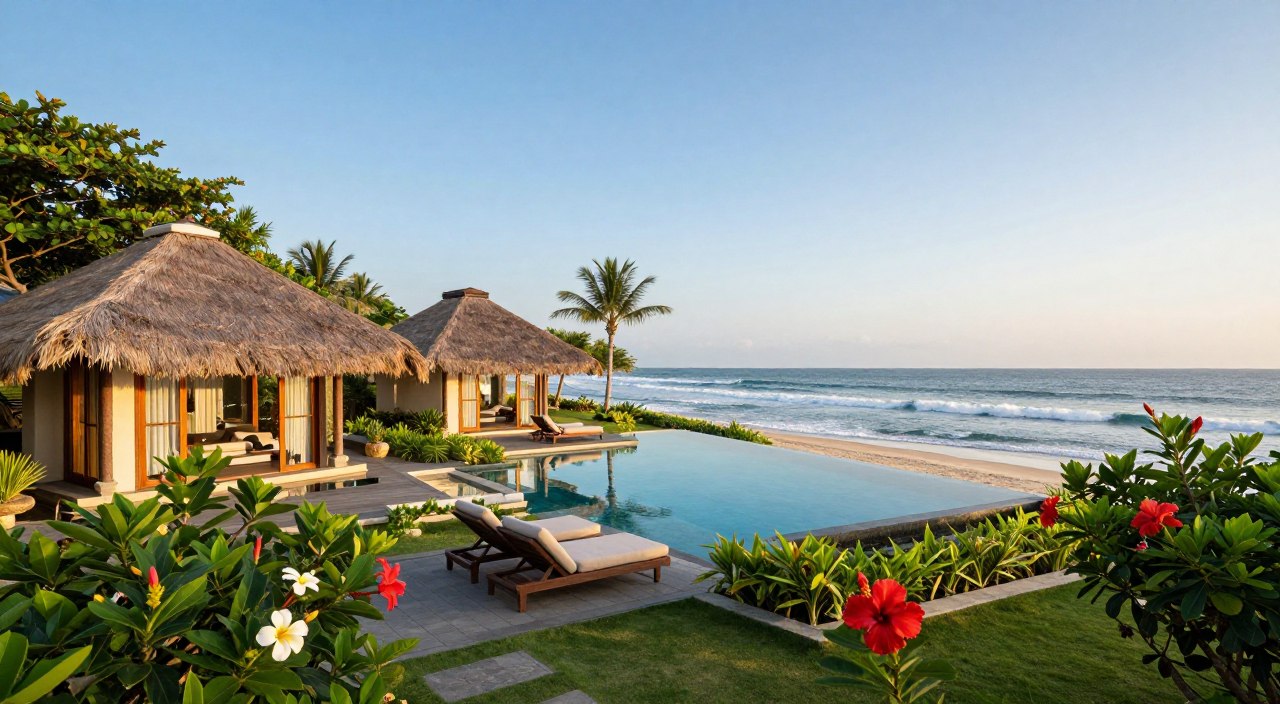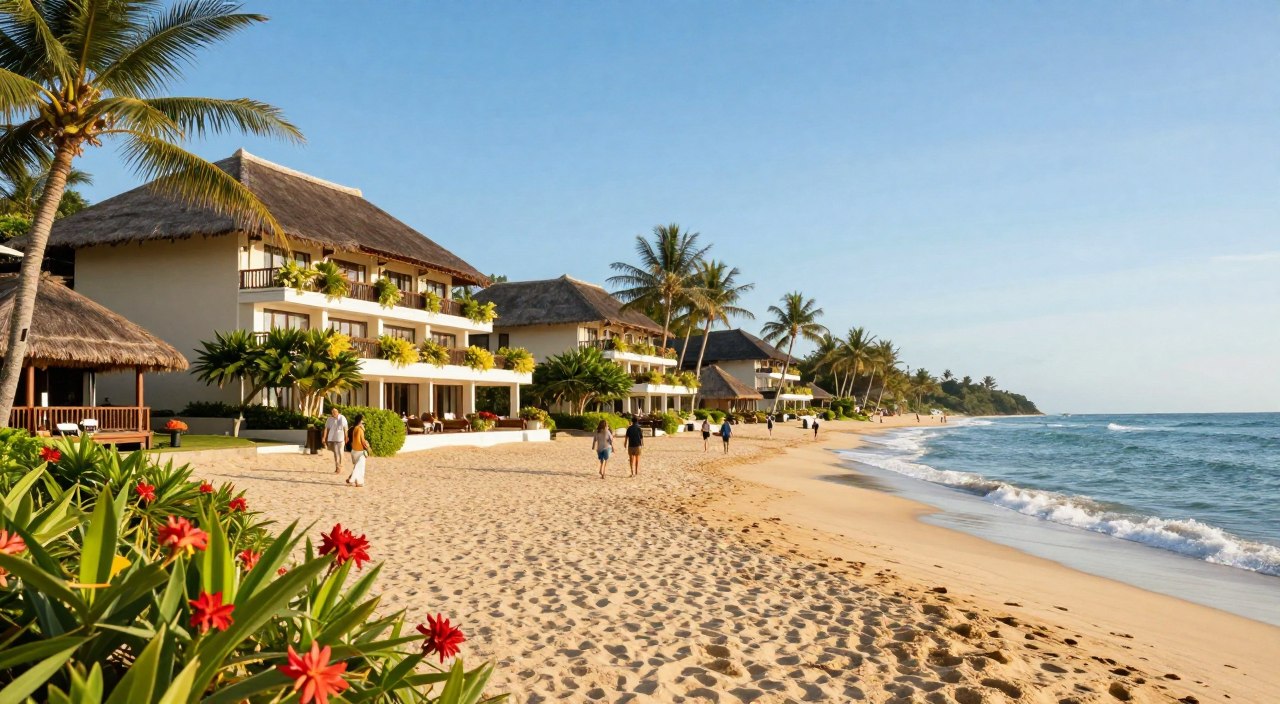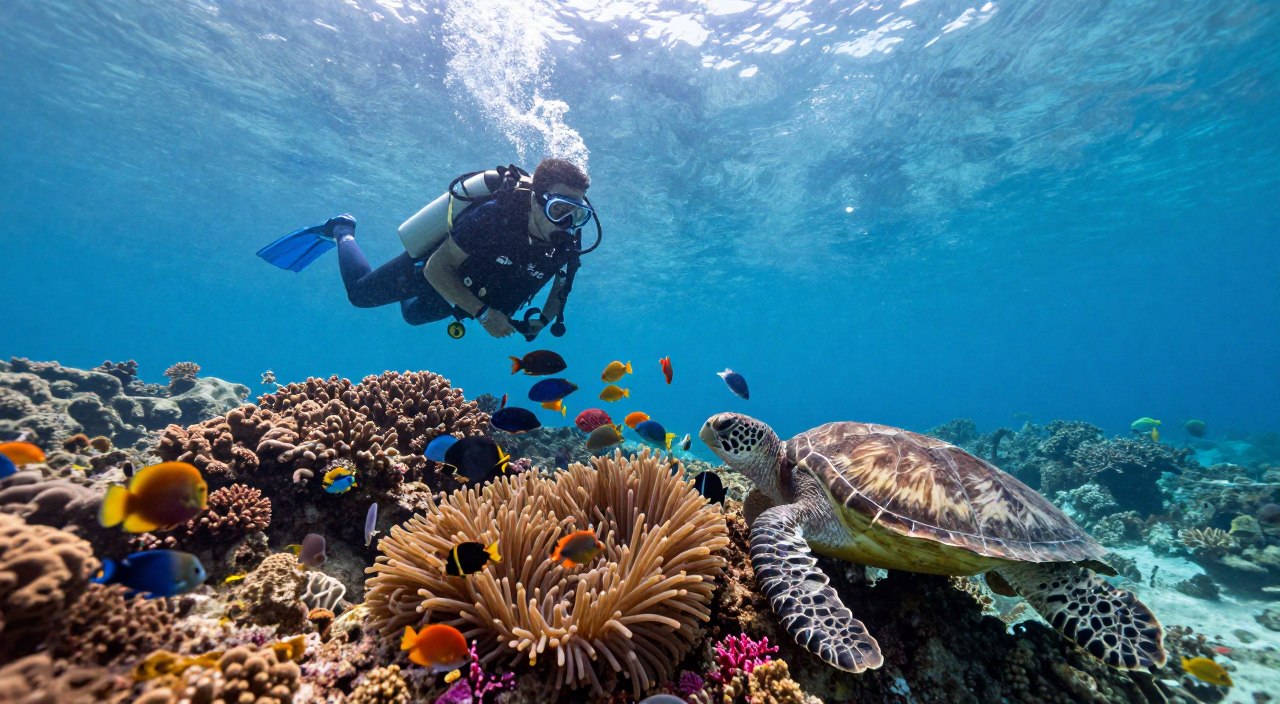
Ever dreamed of floating above a coral garden, surrounded by tropical fish? That dream comes true when you dive into the gili scuba diving world. It’s more than a holiday activity; it’s a deep connection with a vibrant, silent world.
The three Gili Islands are a true paradise, known for their clear waters and warm seas. This archipelago is a world-class diving destination close to Australia. The coral reefs are alive with colour and life, rivaling our Great Barrier Reef.
Whether you’re diving for the first time or are an experienced diver, the Gilis have magic for you. The marine life here is incredible, from sea turtles to reef sharks. This guide is your first step to an unforgettable adventure.
We’ll cover everything you need to know. You’ll learn about the best dive sites, how to get certified, and get practical travel tips. Get ready to plan an underwater journey of a lifetime.
Key Takeaways
- The Gili Islands are a premier destination known for exceptional visibility and healthy coral reefs.
- Diving here suits all skill levels, from complete beginners to advanced divers.
- You can encounter a huge variety of marine life, including turtles, rays, and reef sharks.
- Multiple dive centres on the islands offer certification courses and guided trips.
- Planning your trip with local knowledge ensures a smoother and more enjoyable experience.
- The islands provide a perfect blend of incredible diving and relaxed island vibes.
Introduction to Gili Scuba Diving
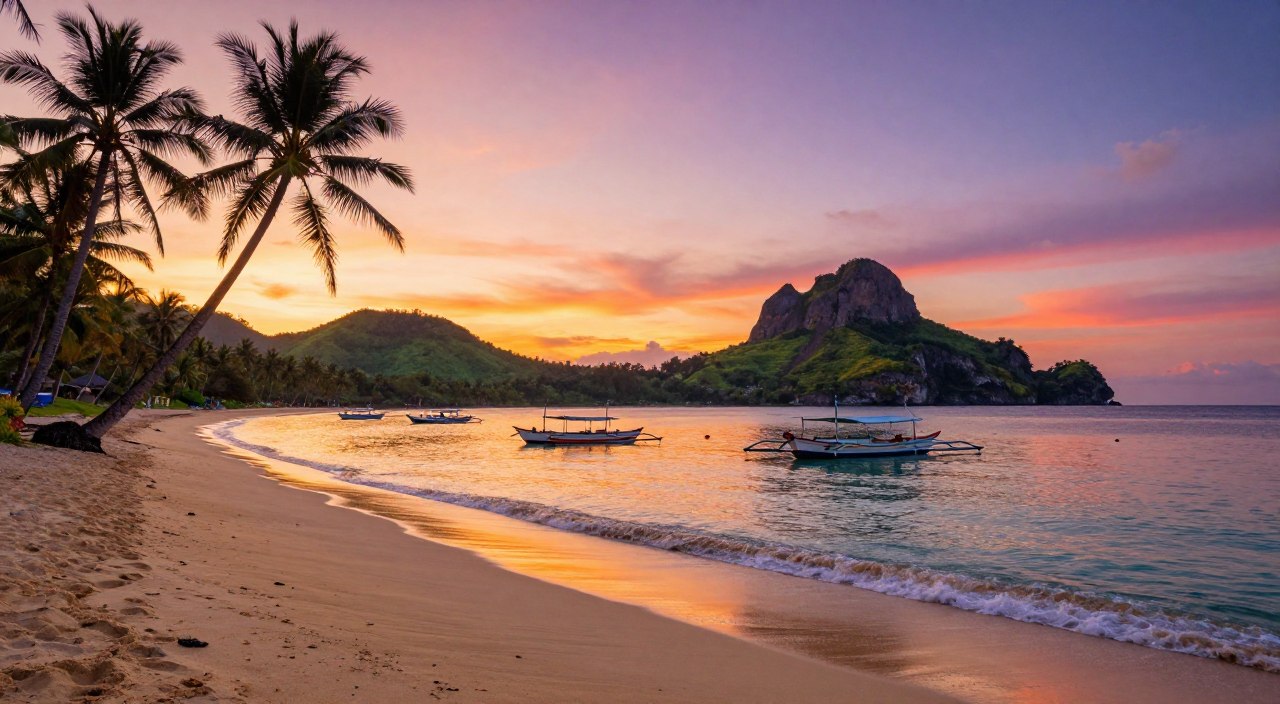
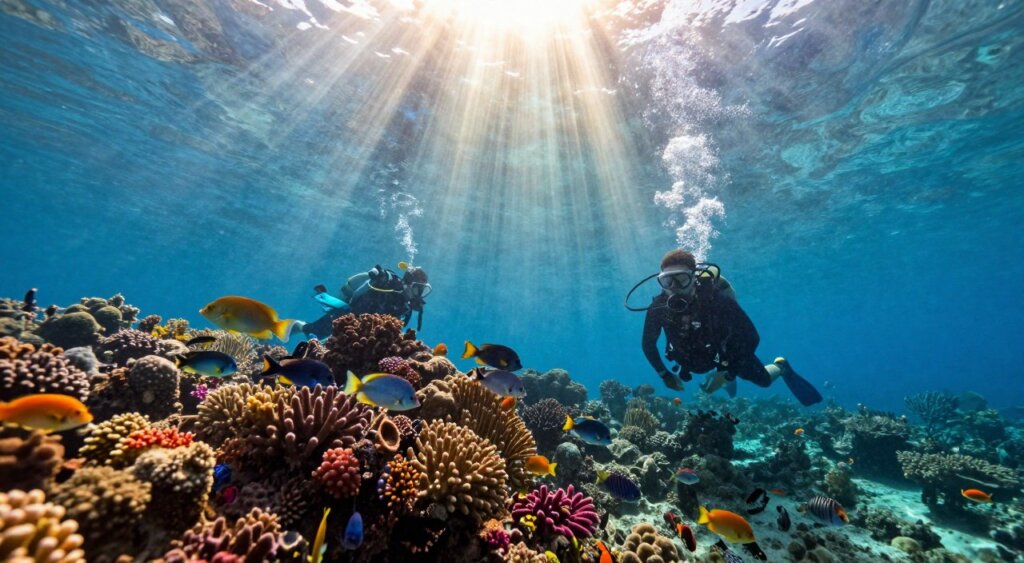
The Gili Islands are a paradise for scuba diving lovers. They offer a wide range of dive experiences in a small area. Just a short boat ride from Bali and Lombok, they are a top spot for underwater adventures. For Aussies, they’re an easy and memorable trip into a vibrant underwater world.
Overview of Gili Islands
Gili Trawangan, or ‘Gili T’, is the biggest and most lively island. It’s famous for its fun nightlife, many dive shops, and a lively vibe. It’s perfect for those who love to dive and have fun.
Gili Meno is the smallest and most peaceful island. It’s ideal for those who want calm and close dive experiences. The island is surrounded by beautiful beaches and is a safe place for turtles to nest.
Gili Air is a great middle ground. It has a relaxed vibe, good cafes, and bars, but is also peaceful. It’s a favourite for couples and divers who want a calm place to stay.
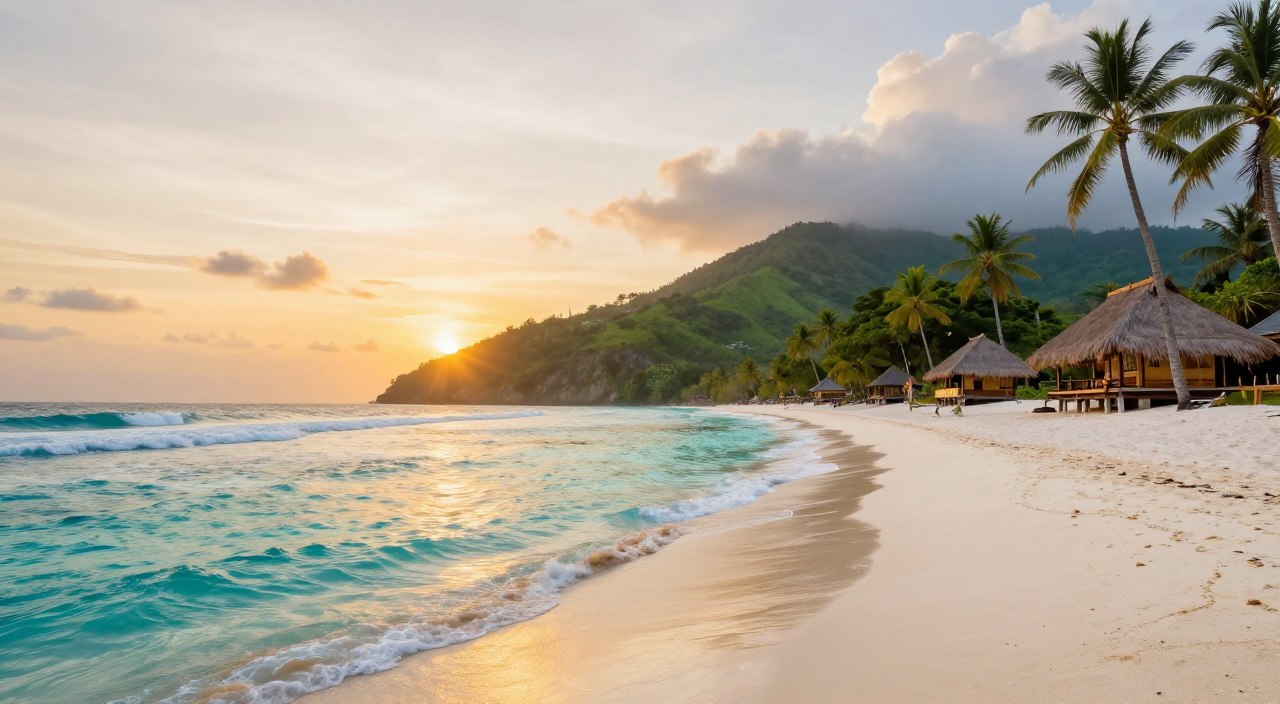
All three islands have stunning white-sand beaches and no cars or motorbikes. You can get around by bike or horse-drawn cart. This adds to their unique charm.
Why Gili is a Popular Diving Destination
Several things make the Gili Islands a top spot for diving. First, the reefs and wrecks are close to shore. This means you spend more time diving and less time getting there.
The diving conditions are also great. The waters are calm and clear, with gentle currents. This makes it perfect for beginners and experienced divers alike.
The marine life is incredible. The islands are in the Coral Triangle, the world’s best place for marine life. You can see stunning coral, lots of fish, turtles, and even sharks and manta rays.
This mix of easy access, good conditions, and amazing marine life makes the Gilis special. It’s a place where everyone, from beginners to experts, can have an amazing dive.
Best Diving Spots Around the Gili Islands
The Gili Islands are known for their stunning beaches and amazing dive sites beneath the waves. Each island offers a unique underwater adventure. You can dive with big fish or tiny critters, finding the perfect spot for you.
Trawangan Dive Sites
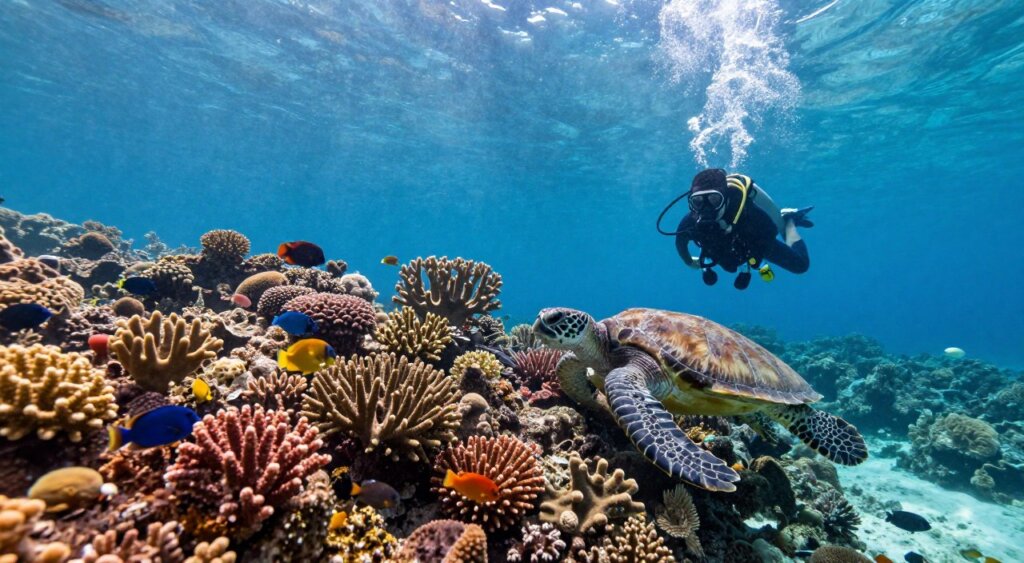
Gili Trawangan, the largest island, is famous for its dynamic dive sites. Shark Point is a must-see, with a depth of 12 to 30 metres. It’s a drift dive where you can see white-tip reef sharks.
Halik is another favourite, known for its vibrant wall dive. It’s full of macro life like frogfish and nudibranchs. The site is calm, perfect for exploring.
On Trawangan’s gili islands dive sites, you might see:
- White-tip and black-tip reef sharks
- Hawksbill and green turtles
- Large schools of trevally and snapper
- Occasional eagle rays gliding by
Meno Island Treasures
Gili Meno offers a peaceful diving experience. Sites like The Nest are known for their unique features and turtle sightings. The Nest has underwater statues in shallow, calm water, perfect for photos.
It’s a turtle hotspot. You’ll see them gliding between the statues or eating seagrass. Meno’s coral formations are also great for night dives, where you can see sleeping turtles and nocturnal crustaceans.
Air Island Wonders
Gili Air is a paradise for colour and biodiversity. The island is surrounded by coral gardens just metres from the shore. These shallow reefs are filled with vibrant corals.
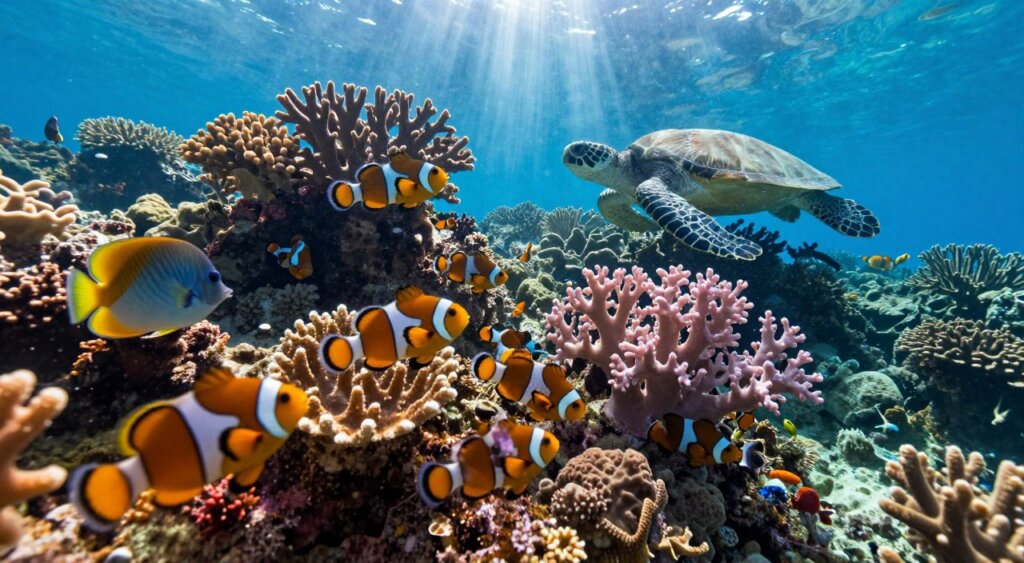
Depths here are mild, from 5 to 18 metres. It’s perfect for new divers and underwater photographers. You’ll see clownfish, octopus, and many tropical fish species.
With so many amazing gili islands dive sites nearby, choosing where to dive first is the hardest part. This access makes diving here incredibly rewarding.
Dive Certification and Training Programs
Starting your diving journey or aiming to get better at it? The Gili Islands have you covered with top-notch certification programs. The many diving schools gili islands offer are run by expert instructors. Getting your gili islands diving certification opens up the area’s stunning reefs and wrecks.
Introduction to PADI Courses
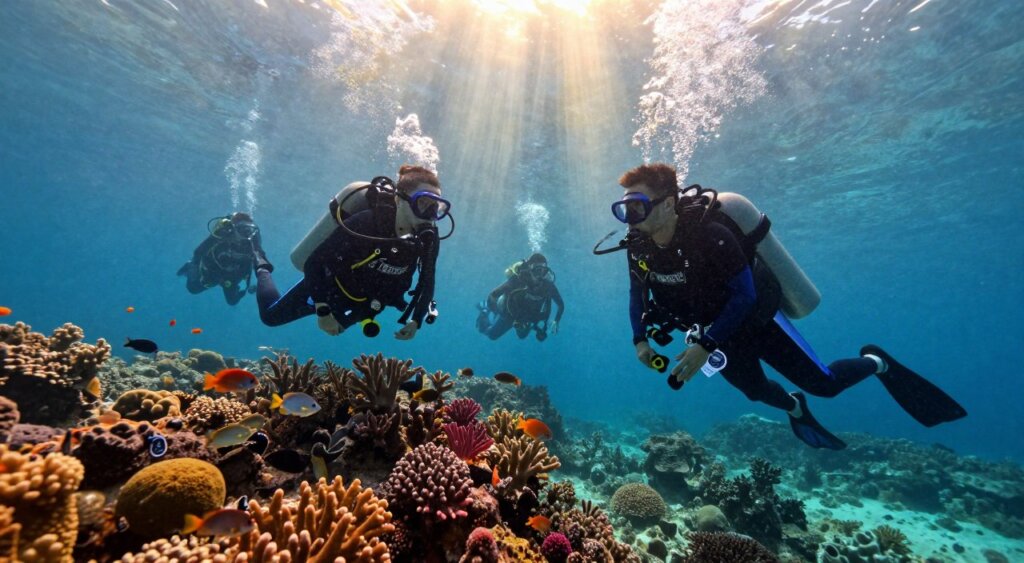
Most dive centers on Gili Trawangan, Air, and Meno follow the PADI system. This ensures top-notch training worldwide. The PADI Open Water Diver course is a great starting point.
This three to four-day course teaches you the basics. You’ll learn how to use equipment, control your buoyancy, and follow safety rules. After passing, you’ll get a lifetime certification to dive up to 18 meters anywhere.
For those in a hurry, the PADI Scuba Diver course is a two-day option. It’s a limited certification for guided dives. All beginner courses include theory sessions, available online before you arrive.
Advanced Diving Certifications
After becoming an Open Water Diver, there’s more to explore. The PADI Advanced Open Water Diver course is the next step. It includes five adventure dives to build your confidence and skills.
These dives might include a deep dive to 30 meters, underwater navigation, and three elective dives. The course focuses on practical experience, usually done in two days.
For those interested in leadership or rescue, the PADI Rescue Diver course is challenging but rewarding. It teaches you to manage diving emergencies and help other divers. This certification is needed for the professional Divemaster level.
Specialty Diving Programs
The diving schools gili islands also offer specialty courses. These let you focus on specific interests and environments. Popular choices include:
- Enriched Air Nitrox: Learn to dive with gas mixtures containing more oxygen. This allows for longer bottom times and shorter surface intervals.
- Deep Diver: Extends your depth limit to 40 metres, teaching you to plan and execute deeper dives safely.
- Wreck Diver: Explores the techniques for safely diving on sunken ships, like those found around the Gilis.
- Underwater Naturalist: Focuses on identifying local marine life and understanding coral reef ecosystems.
Each specialty course combines knowledge with practical training dives. They’re great for divers wanting to improve in a specific area.
| Course Name | Typical Duration | Key Skills Acquired | Prerequisites |
|---|---|---|---|
| Open Water Diver | 3-4 days | Basic scuba skills, safety, buoyancy | Medically fit, able to swim |
| Advanced Open Water | 2-3 days | Deep diving, navigation, elective skills | Open Water Diver certification |
| Rescue Diver | 3-4 days | Emergency management, first aid | Advanced Open Water & First Aid cert. |
| Enriched Air Nitrox | 1-2 days | Nitrox theory, analysing tanks, planning | Open Water Diver certification |
Getting your gili islands diving certification is an investment in future adventures. With clear waters and professional schools, it’s the perfect place to start or advance your diving journey.
Marine Life Encountered While Diving
Diving in Gili is magical because of the marine life. These waters are full of species, from small to big. Every dive is a chance to find something new.
Coral Reefs and Ecosystems
The coral reefs are the heart of this underwater world. Hard corals like staghorn and brain corals build the base. Soft corals add colour and movement.
These reefs are homes for thousands of creatures. Divers help keep them healthy by diving carefully.
Common Species Worth Spotting
Reef fish are everywhere. Look for blue-green chromis and oriental sweetlips. Parrotfish help keep the reef clean by eating algae.
Keep an eye out for octopus and nudibranch. You might see green and hawksbill turtles too.
Black-tip reef sharks are often seen near drop-offs. Manta rays and ocean sunfish visit sometimes.
Seasonal Changes in Marine Life
The dry season, from April to October, is best for clear water. The cooler water makes fish more active.
The wet season, from November to March, has plankton blooms. This makes it hard to see but great for spotting manta rays.
Sea turtles nest during certain months. Knowing this helps plan your dive for the best wildlife views. The marine life is always amazing, no matter when you go.
Equipment Rentals and Recommended Shops
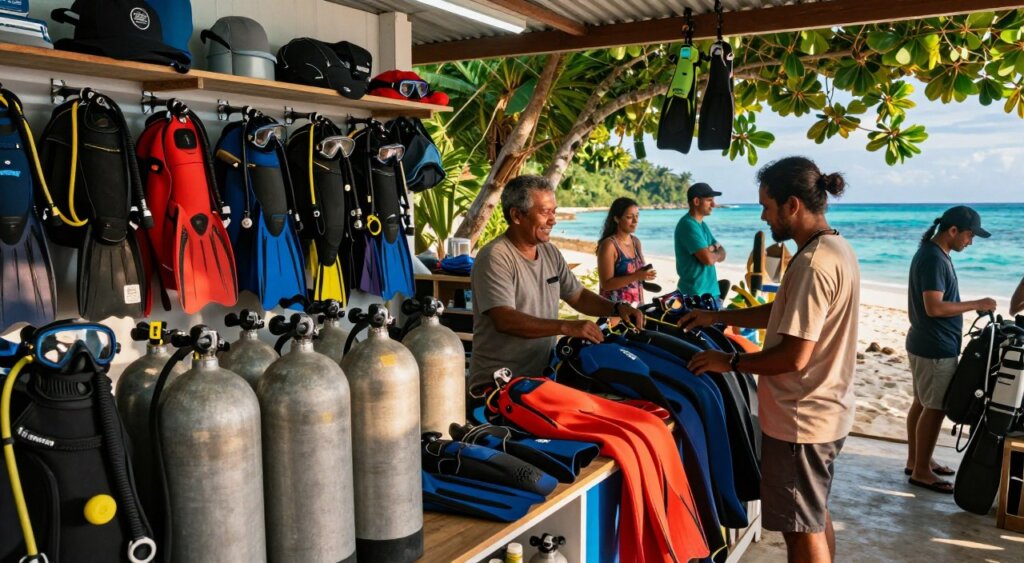
Before diving into the clear waters, you need the right gear for safety and fun. Luckily, you don’t have to bring everything from home. The dive centers in Gili Islands have all you need, from regulators to wetsuits. They offer reliable rental equipment, just like the snorkelling tours.
Trusted Rental Centers on Gili Trawangan
Gili Trawangan, the biggest island, has many top dive shops. These shops are key to the local diving scene and offer quality gear.
Manta Dive is known for its professional service and modern gear. They keep their equipment in top shape, giving divers peace of mind.
Blue Marlin Dive is great for technical divers. They have a wide range of gear, including well-maintained regulators and BCDs.
Gili Divers is known for its reliable rental service. It’s popular for its convenient location and all-inclusive packages. Renting from these dive centers in Gili Islands means you get gear that’s checked regularly.
Tips for Choosing Rental Gear
Choosing rental gear can be tough. Here are some tips to help you pick the right gear that fits and works well.
- Inspect the Regulator: Check the mouthpiece for cracks or wear. Ask when it was last serviced.
- Check the BCD: Inflate and deflate it yourself. Listen for leaks and make sure the dump valves work.
- Ensure a Proper Wetsuit Fit: The wetsuit should fit snugly but not restrict you. Try it on before buying.
- Understand the Package: Rental packages usually include a BCD, regulator, wetsuit, fins, mask, and weights. Make sure you know what’s included.
- Look for Service Stickers: Gear that’s been well-maintained will have service stickers.
Your safety underwater depends on the quality of your gear. Renting from a trusted dive center in the Gili Islands ensures a safe and enjoyable dive.
Dive Tours and Packages
Finding the right dive tour package is key to a great underwater adventure in the Gili Islands. There are many scuba diving packages gili islands for different budgets and experiences. Knowing what each package offers helps you make the most of your time underwater.
Group vs Private Dive Tours
Dive centres offer group and private tours. Group dives are great for meeting others and are often cheaper. They also offer a fun social atmosphere after diving.
Private tours give you more freedom. You can choose where to dive and get your guide’s full attention. Even group tours usually have no more than four guests per guide for safety and a personal touch. Private charters are best for photographers or those looking for a special marine experience.
Full-Day Diving Experiences
Full-day dives are perfect for those who love diving. These packages include two or three dives at top sites, with a break for lunch.
Full-day packages are usually all-inclusive. You get:
- Return transfers from your accommodation.
- High-quality rental gear.
- A professional dive guide all day.
- A big lunch and drinks.
- Things like towels and water.
These scuba diving packages gili islands are great value. Book early, as they get busy, to get the best spots.
Eco-Friendly Diving Options
More dive tours are now eco-friendly. This is for those who want to dive without harming the environment.
These tours teach responsible diving. Guides show how to avoid coral and use safe sunscreen. They also help with local conservation efforts.
“The best divers are not just visitors; they are active guardians of the underwater world they love to explore.”
When looking for scuba diving packages gili islands, choose eco-friendly operators. They support marine protection. Your choice helps the reefs stay healthy.
Whether you prefer group, private, or eco-friendly dives, the right package makes your trip unforgettable.
Safety Guidelines for Diving
Keeping safe is key to a great dive, even more so in the Gili Islands’ vibrant waters. Knowing the safety rules helps protect you, your buddy, and the sea. This lets you enjoy the underwater world fully.
Reputable dive centres in the Gilis are your first safety net. They offer well-maintained gear and detailed briefings. Their professionalism, including reliable service and clear emergency plans, ensures a safe dive.
Essential Pre-Dive Safety Checks
Don’t skip the pre-dive checks. They’re your job and essential for safety. The most important is the buddy check, often remembered by the acronym BWRAF.
This quick check ensures everything is right before you dive. Do it at the surface, just before you go underwater.
| Check Item (BWRAF) | What to Inspect | Why It’s Important |
|---|---|---|
| Buoyancy (BCD) | Inflate and deflate the BCD. Check all dump valves and ensure the inflator hose is securely attached. | Prevents uncontrolled ascents or descents. Ensures you can achieve neutral buoyancy underwater. |
| Weights | Confirm weight amount and that the release mechanism works smoothly. Check your buddy’s weight belt or integrated weight pockets. | Proper weighting is critical for buoyancy control. A quick release is vital in an emergency. |
| Releases | Test all buckles and clips, including tank band, BCD cummerbund, and any accessory releases. | Ensures you can ditch equipment quickly if needed and that nothing will come loose during the dive. |
| Air | Turn on the tank valve fully. Check your pressure gauge and take two breaths from the regulator. Confirm the air is on and flowing freely. | Verifies you have a sufficient air supply and that your primary breathing apparatus is working. |
| Final Okay | Perform a final visual scan. Signal “OK” to your buddy and confirm they are ready to go. | Ensures both divers are mentally prepared and have completed all checks. |
Always listen to the dive briefing. Note entry and exit points, dive plan, depth limits, and hazards. A good dive centre will give you this info clearly.
Staying Safe Underwater
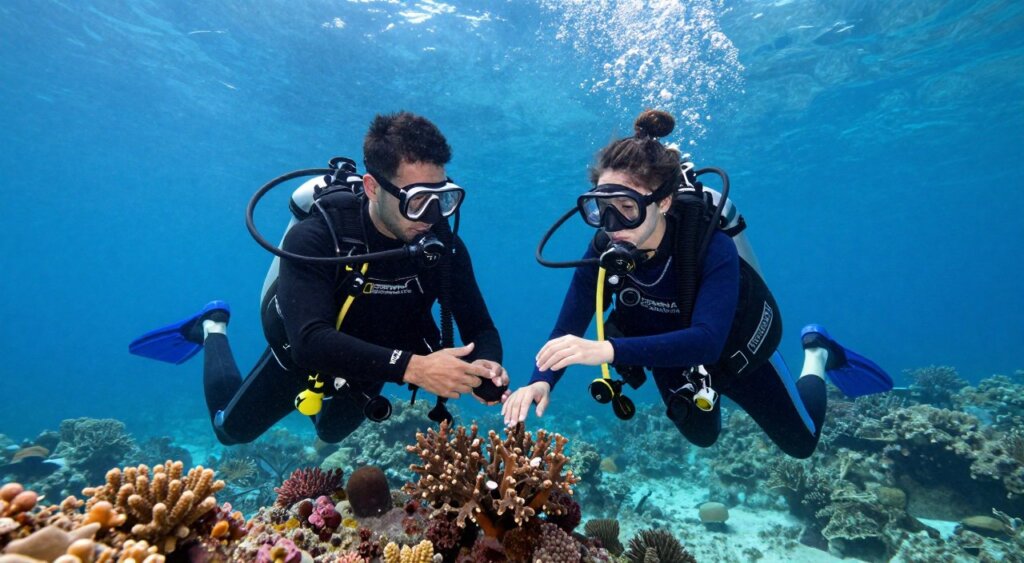
Once underwater, focus on managing your dive. Good habits prevent common problems.
Buoyancy control is key. Perfect neutral buoyancy protects the reef and saves energy. Practice in calm areas if needed.
Air management is also critical. Check your pressure gauge often. Aim to start your ascent with at least 50 bar left. Always surface with some air left.
- Maintain visual contact with your buddy at all times.
- Respect marine life by observing from a distance. Do not touch, chase, or harass any creatures.
- Be aware of your surroundings, including depth, current direction, and boat traffic overhead.
- If you feel uncomfortable or unwell, signal to your buddy and ascend safely.
Emergency Procedures
Knowing emergency procedures is vital. Repetition and mental rehearsal make these actions instinctive. Your dive centre’s professionalism is key, providing reliable support.
Every diver must know the lost buddy drill, controlled emergency swimming ascent (CESA), and assisting a diver in distress. Your briefing should cover site-specific protocols.
“Panic is the real enemy in any diving incident. Drilling emergency procedures during training builds the muscle memory to stay calm and act decisively. Always dive with a centre that makes safety its absolute priority.”
If you become separated from your buddy, stop, look around for one minute, then safely ascend to the surface while making your standard audible signal (e.g., banging on your tank). On the surface, use your whistle or surface marker buoy (SMB) to alert the boat.
For a free-flowing regulator or out-of-air situation, remember your training: signal to your buddy, switch to your alternate air source, and make a slow, controlled ascent while exhaling. A reliable dive centre ensures their guides are trained to manage these situations calmly and efficiently, providing peace of mind for all divers.
Best Time to Go Scuba Diving in Gili
Scuba diving in the Gili Islands is great all year round. Knowing the two main seasons helps plan your trip. Each season changes the underwater world in different ways.
Seasonal Weather Considerations
The Gili Islands have a dry and wet season. Each season brings a unique dive experience.
The dry season is from April to October. It’s sunny, dry, and calm. This makes diving very predictable and comfortable.
- Calmer seas make boat travel easy.
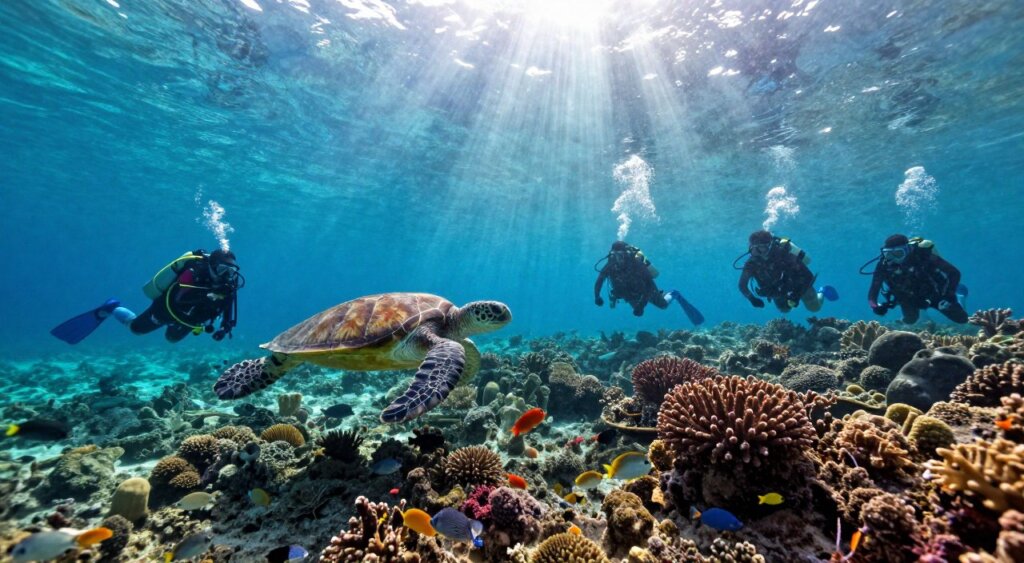
- Excellent visibility is common, often over 25 metres, for stunning reef views.
- This is the peak season for Gili scuba diving, attracting many divers.
The wet season is from November to March. Expect more rain and humidity. But, the underwater world stays vibrant and active.
- Surface chop and currents can be stronger, making diving more exciting.
- Visibility can vary but often stays good, even in the wet season.
- This season has fewer crowds, for a more private dive experience.
Optimal Diving Conditions
Optimal diving conditions depend on a few key factors. These factors change slightly with the seasons.
Water temperature is always warm, between 27°C and 30°C. A 3mm wetsuit or rash guard is usually enough.
Visibility is a big draw. It’s best in the dry season. In the wet season, it might be less clear, but usually stays above 15-20 metres.
Surface conditions are calmest from June to August. Other months might have more wind, like the Lombok breeze.
Diving in the Gili Islands is great any month. The choice between seasons depends on whether you want calm or dynamic conditions.
There’s no bad time for Gili scuba diving. For the best conditions, dive in the dry season. For quieter reefs and tropical weather, try the wet season.
Environmental Conservation Efforts
Diving in Gili is not just about the thrill. It’s also about protecting the marine ecosystem. The islands’ beauty relies on a delicate balance. Conservation efforts are key to keeping these wonders alive for future explorers.
Importance of Coral Reef Protection
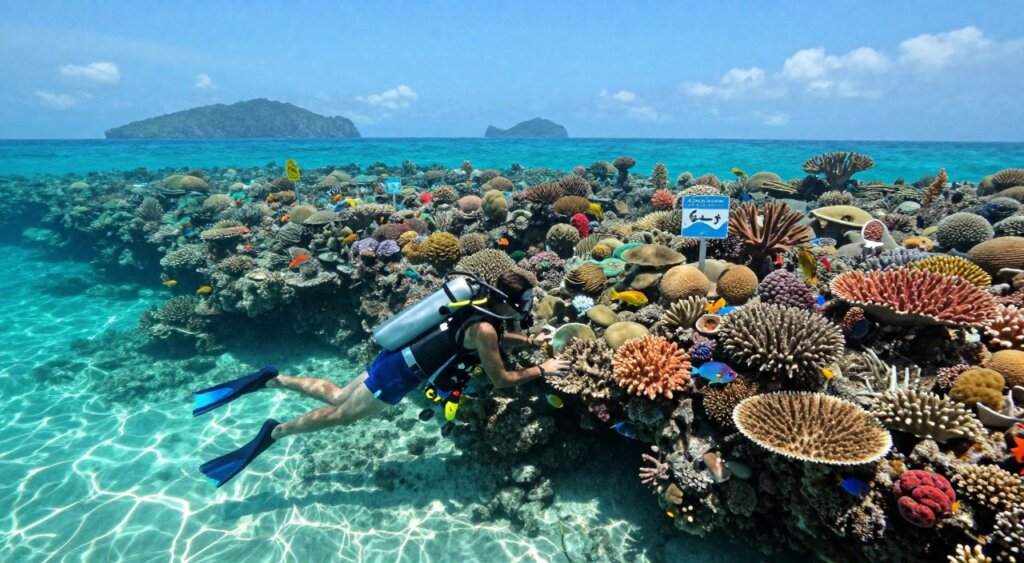
Coral reefs are vital for the Gili Islands’ seas. They support countless species and protect the shore. Healthy reefs attract divers and snorkelers.
But, reefs face many threats. Rising sea temperatures can cause coral bleaching. Physical damage and pollution also harm them. These threats can destroy reefs in seconds.
Knowing these risks is the first step to protecting reefs. Every diver can help reduce their impact.
Initiatives by Local Dive Shops
The Gili diving community is dedicated to conservation. Many local dive shops go beyond tours. They lead in environmental stewardship.
These shops run programs that help the ocean. They teach divers to dive eco-friendly. Supporting them means your tourism helps the environment.
| Initiative | Description | How Divers Can Participate |
|---|---|---|
| Coral Restoration | Nurseries grow coral fragments for reef repair. | Join a coral planting workshop or adoption program. |
| Beach & Reef Clean-ups | Events remove trash from beaches and dive sites. | Volunteer for clean-ups. Always collect trash during dives. |
| Eco-Diver Education | Courses teach reef etiquette and marine life. | Request an eco-briefing. Take a PADI Project AWARE course. |
| Responsible Operations | Shops use mooring buoys and provide reef-safe sunscreen. | Choose operators with these practices. Follow their guidelines. |
Choosing a dive shop involved in conservation makes you part of the solution. Your actions underwater matter. Practice perfect buoyancy and respect marine life.
Your Gili diving adventure can leave a positive legacy. Enjoy the spectacle while preserving it.
Accommodation Options for Divers
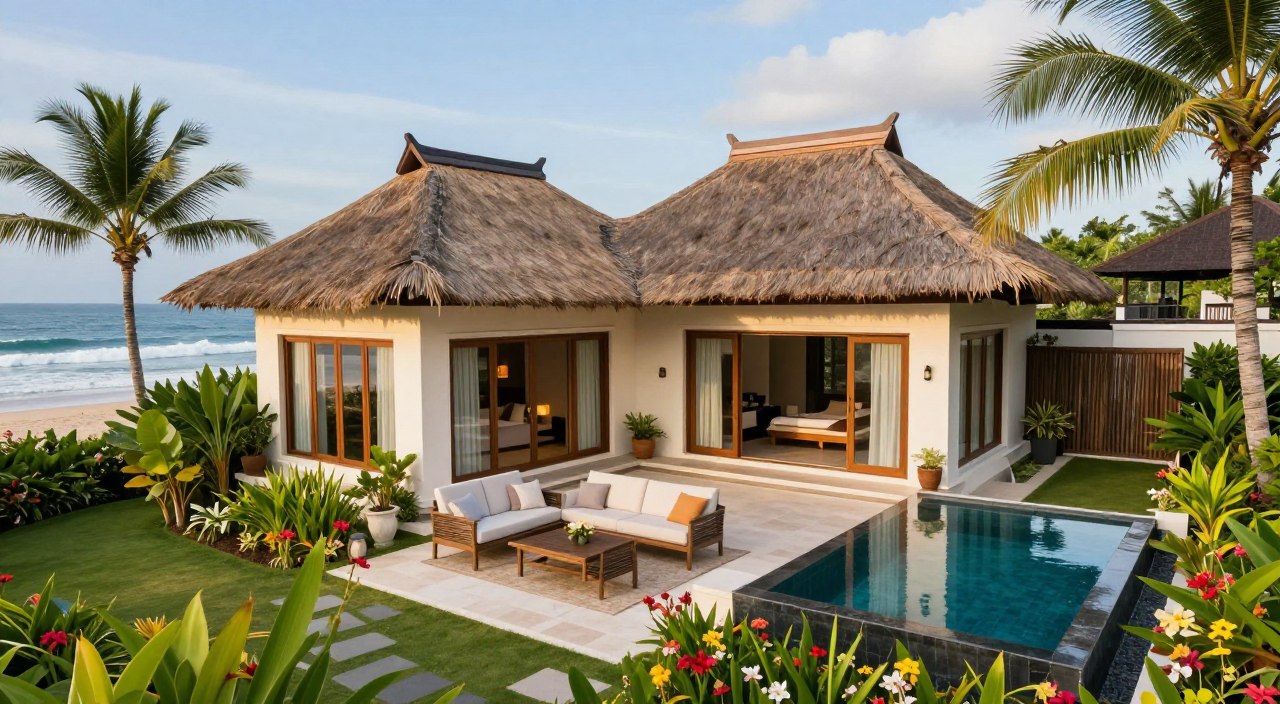
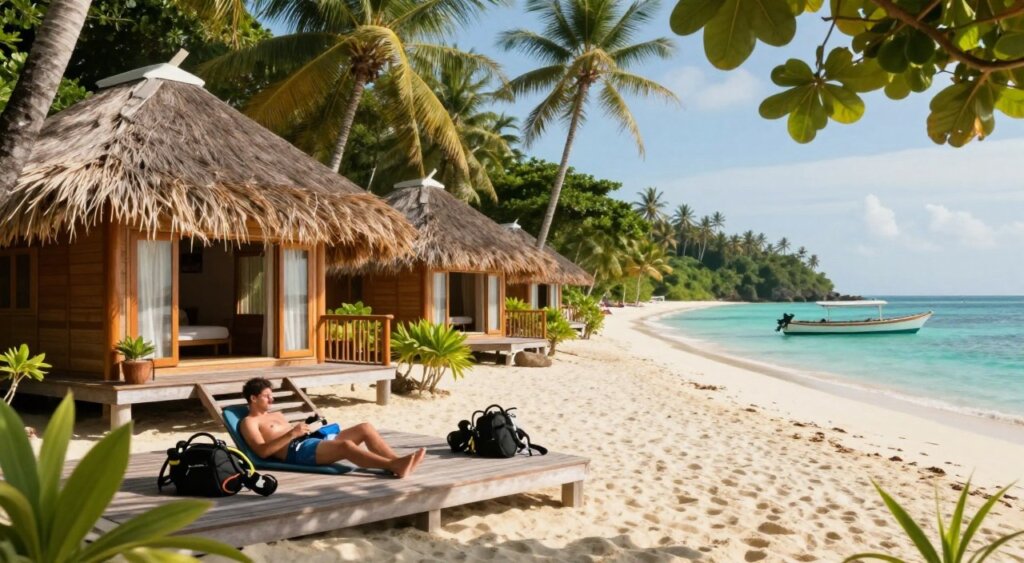
The Gili Islands offer a range of places to stay, from luxury beachfront resorts to friendly hostels. Your choice of accommodation can enhance your diving experience. Think about what’s important to you, like being right by the sea or close to dive schools.
Beachfront Resorts
Beachfront resorts on Gili Trawangan and Gili Meno are perfect for comfort and easy access. They often have their own dive centres or work with local operators. This makes planning your dives, renting gear, and taking courses easy.
Many resorts offer dive and stay packages that include dives and accommodation. Waking up to the sea and having a house reef nearby is a big plus. Places like Pondok Santi Estate or Gili Lankanfushi Resort are great examples.
These resorts are ideal for those who want to relax and don’t want to worry about logistics after diving.
Budget-Friendly Hostels
For those on a budget, the islands’ hostels and guesthouses are lively and affordable. They’re usually in the main villages, close to many dive centres. This makes it easy to compare prices, meet instructors, and join different dive trips.
Staying in a hostel is not just about saving money. It’s a chance to meet divers from all over. Hostels have common areas, kitchens, and travel desks to help plan your adventures. They’re great for solo travellers or those doing longer courses.
When picking a hostel, look for secure gear storage and good cleanliness reviews. This way, you can spend more on diving.
As a dive instructor said,
“The best place to stay is one that gets you to the boat on time and lets you rest well between dives. It doesn’t matter if it’s fancy or simple.”
Think about what’s most important to you: convenience or saving on diving costs. Both paths lead to amazing underwater adventures.
Getting to the Gili Islands
Getting to the Gili Islands is easier than you think. There are several ways from Bali. The trip across the Lombok Strait is a beautiful start to your island adventure. A little planning will make sure you arrive feeling relaxed and ready to explore.
Transportation from Bali
The most popular way is by fast boat. Daily services run from Bali’s eastern ports, like Padang Bai and Serangan (near Sanur).
The journey takes 1.5 to 2.5 hours. It depends on the sea and where you’re going (Trawangan, Meno, or Air). It’s a bumpy but exhilarating ride. So, if you get seasick, be prepared.
Ticket prices vary. They depend on the operator, season, and what’s included. You’ll pay about $50 to $80 AUD for a one-way ticket. Booking online in advance is a good idea, even more so during peak times.
Local Transportation Tips
Once you arrive, you’ll notice there are no cars or motorbikes. Getting around the Gili Islands is easy and traditional.
You have a few options:
- Bicycle: Many people prefer bikes. You can rent one for a day at a low cost. It’s great for exploring and getting to dive shops.
- Cidomo: These are horse-drawn carts. They’re good for moving your luggage or a leisurely tour. Always agree on a price first.
- On Foot: The islands are small. Walking is easy on Gili Meno and Air. It’s the best way to enjoy the relaxed vibe.
Remember to pack light. Moving your gear is easier with less luggage. Also, have small change for drivers and bike rentals.
The first gift the islands give you is the quiet. Enjoy the slow pace—it’s part of the magic.
Travel Tips for Divers
To make your Gili diving trip unforgettable and respectful, follow these tips. They help you prepare well and respect the local culture. Finding experienced dive instructors Gili Islands and affordable scuba diving Gili Islands packages are key to a great trip.
Packing Essentials for a Dive Trip
Don’t forget the essentials beyond the usual travel items. This list ensures you’re ready for your dive adventure without any issues.
- Certification Cards: Carry your PADI or SSI card always. Digital copies are useful, but many places need the original.
- Reef-Safe Sunscreen: Protect your skin and the coral. Choose mineral-based, oxybenzone-free sunscreens.
- Dive Logbook: It’s fun to keep a dive log and often needed for advanced courses.
- Surface Marker Buoy (SMB): Essential for drift dives, it signals your position to boats.
- Sense of Adventure: Be ready for unexpected encounters with turtles and reef sharks!
Choose dive operators based on safety and expertise, not just price. Good centres have experienced dive instructors Gili Islands and modern gear. Look for deals on multi-dive packages or off-peak season offers for affordable scuba diving Gili Islands.
Cultural Etiquette in Gili
The Gili Islands are part of Lombok, where the culture is mostly Muslim. Showing respect is important.
When walking through villages or markets, dress modestly. Cover your shoulders and knees. Beachwear is okay, but wear a sarong or t-shirt in shops or warungs.
Be friendly and say “Selamat pagi” (good morning) to locals. Haggling at markets is okay, but be polite and cheerful.
Being positive and respectful is your most valuable asset. It helps you connect with locals and have a better experience.
Support the local economy by eating at family-run places and buying from local artisans. This way, your visit benefits the community and makes the islands special.
Conclusion: Dive into Gili’s Underwater World
Scuba diving in the Gili Islands is an adventure you won’t forget. You’ll see colourful coral reefs, meet turtles, and dive at famous spots like Shark Point. This guide has helped you learn how to get certified, find a place to stay, and dive responsibly.
Embracing the Experience
Your Gili scuba diving adventure begins with a single breath. The islands are perfect for both beginners and seasoned divers. Local PADI dive centres on Gili Trawangan, Meno, and Air make training safe and easy.
You can swim past coral gardens one day and explore a shipwreck the next. Each dive shows you more of the marine life that lives here. This underwater world is waiting for you to explore it.
Future of Diving in the Gili Islands
The future of diving here depends on sustainable tourism. Local dive shops are leading conservation efforts. They include coral planting and eco-friendly dive tours.
Your choices as a visitor are important. Supporting eco-friendly businesses helps protect the reef. This care ensures amazing diving adventures for years to come.
Start planning your trip to the Gili Islands. Get ready to be amazed by the beauty beneath the surface. And play your part in keeping it pristine.