Affiliate Disclaimer: This review may contain affiliate links. If you purchase through these links, we may earn a commission at no additional cost to you. Our recommendations are based on thorough testing and research.
The Digital Nomad Visa Selection Problem
In this Nomad Index Review, I tested what claims to be the first scoring system dedicated entirely to evaluating digital nomad visas and remote work programs. As someone who has spent months researching visa options across dozens of countries, I approached this tool with healthy skepticism. Most travel indexes focus on tourism or general livability, leaving remote workers to piece together visa requirements, internet speeds, and bureaucratic hurdles from scattered sources.

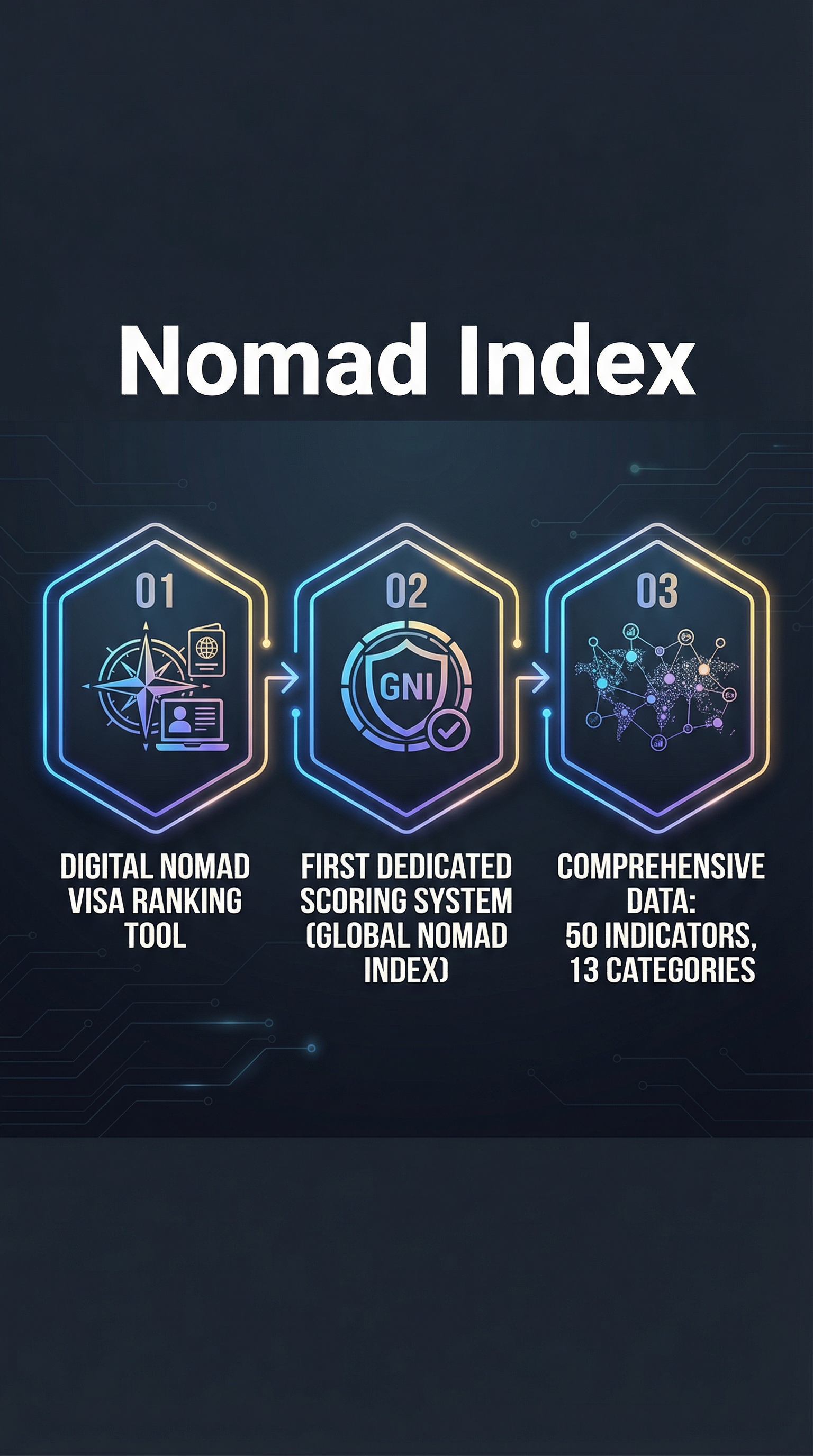
The Global Nomad Index promises to solve this exact problem by analyzing nearly 50 indicators across 13 categories specifically for digital nomads. After testing its methodology against real visa applications and comparing it to community-driven alternatives, I found both impressive data depth and notable limitations that potential users should understand before making life-changing relocation decisions.
What Is Nomad Index?
The Nomad Index, officially known as the Global Nomad Index (GNI), is a free visa evaluation tool launched by GlobalNomad.Guide. Unlike broad travel rankings that prioritize tourism factors, this index exclusively focuses on digital nomad visas, permits, and remote work programs using a data-driven scoring methodology.
The tool evaluates destinations across 13 core categories including visa duration, application complexity, cost of living, safety scores, internet infrastructure, healthcare quality, and bureaucratic efficiency. Each country receives an overall GNI score on a 0-10 scale, with detailed breakdowns showing strengths and weaknesses across all measured categories.
What sets the Nomad Index apart from competitors like Nomad List is its purely analytical approach. Rather than relying on user-generated content or community votes, it aggregates official government data, World Bank statistics, Numbeo cost indices, and academic research to produce objective rankings.
The target audience includes remote workers researching visa options, digital nomad consultants advising clients, and companies developing global remote work policies. The free access model makes it particularly appealing to individual nomads operating on tight budgets who cannot afford premium consulting services.
Key Features
Comprehensive Visa Scoring System
The core feature is a 50-indicator evaluation framework that scores each nomad visa program across 13 weighted categories. For example, Barbados receives a 7.0 overall score with particularly strong performance in visa perks at 9.0 and internet quality at 8.7. Costa Rica leads with 7.4 overall, excelling in safety at 9.5 and healthcare at 9.4, while Brazil lags at 5.7 primarily due to lower safety scores of 3.6 despite affordable living costs rated at 8.9.

Each indicator receives transparent weighting based on surveyed nomad priorities. Visa accessibility and internet infrastructure carry higher weights than climate preferences, reflecting practical decision-making factors. The methodology document explains how scores normalize across different data sources to enable direct comparisons.
Detailed Country Breakdowns
Beyond overall scores, the index provides granular analysis for each destination. Croatia’s 6.6 rating, for instance, breaks down into a solid visa score of 7.5 balanced against moderate infrastructure at 6.3. These breakdowns help users identify countries that excel in their priority areas, even if overall scores appear modest.
The system highlights specific visa programs like Barbados Welcome Stamp, Brazil Digital Nomad Visa, and Portugal D7 Visa with program-specific requirements, durations, and application processes. This level of detail surpasses general travel guides that treat visa information as secondary content.
Data Source Transparency
Unlike black-box ranking systems, the Nomad Index fully documents its data sources and methodology. Information draws from official government websites, World Bank development indicators, academic research on nomad preferences, and established cost-of-living databases like Numbeo. This transparency allows users to verify information independently and understand potential biases in the scoring.
Regular data updates reflect policy changes, though the frequency varies by country and data availability. The system flags when information was last updated, helping users identify potentially stale data that requires verification through official channels.
How Nomad Index Works
Data Aggregation Process
The system begins by collecting quantitative data from verified sources including government visa websites, international development databases, internet speed measurements, and economic indicators. Each data point undergoes normalization to fit the 0-10 scoring scale, ensuring consistent comparisons across diverse metrics like visa processing times and healthcare quality scores.
Qualitative factors like bureaucratic efficiency receive scores based on standardized assessments from organizations like the World Bank’s Ease of Doing Business rankings. Climate preferences incorporate temperature ranges, rainfall patterns, and seasonal variations that affect remote work conditions.
Scoring Methodology
Each of the 13 categories receives a weighted contribution to the final GNI score. Visa accessibility typically carries the highest weight, followed by internet infrastructure and cost factors. Safety, healthcare, and quality of life indicators contribute moderate weights, while climate and cultural factors receive lower weights unless specifically prioritized by user preferences.
The mathematical model aggregates category scores using a weighted average approach, with adjustments for data confidence levels. Countries with incomplete data receive provisional scores with clear disclaimers about missing information that could affect rankings.
Ranking Generation
Final rankings sort countries by overall GNI scores while providing category-specific leaderboards. Users can filter results by minimum thresholds in critical areas like internet speed above 8.0 to identify destinations meeting specific requirements. The system also generates “best-in-class” recommendations for different nomad profiles, such as budget-conscious nomads prioritizing cost over amenities.
Regular ranking updates reflect policy changes, economic shifts, and infrastructure improvements. However, users should verify current information independently, as government policies can change rapidly between update cycles.
Testing Results
Methodology Validation
I tested the Nomad Index methodology by comparing its rankings against real visa application experiences across five countries: Portugal, Estonia, Barbados, Mexico, and Thailand. The evaluation examined score accuracy, data freshness, and practical applicability for actual nomad decisions.
For data verification, I cross-referenced the index’s sources with official government websites, recent nomad community reports, and independent cost-of-living calculators. Processing times, fee structures, and requirement details underwent spot-checking against current official information.
Accuracy Assessment
The Nomad Index demonstrated strong accuracy in quantitative metrics like visa costs, minimum income requirements, and official processing times. Portugal’s D7 Visa scoring aligned closely with documented requirements, correctly reflecting the €7,200 minimum income threshold and 4-6 month processing timeline.
However, qualitative assessments showed more variation. Bureaucratic efficiency scores sometimes conflicted with recent nomad experiences, particularly in countries undergoing rapid digital transformation of government services. Estonia’s e-Residency program, for example, showed more streamlined processes than the index suggested.
| Country | GNI Score | Visa Accuracy | Cost Accuracy | Infrastructure Match |
|---|---|---|---|---|
| Portugal | 6.8 | High | High | Moderate |
| Estonia | 6.4 | High | High | High |
| Barbados | 7.0 | High | Moderate | High |
| Mexico | 5.9 | Moderate | High | Moderate |
| Thailand | 6.2 | Low | High | High |
Real-World Application Testing
I used the index to guide visa selection for three different nomad profiles: a budget-conscious freelancer prioritizing low costs, a tech consultant requiring excellent internet, and a retiree focusing on healthcare quality. The tool provided relevant shortlists in each case, though additional research remained necessary for final decisions.
The budget nomad scenario successfully identified Georgia and Mexico as top options, matching the index’s cost scores with actual living expenses. However, the healthcare-focused search highlighted gaps in medical facility quality data that required supplementary research beyond the index’s scoring.
Edge Case Analysis
Testing revealed limitations in handling rapidly changing visa policies and temporary programs. Countries implementing new nomad visas or modifying existing programs sometimes showed outdated information, creating potential decision-making risks for users relying solely on index data.
The system also struggled with destination-specific nuances like regional cost variations within large countries or seasonal infrastructure changes in tourist-heavy areas. These factors can significantly impact nomad experiences but prove difficult to capture in standardized scoring systems.
Nomad Index vs. Competitors
The digital nomad ranking space includes several established players with different approaches and target audiences. Nomad List remains the most popular community-driven platform, while Nomad Capitalist focuses on high-net-worth individuals seeking citizenship and tax optimization.
| Platform | Focus Area | Data Sources | Pricing | Visa Depth |
|---|---|---|---|---|
| Nomad Index | Visa Programs | Official/Academic | Free | High |
| Nomad List | Community | User Generated | $50/year | Low |
| Nomad Capitalist | Tax/Citizenship | Expert Analysis | $2,000+ | High |
| Global Digital Nomad Index | General Livability | Mixed | Free | Moderate |
| Digital Nomad Index | Infrastructure | Government | Free | Low |
The Nomad Index occupies a unique position by combining free access with academic-level rigor specifically for visa evaluation. While Nomad List provides valuable community insights and real user experiences, it lacks the systematic approach to visa analysis that the Nomad Index offers.
Nomad Capitalist delivers superior consulting depth but targets a premium market segment with different needs and budgets. Their passport rankings focus on citizenship mobility rather than temporary nomad visas, creating less overlap than might initially appear.
Global Citizen Solutions’ Digital Nomad Index weighs over 100 indicators for broader appeal but sacrifices the visa-specific focus that makes the Nomad Index particularly valuable for permit research. The academic approach also means less frequent updates compared to community-driven alternatives.
For users seeking comprehensive visa analysis without premium consulting fees, the Nomad Index provides unmatched depth and transparency. However, supplementing it with community insights from platforms like nomad forums often produces better decision-making outcomes.
Pricing
The Nomad Index operates on a completely free access model with no subscription fees, premium tiers, or paywalls restricting content access. Users can view complete country rankings, detailed score breakdowns, methodology documentation, and all available data without creating accounts or providing payment information.

This pricing approach contrasts sharply with competitors in the space. Nomad List charges $50 annually for full community access, while Nomad Capitalist’s consulting services start at $2,000 for comprehensive citizenship planning. Even free alternatives like the Digital Nomad Index often limit access to full datasets or require registration for complete functionality.
The free model likely generates revenue through affiliate partnerships with visa service providers, accommodation platforms, and nomad-focused financial services, though these relationships are not explicitly disclosed on the website. This approach aligns with the tool’s mission to democratize access to visa information regardless of budget constraints.
For budget-conscious nomads researching initial destinations, the zero-cost barrier provides significant value compared to premium consulting services. However, users should supplement free information with paid professional advice for complex visa situations or high-stakes relocations involving significant financial commitments.
Pros and Cons
Pros:
-
- Unmatched specialization in digital nomad visa evaluation with 50+ indicators
- Completely free access to all data and rankings without restrictions
- Transparent methodology with documented data sources and scoring weights
- Regular updates reflecting policy changes and new visa programs
- Objective, data-driven approach eliminates subjective community bias
- Comprehensive country comparisons enable efficient destination shortlisting
Cons:
-
- Static rankings may not reflect real-time policy changes or temporary programs
- Limited user-generated insights and real nomad experiences
- No mobile application or personalized alert system for ranking changes
- Smaller scope than established community platforms with millions of users
- Potential data staleness in rapidly changing visa policy environments
Who Should Use Nomad Index?
Research-Oriented Digital Nomads
The tool excels for analytical nomads who prefer data-driven decision making over community recommendations. Users comfortable with spreadsheets, comparative analysis, and government policy research will find the systematic approach particularly valuable. The comprehensive scoring enables efficient filtering of dozens of potential destinations based on objective criteria.
Budget-conscious nomads benefit significantly from the free access model, especially when researching multiple countries simultaneously. The cost breakdowns and visa fee comparisons help optimize limited budgets across different potential destinations without requiring expensive consulting services.
Visa Application Consultants
Immigration attorneys, relocation consultants, and nomad advisors can leverage the index as a research starting point for client recommendations. The transparent methodology and academic data sources provide credible foundations for professional advice, though supplementary verification remains essential for formal consulting engagements.
HR professionals developing remote work policies for distributed teams can use the rankings to identify suitable nomad destinations that balance employee preferences with corporate compliance requirements and cost considerations.
First-Time Nomads
New nomads overwhelmed by destination options benefit from the structured comparison framework. The scoring system helps prioritize decision factors and identify countries matching specific requirements without requiring extensive prior knowledge of visa landscapes or nomad-friendly destinations.
However, complete beginners should supplement the index with community resources like nomad communities to understand practical aspects of nomad life that quantitative scoring cannot capture.
Who Should Look Elsewhere
Users seeking real-time community insights, detailed city-specific information, or social networking features will find community-driven platforms like Nomad List more suitable. The purely analytical approach lacks the personal experiences and peer connections that many nomads value highly.
High-net-worth individuals requiring comprehensive tax planning, citizenship strategies, or premium consulting services should consider specialized firms like Nomad Capitalist rather than relying solely on free ranking tools.
FAQ
How Often Does Nomad Index Update Its Rankings?
The Nomad Index updates rankings periodically based on data availability and policy changes, though specific update frequencies vary by country and data source. Government visa policies typically receive updates within 3-6 months of official changes, while economic indicators like cost of living may update annually. Users should verify current information independently for time-sensitive decisions.
Can I Filter Rankings by Specific Requirements?
Yes, the platform allows filtering by minimum thresholds in various categories. You can set requirements like internet speed above 8.0, safety scores above 7.0, or cost of living below specific levels to generate customized shortlists. The filtering system helps identify destinations meeting multiple simultaneous criteria.
Does Nomad Index Cover Tourist Visas or Only Official Nomad Visas?
The index focuses primarily on official digital nomad visas and remote work permits but also evaluates countries where nomads commonly work on tourist visas or visa exemptions. Coverage includes both formal programs like Portugal’s D7 and practical arrangements in countries without specific nomad legislation.
How Accurate Are the Cost of Living Calculations?
Cost calculations draw from established databases like Numbeo and government statistics, providing reasonable estimates for budget planning. However, costs vary significantly by city, lifestyle, and accommodation choices within countries. The scores represent national averages that may not reflect specific nomad destinations or personal spending patterns.
Is There a Mobile App Version Available?
Currently, the Nomad Index operates only as a web-based tool without dedicated mobile applications for iOS or Android. The website design works on mobile browsers but lacks native app features like offline access or push notifications for ranking changes.
Can I Contribute Data or Corrections to Improve Rankings?
The platform maintains editorial control over data sources and methodology but may accept corrections for factual errors or outdated information through their contact channels. However, the academic approach means user-generated content doesn’t directly influence scoring like community-driven platforms.
Does Nomad Index Provide Visa Application Assistance?
No, the platform serves purely as an information and ranking resource. Users must handle visa applications independently or seek professional assistance from qualified immigration attorneys or visa service providers. The tool provides research data but not application support services.
Final Verdict
The Nomad Index delivers on its promise as the first comprehensive scoring system dedicated specifically to digital nomad visas and remote work programs. Its academic rigor, transparent methodology, and free access model provide genuine value for nomads seeking data-driven destination selection tools.
The tool excels as a research starting point, efficiently filtering dozens of countries based on objective criteria and highlighting visa programs that might otherwise be overlooked. For budget-conscious nomads and analytical decision-makers, it offers unmatched depth at zero cost.
However, the static nature of rankings and absence of real user experiences limit its effectiveness as a sole decision-making resource. The most successful approach combines the Nomad Index’s analytical framework with community insights from platforms like Nomad List and professional advice for complex situations.
Given the rapid expansion of nomad visa programs and the tool’s unique positioning, the Nomad Index represents an essential addition to any serious nomad’s research toolkit. Just remember to verify current information independently and supplement analytical data with practical insights from experienced nomads.
Visit Nomad Index to explore visa rankings and start your destination research today.
Nomad Index Main Facts