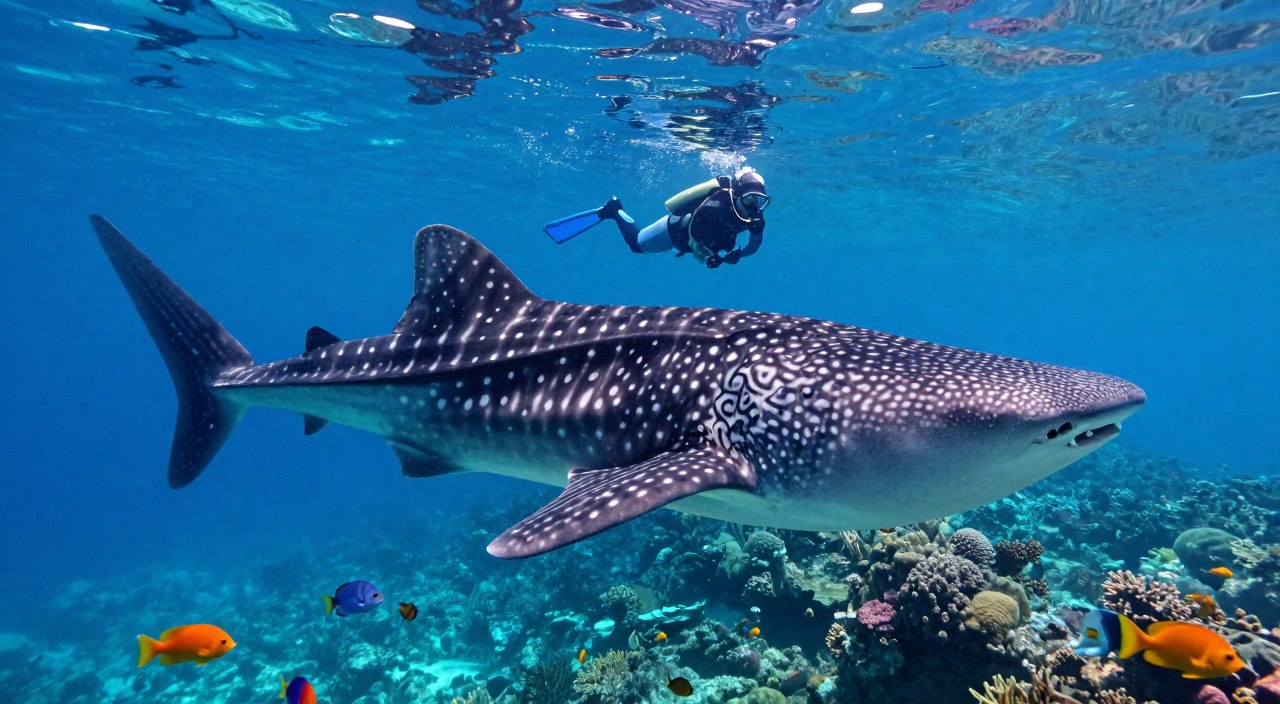
Ever dreamed of floating next to a creature as long as a bus but as gentle as a lamb? This dream comes true in Indonesia. It’s a place where whale sharks gather in spectacular numbers.
The waters here are a top spot for seeing these amazing filter-feeders. From Papua’s rich currents to Java’s famous bays, the sea conditions are perfect.
These gentle giants are actually fish. They swim through clear seas, often near vibrant coral reefs and diverse sea life. Seeing them is truly humbling.
For Aussies, it’s an adventure of a lifetime. It connects you with one of nature’s most amazing sights. It’s a chance to see the ocean’s delicate balance up close.
Key Takeaways
- Indonesia is recognised as a top global hotspot for encountering these magnificent creatures.
- Whale sharks are the world’s largest fish, not whales, and are harmless to humans.
- Specific regions within the Indonesian archipelago offer reliable sightings throughout the year.
- Swimming with them is a safe, regulated, and profoundly awe-inspiring experience.
- Local and national conservation efforts are vital for protecting these gentle giants and their habitats.
- Following responsible encounter guidelines ensures a positive impact for both animals and travellers.
Introduction to Whale Sharks in Indonesia
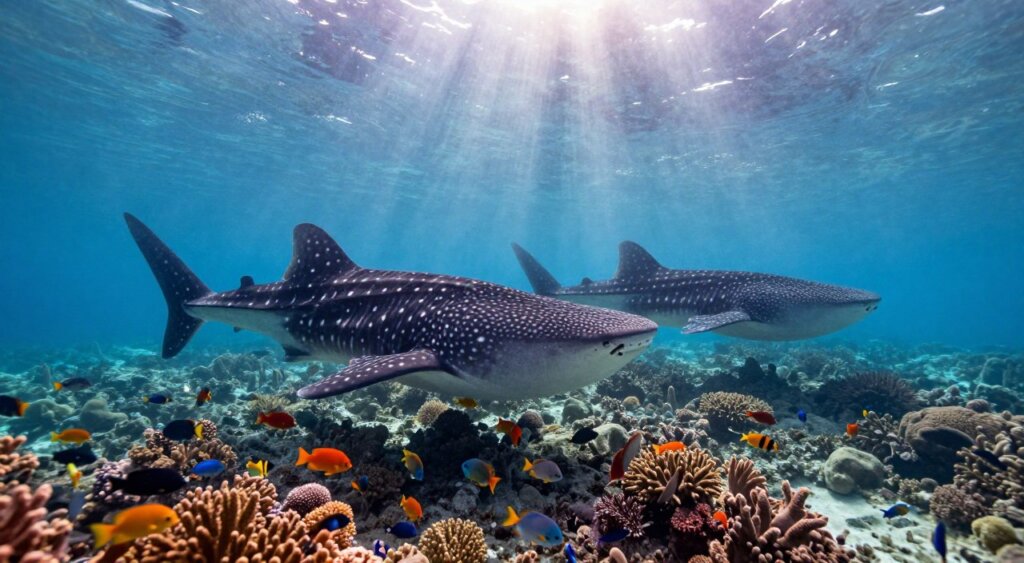
Indonesia is home to a variety of marine life, but whale sharks are truly unique. These gentle giants roam the warm, tropical waters, giving nature lovers unforgettable experiences. Learning about their biology and role in the ecosystem shows why they need our protection.
What Are Whale Sharks?
Whale sharks, known as Rhincodon typus, are the largest fish in the world. They can grow up to 12 metres long, with some reports of even bigger ones. Their broad head and huge mouth, over 1.5 metres wide, make them easily recognisable.
Despite their size, whale sharks are harmless filter-feeders. They swim with their mouths open, catching plankton, small fish, and squid. Their gills have special pads that trap food while letting water go. This way, they can feed without harming humans.
Their skin has unique spots and stripes on a dark grey-blue background. This pattern is like a fingerprint, helping scientists identify them. Whale sharks are slow, often alone or in small groups, and can live for decades.
Importance of Whale Sharks in Marine Ecosystems
Whale sharks are keystone species in Indonesia’s oceans. They eat a lot of plankton, which helps keep the water clear and healthy. This stops plankton blooms that could upset the ocean’s balance.
When they move, they spread nutrients across the sea. This helps feed other marine life. Their travels fertilise different parts of the ocean, supporting food webs.
Healthy whale shark populations mean a healthy ocean. If their numbers drop, it’s a sign of trouble in the marine food chain. So, protecting whale sharks is key to keeping Indonesia’s oceans thriving.
Key Locations for Whale Shark Sightings in Indonesia
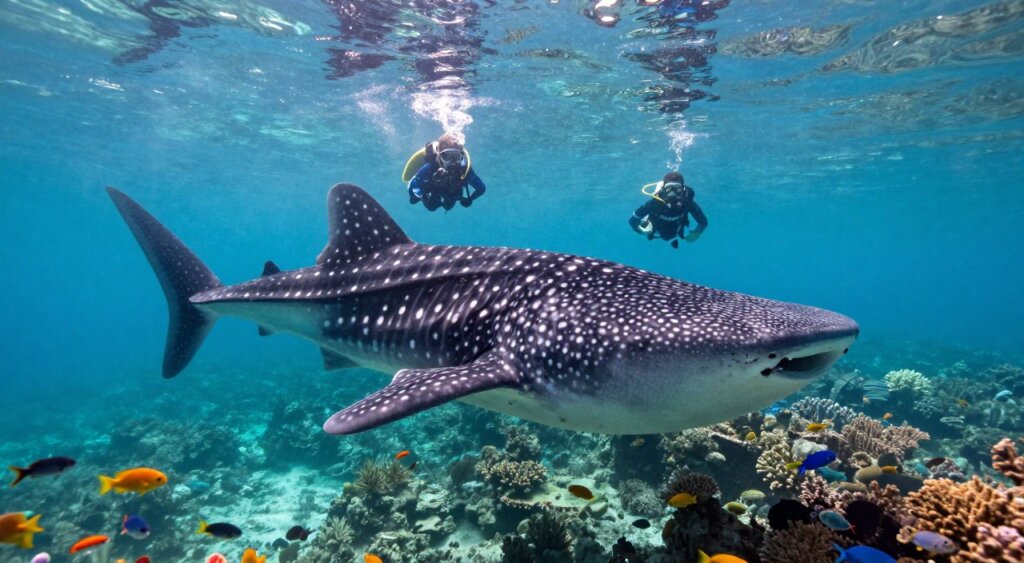
Indonesia’s waters are home to whale sharks, thanks to places like Komodo and West Papua. These areas are among the best places to see these gentle giants. Some spots are better than others for a great whale shark experience.
Komodo National Park
Komodo National Park is known for its dragons and amazing sea life. The strong currents here make it a perfect spot for whale sharks. The best time to see them is from August to October.
Divers often choose liveaboard trips, like the Komodo Aggressor, to explore the park. These trips offer chances to see whale sharks, manta rays, and sea turtles. It’s an exciting place where every dive could be unforgettable.
Cenderawasih Bay
Cenderawasih Bay in West Papua is a unique spot for whale shark sightings. The bay’s bagan fishing platforms attract whale sharks. They come to feed on the fisher’s bycatch.
Here, you can have close and long interactions with whale sharks. Sightings are possible all year, thanks to the bagans. It’s one of the best places in Indonesia for a guaranteed whale shark encounter.
Raja Ampat Islands
Raja Ampat is the heart of the Coral Triangle. Whale shark sightings here are rare but special. They add to the excitement of diving among the world’s most vibrant coral reefs.
When whale sharks do appear, it’s often near seamounts or deep channels. The sight of a whale shark against stunning underwater scenery is unforgettable. Diving in Raja Ampat is always an adventure, even without whale sharks.
Best Times to See Whale Sharks in Indonesia
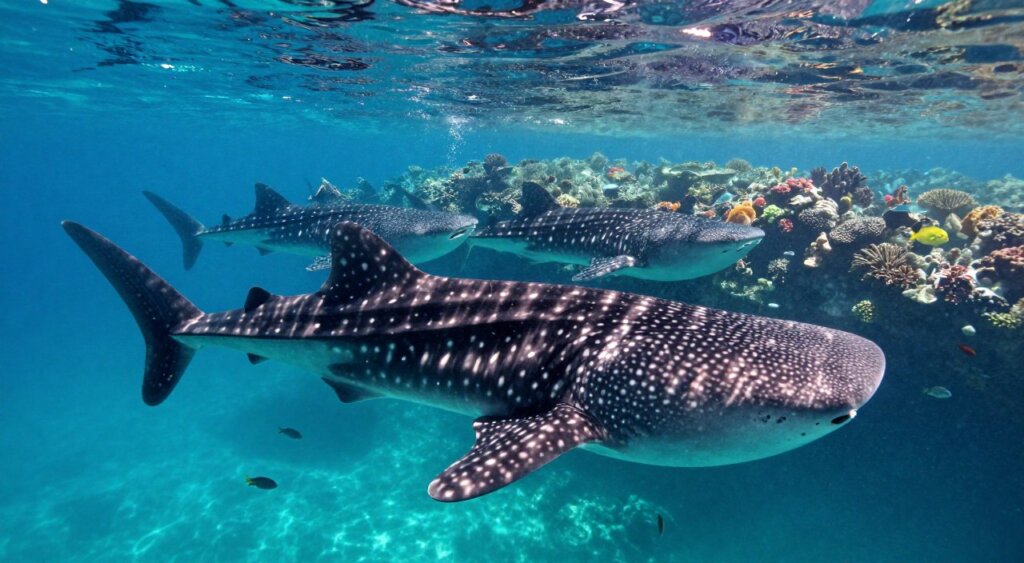
The best time to see whale sharks in Indonesia is not just one date. It’s a period that changes with nature’s cycles. Knowing these cycles is key to a great trip.
Whale sharks eat plankton, following where it’s most plentiful. Water temperature and currents also affect their travels.
Seasonal Patterns of Whale Shark Migration
Whale sharks in Indonesia move in a pattern that changes with the seasons. Their trips are often short, moving between bays and coasts.
The main reason for their migration is the plankton bloom. These blooms happen when nutrient-rich water rises to the surface. This happens seasonally, with different times in western and eastern Indonesia.
In the dry season (April to October), cooler waters bring nutrients, leading to plankton growth. This is when you see more whale sharks in places like Komodo. The wet season (November to March) brings different conditions to areas like Cenderawasih Bay.
Recommended Months for Sightings
Here’s a guide to the best times for whale shark sightings in Indonesia’s top spots. Always check with local operators for the latest information.
| Location | Best Months | Key Factors | Sightings Probability |
|---|---|---|---|
| Komodo National Park | August to November | Strong currents cause upwelling, creating rich plankton patches. Water temps are cooler. | High |
| Cenderawasih Bay | Year-round, peak May to September | Bagans (fishing platforms) attract whale sharks. Calmest sea conditions in mid-year. | Very High |
| Raja Ampat Islands | October to April | Plankton blooms during the wet season. Often seen near coastal cleaning stations. | Moderate to High |
For Komodo National Park, the late dry season to early wet season is best. August to November is when you’re most likely to see them.
Cenderawasih Bay in West Papua is special. Whale sharks are there all year, but May to September has the best weather and visibility.
In Raja Ampat, the wet season from October to April is best. This is when the plankton they eat is most plentiful.
Remember, these are just guidelines. Always check with dive operators a few weeks before your trip for the latest on whale shark sightings.
How to Dive with Whale Sharks Safely
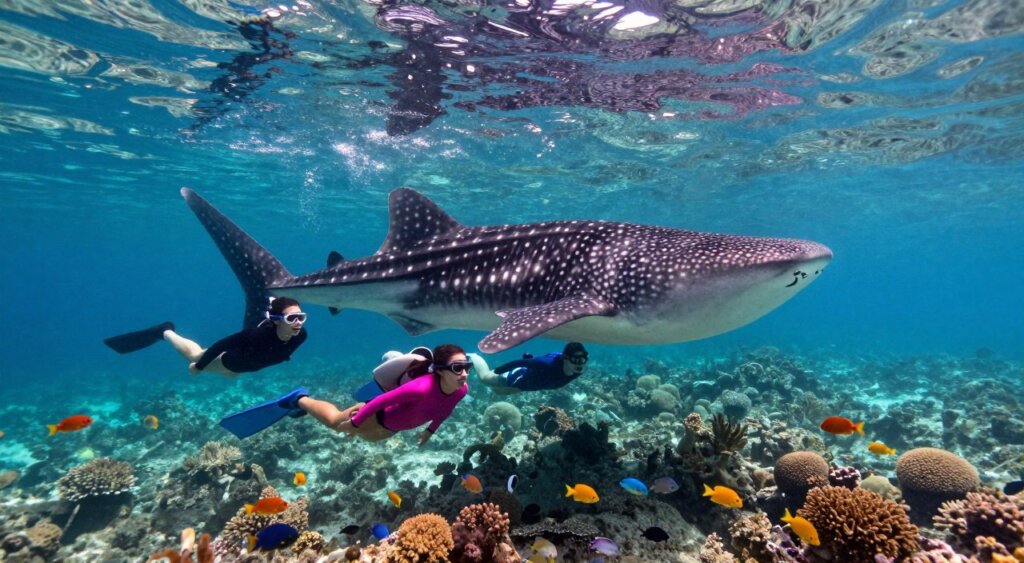
Safety and ethics are key when diving with Indonesia’s whale sharks. This experience is a privilege, not a right. It’s important to approach them correctly to protect both you and the animal. This ensures the long-term health of the whale shark populations.
This guide outlines the core principles of responsible tourism whale sharks indonesia advocates for.
Guidelines for Responsible Interaction
Whale sharks are wild animals, not attractions. Your actions in the water can affect their stress levels and natural behaviour. It’s essential to follow established guidelines for any ethical encounter.
Key rules every diver and snorkeller must follow include:
- Maintain a Safe Distance: Keep at least 3 metres from the shark’s body and 4 metres from its tail. This prevents accidental contact and gives the animal space.
- No Touching, Ever: Touching removes the protective mucus layer on their skin, leaving them vulnerable to infection. It is also illegal in many marine parks.
- Avoid Flash Photography: Sudden bright flashes can startle and disorient whale sharks. Use natural light and adjust your camera settings.
- Master Your Buoyancy: Good buoyancy control stops you from kicking the coral reef or accidentally bumping into the shark. Practice before you go.
- Limit Your Time: Respect other visitors and the shark’s peace. Most operators enforce a maximum interaction time per group.
Remember, you are a guest in their home. Calm, slow movements are less threatening. Never block a whale shark’s path or try to ride on its back. These actions are stressful and can cause the shark to dive deep, ending the encounter for everyone.
Choosing the Right Dive Operators
Your choice of tour company is the single biggest factor in ensuring a safe and ethical experience. Not all operators prioritise animal welfare equally. Doing your homework is a critical part of trip planning.
Look for operators who are transparent about their practices. They should readily provide information on their guide training, safety protocols, and conservation policies. Reputable companies often have partnerships with local research or conservation groups.
Here are key aspects to compare when selecting a provider for diving with whale sharks in Indonesia:
| Operator Feature | What to Look For | Why It Matters |
|---|---|---|
| Certifications & Licences | Valid business licence, association with PADI/SSI, park permits. | Ensures legal operation and adherence to international diving safety standards. |
| Guide Experience & Training | Guides trained in marine life interaction, first aid, and responsible practices. | Knowledgeable guides enforce rules, enhance safety, and provide educational insights. |
| Group Size Policy | Small groups (e.g., 6-8 divers per guide) are clearly stated. | Minimises crowding and stress on the shark, leading to a better experience. |
| Conservation Commitment | Active involvement in clean-ups, data collection, or community projects. | Directly links your tourism dollars to positive conservation outcomes. |
Ask direct questions before you book. How many people will be in the water at once? What is your protocol if a guest breaks the rules? Do you contribute to any whale shark research? A good operator will welcome these questions.
Choosing an operator committed to best practices turns your adventure into a force for good. It supports businesses that put the whale sharks’ wellbeing first, making responsible tourism whale sharks indonesia a reality.
Environmental Threats to Whale Sharks in Indonesia
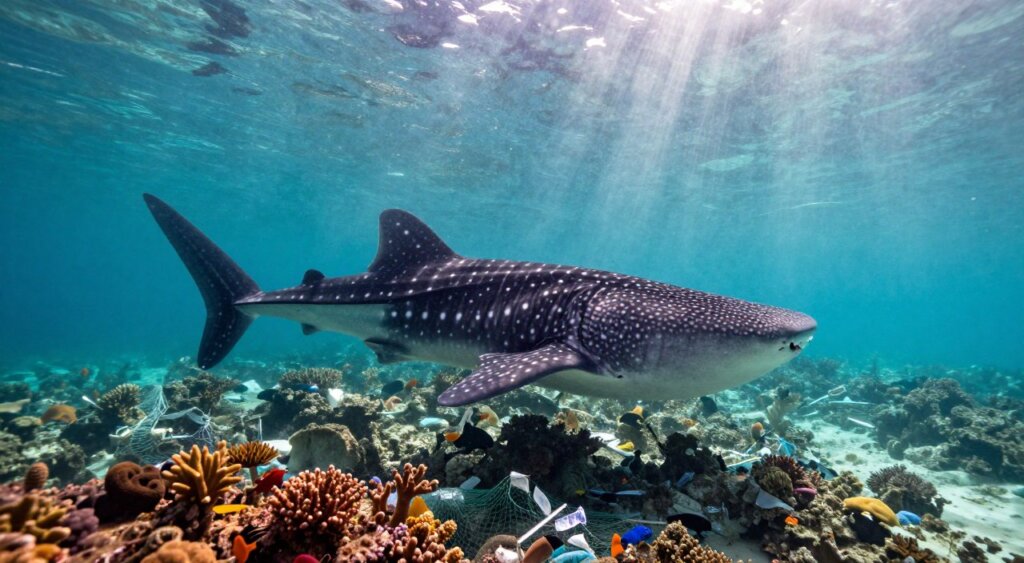
A shadow looms over Indonesia’s seas, threatening the gentle giants. Unsustainable practices and pollution are at play. These filter-feeding leviathans inspire awe but face a precarious future. Human activities pose a complex web of environmental threats to whale shark populations across the archipelago.
Overfishing and Bycatch Concerns
One major danger to whale sharks in Indonesia is overfishing. Despite legal protections, these animals often get caught in fishing gear. They get tangled in massive gillnets and longlines meant for tuna and mackerel.
Their size makes escape impossible. Injuries from nets can be fatal or lead to infections. In some areas, targeted hunting for their fins, meat, and oil is also happening, driven by black markets.
As a marine biologist pointed out,
“The incidental capture of whale sharks is a silent crisis. For every one we see, others may perish unseen in fishing gear, undermining years of conservation work.”
This unsustainable pressure harms breeding populations. It disrupts the marine ecosystems these sharks help maintain.
Pollution and Habitat Destruction
Pollution and habitat destruction also harm whale sharks. Indonesia’s waterways carry vast amounts of plastic waste into the ocean. Whale sharks, which feed by skimming the surface, ingest microplastics and other debris.
This plastic can block their digestive systems or leach toxic chemicals. Chemical runoff from agriculture and coastal development contaminates their feeding grounds. Nutrient pollution can also trigger algal blooms that deplete oxygen in the water.
Critical habitats are being physically altered. Coastal construction, mangrove deforestation, and dredging for ports destroy their sheltered bays and rich feeding areas. Sedimentation from poor land management clouds the water, making it harder for them to find plankton.
These cumulative environmental threats pose a challenging future for the species. Urgent and coordinated action is needed to address these issues, leading us to the vital conservation efforts explored next.
Conservation Efforts for Whale Sharks
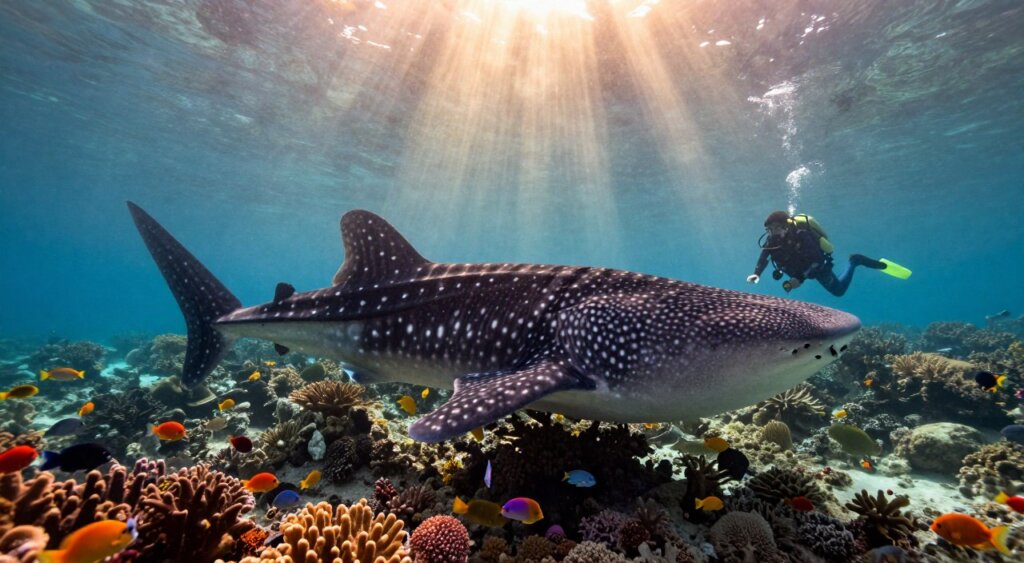
Indonesia is taking big steps to protect whale sharks. They use laws and involve local people. This mix is giving whale sharks a brighter future.
These conservation efforts for whale sharks in Indonesia are key. They aim to fix damaged habitats and lessen threats. The goal is a healthy ocean for all.
National Parks and Marine Reserves
Indonesia has set up many Marine Protected Areas (MPAs) and National Parks. These places are the first line of defence for marine life. They have rules against harmful activities like fishing and mining.
For whale sharks, these areas are safe places to eat and socialise. Places like Komodo National Park and Cenderawasih Bay are not just for tourists. They are also protected by law.
The table below shows important protected zones for whale shark conservation in Indonesia.
| Protected Area | Location | Key Features | Primary Conservation Focus |
|---|---|---|---|
| Komodo National Park | Lesser Sunda Islands | UNESCO site, strong current upwellings, ranger patrols | Biodiversity protection & sustainable tourism |
| Cenderawasih Bay National Park | West Papua | Bagans (fishing platforms), year-round shark presence | Whale shark research & community-based management |
| Raja Ampat Islands | West Papua | World’s richest marine biodiversity, no-take zones | Ecosystem-wide protection & manta ray safeguarding |
| Wakatobi National Park | Southeast Sulawesi | Extensive coral reefs, traditional sasi law | Coral reef health & customary law enforcement |
Management in these parks is getting better. Rangers and scientists work together. They use patrols and studies to protect the sharks.
Community Involvement in Conservation
Protecting whale sharks needs the help of local people. Modern whale shark conservation works with communities. This builds a sense of responsibility.
In places like Cenderawasih Bay, former fishermen now help protect sharks. They monitor shark numbers and behaviour. This helps scientists and gives them a job.
Photo-identification programs are a great example of citizen science. People can submit photos of whale sharks. Researchers use these to track sharks. It’s a simple way to help.
Many villages now run eco-tourism cooperatives. The money from tours helps schools and health clinics. This shows how protecting sharks helps communities.
These local programs are the heart of success. They make sure conservation efforts for whale sharks in Indonesia have community support. The future of sharks and people is linked.
The Role of Local Communities in Whale Shark Conservation
Whale sharks in Indonesian waters have big supporters in local communities. These communities have lived by the sea for ages. Their lives and futures depend on the ocean’s health, making them key in conservation.
This new approach to protecting whale sharks is changing how they are saved in the archipelago.
Sustainable Tourism Practices
Sustainable tourism models are at the heart of community involvement. They offer economic alternatives to fishing, reducing pressure on marine resources like whale sharks. Ecotourism whale shark indonesia initiatives help local people benefit from these gentle giants.
These community-run operations focus on:
- Local Guide Networks: Training community members as certified dive guides and snorkel spotters for safe wildlife interactions.
- Homestays and Community Lodges: Providing tourists with authentic accommodation, with revenue staying in the village for local projects.
- Visitor Management Systems: Communities manage boat numbers and visitor behaviour at popular sites, preventing overcrowding and stress to the animals.
This approach gives a clear financial reason for preservation. When a whale shark is more valuable through tourism than other means, the community protects it.
Educational Initiatives
Long-term protection needs a strong cultural value for marine life. Local educational programs are incredibly powerful. They are designed and delivered by community leaders to foster stewardship from a young age.
In places like Cenderawasih Bay and Komodo, schools teach marine conservation. Kids learn about whale shark biology, their ecosystem role, and threats. This builds pride and a personal connection to the environment.
Community workshops engage fishers and adults. They discuss the economic benefits of ecotourism whale shark indonesia and the ecological importance of healthy shark populations. Seeing respected community members advocate for protection changes attitudes more than external messages.
These educational efforts make conservation a shared responsibility and a source of local pride. They plant the seeds for the next generation of Indonesian ocean guardians.
What to Expect During a Whale Shark Encounter
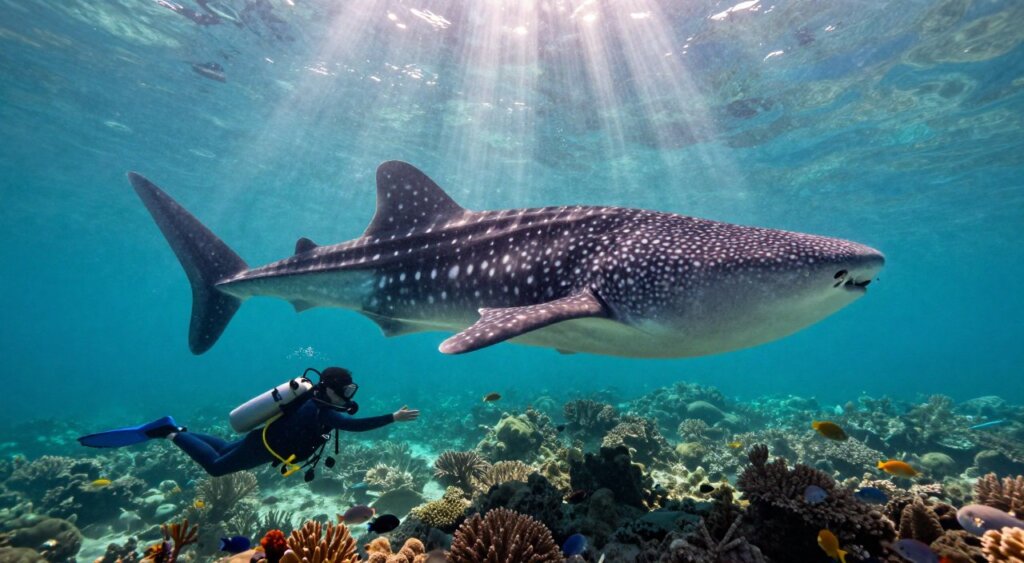
Stepping into the water and seeing a whale shark is magical. These gentle giants often swim beneath fishing platforms in places like Cenderawasih Bay. The water is full of life, with small fish and curious trevally adding to the excitement.
This experience is all about feeling the scale and calm. The first rush of excitement fades into a calm focus as you watch the shark move.
Typical Behaviour and Feeding Habits
Knowing how whale sharks behave makes the encounter even more special. They are placid and deliberate in their movements. They feed by swimming with their mouths open, catching plankton and small fish.
When you see them, they might be making slow loops near the surface. This is how they feed. They usually ignore snorkelers or divers, acting as if we’re not there.
It’s important not to chase or touch them. Let the shark set the pace and distance. Their size and grace are captivating from a few metres away.
How to Capture Memorable Photos
Getting the perfect photo takes preparation and patience. The goal is to capture the moment without disturbing the shark or your experience.
Set your camera before you go in the water. Fumbling with settings while a shark approaches is a missed chance. Use a fast shutter speed and medium aperture to keep everything in focus.
Try to include context in your photos. A shot of the shark’s head is great, but a photo of its full length against the sunlit surface is even better. The best photos show natural behaviour.
Here is a quick reference table for camera settings under different conditions:
| Condition | Aperture (f-stop) | Shutter Speed | ISO | Helpful Notes |
|---|---|---|---|---|
| Bright Sunlight, Near Surface | f/8 – f/11 | 1/640s or faster | 100 – 200 | Use polarising filter to reduce glare on water surface. |
| Overcast or Cloudy Day | f/5.6 – f/8 | 1/500s | 200 – 400 | Open aperture to let in more light; watch for noise at higher ISO. |
| Deeper Water (5m+) | f/4 – f/5.6 | 1/250s minimum | 400 – 800 | Use underwater strobes or video lights for colour and detail. |
Remember, the best memories are the feelings of wonder you take home. Enjoy the privilege of sharing the water with the ocean’s largest fish.
Tour Operators Specialising in Whale Shark Tours
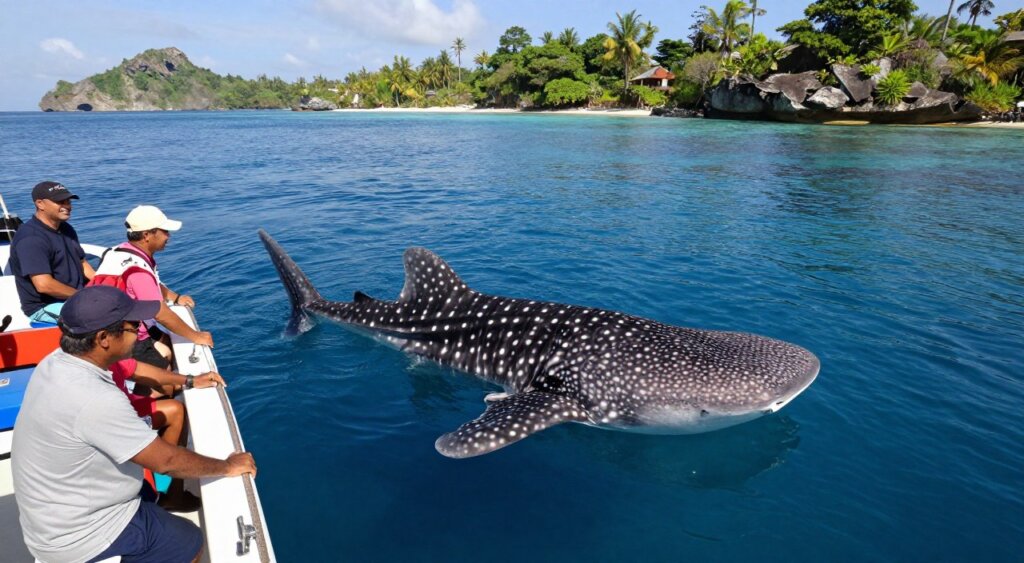
Choosing a whale shark tour operator is key to a safe and memorable trip. A good operator offers expert guidance, cares for marine conservation, and provides great value. Your choice affects your experience and the ecosystem’s health.
Before picking a company, know what you’re looking for. A top operator excels in three main areas.
- Safety Record: Look for current licenses, first-aid trained staff, and well-maintained gear. Ask about their emergency plans.
- Eco-Credentials: Seek operators with eco-certifications or clear eco-policies. They should follow no-touch rules and support local conservation.
- Guide Expertise: Ask about the guides’ experience. The best guides know a lot about whale shark behaviour and where to find them.
Top Recommendations for Tour Companies
Indonesian whale shark tours come in two types: liveaboards and day trips. Liveaboards, like the Komodo Aggressor, go on multi-day trips to places like Komodo National Park. They offer lots of time on the water and many dive chances.
For those in Labuan Bajo or Nabire, day trips are great. Companies like Dive Indonesia and Wicked Diving run tours that are good for the environment. They keep groups small and teach how to interact with whales responsibly.
Choosing a liveaboard like the Komodo Aggressor lets you dive deep into the marine world. It often means more chances to see whales.
Comparing Tour Packages and Prices
Don’t just look at the price. A cheaper tour might miss important things, making it less valuable. Always compare what’s included.
Check the number of dives or snorkelling sessions, accommodation, meals, and transfers. Also, see if marine park fees and equipment are included.
| Tour Type | Operator Example | Typical Inclusions | Approx. Price Range (AUD) |
|---|---|---|---|
| Liveaboard (5-7 days) | Komodo Aggressor | All dives, full board, cabin accommodation, guide, park fees | $2,500 – $4,000 |
| Multi-Day Resort Package | Resort-based operators in Raja Ampat | Daily boat trips, resort stay, meals, 2-3 dives/day | $1,800 – $3,000 |
| Single Day Trip | Local operators in Cenderawasih Bay | Boat transport, guide, lunch, snorkel gear, 1-2 sessions | $150 – $300 |
The best value isn’t always the cheapest. It’s the tour that’s safe, ethical, and amazing. Choosing a reputable operator supports conservation and gives you unforgettable memories.
The Cultural Significance of Whale Sharks in Indonesia
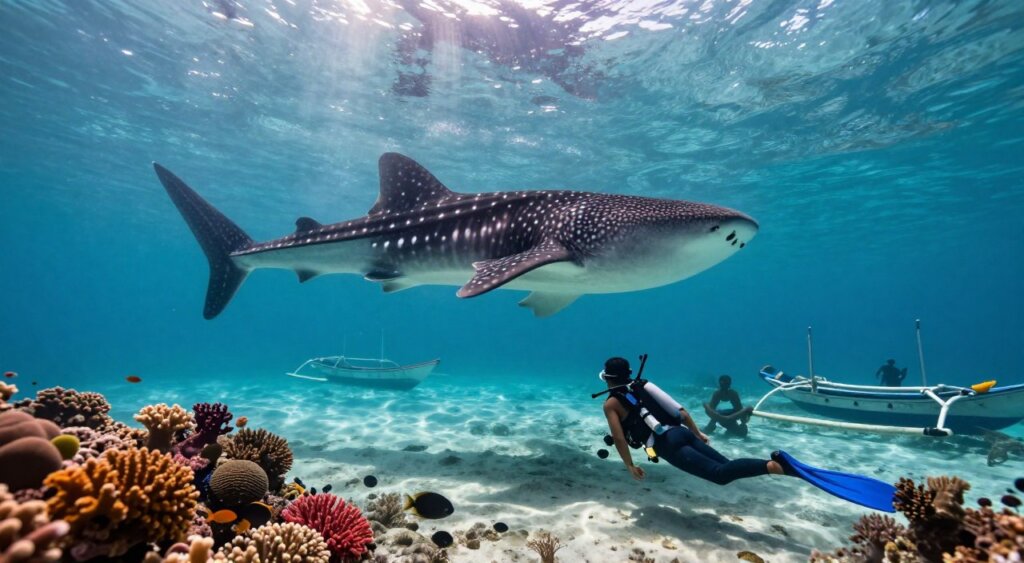
In many Indonesian islands, the whale shark is more than a huge sea creature. It’s a figure deeply rooted in local traditions. Coastal communities have always looked at these gentle giants with awe, respect, and a spiritual bond. This bond adds a special meaning to any encounter with them.
Local Folklore and Myths
Indigenous stories tell of the whale shark as a kind guardian. In Papua, for example, fishermen talk about the “gurano bintang” or star shark. They believe these sharks are the spirits of their ancestors, guiding lost boats to safety during storms.
In Selayar Island, South Sulawesi, a different story is told. Fishermen believe whale sharks protect pregnant women. Seeing one is seen as a good sign, promising safe childbirth and a prosperous future for the community. These stories turn a sea creature into a symbol of safety and continuity.
In other areas, whale sharks are seen as messengers. Some communities think they signal an abundance of fish. Others see them as warnings to protect the sea. This folklore has helped protect the environment for a long time, even before modern conservation efforts.
Whale Sharks in Traditional Practices
Whale sharks are also part of local customs and rules. In the past, some communities used whale shark parts in rituals. But now, this is rare due to conservation efforts and laws.
Today, a common tradition is to respect whale sharks. In many fishing villages, harming one is seen as bad luck. This taboo helps protect the sharks and their habitats. This cultural rule has helped keep local shark populations alive.
Now, the whale shark’s importance is growing. In places like Botubarani, Gorontalo, whale sharks are celebrated with festivals. These events mix old traditions with new ecotourism, teaching young people about their heritage. Whale shark images are also used in local art and crafts, keeping its importance alive.
| Region | Local Name | Mythical Role | Key Belief or Practice |
|---|---|---|---|
| Cenderawasih Bay, Papua | Gurano Bintang | Ancestral Spirit | Believed to guide fishermen safely home; considered family. |
| Selayar Islands, Sulawesi | Hiu Bodoh (Gentle Shark) | Protector of Families | Sighting is a good omen for pregnant women and childbirth. |
| Talise, North Sulawesi | Hiu Naga (Dragon Shark) | Messenger of Abundance | Its arrival signals a coming bounty of fish for the village. |
| Kwandang, Gorontalo | Hiu Tutul | Community Guardian | Strict cultural taboo against harming it; central to local festivals. |
Conclusion: Embrace the Adventure of Whale Shark Watching in Indonesia
Seeing a whale shark in Indonesia’s clear waters is unforgettable. Places like Komodo National Park and Cenderawasih Bay are top spots for this experience.
Your trip helps protect whale sharks. By choosing eco-friendly tours, you support their conservation. Your visit helps protect these gentle giants and their homes.
It’s important to follow rules for safe and respectful viewing. This way, you and the whale sharks stay safe. It’s key for their survival in Indonesian waters.
Start planning to see Indonesia’s whale sharks. Join a community that cares for our oceans. Your choice helps ensure these amazing creatures keep thriving.