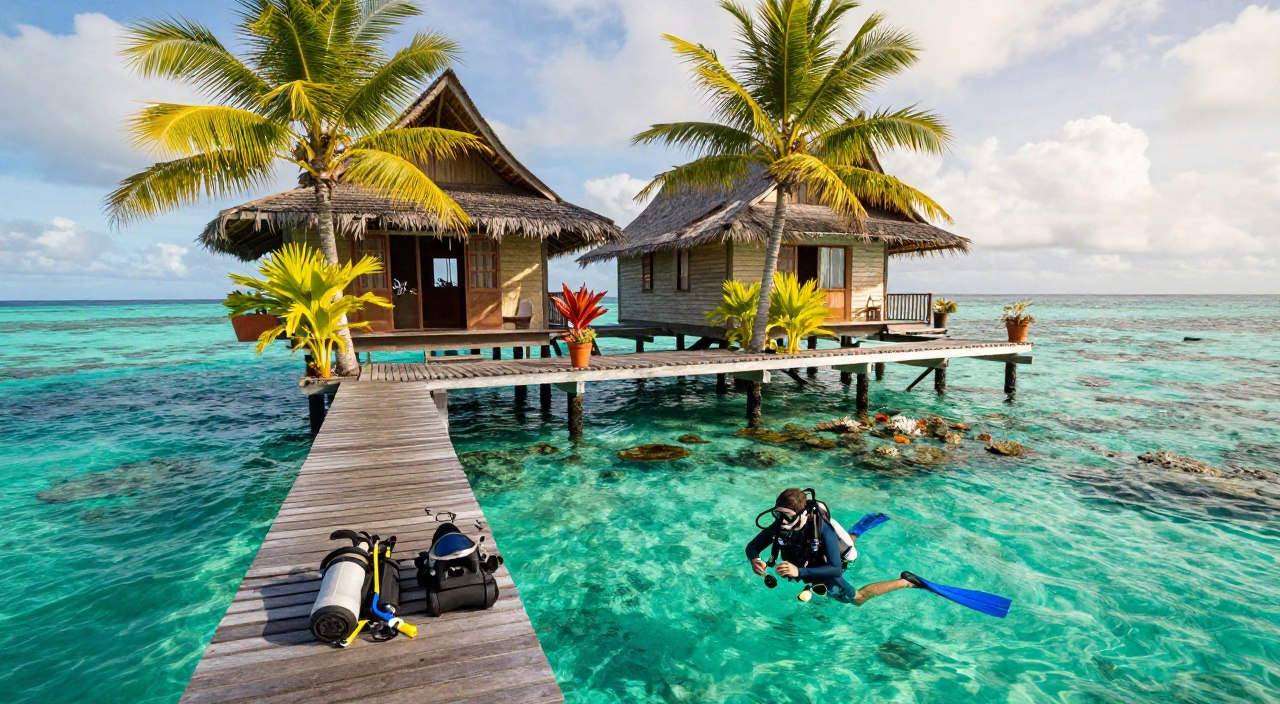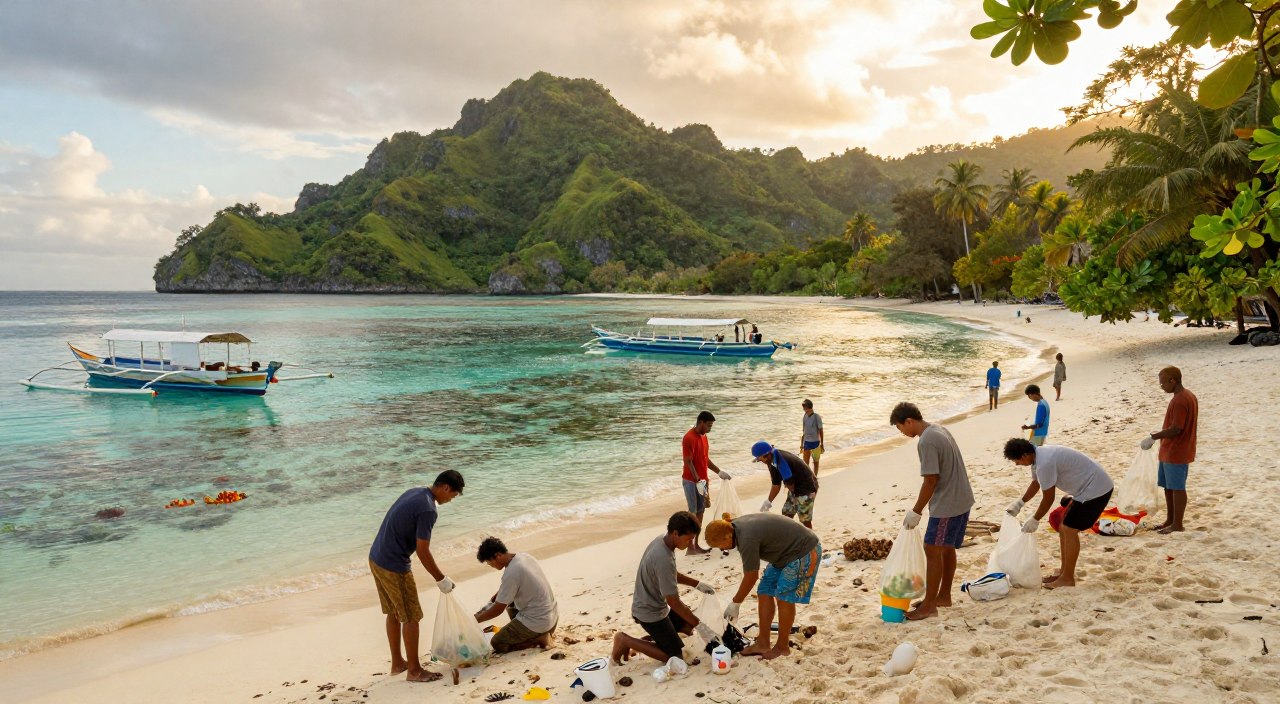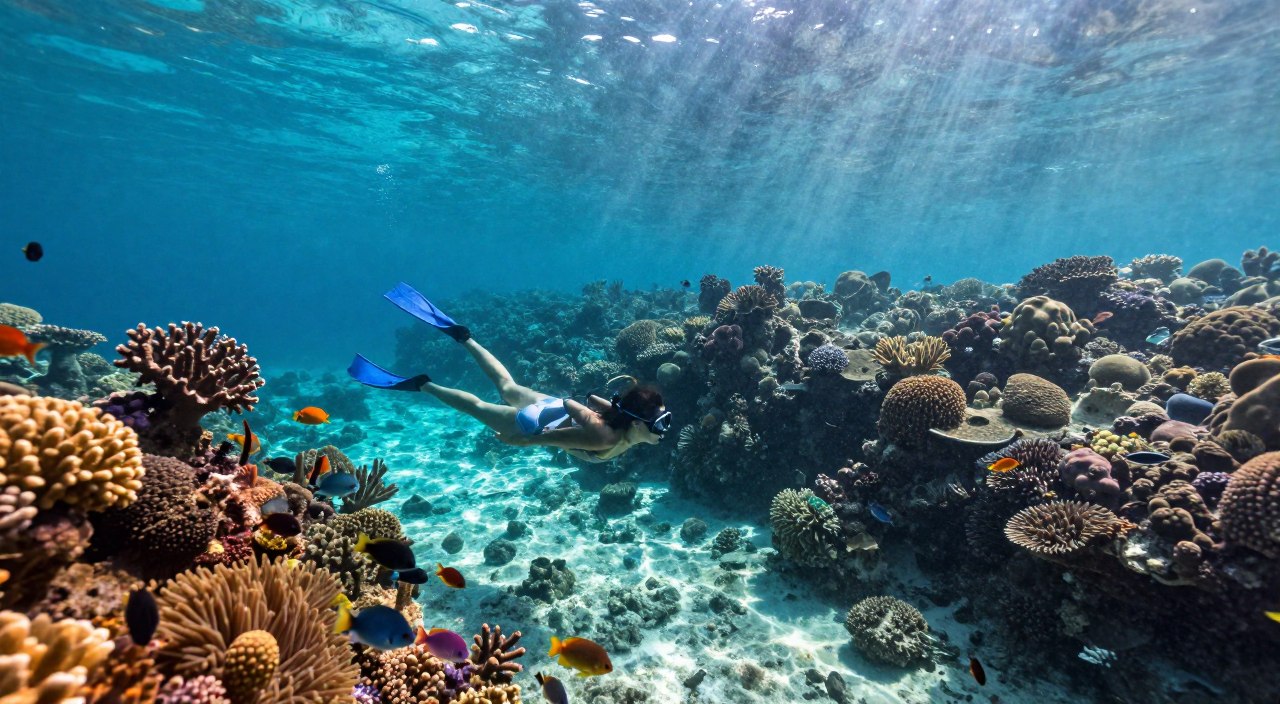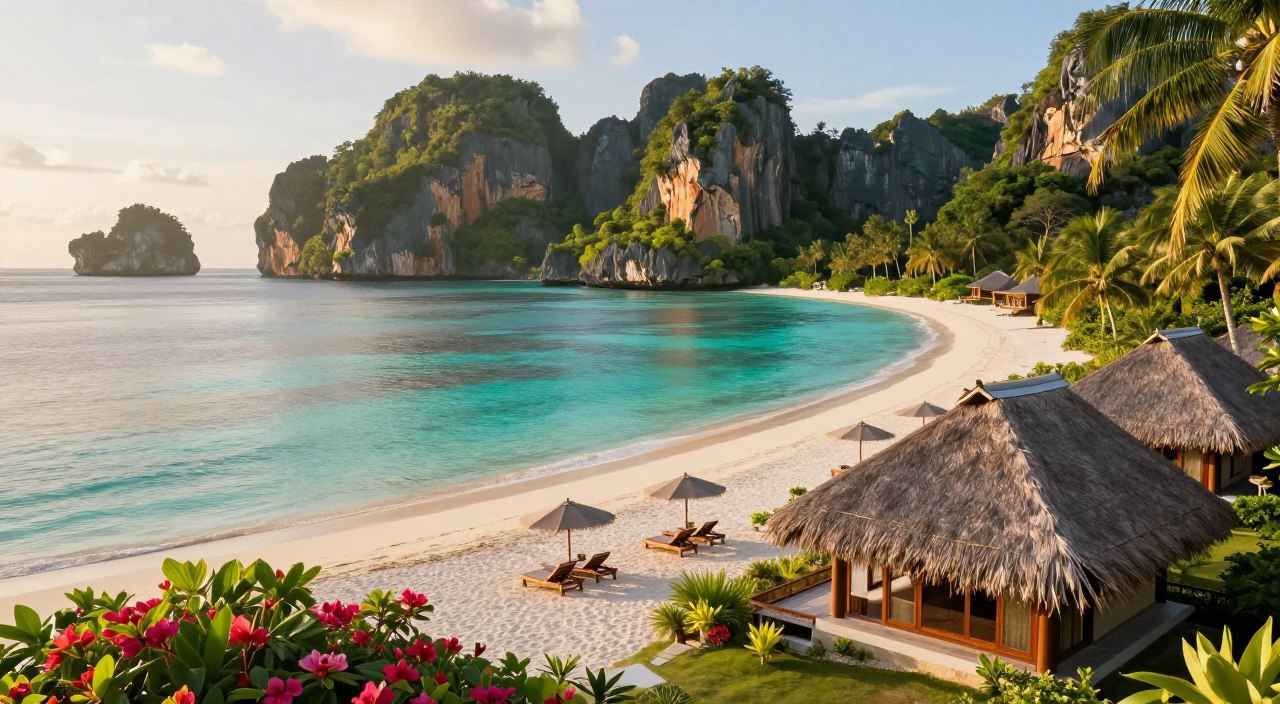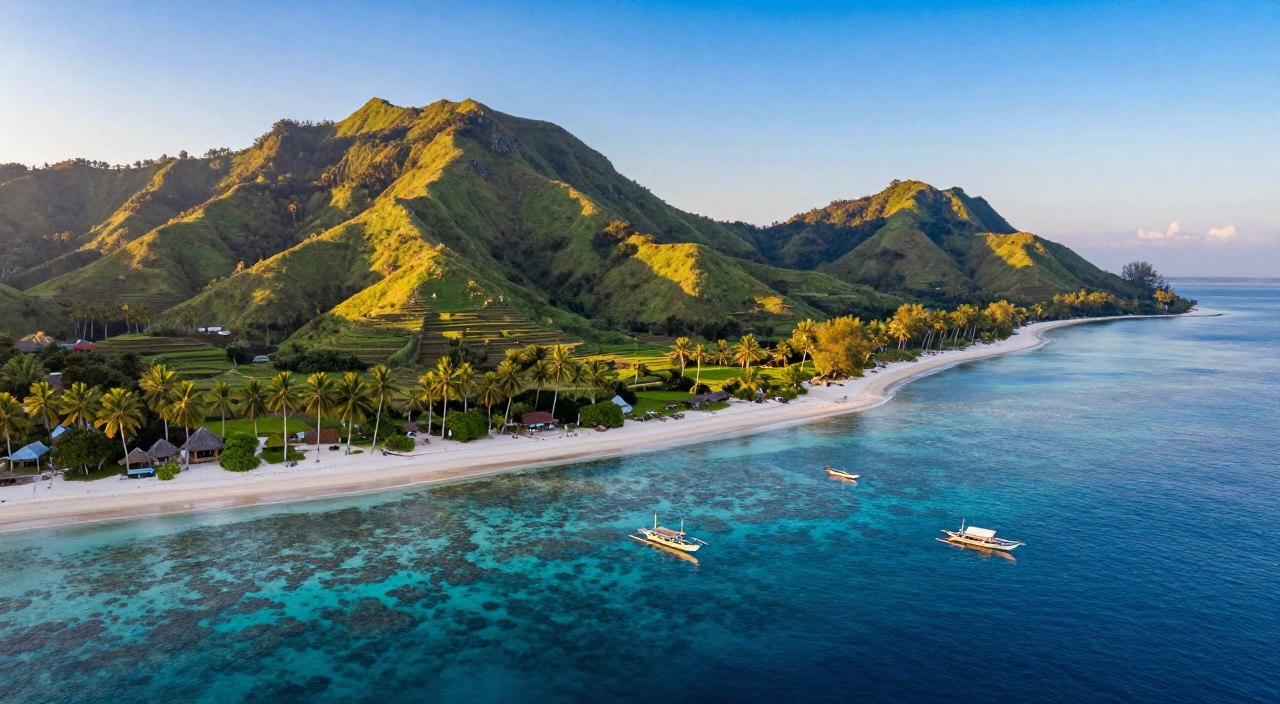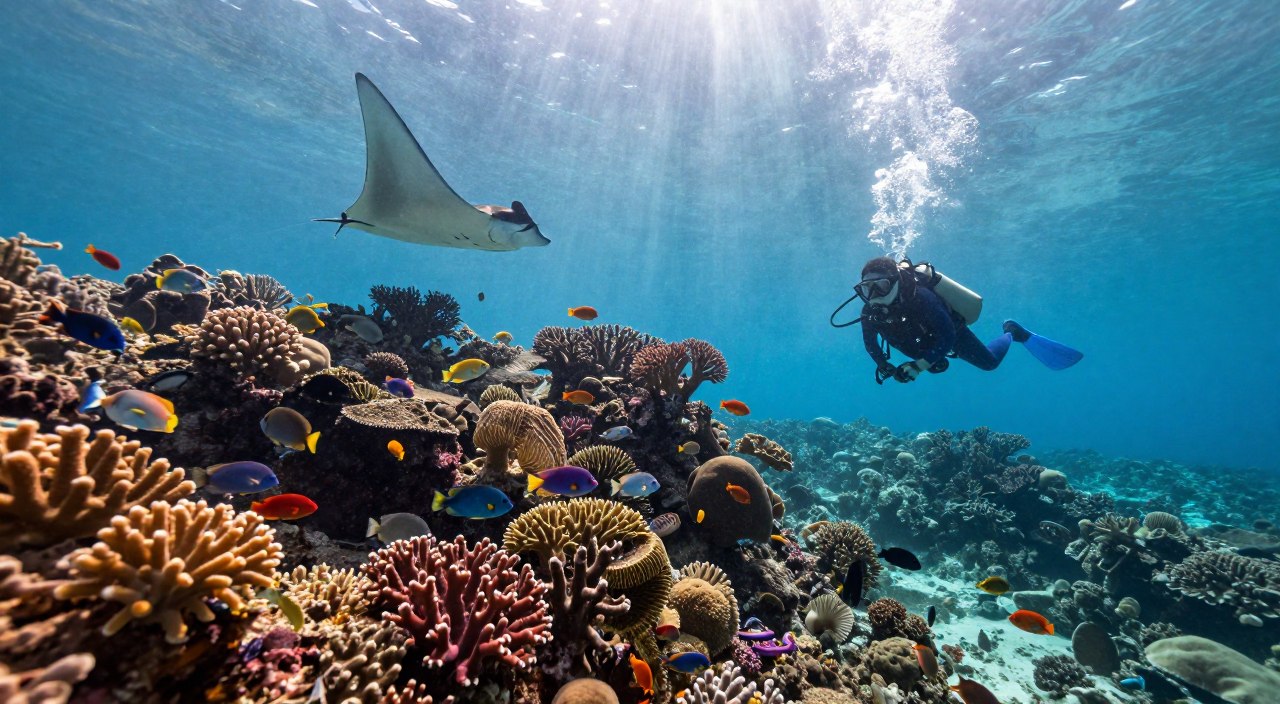
Imagine diving into a world so warm, you might not need a wetsuit. A dive safari Raja Ampat lets you do just that. It takes you to the heart of the world’s most famous marine paradise.
This Indonesian archipelago is known worldwide for its incredible variety. You’ll see lots of fish, amazing macro life, and stunning coral walls.
There’s also unique muck and mangrove sites to explore. The water is always around 31°C, so you might not need a wetsuit.
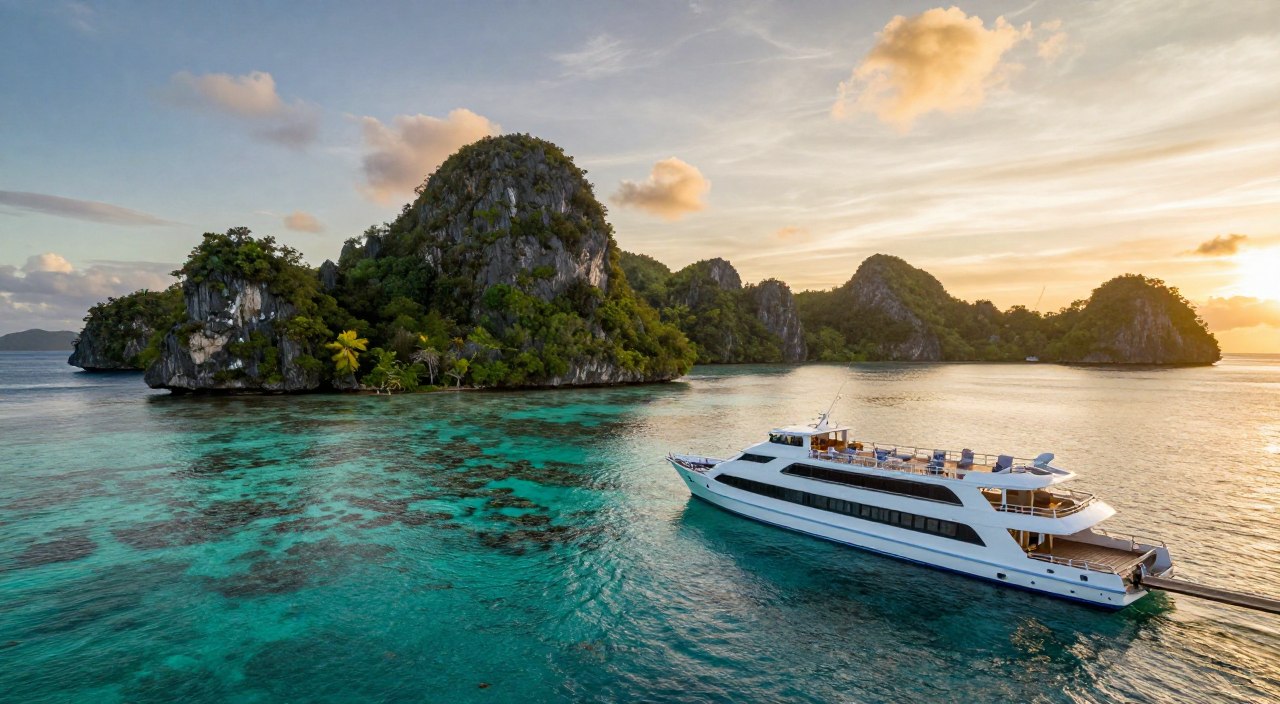
But it’s not just the underwater world that’s spectacular. The islands and limestone formations above the water are breathtaking. The best way to see it all is on an extended liveaboard journey.
Key Takeaways
- Raja Ampat is a world-famous destination for its incredible marine biodiversity.
- The region offers diverse underwater environments, from coral reefs to muck diving.
- Water temperatures are consistently warm, often making a wetsuit unnecessary.
- The topside scenery of the archipelago is remarkably beautiful.
- A dive safari, or liveaboard trip, is the best way to explore remote areas thoroughly.
- The experience combines large pelagic fish sightings with excellent macro life.
- It represents a complete adventure for both underwater explorers and nature lovers.
Overview of Raja Ampat
For Australian divers, Raja Ampat in West Papua is a top-notch underwater adventure spot. It’s known as the heart of marine life diversity. The scuba diving raja ampat community worldwide holds it in high esteem.
Knowing its geography and history makes your trip more than just a dive. It turns into an exploration of nature’s last great wilderness.
Location and Geography
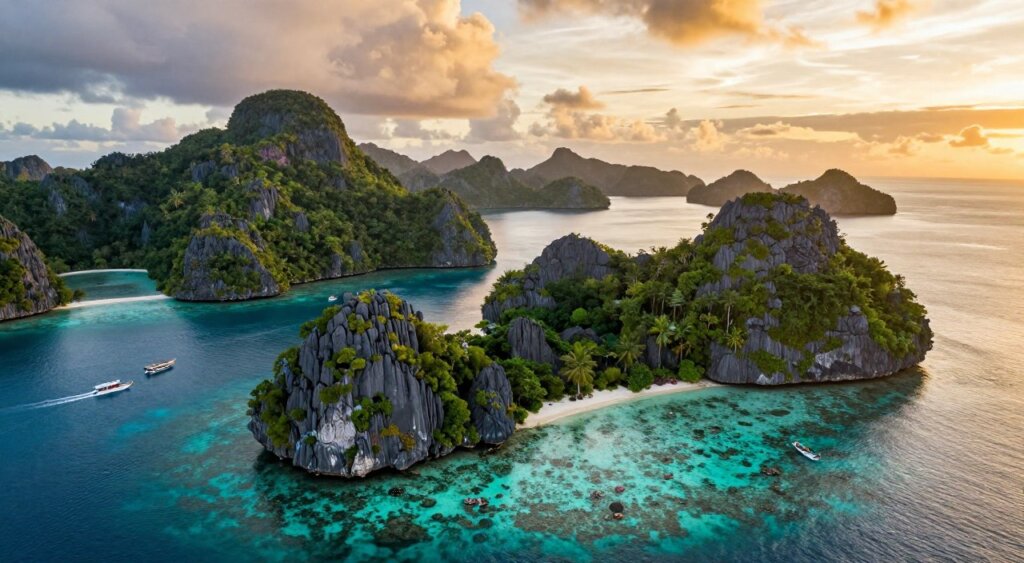
Raja Ampat is in Indonesia’s West Papua province, near New Guinea’s northwest tip. It’s called “Four Kings” because of its four main islands: Waigeo, Batanta, Salawati, and Misool.
But there’s more. Over 1,500 smaller islands, cays, and shoals make up the region. This creates a vast coastline of limestone karsts and hidden lagoons.
At the heart of the Coral Triangle, it’s the global epicentre of marine biodiversity. The warm, nutrient-rich waters support more marine species than anywhere else.
For Australians, Raja Ampat is a unique spot. Its vast size means dive sites are uncrowded and untouched. You’re diving at the source of coral reefs worldwide.
Historical Significance
The name “Four Kings” comes from a myth about a woman and seven eggs. Four eggs hatched into kings who ruled the major islands. This myth is part of the local culture.
For centuries, indigenous Papuan communities lived with the sea. Their traditions and customs are tied to the ocean. European explorers and spice traders later visited, adding to its history.
Marine scientists later discovered its incredible biodiversity. This led to conservation efforts. International groups and the Indonesian government worked to protect it.
This effort made Raja Ampat a top scuba diving raja ampat destination. Marine protected areas were set up to keep the reefs healthy. Today, it’s a model for sustainable tourism, where diving supports the environment and local communities.
Raja Ampat’s history is a tale of natural wonder recognised and preserved. When you dive here, you become part of this legacy.
Why Choose a Dive Safari?
1. First Sentence Variations & Selection: * Variation 1: “While day trips offer a glimpse, a liveaboard dive safari in Raja Ampat unlocks the region’s full, untamed beauty.”
* Variation 2: “For divers seeking more than just a few dives, a liveaboard safari is the best way to see Raja Ampat’s underwater wonders.”
* Variation 3: “Choosing a dive safari over standard day trips makes a good diving holiday into an epic adventure.”
* Variation 4: “The magic of Raja Ampat’s remote reefs is best seen from a liveaboard vessel’s deck.”
* Variation 5: “A liveaboard dive trip is more than a choice; it’s a deep dive into the region’s secrets.”
Choice: I will use Variation 1. It contrasts safaris with day trips, uses active language, and highlights the region’s beauty. It sets a strong tone for the section.
2. Coverage of
: The section will argue for liveaboard safaris over day trips. It will include:
* An introductory paragraph under H2.
* H3: Benefits of Diving in Groups – covering camaraderie, shared experiences, and logistical advantages for accessing remote sites.
* H3: Expert Guidance and Safety – emphasising experienced guides, intimate site knowledge, and safety equipment (specifically Nautilus Lifeline GPS), mentioning local & international crew.
* Integration of the keyword “liveaboard dive trips” naturally.
* A table comparing Safari vs. Day Trip features.
3. Brand Voice: Not specified, so will maintain a consistent, informational, and engaging tone suitable for Australian divers.
4. Formatting: Will use for key advantages, for nuanced points. A comparative table (Safari vs. Day Trip) will be created with 3 columns and 4 rows of meaningful data.
5. Final HTML Content: Will be structured with H2, intro paragraph, H3, content, image placement, H3, content, table, concluding thoughts.
6. Keyword Matrix: Primary keyword: “liveaboard dive trips”. Target word count ~400-500. Max repeats: (500/100)*2 = ~10. Will use variations (liveaboard, safari, liveaboard vessel) and ensure natural integration.
7. Readability: Will write in Australian English. Use short paragraphs (max 3-4 sentences). Aim for Flesch score 60-70 (8th/9th grade). Language will be clear and direct.
8. Structure Adherence: Will write H2: Why Choose a Dive Safari?, followed by an introductory paragraph, then H3: Benefits of Diving in Groups, then H3: Expert Guidance and Safety. The provided image will be placed centrally in a relevant spot, likely after the first H3 content.
9. Image Placement: The image `https://seowriting.ai/32_6.png` will be placed after the first H3 subsection, with alt text focusing on “dive safari group” or “liveaboard diving” to align with the section’s theme.
I need to create section 3 of the article based on the provided instructions.
First, I need to analyze the requirements and plan my content in the
The Rich Marine Biodiversity
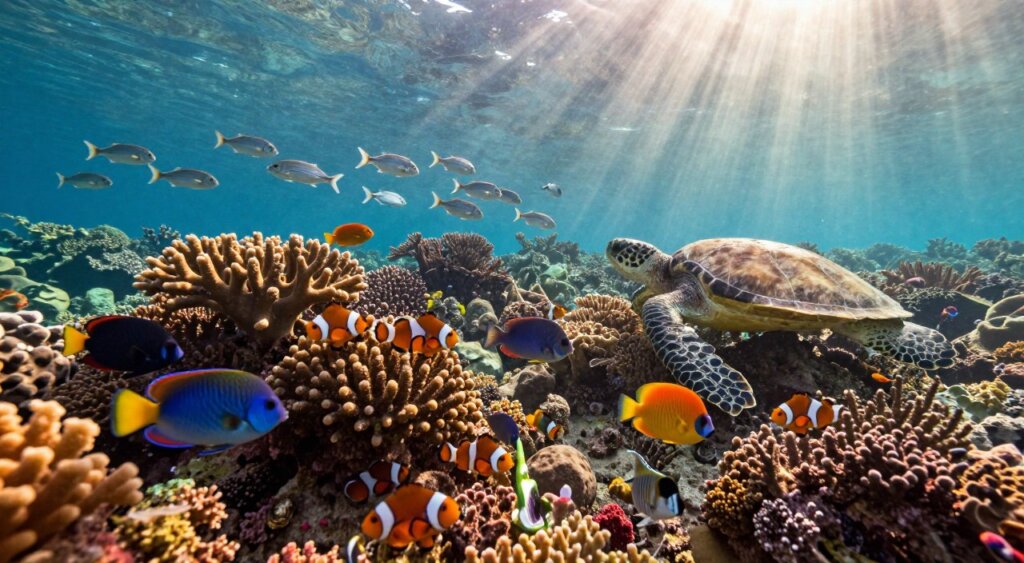
The magic of Raja Ampat dive safaris lies in its incredible marine life. It’s the heart of the Coral Triangle, with the most marine biodiversity in Raja Ampat. Your dive log will be filled with amazing fish, macro life, and stunning coral reefs.
Coral Reefs of Raja Ampat
The coral reefs here are the foundation of this vibrant ecosystem. They are among the healthiest and most diverse on Earth. You’ll see vast gardens of hard corals, like staghorn and plate corals, building massive structures.
Stunning soft corals add to the beauty, with colours of purple, red, and orange. They sway gently in the current, giving the reefs a flowing texture. This creates a complex habitat for countless species.
The coral gardens’ resilience and *density* make diving here special. They form the living backbone of the underwater world.
Notable Marine Species
This rich habitat supports an incredible cast of marine characters. Divers can expect thrilling encounters with larger pelagic species and fascinating small critters.
Iconic sightings often include:
- Schooling Fish: Massive schools of barracuda, trevally, and snapper create moving walls of silver.
- Reef Sharks & Rays: White-tip and black-tip reef sharks are common, while graceful manta rays and eagle rays glide past.
- Wobbegongs & Turtles: The cryptic wobbegong shark hides on the reef, and several turtle species are frequent visitors.
For macro enthusiasts, the muck diving is excellent. Look for rare finds like the elusive walking shark, ornate ghost pipefish, and a rainbow of nudibranchs. This incredible mix of big, small, and rare life perfectly defines the unique marine biodiversity in Raja Ampat.
Best Dive Sites in Raja Ampat
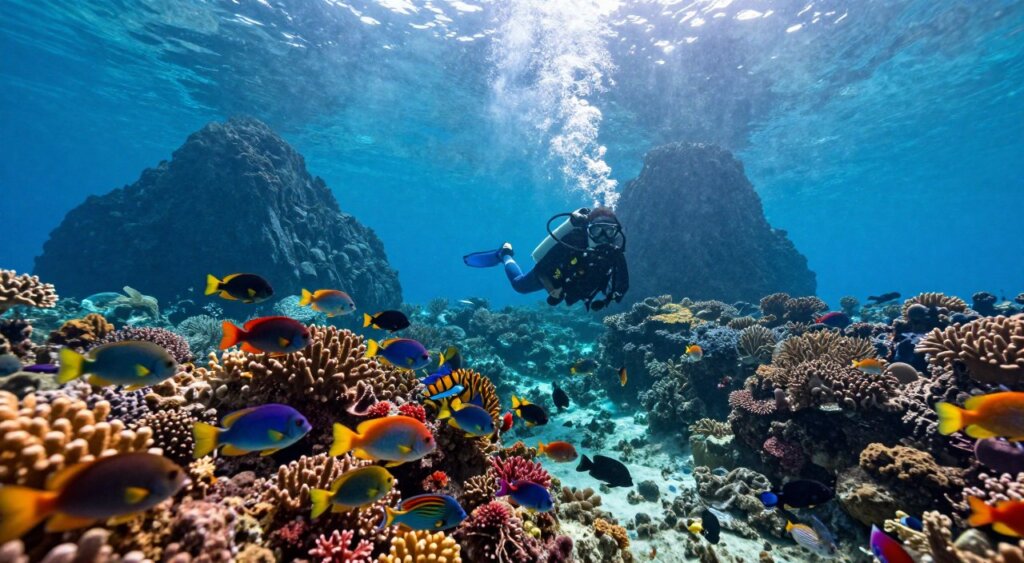
Exploring Raja Ampat’s top dive spots takes you to places known for stunning sea life and underwater views. The archipelago has hundreds of dive sites, but some stand out for their unique experiences and marine encounters.
Cape Kri
Cape Kri is famous worldwide for its exciting marine life. It’s located off Kri Island and is known for its fast-moving fish and strong currents. Divers often see over 300 species in one dive, making it a global record holder.
The dive site has a sloping reef that drops deep into the blue. It’s a thrilling drift dive with a wide variety of creatures.
- Legendary Fish Density: Giant trevally, barracuda, and reef sharks are common here.
- Current Dynamics: The strong currents attract pelagic species, making it exciting for experienced divers.
- Shallow Coral Gardens: The reef top has stunning coral formations for safety stops and macro photography.
This spot shows why Raja Ampat is a top dive destination for those who love action underwater.
Boo Windows
Boo Windows offers a unique dive experience with its amazing underwater landscape. It has a lagoon system with coral-covered passageways and natural ‘windows’ into the deep blue.
Divers swim through these openings, enjoying a magical light and shadow show. It’s calmer than Cape Kri, making it good for divers of all levels.
- Architectural Wonder: The swim-throughs and caverns are filled with vibrant soft corals, sea fans, and sponges.
- Blue Water Vistas: The ‘windows’ offer stunning views of the open ocean, where eagle rays and turtles swim by.
- Protected Lagoon: The enclosed area is safe from currents, allowing for a relaxed exploration of the coral structures.
Boo Windows shows the diverse beauty of Raja Ampat’s underwater world. It proves that not all the best dives are about speed.
Planning Your Dive Safari Trip
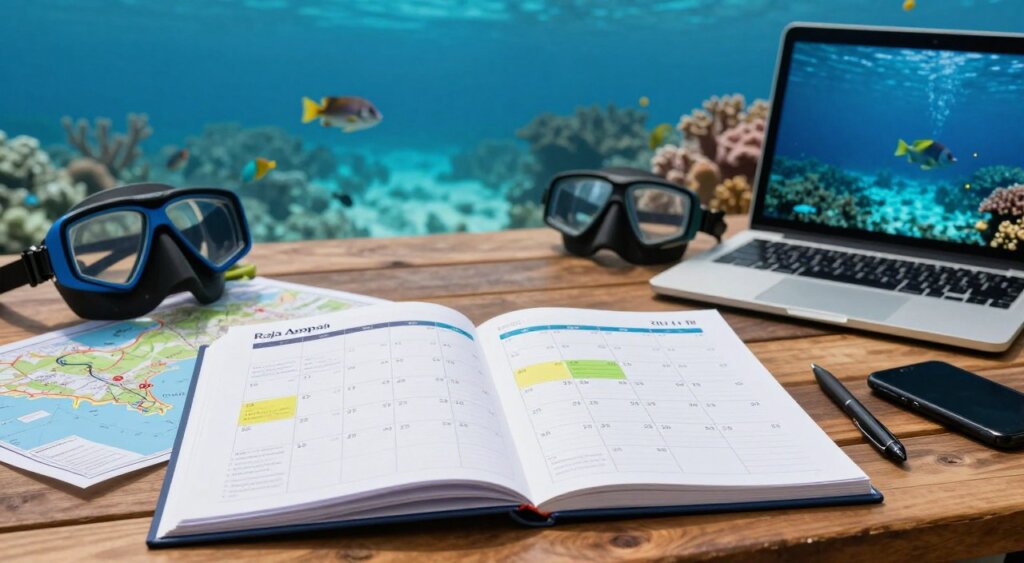
Before you pack your fins, it’s important to know the best times and how long to stay. Planning ahead ensures you have the best experience in this remote paradise. This guide will help you plan your trip, including the best seasons and trip lengths, and some practical tips for Aussie travellers.
Best Time to Visit
The best time for a Raja Ampat dive safari depends on what you want to see. The area has two main seasons, each with its own underwater wonders.
The dry season is from October to April. It offers calm seas, lots of sunshine, and clear visibility up to 30 metres. This is the best time to see manta rays and schooling fish. The water is warm, around 28-30°C.
The wet season is from May to September. You might see some rain in the afternoons, but diving is great. This season attracts larger pelagic species and is perfect for macro photography.
| Season | Period | Conditions | Marine Life Highlight | Best For |
|---|---|---|---|---|
| Dry Season | October – April | Calm seas, high visibility | Manta Rays, Schooling Fish | All divers, photography |
| Wet Season | May – September | Some rain, nutrient-rich water | Pelagics, Macro Life | Advanced divers, unique encounters |
| Shoulder Months | April, May, September, October | Transitional, good mix | Varied sightings | Flexible travellers |
On the ground, you’ll follow Indonesian time (UTC+8 & UTC+9). The local currency is the Indonesian Rupiah (IDR). While many places accept credit/debit cards, having cash is handy for small purchases. English is widely spoken, along with Indonesian and some Chinese. Remember, you’ll need a suitable adaptor for your Australian gear.
Duration of Dive Safaris
Dive safaris here are not weekend trips. Due to the remote location and many sites, most trips are a week or longer. The standard liveaboard trip lasts between 7 and 12 nights.
A 7-night safari is a great introduction. It covers the central Dampier Strait and maybe the Fam Islands. You’ll see iconic sites like Cape Kri and a wide range of marine life.
10 to 12-night itineraries are the ultimate choice. These longer trips let you explore further, reaching places like Penemu or Wayag islands. You’ll see more sites and have a better chance of rare encounters. When looking at diving packages in Indonesia, the duration affects the price and what you see.
What can you do? Longer safaris include 3-4 dives a day, night dives, and time for snorkelling or exploring. Many diving packages in Indonesia include transfers, meals, and guided dives, making the longer trip easy.
When comparing diving packages in Indonesia, think about your stamina and goals. Newer divers might prefer a 7-night trip. Seasoned enthusiasts often choose the 12-night adventure for a deeper dive. Planning your trip duration wisely is key to enjoying Raja Ampat’s magic.
Accommodations for Divers
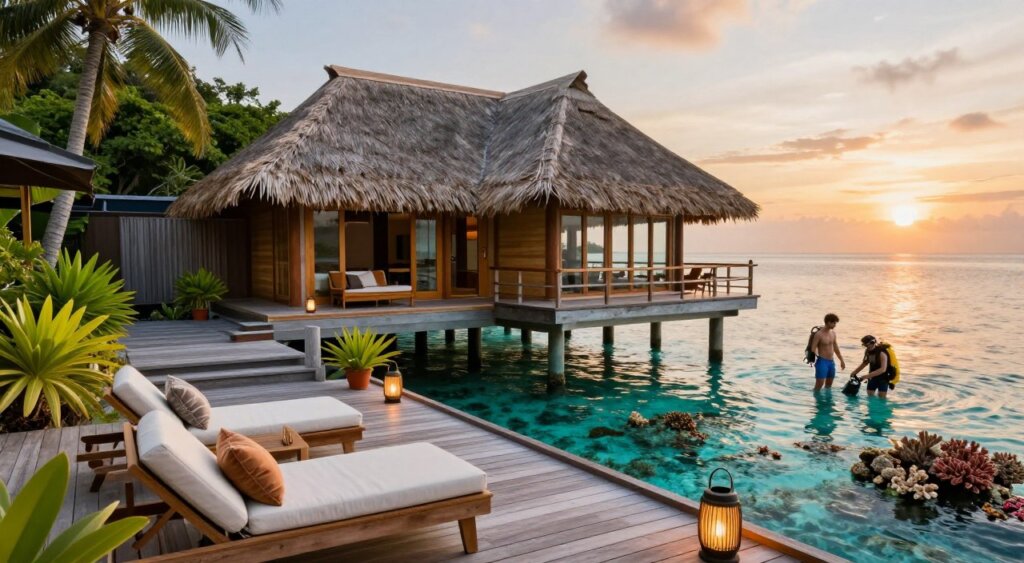
Deciding where to stay is a big choice for divers. You can sleep on the water or on land. This choice affects your daily life, dive access, and comfort.
Both liveaboards and land-based resorts in Raja Ampat aim to make your dive trip unforgettable.
Liveaboard Options
Liveaboards are like floating hotels. They move with you to dive sites. This is great for those who dive a lot and want to see remote places.
The Neptune One Liveaboard is a top choice. It has eight cabins, all with air-conditioning and modern comforts. You can pick from different rooms to suit your group size.
There are places to relax between dives. Enjoy the sun deck, lounge, and saloon. Warm showers are a nice touch after diving. The all-inclusive dining offers a variety of food, keeping you energised all day.
Land-Based Resorts
Island resorts offer a solid base for those who prefer land. You get to return to the same room each night, often with beautiful views. This lets you connect more with the local culture and environment.
Staying on land has its own pace. You can dive when you want, or join cultural tours. Resorts have their own dive centres and jetties, making things easy. You’ll enjoy spacious villas, infinity pools, and personal service.
Whether you pick an overwater bungalow or a jungle lodge, these resorts aim to provide a luxury dive experience. They mix eco-friendly design with luxury, making your time on land as good as your diving.
| Feature | Liveaboard | Land-Based Resort |
|---|---|---|
| Primary Vibe | Mobile dive-centric community | Fixed, immersive island base |
| Dive Site Access | Direct & immediate; often remote sites | Scheduled boat trips; sites within range |
| Typical Amenities | Sun deck, communal lounge, onboard dining | Private villas, pool, restaurant, spa |
| Dining Style | All-inclusive, buffet, multi-cuisine | A la carte or set menus, often local focus |
| Ideal For | Divers wanting maximum water time | Divers mixing exploration with land relaxation |
Both liveaboards and land-based resorts can offer a great luxury dive experience. Your choice depends on what you prefer: always diving or a mix of diving and island life.
Diving Equipment Needs
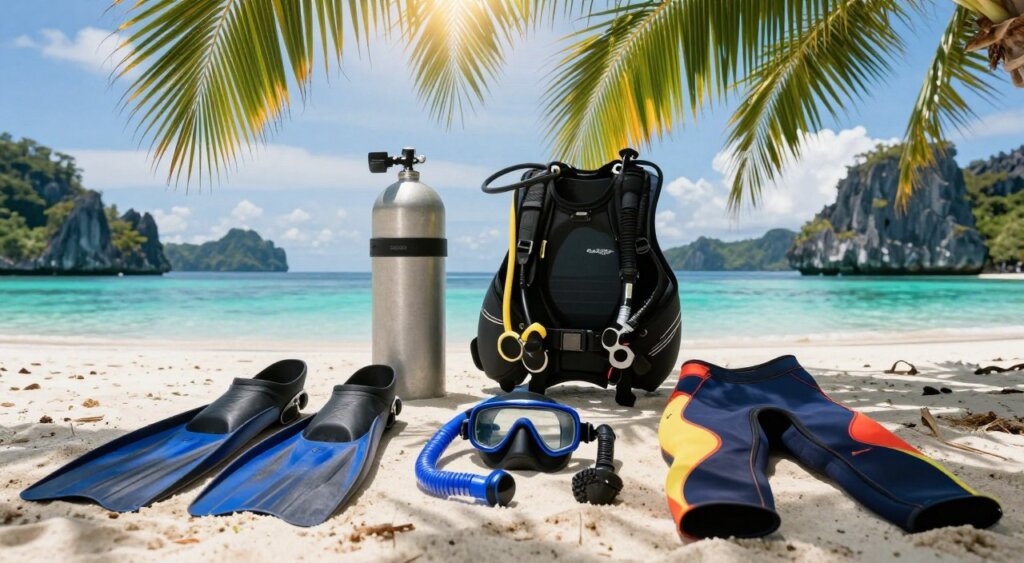
Raja Ampat’s warm waters mean your dive gear needs differ from colder places. Getting the right equipment is key to a great dive safari raja ampat experience. It ensures you’re comfortable, safe, and can fully enjoy the marine wonders.
Essential Gear Recommendations
Preparing for a dive here is straightforward. The water is always around 29°C (84°F), so you don’t need thick wetsuits. Make sure your gear fits well and is clean.
- Exposure Protection: A 3mm shorty wetsuit or rash guard works well. Many prefer lycra suits for sun protection and to avoid coral scrapes.
- Mask, Fins & Snorkel: A good mask is essential. Choose fins that handle mild currents well.
- Regulator & BCD: Bring your trusted gear. Many liveaboards have DIN adaptors for your convenience.
- Dive Computer: It’s vital for tracking your dive limits.
Top liveaboards often include extras like diving towels, saving space in your luggage. Always bring reef-safe sunscreen and a sturdy bag for your gear.
Rental vs. Buying Options
Choosing whether to bring your gear or rent is a common debate. Each option has its pros and cons.
Bringing Your Own Gear: The big plus is familiarity and fit. You know your gear well. But, it’s heavy, and there’s a risk of damage or loss.
Renting Locally: This is very convenient. You avoid heavy bags and airport queues. Dive resorts and boats have high-quality rentals. But, it might cost more, and you might need time to adjust to new gear.
For a dive safari raja ampat, consider a mix. Bring your mask, computer, and fins. Rent the bigger items like BCD and regulator locally. This way, you’re comfortable and practical.
Safety Precautions While Diving
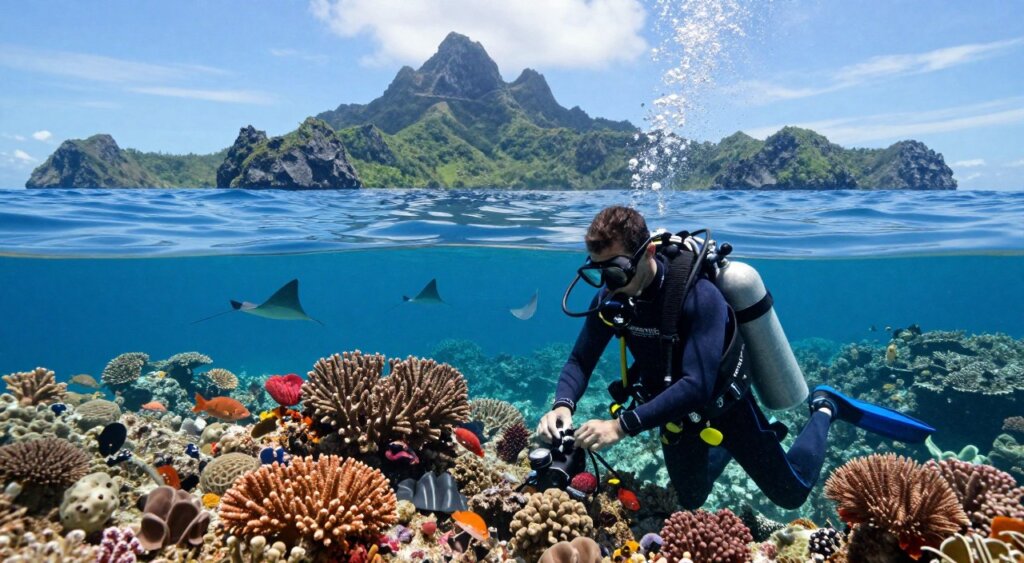
Diving in Raja Ampat is amazing but requires safety focus. The beautiful marine life and remote sites need careful preparation. Being ready ensures your scuba diving Raja Ampat trip is unforgettable.
Safety is your base. It lets you enjoy the underwater world fully. Planning includes getting the right insurance and knowing emergency steps.
Diving Insurance
Getting dive insurance is essential. Medical help in West Papua is limited. Serious diving accidents need quick, expensive treatment.
Your usual insurance might not cover diving, specially deep dives. Look for a policy that includes hyperbaric treatment and evacuation. World Nomads offers diving cover for Australian travellers.
Always read the fine print. Check depth limits, equipment loss, and policy validity for your trip.
| Insurance Consideration | Why It Matters for Raja Ampat | What to Look For |
|---|---|---|
| Hyperbaric Treatment Cover | The nearest decompression chamber may be in Sorong or Manado; transport is costly. | Unlimited cover for chamber treatment and related medical costs. |
| Emergency Evacuation | Many dive sites are hours from mainland medical help. | Coverage for air/sea ambulance services back to Australia if needed. |
| Dive Equipment Cover | Replacing lost or damaged gear on a trip is difficult and expensive. | Cover for accidental loss, theft, or damage to your personal gear. |
| Trip Cancellation/Interruption | Flights to Raja Ampat can be complex; illness or family emergency could disrupt plans. | Reimbursement for non-refundable costs if you must cancel for a covered reason. |
Emergency Procedures
Knowing emergency steps is reassuring. Good scuba diving Raja Ampat operators have clear plans. Your first briefing will cover these.
Important systems include first aid, oxygen kits, and communication with medical support. The guide or captain will have emergency contact details.
As a diver, you play a key role. You must:
- Listen to all pre-dive briefings and safety drills.
- Signal any discomfort or problem to your buddy and guide right away.
- Know where safety equipment, like the oxygen kit, is on the dive deck.
- Keep your dive computer and log your profiles accurately.
In a serious incident, the crew will follow the emergency plan. This includes stabilising the patient, giving oxygen, and evacuating. Your insurance details are critical at this time.
Prevention is best. Dive within your limits, stay hydrated, and do safety stops. This way, you can enjoy the stunning beauty of your scuba diving Raja Ampat adventure.
Environmental Conservation Efforts
The marine life in Raja Ampat needs ongoing protection. It’s not just a place for diving; it’s a living world that needs care. Every dive safari here follows sustainable tourism.
Visitors help protect the reefs and support local people. Your actions have a big impact. Knowing about these efforts makes your trip more meaningful.
Protecting Coral Reefs
Raja Ampat’s coral reefs are famous worldwide. To protect them, several steps are taken. The Raja Ampat Marine Park entry fee helps fund these efforts.
Permanent buoys at dive sites prevent damage from anchors. Divers must use these buoys. Touching the reef can harm it greatly.
Responsible operators teach divers about no-contact rules. They also join in citizen science projects. This helps monitor reef health.
“We are guardians, not owners, of this underwater garden. Every diver who visits must leave it exactly as they found it.”
Small actions can make a big difference. Using reef-safe sunscreen and avoiding plastics helps. Never feeding fish keeps the ecosystem balanced.
Supporting Local Communities
Conservation goes beyond the water. Island communities’ health is tied to the ecosystem. Tourism brings in money, creating jobs.
Choosing local services keeps money in the community. Eco-resorts and liveaboards support schools and health clinics. This helps protect the environment.
Respecting local culture is key. Dress modestly and ask before taking photos. Supporting community tours or homestays is a great way to help.
Look for operators with strong sustainability policies. Those who hire locals and manage waste well are making a difference. Your choice helps empower communities.
This approach ensures the marine life in Raja Ampat thrives. It turns a dive holiday into a chance to make a positive impact.
Cultural Experiences in Raja Ampat
A luxury dive experience in Raja Ampat is more than just diving. It’s about connecting with the local communities. The islands are home to indigenous Papuan cultures with traditions going back thousands of years. This connection adds a special layer of meaning and memory to your trip, just like the beauty of the reefs.
Local Traditions and Customs
Respect is key when interacting with the locals. The people of Raja Ampat are friendly, but visitors should be mindful. Saying “Selamat pagi” (good morning) in Bahasa Indonesia is a great start.
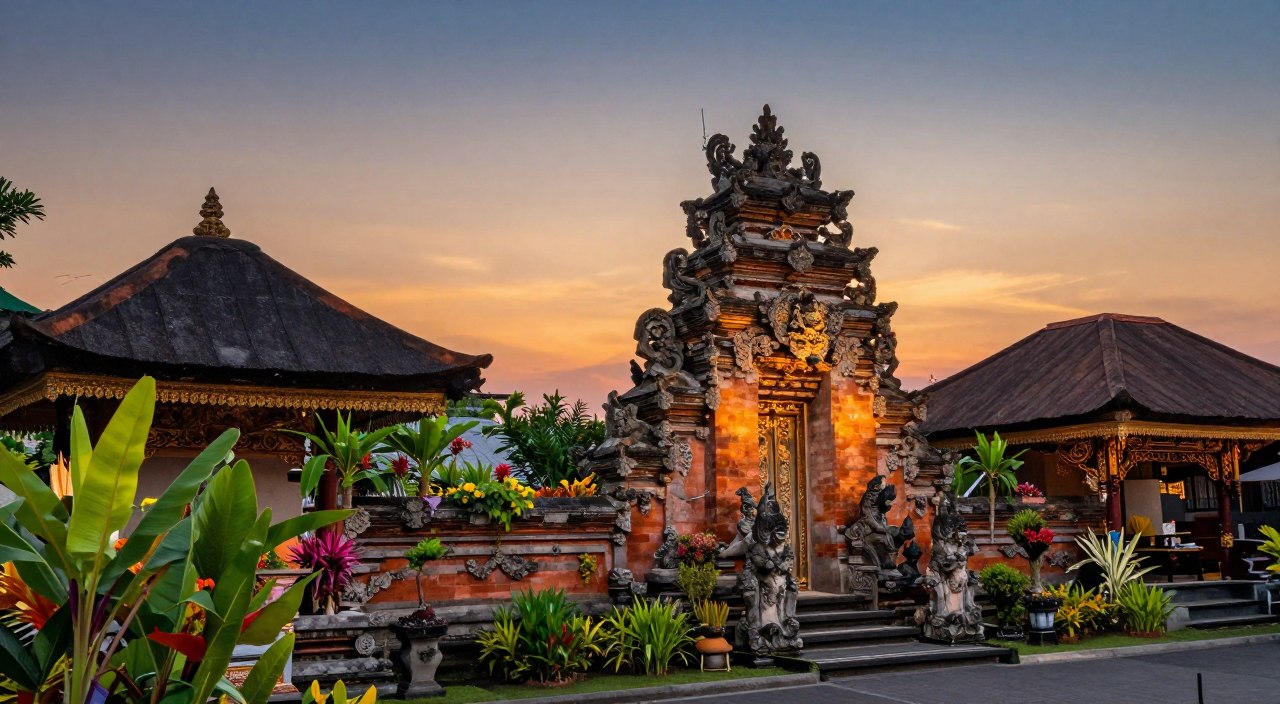
Traditional customs are a big part of daily life here. You might see sasi, a local practice that manages resources. It shows a deep connection to the environment. When visiting villages or sacred sites, dress modestly.
Many dive operations have both local and international crew. This is a great chance to learn from Papuan guides about their history and way of life. Hearing their stories is often a highlight of the trip.
Community Engagement Opportunities
There are ways to go beyond just observing. These interactions can make your trip more meaningful and impactful.
- Guided Village Visits: Always visit with permission and a local guide. This ensures your visit is welcome and culturally sensitive. You might see traditional dance, wood carving, or learn about weaving techniques.
- Support Local Artisans: Buying handicrafts directly from makers helps their income. Look for suanggi (spirit) figures, woven bags, or traditional jewellery. It’s a way to take a piece of Papuan culture home.
- Learn About Conservation Projects: Many community-based initiatives protect Raja Ampat’s ecosystems. Some tours include visits to these projects, where you can learn about reef monitoring, turtle protection, or waste management.
True travel luxury is found in authentic connection and leaving a place better than you found it.
Getting involved in these opportunities helps you understand Raja Ampat better. It shows the region as a living, breathing cultural landscape. This approach makes for a memorable and responsible luxury dive experience.
Photography Tips for Divers
Capturing the vibrant underwater world of Raja Ampat needs more than a waterproof camera. It’s about the right gear and technique. This guide will help you take stunning photos of your dive safari.
Equipment Suggestions
Choosing the right gear is key. Start with a good camera body in a strong, depth-rated housing. Mirrorless cameras are great because they’re small and have electronic viewfinders.
When it comes to lenses, you have a big decision:
- Macro Lenses: Great for tiny creatures like pygmy seahorses and colourful nudibranchs. They show amazing detail.
- Wide-Angle Lenses: Essential for big reefscapes, schools of fish, and big pelagics. They show the beauty of the sea.
Lighting is important. Even in clear water, strobes bring back colours lost at depth. For video, strong video lights are needed. Many use both.
Top liveaboards, like the Neptune One, are great for photographers. They have special camera stations with charging points and separate camera rinsing basins. This keeps your gear clean and makes it easy to manage between dives.
Best Practices Underwater
Perfect buoyancy is key. It protects the reef and helps you take sharp photos. Practice hovering before diving.
Move slowly and calmly around marine life. Avoid sudden movements. Let them get used to you. Being patient often leads to better photos.
Use natural light well. Shoot with the sun behind you to light up your subject. For silhouettes, place your subject against the bright surface. Learn to adjust your camera’s white balance to fix the blue/green cast.
Remember, you’re a guest in this world. Always keep the reef’s health in mind, even if it means missing a shot.
Post-Dive Activities
Your dive log might be full, but your exploration of Raja Ampat is only half complete. When you surface, a stunning landscape of jungle-clad islands and crystal-clear waters awaits your discovery. These topside adventures perfectly complement your underwater memories.
Exploring Raja Ampat’s Islands
Trade your wetsuit for some light trekking gear or a kayak. The archipelago’s islands offer breathtaking vistas, secluded beaches, and serene lagoons. A hike up to viewpoints on islands like Piaynemo or Wayag rewards you with panoramic views that put the entire seascape into perspective.
From these heights, you can often spot the turquoise patches and deep blue channels that mark some of the best diving spots in Raja Ampat. Other popular post-dive pursuits include:
- Paddling through the calm, mangrove-lined waterways.
- Relaxing on untouched, pearly-white sand beaches.
- Snorkelling in shallow, vibrant coral gardens right from the shore.
Local Cuisine and Dining Options
Indonesian flavours take centre stage after a day of diving. Meals are a highlight, often featuring the catch of the day. You’ll enjoy simple, delicious dishes like ikan bakar (grilled fish) with sambal and rice.
On liveaboards, chefs expertly prepare a mix of local, Western, and Chinese-inspired cuisine to satisfy all appetites. Land-based resorts and local warungs (eateries) offer authentic experiences. Don’t miss trying papeda, a traditional sago porridge often served with rich, yellow fish soup.
The real voyage of discovery consists not in seeking new landscapes, but in having new eyes.
Sharing a meal with fellow divers and crew is a cherished part of the safari experience, blending great food with stories of the day’s adventures.
How to Get to Raja Ampat
Your journey to Raja Ampat starts with a flight from Australia. You’ll connect through major Indonesian hubs before taking a boat to your destination. The path to this remote archipelago is well-known. Knowing this journey helps you pick the best diving packages in Indonesia and plan your trip smoothly.
Travel Routes from Australia
The journey to Raja Ampat begins at Domine Eduard Osok Airport in Sorong, West Papua. There are no direct flights from Australia to Sorong. You’ll need to connect in Indonesia at least once.
Common departure cities from Australia include:
- Sydney (SYD)
- Melbourne (MEL)
- Brisbane (BNE)
- Perth (PER)
Your first flight will land in Jakarta (CGK) or Denpasar, Bali (DPS). Then, you’ll take a domestic flight to Sorong (SOQ). Garuda Indonesia, Lion Air, and Batik Air offer these flights.
The total travel time from Australia is 10 to 14 hours, including layovers. Always book your domestic Indonesian flight in advance, as schedules can change. Many diving packages in Indonesia include help with booking your flights.
Transportation within Raja Ampat
After landing in Sorong, your underwater adventure starts. You’ll need to get from the airport to the harbour and then to your resort or liveaboard vessel by sea.
You can choose between the public fast ferry or a private speedboat. Your choice depends on your accommodation and schedule.
| Option | Cost (Approx.) | Duration | Frequency | Best For |
|---|---|---|---|---|
| Fast Ferry to Waisai | 150,000 – 200,000 IDR | 2 – 2.5 hours | 2-3 times daily | Budget travellers and those staying at land-based resorts near Waisai. |
| Private Speedboat | Varies (often included) | 1 – 3 hours | Chartered | Liveaboard guests, resort transfers, and groups seeking direct, flexible service. |
Most liveaboard operators offer a private speedboat pick-up from Sorong harbour. Land-based resorts may arrange a transfer for you, sometimes for an extra fee. Confirm these details with your dive operator before you travel. Planning this final step is important when choosing diving packages in Indonesia for your Raja Ampat trip.
Frequently Asked Questions
Planning a dive adventure in Raja Ampat raises a few questions, like for liveaboard trips. Clear answers help you pack and feel confident. Here are answers to two common questions.
Diving Certifications Needed
Raja Ampat is not for beginners. The dives have strong currents and deep walls. You’ll need at least a Advanced Open Water Diver certification for safety and fun.
This level ensures you know how to dive deep and navigate. Drift diving experience is a big plus. Most liveaboard operators want you to have 30-50 dives logged before booking.
This shows you’re ready for different conditions. If your dive log is thin, dive elsewhere first. Raja Ampat will be more rewarding if you’re experienced.
What to Expect on a Safari
A liveaboard dive trip is all about the water. Your days are filled with diving and relaxation. It’s the best way to see remote sites at the best times.
Days start with a light breakfast. Then, a detailed briefing from your guide. They’ll tell you about the site, currents, and marine life to look for.
You’ll do three or four dives a day. There are breaks for rest and food. Meals are buffet-style, a great time to talk with others.
The vibe is friendly but laid-back. Evenings might include a night dive or sharing photos. Check a liveaboard packing list to make sure you have everything, from spare masks to reef-safe sunscreen.
Think of it as a moving hotel. The crew handles everything from tank fills to meals. Your job is to dive, eat, relax, and do it all again.
Conclusion
A Raja Ampat dive safari is more than just an adventure. It lets you connect with the Coral Triangle’s vibrant ecosystem.
Recap of Dive Safari Experience
This journey offers top-notch diving and easy travel arrangements. You’ll see amazing marine life at places like Cape Kri and Boo Windows. The liveaboard boat takes you to the best dive spots at the right time.
Learning about local cultures adds depth to your trip. Your underwater photography skills will be put to the test with incredible subjects.
Encouragement to Visit
For Australian divers, Raja Ampat is the ultimate underwater adventure. The photos and stories you collect will last a lifetime. Begin planning your visit to this marine wonderland.
Your own adventure in Raja Ampat awaits. It’s time to write your own chapter in this legendary place.