Your Essential Guide to Staying Connected in Indonesia
Getting an Indonesian SIM card is the first thing you should do after landing at the airport. I learned this the hard way during my first trip to Bali when I spent three days without reliable internet, missing restaurant reservations and getting lost without maps. After six years of traveling across Indonesia and testing every major carrier, I can tell you exactly how to stay connected from the moment you arrive.
This guide covers everything you need to know about SIM card options, IMEI registration, network providers, and data packages. Whether you’re island hopping for two weeks or spending months as a digital nomad in Jakarta, you’ll find the practical information that actually matters. No fluff, just the insider knowledge that comes from countless airport arrivals, SIM card purchases, and hours spent comparing mobile data packages Indonesia offerings.
Understanding Your Options: eSIM vs Physical SIM Cards
The Indonesian SIM card for travelers landscape has evolved significantly. You now have two primary options, and choosing the right one depends on your phone, travel style, and budget.
What is an eSIM and How Does It Work in Indonesia?
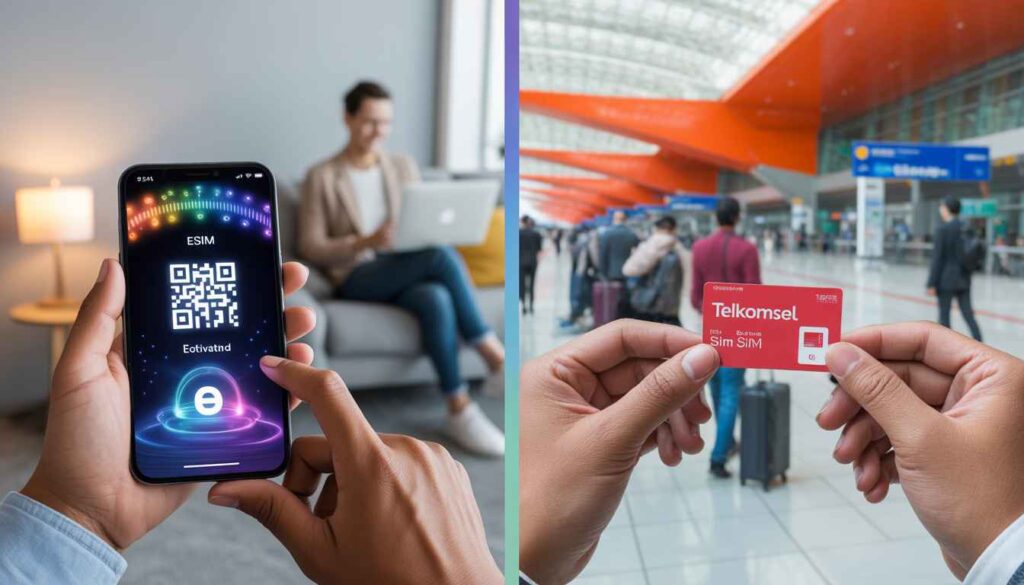
An eSIM is a digital SIM card embedded in your smartphone that you activate through a QR code or mobile app. Your phone downloads the carrier profile directly, eliminating the need for a physical card. Major providers like Telkomsel and XL Axiata now offer eSIM options specifically designed for tourists.
The eSIM vs local SIM card Indonesia debate comes down to convenience versus cost. I’ve used both extensively across Southeast Asia, and eSIM works brilliantly if your device supports it. You can purchase and activate before your flight, landing with immediate connectivity. However, eSIM packages typically cost 20-30% more than physical cards and offer less flexibility for topping up data or switching plans.
Your iPhone (XS or newer), recent Samsung Galaxy phones, and Google Pixels support eSIM. Check your phone’s settings under Cellular or Mobile Data to confirm compatibility before committing to this option.
Traditional SIM Cards: Pros and Cons for Tourists
Physical prepaid SIM card Indonesia foreigners can purchase remain the most economical choice. A typical tourist package costs 50,000-100,000 IDR (approximately $3-6 USD) for 7-15 days of data. The activation process takes five minutes at the airport, and you can buy additional data packages at any convenience store.
The downside is the registration requirement. Every SIM card registration passport Indonesia process requires your physical passport, and some locations verify your information more thoroughly than others. I’ve also encountered occasional language barriers at smaller shops, though airport kiosks always have English-speaking staff.
Expert Tip: Dual SIM phones give you the best of both worlds. Keep your home country number active on eSIM for important communication while using a local Indonesian physical card for data. This setup saved me during a banking emergency when I needed to receive verification codes on my Australian number.
Best Mobile Network Providers in Indonesia
Choosing the best mobile network provider Indonesia offers depends on where you’re traveling. I’ve tested all four major carriers across Bali, Jakarta, Lombok, Komodo, and Sumatra. Here’s what you actually need to know.
Telkomsel: Indonesia’s Largest Network
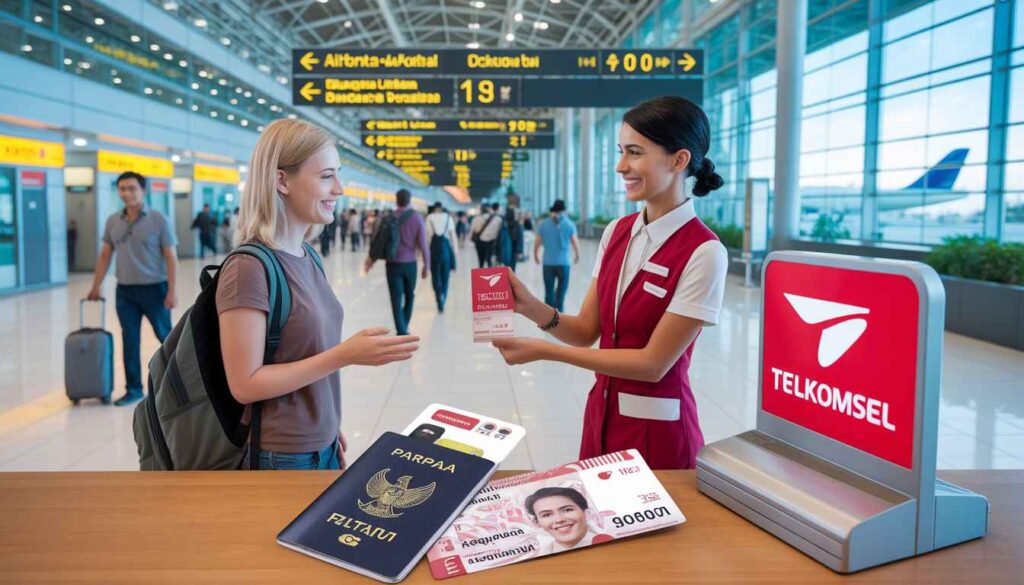
Telkomsel dominates Indonesian telecommunications with the most extensive cellular network coverage. This government-backed provider reaches 95% of Indonesia’s population and maintains signal in remote areas where competitors simply don’t exist. During a trip to Raja Ampat, Telkomsel was the only carrier with consistent 4G coverage.
The Telkomsel tourist SIM card packages start at 50,000 IDR for 3GB of data over seven days. Their “simPATI Tourist” specifically targets travelers with straightforward activation and English-language customer support through WhatsApp. Pricing runs higher than competitors, but the reliability justifies the extra money for most visitors.
I’ve never experienced a dropped call on Telkomsel in urban areas, and their 5G network now covers major cities including Jakarta, Surabaya, and Bandung. The mobile app works flawlessly for checking data usage and buying additional packages.
XL Axiata, Indosat Ooredoo, and Smartfren Compared
XL Axiata offers the best value for data-heavy users. Their tourist packages include 12GB for 60,000 IDR over 15 days, nearly double what Telkomsel provides at similar pricing. Coverage matches Telkomsel in cities and popular tourist areas but weakens in rural regions. I use XL Axiata when staying primarily in Bali or Jakarta.
Indosat Ooredoo falls somewhere between Telkomsel and XL Axiata for both coverage and pricing. Their network performs well in Java and Bali but struggles in Eastern Indonesia. The customer service experience varies significantly by location, with some stores offering excellent support while others seem perpetually understaffed.
Smartfren operates a 4G LTE-only network, meaning older phones won’t work at all. Their coverage focuses on Java, Bali, and Sumatra. Skip this provider unless you’re staying exclusively in major cities and need rock-bottom prices.
Coverage Maps and Performance by Region
Real-world performance often differs from official coverage maps. Telkomsel delivers the most consistent speeds across Indonesia, averaging 20-40 Mbps download in urban areas. I’ve successfully joined Zoom calls, streamed videos, and used Skype without issues.
XL Axiata matches these speeds in Bali and Jakarta but drops to 5-10 Mbps in second-tier cities. Indosat performs similarly, while Smartfren’s speeds fluctuate wildly depending on network congestion. For reliable Voice over IP calls through WhatsApp or Viber, stick with Telkomsel or XL Axiata.
Network Provider Comparison Table
| Provider | Coverage | Price (7-day package) | Best For | Cons |
|---|---|---|---|---|
| Telkomsel | 95% national, excellent rural | 50,000 IDR (3GB) | Remote areas, reliability, first-time visitors | Higher cost, slower customer service |
| XL Axiata | 85% national, strong urban | 45,000 IDR (5GB) | Cities, data-heavy users, budget travelers | Weak rural coverage, inconsistent speeds |
| Indosat Ooredoo | 80% national, focused Java/Bali | 40,000 IDR (4GB) | Popular tourist areas, moderate usage | Limited coverage eastern islands |
| Smartfren | 70% national, cities only | 30,000 IDR (5GB) | Budget travelers in Jakarta/Bali | No 3G fallback, poor rural coverage, compatibility issues |
Where to Buy Your Indonesian SIM Card
Location matters when getting Indonesian SIM card options. I’ve purchased from airports, official stores, and convenience stores across the archipelago. Each has distinct advantages.
Airport Kiosks: Convenience vs Cost
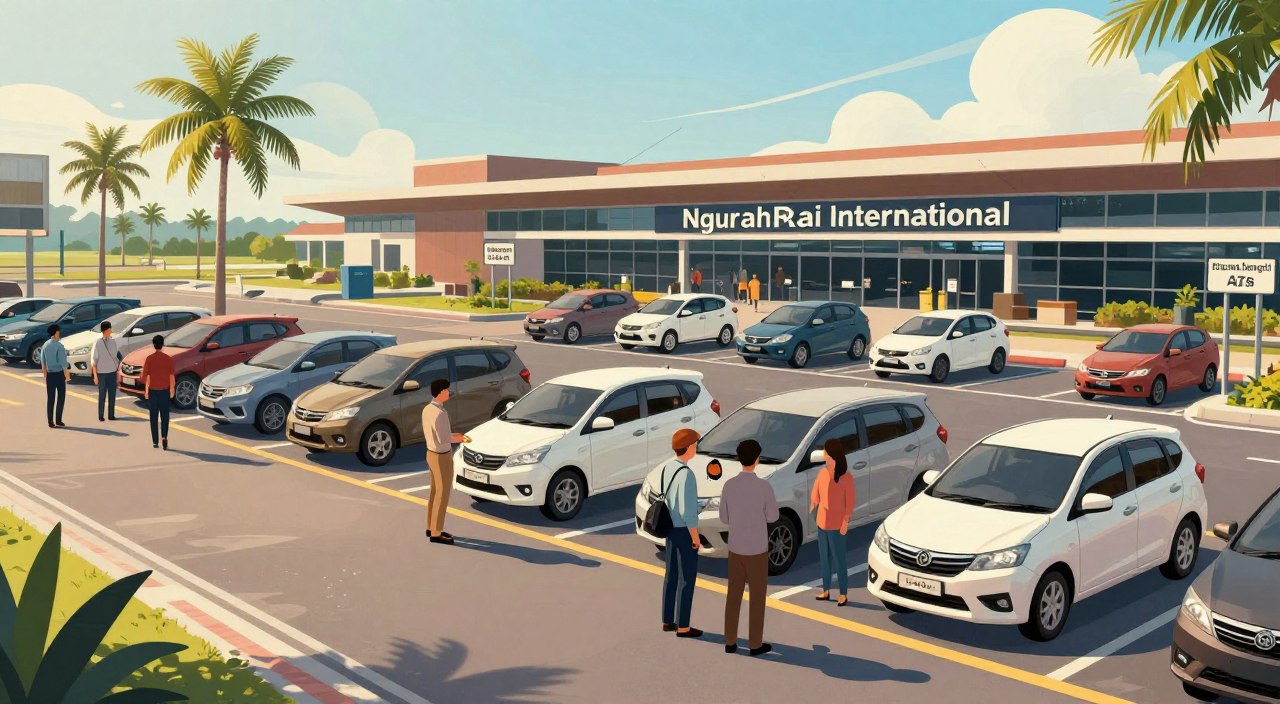
Every major Indonesian airport has official carrier kiosks in the arrivals terminal. Ngurah Rai in Bali, Soekarno-Hatta in Jakarta, and Juanda in Surabaya all feature Telkomsel, XL Axiata, and Indosat counters immediately after customs.
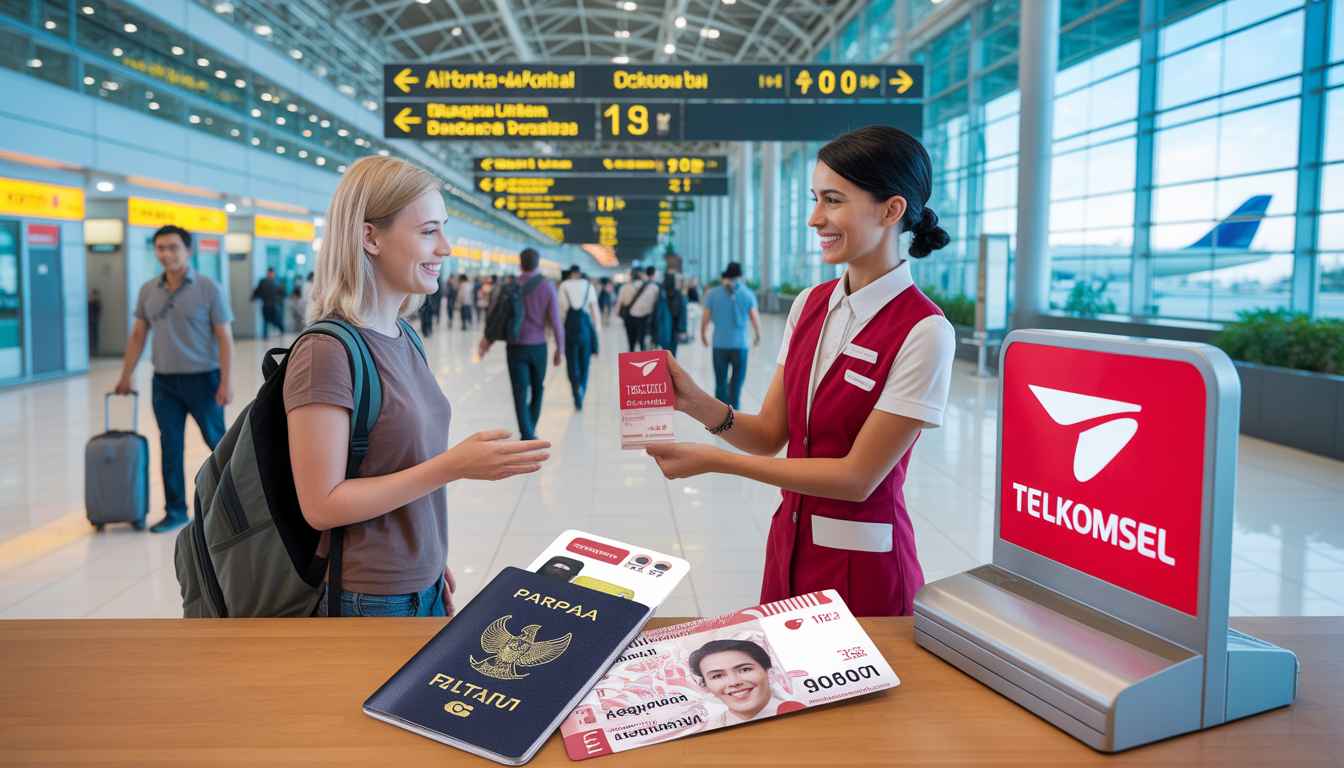
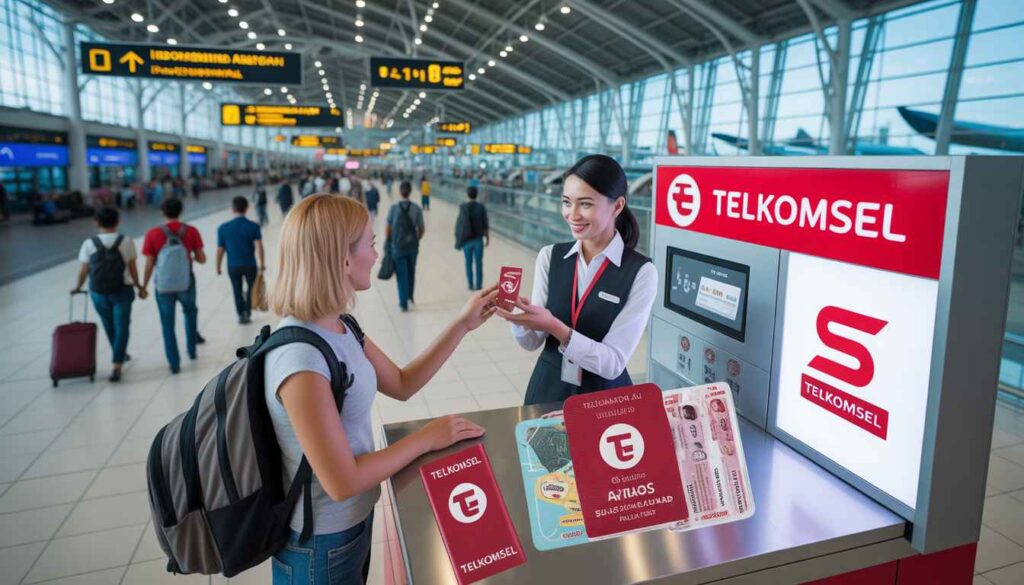
Airport kiosks charge 10-20% more than street prices but save enormous time and frustration. Staff speak English, accept credit cards, and handle all registration paperwork. The Telkomsel counter at Bali airport activates your SIM card in under five minutes. They verify your passport, configure your phone’s APN settings, and send a test message before you leave.
Warning: Avoid unauthorized vendors outside the arrivals area. I’ve seen tourists charged triple the normal fee for SIM cards that mysteriously stop working after 24 hours. Stick with official kiosks inside the terminal.
Operating hours run from 6 AM to midnight at major airports, though some kiosks close during overnight gaps in flight arrivals. Plan accordingly if you’re landing late.
Official Telco Stores and Registration Process
Downtown carrier stores offer the best prices and widest selection of packages. Telkomsel GraPARI stores, XL Axiata Centers, and Indosat shops exist in every city. I buy my long-term SIM cards at these locations to access promotional packages unavailable at airports.
The SIM card registration passport Indonesia requirement applies everywhere. Bring your physical passport and be prepared to provide your Indonesian accommodation address. Some stores photograph your passport data page, while others manually enter information into their system. The entire process takes 10-15 minutes.
Store staff generally speak less English than airport workers, but patience and pointing at package displays works fine. I’ve successfully purchased SIM cards in provincial cities with zero shared language beyond numbers and smiles.
Convenience Stores: What You Need to Know
Can I buy a SIM in 7-Eleven? Yes, Indonesian 7-Eleven stores, Indomaret, and Alfamart locations sell prepaid SIM card Indonesia foreigners packages. However, these stores cannot complete passport registration on-site. You must activate and register through the carrier’s mobile app or website, which creates complications.
I attempted this method once in Yogyakarta and spent 45 minutes troubleshooting the Telkomsel app’s registration system before giving up and visiting a GraPARI store. The convenience store SIM card cost 35,000 IDR compared to 50,000 IDR at the official store, but the time lost eliminated any savings.
Purchase from convenience stores only if you’re comfortable with mobile app registration and speak basic Indonesian or have translation tools ready. Otherwise, the minimal savings aren’t worth the hassle.
Step-by-Step Guide to Buying and Activating Your SIM
Here’s exactly how to get connected quickly after landing in Indonesia. I’ve refined this process through dozens of arrivals.
Before You Leave the Airport Checklist:
- Confirm your phone is unlocked (test before departure)
- Have physical passport accessible (photos don’t work)
- Know your accommodation address (hotel name sufficient)
- Have 100,000 IDR cash (some kiosks don’t accept cards)
- Check your phone supports Indonesian frequencies (most do)
Activation Process:
- Exit customs and look for carrier kiosks in the arrivals hall. They’re impossible to miss, usually positioned between customs and the exit doors.
- Choose your provider based on your destination. Ask staff “Do you have Telkomsel tourist SIM card?” if you want the most reliable option.
- Present your passport and state your desired package duration. Point to the package display or say “tourist package, seven days” or “fifteen days.”
- Pay the fee (50,000-100,000 IDR for tourist packages). Request a receipt for your records.
- Wait while staff configure your phone. They’ll insert the SIM card, enter APN settings, and verify data connectivity. Don’t leave until you’ve successfully loaded a webpage.
- Save important numbers provided on the package documentation. You’ll need these for topping up data or troubleshooting.
The Telkomsel kiosk at Bali airport processes customers in 3-5 minutes during normal hours, though waits can extend to 15-20 minutes during peak afternoon arrivals. Jakarta’s Soekarno-Hatta operates multiple counters and rarely has significant queues.
Expert Tip: Download offline maps for your destination before arrival. Even with this quick process, you’ll want navigation backup during the taxi ride to your hotel. Google Maps allows downloading entire cities or regions for offline use.
IMEI Registration Explained for Tourists
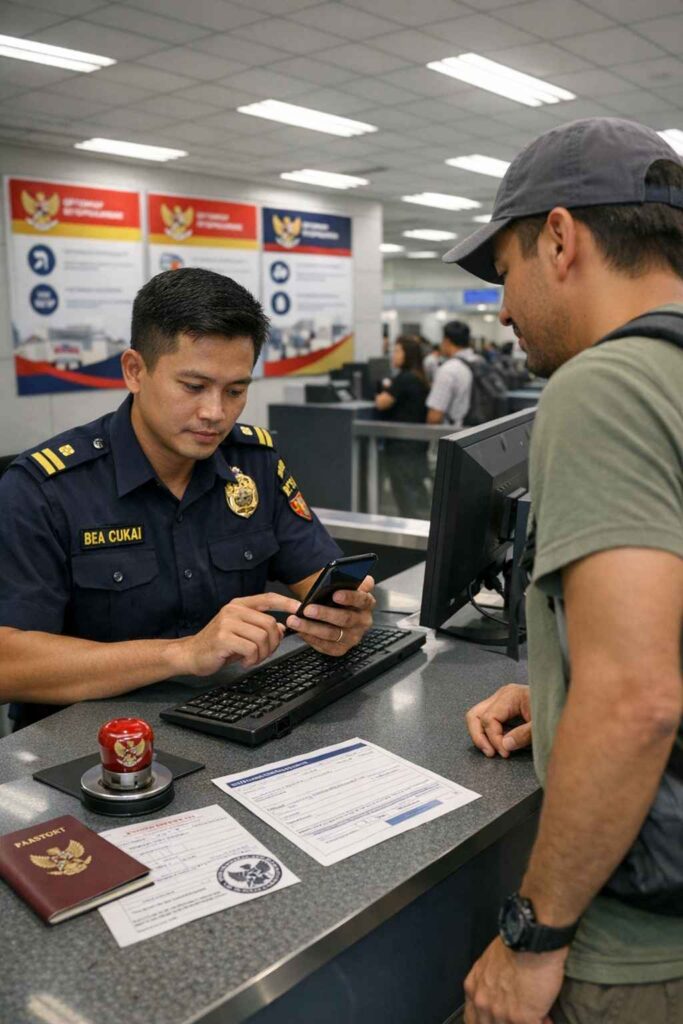
The IMEI registration Indonesia tourists system confuses many visitors. Indonesia tracks all mobile devices through their unique IMEI numbers to combat smartphone smuggling. Here’s how it actually works in practice.
Short Visits Under 90 Days
Do tourists need to register IMEI in Indonesia? Not if you’re visiting for less than 90 days. Your foreign phone receives automatic temporary authorization when you arrive. I’ve taken 15+ trips to Indonesia, some lasting 6-8 weeks, without registering any device.
The system works through customs tracking. When you enter Indonesia with a foreign smartphone or tablet computer, customs records your entry. Your device’s IMEI receives a 90-day exemption from registration requirements. Exit the country before this window expires, and you’ll never encounter issues.
However, you cannot swap SIM cards between multiple unregistered devices. The exemption applies to the specific phone you entered with, not to your passport. Bringing a second phone or tablet computer requires separate consideration.
Long-Term Stays and Import Tax Requirements
Indonesia IMEI registration 90 days rules kick in if you’re staying longer or bringing devices to sell. After 90 days, unregistered phones lose network access. Your SIM card stops working until you complete registration and payment of import duties.
The import tax costs 10% of the device’s declared value, minimum 2 million IDR (approximately $125 USD). This makes formal registration impractical for tourists. Most long-term visitors and digital nomads simply purchase Indonesian phones or exit and re-enter every 90 days to reset the exemption period.
How to Register Your Device at Customs
Registration happens at the airport customs counter during arrival. If you’re bringing an expensive phone or multiple devices for long-term use, declare them on your customs form. Officers verify your devices, calculate the fee, and provide registration documentation.
Warning: Skip this process if you’re a typical tourist. The registration fee exceeds the cost of a budget Indonesian smartphone. Only business travelers or long-term residents benefit from formal IMEI registration.
I’ve watched tourists panic about IMEI registration based on outdated blog posts. Unless you’re specifically told to register by customs officers, ignore this requirement. The automatic 90-day exemption covers normal tourism visits completely.
Data Packages and Pricing Guide
Understanding mobile data packages Indonesia options helps you choose the right amount of data without overpaying. Prices and packages change seasonally, but these ranges held consistent throughout 2024-2025.
Telkomsel tourist packages:
- 3GB / 7 days: 50,000 IDR ($3.20 USD)
- 8GB / 15 days: 100,000 IDR ($6.40 USD)
- 20GB / 30 days: 200,000 IDR ($12.80 USD)
XL Axiata tourist packages:
- 5GB / 7 days: 45,000 IDR ($2.90 USD)
- 12GB / 15 days: 80,000 IDR ($5.10 USD)
- 25GB / 30 days: 150,000 IDR ($9.60 USD)
Indosat Ooredoo packages:
- 4GB / 7 days: 40,000 IDR ($2.55 USD)
- 10GB / 15 days: 75,000 IDR ($4.80 USD)
- 22GB / 30 days: 160,000 IDR ($10.25 USD)
Social media packages from all carriers offer unlimited WhatsApp, Instagram, and Facebook at reduced rates. I find these unnecessary since standard data prices already run cheap compared to Western markets.
Sample Cost Calculator for Different Trip Lengths
7-Day Trip (Moderate Usage – 1-2GB/day):
- Conservative user (maps, WhatsApp, occasional browsing): 3-5GB total
- Recommended: Telkomsel 3GB package + 40,000 IDR top-up = 90,000 IDR ($5.75)
- Alternative: XL Axiata 5GB package = 45,000 IDR ($2.90)
14-Day Trip (Heavy Usage – 2-3GB/day):
- Digital nomad (video calls, streaming, constant connectivity): 8-12GB total
- Recommended: XL Axiata 12GB package = 80,000 IDR ($5.10)
- Premium option: Telkomsel 8GB + 8GB top-up = 180,000 IDR ($11.50)
30-Day Trip (Mixed Usage – 1.5GB/day average):
- Long-term traveler (working remotely, entertainment, navigation): 20-30GB total
- Best value: XL Axiata 25GB package = 150,000 IDR ($9.60)
- Most reliable: Telkomsel 20GB + 10GB top-up = 280,000 IDR ($17.90)
You can top up data through carrier apps, convenience store counters, or by dialing USSD codes provided with your SIM card. I exclusively use the Telkomsel app for top-ups since it accepts international credit cards and processes instantly.
Regional Recommendations by Tourist Route
Different travel patterns demand different provider strategies. Match your SIM card choice to your actual itinerary.
Bali-Only Visitors: Any provider works fine. XL Axiata offers the best value since coverage across Bali is excellent for all carriers. Save money and buy the cheapest package you can find.
Island Hopping (Bali-Lombok-Gili Islands): Telkomsel exclusively. Lombok and the Gili Islands have spotty coverage from other providers. I lost data connectivity for entire days on Gili Air with XL Axiata but had perfect 4G on Telkomsel.
Jakarta Business Travel: Telkomsel or XL Axiata perform identically in the capital. Choose based on package pricing that day. Both deliver solid 5G speeds in business districts.
Sumatra Adventure Travel: Telkomsel without question. Lake Toba, Bukittinggi, and Banda Aceh have minimal coverage from other carriers. I spent three weeks in North Sumatra relying entirely on Telkomsel and rarely dropped below 4G.
Java Cultural Circuit (Yogyakarta-Solo-Surabaya): Indosat Ooredoo actually performs well on this route and costs less. The coverage across Java matches Telkomsel in my experience, making it a solid budget option.
Common Problems and How to Solve Them
Despite straightforward SIM card purchases, occasional issues arise. Here’s how to fix the most frequent problems I’ve encountered.
Problem: SIM card has no data connection despite showing network signal.
Solution: Check APN settings. Telkomsel uses “internet” as the APN name, XL Axiata uses “www.xlaxiata.co.id“, and Indosat uses “indosatgprs”. Navigate to your phone’s cellular settings, select APN, and manually enter these if automatic configuration failed.
Problem: SIM card works for one day then suddenly stops.
Solution: This indicates failed registration verification. Return to the purchase location with your passport to complete registration properly. Alternatively, download the carrier’s app and attempt online registration through their system.
Problem: Can’t receive verification codes from banking apps or email services.
Solution: Indonesian numbers sometimes face restrictions receiving international SMS. Use WhatsApp or email for verification when possible. For critical services, keep your home country SIM card active in a dual SIM phone or maintain roaming on your primary number.
Problem: Data depleted faster than expected.
Solution: Disable automatic app updates and background data usage. Android phones particularly drain data through Google services. Navigate to settings and restrict background data for all non-essential apps.
I once burned through 5GB in two days because Google Photos was uploading my entire camera roll over cellular data. Now I disable all cloud backup services immediately after activating any travel SIM card.
Warning: Never attempt to modify your phone’s IMEI number or use IMEI-changing apps. This is illegal in Indonesia and many other countries. Customs officials sometimes check for IMEI tampering, and violations carry serious penalties including device confiscation.
Expert Tips for Staying Connected in Indonesia
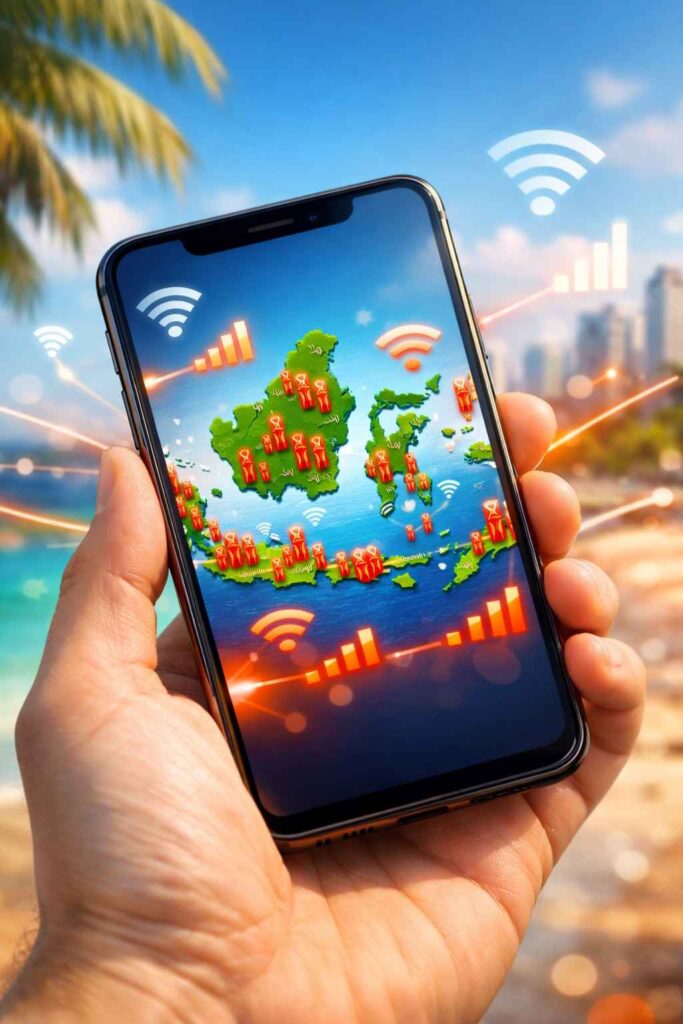
Years of communication across Indonesia’s islands taught me strategies beyond simply buying a SIM card. These tips enhance connectivity and save considerable money.
Download banking and essential apps before arrival. Indonesian app stores sometimes restrict foreign accounts from downloading specific apps. I couldn’t install the Grab ride-sharing app on my Australia-registered account and needed to create an Indonesian Google Play account.
Use Wi-Fi strategically to preserve data. Most hotels, cafes, and restaurants offer free Wi-Fi, though quality varies dramatically. Stream videos and download large files on Wi-Fi, reserving cellular data for navigation and communication.
Enable data-saving modes in apps. WhatsApp, Instagram, and Facebook all offer data-saving features that significantly reduce usage. WhatsApp’s low-data mode cuts usage by 40-50% in my testing.
Buy your SIM card at the airport, not beforehand. Some travel companies sell Indonesian eSIM packages online before your trip. These cost 2-3 times airport kiosk prices and offer no real advantage beyond activation convenience. Save your money and buy locally.
Keep your SIM card packaging. The documentation includes important codes for checking balances, topping up data, and contacting customer support. I store mine in my passport holder throughout my trip.
Expert Tip: Set up WhatsApp before leaving home. The app requires verification through your original phone number. If you swap SIM cards before activating WhatsApp, you’ll face verification complications. Activate WhatsApp on your home number, then switch SIM cards and continue using the app normally.
Conclusion
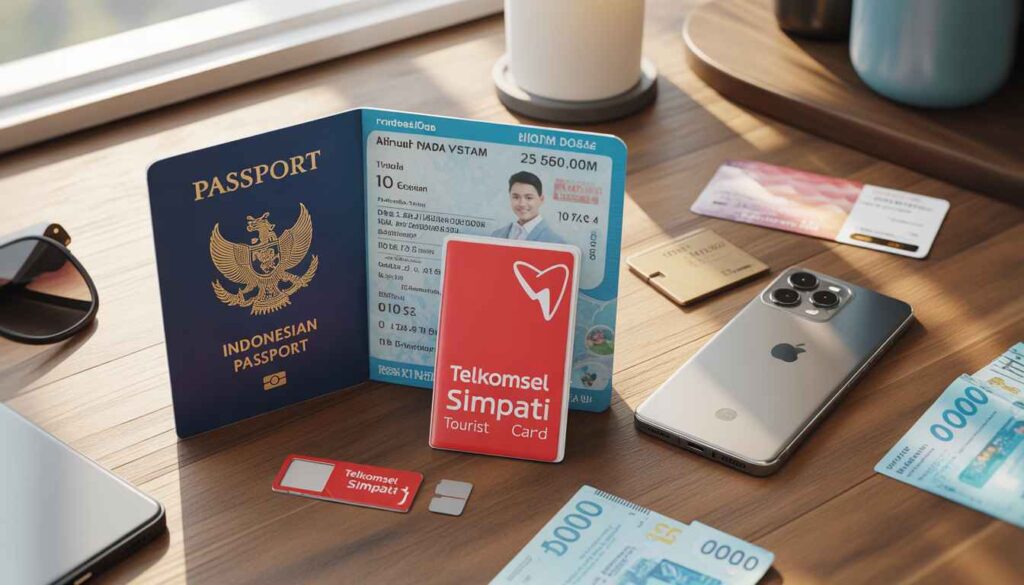
Getting Indonesian SIM card connectivity shouldn’t stress you out. Buy Telkomsel if you value reliability and don’t mind spending slightly more. Choose XL Axiata if you’re staying in tourist areas and want maximum data for your money. Skip IMEI registration unless you’re staying beyond 90 days. Bring your passport, head to the airport kiosk, and you’ll have working data before leaving the terminal.
The Indonesian cellular network infrastructure continues improving. 5G coverage expands monthly in major cities, and even remote islands now offer decent 4G speeds. Your biggest decision is simply choosing which package size matches your data consumption, and you can always top up if you run low.
Start your Indonesian adventure connected. Buy that SIM card at the airport, message your family you’ve arrived safely on WhatsApp, and navigate to your hotel with real-time maps. The whole country becomes more accessible when you’re not hunting for Wi-Fi constantly.
Frequently Asked Questions
Can foreigners buy SIM cards in Indonesia?
Yes, foreigners can absolutely buy SIM cards in Indonesia. You need your physical passport for registration, which applies to both tourists and residents. Airport kiosks, official carrier stores, and many convenience stores sell SIM cards to visitors. The registration process takes 5-15 minutes and requires your passport and Indonesian accommodation address.
Which SIM card is best for tourists in Indonesia?
Telkomsel offers the best overall experience for tourists due to superior coverage across Indonesia’s islands. While slightly more expensive than competitors, Telkomsel maintains signal in remote areas where other carriers fail. Their tourist packages start at 50,000 IDR for 7 days, and English-speaking customer support makes troubleshooting easier for foreign visitors.
Do I need to register my IMEI in Indonesia?
Tourists visiting for under 90 days do not need to register their device’s IMEI. Indonesia provides automatic 90-day temporary exemptions for foreign phones entering the country. Only long-term residents or those staying beyond three months need formal IMEI registration, which involves paying import taxes. Simply use your foreign phone normally throughout your visit.
How much does an Indonesian SIM card cost?
Tourist SIM card packages cost 40,000-100,000 IDR ($2.50-$6.50 USD) depending on the provider and data allocation. A typical 7-day package with 3-5GB costs around 50,000 IDR. Prices at airports run 10-20% higher than downtown stores, but the convenience and guaranteed activation justify the minimal premium for most travelers.
Can I buy a SIM card at Indonesian airports?
All major Indonesian airports feature official carrier kiosks in their arrivals terminals. Bali’s Ngurah Rai, Jakarta’s Soekarno-Hatta, and Surabaya’s Juanda airports have Telkomsel, XL Axiata, and Indosat counters that operate from 6 AM to midnight. Staff speak English, complete registration paperwork, and activate your SIM card in under 10 minutes.
What documents do I need to buy a SIM card in Indonesia?
You need your physical passport and an Indonesian address (your hotel name works fine). Some locations photograph your passport data page while others manually enter information. Photocopies don’t work for registration. Carry your actual passport when purchasing any Indonesian SIM card, whether at airports, official stores, or convenience stores.
Does Telkomsel offer tourist SIM cards?
Telkomsel sells “simPATI Tourist” packages specifically designed for visitors. These packages include generous data allowances, straightforward activation, and English-language support. Tourist packages start at 50,000 IDR for 7 days and include bonus data for social media apps. Purchase at airport kiosks or any Telkomsel GraPARI store.
Can I use my eSIM in Indonesia?
Indonesian carriers including Telkomsel and XL Axiata support eSIM activation. Your smartphone must be eSIM-compatible (iPhone XS or newer, recent Samsung Galaxy, Google Pixel). eSIM packages cost 20-30% more than physical SIM cards but offer pre-arrival activation convenience. Verify your phone supports eSIM before purchasing, as not all devices include this capability.
How long does Indonesian SIM card registration take?
Registration at airport kiosks takes 5-10 minutes including SIM card insertion and activation. Official carrier stores complete registration in 10-15 minutes depending on crowds. Convenience store purchases require self-registration through carrier apps, which adds 15-30 minutes of setup time. Airport kiosks offer the fastest, most straightforward registration process for tourists.
What happens if I don’t register my phone’s IMEI?
Nothing happens if you leave Indonesia within 90 days. The automatic exemption covers typical tourist visits completely. After 90 days, unregistered phones lose network connectivity until you complete IMEI registration and pay import taxes. For standard tourism visits, ignore IMEI registration entirely. The system handles foreign devices automatically through customs tracking.