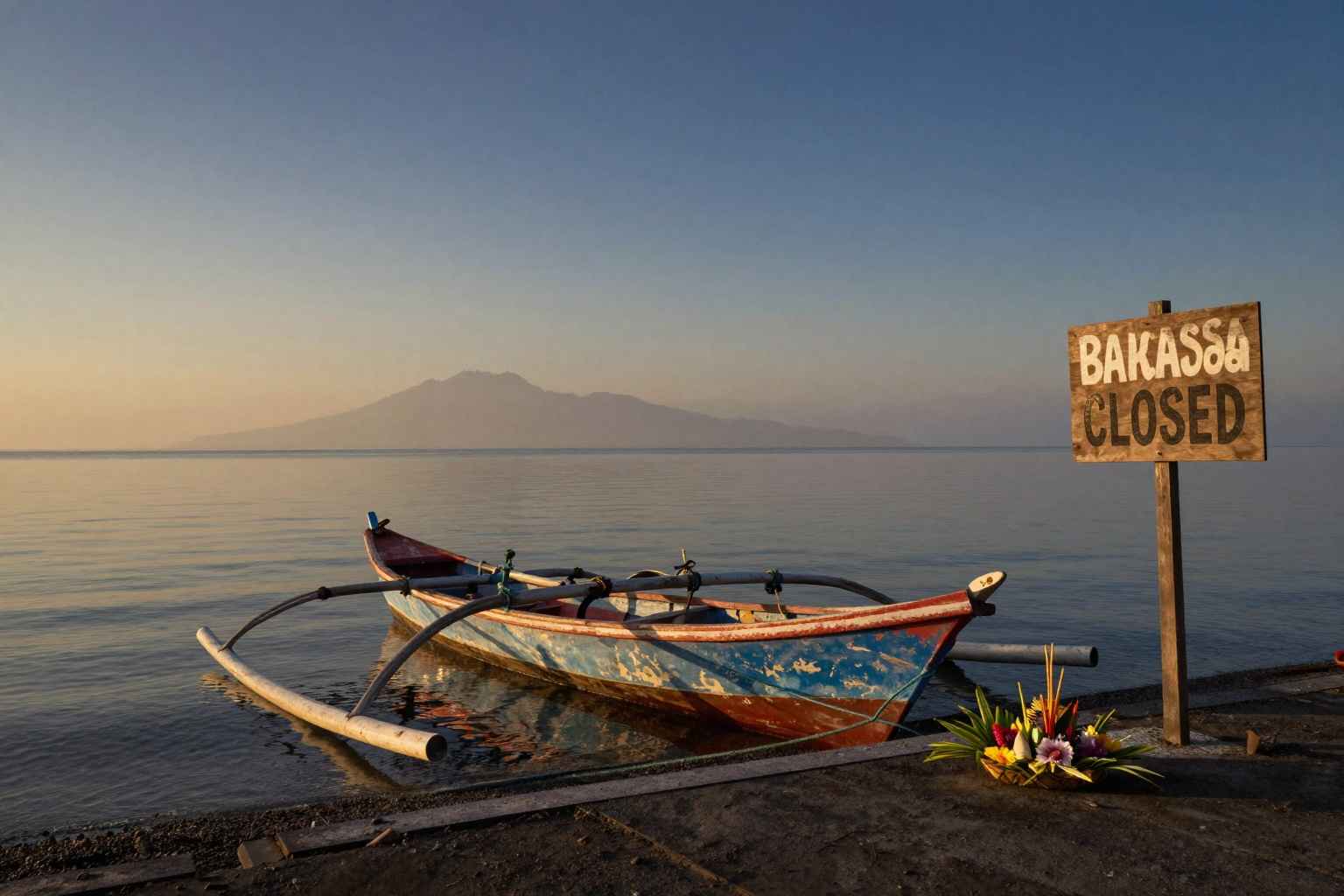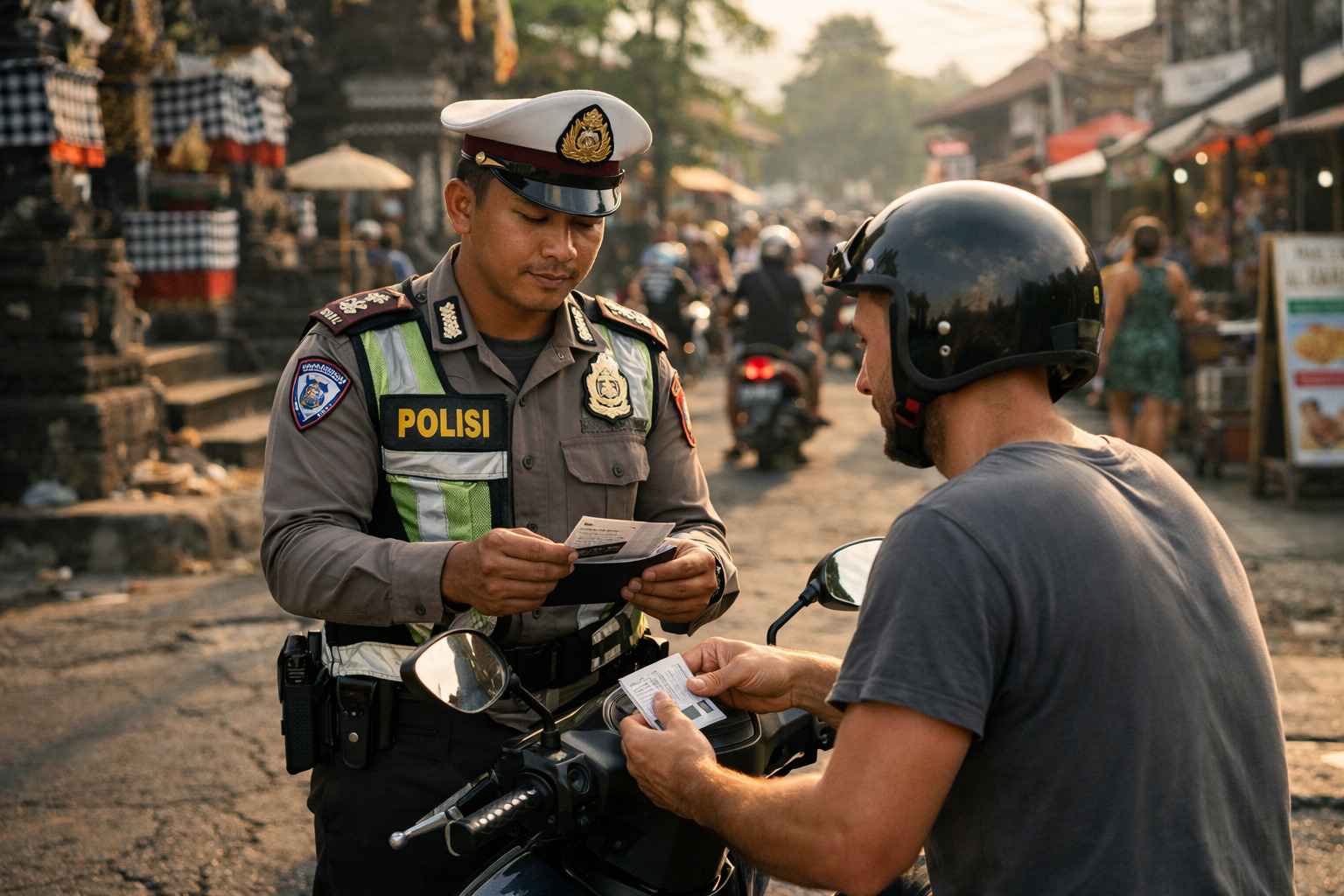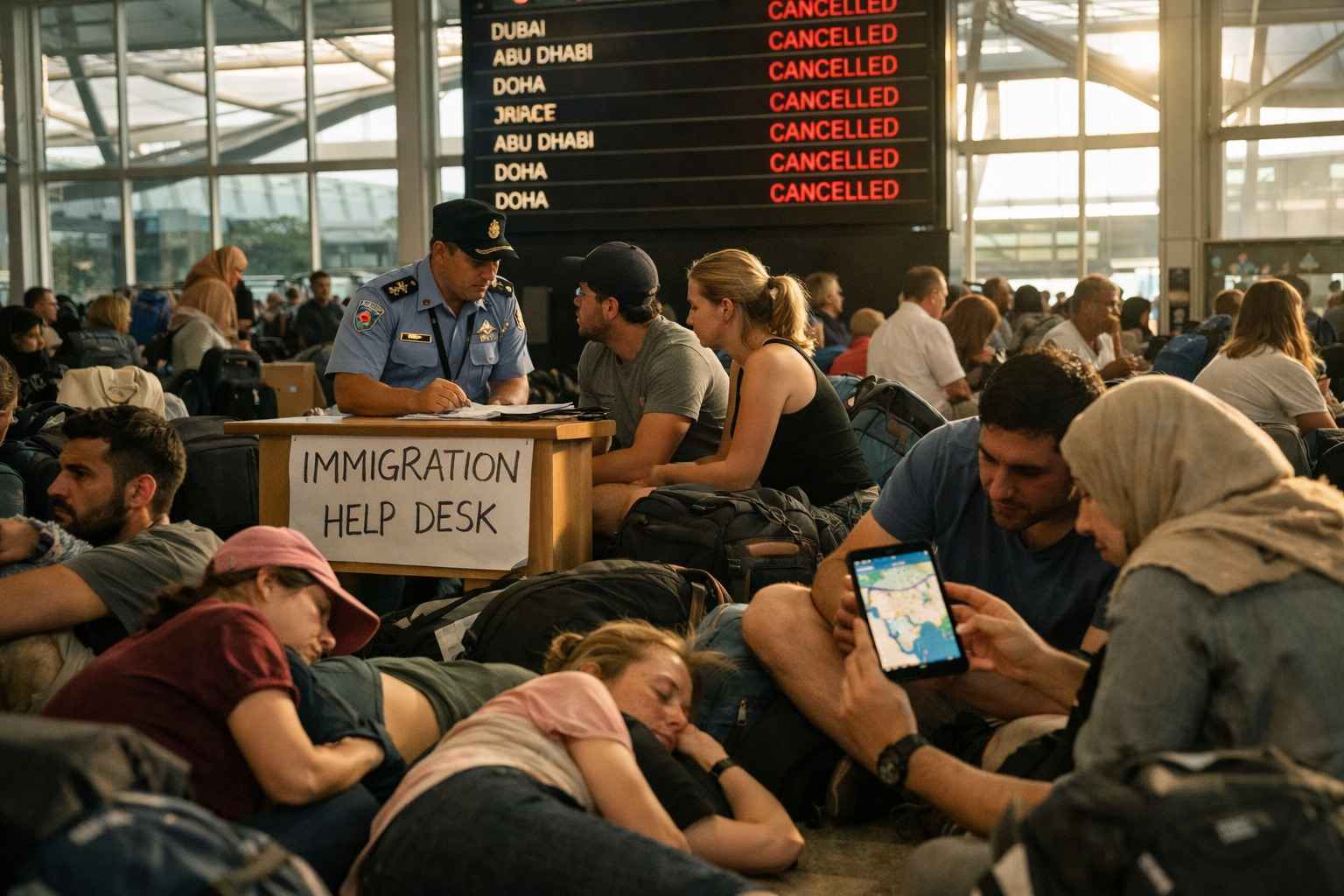
The Middle East airspace closure has done more than ground flights. It has exposed just how fragile the global travel network really is, and nowhere is that more visible right now than on the Indonesian island of Bali, where thousands of tourists have found themselves in legal and logistical limbo, caught between a canceled flight and an expiring visa.
By early March 2026, more than 4,500 passengers were stranded at Ngurah Rai International Airport, their connections to Dubai, Abu Dhabi, and Doha severed without warning. In response, Indonesian immigration authorities moved quickly and decisively, rolling out a framework that offers genuine relief to those affected.
A Policy Built for Chaos
What makes Bali’s response notable is its specificity. Rather than issuing vague reassurances, the Ngurah Rai Immigration Office published a formal technical framework that addresses the exact situation travelers face. Under Circular Letter Number IMI-590.GR.01.01 of 2025, foreign nationals who had already cleared immigration exit controls but were forced to return to Indonesian territory due to force majeure, including conflict, war, or threats of terrorism, are entitled to a 30-day Emergency Stay Permit, known locally as the ITKT.
Crucially, overstay fines in these circumstances are set to zero rupiah. No penalties. No bureaucratic penalties for something entirely outside a traveler’s control. The only requirement is a formal statement from the airline or airport confirming the cancellation.
This matters because the Middle East airspace closure did not give passengers hours of warning. Many had already passed through departure gates, handed over boarding passes, and mentally left Indonesia. The immigration system needed to account for that reality, and it did.
The Bigger Picture Behind a Regional Crisis
The Middle East airspace closure is not a contained incident. It is a cascading disruption with consequences stretching from the Persian Gulf to Southeast Asia, affecting not only tourists but also migrant workers, trade routes, and families separated across borders.
In Bali alone, local officials in Tabanan Regency confirmed they are working to support the families of 14 Balinese workers trying to return from Jordan and the UAE. In Gianyar Regency, authorities are assisting families with loved ones employed in Kuwait. These are people who left home for economic opportunity and are now caught in the crossfire of a geopolitical conflict they had no part in creating.
This human dimension is easy to miss when the headline focuses on stranded tourists. But the Middle East airspace closure is simultaneously a travel disruption, a humanitarian concern, and a stress test for how governments communicate with their most vulnerable citizens during a crisis.
What Travelers Must Do Now
Despite the goodwill behind the policy, responsibility still falls on the individual. The ITKT applies only to travelers who had already been stamped out of Indonesia when their flight was canceled. Tourists who suspect their departure may be affected but have not yet gone through immigration must apply for a standard visa extension before their current permit expires, not after.
The distinction is important. Waiting costs far more time and stress than acting early. Embassies, airlines, consulates, and travel insurers are all issuing updates at different intervals, and the situation continues to evolve. Checking all of these sources regularly is not optional, it is essential.
Immigration staff at Ngurah Rai have increased shift coverage to handle the volume, and cancellation stamps are being reversed manually and systematically. As of early March, only 54 travelers had formally applied for the ITKT, but that number is expected to rise sharply as the Middle East airspace closure extends further into the week.
Looking Ahead
The geopolitical events driving the Middle East airspace closure show no sign of immediate resolution. Airlines and airports are managing rolling cancellations with limited visibility into when normal operations will resume. Travelers planning future trips through Gulf hub airports should now treat contingency planning as a standard part of booking, not an afterthought.
Indonesia’s rapid, structured response offers a model worth watching. When governments move quickly with clear legal frameworks and waived penalties, they reduce panic and protect the dignity of people who are, through no fault of their own, stuck in the middle.
Sources & References
- Ngurah Rai Immigration Office , Official Statement on Emergency Immigration Services for Foreign Nationals
- Indonesian Directorate General of Immigration , Circular Letter IMI-590.GR.01.01 of 2025
- Bali Ngurah Rai International Airport (Angkasa Pura) , Flight Operations & Passenger Updates
- IATA (International Air Transport Association) , Middle East Airspace Disruption and Global Flight Impact Reports
- Indonesian Ministry of Foreign Affairs , Citizen Protection & Evacuation Assistance Updates
About the Author
This article was written by a senior journalist with over a decade of experience covering Southeast Asian travel, regional geopolitics, and aviation. With a focus on the human stories behind policy decisions, the author has reported from across Indonesia, tracking how governance and tourism intersect during periods of global instability. They contribute regularly to international travel and news publications covering the Asia-Pacific region.