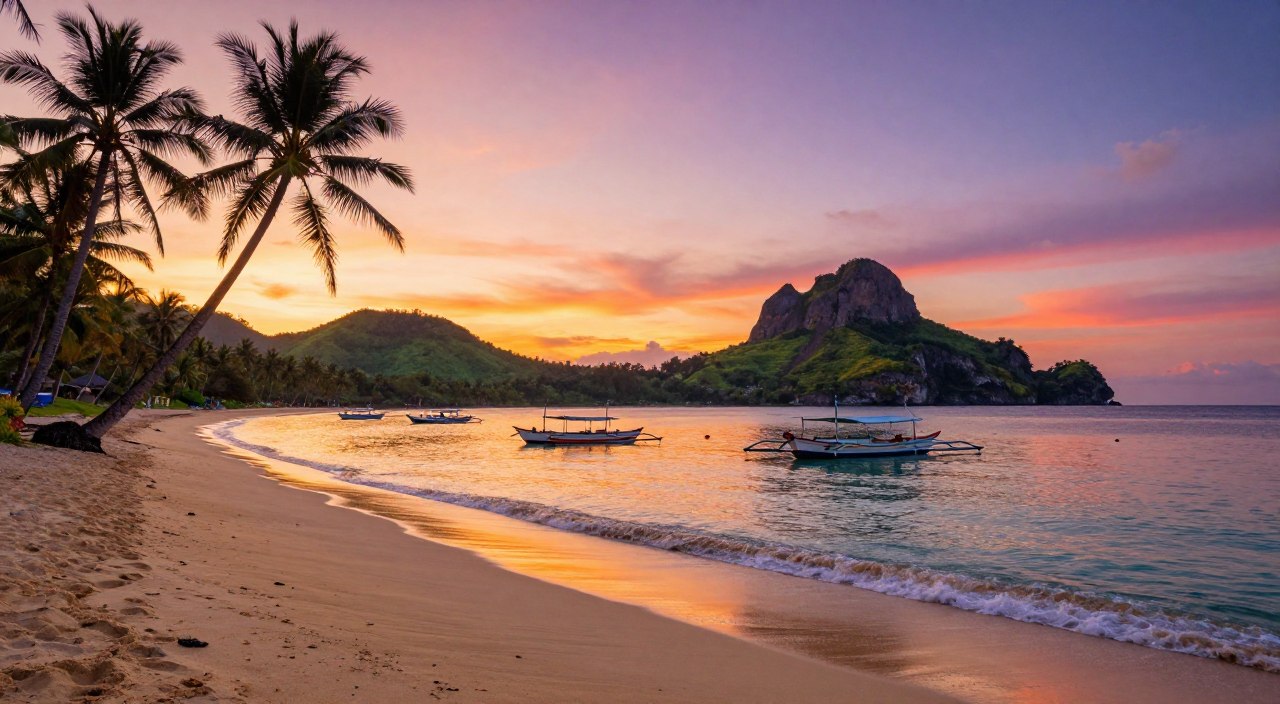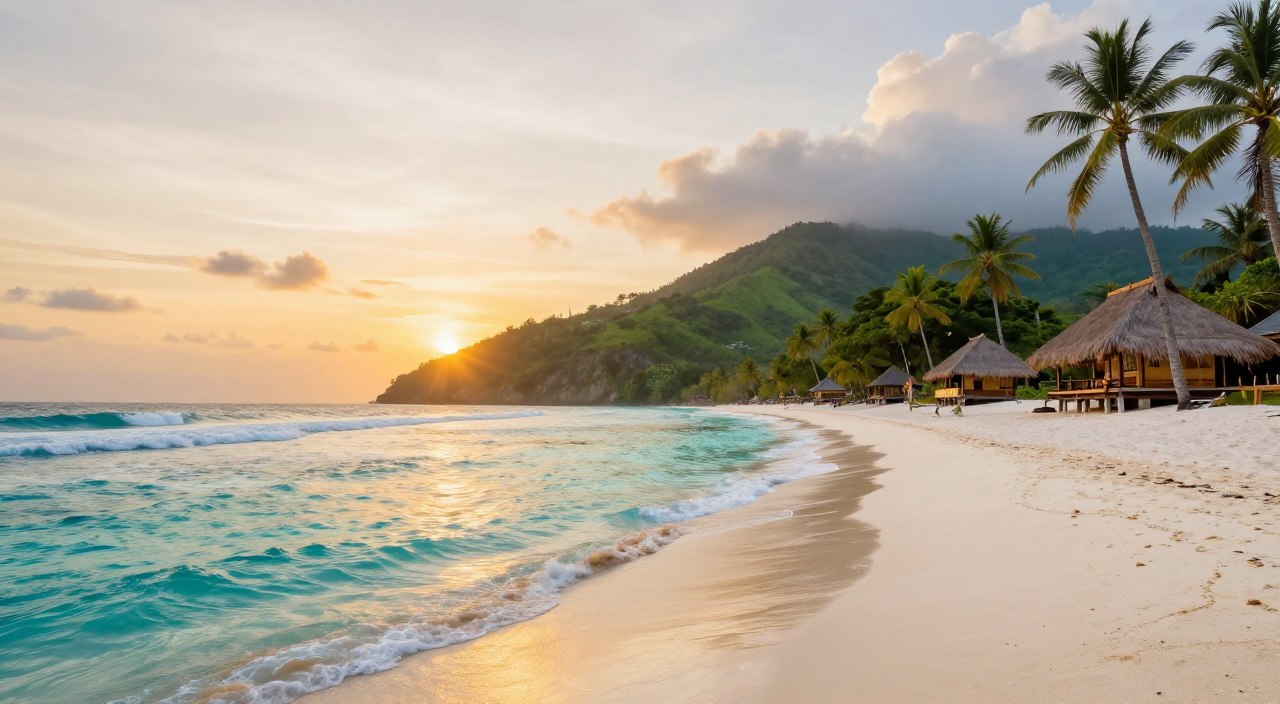
Introduction
A liveaboard Indonesia Raja Ampat trip is, without question, one of the most extraordinary experiences available to any scuba diver on Earth. From the moment you slip beneath the surface into the electric blue of the Coral Triangle, the sheer density and colour of marine life hits you like nothing else, a wall of fish, soft coral, and living reef stretching in every direction.
Raja Ampat is not just a dive destination. It is the benchmark against which every other dive destination is measured. Scientists have catalogued more species of coral reef fish, hard coral, and soft coral here than anywhere else on the planet. If you care about underwater diving, this is where you come.
And there is only one way to do it justice: a liveaboard.
🌊 Quick Facts: Liveaboard Indonesia Raja Ampat
| Detail | Info |
|---|---|
| Best Season | October to April (peak diving season) |
| Water Temperature | 27°C – 30°C (80°F – 86°F) |
| Visibility | 15–30 metres (50–100 ft), site dependent |
| Skill Level | Beginner to Advanced (site dependent) |
| Price Range | USD $150 – $900+ per person per day |
| Nearest Airport | Sorong (SOQ), West Papua |
| Marine Park Fee | USD $35 for international divers (one-time) |
| Currency | Indonesian Rupiah (IDR) |
Why Raja Ampat Is the World’s Ultimate Dive Destination
In 2001, a joint survey by The Nature Conservancy and Conservation International confirmed what marine biologists had long suspected. Raja Ampat is the most biodiverse marine region on Earth. The archipelago sits at the heart of the Coral Triangle, the global epicentre of marine biology, positioned between the Indian Ocean and the Pacific Ocean off the northwestern tip of Western New Guinea.
The numbers are staggering. Over 1,500 species of coral reef fish, more than 600 species of hard coral (roughly 75% of the world’s total), 700 types of molluscs, and countless species of shark, ray, and pelagic visitors have been recorded here. No other place on Earth matches it.
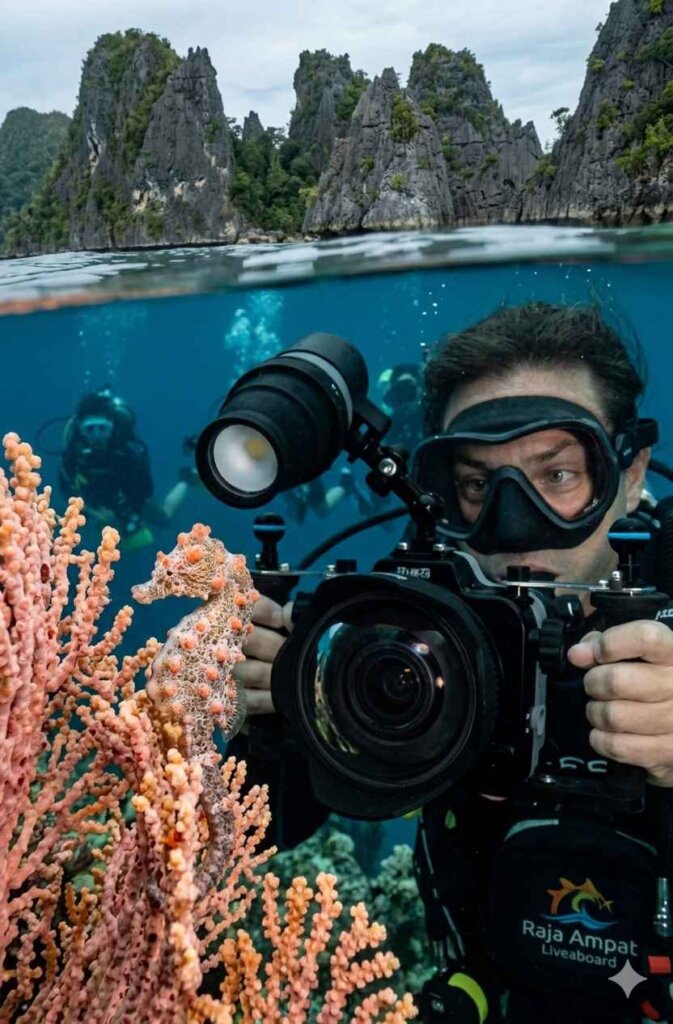
The islands themselves are equally dramatic. Hundreds of jungle-clad limestone karsts rise from flat, mirror-calm seas. Mushroom-shaped islets sit above lagoons of impossible turquoise. The coastline of West Papua forms a backdrop that makes every dive feel like entering another world.
This is why serious divers come to Indonesia, and specifically to Raja Ampat.
Related: Discover all Indonesia dive destinations worth visiting
Why a Liveaboard Is the Best Way to Explore Raja Ampat
Raja Ampat covers more than 40,000 square kilometres of sea. Its best dive sites are spread across remote, often uninhabited islands that are hours apart by boat. A land-based resort simply cannot get you to the places that make this region legendary.
Access to Remote and Uninhabited Islands
A liveaboard is essentially a floating dive base. It moves with you, anchoring overnight at sites that no day-tripper will ever reach. The deep channels of the Dampier Strait, the soft-coral gardens of Misool, the whale shark aggregation zones of Cenderawasih Bay, none of these are accessible from a hotel room in Sorong.
The remoteness is the whole point. You are waking up on a boat, metres above a pristine reef, with no crowds, no commute, and no wasted time.
More Dives, Less Travel Time
On a standard liveaboard diving Indonesia itinerary, you can expect three to four dives per day, plus frequent night dives. That is three to four times more diving than most day-trip operations offer. Over a ten-night trip, you could log 35–45 dives. That kind of dive density transforms a holiday into a genuine expedition.
The Magic of a Pinisi Sailboat Liveaboard
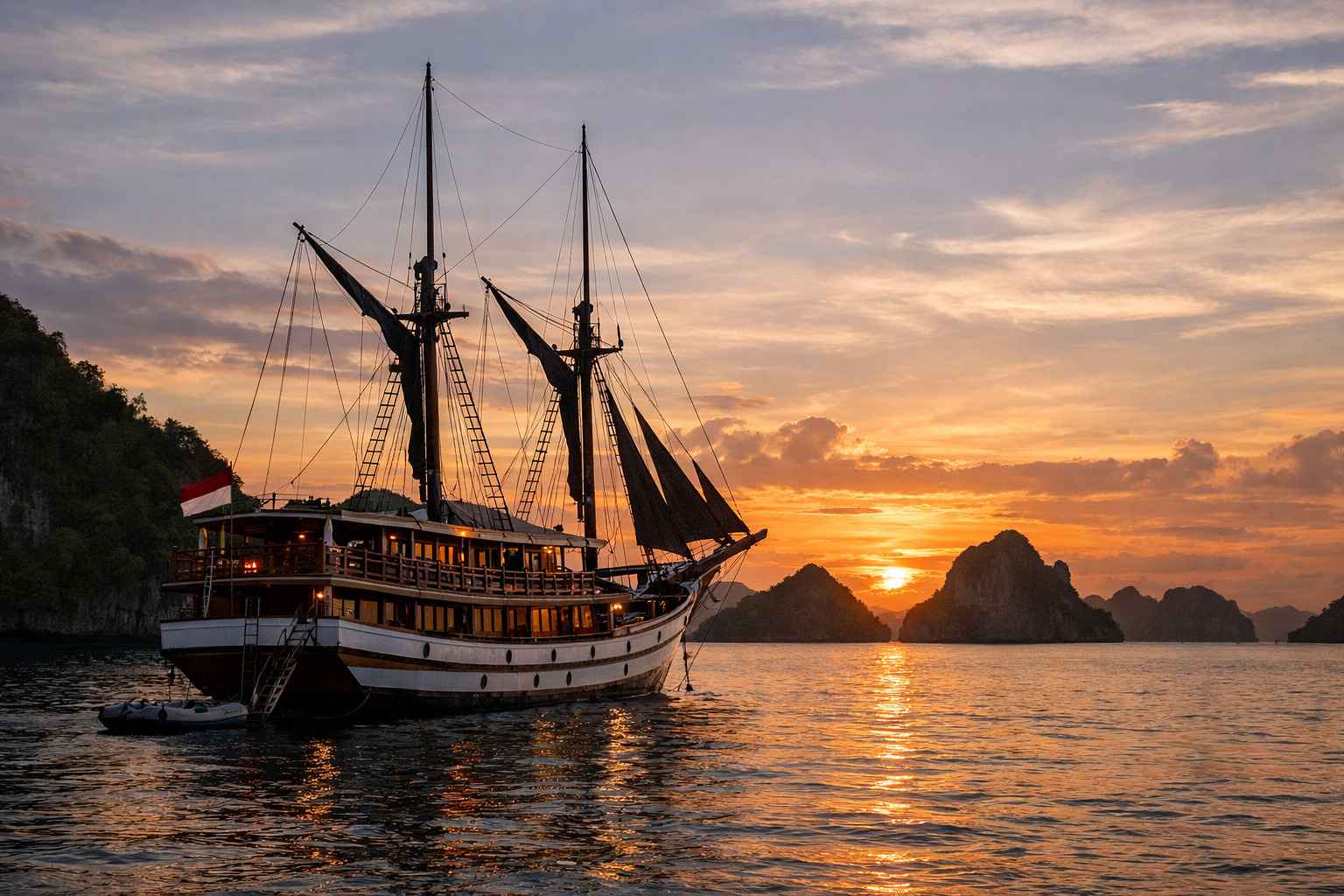
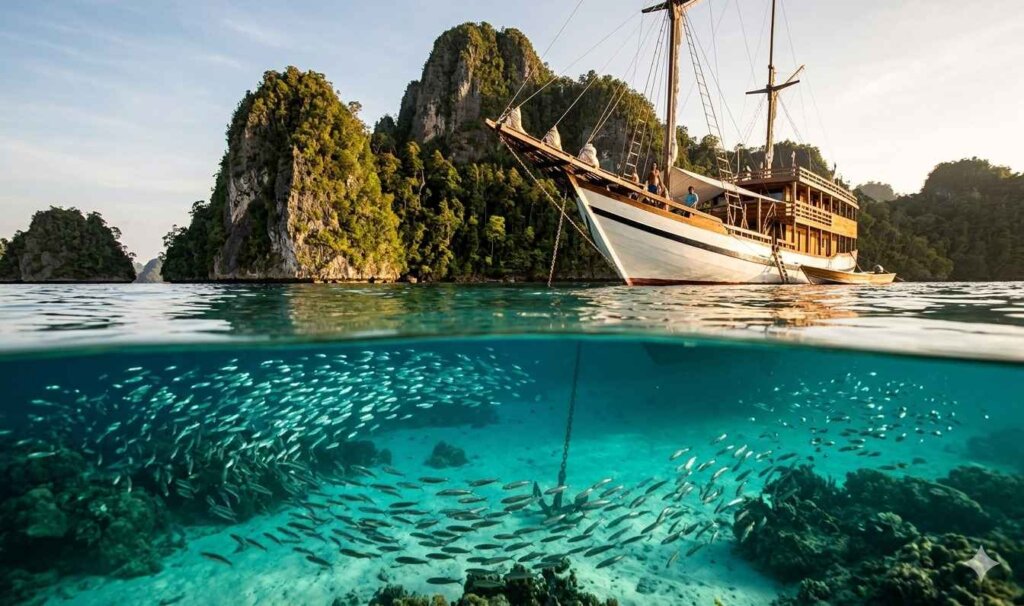
The traditional Pinisi (or Phinisi) is an Indonesian sailboat built by the Bugis and Konjo peoples of Sulawesi. It is a two-masted wooden vessel with distinctive curved sails, and it has been the working boat of the Indonesian archipelago for centuries.
Chartering a Raja Ampat Phinisi sailboat liveaboard adds a cultural dimension that a modern motor yacht simply cannot replicate. Many operators now run beautifully restored or purpose-built Pinisi vessels as dive liveaboards, combining traditional aesthetics with modern dive equipment, comfortable cabins, and excellent food. It is the classic way to explore these waters, and it never gets old.
Both motor yachts and traditional Pinisi sailboats operate in Raja Ampat. Motor vessels tend to cover more distance faster, which suits longer itineraries or faster-paced exploratory cruises. Pinisi-style sailboats offer a slower, more atmospheric experience that many divers find unforgettable.
Raja Ampat Dive Sites Guide: The Best Areas to Explore
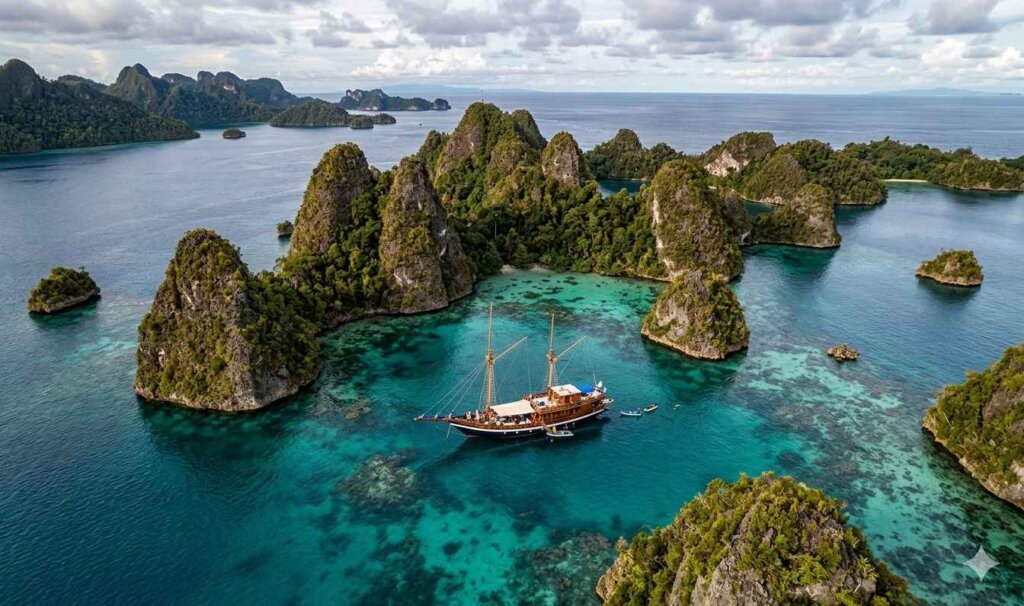
Dampier Strait: The Fish Capital of Raja Ampat
The Dampier Strait sits between Waigeo and Batanta islands, and it is arguably the most famous stretch of water for Raja Ampat liveaboard diving. Powerful currents funnel nutrients through the channel, feeding an astonishing concentration of fish.
Sites like Cape Kri, Sardine Reef, and Chicken Reef regularly appear on lists of the world’s best recreational dive sites. Cape Kri once held the world record for the highest fish count on a single dive, with over 374 species identified in one session. The visibility is typically excellent, ranging from 20 to 30 metres.
Dampier Strait suits intermediate to advanced divers due to its currents. However, slack-tide dives are accessible for confident beginners. Expect schools of barracuda, giant trevallies, manta rays, and occasional whale sharks.
Misool Island: Kaleidoscope of the South
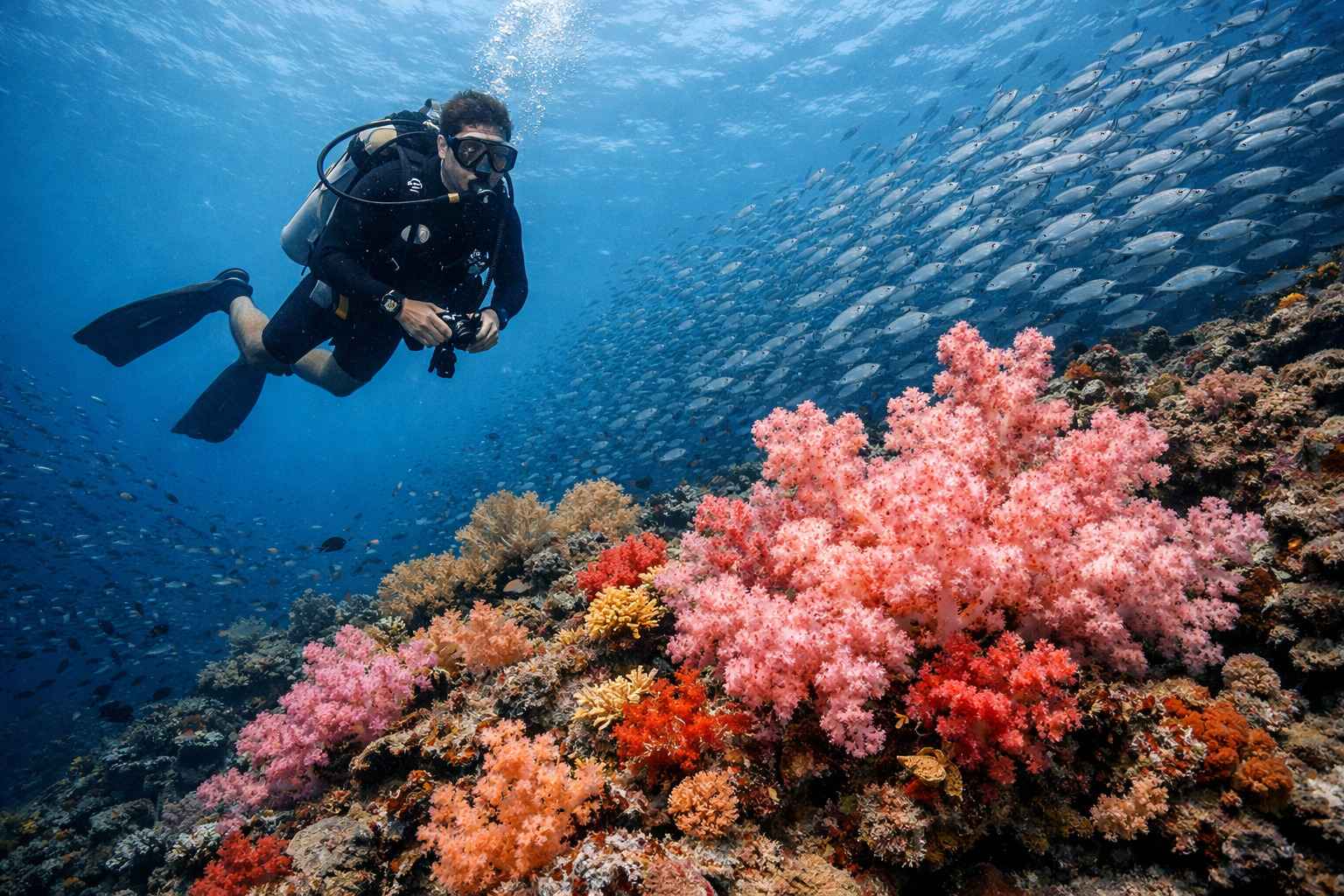
Misool sits in the southern part of Raja Ampat and is widely regarded as one of the most visually stunning reef systems on the planet. The macro diving Raja Ampat Misool experience is particularly renowned, with prolific nudibranchs, pygmy seahorses, and ghost pipefish hiding among the soft corals.
Misool island diving liveaboard trips often include sites like Magic Mountain, a famous seamount where manta rays circle in lazy spirals directly above divers waiting on the bottom. The coral reef diving here is dense and colourful, with barrel sponges the size of small cars.
Misool also offers lagoon dives through flooded limestone caves and tunnels, some of which are genuinely magical, even for non-divers on board.
Waigeo and North Raja Ampat
The north of the region, centred around Waigeo, offers a different character. Calmer conditions make it well-suited to beginners, and the sheltered bays and tidal sea lakes here host species found nowhere else, including the rare Banggai cardinalfish and the extraordinary walking shark.
The Raja Ampat underwater photography opportunities here are exceptional. Clear water, shallow reef gardens, and unusual subjects make it a favourite for wide-angle and macro shooters alike.
Cenderawasih Bay: Diving with Whale Sharks
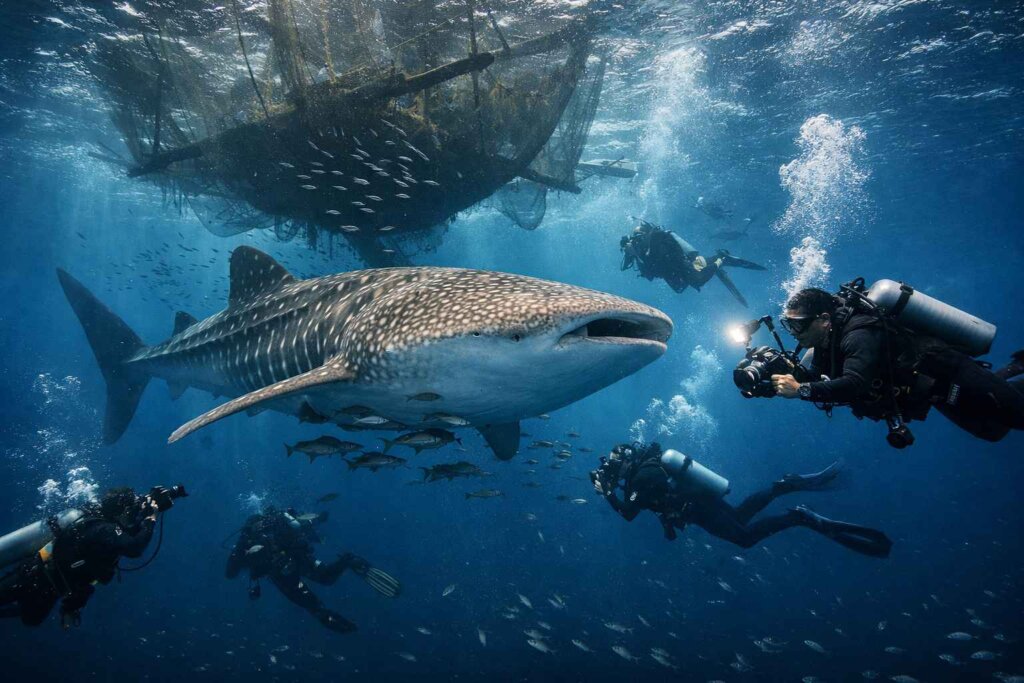
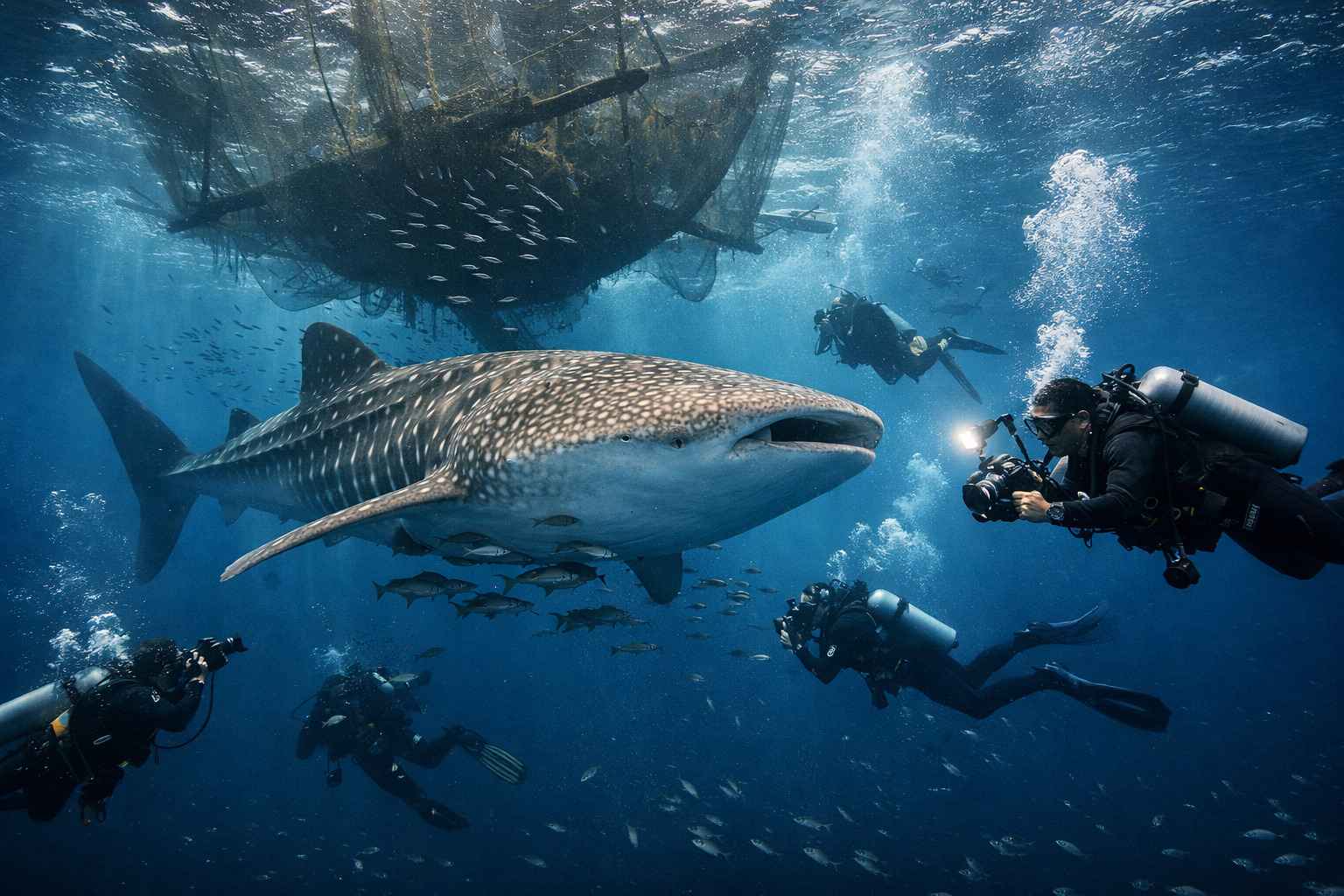
Cenderawasih Bay sits to the east of Raja Ampat proper and requires a longer liveaboard positioning cruise to reach. It is worth every nautical mile. The bay is home to the most reliable whale shark population in the Indo-Pacific, with animals that have been habituated to the presence of local fishing platforms called bagan.
Cenderawasih Bay whale shark encounters are almost guaranteed between October and January. These are not chance sightings. Dives and snorkel sessions with multiple whale sharks at once, sometimes for 30–40 minutes, are genuinely common here.
Raja Ampat whale shark diving in Cenderawasih is a bucket-list experience that deserves its own itinerary. Many liveaboards run dedicated Cenderawasih extensions.
Mansuar and the Manta Rays
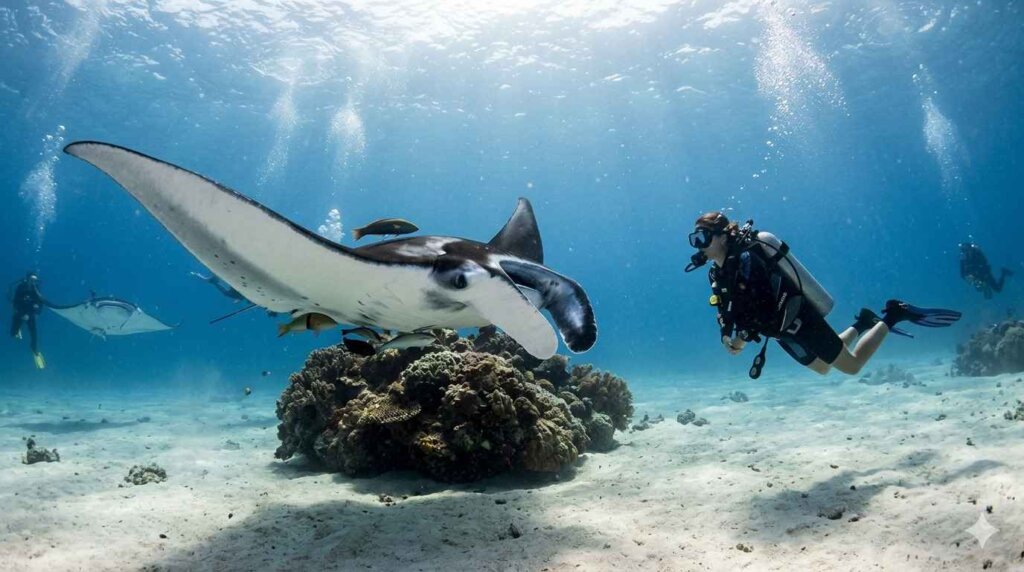
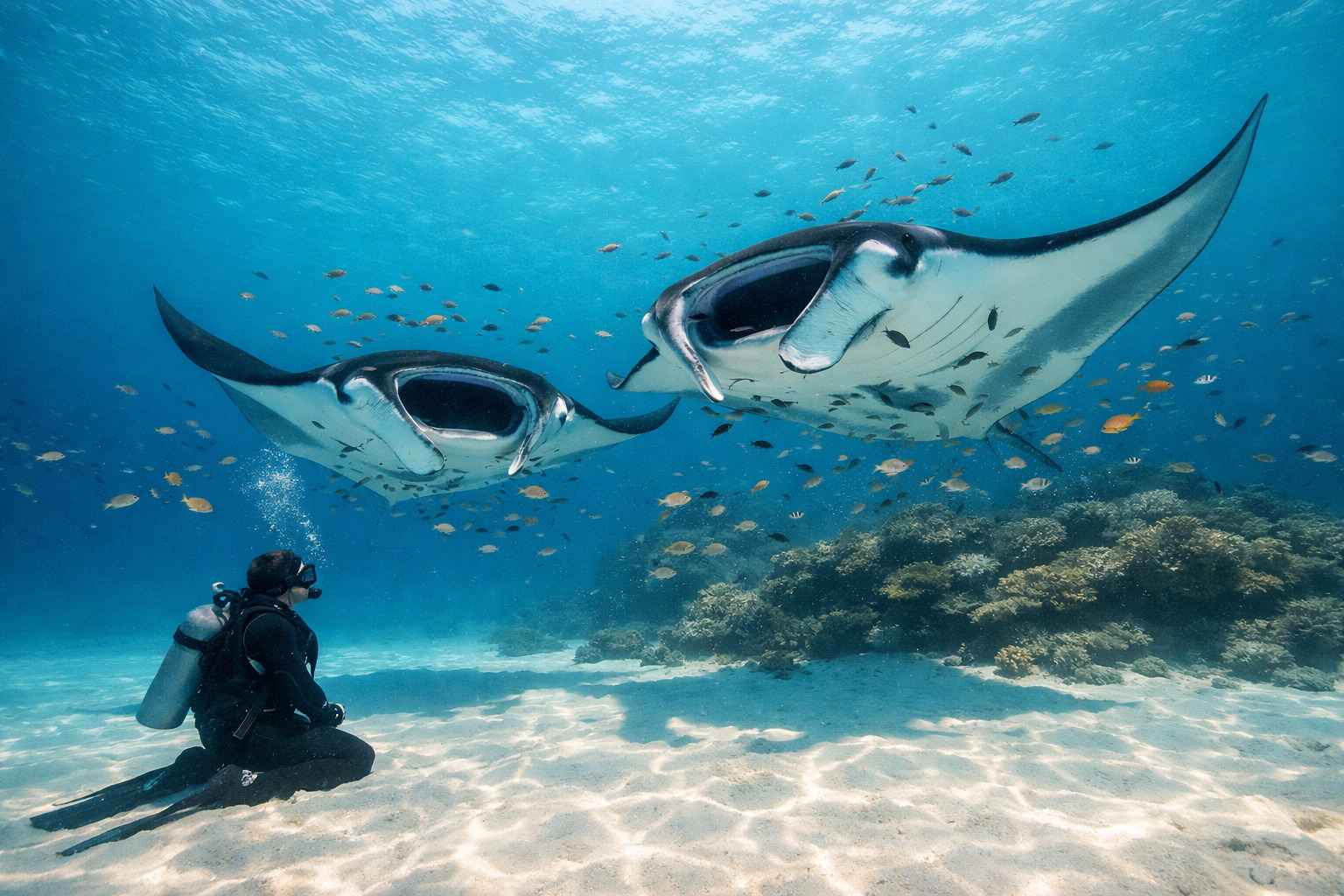
The area around Mansuar island and the famous site of Manta Sandy is one of the best places on Earth for manta ray diving Raja Ampat. This is a cleaning station where manta rays queue up to have parasites removed by wrasse, hovering motionless directly above the sand as divers watch from a respectful distance.
During peak season, it is not unusual to count ten to twenty individual manta rays in a single dive. Combined with the surrounding coral reef and the backdrop of the Raja Ampat Islands above the surface, this is the kind of dive you describe for the rest of your life.
Marine Life You Can Expect to See
Raja Ampat marine biodiversity is unlike anything in Southeast Asia, or anywhere else. Here is what a typical Raja Ampat liveaboard diving week might deliver:
- Manta rays at cleaning stations and feeding aggregations
- Whale sharks in Cenderawasih Bay and occasionally Dampier Strait
- Wobbegong sharks (carpet sharks) resting on coral ledges and overhangs, a wobbegong shark Raja Ampat sighting is almost guaranteed
- Pygmy seahorses on sea fans, including the famous Bargibant’s and Denise’s pygmy seahorse
- Raja Ampat pygmy seahorse diving is world-class, Misool in particular
- Reef sharks (whitetip and blacktip) on virtually every dive
- Sea turtles, including hawksbill and green turtles
- Dolphins in open water passages, often riding the boat‘s bow wave
- Nudibranchs in extraordinary variety, over 600 species recorded in the region
- Ghost pipefish and their ornate relatives
- Blue-ring octopus hiding in rubble zones
- Giant trevallies in hunting packs
- Schools of barracuda, surgeonfish, and anthias beyond counting
- Mantis shrimp, squid, and cuttlefish on night dives
- Coral Triangle specialities including the epaulette (walking) shark
The sea floor across Raja Ampat is also carpeted with species of hard and soft coral that form the literal foundation of this biodiversity. Preserving the coral reef here matters globally, which is why marine park conservation fees are not optional, they are essential.
Raja Ampat Liveaboard Diving: What to Expect on Board
A typical liveaboard Indonesia day in Raja Ampat follows a rhythm that quickly becomes addictive. You wake up anchored above a new site. Breakfast is served before the first dive. Dives run at roughly 7am, 10am, 2pm, and often again at dusk or after dark.
Between dives you eat, sleep, review photos, and watch the islands pass by. Meals on quality liveaboards are excellent, with a mix of Indonesian and Western dishes. Freshwater showers, air-conditioned cabins, and comfortable communal areas are standard on mid-range and above vessels.
Dive guides are always on board to brief each site, point out hidden marine life, and ensure safety. Most vessels carry full sets of rental scuba diving equipment, though experienced divers prefer to bring their own regulators and computers.
The Raja Ampat marine park fee of USD $35 (for international visitors) is a one-time charge, usually collected by the liveaboard operator on your behalf. This fee directly funds coral reef protection, ranger patrols, and conservation research. Pay it gladly.
Equipment rinse stations, camera table space, and individual dive lockers are standard. Nitrox is available on most vessels for an additional fee.
Expert Experience: What It’s Really Like
I have been on enough liveaboards across Asia to know the difference between a good trip and a great one. My first liveaboard Indonesia Raja Ampat trip was a ten-night voyage on a traditional Pinisi sailboat out of Sorong, back when the marine park was quieter and the only person who knew about Cape Kri was the dive guide standing in front of you.
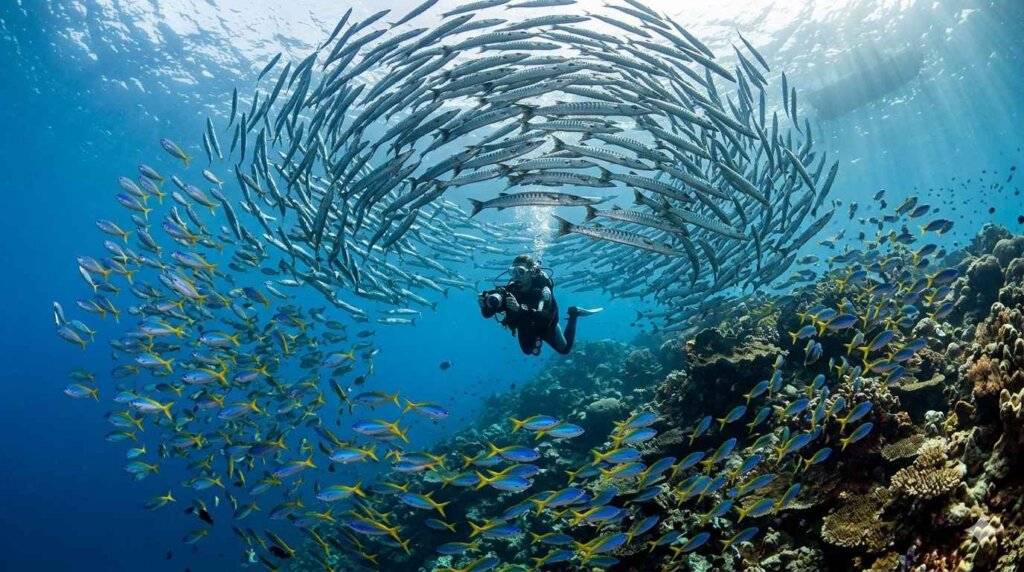
The first dive was at a site called Sardine Reef in the Dampier Strait. I dropped down to 18 metres and was immediately surrounded by a tornado of fusiliers so dense I lost sight of the guide entirely. A manta ray cruised through the school as if we were all perfectly ordinary. I genuinely forgot to check my air until the guide signalled the ascent.
What surprises most first-timers is the sheer scale of it. You can see forty species in a single dive and still feel like you missed half of what was happening. Night dives on the coral reef at Misool feel like visiting a different planet, all flashing bioluminescence and hunting cephalopods.
I will be honest about one thing: the currents in the Dampier Strait are no joke. I have been swept sideways, pulled upward, and occasionally had to abort a dive entirely because the water decided it had other plans. A good liveaboard crew reads the tides and adjusts the plan. The ones who try to force a dive in the wrong conditions are the ones to avoid.
Book with an operator whose guides know these islands by name and by current pattern. That knowledge is worth more than the thread count on your cabin sheets.
Raja Ampat Liveaboard Prices and Budget Guide
Liveaboard Comparison Table
| Category | Price Per Day | Price Per 10-Night Trip | Vessel Type | Key Features |
|---|---|---|---|---|
| Budget | $150–$250 | $1,500–$2,500 | Small motor boat, basic Pinisi | Shared cabins, simple meals, 3 dives/day |
| Mid-Range | $250–$450 | $2,500–$4,500 | Modern Pinisi or motor yacht | En-suite cabins, Nitrox, 4 dives/day |
| Luxury | $450–$700 | $4,500–$7,000 | Premium Pinisi or motor yacht | A/C suites, gourmet meals, photo facilities |
| Private Charter | $700–$1,000+ | $7,000–$12,000+ | Full vessel hire | Bespoke itinerary, full exclusivity |
Budget Liveaboards in Raja Ampat
Budget liveaboard diving Indonesia options typically run $150–$250 per person per day, covering accommodation, meals, and three dives per day. Expect basic but functional cabins, often shared. The diving itself is just as good; the comfort level is simply more modest.
These are best suited to experienced divers who prioritise maximising dive time over onboard comfort.
Mid-Range Raja Ampat Dive Cruise Packages
The sweet spot for most divers. Raja Ampat dive cruise packages in the $250–$450 range offer en-suite cabins, air conditioning, Nitrox fills, and experienced English-speaking guides. Four dives per day is standard. Many of the best-reviewed operators in the region sit in this bracket.
A 10-night mid-range trip with flights from Europe or Australia typically totals $3,000–$6,000 per person all-in.
Luxury Liveaboard Raja Ampat Options
Premium vessels at $450–$700 per day offer genuinely impressive experiences: gourmet food, suite-level cabins, dedicated underwater photography support, kayaks, and stand-up paddleboards. Some offer spa facilities and satellite communications.
The best luxury liveaboard Raja Ampat operators limit passenger numbers to eight to twelve guests for a more private experience.
Private Liveaboard Raja Ampat
A private charter of an entire vessel ranges from $7,000 to $12,000+ per trip (not per person), depending on vessel size and trip length. Groups of six to twelve divers can make this surprisingly cost-effective. Full itinerary control is the primary advantage.
Raja Ampat Liveaboard: 5-Day vs Extended Trip Options
5-Day Raja Ampat Liveaboard
A Raja Ampat liveaboard 5-day trip is the minimum that makes sense given the travel time to reach Sorong. You can expect 12–15 dives, typically focused on one or two areas such as the Dampier Strait and Mansuar. It suits divers with limited leave, a tight budget, or those combining Raja Ampat with another liveaboard destination such as Komodo.
What you gain in cost savings, you lose in range. A 5-day trip will not reach Misool or Cenderawasih Bay.
Extended 10 to 14-Night Dive Cruises
For serious divers, a 10–14 night trip is the only way to properly cover Raja Ampat. You gain access to all major regions: Dampier Strait, Waigeo, Misool, and potentially Cenderawasih Bay. Dive counts of 35–50 are achievable.
Extended Raja Ampat liveaboard diving trips suit photographers, macro enthusiasts, and anyone who wants to leave knowing they have truly experienced the archipelago.
Recommendation: If you are travelling to Raja Ampat for the first time and can afford the time, do the extended trip. The distance alone justifies it.
Best Time to Visit: Raja Ampat Diving Season October to April
The Raja Ampat diving season October to April represents the peak period for calm seas, excellent visibility, and the best marine encounters. The northwest monsoon keeps the Pacific Ocean side calm and conditions predictable. Water temperature averages 28°C–30°C.
October to January is prime time for manta rays at Manta Sandy and whale sharks in Cenderawasih Bay. February to April sees the final weeks of the northwest season with continued excellent conditions.
May to September is technically the off-season, with stronger winds and choppier seas on some exposed sites. However, liveaboard diving Coral Triangle Indonesia continues year-round in Raja Ampat. Some operators specifically target Misool during the southern season, as its sheltered lagoons remain diveable. Visibility is often lower in these months at 10–20 metres.
Water temperature never drops below 26°C in Raja Ampat, making thermal protection more about comfort than survival. A 3mm wetsuit is standard; some photographers prefer a 5mm for longer dives in deeper water.
How to Get to Raja Ampat
- Fly to Jakarta (CGK) or Bali (DPS) from your international departure point.
- Connect to Sorong (SOQ) in West Papua via Jakarta, Makassar, or Manado. Airlines include Garuda Indonesia, Batik Air, and Lion Air. Flight time from Jakarta is approximately 5–6 hours.
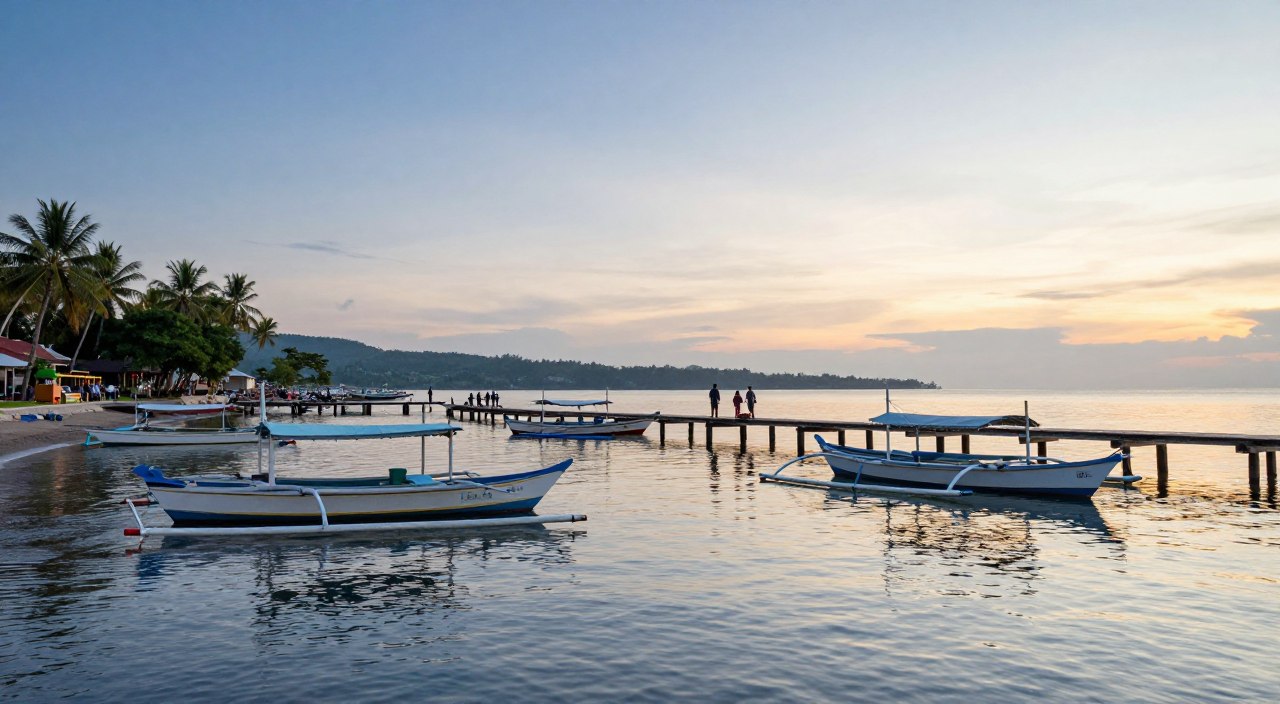
- Arrive in Sorong and transfer to your liveaboard. Most operators arrange airport pickup and handle boarding logistics. Sorong has basic facilities and is a transit city rather than a destination.
- Board your vessel at Sorong harbour or a nearby jetty. Some operators depart from the Waisai ferry terminal on Waigeo island.
- Depart and begin diving within hours of boarding, often on the first afternoon.
Visa note: Most nationalities receive a free 30-day visa on arrival to Indonesia. Confirm current requirements before travel.
Budget for international flights: USD $600–$1,500 from Europe, $400–$900 from Australia, depending on season and routing.
Top Tips for Diving Raja Ampat
- Check your certification level. Many Raja Ampat sites require at minimum Open Water certification, while the Dampier Strait channels suit Advanced divers or above.
- Pay the marine park fee. It costs USD $35 and goes directly to conservation. Carry the card with you underwater, rangers do check.
- Respect the currents. The tides in the Dampier Strait and Misool channels move fast and change direction. Always follow your guide’s briefing.
- Bring a surface marker buoy (SMB). It is mandatory in Raja Ampat due to boat traffic in some areas. Your liveaboard will supply one, but owning your own is good practice.
- For underwater photography, bring a wide-angle lens for mantas and reef walls, and a macro lens or close-up kit for pygmy seahorse and nudibranch work.
- Dive early. The first dive of the day, typically at dawn or just after sunrise, consistently delivers better fish activity, calmer current windows, and cleaner water.
- Book early. Peak season berths on the best Raja Ampat liveaboards sell out six to twelve months in advance.
- Bring reef-safe sunscreen only. Standard chemical sunscreens are prohibited in the marine park and actively damage coral.
- Carry seasickness remedies. The crossing from Sorong can be rough in certain conditions, and early trips in the Pacific Ocean swell are not for the unprepared.
- Allow at least 24 hours after your last dive before flying. Most multi-day liveaboard itineraries build this in, but confirm with your operator.
Is This Trip Right For You? A Quick Self-Qualification Checklist
Use this checklist to decide whether a liveaboard Indonesia Raja Ampat trip suits you:
- ✅ You are a certified scuba diver (Open Water minimum; Advanced recommended)
- ✅ You have logged at least 10–20 dives (beginners should confirm site suitability with operator)
- ✅ You are comfortable sleeping on a moving boat for multiple nights
- ✅ You can commit 7–14 days of travel time including transit
- ✅ You have a budget of at least USD $2,500–$3,500 for the trip itself (excluding flights)
- ✅ You are interested in conservation and wildlife, not just tick-box tourism
- ✅ You are flexible about itinerary changes due to weather or current conditions
- ✅ You are happy with limited mobile phone coverage for a week or more
- ⚠️ You are a non-diver: some liveaboards accept snorkellers, but confirm in advance
- ❌ You require luxury hotel facilities: liveaboards are comfortable but compact by nature
Pros and Cons of a Raja Ampat Liveaboard
| Pros | Cons |
|---|---|
| Access to remote, uncrowded dive sites | Seasickness risk, especially in transit |
| 3–5 dives per day, maximum dive time | Limited personal space on board |
| Traditional Pinisi cultural experience | Expensive compared to land-based resorts |
| All-inclusive convenience | Inflexible schedule once underway |
| Night dives included as standard | Connectivity is very limited offshore |
| Expert guides with site-specific knowledge | Requires advance booking (6–12 months out) |
| No daily commute to dive sites | Not ideal for non-divers unless they snorkel |
| Conservation fees built into the trip | Weather can alter itinerary |
Conclusion
A liveaboard Indonesia Raja Ampat trip is not simply a holiday. It is an immersion into the most biodiverse underwater world on the planet, on a vessel that takes you further than any resort can, deeper into the archipelago, and closer to the marine life that makes Raja Ampat genuinely incomparable.
Whether you choose a traditional Pinisi sailboat liveaboard, a modern motor yacht, or a private charter, the experience of waking up above a pristine reef in West Papua is one you will carry for the rest of your diving life.
The manta rays are waiting at Manta Sandy. The whale sharks are circling the bagan in Cenderawasih Bay. And somewhere in a sea fan in Misool, a pygmy seahorse is doing absolutely nothing and somehow being the most wonderful thing you have ever seen.
Book your trip. Go.
Looking to combine your trip? Read our guide to Komodo liveaboard diving or explore Banda Sea liveaboard expeditions for a truly epic Indonesia dive circuit.
Frequently Asked Questions
What are the reviews saying about liveaboard Indonesia Raja Ampat?
Reviews of liveaboard Indonesia Raja Ampat trips are overwhelmingly positive across booking platforms and dive travel forums. Divers consistently highlight the exceptional marine biodiversity, the quality of the dive guides, and the unique experience of sleeping above a world-class reef. Common praise centres on manta ray encounters at Manta Sandy, the wobbegong shark sightings, and the visual impact of the coral reef at Misool. Some reviews mention seasickness during transit and the compactness of budget cabins as the primary downsides. Overall, most divers rate their Raja Ampat liveaboard diving experience among the best of their diving lives.
What is the price of a liveaboard Indonesia Raja Ampat trip?
Prices range from approximately USD $150 per person per day for budget vessels to USD $900 or more for luxury operators. A typical 10-night mid-range liveaboard Indonesia trip costs USD $2,500–$4,500 per person, excluding international flights. Most operators charge an all-inclusive daily rate covering accommodation, meals, and three to four dives per day. The Raja Ampat marine park fee of USD $35 is generally added separately.
What should I know about liveaboard Indonesia Raja Ampat in Papua?
Raja Ampat sits in West Papua, Indonesia‘s easternmost province. It is a remote destination, and access requires a domestic flight to Sorong followed by a boat transfer to your vessel. Infrastructure is limited, and the nearest international hospital is in Sorong or further west in Jakarta. Dive operators take safety seriously and most vessels carry oxygen and first-aid equipment. The cultural environment is welcoming, and conservation awareness among local communities is high. Carry cash as ATM access is limited in the region.
How much does a liveaboard Indonesia Raja Ampat cost in total?
When budgeting for a full trip, include: the liveaboard cost (USD $1,500–$7,000+ depending on length and category), international flights (USD $400–$1,500 depending on origin), domestic flights to Sorong (USD $100–$300), the marine park fee (USD $35), visa if applicable, and travel insurance. A realistic total budget for a 10-night mid-range trip from Europe, including all flights, is USD $4,000–$7,000 per person.
What is the Raja Ampat liveaboard budget range?
The Raja Ampat liveaboard budget range spans broadly. Budget operators charge $150–$250 per person per day. Mid-range sits at $250–$450. Luxury is $450–$700. Private charters of an entire vessel start around $7,000 per trip for the boat (not per person), making them cost-competitive for groups of six or more. For a 5-day trip, budget travellers should plan for approximately $750–$1,250 for the liveaboard portion alone, before flights.
What is a Raja Ampat liveaboard 5-day trip like?
A Raja Ampat liveaboard 5-day trip is a fast-paced, high-intensity diving experience. You can expect 12–18 dives depending on conditions, typically focused on the Dampier Strait and surrounding northern sites. The fish density at sites like Cape Kri and Sardine Reef means even a short trip delivers extraordinary encounters. Night dives are usually included. The main trade-off is limited geographic range, you will not reach Misool or Cenderawasih Bay in five days. It suits first-time visitors, divers combining Raja Ampat with another destination, or those on tighter budgets.
What are the best luxury liveaboard Raja Ampat options?
The best luxury liveaboard Raja Ampat operators offer vessels accommodating 8–12 guests in spacious en-suite cabins with air conditioning, gourmet meals, and professional dive support including Nitrox and camera rinse stations. Premium Pinisi-style vessels and purpose-built motor yachts both feature at the top end. Look for vessels with dedicated marine biologist or naturalist guides, underwater photography support, and flexible itineraries that include Cenderawasih Bay extensions. Prices of $450–$700 per person per day are typical at this level.
Can I book a private liveaboard Raja Ampat?
Yes. Most liveaboard operators in Raja Ampat offer full vessel charters for private groups. This gives you complete control over the itinerary, dive schedule, and crew. Pricing starts at approximately USD $7,000–$10,000 per trip for smaller vessels and scales upward with vessel size and duration. Private charters are popular with dive clubs, underwater photography groups, researchers, and families. They allow bespoke routing, including extended Cenderawasih Bay itineraries or remote Misool focus trips not available on fixed-schedule cruises.
Is Raja Ampat suitable for beginner divers on a liveaboard?
Yes, with appropriate guidance. While some Raja Ampat sites, particularly in the Dampier Strait, require Advanced certification or significant dive experience, many of the coral reef diving sites around Waigeo, the northern bays, and parts of Misool are suitable for Open Water certified divers. Always declare your experience level honestly when booking. Reputable liveaboard operators will match site selection to the group’s skill level and ensure beginners are never taken to unsafe conditions. Buoyancy control is particularly important on any Raja Ampat liveaboard, as the coral is fragile and touching it is strictly prohibited.
When is the best time to book a Raja Ampat dive cruise?
Book as early as possible, ideally 6–12 months ahead of your intended travel dates. The Raja Ampat diving season October to April is the peak period, and berths on the most reputable vessels sell out well in advance. If your priority is manta ray diving Raja Ampat, aim for October through December. For whale shark encounters in Cenderawasih Bay, October through January is optimal. If you are flexible, shoulder periods in late April or early October can offer good value and fewer crowds.
Sources and References
- NOAA Ocean Service, Coral Triangle Overview
- The Nature Conservancy, Raja Ampat Marine Biodiversity
- Conservation International, Bird’s Head Seascape, Raja Ampat
- Coral Triangle Initiative, About the Coral Triangle
- PADI Travel, Raja Ampat Dive Destination Guide
About the Author
James Whitfield is a dive travel writer and liveaboard specialist with over 15 years of experience covering Southeast Asia and the wider Indo-Pacific. He has logged more than 1,200 dives across Indonesia, the Philippines, Papua New Guinea, and the Maldives, with multiple Raja Ampat and Banda Sea expeditions to his name. His work has appeared in dive and adventure travel publications across Europe and Australia. He holds PADI Divemaster certification and a particular weakness for pygmy seahorses.