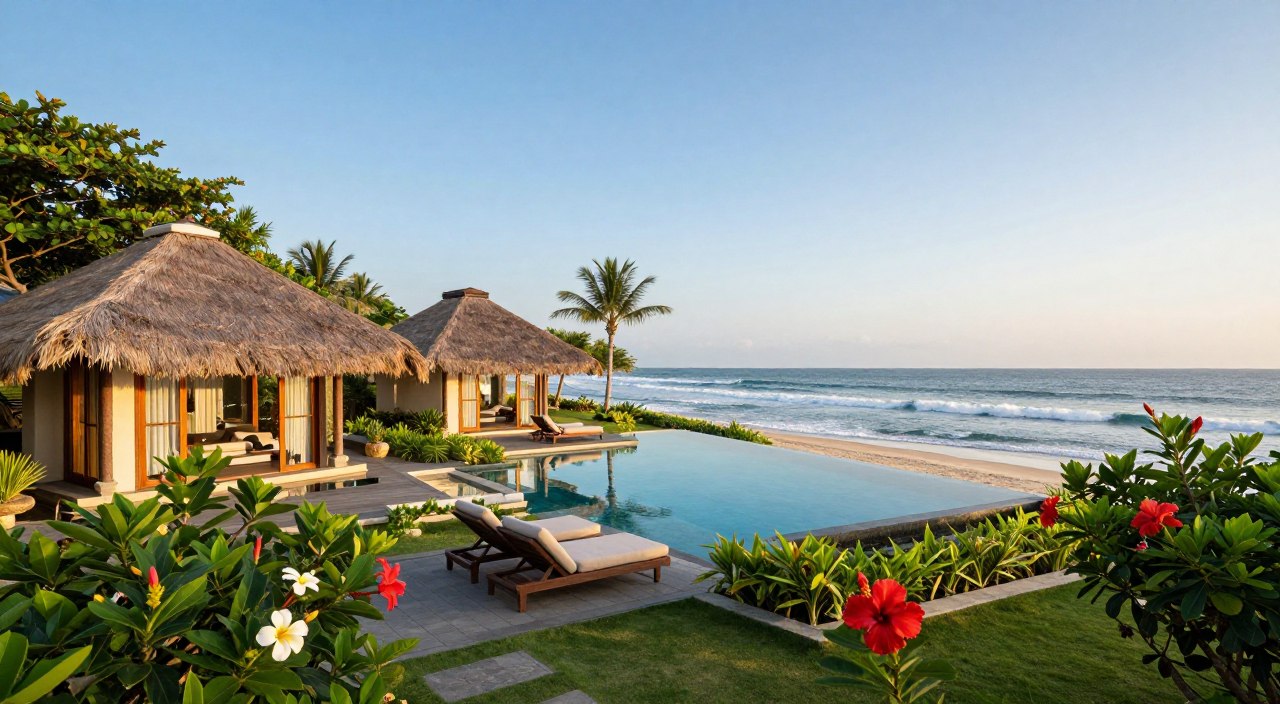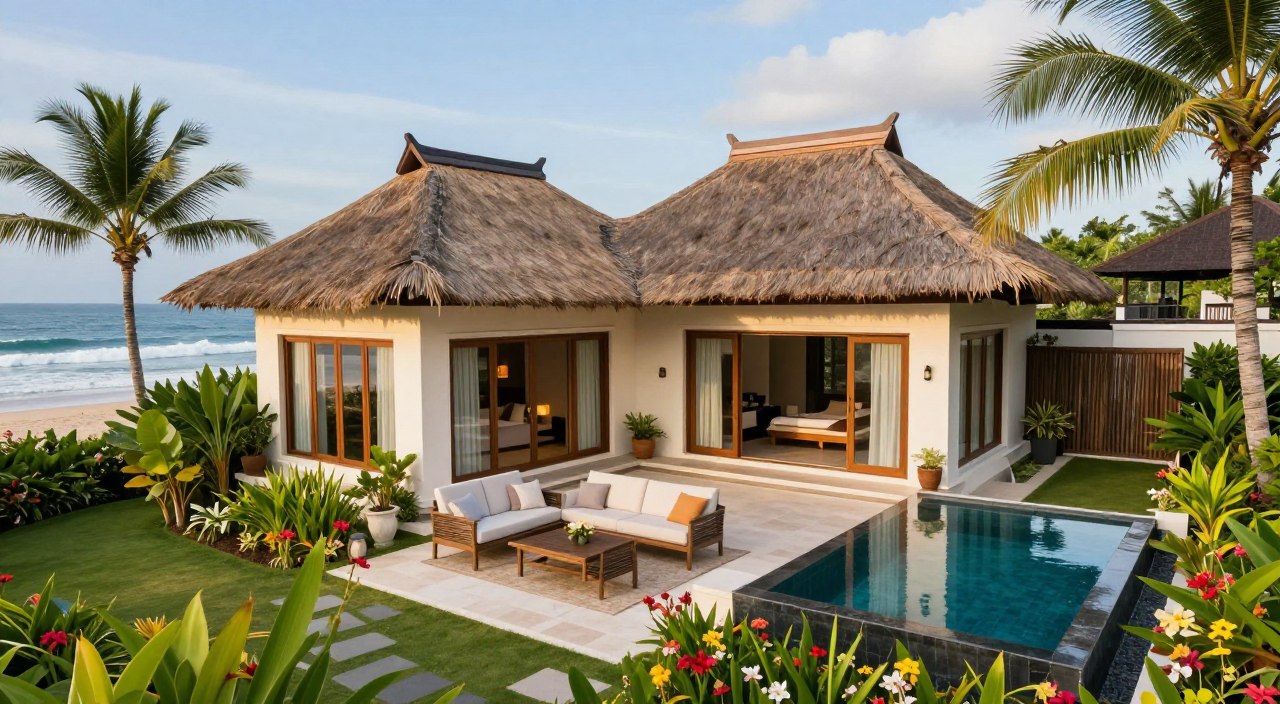
Whether you’re looking to create a poolside oasis or a garden retreat, understanding what makes these structures special is essential. This comprehensive guide covers everything from traditional materials to modern designs, helping you make an informed decision.
From bamboo frames to authentic thatching, we’ll explore the features that make these outdoor structures worth the investment for Australian homeowners.
Quick Summary
- Bali huts originated in Indonesia and have been adapted for Australian outdoor living spaces
- Traditional materials include bamboo frames, coconut wood, and Alang Alang grass thatched roofs
- Multiple sizes available from compact 3x3m to spacious 5x5m with customizable features
- Rethatching typically required every 10-15 years depending on climate and maintenance
- Professional installation ensures longevity and proper weatherproofing for Australian conditions
The Origin of Bali Huts: From Indonesian Tradition to Australian Backyards
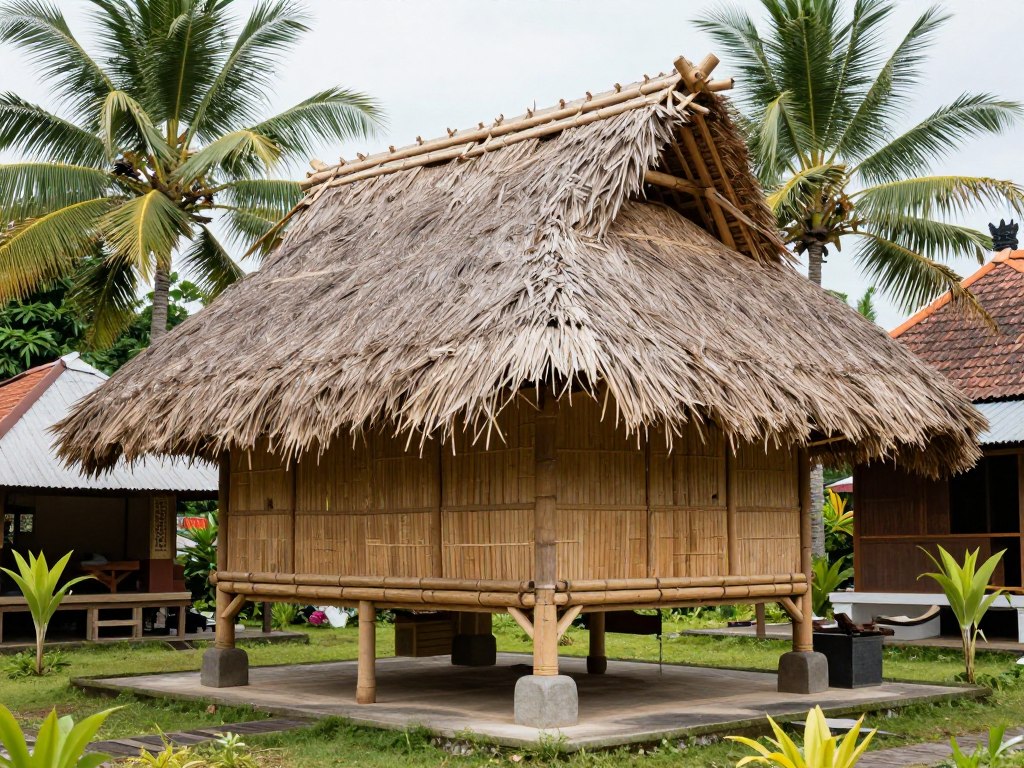
The story of Bali huts begins in the Indonesian island of Bali, where these structures have served as homes, temples, and gathering spaces for centuries. Traditional Balinese architecture emphasizes harmony with nature, using locally sourced materials that blend seamlessly with tropical environments.
These authentic designs caught the attention of Australian travelers in the 1970s and 1980s. Returning home with memories of island paradise, many sought to recreate that tropical atmosphere in their own backyards. The style quickly gained popularity across Australia, particularly in coastal regions and areas with warmer climates.
The adaptation process involved modifying traditional designs to withstand Australian weather conditions. While maintaining authentic aesthetics, manufacturers incorporated durability features suitable for everything from the tropical north to temperate southern regions including Adelaide and South Australia.
Today’s Australian bali huts honor their Indonesian heritage while meeting modern standards. The traditional thatching of Alang Alang grass remains popular, though treatments now improve weather resistance. Bamboo frames continue to provide that authentic look, often reinforced with galvanised fittings for enhanced structural integrity.
What Are Bali Huts Made Of?
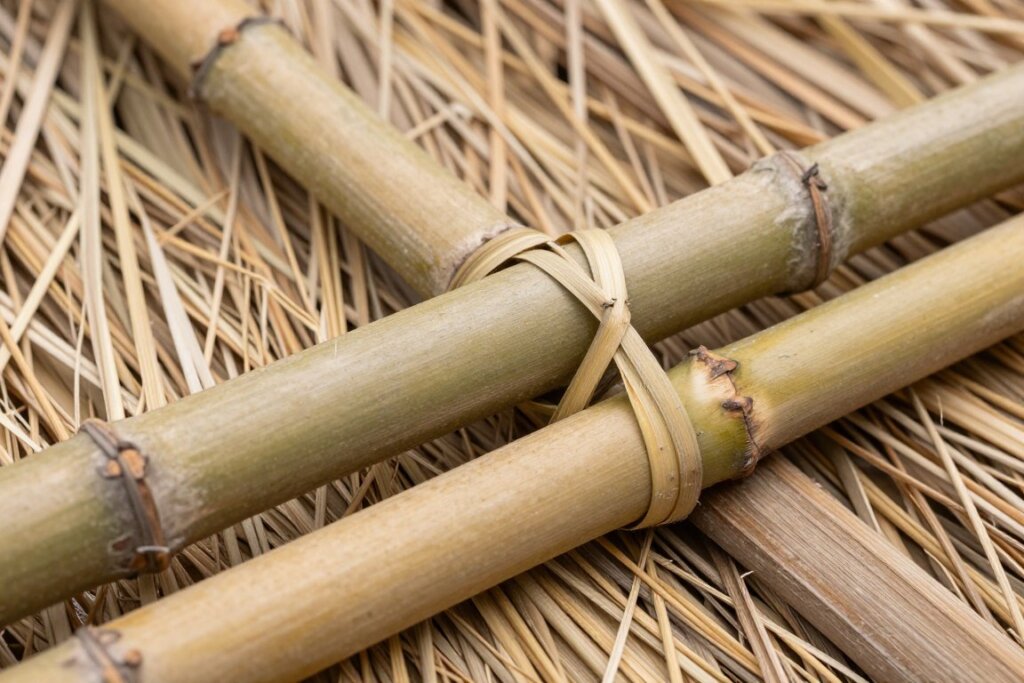
Thatched Roofs and Alang Alang Grass
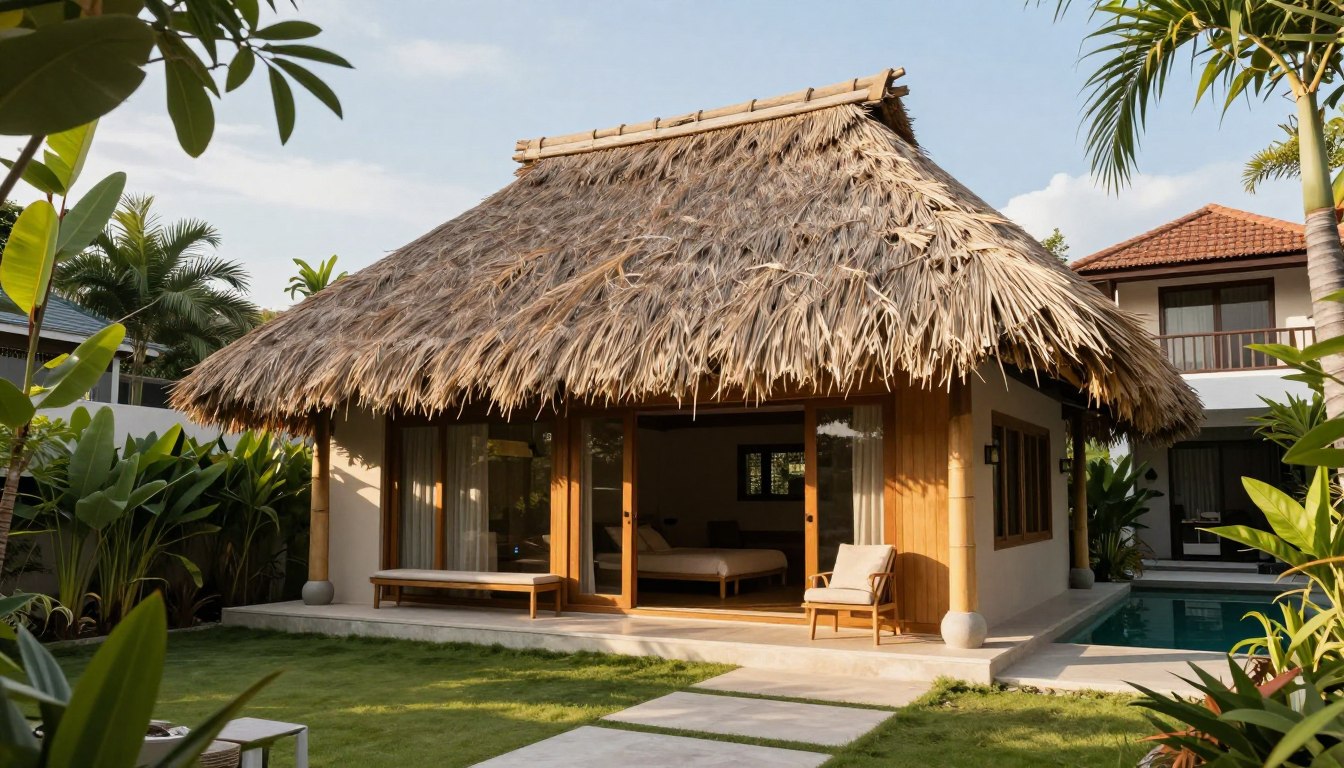
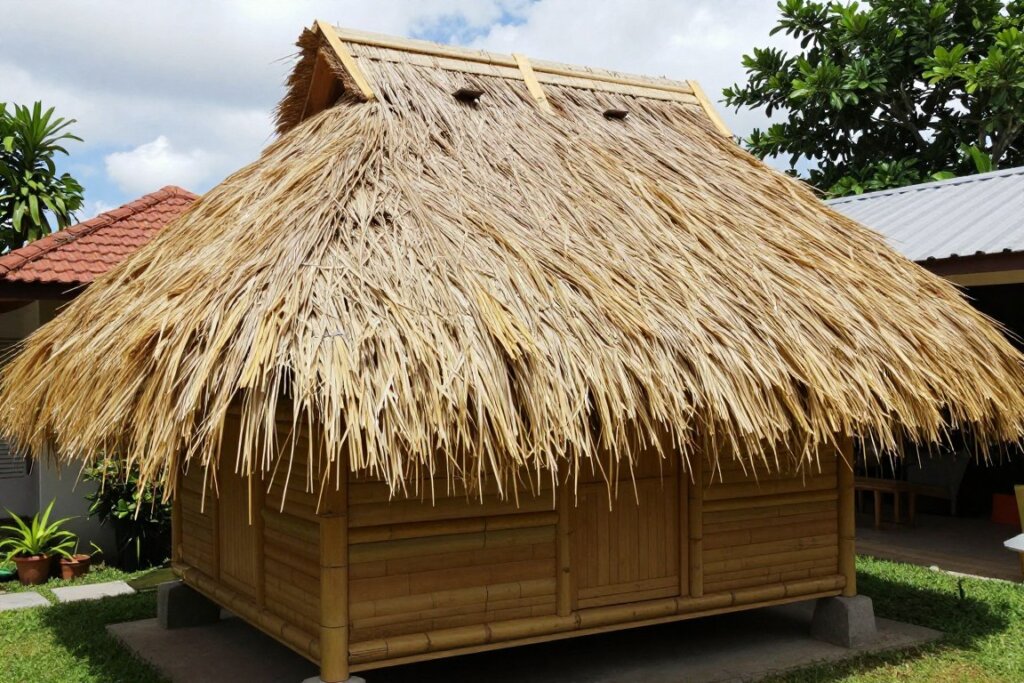
The iconic roof of a Bali hut typically features Alang Alang grass, a fast-growing species native to Indonesia. This natural material provides excellent insulation, keeping the space beneath cool even during hot Australian summers. The dense layering creates a waterproof thatched Bali hut outdoor shelter that effectively sheds rain.
Alang Alang grass offers natural UV resistance and can reduce temperatures underneath by up to 10 degrees compared to conventional roof materials. This makes it ideal for creating comfortable outdoor entertaining areas. The golden-brown color weathers beautifully, developing a silvery patina over time.
Bamboo and Coconut Wood Frames
Bamboo serves as the primary structural material for authentic designs. Its natural strength-to-weight ratio makes it perfect for outdoor structures, while its hollow core provides additional insulation. Many suppliers now offer coconut wood Bali hut for sale options, which provide increased durability and termite resistance.
Coconut wood, harvested from non-productive palm trees, offers a sustainable alternative with superior weather resistance. The dense timber stands up well to Australian conditions, requiring minimal maintenance while maintaining the tropical aesthetic.
Galvanised Fittings and Hardware
Modern bali hut assembly instructions galvanised fittings ensure structural stability while remaining hidden from view. These corrosion-resistant components connect bamboo poles securely, meeting Australian building standards. Quality hut kits include all necessary hardware for proper installation.
The combination of traditional materials and modern engineering creates structures that honor Balinese tradition while providing the durability Australian homeowners expect. This blend ensures your investment will provide years of enjoyment.
Types of Bali Huts Available in Australia
Australian suppliers offer diverse options to suit different spaces and budgets. Understanding the available styles helps you choose the perfect fit for your outdoor area.
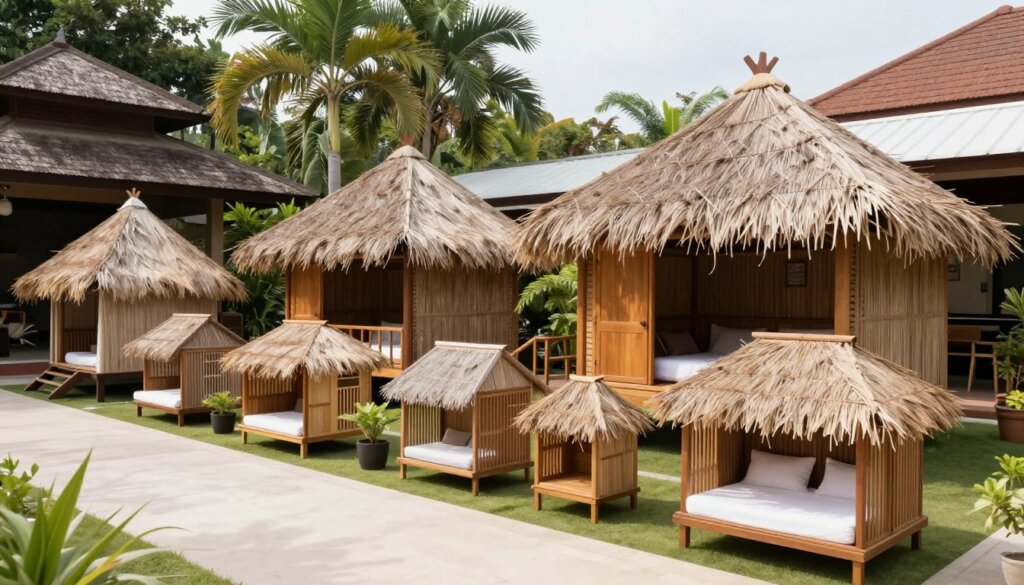
Standard Square Models
- 3x3m compact design for smaller yards
- 3.5×3.5m mid-size option
- 4x4m popular family size
- 5x5m premium entertaining space
Square bali hut kits provide traditional styling with straightforward installation. These versatile designs work well in various backyard layouts.
Specialty Configurations
- Hexagonal Bali hut with daybed for unique styling
- Bamboo Bali hut with sides and daybed for privacy
- Bali pergola deluxe outdoor living spaces
- Bamboo gazebo with sides and entrance options
Specialty models offer enhanced features and distinctive aesthetics for customers seeking something beyond standard designs.
| Size | Capacity | Typical Use | Price Range |
| 3x3m | 4-6 people | Small entertaining, spa area | $2,500 – $4,000 |
| 3.5×3.5m | 6-8 people | Pool area, garden retreat | $3,200 – $5,200 |
| 4x4m | 8-10 people | Family entertaining, BBQ area | $4,500 – $7,000 |
| 5x5m | 12-15 people | Large gatherings, commercial | $7,000 – $11,000 |
Premium options like the thatched roof gazebo 4×4 with sides or Bali hut 5×5 with sides and entrance provide additional weather protection and privacy. These enclosed designs extend usability throughout the year, particularly valuable in areas with variable weather.
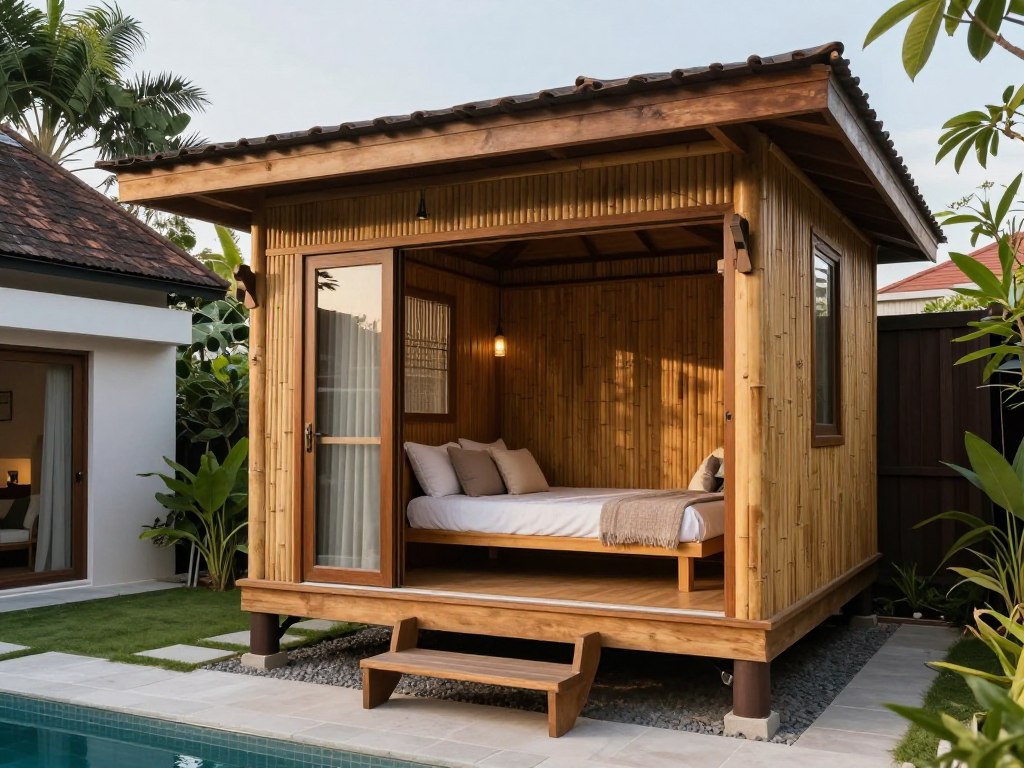
Many products now include outdoor Bali hut steps and daybed accessories as standard or optional additions. These features enhance functionality and comfort, creating a complete outdoor living solution.
Find Your Perfect Bali Hut
Not sure which size or style suits your space? Our specialists can help you choose the ideal configuration for your backyard and budget. Get a free, no-obligation consultation and quote today.
Key Benefits of a Bali Hut for Your Backyard
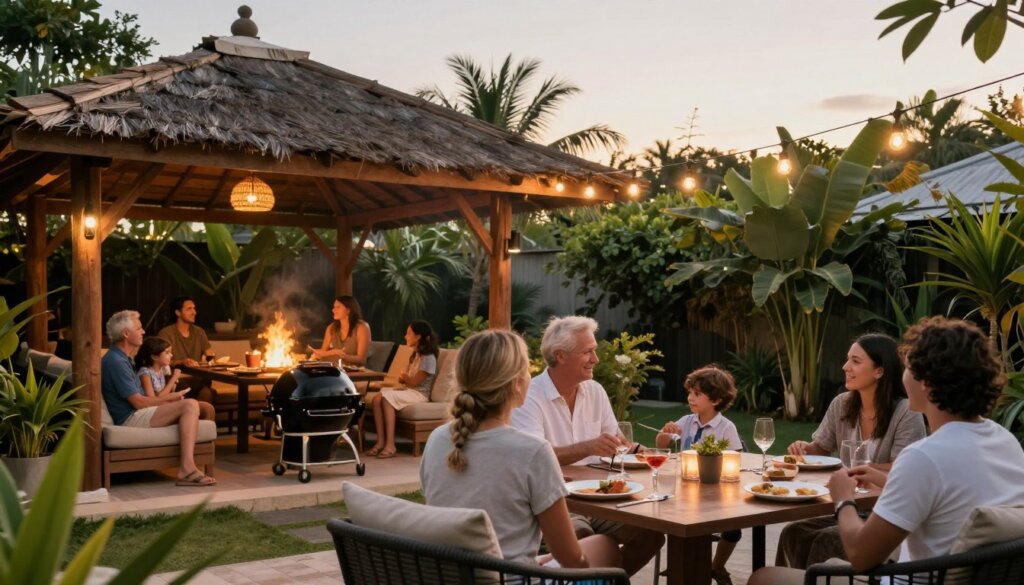
Investing in a Bali hut gazebo for backyard entertaining delivers multiple advantages beyond aesthetic appeal. Understanding these benefits helps justify the investment.
- Superior Natural Insulation: The Bali hut roof insulation summer heat properties are exceptional. Alang Alang grass provides natural temperature regulation, reducing heat by up to 10 degrees compared to metal or tile roofs. This creates comfortable outdoor spaces even during peak summer.
- Effective Weather Protection: A properly installed waterproof thatched Bali hut outdoor structure sheds rain efficiently. The dense layering and steep pitch prevent water penetration while allowing air circulation underneath.
- Timeless Aesthetic Appeal: The tropical styling complements both traditional and contemporary Australian homes. The natural materials age gracefully, developing character over time rather than looking worn.
- Versatile Functionality: These structures serve multiple purposes, from pool cabanas to garden retreats, outdoor dining areas to yoga spaces. The open design accommodates various furniture arrangements and activities.
- Low Ongoing Maintenance: Beyond periodic rethatching, bali huts require minimal upkeep. The natural materials resist fading and don’t require painting or sealing like conventional outdoor structures.
- Increased Property Value: Well-maintained outdoor living spaces add significant appeal to house valuations. A quality installed structure can provide excellent return on investment.
The combination of practical benefits and visual appeal makes these structures increasingly popular across Australia. From Christies Beach to the Sunshine Coast, homeowners appreciate the value these additions bring to outdoor living.
Pros and Cons of Bali Huts
Making an informed decision requires understanding both advantages and potential limitations. Here’s an honest assessment to help guide your choice.
Advantages
- Natural cooling reduces temperatures significantly
- Authentic tropical aesthetic enhances property appeal
- Durable materials withstand Australian weather
- Versatile design suits multiple outdoor uses
- Eco-friendly sustainable natural materials
- Creates defined entertaining space
- Adds substantial property value
- Relatively quick installation process
Considerations
- Initial investment higher than basic gazebos
- Rethatching required every 10-15 years
- Natural materials require specific maintenance
- May require council approval in some areas
- Delivery costs can be significant for remote location
- Professional installation recommended for best results
- Thatch can attract nesting birds occasionally
For most Australian homeowners, the benefits significantly outweigh the considerations. Proper planning and working with experienced suppliers minimizes potential drawbacks while maximizing enjoyment. Bali Style Home: Bringing Tropical Charm to Your Australian Home
Bali Hut Rethatching: Everything You Need to Know
Why Rethatching Matters
Even the highest quality natural thatching eventually requires replacement. Understanding the rethatching lifecycle helps you plan for this inevitable maintenance and protect your investment.
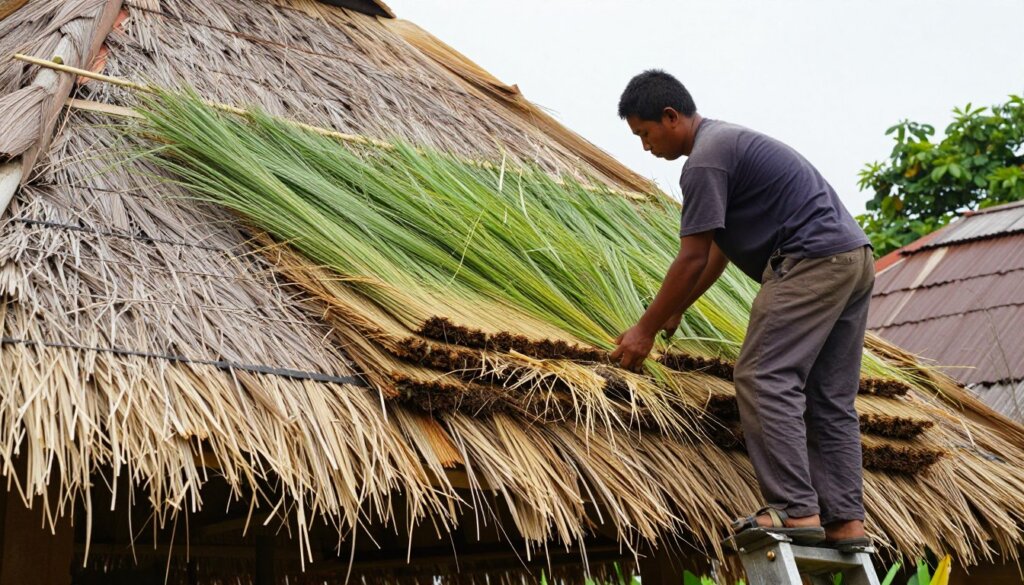
The Alang Alang grass roof rethatching process restores your structure’s weatherproofing and insulation properties. Timely rethatching prevents water damage to underlying bamboo framework and extends overall structure lifespan.
How Often Should You Rethatch a Bali Hut?
Most Australian installations require rethatching every 10 to 15 years, though this varies based on several factors. Coastal areas with salt air exposure may see slightly shorter lifespans, while protected inland location installations can exceed 15 years.
Climate plays a significant role. Areas with intense UV exposure or frequent storms may require more frequent attention. Regular inspection helps identify when rethatching becomes necessary before problems develop.
Signs Your Bali Hut Needs Rethatching
- Visible thinning of thatch layers
- Grass becoming brittle or breaking easily
- Small leaks during rain
- Patches of exposed bamboo framework
- Significant color fading or bleaching
- Loose thatch pieces falling during wind
Alang Alang Grass Roof Rethatching Process
Professional Bali hut rethatching services Australia follow established procedures to ensure lasting results. The process typically involves complete removal of old material, framework inspection and repair if needed, then installation of fresh Alang Alang grass layers.
Experienced contractors work from bottom to top, carefully layering and securing new thatch. Proper technique ensures water runs off effectively while maintaining the characteristic thick, lush appearance. The entire process usually takes 2-4 days depending on structure size.
Rethatching Bali Hut Cost in Australia
The rethatching Bali hut cost Australia varies based on structure size, location, and accessibility. Current prices typically range from $2,000 to $6,000 for standard residential installations.
Smaller 3x3m structures generally cost $2,000-$3,500 for professional rethatching. Mid-size 4x4m units range from $3,500-$5,000. Larger 5x5m installations can reach $5,000-$6,000 or more. These prices usually include materials, labor, and disposal of old thatch.
Specialist refurbishing Bali huts East Coast Australia providers often offer package deals combining rethatching with structural repairs or upgrades. Obtaining multiple quotes ensures competitive pricing while comparing service quality.
Professional Rethatching Services
Extend your Bali hut’s lifespan with expert rethatching. Our experienced team services properties across Adelaide, South Australia, and the East Coast. Get a detailed quote and schedule your rethatching today.
How to Choose the Right Bali Hut for Your Outdoor Space
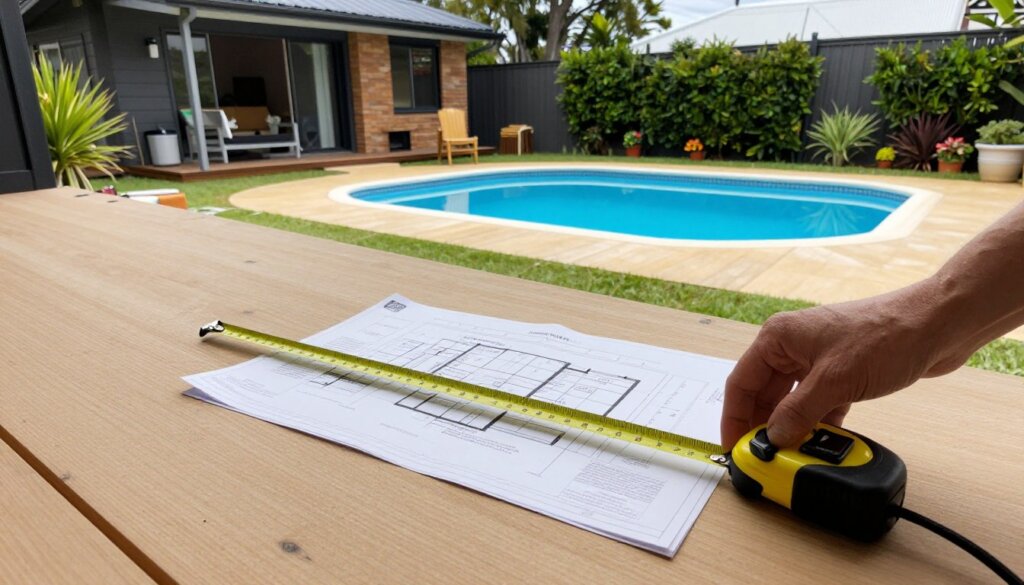
Selecting the ideal traditional Bali hut design for Australian backyard spaces requires careful consideration of multiple factors. Follow this systematic approach to make the best choice.
- Measure Your Available Space: Begin by accurately measuring your intended area. Allow at least 500mm clearance on all sides for maintenance access. Consider overhead clearance if installing near trees or power lines. Document measurements carefully before viewing products.
- Determine Primary Use: Will your hut gazebo primarily serve as a pool cabana, outdoor dining area, or garden retreat? Usage patterns influence size selection and feature choices. Entertaining large groups requires more space than intimate family use.
- Select Appropriate Size: Match structure size to your space and intended use. A 3x3m model suits compact yards or spa areas. The popular 4x4m option works well for family entertaining. Larger 5x5m installations create impressive outdoor rooms for serious entertainers.
- Choose Essential Inclusions: Decide whether you need sides for weather protection and privacy. Consider if a hexagonal Bali hut with daybed suits your aesthetic preferences. Evaluate whether outdoor Bali hut steps and daybed accessories enhance functionality for your situation.
- Set a Realistic Budget: Factor in all costs including structure, delivery, installation, and site preparation. Remember to budget for optional features and future maintenance including eventual rethatching. Quality installations provide better long-term value than budget shortcuts.
- Decide DIY vs Professional Installation: While hut kits come with instructions, professional outdoor Bali hut installation and delivery ensures proper assembly and longevity. Consider your skills, available time, and local building requirements before choosing.
- Research Suppliers: Look for established businesses with verifiable customer reviews. When you buy Bali hut online Australia, verify the supplier’s location, warranty terms, and after-sales support. Contact them via phone to assess responsiveness and expertise.
- Verify Council Requirements: Some local councils require permits for outdoor structures. Check your area‘s building regulations before purchasing to avoid compliance issues.
Taking time to carefully evaluate these factors ensures you select the perfect structure for your needs and avoid costly mistakes.
Expert Experience: What 35 Years in Bali Huts Taught Me
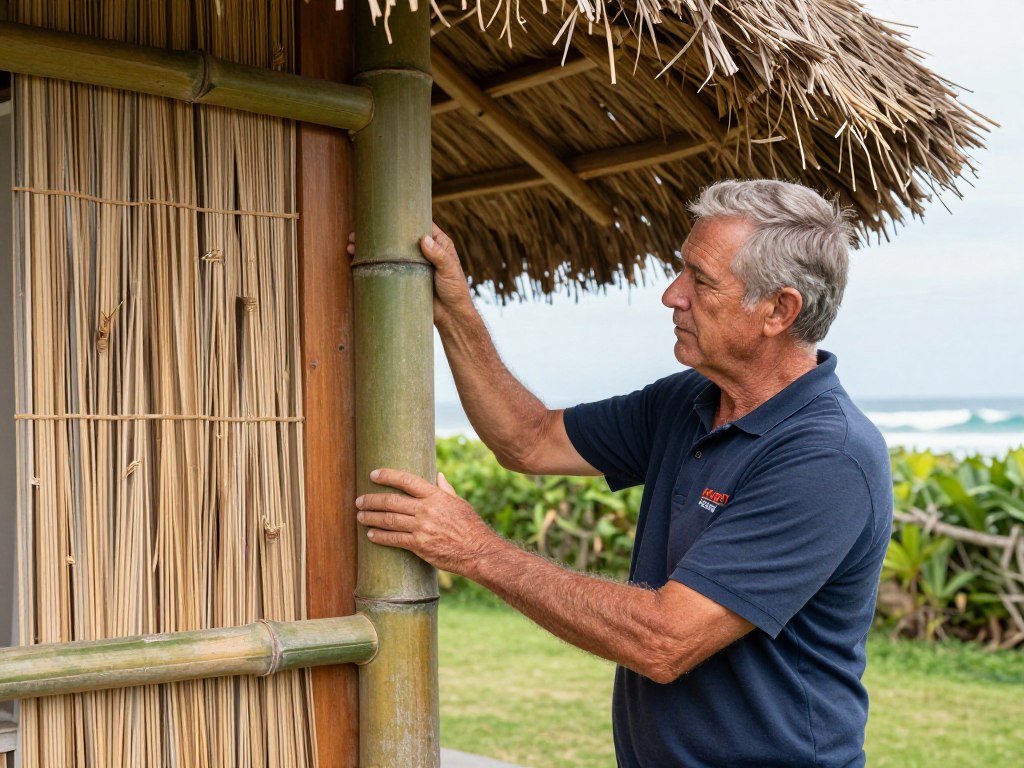
I’ve been working with these structures since 1989, starting as an apprentice in Christies Beach, South Australia. Over three and a half decades, I’ve installed hundreds of bali huts across Adelaide and up the East Coast. The work has taught me what separates exceptional installations from disappointing ones.
One particular job sticks in my memory. A customer in Adelaide‘s eastern suburbs was skeptical about thatching surviving Australian summers. She’d seen poorly installed units deteriorate rapidly and worried about throwing money away. I showed her a hut I’d built 18 years prior, still going strong with just one rethatch. The original bamboo frame remained solid, the Alang Alang still weathertight.
That installation had three things right: proper quality materials, professional installation with correct galvanised fittings, and a customer who understood basic maintenance. She became one of my most enthusiastic advocates, referring dozens of friends over the following years.
The biggest lesson learned? Never compromise on materials or technique. I’ve seen cheap hut kits fail within five years, while properly built structures easily exceed 20 years before needing major work. The modest additional investment in quality pays dividends in longevity and owner satisfaction. That’s why I only work with proven suppliers and never rush installation to save a few hours.
Conclusion
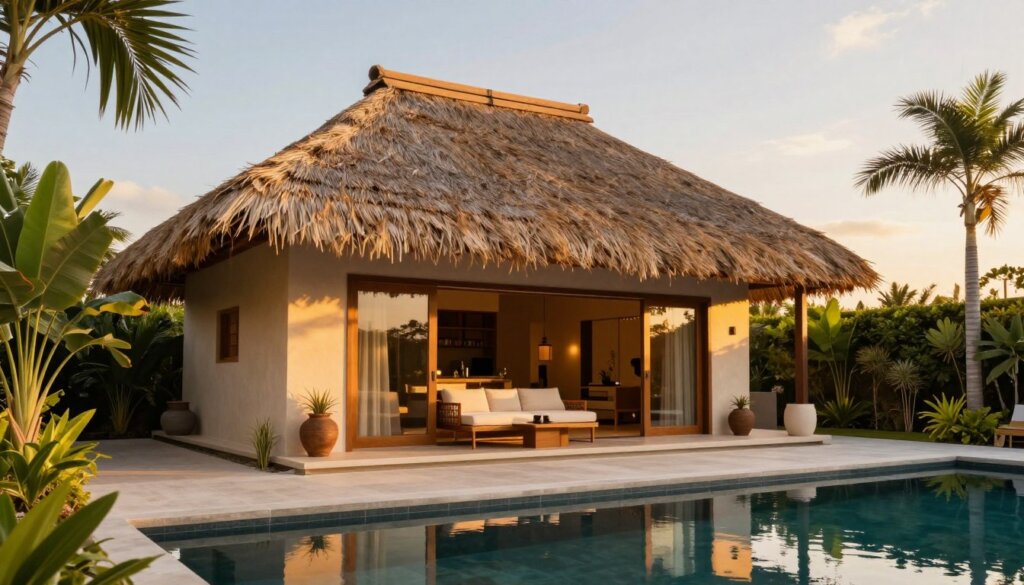
Bali huts represent an excellent investment for Australian homeowners seeking to enhance outdoor living spaces. These versatile structures combine authentic tropical styling with practical benefits including natural cooling, weather protection, and increased property value.
Understanding the materials, particularly bamboo frames and Alang Alang thatching, helps you appreciate the craftsmanship involved. Knowing the various sizes and configurations available ensures you can find the perfect match for your space and needs.
While rethatching represents a future maintenance requirement, proper planning makes this manageable. The 10-15 year lifespan between services, combined with minimal ongoing maintenance, makes these structures remarkably practical for busy Australian families. Create a Serene Bali Garden with Our Expert Tips
Whether you choose a compact 3x3m design or a spacious 5x5m entertaining area, professional installation ensures you get maximum value from your investment. The right structure, properly installed in your Australian backyard, will provide decades of enjoyment.
Ready to Transform Your Backyard?
Get started on your Bali hut project today. Our team provides expert guidance, competitive pricing, and professional installation available throughout Australia. Request your free consultation and detailed quote now.
Frequently Asked Questions About Bali Huts
How long do Bali huts last?
With proper maintenance, the structural framework of a Bali hut can last 25-30 years or more. The thatching typically requires replacement every 10-15 years depending on climate conditions and exposure. Coastal areas with salt air may see slightly shorter thatch life, while protected inland locations often exceed 15 years. Regular inspections and prompt attention to any issues significantly extend overall lifespan. Professional installation using quality materials maximizes durability.
What is a Bali hut called?
In Bali, these structures are traditionally called “bale” (pronounced bah-lay), which simply means a pavilion or open-sided building. In Australia, they’re commonly known as Bali huts, Balinese gazebos, or thatched gazebos. Some suppliers also use terms like Bali pergola or tropical hut to describe similar structures. Regardless of terminology, they all reference the distinctive Indonesian-inspired design with natural bamboo framework and thatched roof.
What do Bali houses look like?
Traditional Balinese architecture features steeply pitched thatched roofs made from natural grass, supported by bamboo or timber posts. The structures typically have open sides to encourage airflow, though walls may be added for privacy or weather protection. Natural materials dominate, including bamboo, coconut wood, and local stone. The design emphasizes harmony with nature through organic shapes and earth-tone colors. Modern Australian adaptations maintain these aesthetic principles while incorporating features suited to local conditions and contemporary outdoor living expectations.
What are Bali huts made of?
Bali huts primarily use natural materials. The roof consists of Alang Alang grass thatching, a durable Indonesian grass that provides excellent insulation and water resistance. Structural frames use bamboo poles or coconut wood, chosen for strength and authentic appearance. Modern designs incorporate galvanised steel fittings to connect framework components, ensuring stability while remaining hidden. Some contemporary versions blend traditional materials with treated timber posts for increased durability. All materials are selected to withstand Australian weather while maintaining the signature tropical aesthetic.
How much does rethatching cost in Australia?
The rethatching Bali hut cost Australia varies by size and location. Expect to pay ,000-,500 for a 3x3m structure, ,500-,000 for 4x4m, and ,000-,000 or more for 5x5m installations. These prices typically include materials, professional labor, and old thatch removal. Regional variations occur, with metro areas generally offering more competitive prices than remote locations due to delivery and travel costs. Bali hut rethatching services Australia providers often offer package deals if you’re also updating framework or adding features. Always obtain multiple quotes for comparison.
Can I install a Bali hut myself?
While hut kits include detailed instructions, DIY installation requires significant carpentry skills and appropriate tools. The process involves setting posts level and plumb, correctly assembling the framework with galvanised fittings, and properly layering thatching for weatherproofing. Most homeowners find professional outdoor Bali hut installation and delivery provides better results and saves considerable time. Incorrect installation can void warranties and create safety issues. If you choose DIY, work with a knowledgeable assistant and carefully follow all instructions. Consider professional installation for at least the thatching portion, as this requires specialized technique.
Do I need council approval for a Bali hut?
Requirements vary by local council and structure specifications. Many areas allow small gazebos under certain size thresholds without permits, though restrictions on location, height, and setbacks from boundaries still apply. Larger structures or those with enclosed sides typically require building approval. Check with your specific council before purchasing. Most reputable suppliers can advise on local regulations in their service area. Factor potential permit costs and approval timeframes into your planning. Non-compliance can result in removal orders and fines, so verify requirements upfront.
What’s included with a bamboo Bali hut with sides and daybed?
A bamboo Bali hut with sides and daybed typically includes the complete framework, thatched roof, bamboo side panels, all necessary galvanised fittings, and an integrated daybed platform. Some kits include cushions while others sell these separately. Side panels may be fixed or removable depending on the design. Outdoor Bali hut steps and daybed accessories might be included or offered as optional upgrades. Always confirm exactly what’s included in your quote. Delivery may be additional depending on your location. Professional installation is usually quoted separately unless specifically included in package pricing.
How do I maintain my Bali hut between rethatching?
Maintenance is minimal but important. Annually inspect the thatching for loose sections and trim any overhanging vegetation that might damage the roof. Remove debris from the thatch surface to prevent moisture buildup. Check bamboo posts for signs of insect activity or rot, treating promptly if found. Ensure proper drainage around posts to prevent water damage. Keep the area underneath clear of stored items to maintain airflow. Apply appropriate timber treatments to exposed framework if recommended by your supplier. Address small issues immediately to prevent larger problems. Well-maintained structures require significantly less intervention over their lifespan.
Where can I buy Bali hut online in Australia?
When you buy Bali hut online Australia, research established suppliers with verified customer reviews and detailed product information. Look for businesses offering comprehensive specifications, clear pricing, and responsive customer service. Many suppliers provide online quotes through their websites. Verify they offer delivery to your area and confirm any additional costs. Check whether professional installation available in your region. Contact suppliers by phone to assess their expertise and willingness to answer questions. Established businesses often have display models you can view before purchasing. Compare warranties, materials quality, and overall value rather than simply choosing the lowest price.
Still have questions? Our specialists are here to help.
📞 1800 BALI HUT
Trusted Sources and References
- Australian Building Codes Board, National Construction Code – Outdoor Structures Guidelines
- Sustainable Gardening Australia, Natural Building Materials and Sustainability
- Master Builders Association, Professional Installation Standards for Outdoor Structures
- CSIRO, Natural Materials Performance in Australian Climates