Did you know that searches for the digital nomad visa Germany have surged by over 300% in the past two years? This isn’t just a trend; it’s a sign that remote workers are looking for stable, high-quality bases in the heart of Europe.
Germany is a great place for location-independent professionals. It offers top-notch internet, efficient public transport, and a central location for exploring the continent. The quality of life here, with its vibrant cities and beautiful countryside, is a major draw.
The pathway for remote workers often involves the freelance or self-employment visa. This permit allows you to live and work legally from within the country. It’s a popular choice for consultants, designers, and online entrepreneurs.
Before you start planning, a key rule applies. Always verify details through official German immigration channels. Laws and requirements can change, and getting information straight from the source is the only way to ensure your move is smooth and successful.
Key Takeaways
- Germany is a top destination for remote workers due to its excellent infrastructure and central European location.
- The German digital nomad route is commonly associated with the freelance or self-employment visa.
- High quality of life in cities and nature makes Germany a compelling long-term base.
- You must rely on official government sources for the most current application information.
- This guide will walk you through the essentials of eligibility, application, and life in Germany.
What is the Digital Nomad Visa?
Germany doesn’t have a special visa for digital nomads. Instead, it offers a Freelance Visa, also known as the Freiberufler Visa. This is the main way for non-EU remote workers and freelancers to live in Germany.
Definition and Purpose
The German Freelance Visa lets you live in Germany while working for yourself. It’s based on the German Residence Act. It’s for non-EU nationals who want to work as freelancers or self-employed individuals.
You can work remotely for clients worldwide. Your income doesn’t have to come from the German job market. This visa is for those who work from anywhere and need a legal place to stay in Europe.
This visa is not for tourists. It’s a real residence permit with its own rules and benefits. It’s for serious professionals who want to live and work in Europe.
Key Features
The german freelance visa for digital nomads has some great features:
- Initial Validity: You get a one-year permit first. This lets you start your freelance work and life in Germany.
- Renewal Possible: If you prove your freelance business is stable, you can renew your visa. This might lead to longer stays and even settling down.
- Schengen Area Access: With this visa, you can travel freely in the Schengen Area for up to 90 days in 180 days. This is great for exploring Europe.
- Work Conditions: You can work for clients outside Germany. You can also work with German clients. But, your main job should be freelance work as defined by German law.
This visa offers stability, freedom, and clear rules. It’s a strong choice for building your digital nomad life in Europe.
Eligibility Requirements for the Visa
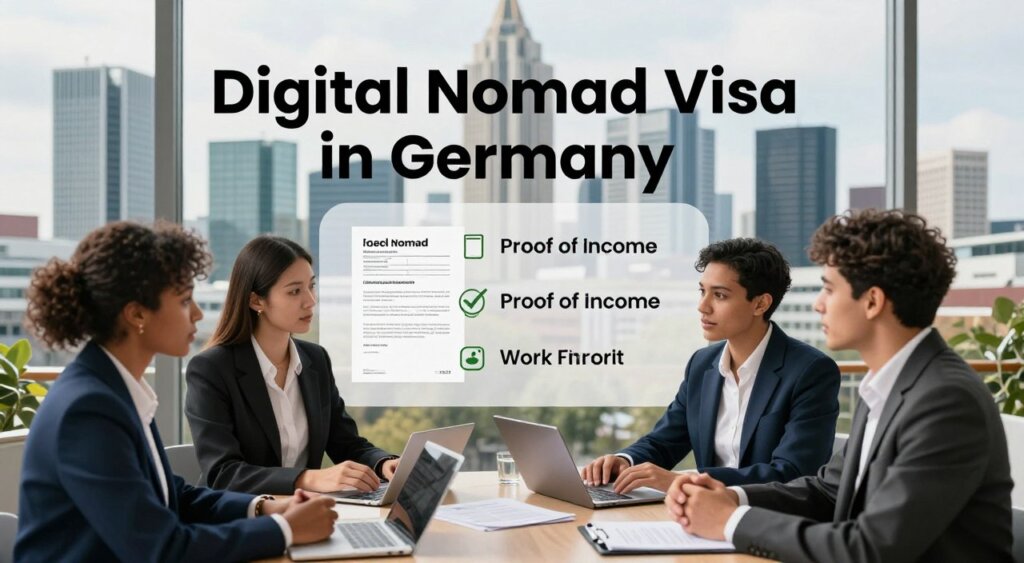
Getting Germany’s digital nomad visa starts with knowing the rules. These rules help ensure you can legally support yourself and make a positive impact. Germany’s germany digital nomad visa requirements are clear, making the application process easier.
Age and Nationality
This visa is for non-EU and non-EEA citizens. If you’re from the US, Canada, Australia, or other non-EU countries, you might qualify. You must be at least 18 and have a clean criminal record.
Income Requirements
You need to show you can afford to live without a local job. The exact income amount can vary. But, you must prove you have enough money each month.
Acceptable documents include:
- Recent bank statements showing consistent deposits
- Freelance contracts with reliable clients
- Proof of revenue from your own business or online ventures
This shows you won’t rely on Germany’s social system.
Health Insurance Coverage
You must have health insurance that covers you fully. This can be a German public plan or a private one with similar coverage. Travel insurance or international plans are not enough.
Your insurance must last as long as you plan to stay. You’ll need to show proof from your insurer. This ensures you can use Germany’s healthcare system.
Application Process Overview

Getting a Digital Nomad Visa for Germany needs a clear plan. Paying attention to details is key. Remember, immigration rules can change. Always check the official German government or embassy websites before applying and traveling.
Step-by-Step Guide
Following a logical sequence makes the germany freelance visa process easier. This guide shows the main steps from start to finish.
- Prepare Your Business Plan: This is your starting point. Write a detailed plan about your freelance work, clients, and income. It shows you’re serious and viable to German authorities.
- Book an Appointment: You usually apply from outside Germany. Book a time at the German embassy or consulate in your home country. If you’re already in Germany, you might apply at the Ausländerbehörde (Foreigners’ Office), but rules differ by city.
- Gather Required Documentation: Get all the papers listed next. Give yourself plenty of time for documents like criminal background checks, which can take weeks.
- Attend the Interview: Be on time and ready. A consular officer will check your documents and ask about your freelance plans. Be confident and match your answers with your business plan.
- Submit Application and Pay Fees: Give them your complete application and pay the visa fee. Fees can change, so check during your appointment booking.
- Wait for Processing: Processing times vary from weeks to months. Don’t make final travel plans until you have the visa in your passport.
Preparation is the first step in how to get a digital nomad visa in germany. Double-check every requirement against the latest official sources.
Required Documentation
Your application depends on a complete and correct set of documents. Missing or wrong paperwork is the main reason for delays or rejections. The table below lists the essential documents for your german digital nomad visa application.
| Document | Description | Important Notes |
|---|---|---|
| Completed Application Forms | The national visa application form (Antrag auf Erteilung eines Visums) and any supplementary declarations. | Fill out electronically if possible. Ensure no fields are left blank. Use “freelancer” or “self-employed” as your purpose. |
| Valid Passport | Your national passport with at least two blank pages. | Must be valid for at least three months beyond your intended stay in Germany. Include copies of previous visas. |
| Proof of Income | Bank statements, client contracts, or letters of intent. | Must show you meet the minimum income threshold. Translations may be needed for non-English/German documents. |
| Health Insurance Coverage | Confirmation of German or equivalent international health insurance. | Insurance must be valid from the day you enter Germany. Travel insurance is not enough. |
| Business Plan / Client Contracts | A detailed freelance business plan and/or signed contracts with clients. | The plan should include market research, service offerings, and financial projections for at least one year. |
| Clean Criminal Record | A police clearance certificate from your country of residence. | Usually must be issued within the last six months. An apostille or legalization might be needed. |
| Biometric Photos | Two recent passport-sized photographs meeting ICAO standards. | Photos must have a plain light background. Do not use old photos or those from automated booths without checking guidelines. |
Most documents not in German or English need a certified translation. Some, like the criminal record, may also need an apostille. Contact your local German mission for their specific document requirements, as they can have slight variations. Getting this paperwork right is the most practical part of learning how to get a digital nomad visa in germany.
Benefits of the Digital Nomad Visa in Germany
The Digital Nomad Visa in Germany offers more than just paperwork. It opens up a world of professional growth and adventure. You get to live in a stable, innovative country legally.
This visa brings you freedom to work and travel. It also connects you to top-notch professional networks. These benefits make Germany a perfect place for remote workers.
Work and Travel Freedom
Your German Digital Nomad Visa gives you ultimate geographic flexibility. You can explore 26 European countries easily. No border checks for short trips.
Imagine a weekend in Paris or the Italian Alps. Your work-from-anywhere lifestyle becomes truly European. Germany is a great travel hub with fast trains and cheap flights.
Germany offers a stable base with fast internet. This lets you balance work and travel. Your visa legally recognizes your remote work, easing your mind.
You can work on projects and plan trips at night. This balance is the heart of the digital nomad dream.
Networking Opportunities
Germany, cities like Berlin and Munich, attract global talent. Your visa puts you in the middle of this action. The professional networking opportunities are top-notch.
Berlin’s startup scene is famous worldwide. You’ll find meetups, tech conferences, and co-working spaces. Connecting with others is easy.
These connections can lead to new clients, collaborations, or partnerships. The community is diverse and supports remote work.
You’re not just visiting; you’re part of a vibrant ecosystem. Attending events or joining online forums can boost your career. Germany offers unique opportunities.
Popular Cities for Digital Nomads in Germany
Germany offers a range of cities for digital nomads. Berlin is known for its creativity, while Munich is efficient. Your choice depends on what you value most: art, business, or a quiet life by the sea.
Berlin
Berlin attracts creatives and tech entrepreneurs from around the world. Areas like Kreuzberg and Friedrichshain are affordable. The city buzzes with artistic projects and events.
There are many coworking spaces in Berlin, like Betahaus and St. Oberholz. These places are great for networking with other digital nomads. The startup scene is huge, perfect for making connections.
Berlin’s culture is unmatched. It has world-class museums, lively nightlife, and a diverse population. With your Digital Nomad Visa Germany, you can fully experience this vibrant city.
Munich
Munich offers a high quality of life and a strong economy. It’s great for freelancers in engineering, finance, or tech. The city is clean, safe, and well-organized.
But, Munich is more expensive. Rent is high. You’ll enjoy excellent public transport, parks, and infrastructure for work.
Being close to the Alps is a big plus. You can easily go hiking or skiing. Munich also offers a taste of traditional Bavarian culture, from beer gardens to architecture.
Hamburg
Hamburg has a maritime spirit and a relaxed work atmosphere. It’s a port city with a unique vibe. The pace is slower than Berlin but just as cosmopolitan.
Hamburg is strong in media and publishing. It’s good for remote work in marketing, design, or journalism. The business culture is direct but less intense than in southern Germany.
The city has green spaces, canals, and a famous warehouse district. It offers a balanced lifestyle for work and leisure. Hamburg is perfect for those who want a calmer base.
Cost of Living in Germany for Digital Nomads
Germany offers a high quality of life, but your expenses will vary. The city you choose as your base matters a lot. Creating a realistic monthly budget is key for a smooth transition. Tools like Numbeo provide useful, crowdsourced snapshots of prices, which are great for initial planning.
Your main costs will fall into three categories: housing, getting around, and daily living. Let’s break down what you can expect.
Average Rental Prices
Housing is your largest monthly expense. Rental prices in Germany vary a lot. Major hubs like Munich and Frankfurt are at the top, while cities like Leipzig and Dresden offer more affordable options.
In city centers, a one-bedroom apartment can be costly. Many digital nomads start in a WG (shared flat) to save money and meet people. Expect to pay a security deposit equal to two or three months’ cold rent.
Here is a comparison of average monthly rents for a one-bedroom apartment in popular digital nomad cities:
| City | City Center (€) | Outside Center (€) | Trend |
|---|---|---|---|
| Berlin | 1,200 – 1,600 | 900 – 1,200 | High Demand |
| Munich | 1,500 – 1,900 | 1,100 – 1,400 | Most Expensive |
| Hamburg | 1,100 – 1,500 | 850 – 1,100 | Steady |
| Leipzig | 650 – 850 | 500 – 650 | More Affordable |
Transportation Costs
Germany’s public transport is efficient and often the best way to travel. Most cities have integrated networks of buses, trams, U-Bahn (subway), and S-Bahn (suburban train).
The nationwide Deutschlandticket for €49 per month is a game-changer. It gives you unlimited travel on all local and regional public transport across Germany.
For city-only travel, monthly passes range from €70 to €100. Biking is extremely popular and cheap after the initial purchase. Ride-sharing and occasional taxi trips will add to your transportation costs.
Food and Entertainment
Your spending on groceries, eating out, and fun is where you have the most control. German supermarkets like Aldi, Lidl, and Rewe offer good quality at low prices.
A weekly grocery shop for one person typically costs €40 to €60. Dining out ranges from a €5 kebab at an Imbiss to a €25 main course at a mid-range restaurant.
Pro tip: Budget for Kaffee und Kuchen (coffee and cake). It’s a beloved German tradition and a perfect, affordable way to relax or have a casual work meeting.
Leisure activities are reasonably priced. Many museums have discounted entry days. A cinema ticket costs around €12. Going out for drinks in a neighborhood bar is a common and social expense.
By understanding these average rental prices, transportation costs, and food and entertainment estimates, you can build a personal budget. This planning ensures your time as a digital nomad in Germany is financially sustainable and enjoyable.
Cultural Insights for Digital Nomads

Being successful as a digital nomad in Germany means understanding its culture. Knowing local customs and work norms can make your stay better. It helps you make friends, do daily tasks easily, and avoid misunderstandings.
Language Considerations
In big German cities like Berlin, Munich, and Hamburg, many people speak English well. You can easily get by in English in tech spots, cafes, and government offices. This makes starting your stay easier for English speakers.
But, don’t skip learning German. Knowing basic German phrases shows respect and opens doors. It’s key for dealing with bureaucracy, reading rental contracts, and talking to service providers outside the city.
Start with greetings, numbers, and polite requests. Germans appreciate the effort, even if you switch to English later. This small step can lead to deeper connections and more freedom.
Work Culture
German work culture has clear rules that differ from other places. Getting these can make work interactions better and more enjoyable.
Punctuality is very important. Being even five minutes late is seen as rude. Try to arrive a bit early. Germans value direct and clear communication. Feedback might seem harsh without small talk, but it’s about being clear and efficient.
Germans also value keeping work and personal life separate. While you might be used to working anytime, locals protect their personal time. Don’t call colleagues for non-urgent work outside work hours.
First meetings can be formal. Use titles and last names until told to do differently. Handshakes are common for greetings and goodbyes. This shows respect and professionalism.
| Aspect | Norm | Practical Tip for Nomads |
|---|---|---|
| Punctuality | Extremely important. Lateness is rude. | Always aim to arrive 5 minutes early for appointments. |
| Communication | Direct, honest, and focused on facts. | Don’t take blunt feedback personally; see it as efficient. |
| Work-Life Balance | Strict boundaries between professional and private time. | Schedule meetings during core hours and respect evenings/weekends. |
| Formality | Initial interactions use titles and last names. | Start formal; you can relax if your counterpart suggests it. |
| Language | High English proficiency, but German is key for integration. | Learn basic greetings and phrases. It’s a sign of respect. |
Tax Implications for Digital Nomads
Understanding taxes is key for digital nomads in Germany. Your visa lets you live and work, but your tax status affects how much you keep. Getting this right is vital for a smooth experience.
Ignoring tax rules can lead to surprises. A proactive approach protects your finances and ensures compliance with German law.
Residency Status
Your tax obligations in Germany depend on your residency status. If you stay in the country for more than 183 days (about six months) in a calendar year, you are typically considered a tax resident.
This status has a major impact. As a tax resident, Germany can tax your worldwide income, not just the money you earn from German clients. This includes income from investments, rental properties back home, or freelance work for U.S. companies.
Double taxation treaties between Germany and the U.S. exist to prevent you from being taxed twice on the same income. Consulting a qualified tax advisor (Steuerberater) familiar with international clients is non-negotiable. They will help you determine your exact status and optimize your position.
Taxation for Freelancers
As a self-employed digital nomad, you will engage directly with the German tax system. The main taxes you’ll encounter are income tax and potentially value-added tax (VAT), known locally as Mehrwertsteuer.
German income tax is progressive, meaning the rate increases as your earnings rise. You must file an annual tax return. The good news is that you can deduct legitimate business expenses. This includes things like a portion of your rent for a home office, new laptop, software subscriptions, and even certain travel costs.
Keeping meticulous records of all income and expenses is key for maximizing these deductions.
VAT (Mehrwertsteuer) adds another layer. If your annual freelance turnover from within Germany exceeds a specific threshold (currently €22,000), you must register for VAT, charge it to your clients, and file regular returns. Even below the threshold, voluntary registration can have benefits. A tax advisor is essential here to navigate registration, filing, and possible refunds.
| Tax Aspect | Tax Resident (>183 days) | Non-Tax Resident ( |
|---|---|---|
| Income Taxed | Worldwide income | Only German-sourced income |
| Filing Requirement | Must file German annual tax return | Only required if German income exists |
| Tax Treaty Benefits | Full access to avoid double taxation | Applicable to German-sourced income |
| Primary Complexity | Reporting foreign income & assets | Defining what is “German-sourced” |
In summary, your first tax step is determining your residency status. Then, focus on understanding the specific rules for freelancer taxation. Partnering with a professional from the start is the smartest investment you can make for your German adventure.
Community and Support for Digital Nomads
Remote work in Germany is exciting, but finding your tribe makes it even better. A strong network offers advice, social connections, and job chances. These are key when exploring a new country.
You don’t have to be alone in Germany. There’s a big, welcoming community for remote workers online and in person. Joining this digital nomad community helps you feel at home.
Online Groups and Forums
Start by exploring the digital world. Online forums are full of useful tips, from visa advice to the best cafes for work.
Here are some key platforms to join:
- Facebook Groups: Look for groups like “Digital Nomads Berlin” or “Expats in Munich.” They’re active, with posts on housing, events, and job leads.
- Reddit: Subreddits like r/berlin, r/digitalnomad, and r/germany offer detailed discussions. The anonymity leads to honest advice.
- Meetup.com: It’s not just for events. Many groups have online forums for planning meetups.
- Internations: A global expat community, Internations has city groups in Germany. It’s great for professional networking.
Always introduce yourself and check the group’s history before asking questions. These communities rely on mutual support.
Local Meetups
Face-to-face connections are where the magic happens. Local meetups are key for your social and professional network in Germany.
The scene is varied. You can find coworking pop-ups and “Stammtisch” events for language practice at pubs.
These events are great for meeting locals and practicing German. For specific industries, look for tech, design, or freelance networking nights. Cities like Berlin, Hamburg, and Munich have lots of events.
How do you find these events? Your online groups are a great source. Also, check coworking spaces’ event calendars. Just showing up can lead to lasting friendships and collaborations.
Building your digital nomad Germany network takes some effort, but it’s worth it. You get local knowledge, job leads, and friends who get your lifestyle.
Tips for a Successful Experience in Germany
Your journey with the Digital Nomad Visa Germany is about to begin. To thrive, integrate these final pieces of advice into your plan.
Embracing Local Culture
Participate in local traditions. Visit a Christmas market or experience Oktoberfest. Explore regions beyond Berlin, Munich, and Hamburg. The Black Forest and the Rhine Valley offer unique charm.
Make an effort to learn German. Basic phrases help daily life. Understand local customs like punctuality. This respect opens doors and enriches your stay.
Balancing Work and Leisure
Use coworking spaces like Betahaus or WeWork. They provide structure and networking opportunities for digital nomads. Plan your travel around Germany’s many public holidays.
Explore the country’s diverse landscapes. Hike in the Bavarian Alps or cycle along the Elbe River. Visit museums and historical sites. This balance prevents burnout and makes your experience memorable.
A critical tip saves the most headaches. Visa and tax rules can shift. Always recheck official sources like the German Federal Foreign Office for the latest Digital Nomad Visa Germany regulations before you act.