Over six million international visitors land at Indonesia’s premier island gateway each year. Their first critical vacation decision is how to get to their hotel. This choice between traditional transport and modern ride-hailing apps sets the tone for the entire trip.
Selecting the right option directly impacts your budget and initial experience. An informed decision can prevent scams and overpaying. It also ensures a smooth start to your island adventure.
Local regulations create a confusing landscape for new arrivals. App-based services face specific pickup restrictions at the terminals. Understanding these rules before you land is essential.
This guide provides clear, current information for 2025 travelers. We break down everything from pricing and convenience to safety and booking procedures. Our goal is to help you navigate this first step with confidence.
Key Takeaways
- Your arrival transport choice significantly affects your budget and travel experience.
- Official taxis operate from designated ranks inside the airport premises.
- Ride-hailing apps cannot pick up passengers directly from the terminal buildings.
- Pre-booked private transfers often offer the best value for first-time visitors.
- Kuta is the nearest town to the airport, just 3-4 kilometers away.
- Knowing the local rules and average fares helps you avoid common tourist pitfalls.
- The best service for you depends on your group size, destination, and comfort with technology.
Overview of Bali Airport Transportation Options
Navigating the first moments after landing involves selecting from a few distinct ground transport methods. This initial choice impacts your convenience, budget, and overall arrival experience.
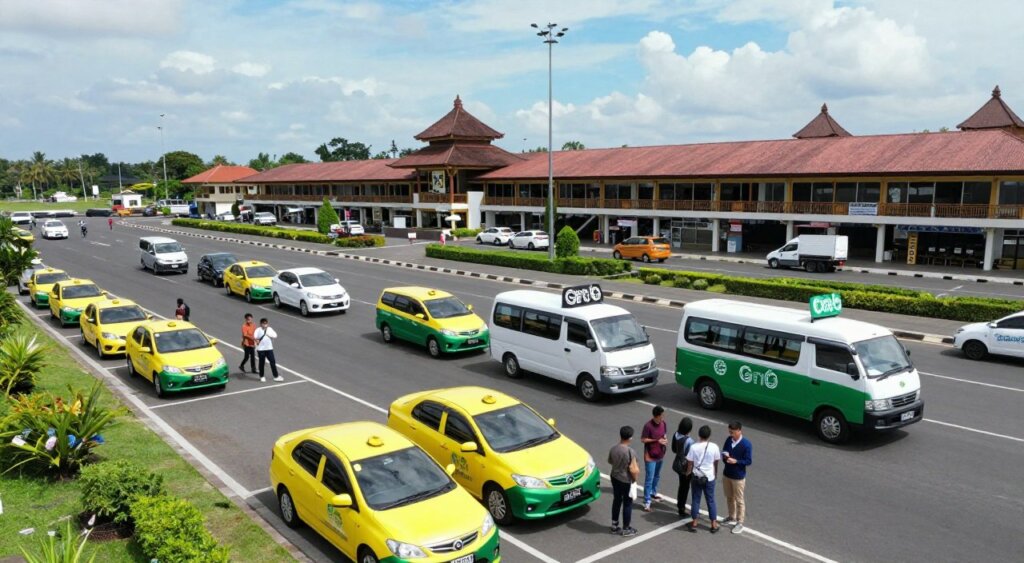
Understanding Official Taxis
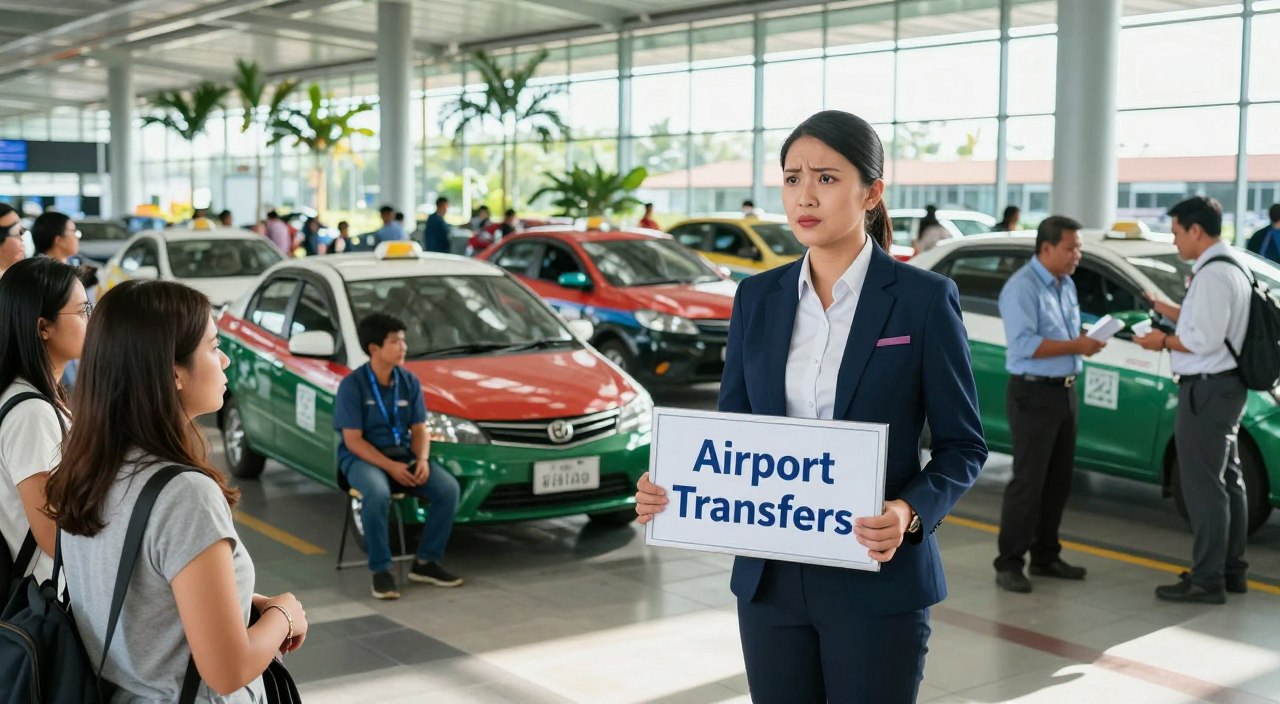
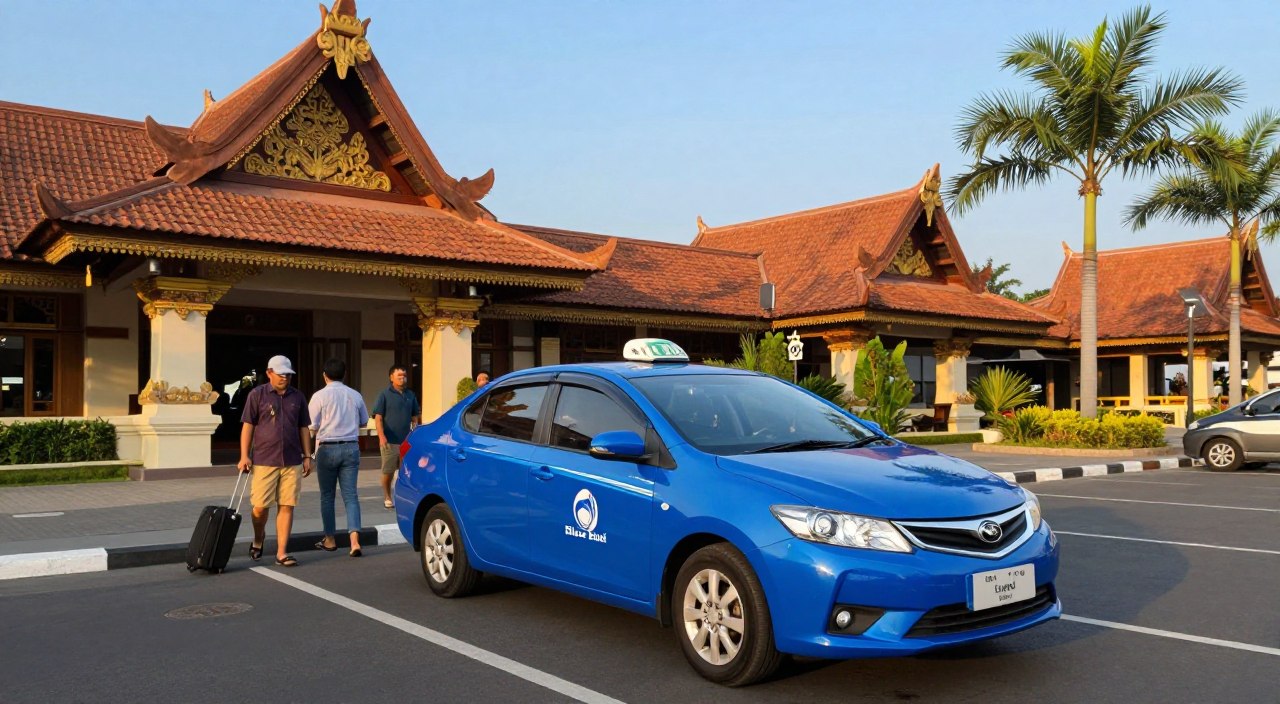
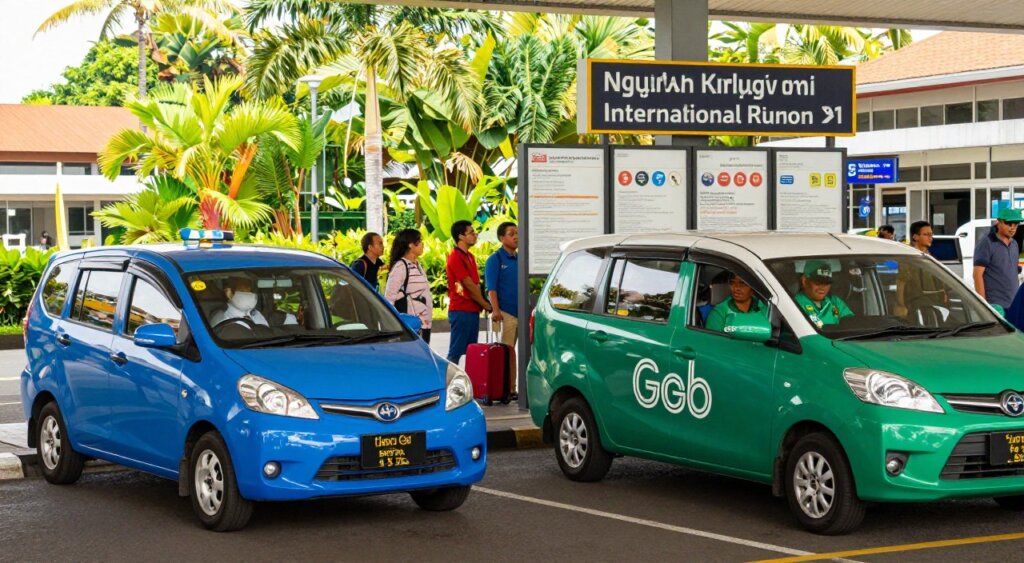
Official taxis operate through a centralized, government-regulated system. You will find their blue-and-white marked cars immediately outside the arrivals terminal.
They use transparent, zone-based pricing set at a designated counter. This option provides standardized service and is the most accessible for travelers seeking immediate departure.
The drivers are licensed and familiar with all major tourist areas.
Introduction to Ride-Hailing Apps
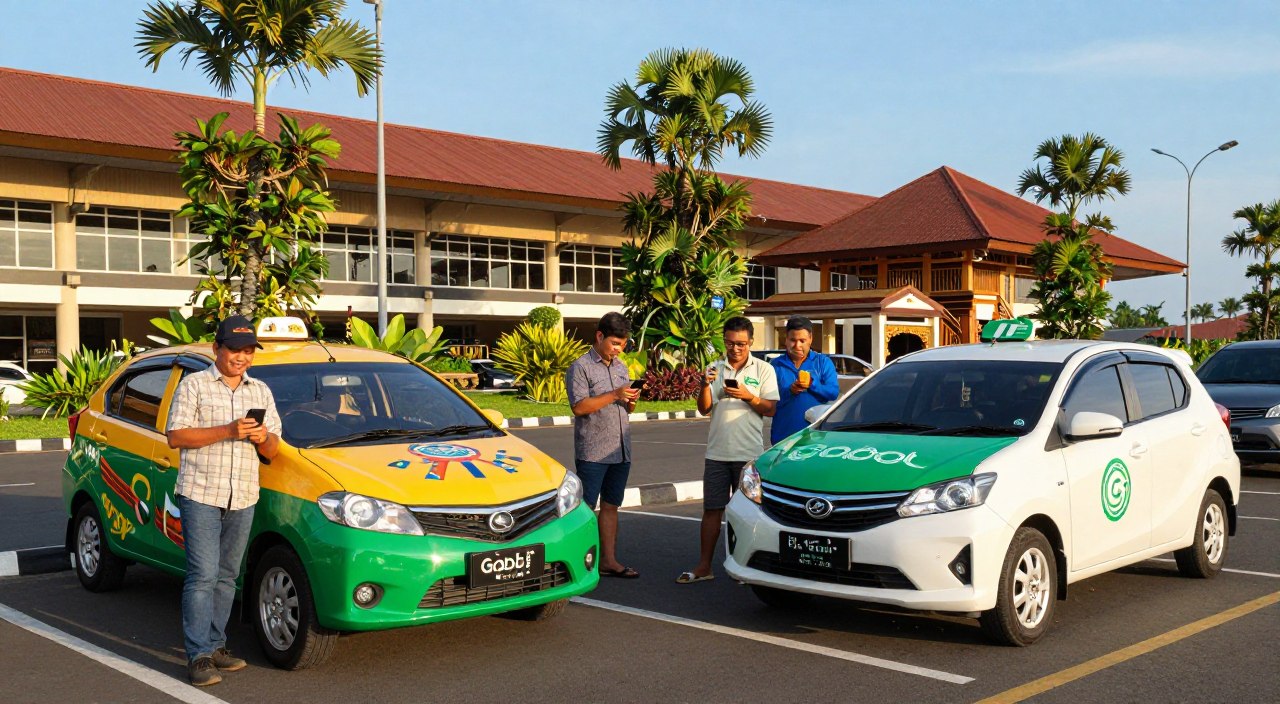
Digital platforms like Grab and Gojek have transformed how people get around. These app-based services offer convenient booking and upfront fare estimates for your ride.
However, local rules restrict their pickup zones at the terminals. You typically need to walk to a specific meeting point.
A local data connection is required to use these services. This can be a hurdle for some visitors.
Exploring “bali airport taxi vs grab”
Evaluating the core features of each available service is key to a smooth and cost-effective arrival. This direct comparison breaks down how they operate and what you’ll pay.
Service and Pricing Comparison
Official transport uses a zone-based fare system. You pay a fixed rate at a counter after stating your destination.
For example, a ride to Kuta or Seminyak costs about $12-15 USD (IDR 110,000). Trips to Ubud range from $20-35 USD (IDR 300,000).
In contrast, the app-based service provides upfront, algorithm-calculated prices. These are often 20-50% lower than standard meter rates.
A fair local meter starts at 7,000 IDR and adds 6,500 IDR per kilometer. However, the digital option cannot collect passengers from inside the terminal buildings.
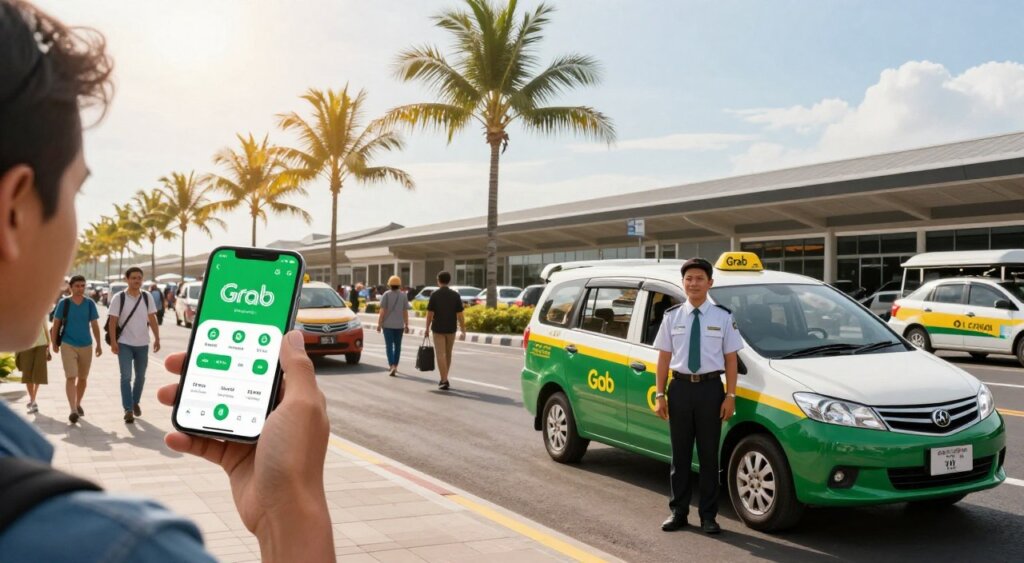
Advantages and Challenges
The primary benefit of the official system is immediate availability. There’s no need for a smartphone or local SIM card.
You get regulated pricing with no surprise charges. A potential downside is waiting in a queue during peak times.
The ride-hailing app offers transparent pricing and real-time driver tracking. This can lead to significant savings.
The main challenge is the required walk to a designated meeting point outside the premises. You also need a stable data connection.
Your best option depends on whether you prioritize convenience or are willing to trade a short walk for a lower price.
Insights into Official Airport Taxi Services
A government-managed service ensures transparent fares and immediate availability for new arrivals. The system is designed for maximum convenience right outside the terminal.

Regulated Pricing and Zone-Based Fare Structure
Fares are fixed by zone and displayed on large boards. You pay a set rate based on your final stop.
For example, a ride to Kuta or Seminyak costs about IDR 110,000-130,000. Travel to Ubud is around IDR 300,000.
These prices include a premium over standard metered rates. This covers access fees and guaranteed service.
Booking Procedures and Availability
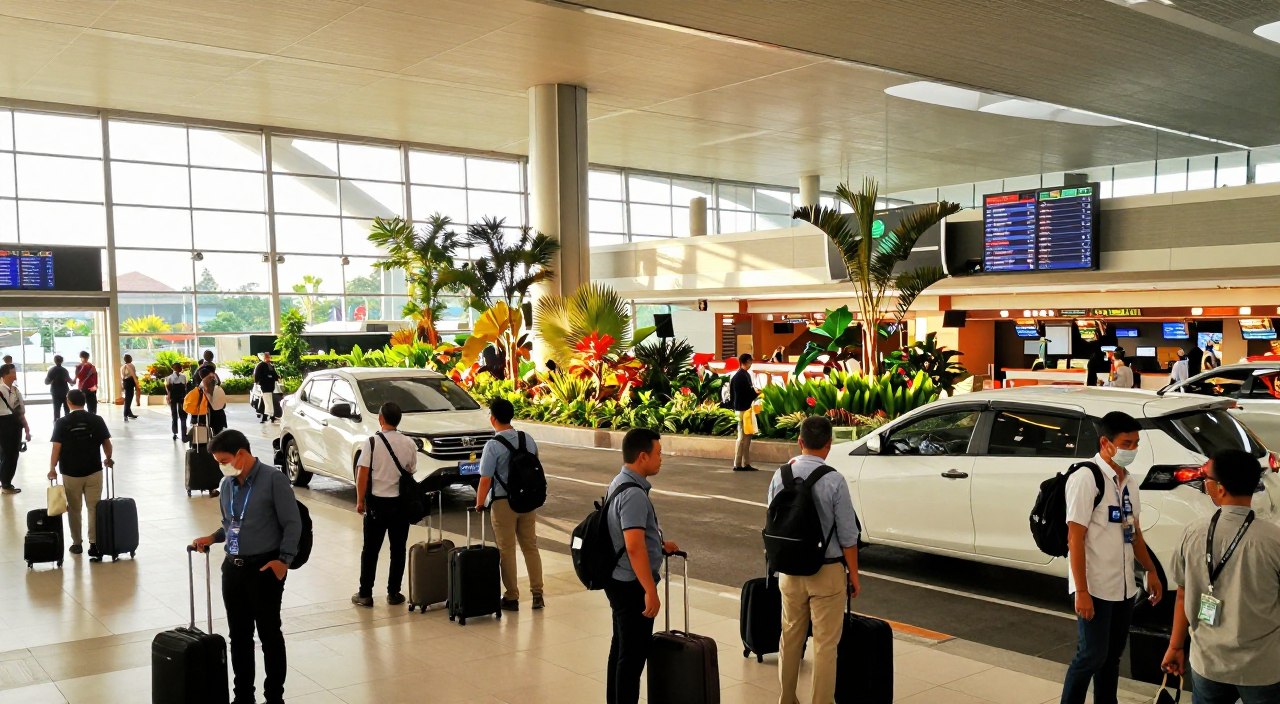
Locate the official counter in the arrivals hall. State your destination and receive a payment voucher.
The voucher directs you to your assigned vehicle and driver. This process eliminates negotiation stress.
No advance booking or smartphone is needed. This regulated option provides a safe and reliable start to your journey.
Pre-Booked Private Transfers: Comfort and Convenience
The third and often most comfortable option for ground transport is a pre-booked private car. This service is arranged online before your trip, providing a stress-free arrival.

Benefits of a Private Driver
A major benefit is the personalized meet-and-greet. Your private driver waits in the arrivals hall with a sign bearing your name.
This eliminates confusion in the busy terminal. You are escorted directly to an air-conditioned car.
The driver often speaks English and can offer local tips. You also get peace of mind from a fixed price agreed upon during booking.
Cost Considerations Compared to Metered Taxi Rides
These transfers typically cost $25 to $40 for a standard airport-to-hotel trip. This is slightly more than other options.
The premium buys superior convenience and a predictable experience. It is highly valuable for families, first-time visitors, or late-night arrivals.
You can book through platforms like Klook or directly through your hotel. For longer journeys, hiring a private driver for a half-day can be excellent value.
Ride-Hailing Apps in Bali: Focus on Grab and Go-Jek
Understanding the specific rules and practical steps for using app-based services is crucial for a smooth first journey. These platforms dominate local transport but function differently than in many other countries.
App Functionality and Limitations at the Airport
To use these services, you need a local Indonesian SIM card for registration. Download the app before you travel or connect to airport Wi-Fi.
The booking process is straightforward. You input your destination, see an upfront fare, and choose payment. Options include cash or linking a credit card.
A key restriction exists at the terminal. Drivers cannot pick up inside the buildings. You must walk to a designated zone outside the main entrance.
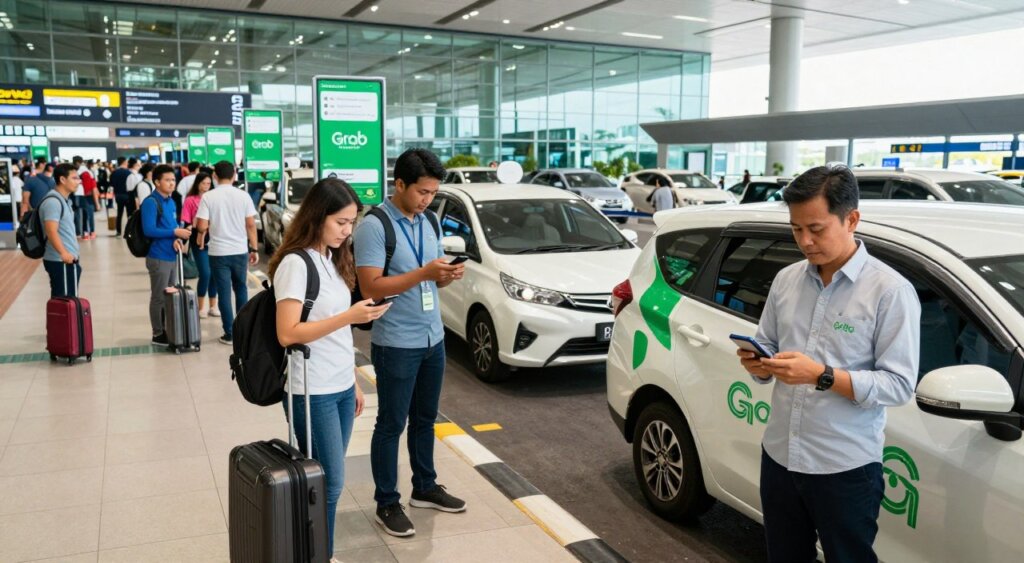
This walk with luggage adds a few minutes to your trip. The meeting point is usually well-marked.
Comparative Analysis of Grab Versus Traditional Taxis
The most compelling advantage is cost. Fares are typically 20-50% cheaper than standard metered rates.
Other benefits include transparent pricing shown before booking. You can track your driver’s route in real-time and see user ratings.
There is no risk of meter tampering or price negotiation. However, be aware that some parts of the island are restricted zones for these apps.
Local driver cooperatives sometimes block operations in certain areas. The app map will clearly show if service is unavailable at your location.
Practical Tips for Navigating Bali’s Taxi and App Services
Smart travelers know that a few key strategies can transform a confusing arrival into a seamless journey. These practical tips help you save money and avoid stressful situations.
Always insist the driver uses the meter. The fair rate starts at 7,000 IDR plus 6,500 IDR per kilometer.
How to Avoid Scams and Impostors
Blue Bird is the most trusted company. Many copycats use similar colors and names.
Check for specific identifiers to spot a real Blue Bird taxi. Imposters often lack these details.
| Feature | Real Blue Bird Taxi | Imposter / Fake Taxi |
|---|---|---|
| Driver Uniform | Blue button-up shirt with logo | Plain or mismatched attire |
| Vehicle Logo | Official corporate logo on door | Poorly printed or missing logo |
| Headrest Covers | White with blue bird logo | Plain or no covers |
| Sun Screen | Has logo and text on windshield | Missing or generic |
| Serial Numbers | On side, dashboard, and rear | None visible |
Some hotel areas have exclusive deals with local drivers. Check your hotel reviews for “taxi” to learn about restrictions.
Carry small bills for money. Drivers often lack change for large card payments.
Strategies for Efficient Pickups and Drop-Offs
Have your destination address saved offline. Screenshots of maps work without WiFi.
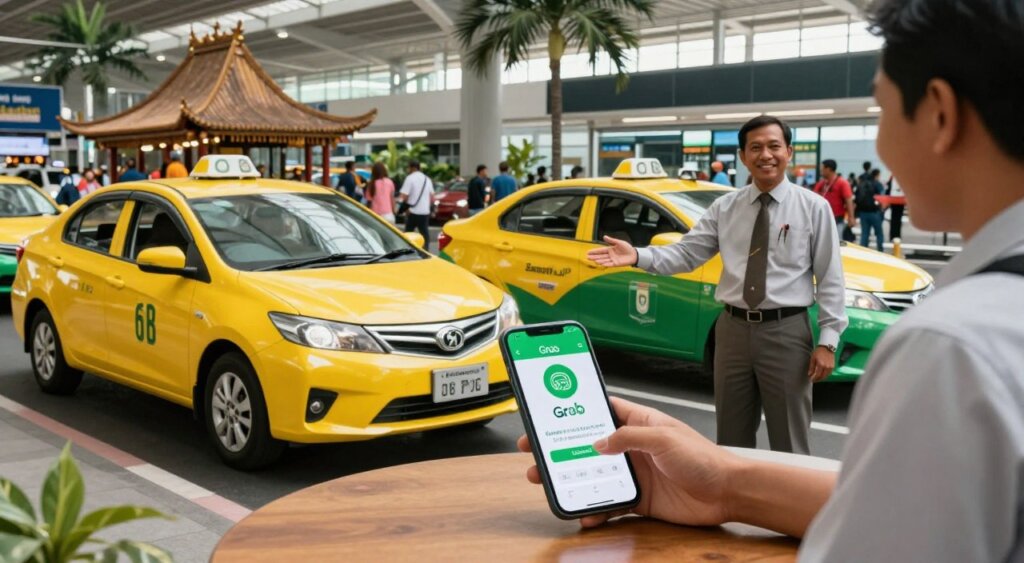
Use discretion when requesting a grab in areas with many traditional taxis. Walk a short way from the main crowd first.
If your grab driver doesn’t move for three minutes, cancel the ride. Request another driver to save time.
Choose your payment card in the app before booking. This speeds up the process at drop-off time.
Local Experiences and On-the-Ground Insights
Real-world stories from travelers reveal the stark contrasts in cost and convenience on the ground. These personal accounts provide context that goes beyond official rates and rules.
They show why informed choices matter for your budget and daily travel.
Traveler Stories and Real-World Feedback
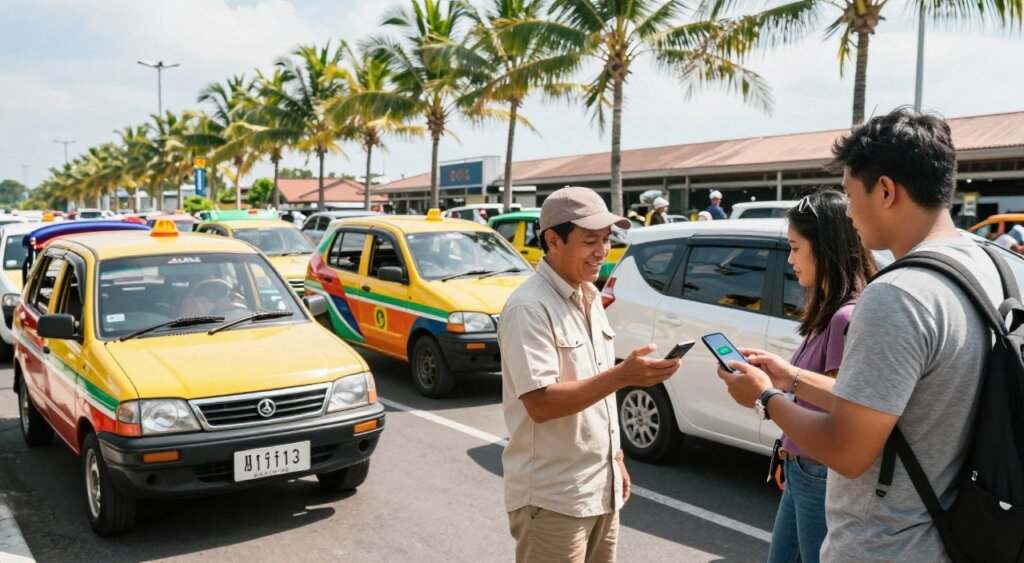
One visitor shared a telling experience. A metered Blue Bird ride cost 110,000 IDR.
An unmetered “fake” version charged 350,000 IDR for the same road. This price was negotiated down but remained double the fair rate.
Long-term visitors report spending 8-10 million IDR monthly on app services. This highlights the cumulative cost of daily transport on the island.
Impact of Local Taxi Regulations
Ongoing tensions shape service availability. In areas like Canggu and Ubud, local drivers strongly control operations.
Getting a ride via app can be nearly impossible there. These local cooperatives protect their livelihoods against disruptive technology.
Some taxi drivers accept app requests but then refuse the trip. They ask passengers to cancel to avoid penalties.
This creates a frustrating experience for visitors. Understanding this dynamic helps you plan your day.
Remain flexible with your transport plans based on your specific location.
Economic and Safety Factors in Bali Airport Transfers
Two paramount considerations for any visitor are how much they will spend on transport and how safe their journey will be. This section breaks down costs and outlines the security features of each mainstream service.
Budgeting for Transportation Options
Your final price depends on distance, time of day, traffic, and booking method. A clear budget helps you choose between options.
| Service Type | Approx. Cost (USD) | Approx. Cost (IDR) | Best For |
|---|---|---|---|
| Shared Shuttle | $10 – $15 per person | 150,000 – 225,000 IDR | Solo travelers on a tight budget |
| Official Airport Taxi | $15 – $45 | 225,000 – 675,000 IDR | Immediate departure, no planning |
| Private Transfer | $20 – $50 | 300,000 – 750,000 IDR | Families, convenience seekers |
| Ride-Hailing App | 20-50% savings vs. taxi | Varies | Tech-savvy visitors willing to walk |
Journey time varies. A trip to nearby Kuta takes minutes. Reaching Ubud can take 1-1.5 hours. A fair waiting price is around 50,000 idr per hour.
Ensuring Safe and Reliable Rides
All established options provide adequate security. Official taxis are regulated. Private companies rely on reputation.
App-based service adds technology. Your ride is tracked via GPS. You see your driver‘s photo and rating. A digital record of the trip is created.
Payment security matters. You can pay with cash or card. Using an e-wallet like Ovo or GoPay adds a layer of safety. It keeps your card info in one secure place.
Choose based on your comfort with technology and money saved. Your destination and schedule also guide this key decision.
Conclusion
Ultimately, the ideal transport method balances cost, convenience, and comfort to match your specific needs. There is no single “best” option for every traveler.
Your choice depends on personal priorities. Official taxi services offer immediate departure from the terminal. Pre-booked private transfers provide a premium, stress-free experience.
App-based ride services like Grab deliver significant savings. Download these apps upon arrival for flexibility during your entire trip.
The local transport landscape keeps evolving. Always verify current conditions for a smooth day of travel.
Use only official cars and licensed drivers. Carry small cash bills for payments. This prepares you for a great island adventure.
With this knowledge, you can navigate your arrival and daily journeys with confidence. Enjoy your time in this beautiful part of Southeast Asia.