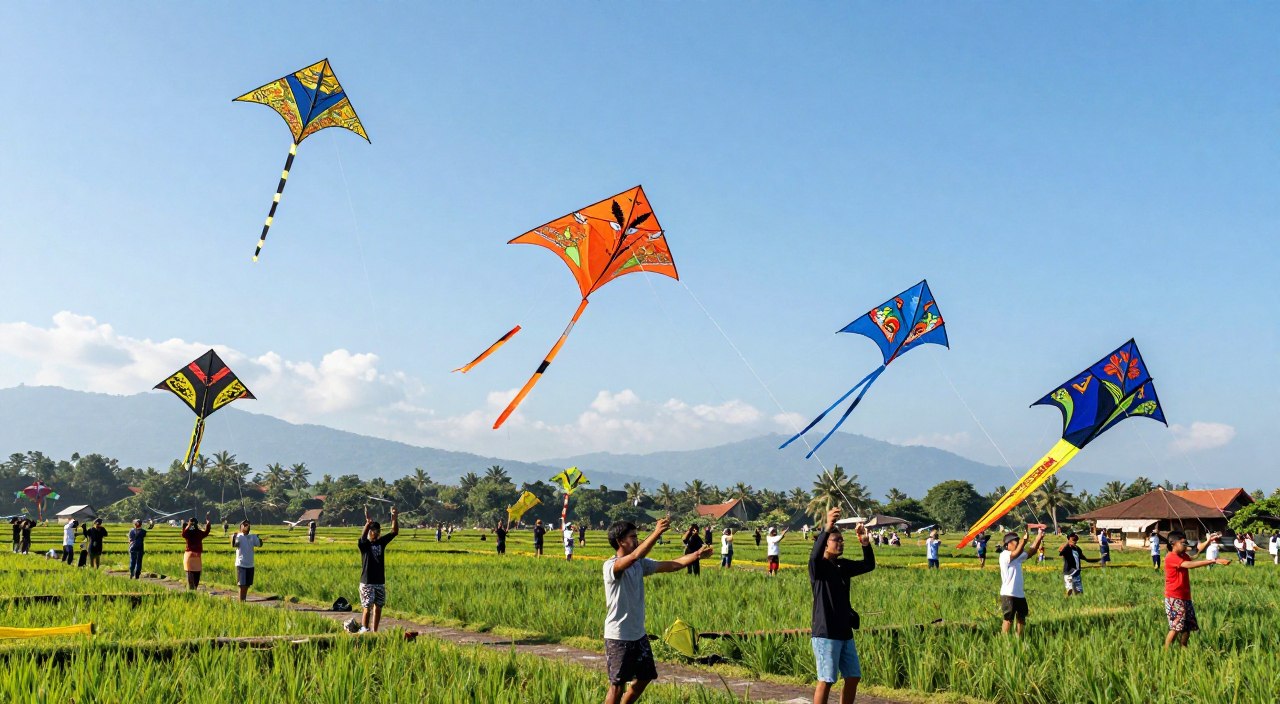
Imagine a sky filled with giants. Every July, the Bali Kite Festival transforms the island’s coastline into a breathtaking aerial gallery. This is one of Indonesia’s most visually stunning events.
This is far more than a simple pastime. It is a deeply sacred tradition. Massive, handcrafted kites act as messengers, carrying prayers and gratitude from the Balinese people to the heavens.
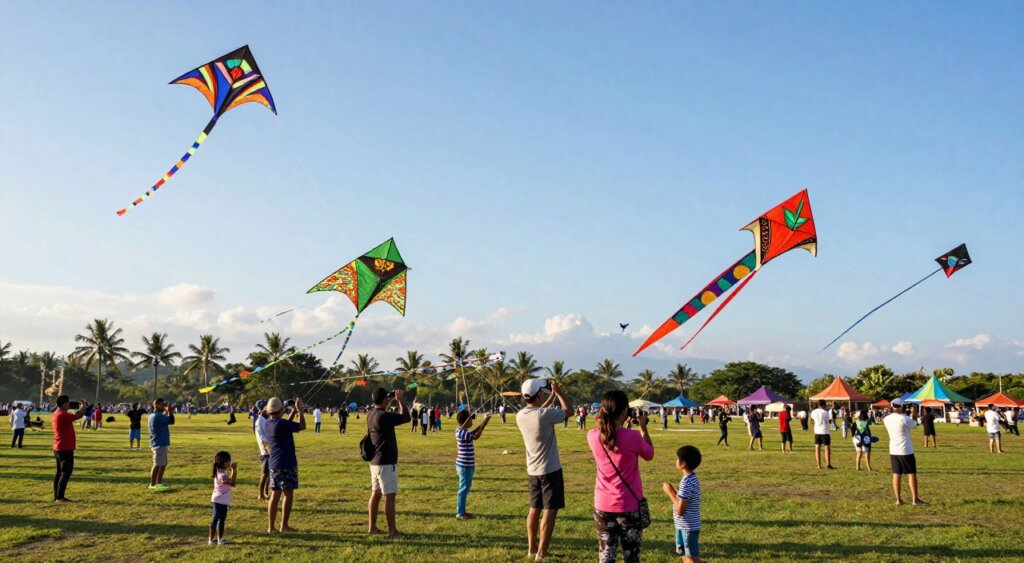
Visitors witness an incredible scene. Enormous kites, shaped like mythical dragons with tails stretching over 100 metres, soar gracefully. Giant fish and elegant leaf designs dance against brilliant blue skies.
The powerful, rhythmic pulse of live Gamelan orchestras on the beaches below completes the sensory experience. This celebration represents the perfect mix of art, spirituality, and community.
This ultimate guide will cover everything you need to know. We explore the spiritual meaning, historical roots, and different kite types. You will also find practical tips for experiencing this magnificent cultural event firsthand.
Witnessing the festival offers a rare chance to connect with local communities. It provides an authentic cultural experience few other tourist attractions can match.
Key Takeaways
- The event is a significant spiritual tradition, not just a recreational activity.
- It occurs annually during the dry season, from June to September.
- Teams fly enormous, handcrafted kites with intricate designs.
- Traditional Gamelan music provides a powerful soundtrack to the spectacle.
- It offers a unique opportunity for a genuine cultural connection.
- The festival has grown internationally while maintaining deep cultural authenticity.
Discover the Magic of the Bali Kite Festival
What appears as colorful entertainment is actually an ancient ritual deeply embedded in Balinese spirituality. This celebration connects earthly life with divine realms through sacred practices.
The Cultural and Spiritual Roots
The tradition began as farmers expressed gratitude for successful harvests. They created magnificent flying messengers to carry prayers to Hindu gods.
These creations honor Dewa Bayu, the wind deity. The practice symbolizes harmony between nature, people, and divine forces.
An important legend involves Rare Angon, a form of Lord Shiva. This mythical shepherd calls winds after harvest season, encouraging joyful celebration.
“The kites are not toys but sacred vessels carrying community prayers to the heavens.”
Historical Significance and Community Spirit
The event demonstrates powerful community spirit known as gotong royong. Villages work together for weeks preparing their entries.
Youth organizations called Sekaa Teruna lead the efforts. Dozens of people from each banjar contribute skills and resources.
| Aspect | Spiritual Significance | Community Impact |
|---|---|---|
| Purpose | Communication with gods | Village unity |
| Preparation | Priest blessings | Collaborative work |
| Outcome | Divine harmony | Cultural preservation |
Before flying, priests bless each creation. This ritual connects communities with ancestors and deities, reinforcing cultural values.
The entire process passes artistry and spirituality to new generations. It maintains living connections to Balinese heritage.
Traditional Craftsmanship and Unique Kite Designs
Three distinct traditional designs dominate the skies, each with unique characteristics and symbolism. These creations represent generations of Balinese artistry and cultural heritage.
Exploring Bebean, Janggan and Pecukan
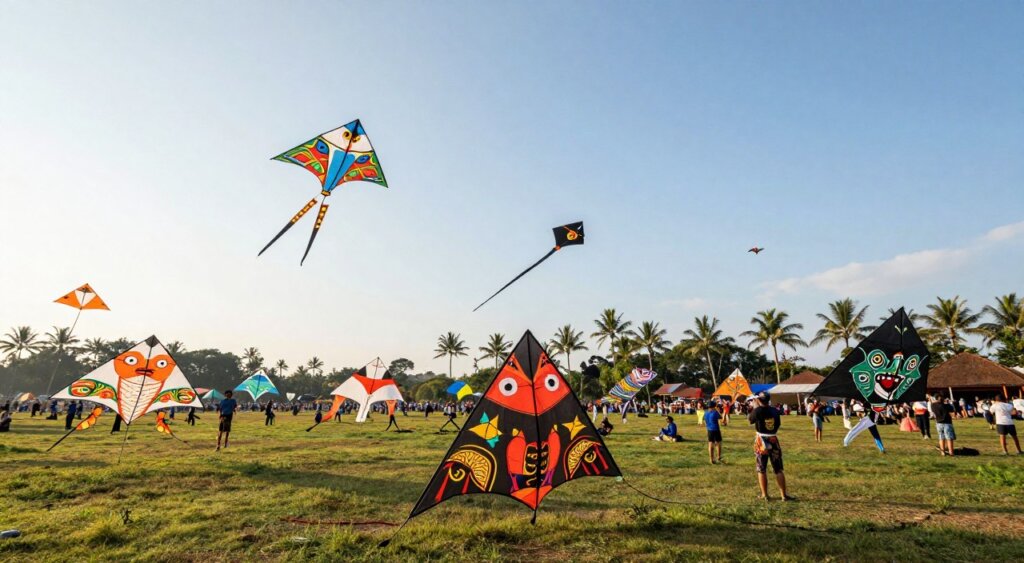
The Bebean design resembles a giant fish, symbolising ocean bounty. It’s known for impressive stability in the air, making it a common sight.
Janggan kites feature mythical dragon shapes with flowing tails stretching over 100 metres. They represent the Hindu Naga Basuki, a protective earth dragon.
Pecukan designs have rounded, leaf-like shapes prized for their agility. Skilled teams make them dance acrobatically in the wind.
Ancient Materials and Construction Techniques
Artisans use bamboo frames with colourful paper or silk coverings. The construction process begins as a father-son bonding activity.
Many giant kites feature a guwang mechanism that creates deep humming sounds. This adds an auditory dimension to the visual spectacle.
The largest creations require group effort to operate safely. Traditional colours like black, white, red, and yellow represent Hindu deities.
Major Balinese Hindu Holidays: Complete 2026 Festival Guide
Experiencing the Festival: A Visitor’s Essential Guide
Australian travellers seeking to witness this magnificent aerial display should plan their trip during the optimal season. Proper preparation ensures you enjoy every moment of this cultural celebration.
When, Where, and How to Enjoy the Event
The prime viewing period runs from June to September, with peak conditions in July and August. The main international competition occurs on July 20-21, 2025 at Padang Galak Beach near Sanur.
Local teams practice throughout July on beaches across South Bali. Even if you miss the main dates, you can still catch impressive displays.
| Event Type | Location | Experience Level | Crowd Size |
|---|---|---|---|
| International Competition | Padang Galak Beach | Large-scale spectacle | Very crowded |
| Local Village Events | Gianyar, Denpasar areas | Intimate cultural immersion | Smaller gatherings |
| Daily Practice Sessions | Various South Bali beaches | Casual viewing opportunity | Minimal crowds |
Practical Tips for Spectators and Families
Arrive early to secure good viewing spots and bring portable seating. The beach offers little shade, so sun protection is essential.
“Watching these enormous creations dance across the sky was unforgettable. The energy from the teams and music created a truly magical atmosphere.”
Stay clear of launching areas and supervise children closely. Bring Indonesian Rupiah cash for local food vendors. Consider hiring a private driver to navigate festival traffic.
The spectacle features kites reaching 50-200 metres high. Night flying with LED lights creates an extra special experience worth staying for.
Conclusion
Witnessing this magnificent aerial display offers more than just visual entertainment, it provides a genuine connection to Balinese heritage. The event represents a perfect blend of ancient tradition, spiritual devotion, and community celebration that remains deeply meaningful for local people.
For Australian families visiting during the June to September season, this experience delivers unforgettable memories. You’ll see handcrafted creations soaring gracefully against brilliant blue skies, accompanied by traditional music. The spectacle showcases remarkable craftsmanship and cultural cooperation.
Any traveler fortunate enough to be on the island during this period should prioritize attending this celebration. Whether you catch the main international competition or a smaller village gathering, the memory of these artistic giants dancing through the tropical air will remain a treasured highlight of your holiday.