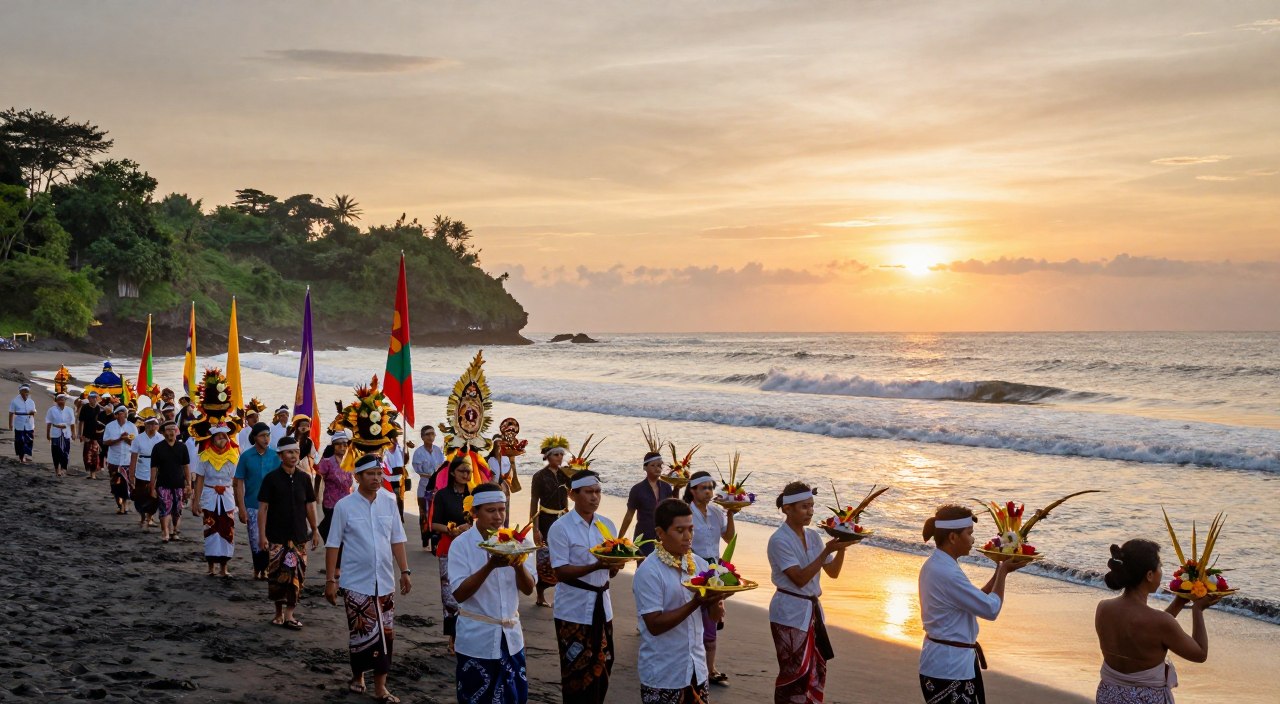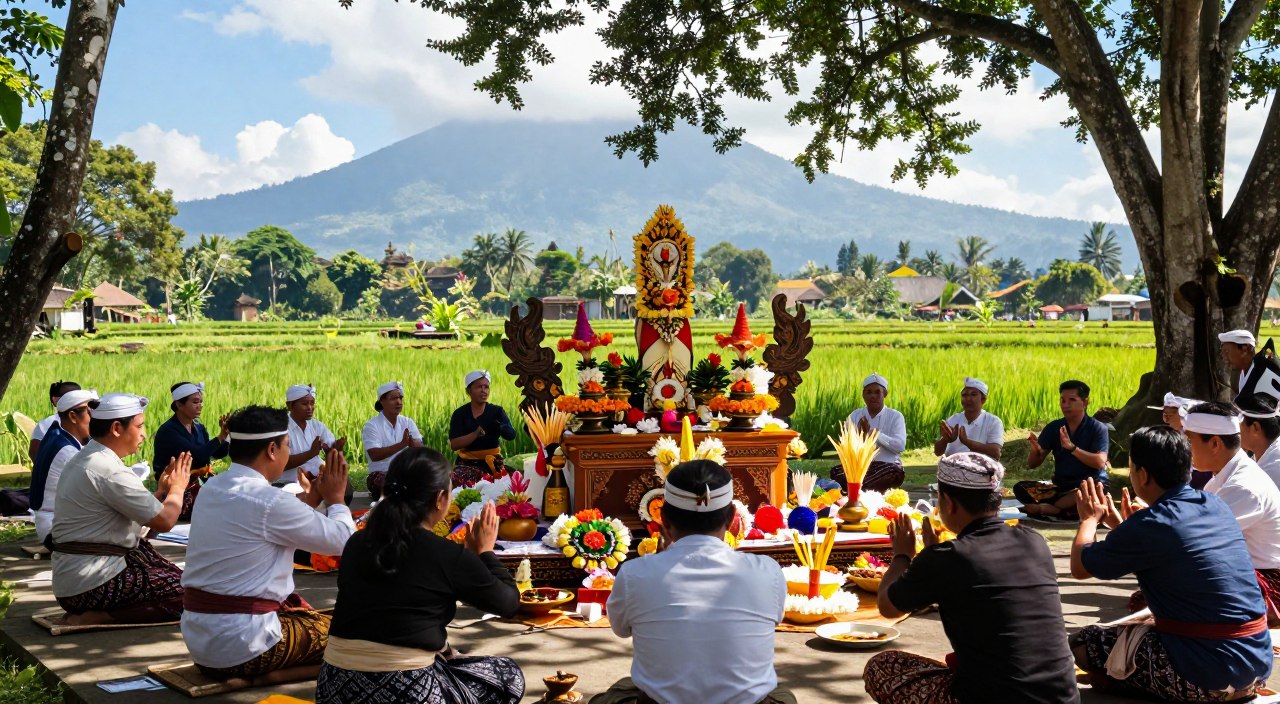
Bali aesthetic ideas offer a transformative approach to creating spaces that feel like a permanent tropical vacation. The growing global popularity of Bali design reflects our collective desire for tranquil, nature-connected environments that serve as personal sanctuaries from modern life. What makes Bali aesthetic uniquely captivating is its seamless blend of natural materials, traditional craftsmanship, rich textures, and profound sense of tranquillity. As a professional interior design consultant with over 15 years creating authentic Balinese interior style across Indonesia, Australia, and Southeast Asia, I’ve witnessed how this ancient design philosophy transforms ordinary homes into extraordinary paradise retreats.
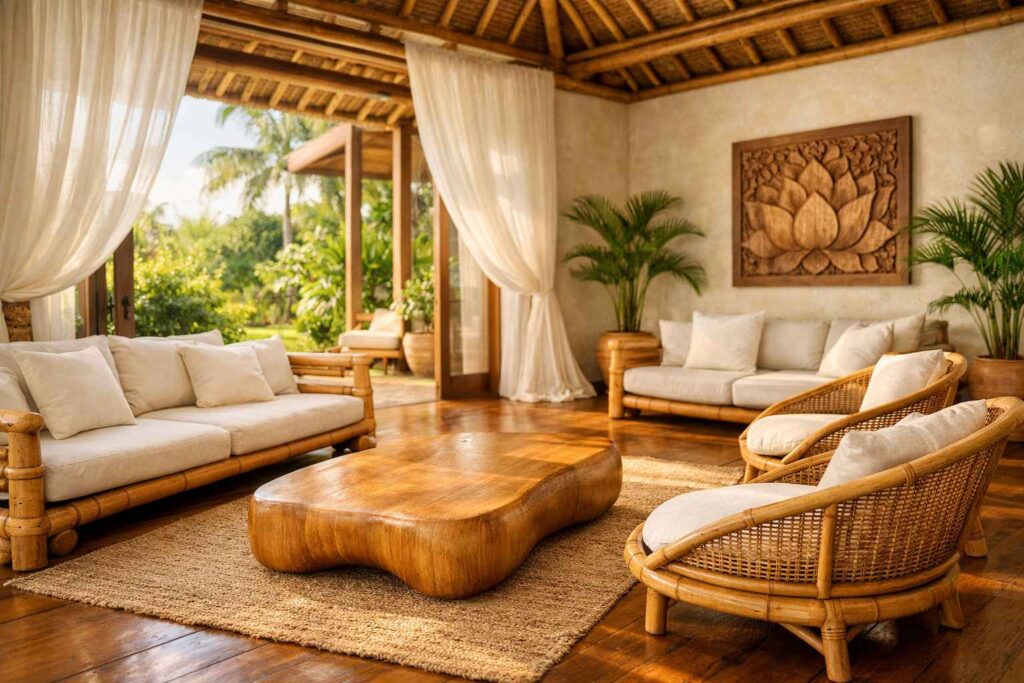
This comprehensive guide covers everything from Balinese architecture principles to practical implementation across your villa, home, bedroom, and backyard. You’ll discover how to incorporate bamboo, wood, stone, and natural textiles to create authentic Bali aesthetic ideas. From selecting perfect furniture pieces to designing lush tropical gardens with water features, this guide provides actionable steps drawn from traditional Balinese culture and contemporary design trends. Whether you’re browsing Pinterest for inspiration or ready to start your transformation, these Bali aesthetic ideas will help you create a space that blends indoor and outdoor living with timeless beauty.
Understanding the Bali Aesthetic
The Bali aesthetic isn’t simply a decorating style, it’s a living philosophy rooted in Balinese Hindu principles of harmony, balance, and connection to the natural world. These Bali aesthetic ideas emerge from centuries of Balinese architecture that treats buildings as living organisms in dialogue with their environment. The spiritual dimension of Balinese culture infuses every design decision, from the placement of fountains symbolizing life’s flow to carved wood deities protecting doorways.
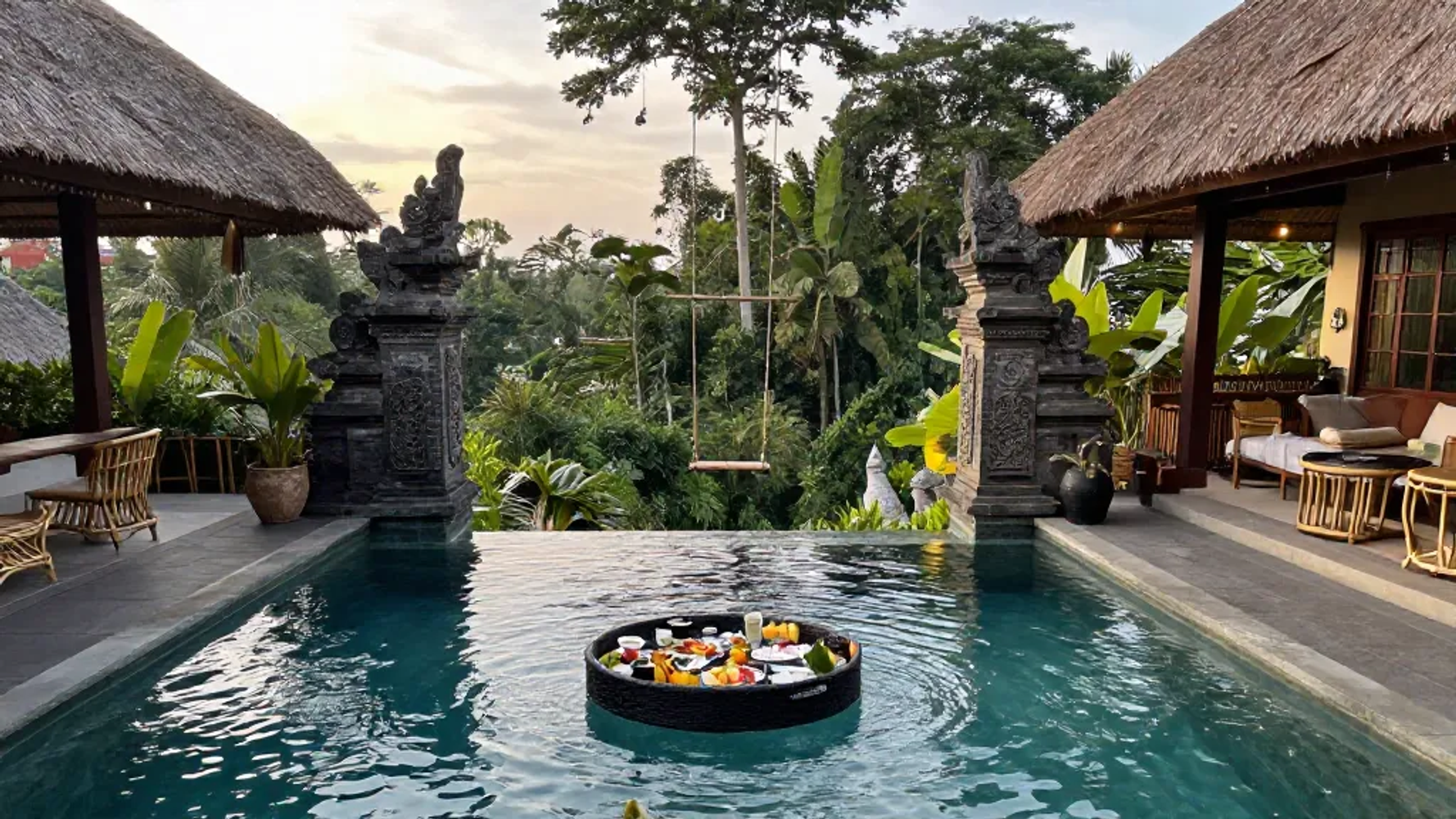
Traditional Balinese architecture follows the Tri Hita Karana principle, creating harmony between humans, nature, and the divine. This philosophy manifests in open pavilions that invite breezes, courtyards centered around sacred trees, and deliberate blurring of boundaries between inside and outside. Modern Bali aesthetic ideas preserve this wisdom while adapting to contemporary needs, balancing traditional thatched bamboo structures with clean-lined minimalism seen in Canggu villas.
What creates that unmistakable paradise feeling is the emphasis on tranquillity and sanctuary. Every element, from the sound of water trickling through stone ponds to the gentle rustle of bamboo leaves, contributes to an atmosphere of peaceful contemplation. The Balinese interior style achieves this through symmetry, natural lighting, organic textures, and carefully curated art that tells stories. These Bali aesthetic ideas transform homes into restorative retreats where the soul finds rest.
Core Elements of Balinese Interior Style
The Balinese interior style rests on three foundational pillars: nature, tradition, and texture. Understanding these Balinese design elements is essential before implementing any Bali aesthetic ideas in your space. Nature manifests through living plants, organic materials, and earth-toned palettes that echo tropical landscapes. Tradition appears in handcrafted furniture, spiritual symbols, and time-honored building techniques passed through generations of Balinese artisans.
Texture creates depth and sensory richness that defines authentic Bali aesthetic ideas. Rough-hewn stone walls contrast with smooth teak wood floors. Woven rattan furniture plays against soft linen cushions. These Balinese design elements engage multiple senses simultaneously. The emphasis on organic materials creates spaces that breathe, age gracefully, and connect occupants to the earth. Every surface tells a story through its grain, weave, or patina.
Balance and symmetry guide spatial arrangements in Balinese interior style. Traditional compounds organize buildings around central courtyards, creating equilibrium between public and private, active and contemplative spaces. Modern interpretations of these Bali aesthetic ideas maintain this principle through thoughtful furniture placement and architectural flow. Integration with surroundings is paramount. Large windows frame garden views like living paintings, while open pavilions dissolve boundaries between home and landscape. This connection to environment isn’t decorative, it’s fundamental to the Balinese design elements that create true sanctuary spaces.
Natural Materials in Interior Design
The foundation of all Bali aesthetic ideas is the thoughtful selection of natural materials interior design. These aren’t mere decorative choices but essential components that create authentic Balinese interior style. Bamboo, wood, stone, and woven fibers form the material vocabulary that speaks fluently in the language of Bali design. Each material brings specific qualities, from bamboo’s sustainability and flexibility to teak’s warm durability.
Bamboo in Balinese Design
Bamboo stands as the most versatile and iconic material in Bali aesthetic ideas. This remarkable grass grows rapidly, requires minimal resources, and provides extraordinary structural strength. Traditional Balinese builders have perfected bamboo furniture design techniques over centuries, creating everything from delicate chairs to load-bearing architectural columns. The natural variation in bamboo poles, from golden yellow to deep brown, adds organic visual interest that manufactured materials cannot replicate.
Incorporating bamboo furniture design into your Bali aesthetic ideas brings immediate tropical authenticity. Consider bamboo dining chairs with curved backs and woven seats, coffee tables featuring polished bamboo poles in geometric patterns, or statement bed frames with intricate joinery. Bamboo panels serve multiple functions as room dividers, privacy screens, or textural wall treatments. These panels can be left natural or finished with clear sealants that preserve the material’s inherent beauty while protecting against humidity.
Structural bamboo transforms architecture itself. Modern Balinese villas in Canggu showcase soaring bamboo roof structures that create cathedral-like spaces while remaining completely sustainable. The sustainability aspect of bamboo aligns perfectly with contemporary environmental values. This grass reaches maturity in three to five years compared to hardwoods requiring decades, making it the most renewable option for implementing Bali aesthetic ideas. When properly treated and maintained, bamboo furniture design pieces last for generations, developing rich patinas that enhance their authentic Bali feel.
Wood Elements
Wood brings warmth, permanence, and rich character to Bali aesthetic ideas. The most prized varieties in Balinese interior style include teak, mahogany, and coconut palm wood. Teak reigns supreme for its exceptional durability in humid tropical climates, natural oils that repel water and insects, and gorgeous golden-brown tones that deepen with age. Mahogany offers similar resilience with reddish undertones perfect for statement furniture pieces. Coconut palm wood, harvested from trees no longer producing fruit, provides sustainable material with distinctive grain patterns and speckled appearance.
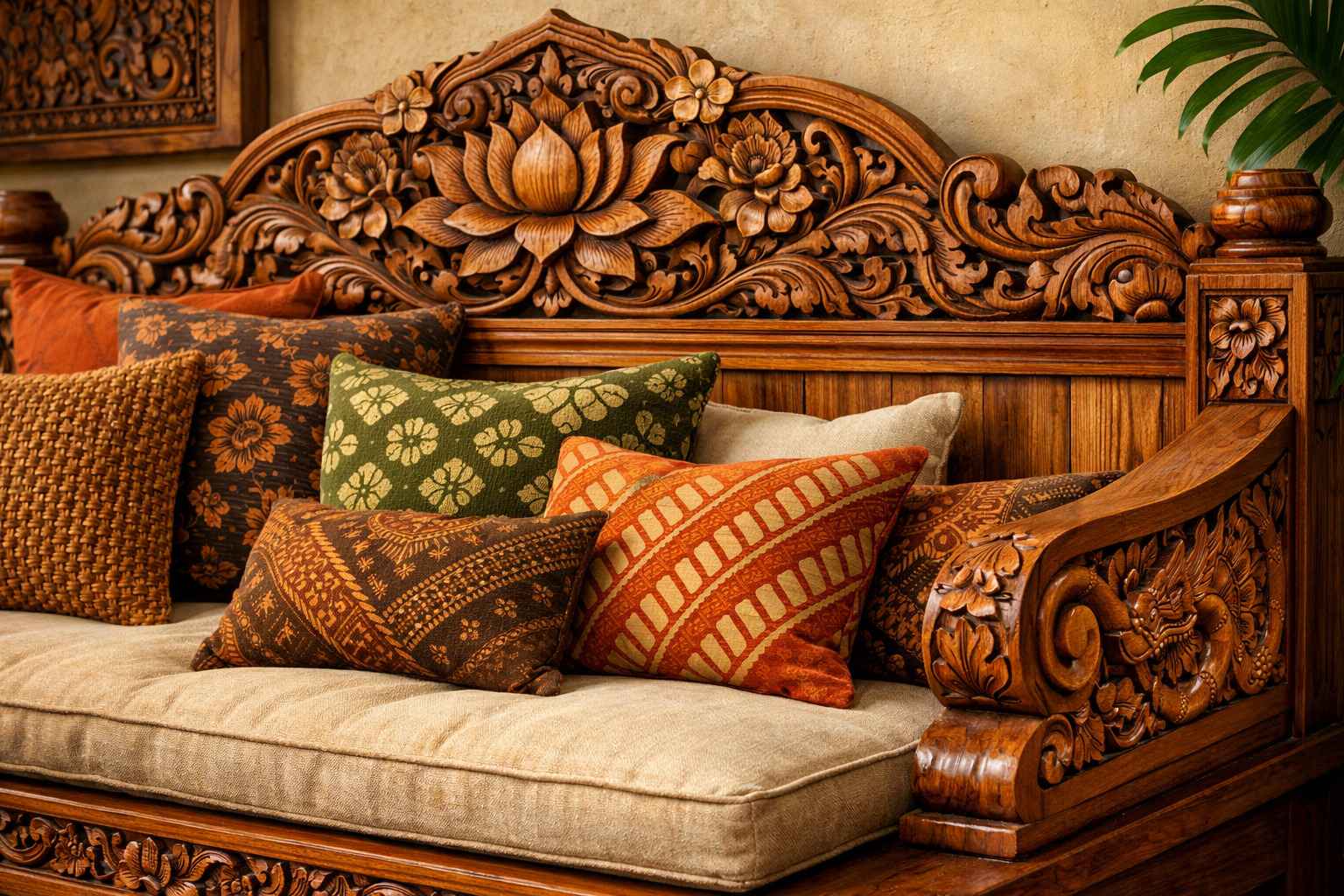
Carved wood details distinguish authentic Bali aesthetic ideas from generic tropical design. Balinese master carvers transform wood into intricate art, creating lotus motifs symbolizing purity, stylized frangipani flowers, and elaborate mythological scenes. These carvings appear on doorframes, window shutters, furniture headboards, and decorative panels. A single carved teak door with traditional Balinese art motifs can serve as the focal point for an entire room, immediately establishing Balinese culture within your space.
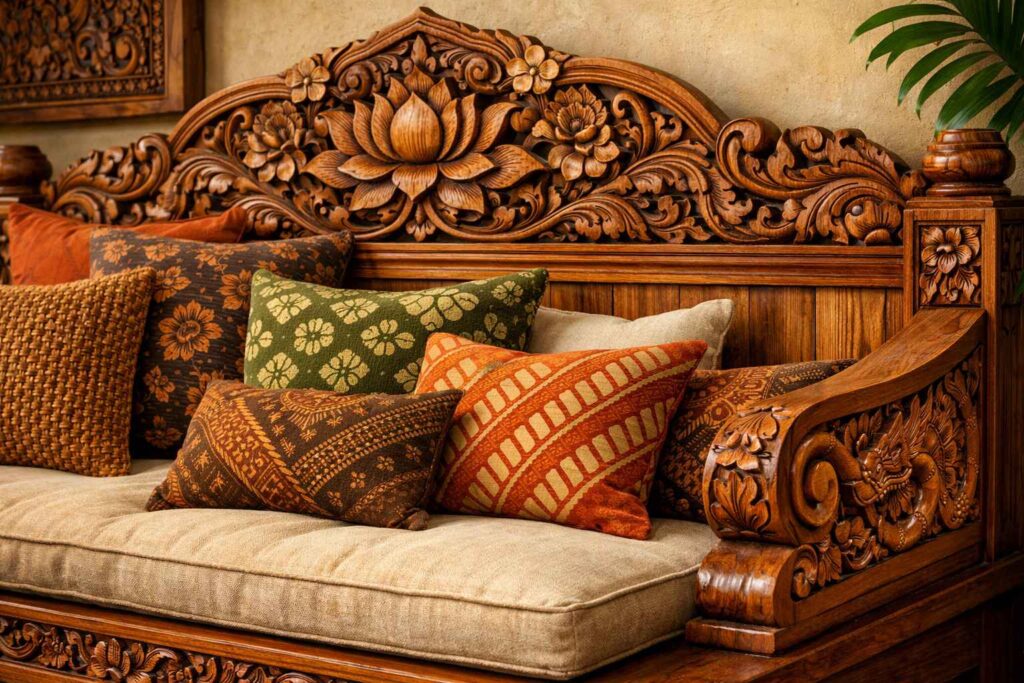
Wood furniture with warm natural tones forms the backbone of Bali aesthetic ideas. Look for low-profile platform beds in solid teak, dining tables featuring live-edge slabs that preserve the tree’s natural contours, and substantial wood benches perfect for entryways or bedroom seating. Wood accents around doorframes, window casings, and ceiling beams add architectural integrity. Hand-carved wood art and sculptures range from small deity figures to massive panels depicting scenes from Hindu epics. Wood flooring, particularly wide-plank teak or reclaimed wood, grounds spaces with earthy solidity while wall treatments using weathered wood planks create stunning textural backdrops in the Balinese interior style.
Rattan and Woven Materials
Rattan furniture and woven materials add essential texture layers to Bali aesthetic ideas. Rattan, a climbing palm, bends easily when heated, allowing artisans to create fluid, sculptural forms impossible with rigid wood. Classic rattan peacock chairs make dramatic statements in living spaces or bedrooms, while smaller rattan side tables, magazine holders, and storage baskets add practical beauty. The natural golden-brown hue of rattan complements Balinese colour schemes perfectly.
Woven textiles and baskets showcase intricate traditional patterns in Bali aesthetic ideas. Palm leaf weaving produces everything from ceremonial offerings to modern storage solutions. Ata grass, water hyacinth, and seagrass create textured baskets in various sizes for organizing while adding organic visual interest. Natural fiber cushion covers in neutral tones provide comfortable seating on wood or rattan furniture. Jute rugs and mats ground spaces with their rough, earthy texture, defining seating areas while allowing wood floors to show through. These woven elements bring the Balinese interior style to life through their handcrafted authenticity and tactile richness.
Stone and Natural Textures
Natural stone anchors Bali aesthetic ideas with timeless solidity and connection to the earth. Local volcanic stone, river rocks, and limestone appear throughout Balinese architecture, from foundation walls to intricate temple carvings. In modern interior design, natural stone creates dramatic focal points. Consider a rough-hewn stone accent wall behind your bed, polished stone countertops in kitchens or bathrooms, or stacked stone around fireplaces.
Stone sculptures and statues embody Balinese art traditions in these Bali aesthetic ideas. Carved stone deities protect entrances, while contemporary abstract stone forms serve as garden focal points. Natural stone patios extend living spaces outdoors, creating seamless transitions that define Balinese interior style. Stone walkways and stepping stones through gardens invite contemplative strolls while connecting different areas of your property.
Concrete and lime plaster walls contribute subtle textural depth to Bali aesthetic ideas. Traditional lime plaster, called plaster kapur, produces soft, slightly irregular surfaces that catch light beautifully throughout the day. Modern polished concrete floors offer smooth, cool surfaces perfect for tropical climates while maintaining the earthy color palettes essential to authentic Balinese interior style. The combination of rough and refined stone textures creates the sensory complexity that makes Bali aesthetic ideas so compelling and distinctive.
Balinese Colour Schemes
Balinese colour schemes draw directly from the island’s natural environment, creating palettes that feel both grounded and uplifting in Bali aesthetic ideas. The foundation always begins with neutral bases: creamy whites, warm beiges, soft grays, and natural wood tones. These neutrals create the calm, uncluttered atmosphere essential to Balinese interior style while allowing natural materials and textures to shine. White lime plaster walls reflect tropical sunlight beautifully, making spaces feel larger and more serene.
Warm earthy accent colors layer onto this neutral foundation in thoughtful Bali aesthetic ideas. Terracotta oranges and reds reference traditional clay roof tiles and ceremonial pottery. Deep jungle greens connect to lush tropical forests and rice terraces. Rich chocolate browns echo wood tones and volcanic soil. These Balinese colour schemes appear primarily through textiles, art, cushions, and accessories rather than dominating walls or large furniture pieces.
Colors reflecting the natural environment bring authenticity to your Bali aesthetic ideas. Think of sunrise pinks and peachy tones, the azure blues of the ocean, golden yellows of frangipani flowers, and the varied greens of palm fronds from the Arecaceae family. Natural concrete tones, whether polished smooth or left raw, provide industrial-chic elements in modern Balinese style. The key to successful Balinese colour schemes is restraint. Rather than painting walls in bold colors, incorporate accents through batik textiles, painted pottery, fresh flowers, and carefully selected art pieces that bring vibrancy without overwhelming the peaceful sanctuary atmosphere.
Furniture Design and Selection
Selecting furniture for Bali aesthetic ideas requires understanding both form and philosophy. The ideal pieces combine natural warm tones, handcrafted quality, and low-profile designs that maintain visual openness. Rattan and bamboo furniture design naturally fits this aesthetic, offering lightweight yet durable options that age beautifully. Heavy wood furniture in teak or mahogany provides substantial anchor pieces like dining tables and bed frames.
Low-profile pieces characterize authentic Balinese interior style and effective Bali aesthetic ideas. Platform beds sit close to the ground, creating intimate sleeping spaces that feel grounded and secure. Low coffee tables encourage relaxed, floor-level living that’s central to Balinese lifestyle. Daybeds and floor cushions offer flexible seating arrangements perfect for lounging or entertaining. These pieces maintain sight lines across rooms, preventing visual clutter and preserving the open, airy feeling essential to the Balinese interior style.
Statement furniture pieces anchor your Bali aesthetic ideas while telling stories. A hand-carved wood daybed with intricate motifs becomes a functional sculpture. An oversized rattan chair creates instant tropical atmosphere. A massive wood dining table crafted from a single tree slab celebrates natural beauty. Furniture placement should facilitate flow and conversation. Arrange seating to encourage interaction while maintaining clear pathways. In indoor outdoor living spaces, position furniture to frame garden views and create seamless transitions. Mixing traditional carved pieces with clean-lined modern furniture achieves the balanced eclecticism that defines contemporary Bali aesthetic ideas.
Textiles and Soft Furnishings
Textiles bring softness, color, and cultural depth to Bali aesthetic ideas. Linen reigns supreme for curtains and drapes, offering lightweight, breathable coverage that filters tropical sunlight into soft, diffused glows. White or cream linen curtains create ethereal atmospheres in bedrooms and living spaces. Sheer, light-colored natural fabrics preserve privacy while maintaining the bright, airy quality essential to Balinese interior style.
Batik patterns and prints infuse authentic Indonesian culture into your Bali aesthetic ideas. This ancient wax-resist dyeing technique produces intricate motifs ranging from geometric patterns to organic florals. Use batik textiles as throw pillows, wall hangings, table runners, or upholstery accents. Handmade rugs and floor coverings add warmth and texture underfoot. Natural fiber rugs in jute, sisal, or seagrass complement wood floors beautifully.
Cushions and throw pillows offer opportunities for color and pattern play in Bali aesthetic ideas. Layer various sizes and textures, mixing solid linen with patterned batik, woven textiles, and subtle embroidery. Textile layering techniques create depth and visual interest. In bedrooms, layer crisp white linen sheets with textured throws, decorative cushions, and lightweight quilts. The motifs found in Balinese textiles carry symbolic meanings, from lotus flowers representing spiritual purity to geometric patterns reflecting cosmic order. Understanding these motifs adds meaningful depth to your Bali aesthetic ideas.
Lighting in Balinese Design
Lighting profoundly impacts the atmosphere in Bali aesthetic ideas. Natural lighting maximization is paramount in Balinese architecture. Large windows, open walls, and skylights flood spaces with tropical sunshine, reducing reliance on artificial sources. Position furniture to capitalize on natural light patterns throughout the day. Sheer linen curtains soften harsh afternoon sun without blocking precious daylight.
Lanterns provide essential mood lighting in evening hours for your Bali aesthetic ideas. Traditional paper lanterns cast warm, diffused glows, while metal lanterns with intricate cutout patterns create dancing shadows. Hang lanterns at varying heights or cluster them as statement pieces. Soft, warm lighting choices maintain the serene tranquillity central to Balinese interior style. Avoid harsh, cool-toned bulbs; instead choose warm-white LEDs or traditional incandescent options.
Lighting fixtures crafted from natural materials reinforce authentic Bali aesthetic ideas. Bamboo pendant lights, woven rattan shades, and wood-framed lanterns add sculptural interest while providing functional illumination. Solar lanterns work beautifully in outdoor spaces, lining pathways or illuminating garden features sustainably. Use lighting to highlight textures, grazing stone walls to reveal their rugged surfaces or uplighting carved wood panels. In bedroom design, combine ambient lighting with task lamps for reading, all maintaining the warm, golden glow that defines evenings in Bali.
Balinese Art and Cultural Elements
Balinese art incorporation elevates Bali aesthetic ideas from decorative schemes to culturally meaningful environments. Paintings and sculptures of Hindu deities connect spaces to spiritual traditions. Look for depictions of Ganesha (remover of obstacles), Saraswati (goddess of knowledge), or Garuda (mythological bird). Wood carvings and stone sculptures demonstrate centuries-old craftsmanship techniques. Traditional art features religious narratives and ceremonial purposes, while contemporary pieces reinterpret these themes with modern aesthetics.
Art serves as focal points in Bali aesthetic ideas, commanding attention and anchoring rooms. A large carved wood panel above a sofa, a stone Buddha in a meditation corner, or traditional wayang kulit (shadow puppet) figures displayed decoratively all establish Balinese culture presence. Supporting local artisans ensures authenticity while contributing to preservation of traditional crafts. When purchasing Balinese art, seek pieces directly from artisans or ethical galleries that fairly compensate creators.
Spiritual significance in art deserves respectful consideration when implementing Bali aesthetic ideas. Religious imagery should be placed thoughtfully, above waist height and in dignified locations rather than bathrooms or entryways. Balinese art in modern interior design balances reverence with aesthetics. Contemporary interpretations might abstract traditional motifs into modern forms, maintaining cultural connection while fitting minimalist spaces. This thoughtful approach creates Bali aesthetic ideas that honor Indonesian traditions while serving contemporary living.
Creating Indoor-Outdoor Living Spaces
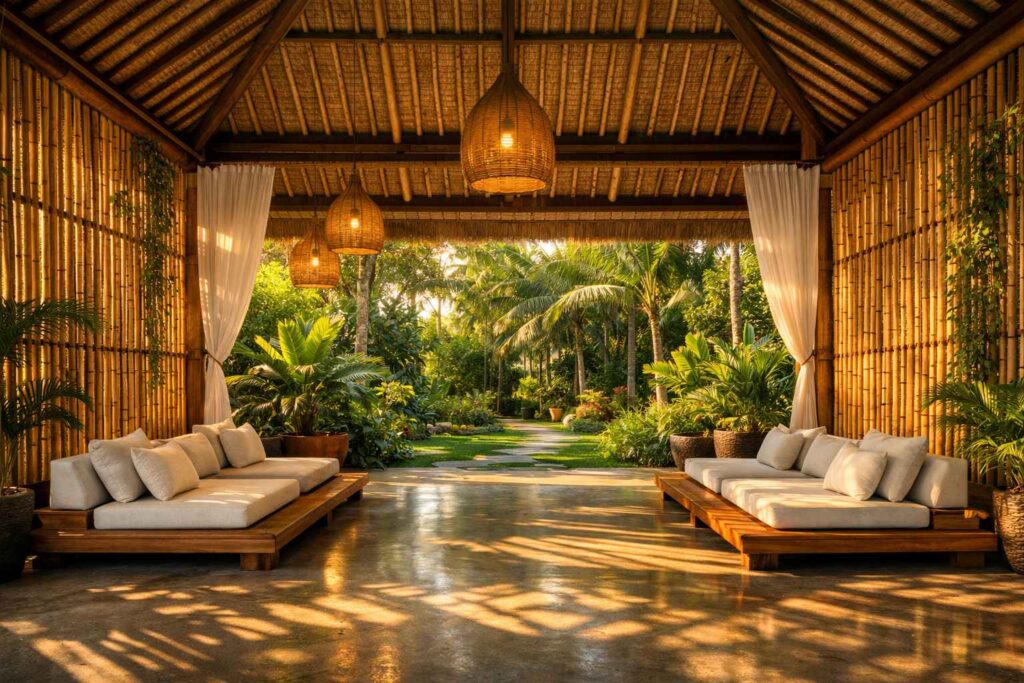
Indoor outdoor living spaces define the essence of Bali aesthetic ideas. This seamless integration between interior and exterior environments characterizes Balinese architecture at every scale. Courtyards, patios, and verandas serve as transitional zones that are neither fully inside nor completely outside. These spaces host daily activities like dining, lounging, and entertaining while remaining open to breezes, natural light, and garden views.
The seamless transition philosophy manifests through architectural strategies in Bali aesthetic ideas. Large sliding doors or folding glass walls open entire walls, dissolving boundaries between living rooms and gardens. Consistent flooring materials flow from interior to exterior, perhaps transitioning from polished concrete inside to rough-cut stone patios outside. Ceiling heights, roof overhangs, and structural columns maintain visual continuity across thresholds.
Bringing nature inside with plants completes the indoor outdoor living spaces concept in Bali aesthetic ideas. Large potted palms from the Arecaceae family, ferns, and tropical flowers blur the line between garden and home. Position plants near windows and doorways to frame views and soften transitions. Outdoor furniture zones extend living areas into gardens, with comfortable seating arranged under Bali huts or shade structures. Space flow and connectivity ensure movements between areas feel natural and intuitive, encouraging occupants to engage with both interior comfort and outdoor beauty throughout their day.
Balinese Style Gardens and Outdoor Spaces
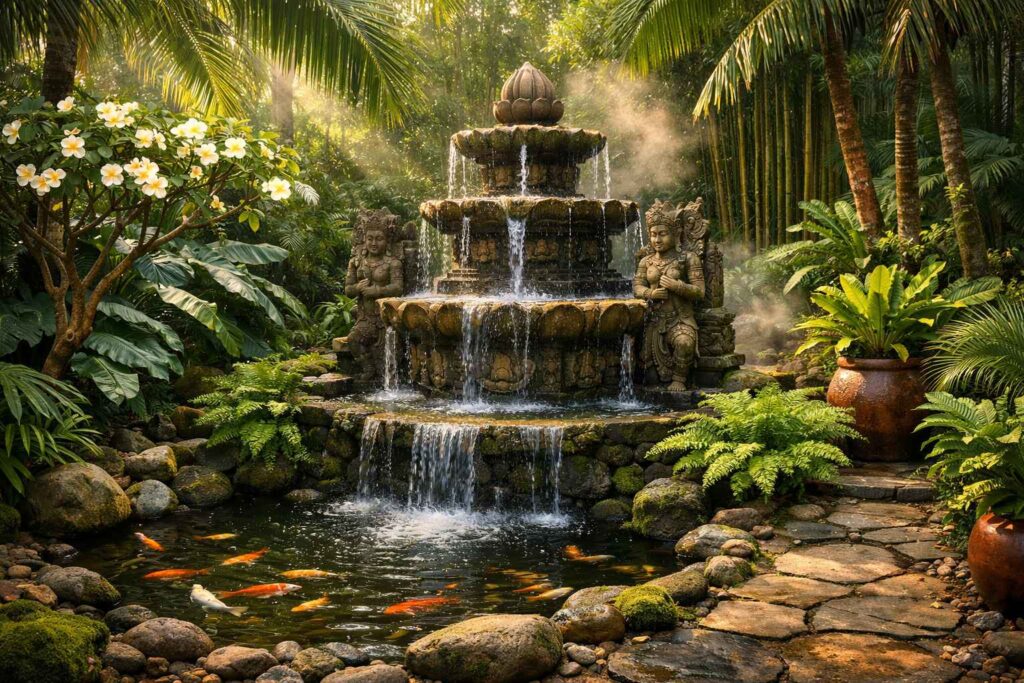
Balinese style gardens transform outdoor areas into lush, meditative retreats central to Bali aesthetic ideas. These aren’t merely decorative landscapes but functional extensions of living space that provide food, shade, spiritual connection, and sensory pleasure. The Balinese garden concept emphasizes creating zen-like outdoor sanctuary environments through thoughtful landscape design principles that balance structure with abundant natural growth.
Tropical Plants and Landscaping
Tropical plants landscaping forms the living foundation of Balinese style gardens in your Bali aesthetic ideas. Plant selection should prioritize species that thrive in your climate while evoking Bali’s lush tropical gardens atmosphere. Palms from the Arecaceae family provide essential vertical elements, from compact lady palms to towering coconut palms. Frangipani trees offer fragrant flowers and sculptural branching. Bamboo creates privacy screens and rustling soundscapes.
A layered planting approach mimics forest ecology in Balinese style gardens. Tall plants form canopy layers, mid-height shrubs create understory interest, and ground covers complete the composition. This density produces the lush tropical gardens feeling central to Bali aesthetic ideas while supporting diverse wildlife. Statement plants in large decorative pots serve as mobile focal points, allowing seasonal rearrangement and highlighting particularly beautiful specimens.
Balance is crucial in tropical plants landscaping to avoid overwhelming your space in these Balinese garden ideas. While Bali gardens embrace abundance, maintain sight lines and open areas that provide visual rest. Keep pathways clear and define distinct zones for different activities. The bright and airy feel essential to Balinese interior style extends outdoors through strategic plant placement that frames views rather than blocking them. Creating forest-like atmosphere doesn’t require every inch be filled, thoughtfully placed greenery can suggest density while preserving usable space.
Water Features in Garden Design
Water features garden design adds essential elements to Balinese style gardens and overall Bali aesthetic ideas. Ponds and fountains serve symbolic purposes beyond aesthetic appeal. Water represents life’s continuous flow, renewal, and purification in Balinese philosophy. The sound of trickling water creates immediate tranquillity, masking urban noise while encouraging contemplation.
Tirta Gangga water palace in eastern Bali provides inspiration for elaborate water features garden design in these Balinese garden ideas. Tiered stone fountains cascading into lotus ponds demonstrate classical Balinese water architecture. Koi ponds add living interest with their colorful inhabitants, requiring careful balance of filtration, feeding, and maintenance. Even small spaces can incorporate tabletop water features, compact fountains bubbling over stacked stones that bring sound and movement indoors.
Water features garden design considerations include power sources, water circulation, and seasonal maintenance in your Bali aesthetic ideas. Solar-powered pumps offer sustainable solutions for remote garden locations. Regular cleaning prevents algae buildup and maintains water clarity. In colder climates, features may need winterization. The investment in water features garden design pays dividends through enhanced sanctuary atmosphere, increased property value, and daily enjoyment of this timeless Balinese garden concept.
Natural Stone Patios and Pathways
Natural stone patios anchor outdoor living areas in Balinese style gardens and comprehensive Bali aesthetic ideas. These durable surfaces withstand tropical weather while aging beautifully with moss and patina. Local volcanic stone, limestone, or sandstone creates authentic connections to Bali’s geological character. Large format pavers produce clean, modern looks while irregular flagstone offers rustic charm.
Natural stone walkways guide movement through Balinese style gardens with both practical and aesthetic purpose in Balinese landscape design ideas. Stepping stones across lawns invite wandering while protecting grass. Pebble pathways provide textural interest and excellent drainage. Gravel paths edged with bamboo or wood define boundaries while allowing water infiltration.
Stone serves as a grounding element in Bali aesthetic ideas, literally and figuratively. Its permanence contrasts with ephemeral plants and flowing water. Warm tones in sandstone or terracotta-hued stone complement Balinese colour schemes. Cool gray volcanic rock provides dramatic contrast. Natural stone patios require proper base preparation to prevent settling but reward with decades of maintenance-free beauty that only improves with age.
Bali Hut and Gazebo Structures
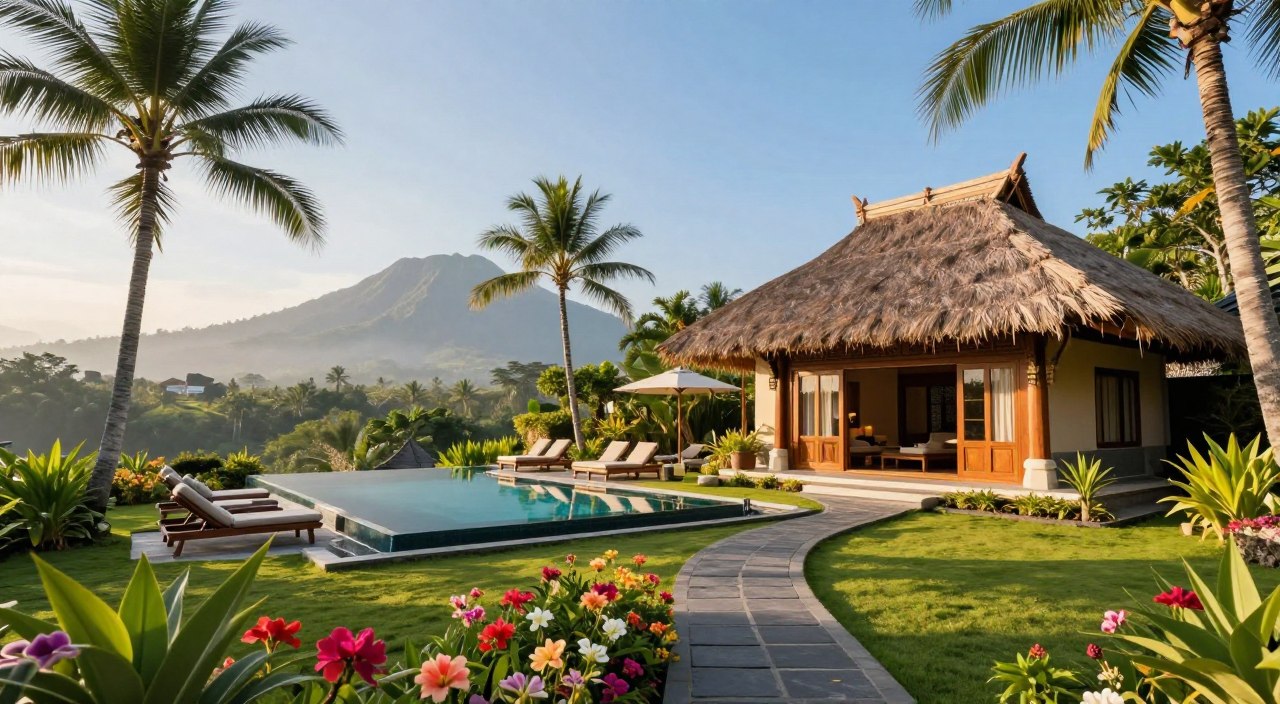
A Bali hut backyard structure creates an iconic focal point and functional outdoor room in Balinese style gardens. Traditional thatched huts, called bale or gazebos, provide shade and shelter while maintaining open-air connection to surroundings. These structures serve multiple purposes: meditation spaces, entertainment areas, poolside lounges, or simply peaceful retreats for reading and relaxation.
Architecture of outdoor structures should respect traditional Balinese proportions and materials in your Bali aesthetic ideas. Alang-alang thatch roofing, made from dried grasses, creates authentic steep-pitched roofs with excellent ventilation. Bamboo or wood posts support these structures with visible joinery that showcases craftsmanship. Open sides maintain air circulation while strategic placement provides privacy from neighbors.
African gazebo structures offer alternative interpretations with their peaked, thatched designs that complement Bali aesthetic ideas. Whether pursuing authentic Indonesian construction or adapted versions suitable for different climates, the Bali hut backyard concept transforms outdoor spaces. These structures typically include raised platforms, built-in seating, and sometimes daybeds for afternoon naps. Position your Bali hut backyard structure to capture best views, cooling breezes, and morning or afternoon shade depending on intended use.
Bamboo Panels for Privacy
Bamboo panels privacy solutions provide natural screening in Balinese style gardens while maintaining the organic aesthetic of Bali aesthetic ideas. These versatile elements create intimate zones, hide utility areas, define property boundaries, or simply add vertical texture. Bamboo fencing ranges from simple split poles to intricate woven patterns, each offering different density and visual character.
Natural backdrops created by bamboo panels privacy screens beautifully showcase sculptures, fountains, or feature plants in your Balinese garden ideas. The golden tones of bamboo complement stone and wood elements while contrasting pleasingly with deep green foliage. Climbing plants on bamboo panels privacy structures add another living layer, softening hard edges with jasmine, passionflower, or tropical vines.
Privacy with aesthetic appeal defines successful bamboo panels privacy implementation in Bali aesthetic ideas. Unlike solid fences that feel confining, bamboo screens filter views while allowing air circulation and dappled light penetration. This creates the sanctuary feeling essential to Balinese garden concept without total isolation from surroundings. Bamboo panels privacy solutions require occasional treatment to prevent weathering but remain one of the most sustainable and visually appropriate choices for authentic Balinese landscape design ideas.
Balinese Garden Décor
Balinese garden décor completes outdoor spaces with cultural authenticity and personal expression in comprehensive Bali aesthetic ideas. Stone statues and sculptures anchor key locations, from Buddha figures in meditation corners to whimsical frog sculptures near ponds. These pieces should be positioned thoughtfully at pathway intersections, garden focal points, or framing views rather than scattered randomly throughout space.
Lanterns for outdoor lighting serve both functional and decorative roles in Balinese garden décor and Balinese style gardens. Stone carved lanterns evoke traditional temple architecture. Metal lanterns with cutout patterns create enchanting shadow plays after dark. String solar-powered paper lanterns through trees for festive atmosphere during gatherings.
Religious shrines serve as focal points in authentic Balinese garden décor, though their use outside Bali and Indonesian communities requires cultural sensitivity. If incorporating these sacred elements into your Bali aesthetic ideas, research appropriate placement and treatment. Alternative focal points might include carved wood elements like decorative panels or traditional painted umbrellas. Natural material accents such as large decorative clay pots, wood carved planters, and woven baskets complete the Balinese garden décor palette while maintaining the organic aesthetic central to all Bali aesthetic ideas.
Modern Balinese Style
Modern Balinese style represents the evolution of traditional design principles meeting contemporary aesthetics in current Bali aesthetic ideas. This approach maintains core elements like natural materials, indoor outdoor living spaces, and spiritual connection while embracing minimalism, clean lines, and industrial touches. Contemporary art in Balinese spaces might feature abstract interpretations of traditional motifs or modern sculptures replacing ornate carvings.
The streamlined aesthetic of modern Balinese style removes excessive ornamentation while preserving essential Balinese design elements. Walls remain predominantly white or natural concrete, allowing statement furniture pieces and art to command attention. Bamboo and wood elements appear in their most refined forms: polished finishes, geometric compositions, minimal carving. This reduction creates breathing room and visual calm amplified beyond traditional dense layering.
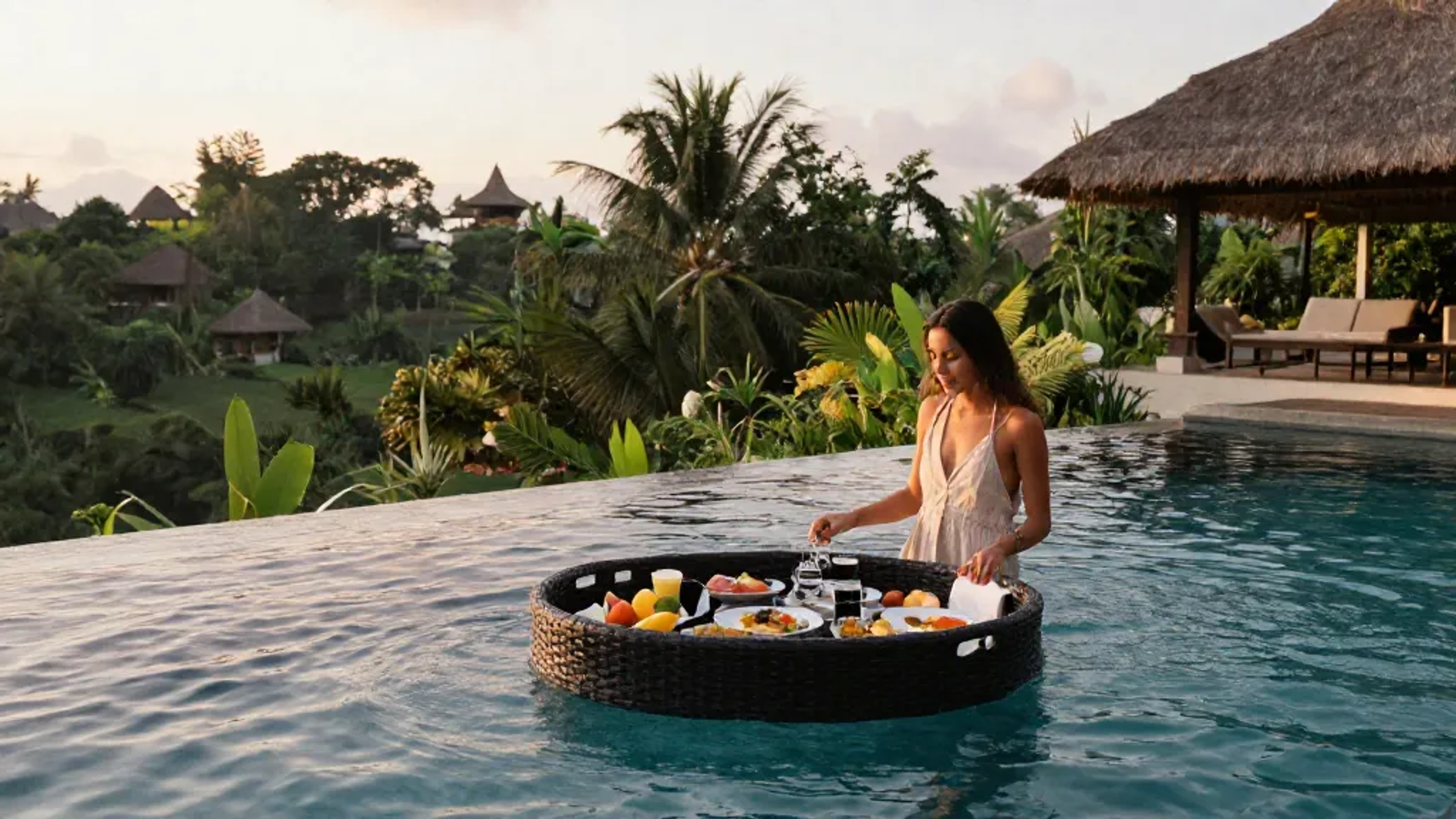
Canggu modern villa style exemplifies this contemporary interpretation of Bali aesthetic ideas. These luxury properties feature soaring glass walls, infinity pools that blur into ocean views, and restrained material palettes of concrete, teak, and black accents. High-end hotel design trends influence residential spaces, incorporating boutique hotel sophistication while maintaining Balinese soul. Balancing tradition with current trends requires selecting which traditional elements to preserve and which to reinterpret, ensuring modern Balinese style feels fresh rather than derivative while honoring Balinese culture and craftsmanship.
Room-by-Room Bali Aesthetic Guide
Balinese Bedroom Design
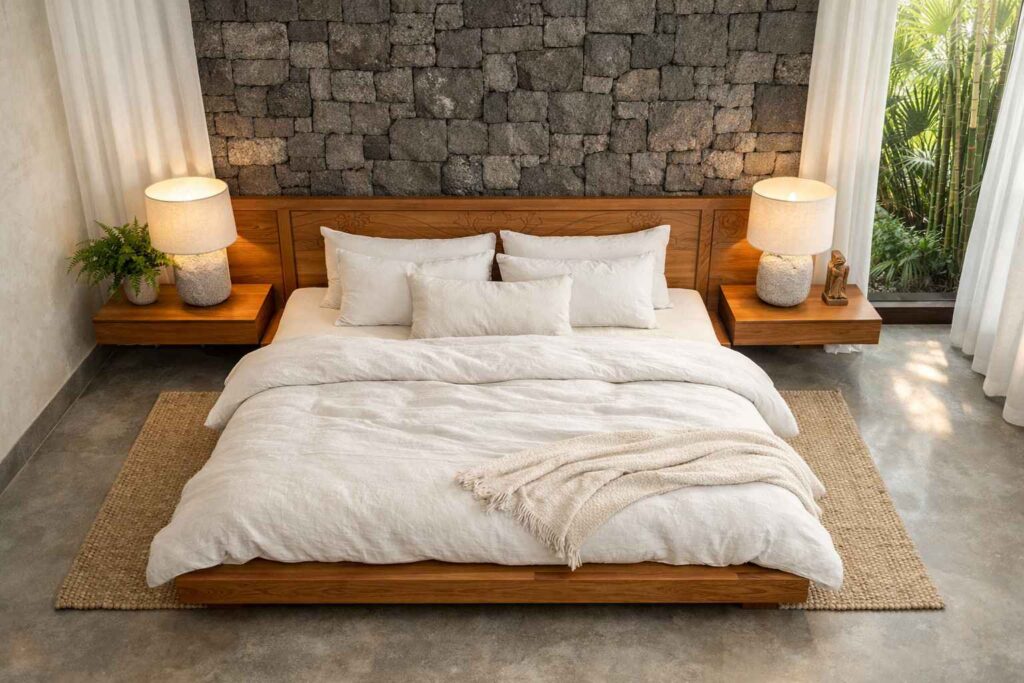
The bedroom as peaceful sanctuary forms the heart of residential Bali aesthetic ideas. Linen bedding and textiles in crisp whites or natural beiges create the foundation, layered with textured throws and cushions for depth. Natural wood furniture, particularly low-profile platform beds in teak or reclaimed timber, grounds the space with earthy solidity. Matching side tables and minimalist wardrobes maintain visual simplicity.
A minimal clutter approach proves essential in Balinese bedroom design and broader Balinese interior style. Storage solutions should conceal items behind closed doors, maintaining serene, uncluttered surfaces. Sheer curtains for soft lighting filter harsh sunlight while preserving privacy and airiness. Heavy drapes contradict the open, breezy quality central to Bali aesthetic ideas.
Cushions and layered textiles add comfort without chaos in bedroom spaces. Decorative pillows featuring batik patterns or natural linen in varying sizes create inviting beds for rest. Balinese art above the bed serves as the room’s focal point, perhaps a carved wood panel with lotus motifs or contemporary painting featuring tropical themes. Mosquito net canopy, even in non-tropical climates, functions as romantic design element suspended from ceiling posts, adding vertical drama and authentic Bali atmosphere to bedroom retreats.
Living Spaces
Open floor plans characterize living spaces in Bali aesthetic ideas, promoting flow and connection between functional zones. Furniture arrangement should facilitate conversation while maintaining clear circulation paths. Natural color palettes dominate with white walls, wood tones, and earth accents creating calm foundations. Statement wood or stone features, like a feature wall or large sculpture, provide visual anchors without overwhelming space.
Plants integrated throughout living areas bring nature inside per Balinese interior style principles. Large potted specimens from the Arecaceae family occupy corners, smaller plants accessorize shelves and tables. This greenery softens hard surfaces and purifies air while maintaining essential Bali aesthetic. Connection to outdoor spaces proves paramount, with living areas opening directly onto patios, gardens, or indoor outdoor living spaces through large doors or windows.
Bathrooms
Natural stone and wood transform bathrooms into spa-like retreats in Bali aesthetic ideas. Stone tiles, river rock shower floors, and wood vanities create grounding, earthy atmospheres. Ocean-inspired colors, from soft seafoam to deep navy, complement neutral bases beautifully. Pond-like soaking tubs, particularly freestanding versions, provide focal points and luxury bathing experiences.
Outdoor shower concepts bring ultimate indoor outdoor living spaces experience to bathrooms in Balinese interior style. These partially or fully exposed showers allow bathing under open sky or garden canopies. Even in cooler climates, the concept can be adapted with glass enclosures opening to private courtyards. Linen towels and natural accessories like wood soap dishes and stone trays complete the spa aesthetic that makes bathroom Bali aesthetic ideas feel like daily retreats to Tirta Gangga or luxury resort.
Tropical Interior Aesthetics
Tropical interior aesthetics encompass broader principles that Bali aesthetic ideas embody perfectly. Bringing paradise indoors requires strategic textile choices for humid climates, selecting breathable natural fibers like linen, cotton, and light wools rather than synthetics. Furniture for humid climates must resist moisture damage, making teak, bamboo, and rattan superior choices over particle board or untreated softwoods.
Lighting for tropical spaces should maximize natural sources while providing warm artificial alternatives for evenings. Color palettes inspired by ocean and forest create psychologically cooling effects through blues, greens, and earthy neutrals. Avoid dark, heat-absorbing tones on large surfaces. Creating resort-like atmosphere comes from combining these practical considerations with luxurious touches: plush towels, quality bedding, fresh flowers, and thoughtful amenities that make every day feel like vacation.
Authentic Balinese Design vs. Interpretation
Authentic Balinese design requires respecting Balinese culture, using traditional materials, and understanding spiritual significance behind decorative elements. Working with Balinese artisans ensures pieces carry genuine craftsmanship and cultural knowledge. When budgets allow, sourcing directly from Indonesian makers supports local economies while guaranteeing authenticity in your Bali aesthetic ideas.
Adapting Bali aesthetic for non-tropical climates necessitates thoughtful substitutions. In cold regions, swap outdoor showers for steam rooms, choose cold-hardy plants resembling tropical varieties, and add heating elements to maintain comfortable spaces. Maintaining design integrity while adapting for climate requires understanding which elements are decorative and which are functional, preserving the spirit of Balinese interior style even when specific materials or features must change.
Ethical sourcing of materials protects both environment and artisan communities. Verify wood comes from sustainable forestry, ensure stone isn’t quarried from protected sites, and confirm textiles employ fair labor practices. These considerations align with Balinese Hindu principles of harmony with nature, making ethical choices not just moral but authentically aligned with Bali aesthetic ideas philosophy.
Balinese Landscape Design Ideas
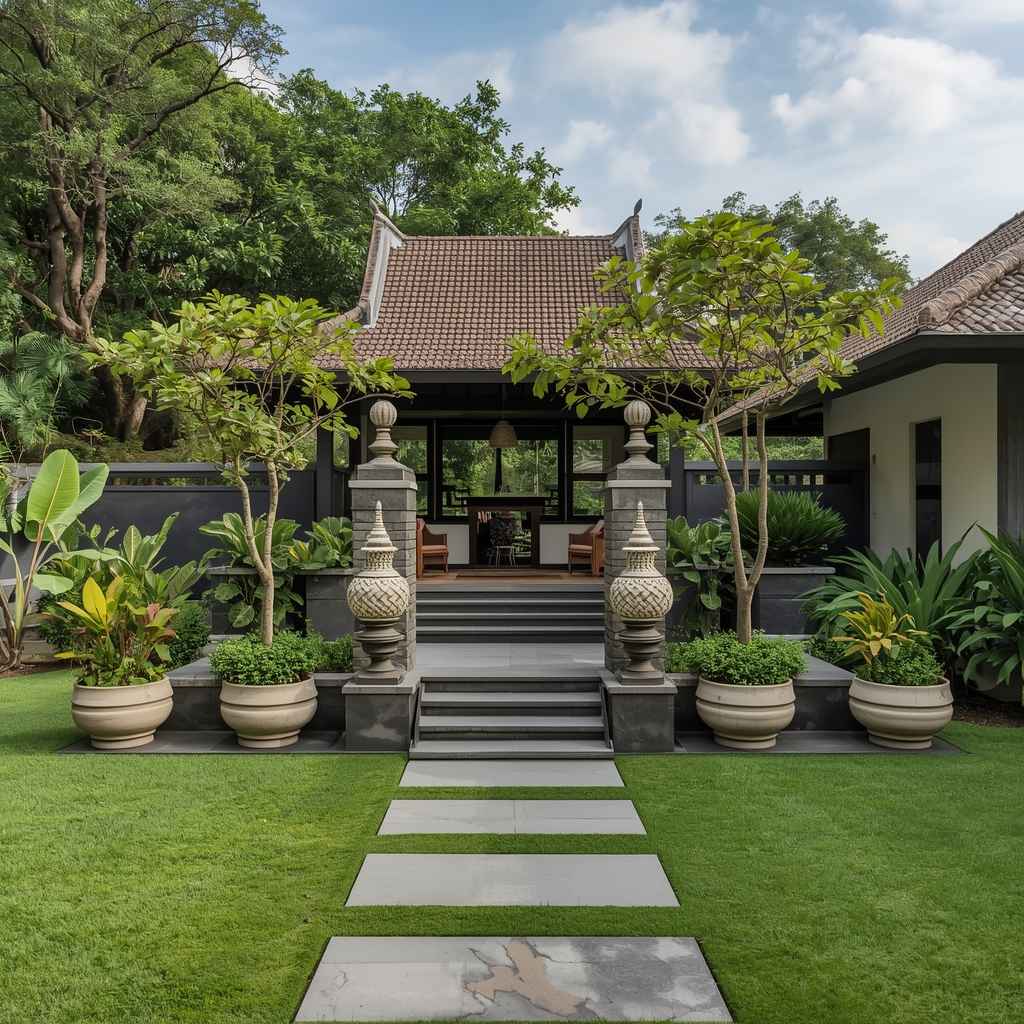
Balinese landscape design ideas offer complete outdoor transformation potential in comprehensive Bali aesthetic ideas. Eco-friendly landscape trends emphasize native plant selection, reduced water consumption, and wildlife habitat creation. Sustainable materials like reclaimed wood, local stone, and bamboo minimize environmental impact while maintaining aesthetic standards.
Australian adaptations of Bali gardens demonstrate how these Balinese landscape design ideas transplant successfully to similar climates. Drought-tolerant Australian natives can substitute for tropical plants while maintaining lush tropical gardens appearance. Landscape layers and zones create distinct areas for different purposes: entertainment zones, meditation spaces, vegetable gardens, and purely ornamental sections. Each zone should flow naturally into the next while maintaining individual character.
Creating hidden gem spaces within larger landscapes rewards exploration and discovery in Balinese landscape design ideas. A secret pond behind bamboo screening, a meditation platform accessible only via winding stone paths, or an intimate seating area nestled within dense forest-like planting all exemplify this concept. These discoveries make gardens feel larger and more mysterious, encouraging daily engagement with outdoor spaces in ways manicured lawns never achieve.
Budget-Friendly Bali Aesthetic Ideas
DIY design elements make Bali aesthetic ideas accessible regardless of budget. Create simple bamboo lanterns using hardware store poles and rice paper. Paint terra cotta pots in earthy tones for affordable planters. Sew cushion covers from remnant linen or thrifted textiles. These handmade pieces add personal character while controlling costs in your Bali aesthetic ideas implementation.
Affordable bamboo and rattan pieces abound at import stores and online retailers. While not hand-crafted heirlooms, mass-produced options provide the right aesthetic at accessible prices. Second-hand furniture finds often include solid wood pieces that, with refinishing, become perfect Bali aesthetic ideas foundations. Estate sales and architectural salvage yards yield carved doors, wood beams, and stone elements at fractions of retail costs.
Plants and greenery on budget transform spaces dramatically in Bali aesthetic ideas. Propagate cuttings from friends’ tropical houseplants rather than purchasing mature specimens. Start with small palms and ferns that grow quickly. Simple textile swaps, replacing synthetic curtains with linen panels or adding batik throw pillows, instantly shift atmosphere toward Balinese interior style. Strategic accent pieces like a single statement lantern or carved wood panel create focal points without requiring complete room overhauls.
Pinterest inspiration for less involves saving images and identifying which specific elements create desired effects in Bali aesthetic ideas. Often it’s not expensive furniture but thoughtful arrangement, abundant greenery, or specific lighting that creates impact. Gradual transformation approach spreads costs over time, tackling one room or element monthly rather than attempting instant complete makeovers that strain budgets.
Where to Find Bali Aesthetic Inspiration
Answering “Bali aesthetic ideas pinterest?” requires understanding how to effectively use this visual platform. Pinterest boards for Bali aesthetic should be organized by room type, element category (lighting, textiles, furniture), and style variation (traditional, modern Balinese style). Search terms like “Balinese interior,” “tropical bedroom,” “bamboo furniture design,” “Balinese style gardens,” and “natural materials interior design” yield rich results for your Bali aesthetic ideas inspiration.
The question “Bali Pinterest Aesthetic?” refers to Pinterest’s role as primary visual inspiration source for Bali aesthetic ideas. The platform allows creating multiple boards for different aspects: one for bedroom inspiration, another for gardens, a third for color schemes. Pin consistently, organize thoughtfully, and add notes about specific elements that attract you to each image.
Instagram accounts to follow for Bali aesthetic ideas include luxury villa rental companies showcasing properties in Canggu and Ubud, Balinese interior design studios, and lifestyle influencers sharing authentic Indonesian living. Bali villa tours and lookbooks provide room-by-room inspiration showing how elements combine in real spaces. Interior design magazines, both print and digital, regularly feature Bali-inspired projects that demonstrate professional implementation of these Bali aesthetic ideas.
Canggu and Ubud style references differ notably, with Canggu emphasizing beach-chic minimalism while Ubud leans toward jungle retreat opulence. Both offer valuable Bali aesthetic ideas depending on personal preferences. Balinese architecture photography books document traditional compounds, temples, and heritage buildings that reveal timeless design principles. Travel inspiration from Bali visits remains ideal, allowing firsthand experience of materials, lighting, sounds, and atmospheres that photographs cannot fully capture.
Seminyak vs Canggu Guide: Which Bali Beach Town Is Right for You?
Shopping for Balinese Design Elements
Where to buy bamboo furniture ranges from online Indonesian exporters shipping internationally to local import shops carrying Asian-inspired pieces. Specialty retailers focused on sustainable furniture often stock bamboo furniture design options. For authentic pieces, consider working directly with Indonesian manufacturers who can custom create items to your specifications at competitive prices.
Balinese art and sculpture sources include galleries specializing in Southeast Asian art, online marketplaces like Etsy featuring individual artisans, and importers focused specifically on Indonesian cultural items. Textile and batik suppliers exist both in Bali itself for direct purchasing and through online retailers worldwide. Research seller reputations and request detailed photos to ensure quality before purchasing expensive Bali aesthetic ideas pieces.
Online retailers for Bali aesthetic include major furniture companies now offering tropical collections, sustainable design boutiques, and Indonesia-focused import sites. Supporting ethical brands ensures fair artisan compensation and environmentally responsible sourcing. Importing from Indonesia requires understanding customs regulations, shipping costs, and lead times but often yields best authenticity and value for serious Bali aesthetic ideas implementations.
Local artisans and makers might create comparable pieces adapted to your region’s materials and climate. Commission custom furniture, source local stone for water features, or work with regional weavers for textiles inspired by batik patterns. Pinterest shopping features allow purchasing items directly from pinned images, though verify seller legitimacy and read reviews before buying for your Bali aesthetic ideas project.
Common Mistakes to Avoid
Over-cluttering spaces contradicts the serene minimalism essential to Balinese interior style. While Bali aesthetic ideas embrace natural materials and cultural elements, excessive decoration creates visual chaos rather than tranquillity. Edit ruthlessly, removing items until space breathes. Ignoring lighting importance results in flat, lifeless rooms. Natural light maximization, layered artificial sources, and warm tones make or break Bali aesthetic ideas success.
Using inauthentic materials undermines the entire concept. Plastic “wood” or synthetic “stone” lack the texture, aging qualities, and spiritual resonance of genuine natural materials central to Bali aesthetic ideas. Invest in real materials, even in smaller quantities, rather than filling spaces with convincing imitations. Neglecting indoor outdoor living spaces connection misses fundamental Balinese interior style principle. Every room should relate to exterior environments through views, direct access, or plant presence.
Wrong color palette choices, particularly cool grays or stark whites without warm undertones, feel sterile rather than tropical. Balinese colour schemes require warm neutrals and earthy accents. Poor plant selection results in dying specimens or inappropriate species. Research plant needs and choose varieties proven for your climate that resemble Bali’s tropical vegetation when implementing Bali aesthetic ideas.
Forgetting spiritual and cultural elements reduces Bali aesthetic ideas to mere decoration. Include meaningful art, respect cultural symbols, and understand the philosophy behind design choices. Mixing incompatible design styles, like combining Balinese interior style with stark Scandinavian minimalism or French provincial ornament, creates confused rather than cohesive spaces. Commit to the Bali aesthetic with discipline, allowing natural materials and careful editing to create authentic environments.
Bali Aesthetic for Different Climates
Adapting tropical design for temperate climates in Bali aesthetic ideas requires creative problem-solving. Material substitutions might include cedar or redwood for outdoor furniture instead of tropical hardwoods, cold-hardy bamboo species, or stone types local to your region rather than volcanic rock. These maintain authentic textures while surviving climate demands.
Plant alternatives for non-tropical areas should prioritize evergreens, architectural forms, and species with similar visual qualities to palms and tropical specimens. Hardy bamboo varieties, ornamental grasses resembling tropical vegetation, and large-leaved perennials can evoke lush tropical gardens feeling even in cold climates. Seasonal adjustments acknowledge that Bali aesthetic ideas manifest differently across the year in temperate zones, perhaps emphasizing indoor outdoor living spaces in summer while creating cozy interior retreats in winter.
Maintaining aesthetic year-round requires selecting materials that age gracefully through freeze-thaw cycles, choosing plants that provide four-season interest, and designing flexible spaces equally appealing in all weather. Lighting in darker climates becomes even more critical, with warm artificial sources compensating for reduced natural light during winter months. These adaptations prove that Bali aesthetic ideas transcend geographical limitation when approached thoughtfully.
Bali Weather Guide: Complete Climate & Season Planning 2026
Sustainable and Eco-Friendly Bali Design
Bamboo sustainability makes this material ideal for environmentally conscious Bali aesthetic ideas. This rapidly renewable grass stores more carbon than equivalent trees, requires no pesticides or fertilizers, and regenerates from roots after harvesting. Recycled wood and materials give new life to reclaimed timber, salvaged doors, and repurposed architectural elements while reducing demand for virgin resources.
Eco-friendly textiles include organic cotton, hemp linen, and naturally dyed fabrics free from harmful chemicals. Water conservation in gardens employs drip irrigation, mulching, and drought-tolerant plant selection, principles applicable even in Bali’s tropical climate. Supporting local culture and economy through purchasing from Indonesian artisans, hiring Balinese designers for consultations, or learning traditional crafts honors the human dimension of sustainability.
Green building practices incorporate passive cooling through indoor outdoor living spaces, natural ventilation replacing air conditioning, and solar power for lighting and pumps. Balinese principles of harmony with nature inherently embrace sustainability, making eco-friendly choices not additions but integral aspects of authentic Bali aesthetic ideas. This alignment between traditional philosophy and contemporary environmental values explains why Bali aesthetic resonates so powerfully with modern consciousness.
BALI AESTHETIC CHECKLIST
☐ Natural materials (bamboo, wood, stone, rattan) ☐ Neutral color base with earthy accents
☐ Balinese art or cultural elements ☐ Indoor-outdoor connection established ☐ Water feature (fountain or pond) ☐ Tropical plants (palms, ferns, bamboo) ☐ Natural textiles (linen, cotton, batik) ☐ Soft lighting with lanterns ☐ Handcrafted furniture pieces ☐ Open, uncluttered spaces maintained
ROOM TRANSFORMATION GUIDE
BEDROOM:
- Key Elements: Linen bedding, low teak platform bed, carved wood headboard
- Materials: Teak wood, linen, bamboo, natural stone
- Color Palette: White, cream, warm browns, terracotta accents
- Focal Point: Carved wood art panel or stone sculpture
LIVING ROOM:
- Key Elements: Rattan furniture, tropical plants, stone feature wall
- Materials: Rattan, teak, linen cushions, jute rug
- Color Palette: Cream, beige, jungle greens, wood tones
- Focal Point: Statement wood coffee table or large palm plant
BATHROOM:
- Key Elements: Natural stone tiles, wood vanity, soaking tub
- Materials: River rock, teak, linen towels, stone counters
- Color Palette: White, soft gray, ocean blues, natural wood
- Focal Point: Stone soaking tub or outdoor shower
OUTDOOR SPACE:
- Key Elements: Bali hut, water fountain, tropical landscaping
- Materials: Bamboo, thatch roofing, stone pavers, plants
- Color Palette: Natural greens, earth browns, stone grays
- Focal Point: Traditional Bali hut gazebo or tiered fountain
MATERIAL SOURCING GUIDE
BAMBOO FURNITURE:
- Where to Buy: Indonesian exporters, sustainable furniture retailers, import shops
- Price Range: $100-$2,000+ per piece depending on size and craftsmanship
- Sustainability: Highly sustainable, 3-5 year growth cycle
- Authenticity: Highest when sourced from Indonesian artisans
TEAK WOOD:
- Where to Buy: Specialty wood suppliers, Indonesian manufacturers, online retailers
- Price Range: $500-$5,000+ depending on furniture size
- Sustainability: Moderate (choose certified sustainable sources)
- Authenticity: Verify genuine teak vs. imitations
STONE SCULPTURES:
- Where to Buy: Indonesian art galleries, online marketplaces, direct from Bali
- Price Range: $50-$5,000+ based on size and detail
- Sustainability: Check quarrying practices
- Authenticity: Highest from Balinese stone carving villages
BATIK TEXTILES:
- Where to Buy: Indonesian textile importers, Etsy artisans, specialty fabric stores
- Price Range: $10-$200 per meter depending on quality
- Sustainability: Natural dyes preferred, check labor practices
- Authenticity: Hand-batik more authentic than printed imitations
BUDGET BREAKDOWN
$500 BUDGET TRANSFORMATION:
- Key Investments: Tropical plants ($150), bamboo accessories ($100), linen textiles ($150)
- DIY Elements: Painted pots, simple bamboo lanterns, reorganization
- Total Impact: Single room refresh with plants and textile swaps
- Timeline: 1-2 weekends
$2,000 BUDGET TRANSFORMATION:
- Key Investments: Statement furniture piece ($800), multiple plants ($300), water feature ($400), lighting ($300), textiles and art ($200)
- DIY Elements: Painted walls, rearranged layouts, handmade accents
- Total Impact: Complete room makeover or multiple room refreshes
- Timeline: 4-6 weeks
$5,000+ BUDGET TRANSFORMATION:
- Key Investments: Multiple furniture pieces ($2,500), Bali hut structure ($1,200), extensive landscaping ($800), authentic Balinese art ($500), complete textile overhaul ($500), lighting systems ($500)
- DIY Elements: Personal touches, ongoing maintenance, gradual additions
- Total Impact: Whole home or complete outdoor transformation
- Timeline: 2-3 months
PLANT SELECTION CHART
ARECACEAE PALMS:
- Light Needs: Bright indirect to full sun
- Water Needs: Moderate, allow soil to dry between watering
- Indoor/Outdoor: Both (depending on species and climate)
- Bali Authenticity: Very high, iconic tropical plants
FRANGIPANI:
- Light Needs: Full sun
- Water Needs: Low to moderate, drought tolerant once established
- Indoor/Outdoor: Outdoor (indoor in cold climates during growing season)
- Bali Authenticity: Extremely high, sacred Balinese flower
BAMBOO:
- Light Needs: Full sun to partial shade
- Water Needs: Moderate to high
- Indoor/Outdoor: Primarily outdoor (some dwarf varieties indoor)
- Bali Authenticity: Very high, essential Balinese plant
FERNS:
- Light Needs: Shade to partial shade
- Water Needs: High, consistent moisture
- Indoor/Outdoor: Both, excellent for understory planting
- Bali Authenticity: High, creates lush tropical feeling
TROPICAL FLOWERING PLANTS:
- Light Needs: Full sun to partial shade
- Water Needs: Moderate to high
- Indoor/Outdoor: Primarily outdoor, some indoor varieties
- Bali Authenticity: High, adds color and scent
COLOR PALETTE GUIDE
NEUTRAL BASE:
- Cream White (
#F5F5DC) - Warm Beige (
#E8D5B7) - Soft Gray (
#D3D3D3) - Natural Wood Tones
- Where to Use: Walls, large furniture, flooring, main textiles
ACCENT COLORS:
- Terracotta Orange (
#E2725B) - Jungle Green (
#2F4F2F) - Chocolate Brown (
#3B2F2F) - Golden Yellow (
#DAA520) - Where to Use: Cushions, art, accessories, plants, small furniture
PAINT BRANDS:
- Benjamin Moore: “Swiss Coffee,” “Manchester Tan,” “Natural Cream”
- Sherwin Williams: “Accessible Beige,” “Kilim Beige,” “Natural Linen”
- Farrow & Ball: “Pointing,” “Joa’s White,” “String”
People Also Ask Topics
Pinterest Bali Outfits?
Bali fashion aesthetic connects intimately with interior design, both celebrating natural textiles, flowing forms, and earthy color palettes. Batik patterns appear equally in home textiles and clothing, providing visual continuity between personal style and environmental aesthetics. Flowy linen and natural textiles in loose silhouettes mirror the relaxed, breathable quality of Balinese interior style.
Bali Outfit Ideas: Complete Style Guide for Every Occasion 2026
Color palettes matching interior aesthetic include cream, terracotta, olive green, and soft blues that complement skin tones while echoing Balinese colour schemes. Bohemian tropical style embraces handcrafted details, natural fibers, and relaxed sophistication found in both Bali fashion and interior design. Pinterest boards for Bali fashion inspiration should include keywords like “tropical style,” “resort wear,” “linen dress,” “batik clothing,” and “bohemian beachwear.”
Vibes of Bali perfume?
Addressing sensory aesthetic of Bali extends Bali aesthetic ideas beyond visual into olfactory experience. Frangipani, coconut, and incense scents instantly evoke Bali’s atmosphere. These fragrances, whether from fresh flowers, essential oils, or candles, create multi-sensory sanctuary environments. Aromatherapy in Balinese spaces employs traditional combinations: sandalwood for grounding, jasmine for relaxation, citronella for freshness.
Creating multi-sensory sanctuary requires attending to all sense in Bali aesthetic ideas. Natural fragrances and essential oils in diffusers, burning incense, or fresh tropical flowers contribute scent layers. Scent as part of tranquillity proves as important as visual beauty or comfortable furniture. Balinese spa-inspired home scents might include lemongrass-ginger combinations, coconut-vanilla blends, or pure frangipani oil, each transporting occupants mentally to tropical paradise even in distant locations.
Balinese interior design style emphasizes natural materials like bamboo, wood, and stone, combined with neutral color palettes and earthy accents. Core elements include handcrafted furniture, indoor-outdoor living integration, tropical plants, linen textiles, and Balinese art. This style creates tranquil sanctuary spaces through harmony with nature, balanced design, and spiritual connection, transforming homes into peaceful paradise retreats.
Conclusion
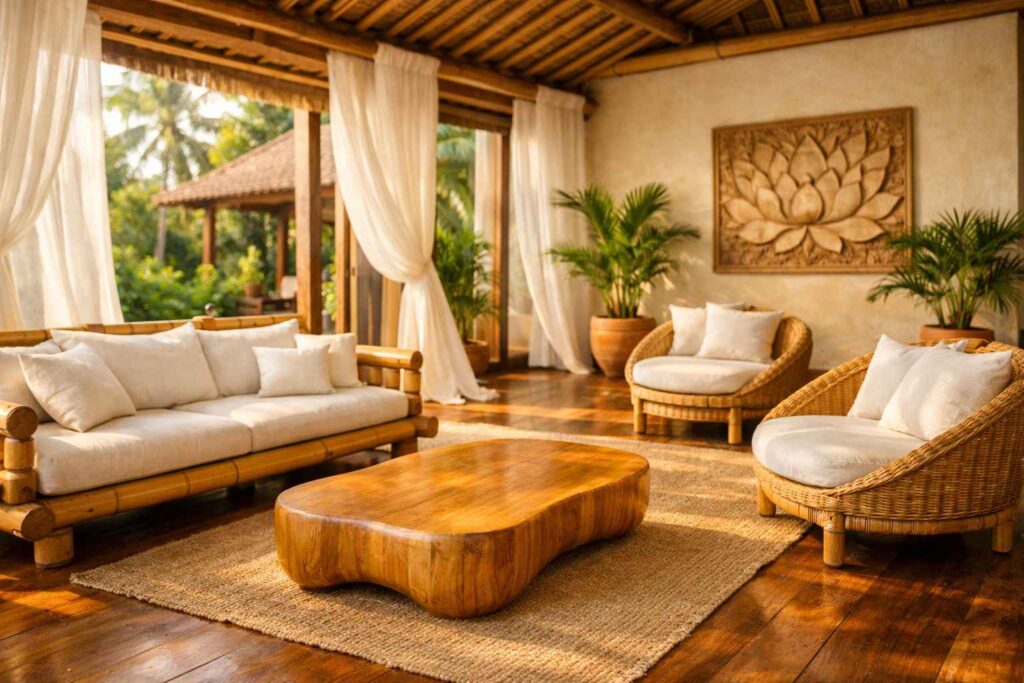
The comprehensive exploration of Bali aesthetic ideas reveals a design philosophy that transcends mere decoration, offering holistic transformation of living environments. Bali aesthetic combines nature, tradition, and texture into spaces promoting tranquillity, connection, and beauty. Key elements including natural materials like bamboo, wood, and stone form foundations, while neutral colors with earthy accents create calming Balinese colour schemes.
Balinese art and culture infuse meaning beyond aesthetics, honoring Indonesian traditions through thoughtful incorporation. Indoor outdoor living spaces essential to design dissolve boundaries between home and nature, perhaps the most transformative aspect of Bali aesthetic ideas. Balinese style gardens with tropical plants landscaping and water features garden design extend paradise feeling outdoors, creating complete environmental experiences.
Furniture and textile choices, particularly linen, batik, and bamboo furniture design, create tranquillity through natural materials and handcrafted quality. Modern Balinese style versus traditional interpretations both prove valid, each offering pathways to authentic Bali environments. Pinterest and real Bali villa tours offer endless inspiration for implementing these Bali aesthetic ideas.
Respect for Balinese culture and craftsmanship remains paramount throughout implementation. The design philosophy creates sanctuary and paradise feelings that transform daily life. Begin with small changes, perhaps a bamboo accent piece or tropical plant, gradually building toward complete transformation. Any space, regardless of size or climate, can incorporate Bali aesthetic ideas to create personal Bali-inspired beauty and peaceful retreat from modern demands.
Frequently Asked Questions
Bali aesthetic ideas pinterest?
Yes, Pinterest serves as an excellent platform for discovering Bali aesthetic ideas. Search terms like “Balinese interior,” “tropical bedroom design,” “bamboo furniture,” “natural stone patios,” and “Balinese style gardens” yield thousands of inspiring images. Create organized boards separating bedroom inspiration, garden ideas, color schemes, and furniture styles. Follow accounts featuring Bali villas, Indonesian interior design studios, and tropical lifestyle content for consistent inspiration feeds.
Bali Pinterest Aesthetic?
The Bali Pinterest aesthetic emphasizes natural materials, neutral color palettes, abundant greenery, and indoor outdoor living spaces. Popular pins feature white linen bedding, bamboo furniture, stone fountains, tropical plants, and carved wood details. Create your Bali Pinterest boards by organizing pins into categories like “Balinese Bedroom,” “Tropical Garden,” “Natural Materials,” and “Balinese Art.” Save pins with detailed descriptions noting specific elements that attract you for easier reference during implementation.
Pinterest Bali Outfits?
Pinterest Bali outfits showcase the island’s relaxed tropical fashion aesthetic that complements interior design trends. Search for flowing linen dresses, batik prints, wide-leg trousers, and natural fiber clothing. The fashion aesthetic mirrors interior choices through earthy colors, natural textiles, and handcrafted details. Create boards featuring resort wear, bohemian tropical style, and sustainable fashion that align with Bali aesthetic ideas. These fashion choices create visual harmony when your personal style matches your environmental aesthetic.
Vibes of Bali perfume?
While “Vibes of Bali” isn’t a specific perfume brand, the scent aesthetic of Bali includes frangipani, coconut, sandalwood, jasmine, and tropical flowers. Create this sensory atmosphere through essential oil diffusers, incense, scented candles, or fresh flowers. Traditional Balinese scent combinations include sandalwood with jasmine, frangipani with coconut, or lemongrass with ginger. These fragrances complete multi-sensory Bali aesthetic ideas, transporting you mentally to tropical paradise while supporting the tranquillity central to Balinese interior style.
What is Balinese interior design style?
Balinese interior design style emphasizes natural materials (bamboo, wood, stone), neutral color palettes with earthy accents, handcrafted furniture, and seamless indoor outdoor living spaces integration. Core principles include harmony with nature, balance, tranquillity, and spiritual connection. The style features low-profile furniture, abundant tropical plants, natural textiles like linen and batik, soft lighting, and Balinese art. It creates sanctuary-like environments promoting relaxation and connection to nature through thoughtful material selection and spatial arrangement.
How do I create a Bali aesthetic in my home?
Start with neutral wall colors and natural wood flooring. Add bamboo or rattan furniture pieces, incorporate tropical plants (palms, ferns), and use linen textiles in whites and earth tones. Include Balinese art or carved wood elements as focal points. Maximize natural light and create connections to outdoor spaces. Add water features if possible, use lanterns for soft evening lighting, and layer textures through stone, wood, and woven materials. Implement changes gradually, starting with high-impact elements like statement furniture or abundant greenery before tackling larger architectural modifications.
What are the best materials for Balinese design?
Best materials include bamboo for furniture and architectural elements, teak and mahogany wood for furniture and flooring, natural stone (volcanic rock, limestone) for accents and patios, rattan for furniture and accessories, linen and cotton for textiles, and batik fabrics for color accents. These natural materials interior design choices provide authenticity, durability, and proper aesthetic qualities. Prioritize genuine materials over synthetics, as texture, aging qualities, and environmental connection prove central to successful Bali aesthetic ideas implementation.
What colors are used in Balinese interior design?
Balinese colour schemes feature neutral bases: cream, beige, soft gray, white, and natural wood tones. Accent colors include terracotta orange, jungle greens, chocolate brown, golden yellow, and ocean blues. These earth tones and nature-inspired hues create calming atmospheres while reflecting Bali’s landscape. Apply colors primarily through accessories, textiles, art, and plants rather than dominant wall treatments. The overall effect should feel warm, organic, and grounded rather than bold or saturated.
How can I incorporate Balinese elements on a budget?
Budget-friendly Bali aesthetic ideas include: DIY bamboo lanterns using hardware store materials, thrifted wood furniture refinished naturally, second-hand rattan pieces, affordable mass-produced bamboo items, propagated plant cuttings rather than mature specimens, linen textile swaps for curtains and cushion covers, and strategic accent pieces like single statement art or sculpture. Focus on abundant affordable greenery, simple material swaps, and gradual room-by-room transformation rather than complete instant makeovers.
What plants are best for a Balinese garden?
Best plants include palms from the Arecaceae family (lady palm, coconut palm, areca palm), frangipani trees, bamboo varieties, ferns, bird of paradise, tropical gingers, monstera, philodendron, and flowering tropicals like hibiscus. In non-tropical climates, substitute cold-hardy bamboo, ornamental grasses, large-leaved hostas, and architectural evergreens that evoke similar forms. Select plants appropriate for your specific climate while prioritizing species with tropical appearances, layered growth habits, and lush foliage that creates forest-like atmospheres in Balinese style gardens.