If you have ever asked a serious diver where the best underwater experience on earth is, the answer almost always comes back the same: dive sites Raja Ampat. Tucked in the far eastern corner of Indonesia, deep inside the world’s richest marine region, Raja Ampat is not just a bucket-list destination. It is the benchmark against which every other scuba diving destination is measured.
This guide covers everything, from the top dive sites to how to plan your Raja Ampat liveaboard trip, what marine life to expect, the best seasons to visit, and honest advice for both first-timers and seasoned divers. Whether you are chasing manta rays, reef sharks, or tiny pygmy seahorses, this is the guide you need before you pack your diving equipment.
What Makes Raja Ampat the World’s Best Diving Destination?
Raja Ampat sits at the heart of the Coral Triangle, the global epicentre of marine life biodiversity. This region spans parts of Indonesia, the Philippines, Malaysia, Papua New Guinea, the Solomon Islands, and Timor-Leste. Raja Ampat sits directly in the richest corner of this triangle.
The numbers speak for themselves. Scientists have recorded over 1,500 fish species, 700 coral species, and 700 mollusc species across the Raja Ampat Islands. On a single dive at Cape Kri, researchers once counted 374 species in one tank, which remains a world record for recreational dive sites.
The Coral Triangle here functions like a living engine. Currents from both the Indian Ocean and the Pacific push nutrients through channels between islands, feeding reef systems that have largely been protected from mass tourism. The result is a density of marine life that simply does not exist anywhere else on the planet.
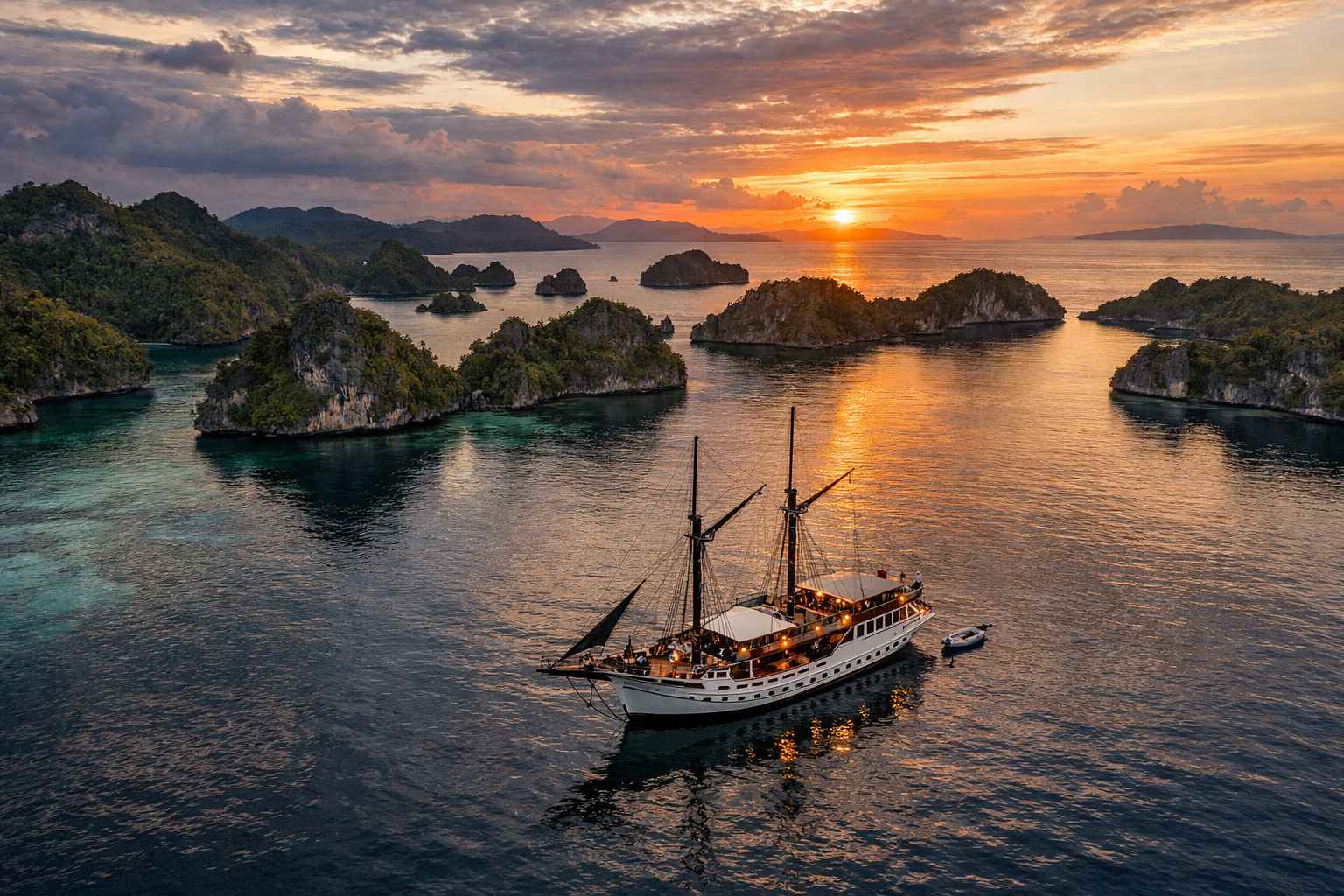
Above water, the scenery is equally surreal. Limestone karst islets draped in jungle rise from a flat turquoise sea. Ecotourism is taken seriously here, and marine park fees help fund conservation efforts that keep the reefs healthy.
How to Get to Raja Ampat
Raja Ampat is remote, and that remoteness is part of what protects it. Here is the typical travel route:
- Fly into Bali or Jakarta
- Connect to Sorong, the gateway city in West Papua (province), usually via Makassar or Manado
- Take a ferry or speedboat from Sorong to Waisai, the capital of Waigeo island, or arrange a boat transfer directly to your resort or liveaboard
The journey from Bali to Sorong takes roughly 5 to 7 hours including connections. From Sorong Airport, the ferry to Waisai runs daily and takes about 2 hours. From Waisai, speedboat transfers to individual dive resorts or liveaboard pickup points can take anywhere from 30 minutes to 4 hours depending on which part of Raja Ampat you are heading to.
Most Raja Ampat liveaboard operators and dive resorts offer airport transfer packages, so it is worth confirming pickup logistics before you arrive.
The Best Time to Dive Raja Ampat: Seasons and Conditions
The Raja Ampat diving season October to May is considered peak season. During these months, visibility is at its best, often exceeding 20 to 30 metres, and seas are calmer. Water temperature sits between 27 and 30 degrees Celsius year-round, meaning a 3mm wetsuit is sufficient for most divers.
From June through August, the southeast monsoon brings stronger winds and rougher seas. Rain becomes more frequent, and many liveaboard operators either reduce their schedules or modify itineraries. Some northern and sheltered parts of Raja Ampat remain diveable during this period, but conditions are less predictable.
September is a transition month and can offer surprisingly good conditions at lower prices.
Best time to dive Raja Ampat for specific highlights:
- Manta rays: November through April, particularly around Manta Sandy and Manta Ridge
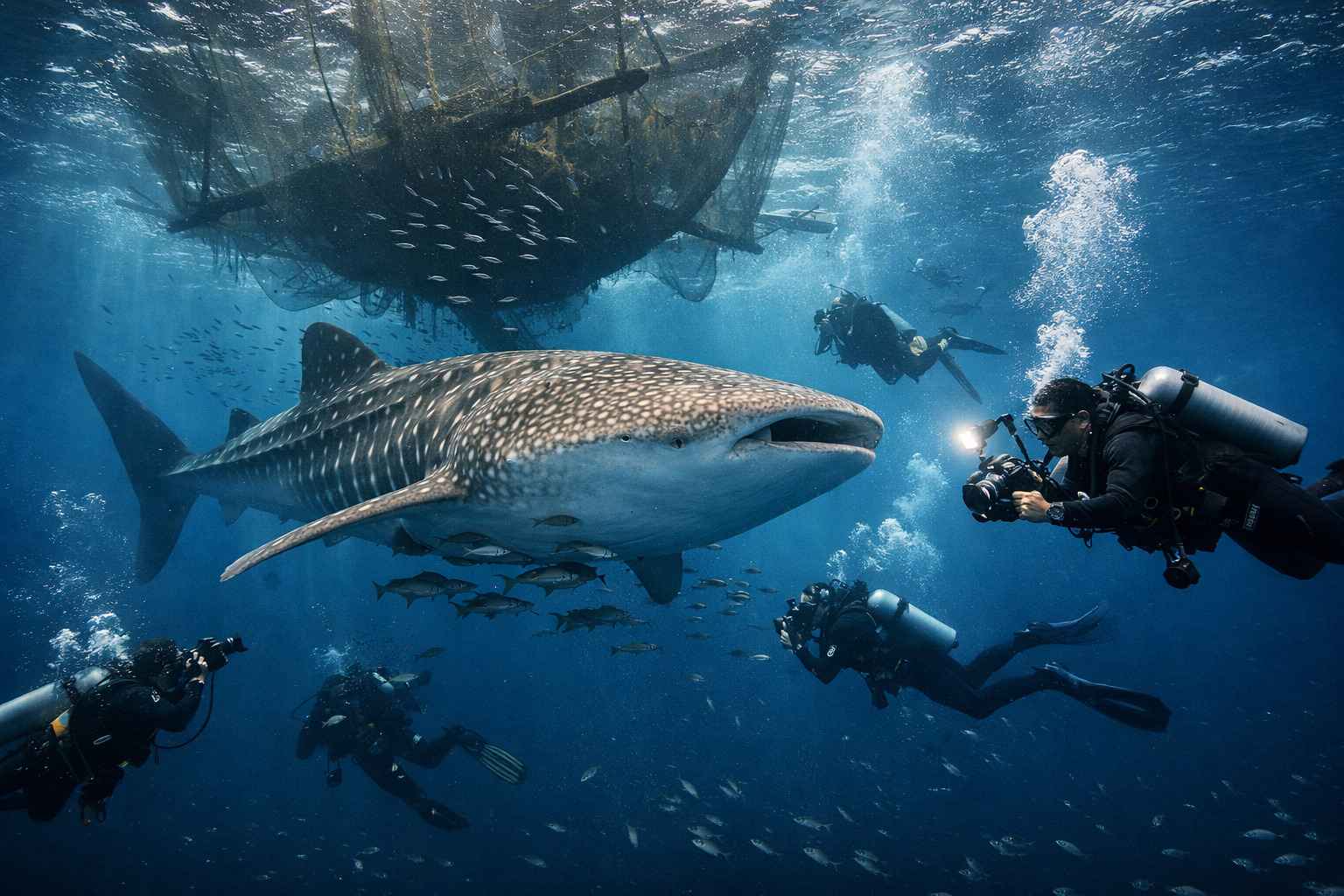
- Whale sharks: Occasionally sighted year-round, but most commonly in the Misool area during October through November
- Macro life and critters: Year-round, with the Dampier Strait (Indonesia) particularly productive from October through January
- Photography: April and May offer excellent light and visibility before the monsoon begins
The Top Dive Sites Raja Ampat: A Complete Breakdown
Cape Kri, The World Record Reef
Cape Kri is arguably the most famous of all dive sites Raja Ampat. Located just one minute by boat from Papua Diving’s resort on Kri Island, this is where the world record count of 374 species was set on a single dive. That record includes fish, coral, and molluscs, all documented in one tank.
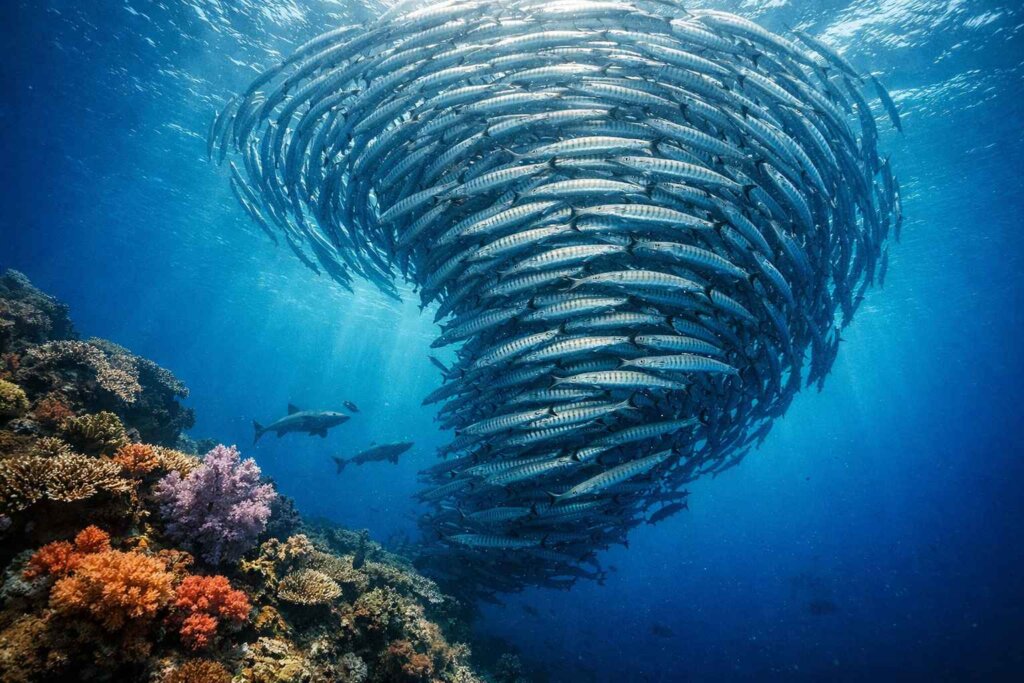
What makes Cape Kri extraordinary is not just the numbers. It is the sheer density and variety of life stacked on one reef. You will encounter massive schools of barracuda (Carangidae), whitetip reef sharks patrolling the drop-off, giant trevally hunting in packs, Lutjanidae (snappers) schooling beneath ledges, and Acanthuridae (surgeonfish) grazing across the reef top.
Current can range from mild to strong depending on the tide, making Cape Kri better suited to intermediate and advanced divers during peak flow. Early morning dives often offer calmer conditions.
Image alt text suggestion: Massive school of barracuda at Cape Kri dive site Raja Ampat Indonesia
Blue Magic, Raja Ampat’s Pelagic Showstopper
Blue Magic Raja Ampat is one of those dive sites that earns its name. This open-water seamount in the Dampier Strait (Indonesia) sits in the pelagic zone, making it a magnet for large, fast-moving species.
Schools of tuna, mackerel, and giant trevally circle the structure. Blacktip reef sharks and whitetip reef sharks patrol the edges. During the right season, oceanic manta rays visit the cleaning station here, hovering motionless while small Anthiadidae (anthias) pick parasites from their skin.
Current here can be significant, and divers often need to hold onto the reef or use a reef hook to stay in position while the action unfolds. This is a dive for intermediate to advanced level scuba divers.
Suggested alt text: Oceanic manta ray at Blue Magic dive site Raja Ampat
Manta Sandy and Manta Ridge, The Manta Ray Capital
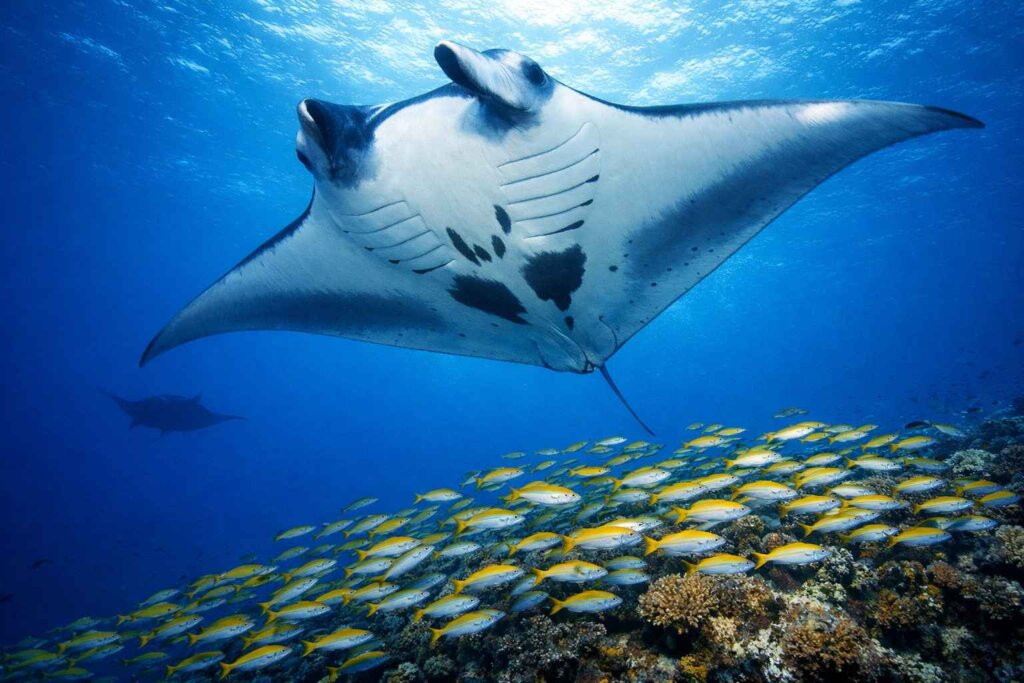
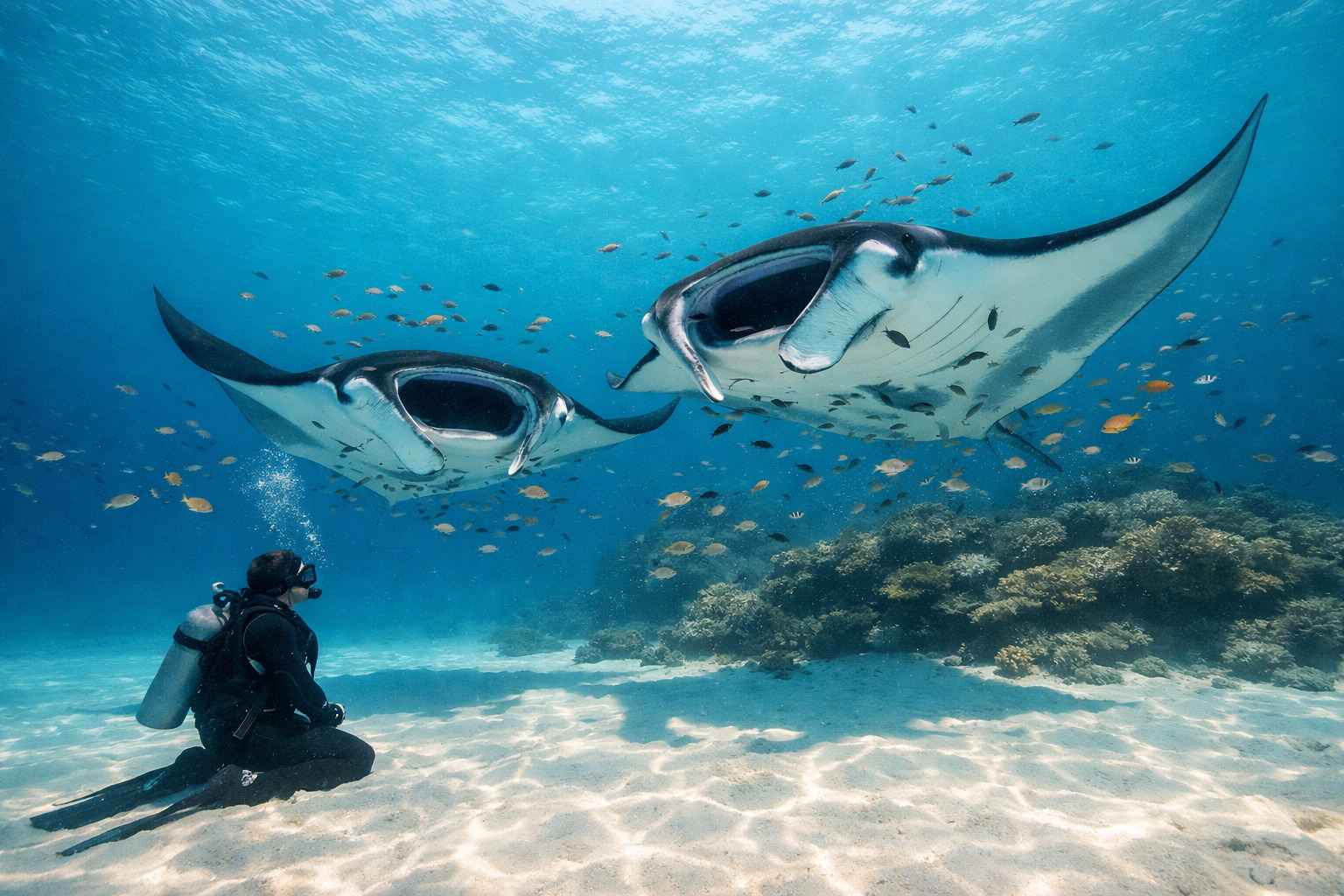
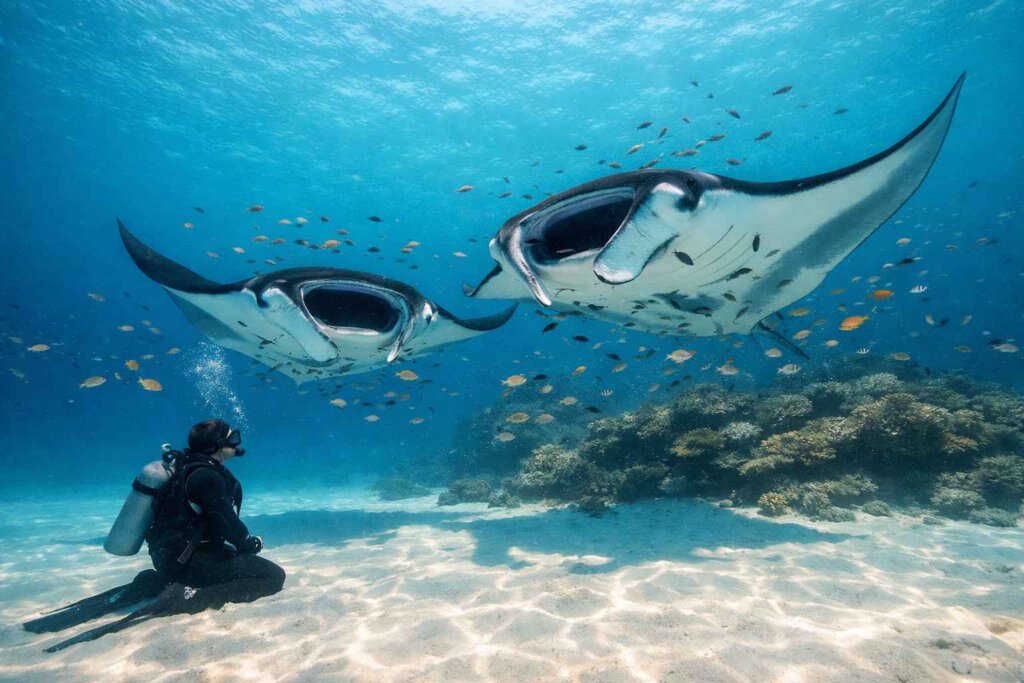
If raja ampat manta ray diving is what you came for, these two sites will not disappoint. Manta Sandy Raja Ampat is a sandy-bottomed cleaning station in shallow water, typically 10 to 15 metres, where manta rays queue up to be cleaned by small reef fish. The behaviour is mesmerising, and because the site is relatively sheltered, it is accessible to beginner divers and snorkellers alike.
Manta Ridge is more dramatic. Divers use reef hooks to hold position on a shallow wall while mantas glide effortlessly through strong current. The angle of this site gives you a perfect view of the mantas from below as they sweep overhead. It is one of the most iconic encounters in all of diving (sport) worldwide.
Both sites are accessible from liveaboard vessels and some resorts, though the southern Manta Sandy site is closer to Waigeo and central bases, while Manta Ridge requires more travel time.
Boo Windows, Misool’s Crown Jewel
Boo Windows Misool diving is a site that photographers dream about. Located in the southern region of Misool, this wall features two enormous archways carved into the reef structure. When sunlight hits these openings at the right angle, the entire scene turns golden, and fish pour through the arches like a river.
Shoaling and schooling fish fill every corner. Barracuda, fusiliers (Anthiadidae), and Lutjanidae move in choreographed clouds. Wobbegong sharks rest beneath ledges, perfectly camouflaged. On lucky dives, manta rays drift past in the blue water beyond the wall.
Boo Windows requires a liveaboard to reach. It is too far from Sorong for day trips, which means only guests on liveaboard vessels and the rare dedicated boat trip get to experience it.
Magic Mountain, Misool’s Manta Cleaning Station
Magic Mountain Misool manta rays is a seamount rising from deep water that acts as one of the most consistent manta ray aggregation points in Raja Ampat. Mantas come here regularly to use the cleaning stations on the summit, circling in lazy spirals while reef fish do their work.
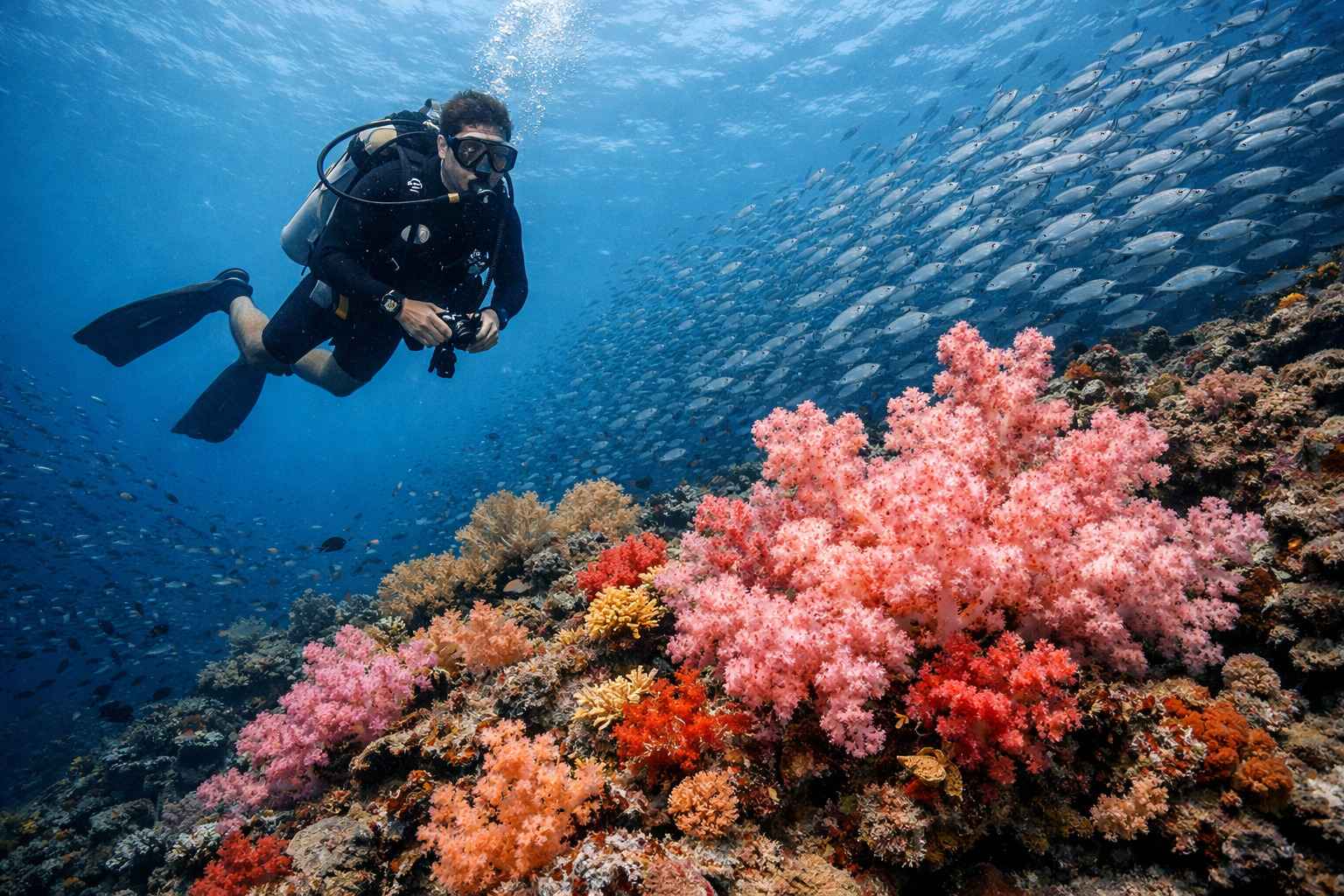
Below the mantas, reef sharks cruise the structure, and schools of barracuda wheel overhead. The coral coverage on Magic Mountain is dense and healthy, with Octocorallia (soft corals) in brilliant oranges and purples decorating every surface.
Like Boo Windows, this site is only reachable by liveaboard, making the raja ampat liveaboard trip the only realistic way to include it in your diving itinerary.
Four Kings, Misool’s Pinnacle Dive
The four kings misool dive site consists of four massive underwater pinnacles rising from the seafloor, each one encrusted with Octocorallia and alive with fish. The sheer scale of the structures is impressive enough, but it is the biological density that leaves divers speechless.
Anthiadidae hover in pink and orange clouds. Carangidae school in tight formation. Blacktip sharks cruise between the pinnacles at midwater. The site creates strong, swirling currents that bring nutrients up from the deep, feeding this enormous concentration of life. Advanced navigation and buoyancy skills are recommended here.
The Passage (Kabui Passage), A Truly Unique Dive
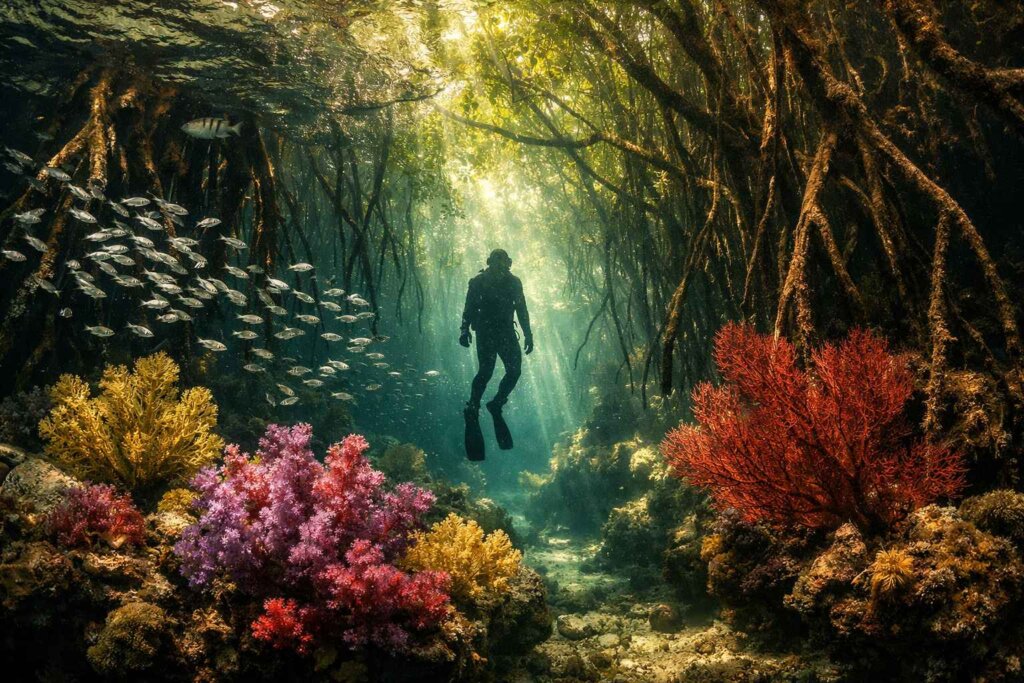
The Passage, also known as Kabui Passage, is unlike any other dive site in Raja Ampat, or anywhere else. It is a narrow channel between two islands where mangrove roots grow directly over the reef. Sunlight filters through the trees and illuminates the coral below in shifting patterns.
Archerfish shoot water at insects in the roots above the surface. Sea fans and Octocorallia grow between mangrove trunks. Shoaling and schooling fish fill the channel, and the current sweeps you along like a conveyor belt through a living jungle aquarium.
This is a dive with serious novelty value and genuine ecological interest. It is accessible from central liveaboard itineraries and some Waigeo area resorts.
Arborek Jetty, The Accessible Classic
Not every great dive in Raja Ampat requires a liveaboard. Arborek Jetty is one of the most accessible dive sites Raja Ampat has to offer. Located near a small village on Mansuar island, the jetty structure acts as an artificial reef, and the concentration of marine life around its wooden poles is extraordinary.
Shoaling and schooling Lutjanidae (snappers), Plectorhinchus (sweetlips), and giant trevally pack the area so densely that visibility is sometimes reduced simply by the volume of fish. It is excellent for snorkeling, freediving, and night dives, making it one of the most versatile sites in the region.
Raja Ampat beginner diver groups frequently start with Arborek Jetty because the site is shallow, sheltered, and endlessly rewarding at any experience level.
Farondi Caves, The Explorer’s Dive
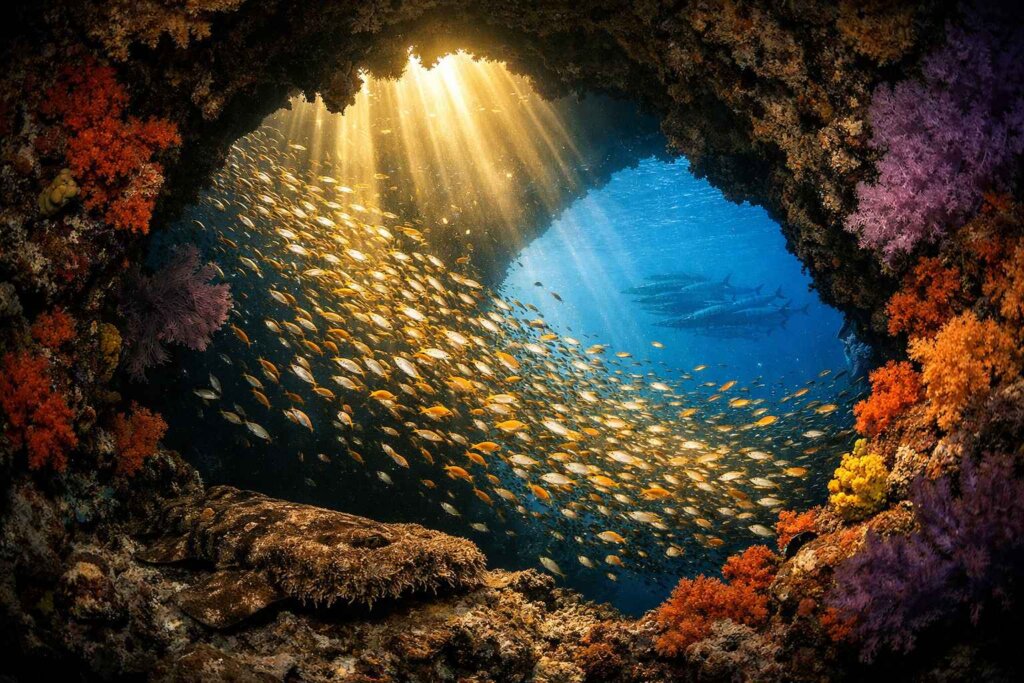
Farondi Caves in the Misool area offers a cave and cavern experience unlike anything else in Raja Ampat. The tunnels weave through the reef structure, revealing bamboo sharks resting in dark corners, crab species tucked into crevices, and walls decorated with Octocorallia in every colour imaginable.
Torch light picks out details that daylight never reaches. The atmosphere is quiet, slightly eerie, and genuinely memorable. This is not a penetration dive in the technical sense, meaning there is always ambient light visible, but navigation awareness and calm buoyancy are essential.
Fiabacet, Colour Overload
Fiabacet is one of the most visually overwhelming dive sites Raja Ampat has in its Misool region. Soft coral gardens spread across every surface, turtle species glide overhead, reef sharks weave through the shallows, and pygmy seahorse individuals can be found clinging to sea fans if you look carefully.
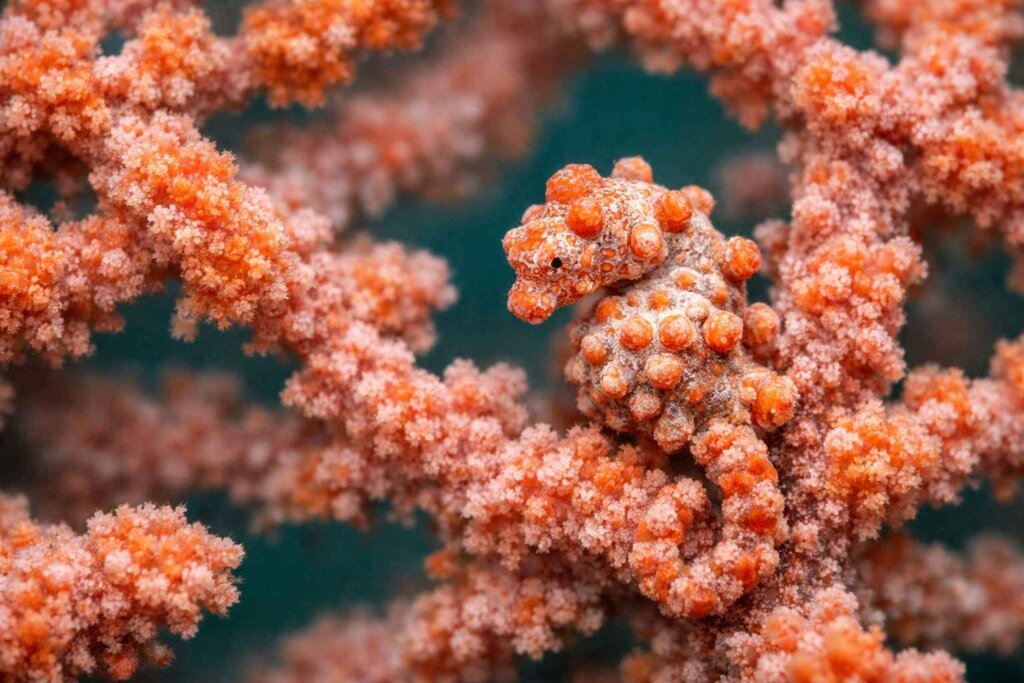
Pygmy seahorse sightings here are a particular highlight for photography enthusiasts. These tiny creatures, barely a centimetre long, perfectly mimic the texture and colour of the Octocorallia they live on. Finding one requires patience and a guide who knows where to look.
Kawe, Wayag’s Remote Gem
Kawe in the northern Wayag area is one of the most remote dive sites Raja Ampat has to offer. Wayag is famous as a viewpoint destination, with its cluster of mushroom-shaped islets rising from turquoise water. But underwater, Kawe delivers a completely different kind of spectacle.
Mantas sweep through the current here, tuna dart past at speed, and the reef is pristine thanks to the area’s limited visitor numbers. Getting to Kawe requires either a dedicated liveaboard itinerary extending to the north, or a long journey from more central bases.
Liveaboard vs Day Boat: Which Do You Need for Raja Ampat Diving?
This is one of the most common questions for anyone planning diving Raja Ampat Indonesia. The honest answer is that it depends on which sites you want to reach.
Day boats from base resorts can cover sites within about 45 minutes to an hour of their location. This covers sites like Cape Kri, Arborek Jetty, Manta Sandy, and Blue Magic. For divers staying at a well-located resort in the Dampier Strait area, day boats provide a perfectly satisfying diving experience.
Liveaboards are necessary if you want to reach:
- Boo Windows, Magic Mountain, Four Kings, and Fiabacet in Misool
- Kawe and other northern Wayag sites
- The Passage and related central sites in combination with both north and south regions
- Multiple regions in a single trip without losing hours each day to travel
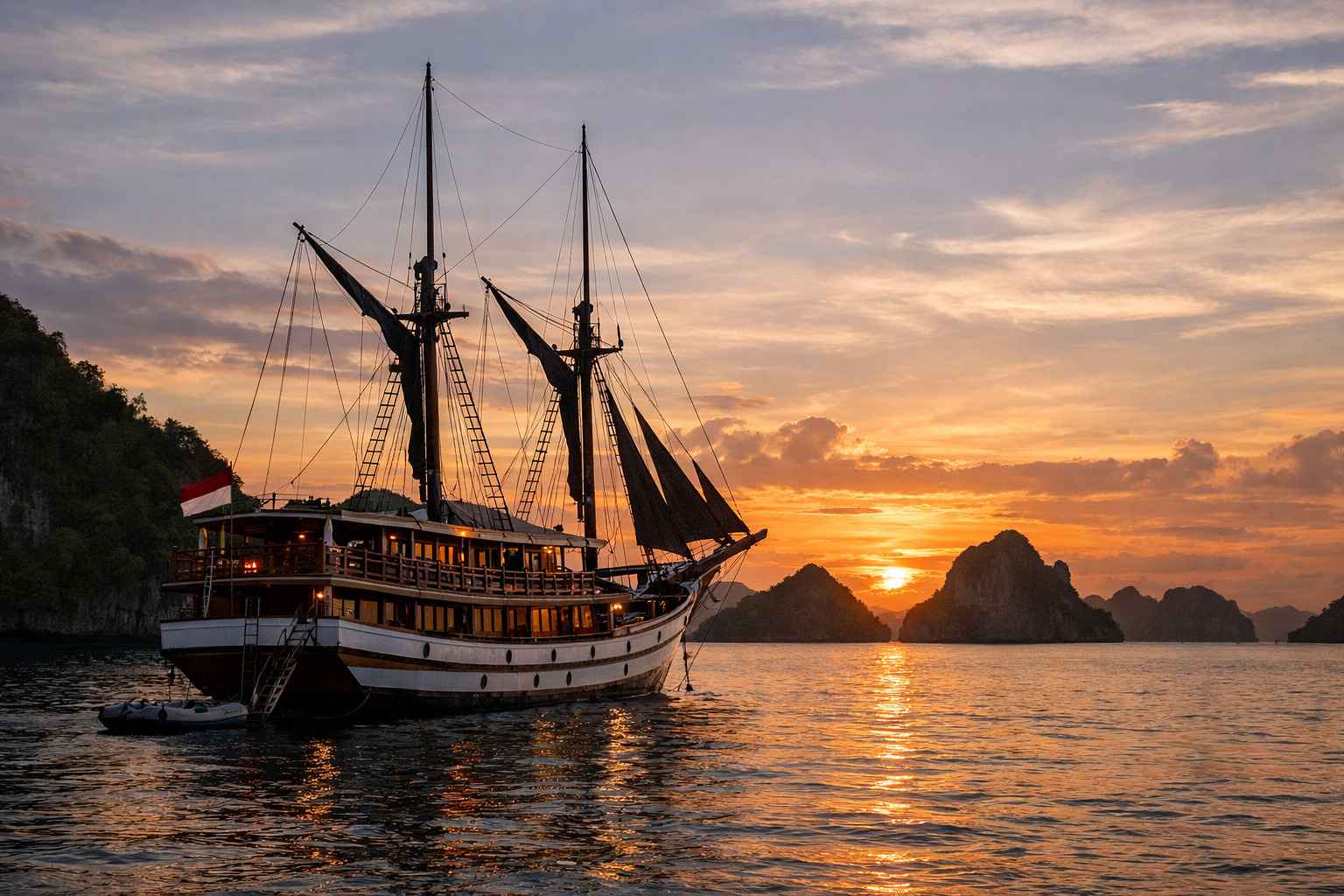
The raja ampat liveaboard itinerary typically spans 7 to 12 nights. Shorter trips usually cover one region. Longer trips connect Misool in the south, the Dampier Strait in the centre, and Wayag in the north. For serious divers, the raja ampat liveaboard diving experience allows up to four dives per day and waking up already anchored at the site.
Raja ampat liveaboard schedule and pricing varies by operator. Budget options exist, as do premium vessels with private cabins, air conditioning, and gourmet meals. Booking 6 to 12 months in advance is strongly recommended for peak season departures.
If you are planning to combine a Raja Ampat liveaboard trip with broader Indonesian travel, you might also want to explore the best water activities and diving options available from Bali as a useful base before heading east.
Who Can Dive in Raja Ampat?
For Beginner Divers
Raja Ampat beginner diver access is better than many people expect. While some sites have powerful currents that demand experience, plenty of calmer, shallower sites exist. Arborek Jetty, Manta Sandy, Sawandarek, and several Misool sites are suitable for Open Water certified divers with limited experience.
Most reputable liveaboard operators require either Advanced Open Water Diver certification with at least 20 dives, or Open Water Diver certification with at least 40 logged dives. This ensures divers have the buoyancy control and awareness needed to protect the fragile coral ecosystems.
For Advanced and Technical Divers
Raja ampat advanced dive sites like Blue Magic, Four Kings, Manta Ridge, and Cape Kri during peak current provide the kind of high-energy, high-density diving that experienced divers travel the world to find. Strong predation activity, large pelagic zone species, and complex topography make these sites genuinely challenging and deeply rewarding.
For Snorkelers
Raja ampat snorkeling liveaboard options are well-established. Many of the most spectacular reef sections are found in just 2 to 5 metres of water, meaning snorkeling here rivals scuba diving at most other destinations. Manta Sandy in particular offers some of the best snorkeling in the world, with manta rays frequently visible from the surface.
If you are visiting Indonesia for marine experiences beyond diving, check out this guide on snorkeling and underwater activities in Bali for ideas before you head to Raja Ampat.
My Experience Diving Raja Ampat: A Diver’s Honest Take
I will be straightforward. Before my first trip to Raja Ampat, I was sceptical. Every destination gets called “the best,” and after years of diving across Southeast Asia, I had learned to temper my expectations.
Raja Ampat dismantled every one of them within the first five minutes of my first dive.
I descended at Cape Kri expecting a nice reef. What I got was a wall of fish so dense I genuinely could not see through it. Shoaling and schooling giant trevally moved like a single organism. A blacktip reef shark passed so close I could see its eye tracking me. And then, just as I was processing all of that, a manta ray drifted past the edge of the reef drop-off as if it had somewhere better to be.
The thing nobody tells you about Raja Ampat is that this is not the highlight reel. This is a Tuesday morning.
By day three, a divemaster on our liveaboard vessel pointed to a sea fan and mimed something tiny with his fingers. Pygmy seahorse. I squinted for a full two minutes before I saw it, a creature smaller than my thumbnail, perfectly disguised in matching coral texture. Finding it felt like solving a puzzle the ocean set specifically for me.
The honesty is this: Raja Ampat will ruin you for other diving. Not in a bad way. In the best possible way. Every subsequent dive elsewhere simply reminds you that something extraordinary exists in the West Papua seas, and it is waiting.
Raja Ampat Dive Site Map: How to Navigate the Region
Understanding the Raja Ampat dive sites map is essential for planning, because the region is enormous. The four main island groups are Waigeo, Batanta, Salawati, and Misool, and each contains distinct dive areas.
Key regional breakdown:
- Dampier Strait area (central): Cape Kri, Blue Magic, Arborek Jetty, Manta Sandy, Manta Ridge, The Passage. Best accessed from resorts on Kri or Mansuar island, or from liveaboard vessels anchoring in the strait.
- Misool (south): Boo Windows, Magic Mountain, Four Kings, Fiabacet, Farondi Caves. Only accessible by liveaboard or by staying at the remote Misool Eco Resort.
- Wayag (north): Kawe and surrounding sites. Requires a liveaboard or a very long dedicated boat trip from the north.
- Gam and Batanta: Various macro-focused sites, caverns, and soft coral walls. Some accessible from local resorts.
For first-time visitors, a liveaboard itinerary combining the Dampier Strait and Misool covers the greatest variety of dive sites Raja Ampat has in both regions.
You can also use this knowledge to start planning a broader Indonesian trip. Our guide on things to do in Bali before heading to Raja Ampat is a great starting point for building your full itinerary.
Marine Life Checklist: What to Expect at Dive Sites Raja Ampat
Common sightings across most sites:
- Manta ray (both reef and oceanic species)
- Blacktip reef shark and whitetip reef shark
- Blacktip shark
- Barracuda in massive schools
- Giant trevally and other Carangidae
- Lutjanidae (snappers) in dense schools
- Plectorhinchus (sweetlips)
- Turtle species (green and hawksbill)
- Parrotfish including green humphead parrotfish
- Acanthuridae (surgeonfish)
- Anthiadidae (anthias)
- Butterflyfish in pairs
Rare but possible:
- Pygmy seahorse (at Fiabacet and several central sites)
- Wobbegong sharks (Arborek Jetty, Farondi Caves)
- Dolphin pods (surface, transit between sites)
- Blue-ringed octopus (Cape Kri, rare)
- Crab species in macro-rich sites
- Hammerhead shark (seasonal, northern sites)
Practical Tips for Diving Raja Ampat Indonesia
Before you go:
- Book your liveaboard or resort 6 to 12 months ahead, particularly for October through April peak season
- Confirm certification requirements with your operator
- Pack reef-safe sunscreen, all personal dive gear you prefer, a quality dive torch, and a surface marker buoy
- Purchase travel insurance that specifically covers scuba diving
On the water:
- Always listen to the pre-dive briefing. Currents in Raja Ampat can change with the tide and vary dramatically between sites
- Never touch coral or marine life, including Wobbegong sharks, which can bite when startled
- Practice buoyancy in open water before diving complex sites
- Use a reef hook at sites like Manta Ridge to avoid contact with coral while holding position in current
Photography:
- Wide-angle lenses suit most sites, particularly Cape Kri, Blue Magic, and the manta sites
- Macro setups reward patience at Fiabacet, Arborek Jetty, and Saporkren
- Shooting during the angle of late morning light at sites like Boo Windows produces extraordinary results
Raja Ampat Dive Resorts: Staying on Shore vs Liveaboard
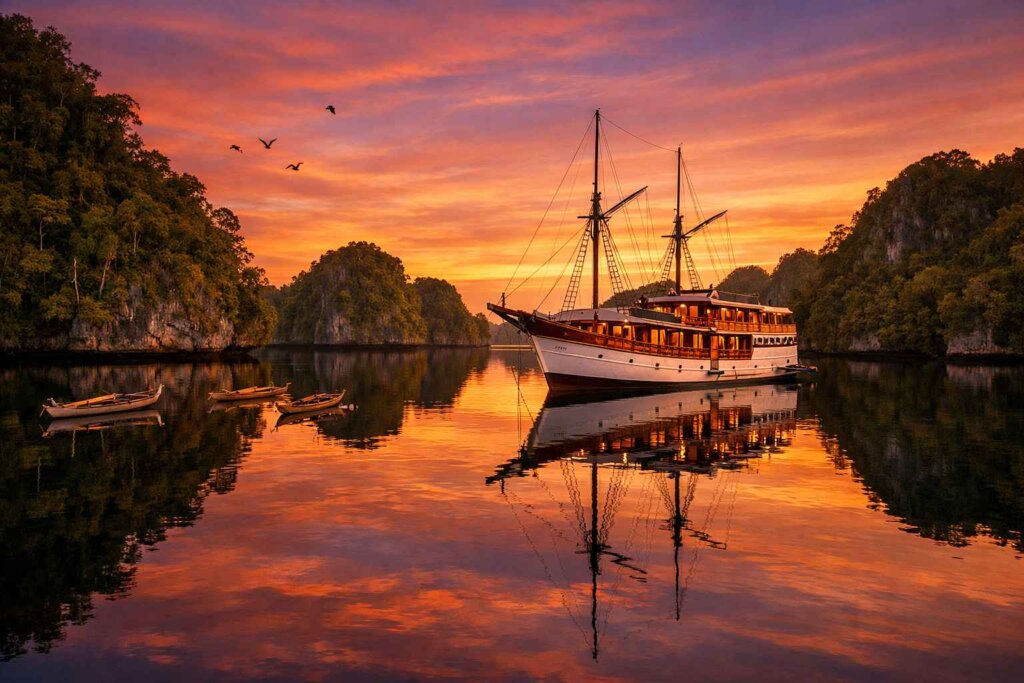
Several excellent resort options exist for divers who prefer a land base. Papua Diving’s properties on Kri Island place you within a one-minute boat ride of Cape Kri and within 15 minutes of Blue Magic. For central region diving, this is one of the most convenient locations available.
Misool Eco Resort is the only accommodation option within the southern Misool dive region, providing the only way to dive Boo Windows, Magic Mountain, and Four Kings from a land base. It is premium in price and genuinely exceptional in experience.
For divers who want to cover multiple regions, the raja ampat liveaboard remains the most efficient format. The freedom to wake up at different sites each morning, complete four dives per day, and cover ground from Misool to Wayag in a single trip is simply not replicable from a fixed resort base.
If you enjoy combining sea and culture, our guide on island hopping and marine adventures near Bali offers great ideas for extending your Indonesian adventure.
Conservation at Dive Sites Raja Ampat
The health of dive sites Raja Ampat depends directly on the conservation efforts funded largely by tourism. The marine park entrance fee (currently around IDR 1,000,000 per person, valid for one year) goes toward reef monitoring, buoy maintenance, ranger patrols, and community programs.
Responsible diving (sport) and snorkeling practices are not optional here, they are enforced. Dive operators and resort staff will brief visitors on no-touch, no-anchor, and no-feeding policies at all major sites. The ecotourism model that has developed in Raja Ampat is genuinely one of the better examples of conservation-driven marine tourism in Indonesia.
As a visitor, choosing operators who follow these protocols makes a real difference. The alternative, unsustainable mass tourism, has already damaged reef systems across much of Southeast Asia. Raja Ampat remains largely intact because locals, operators, and government have worked together to prevent that outcome.
Conclusion: Dive Sites Raja Ampat Are in a Class of Their Own
There is no honest way to write about dive sites Raja Ampat without running out of superlatives. Cape Kri holds a world record. Boo Windows is the most photographed underwater arch in Indonesia. Magic Mountain offers the most consistent manta ray encounters in the country. Blue Magic delivers pelagic action that rivals anywhere on the planet.
But the thing that truly sets Raja Ampat apart is not any single site. It is the cumulative effect of diving in a place that has been genuinely protected, where the reef is healthy, the fish are numerous, the coral is intact, and the marine life behaves naturally because it has not been driven away by careless tourism.
Whether you are planning your first raja ampat liveaboard trip, researching the best dive sites raja ampat offers for your experience level, or simply dreaming of one day descending below those turquoise waters, this guide should give you everything you need to take the next step.
Book early, dive responsibly, and protect what you see. Raja Ampat deserves it.
And if you are still building your broader Indonesian adventure, start with our guide on the best things to do in Kuta and Bali before heading east to one of the greatest underwater worlds on earth.
Frequently Asked Questions
What is the Raja Ampat dive sites map and how should I use it to plan my trip?
The Raja Ampat region is divided into four main island groups: Waigeo, Batanta, Salawati, and Misool. The central Dampier Strait area around Kri and Mansuar islands hosts sites like Cape Kri, Blue Magic, Manta Sandy, and The Passage. Southern Misool contains Boo Windows, Magic Mountain, and Four Kings. Northern Wayag hosts sites like Kawe. Use a liveaboard itinerary map to match your available days to the regions you most want to explore.
What are the best dive sites in Raja Ampat overall?
The consistently top-rated dive sites Raja Ampat offers include Cape Kri (world record fish count), Blue Magic (pelagic species and manta rays), Boo Windows (underwater arches in Misool), Magic Mountain (manta cleaning station), Manta Sandy and Manta Ridge (best raja ampat manta ray diving spots), and The Passage (unique mangrove reef channel). Each excels in a different category, making a liveaboard trip that covers multiple regions the ideal format.
Are there free dive sites in Raja Ampat accessible without resort fees?
While the marine park entrance fee applies to all visitors regardless of how they dive, some sites in Raja Ampat are accessed through day trips from Sorong or Waisai without requiring a resort stay. However, truly free access is limited, and most worthwhile dive sites require either a resort package or liveaboard booking. The marine park fee itself funds critical conservation work and is worth paying.
What is Raja Ampat diving like for first-time visitors?
Diving Raja Ampat Indonesia as a first-time visitor is genuinely life-changing. The density of marine life surpasses most other scuba diving destinations in the world. First-timers typically dive the Dampier Strait area around Cape Kri and Manta Sandy before progressing to Misool sites. The diversity of experience levels accommodated means raja ampat beginner diver groups and experts can dive the same general area while accessing sites suited to their skill level.
What should I look for in a Raja Ampat dive resort?
A good Raja Ampat dive resort should be located within reasonable boat travel of key sites, offer certified and experienced dive guides who know local currents, maintain well-serviced diving equipment, follow marine park conservation rules, and include meals and transfers in their packages. Ecotourism credentials and genuine commitment to reef protection are important markers of quality.
What makes a Raja Ampat liveaboard better than a resort stay?
A raja ampat liveaboard provides access to remote sites in Misool, Wayag, and other areas unreachable by day trips. You wake up at the dive site each morning, complete up to four dives per day, and cover multiple regions of Raja Ampat in a single trip. It is the only realistic way to dive Boo Windows, Four Kings, and Magic Mountain. The tradeoff is living on a boat for 7 to 12 nights, which suits some travellers better than others.
What are the best dive sites in Misool Raja Ampat?
The best dive sites Misool include Boo Windows (the iconic arch dive), Magic Mountain (manta cleaning station), Four Kings (pinnacle dive with massive fish aggregations), Fiabacet (soft coral and pygmy seahorse), and Farondi Caves (cavern dive with Wobbegong sharks). All Misool sites require a liveaboard or a stay at Misool Eco Resort.
What does a Raja Ampat map reveal about diving logistics?
A raja ampat map shows immediately how spread out the destination is. The region spans roughly 500 kilometres from north to south. Sorong on the mainland is the entry point. From there, Waisai on Waigeo island is the administrative hub. Misool in the south is roughly 200 kilometres from Sorong. This scale is why day boats cannot reach the best sites and why the liveaboard format dominates serious diving Raja Ampat Indonesia itineraries.
When is the raja ampat diving season and when should I book?
The raja ampat diving season october to may represents peak conditions, with the best visibility, calmest seas, and highest marine activity. Manta ray encounters peak from November through April. June through August sees the southeast monsoon bringing rougher conditions, though some areas remain diveable. Book your liveaboard or resort 6 to 12 months ahead for peak season dates, as the best operators fill up quickly.
Is Raja Ampat snorkeling on a liveaboard worth it for non-divers?
Absolutely. Raja ampat snorkeling liveaboard experiences rival full scuba diving trips at most other destinations. Many reef sections sit in 1 to 3 metres of water, making snorkeling exceptionally rewarding. Manta Sandy is considered one of the world’s great snorkelling locations. Non-diving partners regularly report that their snorkeling experience in Raja Ampat was among the best of their lives.
Sources and References
- NOAA Coral Reef Watch, Coral Triangle Overview
- Papua Diving, Raja Ampat Dive Sites
- Reef Check, Indonesian Reef Health Reports
- Conservation International, Raja Ampat Marine Protected Area
- World Wildlife Fund, Coral Triangle and Marine Biodiversity
About the Author
Nick Barr is a PADI Divemaster with over a decade of diving experience across Indonesia and the wider Indo-Pacific. He has logged hundreds of dives across Raja Ampat, Komodo, Alor, Halmahera, and the Coral Triangle, and has written extensively about marine conservation, scuba diving tourism, and practical dive travel planning. His work focuses on helping divers of all experience levels access extraordinary underwater experiences responsibly, while advocating for the protection of the reef systems that make those experiences possible.