Did you know Bali is now home to over 50 international schools? More Australian families are moving here each year. Enrolling children in international schools in Bali is a top choice for parents wanting a top-notch education in paradise.
The island offers a mix of academic excellence and cultural richness. It’s a top spot for overseas education in Indonesia. For expat families, it’s a chance to give their kids a global view.
But, the enrollment process has its own challenges. You need to understand visa rules and choose the right curriculum. This guide will help you through every step.
We’ll show you how to research schools, prepare documents, and ensure a smooth transition. Our aim is to help you make a confident choice for your child’s future.
Key Takeaways
- Bali has a rapidly growing number of international schools catering to expatriate communities.
- The education system there combines high academic standards with a rich cultural experience.
- Australian families often choose Bali for its unique lifestyle and global curriculum options.
- The enrollment process involves several key steps, including visa arrangements and document preparation.
- Understanding the different schools and their offerings is key to making the best choice.
- Planning ahead can significantly reduce stress and help ensure a successful transition for your child.
- This guide provides a detailed overview to support your family’s decision-making journey.
Why Choose an International School in Bali?
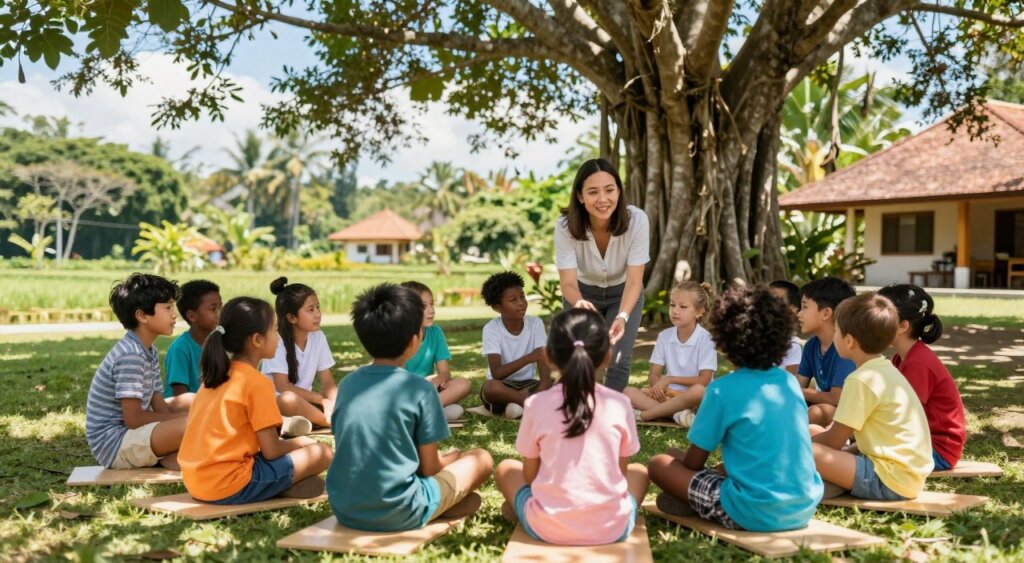
International schools in Bali mix top-notch curricula with Bali’s rich culture. This blend creates a special learning space. It offers big benefits for expat families and gives kids an amazing education in Bali. It prepares them for a world where everyone is connected.
Benefits for Expat Families
For families moving from Australia or other places, these schools are a big help. They offer a steady, high-quality learning path. This helps avoid any school gaps.
These schools also become a community center. They connect you with other families who face similar issues. This network is full of support, friends, and local tips from the start.
Cultural Exposure for Children
Learning in Bali changes kids in big ways. They get to see and learn from people from all over. This experience can’t be found in books.
This experience teaches kids more than just facts. It helps them:
- Be open-minded and respect different cultures.
- Adapt and solve problems in new places.
- Feel confident in diverse settings.
These skills are what top schools and employers look for. The education in Bali teaches kids about life itself.
High-Quality Education Standards
Parents can trust the high standards of these schools. They are recognized by global bodies and offer programs like the IB, British, or American curricula.
This recognition means your child’s grades will be accepted worldwide. The teaching methods focus on thinking and exploring, not just memorizing. This helps students move easily to other schools or back to Australia.
In short, choosing an international school in Bali means your child gets a top-notch, global education. It’s a key benefit of international schools in Bali. It makes sure your child’s education is both outstanding and recognized everywhere.
Overview of International Schools in Bali
For families moving to Bali, knowing the international schools available is key. The island has a wide range of schools for expats. These include big campuses and smaller schools with a national focus.
Understanding these options helps parents choose the right school for their child. It must match their educational needs and lifestyle.
Types of International Schools Available
International schools in Bali vary. Some follow a national curriculum, like Australian or British. These schools often serve that community well. Others are fully international, with programmes like the International Baccalaureate and a diverse student body.
Choosing between these types is important. A school with a national focus might be easier for a child moving from that country. A fully international school focuses on a multicultural environment.
Notable International School Options
Several schools are often mentioned as the top international schools in Bali. Knowing their locations and features is helpful.
Bali Island School (formerly Bali International School), near Sanur, is the oldest. It offers the International Baccalaureate from primary to diploma.
Australian International School Bali, in South Kuta, follows the Australian curriculum. It leads to the NSW Higher School Certificate, popular with Australian families.
Dyatmika School, between Sanur and Ubud, combines the Indonesian curriculum with Cambridge IGCSEs. It offers a bilingual and bicultural education.
Canggu Community School, in Canggu, follows the English National Curriculum. It’s known for its community ethos. These are just a few examples of schools on the island.
Curricula Offered: IB, British, American
The curriculum of a school is key to its identity. In Bali, you’ll find the International Baccalaureate (IB), British, and American curricula.
The International Baccalaureate focuses on critical thinking and global citizenship. It’s highly valued by universities.
The British curriculum is structured and focuses on exams. Students take IGCSEs in Years 10-11 and A-Levels in the final years. It offers deep subject specialisation.
The American curriculum is flexible, leading to a High School Diploma. Advanced Placement (AP) courses can earn university credit. Knowing these curricula helps choose the best fit for your child.
With this information, you can explore the top international schools in Bali in more detail.
Key Factors to Consider When Enrolling
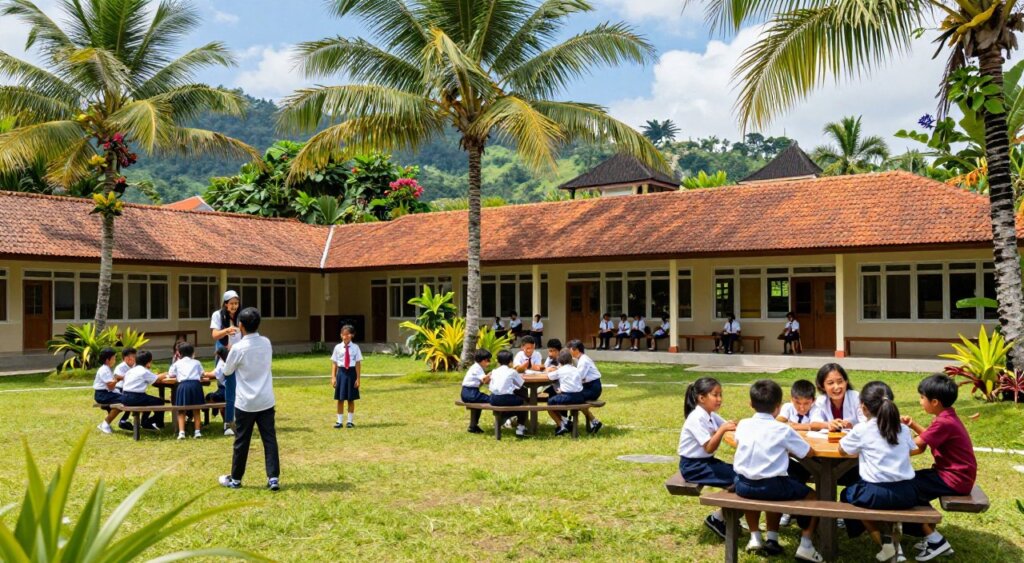
Parents looking for the best schools for expat children in Bali should think about location, reputation, and classroom environment. Getting these right can make a big difference. It can turn a stressful daily routine into a smooth, enriching experience for your family.
Location and Accessibility
Bali’s beauty is matched by its traffic challenges. The daily commute is a big concern. A long drive in heavy traffic can make your family’s day start on a tired note.
Consider the area around the school. Places like Canggu, Sanur, Ubud, and South Bali offer different lifestyles. The table below helps you understand each region better.
| Region | Typical Commute Vibe | Traffic Notes | Family Lifestyle Fit |
|---|---|---|---|
| Canggu | Vibrant, surf-focused | Peak hour congestion can be heavy | Great for active, social families |
| Sanur | Calmer, more relaxed | Generally lighter traffic flows | Ideal for those seeking a quieter pace |
| Ubud | Cultural, greenery-filled | Inland roads can be winding | Perfect for arts and nature lovers |
| South Bali (Kuta, Seminyak) | Busy, central, and commercial | Often has the densest traffic | Convenient for access to amenities |
Choosing a school close to home or with reliable transport is a big win. It makes daily life easier for everyone.
School Reputation and Accreditation
Start by checking the school’s credentials. Look for accreditation from global bodies like CIS or WASC.
These accreditations show the school meets high standards. They are reviewed regularly for teaching, facilities, and governance.
But don’t just stop at official stamps. Talk to other expat parents in Bali. Check online forums and review sites for international schools.
This research gives you the real story on a school’s community feel and strengths. A good reputation from current families is a strong endorsement.
Class Size and Teacher-Student Ratio
Class size affects how much attention your child gets. Smaller classes are a sign of quality education.
In smaller classes, teachers can tailor their teaching. They can spot strengths and struggles quickly. This leads to better learning and support.
When looking for the best schools for expat children in Bali, ask about class size and teacher-to-student ratio. A ratio of 1:15 or lower is a good sign.
This suggests the school values a supportive and engaging classroom. Your child won’t just be another face in the crowd.
Focus on location, quality, and class size to make a confident choice. It ensures your child’s education and your family’s daily life in Bali are supported.
The Enrollment Process Explained
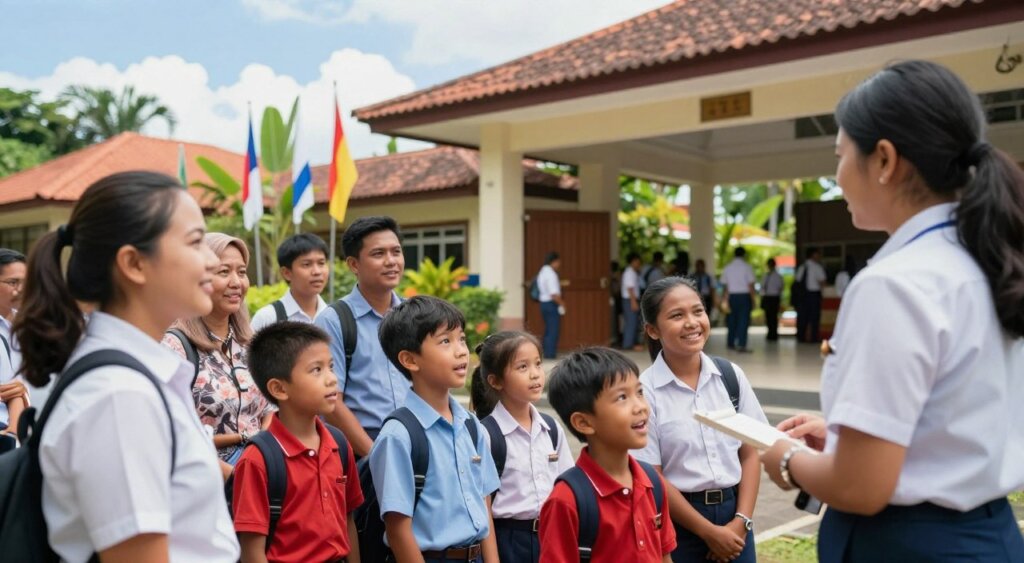
Getting your child into a Bali international school needs a clear plan. This includes researching, applying, and meeting deadlines. Knowing this process helps reduce stress for parents. It makes a complex task easier to manage.
Research and School Visits
Your first step is to do thorough research. Look at school websites and forums for expats in Bali. These sources give honest views not found in official materials.
Next, schedule a school tour. Schools offer both in-person and virtual tours. This lets you see the campus and daily life up close.
When you visit, don’t just look at the buildings. Watch how teachers and students interact. See how engaged students are and what activities they do. Trust your gut about whether your child will fit in.
Virtual tours are great for families abroad. They give a real feel of the school and help you decide before you visit.
Application Requirements
After picking your schools, the formal international school enrollment Bali starts. Applications need a set of documents. Get these early to avoid last-minute rushes.
Common documents include:
- Reports from the last two years of school.
- Standardised test scores, like MAP or CAT4.
- A portfolio of your child’s achievements in academics, arts, or sports.
- An essay or statement of purpose.
- References from a current teacher or principal.
Each document helps the school understand your child’s abilities and fit. Make sure any non-English documents are translated and certified.
Important Deadlines to Note
Timing is key in international school admissions Bali. The school year starts in July or August. Applications open almost a year before, and top schools often have long waiting lists.
Missing a deadline can mean waiting a whole year. Many families apply 6 to 9 months before they want to start. This is more important for popular year groups.
Know if schools have rolling admissions or fixed deadlines. Some review applications as they come in. Others have a strict deadline. Always check with the admissions office.
Financial Considerations of International Education
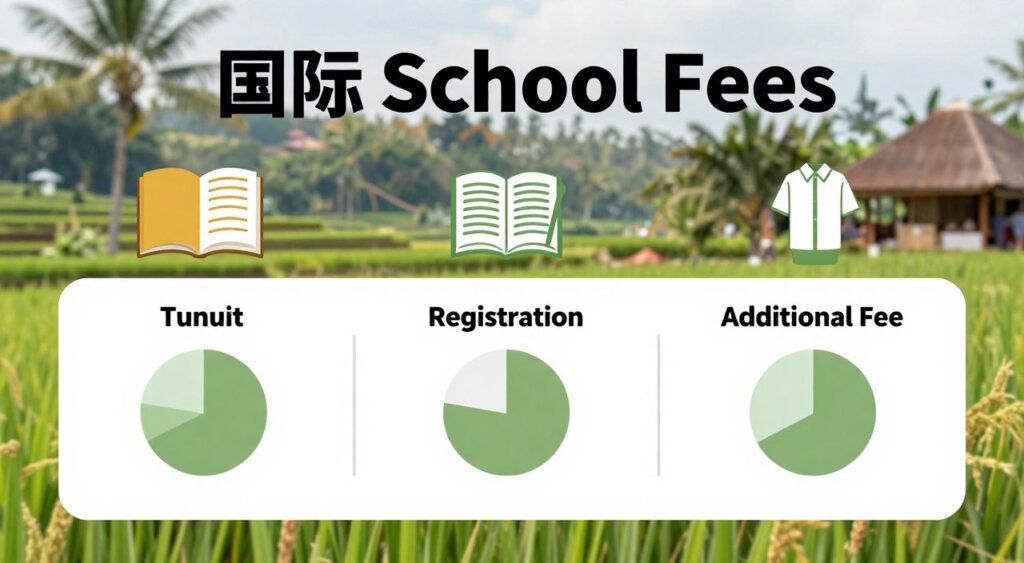
It’s important to understand all costs when choosing Bali international schools. This includes more than just tuition. A clear budget helps families avoid unexpected expenses and ensures the school fits their financial situation.
Tuition Fees Breakdown
Annual tuition is the biggest expense. Prices vary by school and grade level. For example, primary school fees can start at IDR 150 to 250 million per year.
Secondary school fees, like those for the International Baccalaureate Diploma, can be IDR 300 million or more annually.
Fees often go up each year. Schools may ask for payments in two or three parts. Always check the latest fee schedule with the school’s admissions office for your child’s grade.
Additional Costs to Anticipate
There’s more to consider than just tuition. Here are some other costs:
- One-time Enrollment Fee: A non-refundable fee paid when accepted, which can be a big amount.
- Capital Levy or Development Fee: A fee for school facilities, often paid annually or once.
- Technology & Resource Fees: Covers digital platforms, software, and sometimes a school device.
- Uniforms, Textbooks, and Stationery: These can cost a few million Rupiah each year.
- Extracurricular Activities & School Trips: Sports, arts, music, and trips add to the cost.
- School Transport: If using the school bus, this is a term-based expense.
Remember to include these costs for a complete education budget.
Scholarships and Financial Aid Options
Some Bali international schools offer financial help. But, it’s not always available and is very competitive.
Merit-based scholarships are for those with exceptional talent. Needs-based bursaries help families in financial need, but are less common.
Applying for aid is separate from the main application. You’ll need to provide financial details and might have a personal interview. Contact the school’s bursar or admissions team early to ask about aid.
Looking into all financial aid options can make a big difference. Always ask, even if support is limited.
Understanding the School Curriculum
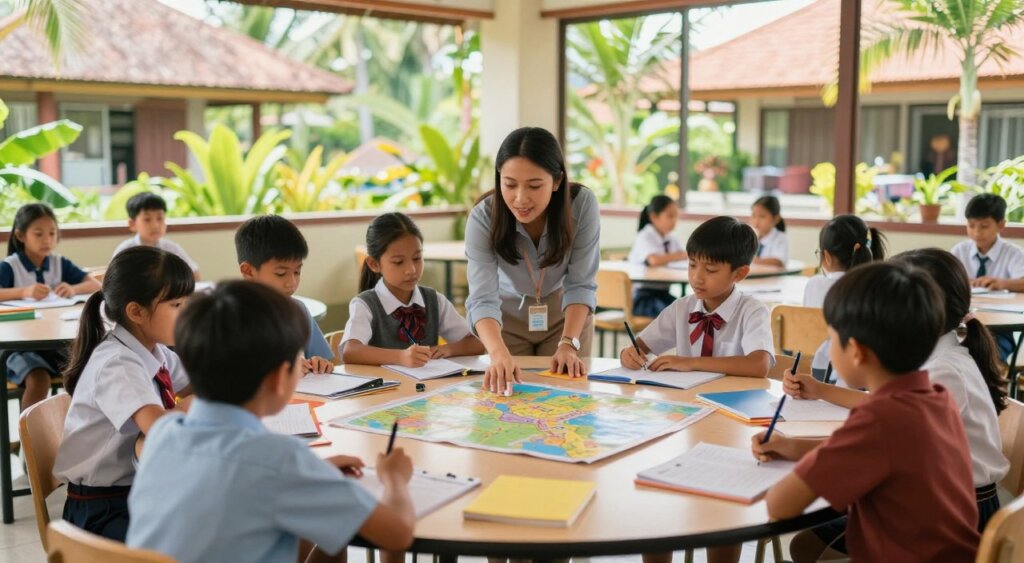
The school curriculum your child follows is very important. It shapes their education and future. In Bali, you’ll find three main curricula. Each has its own way of teaching and testing.
Choosing the right one is key. It depends on your child’s learning style and your family’s plans. This section will help you understand the International Baccalaureate (IB), British, and American curricula.
International Baccalaureate (IB) Explained
The International Baccalaureate is a well-known programme. It aims to make young people inquiring, knowledgeable, and caring. It’s not a national curriculum but a framework for international-mindedness and critical thinking.
The IB has four programmes. Three are common in K-12 schools:
- Primary Years Programme (PYP): For ages 3-12, it focuses on inquiry-based learning across six themes.
- Middle Years Programme (MYP): For ages 11-16, it helps students connect their studies to the real world.
- Diploma Programme (DP): For ages 16-19, it’s a rigorous course leading to exams and a qualification universities value worldwide.
The Learner Profile is a key principle. It aims to develop attributes like being open-minded and reflective. Assessments include exams, oral work, projects, and written assignments.
British Curriculum Insights
The British curriculum is a structured path followed by schools in England and many international schools. It’s known for its academic depth and clear progression through Key Stages.
The journey has two major public examination points:
- GCSEs (General Certificate of Secondary Education): Taken around age 16, students study 8-10 subjects, with core exams in Maths, English, and Sciences.
- A-Levels (Advanced Levels): Taken after GCSEs, students specialise in 3-4 subjects over two years. A-Level results are key for university entrance in the UK and are widely accepted globally.
The approach is more specialised than the IB, allowing students to dive deep into chosen disciplines. Continuous teacher assessment and standardised testing measure progress.
American Curriculum Structure
The American curriculum is a standards-based system. It aims to provide a broad and balanced education. It’s flexible and prepares students for college and career.
The core structure leads to the High School Diploma, awarded upon completion of required credits in subjects like English, Mathematics, Science, Social Studies, and Foreign Languages. A key feature is the opportunity for academic advancement through:
- Advanced Placement (AP) Courses: These are college-level classes offered in high school. Students can take AP exams to potentially earn college credit or advanced standing at universities, mainly in the United States and Canada.
Grading is based on a cumulative Grade Point Average (GPA), considering performance across all subjects. The curriculum often focuses on project-based learning, extracurricular involvement, and the development of soft skills.
| Curriculum | Core Philosophy | Key Assessment | Ideal For Students Who… |
|---|---|---|---|
| International Baccalaureate (IB) | Inquiry-based, holistic, internationally-minded. | Mix of exams, coursework, extended essay. | Thrive on interdisciplinary learning and big-picture concepts. |
| British Curriculum | Subject-depth, academic rigour, structured progression. | GCSE & A-Level final examinations. | Prefer specialisation and a clear, exam-focused path. |
| American Curriculum | Broad education, flexibility, college preparation. | Continuous assessment, GPA, AP exams. | Enjoy a wide range of subjects and value extracurricular balance. |
The best international school curriculum in Bali for your child depends on their strengths and your values. Visiting schools and talking to teachers will give you the best insight into each programme.
Supporting Your Child’s Transition
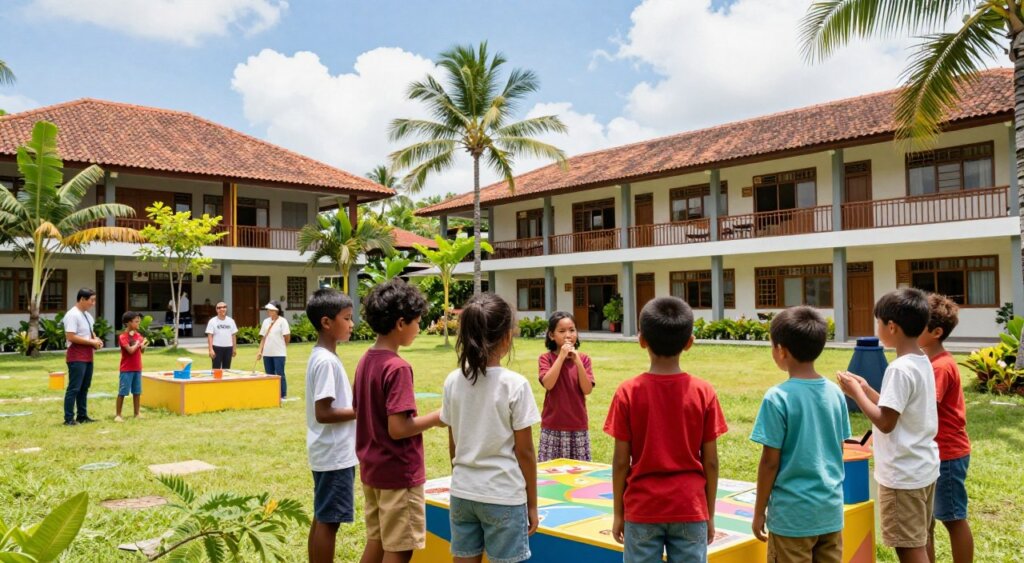
Starting at a new school is like an internship abroad. It quickly boosts a child’s confidence through new experiences. This time is not just about schoolwork; it’s about growing as a whole person. Your support is key to making this transition smooth.
Tips for Helping Children Adjust
Feeling good emotionally is the first step to a great start. Kids like routine, so keep things familiar at home. It’s also important to talk openly about how they’re feeling.
Here are some tips to help:
- Maintain home routines: Keep meal times and bedtime stories the same to offer stability.
- Validate all emotions: It’s okay to feel scared or excited. Celebrate their small wins together.
- Foster connections early: Arrange playdates and connect with other families to build a social network.
- Stay positive and patient: Your positive attitude can make the experience feel like an adventure.
Every child takes their own time to adjust. Your support and understanding are the most powerful tools you have.
Language Support Services
Learning in English can be a big step for many students. Just like learning a new language abroad, school support programs help with practical, immersive learning. Most schools in Bali have strong English as an Additional Language (EAL) services.
These programs are not just for catching up; they’re for learning English fluently. EAL teachers work closely with students, focusing on the words and skills needed for school subjects. This support helps students join in class discussions and understand their schoolwork better.
Talking to the EAL department is important. They can share learning tips at home and keep you updated on your child’s progress. This ensures they feel supported in school and at home.
Community and Extracurricular Activities
Friendships and feeling part of a community happen outside the classroom too. Joining in school activities is a great way for your child to settle in. From sports to clubs, these activities help kids make friends and learn new things.
These activities are great for building self-esteem and social skills. They offer a chance to work together, have fun, and discover new talents. Encourage your child to try new things. This helps them connect with others and feel at home in school.
For parents, getting involved in school events is also important. It shows you care about your child’s world and helps you connect with other families.
Engaging with the School Community
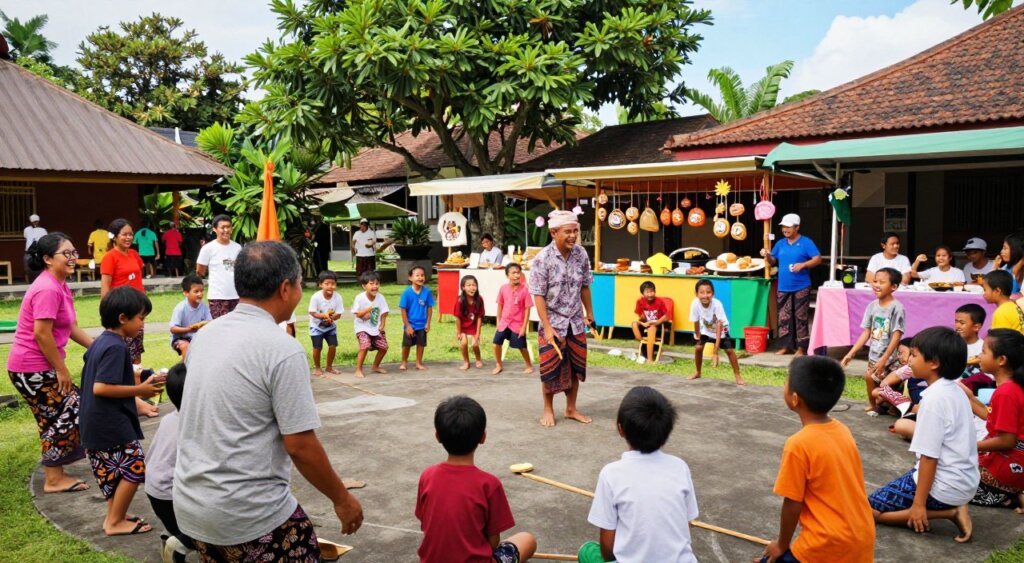
Connecting with your child’s new school is more than just dropping them off. For expat families in Bali, joining the school community is key. It turns the school into a place for friendship and shared experiences.
Parent-Teacher Associations
Most international schools in Bali have an active Parent-Teacher Association (PTA). It’s not just for fundraising. It’s a way for parents to give feedback and help shape the school.
PTA meetings are great for meeting other parents. You can share ideas, support each other, and work on projects for all students. It’s a way to feel at home quickly.
Volunteering Opportunities
If you don’t want to join the PTA, there are many other ways to help. Schools welcome volunteers for many activities. This shows your child you care about their world.
Volunteering can include helping in the library, assisting with art projects, or coaching sports. Schools also need help with big events and fundraising. These activities enrich the school environment.
The table below outlines some typical opportunities:
| Opportunity Type | Typical Time Commitment | Useful Skills or Traits |
|---|---|---|
| Library Assistant | A few hours per week or fortnight | Organised, enjoys books |
| Sports Day Helper | Half-day or full-day event | Energetic, enjoys outdoors |
| Fundraising Committee | Monthly meetings + project time | Creative, networking |
| Classroom Reading Helper | Regular weekly hour | Patient, good with children |
| International Day Coordinator | Seasonal, leading up to event | Cultural knowledge, organised |
Events and School Activities
An international school Bali has a busy calendar of events and activities. These are great for celebrating diversity and building community.
Highlights include International Day, where families share their cultures. Cultural festivals and sports carnivals showcase student talents. These are perfect for family attendance.
Don’t miss out on parent socials, like morning coffees or evening dinners. These are informal and great for meeting other parents.
By attending these events, you do more than just fill your diary. You build a support network, understand the school’s ethos, and show your child you’re invested in their new life. This is key for a successful family transition to Bali.
Cultural Sensitivity and Awareness
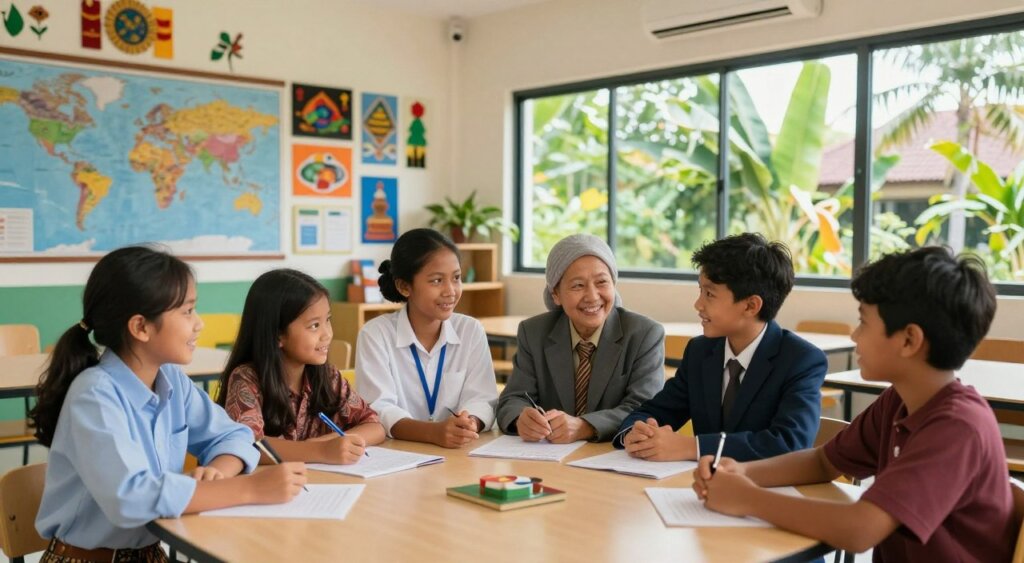
International schools in Bali are vibrant places where many cultures meet. For Australian families, this is a key part of the Bali international education journey. It makes learning richer and helps families connect with the local community.
Promoting Inclusivity and Diversity
Schools in Bali work hard to welcome students from all backgrounds. It’s not just about having students from different places. They also have special programs and celebrate many cultural festivals.
Classroom talks often focus on sharing traditions and views. This builds respect from a young age. The aim is for every child to feel valued and seen in the school.
Navigating Cultural Differences in Education
You and your child might see different teaching styles. Balinese and Indonesian culture often stress community and harmony. This can make classrooms more team-focused than some Western schools.
Being open to these different views is important. It means being flexible and open to many perspectives. Talking with teachers might also feel more personal.
Grasping these differences helps you support your child more effectively. It turns challenges into chances for growth.
Importance of Language Learning
Even though English is the main language, learning some Bahasa Indonesia is encouraged. For kids, even simple words can help make friends and feel at home. It’s useful for everyday life outside school.
For parents, learning the language shows respect for the culture. It shows you’re serious about connecting with Bali beyond the expat world. Locals often appreciate this effort.
Many schools offer Bahasa Indonesia classes for students and parents. Seeing language as a bridge, not a barrier, is key to a culturally aware Bali international education experience.
How to Prepare Your Child for School
Getting your child ready emotionally and academically for school is key. It helps build confidence and turns anxiety into excitement. This is the first step towards a successful school journey.
Pre-School Readiness Programs
Many international schools in Bali have special programs for new students. These programs help kids adjust before they start learning.
These programs include orientation weeks and buddy systems. Buddy or mentor systems pair new students with older ones. This helps them feel welcome and learn about school life.
Some schools also offer bridging courses. These courses help students get used to the school’s curriculum.
Key features of these programs are:
- Guided tours of the campus and facilities.
- Introductory sessions with key teachers and staff.
- Social ice-breaker activities to help form early friendships.
- For non-native speakers, initial language support sessions.
Recommended Resources and Materials
Having the right tools can help your child adjust better. There are many resources available, from cultural books to educational websites.
The following table outlines key resource types to consider:
| Resource Type | Primary Purpose | Examples |
|---|---|---|
| Cultural & Transition Books | To build familiarity and reduce anxiety about the move. | A Kid’s Guide to Bali, The Global Nomad’s Guide to Moving Schools |
| Online Educational Platforms | To maintain core academic skills during holidays or gaps. | Khan Academy, Reading Eggs, National Geographic Kids |
| Practical Preparation Items | To foster independence and organisation. | A labelled world map, a journal for reflections, bilingual phrase books |
Start introducing these materials a few weeks before school starts. Reading stories about Bali or exploring geography websites can make the unknown exciting.
Encouraging Positive Attitudes Toward Learning
Your attitude as a parent is very important. Seeing the move as an adventure can be very powerful. Focus on the fun things, like trying new activities, not just the change.
“Education is not the filling of a pail, but the lighting of a fire.”
Start simple routines early. This could be reading together each night or discussing something interesting each day. Celebrate small achievements, like learning a new word or doing homework on their own.
Most importantly, keep talking to your child. Listen to their worries and show you understand. Your support and excitement are the most important things for a happy learner.
Legal Requirements for Enrollment
Before your child can start school in Bali, you must complete some legal steps. This process can be complex due to Indonesian rules. Getting these documents ready early helps avoid stress and delays.
Australian families must follow specific rules. These rules ensure your child can legally live and study in Bali. Being well-prepared is key for a smooth start.
Visa and Residency Considerations
Your child’s visa status is critical for studying. Indonesia doesn’t have a student visa for kids. They must be on a parent’s stay permit.
The Dependent Stay Permit (KITAS) is common for this. It links your child’s residency to yours, based on your visa type. Schools need proof of this visa for enrollment.
Start the visa process early, as it can take weeks. Try to match your child’s visa with your own renewal dates.
Health and Immunization Records
Schools in Bali need health records for your child. This is a community safety measure. You’ll need two main documents.
First, a medical certificate from a registered doctor. It confirms your child is healthy and ready for school. Second, a full immunisation history is required.
Indonesia has its own health standards. Make sure your child’s vaccinations are up-to-date. Foreign documents, like the Australian Medicare statement, need a notarised translation into Bahasa Indonesia.
Other Legal Documentation Needed
More than just visas and health records are needed. Schools require personal documents to confirm your child’s identity and family. These documents take time to prepare, due to authentication steps.
The main documents include:
- Your child’s original birth certificate
- Passports for both the child and parents
- Parents’ marriage certificate (if applicable)
Australian documents need an apostille from the Australian Department of Foreign Affairs and Trade (DFAT). Then, they must be legalised by the Indonesian Embassy or Consulate in Australia. Lastly, you’ll need official Indonesian translations.
Starting the authentication process early is vital. A complete, legalised dossier speeds up the school’s process. It shows your family’s readiness and commitment to following all legal requirements for enrollment.
Feedback from Other Parents
Getting feedback from other parents gives a real view of international schools in Bali. It’s essential for choosing the right school for your child.
Testimonials from Families in Bali
Talking to current families gives honest insights. Schools like Australian International School Bali and Dyatmika School help connect parents. Look for comments on teaching, student care, and support from the school.
Online Resources and Forums for Support
Online platforms are great for research. Join Facebook groups like ‘Bali Expats Forum’ or ‘Bali Mothers Group’. Also, check out sites like International Schools Database or WhichSchoolAdvisor for school profiles.
Connecting with Local Expat Communities
Networking is key for support. Go to local markets, sports clubs, or school events in places like Ubud or Jimbaran. These connections offer real advice and help your family adjust.