Twice each year, the entire island of Bali comes to a spiritual standstill as families prepare elaborate offerings for a sacred farewell. The Kuningan ancestral spirits ceremony represents one of Bali’s most profound spiritual events.
This observance marks the grand finale of the ten-day Galungan festival period. While Galungan welcomes ancestral visitors, this day is for their departure.
For Balinese Hindus, it is a time of deep thanksgiving and final prayers. Special offerings provide provisions for the spiritual journey ahead.
The dates, like Saturday, May 3, 2025, and Saturday, November 29, 2025, are not random. They are set by the complex Pawukon calendar, a cornerstone of local culture.
Understanding the Galungan and Kuningan cycle offers a window into the living traditions that shape Balinese life. It highlights the enduring bond between families and the spiritual realm.
Key Takeaways
- The ceremony is the culmination of the ten-day Galungan festival.
- It is a day for bidding farewell to visiting ancestral spirits.
- Kuningan Day in 2025 falls on May 3rd and November 29th.
- Dates are determined by the traditional Pawukon calendar.
- The day involves special prayers and elaborate offerings.
- It reinforces family and spiritual connections within the community.
- This tradition is central to Balinese Hindu religious practice.
Introduction to Bali’s Sacred Kuningan Celebrations
The island’s identity is deeply intertwined with a calendar brimming with vibrant ceremonies and heartfelt devotion. For the Balinese people, these practices are the core of community life and personal faith.
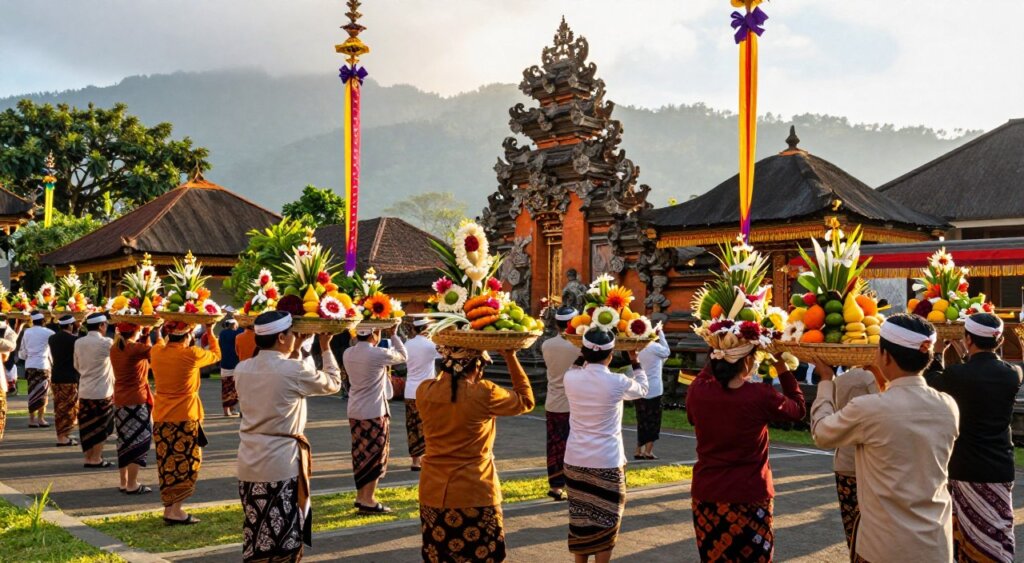
Setting the Stage: The Importance of Spiritual Traditions
Why do these observances matter so deeply? They are essential for maintaining cosmic balance. They honor the sacred link between past and present generations.
This devotion creates a unique landscape. The sacred and everyday life blend seamlessly here. It makes Bali distinct within Indonesia.
“In Bali, tradition is not a relic of the past but a living, breathing guide for the present.”
Overview of Bali’s Cultural Festivities
This sacred festival is part of a broader ceremonial calendar. Major observances like Galungan and Nyepi punctuate the Balinese year.
Each event serves a specific spiritual purpose. Together, they reinforce the island’s Hindu identity. They create a cultural rhythm that defines local culture.
The table below highlights key celebrations that structure this cyclical time:
| Festival | Time in Pawukon Cycle | Spiritual Purpose | Community Activity |
|---|---|---|---|
| Galungan | Every 210 days | Welcome ancestral spirits | Erecting penjor, family prayers |
| Kuningan | 10 days after Galungan | Farewell to ancestors | Morning offerings, yellow rice |
| Nyepi | New Year (Saka calendar) | Silence for self-reflection | Day of silence, no activities |
| Odalan (Temple Anniversary) | Every 210 days per temple | Honor temple deities | Processions, dances, feasts |
These traditions have been preserved for generations. They are not burdensome duties. They are joyful expressions of gratitude that give life meaning.
Historical Context and Origin of the Ceremony
A legendary victory of good over evil established the cyclical rhythm of Balinese spiritual life. This foundational story is central to understanding the day’s deep roots.
Mythological Roots and Ancient Legends
Balinese legend tells of the god Indra’s battle against the demon king Mayadenawa. Indra’s victory symbolizes virtue overcoming vice.
This triumph is said to have brought peace to the island. It created the spiritual opening for ancestors to visit.
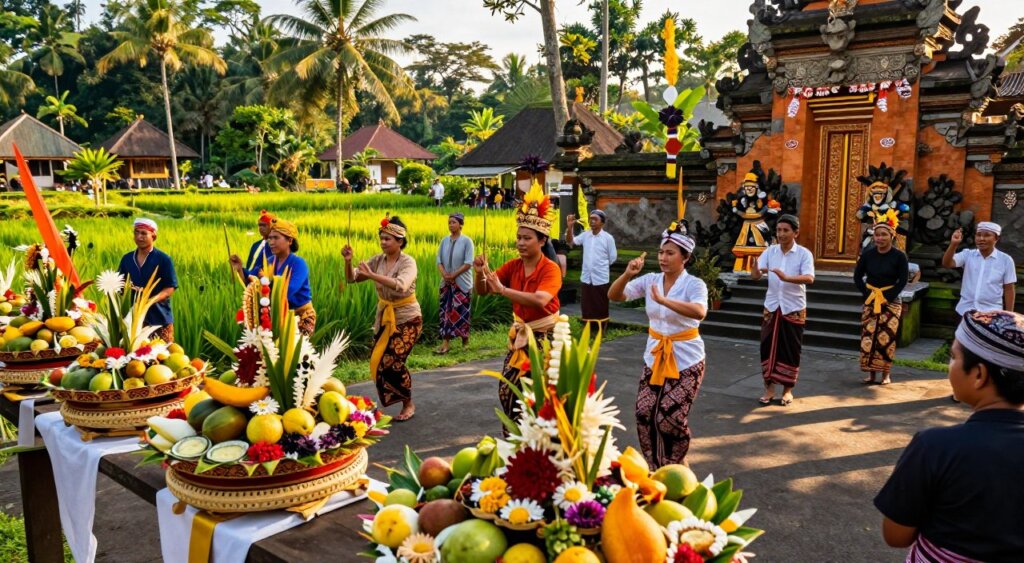
The story is more than an ancient tale. For the Balinese people, it represents a ongoing cosmic struggle.
“The legends are not just history; they are a living map for our spiritual conduct.”
The Evolution of Ritual Practices Over Time
The core rituals have adapted across time. They blend ancient animism with Hindu theology.
This syncretic practice shows remarkable resilience. Colonial periods and modernization brought changes, but the essence remains.
The table below outlines key historical influences:
| Time Period | Primary Influence | Impact on Practices |
|---|---|---|
| Pre-Hindu Era | Indigenous Animism | Foundation of offering traditions |
| Early Hindu Influence | Indian Hindu Theology | Integration of deities like Indra |
| Colonial Era | Dutch Administration | Administrative recognition of holidays |
| Modern Era | Globalization & Tourism | Logistical adaptations, maintained core meaning |
Today’s observances honor this layered history. They connect modern families to a timeless spiritual heritage.
Exploring the Kuningan Ancestral Spirits Ceremony
This sacred day represents the final chapter in a ten-day period of ancestral visitation and familial devotion. It is a focused time for thanksgiving and providing spiritual provisions for the journey ahead.
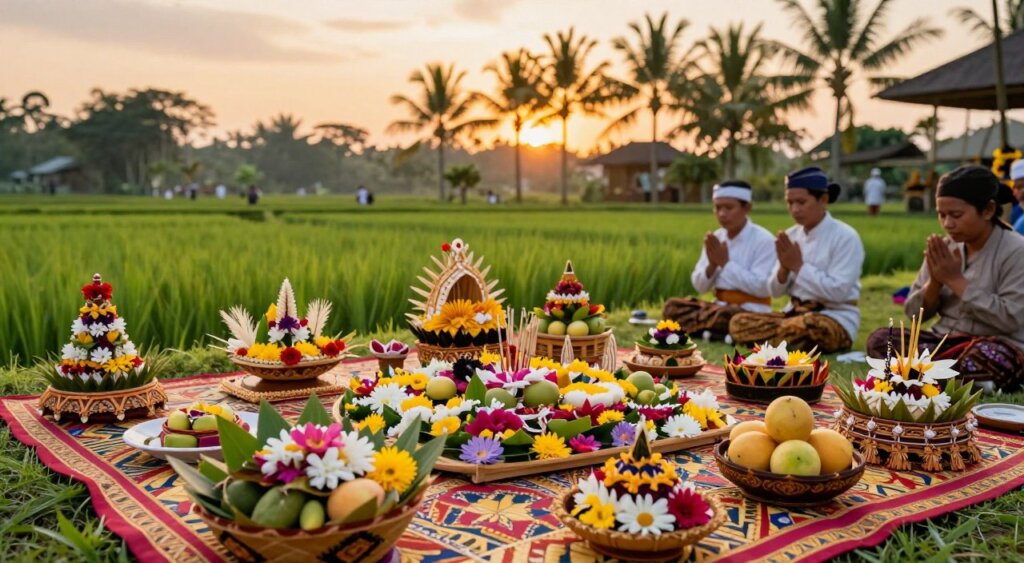
Spiritual Significance and Religious Meaning
The observance embodies a core Balinese Hindu belief. It affirms an ongoing, beneficial relationship between the living and their forebears.
Proper rituals are thought to maintain cosmic harmony. They ensure continued protection and guidance from the ancestors.
This is a profound expression of gratitude. Families offer prayers and seek blessings, strengthening a spiritual connection that transcends time.
Cultural Symbolism Behind Offerings and Rituals
Each element in the offerings carries deep symbolic meaning. They are not mere gifts but a language of respect and sustenance for the departing spirits.
The meticulous rituals performed before noon are crucial. They align with beliefs about spiritual transitions, ensuring a safe passage.
This collective devotion reinforces family identity and community cohesion. It places tradition at the very heart of cultural life, expressing shared gratitude across generations.
Balinese Calendar and the Timing of Rituals
To truly grasp the timing of Bali’s festivals, one must understand the unique Pawukon calendar. This system dictates when all major observances occur. It is very different from the Gregorian calendar used elsewhere.
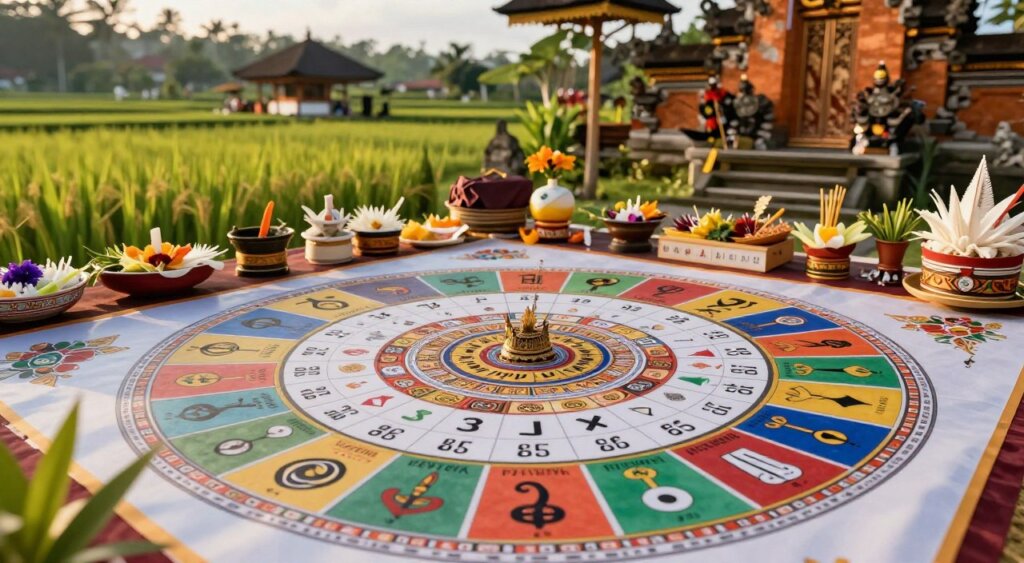
Understanding the 210-Day Pawukon Cycle
The Balinese Pawukon calendar operates on a 210-day cycle. It weaves together multiple week cycles, from one to ten days long. This creates a complex but precise method for setting auspicious time.
Because of this cycle, Kuningan Day happens twice a Gregorian year. The dates shift annually. For 2025, it falls on Saturday, May 3rd and Saturday, November 29th.
This calendar is more than a tool for tracking days. It embodies spiritual principles about cosmic rhythms. It connects community life to natural and supernatural cycles.
Rituals, Offerings, and Symbolic Practices
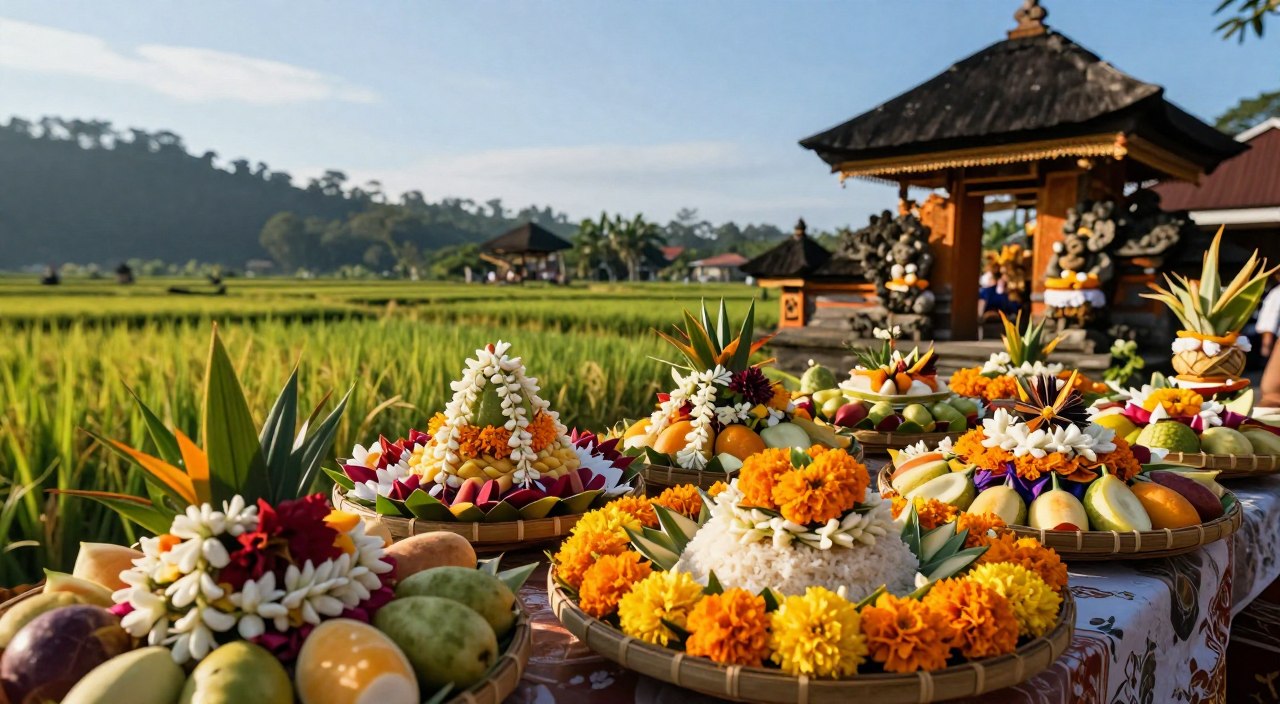
Preparations for the departure involve a symphony of symbolic items, from yellow rice to towering bamboo poles. Each element in the elaborate offerings communicates deep reverence and provides for the journey ahead.
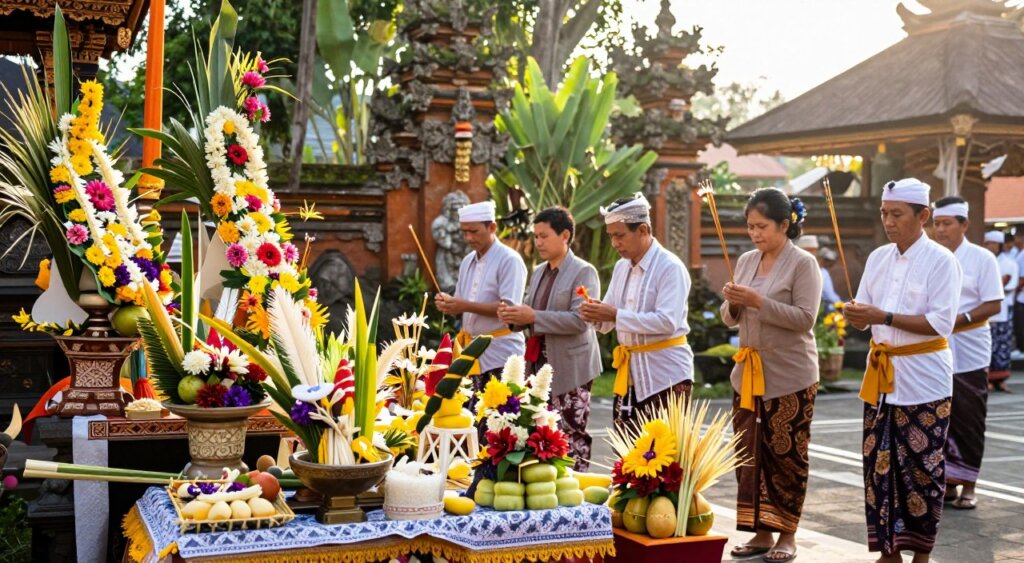
Yellow Rice and Special Offerings Explained
Nasi Kuning (yellow rice) is the signature dish. Its golden color symbolizes prosperity and gratitude. It is a special provision for the spirits.
Other items in the offerings carry specific meanings. They ensure protection and supply necessities for the return.
| Offering Item | Material | Symbolic Meaning |
|---|---|---|
| Tamiang | Woven coconut leaves | Shield against negative forces |
| Endongan | Small bag | Travel provisions for the journey |
| Kolem | Container | Represents life’s basic necessities |
| Ter | Bamboo & coconut leaves | Symbolic lance or structure |
Role of Penjor Poles and Decorative Elements
Tall, arching bamboo poles called Penjor line the streets. Their curve represents Mount Agung and a mythical dragon of prosperity.
These poles are decorated with farm products. You will see rice stalks, coconut fruits, and woven coconut leaves. They show thanks for earth’s bounty.
Morning Rituals and Timing of Observances
Families perform prayers and present offerings in the morning hours. These rituals take place at family shrines in homes and village temples.
All ceremonies must finish before noon. Tradition states the divine visitors depart around midday. This timing is crucial for the day‘s spiritual success.
Observing the Ceremony Respectfully as a Visitor
For travelers, observing the culmination of the Galungan Kuningan festival requires mindfulness and respect. Witnessing these events is a privilege, not a performance. Your conduct should honor the deep significance for the Balinese people.
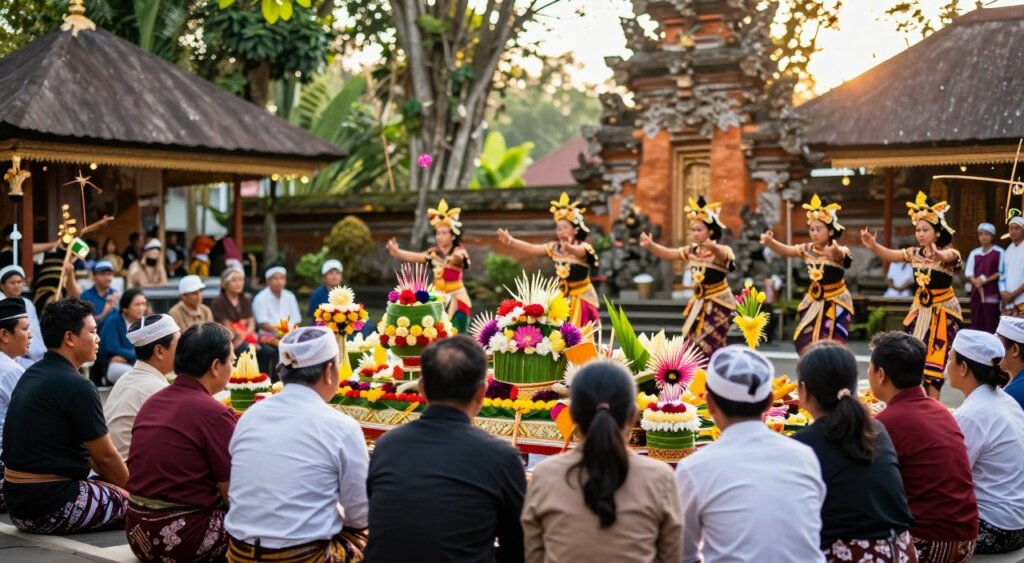
Guidelines for Appropriate Behavior
First, understand you are observing authentic religious ceremonies. Dress codes are vital. Always wear a sarong and sash at temples, and keep shoulders covered.
Maintain a quiet, observant presence. This is especially important during prayers. Your respect helps preserve the sacred atmosphere.
Practical Dos and Don’ts During Ceremonies
Follow these specific tips to show respect for the local culture:
- Do ask permission for photography, especially of individuals. Avoid flash during prayers.
- Do not step over or touch offerings on the ground. Walk behind, not in front of, praying people.
- Do sit with legs folded, never pointing feet at altars.
- Do not enter temples if you are a woman menstruating.
Keep a respectful distance and avoid loud talk. If a family invites you closer, accept graciously and follow their lead. Remember, active participation is for the faithful. As a visitor, your role is to observe quietly and appreciate this unique aspect of life on the island.
Impact on Families and the Balinese Community
During these sacred ten days, a palpable shift occurs across the island. Work pauses and homes become centers of activity as the Galungan Kuningan period begins. For the Balinese people, this time is essential for maintaining social fabric.
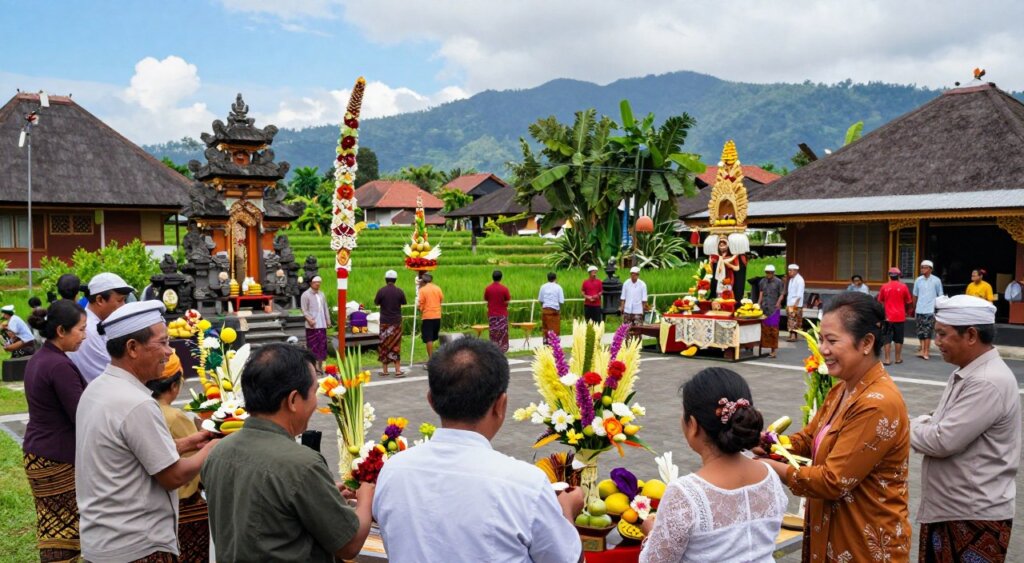
Strengthening Community Bonds Through Tradition
Relatives travel to reunite in their homes. They share ceremonial meals and exchange blessings, reinforcing kinship connections. The day after Galungan is dedicated to visiting extended family and friends.
This focus on togetherness affects daily life. Many local businesses and shops close or operate on reduced hours. Tourist venues usually remain open, but the overall pace becomes more relaxed.
The entire festival cycle fosters intergenerational learning. Elders teach younger family members proper rituals. Kuningan Day provides a final moment for families to express gratitude and seek blessings.
Conclusion
More than a single event, this day encapsulates the enduring spiritual heartbeat of the island. The Kuningan observance offers a profound glimpse into a worldview where gratitude defines daily life.
For Balinese Hindus, it reaffirms the vital connection between living families and their ancestors. This sacred time strengthens each family and seeks continued blessings.
Mindful visitors in 2025 can witness this deep cultural expression. It reveals the soul of Bali beyond its beaches.
The ceremony honors ancestral spirits and maintains cosmic balance. It is a powerful tradition that continues to shape the island’s unique identity.