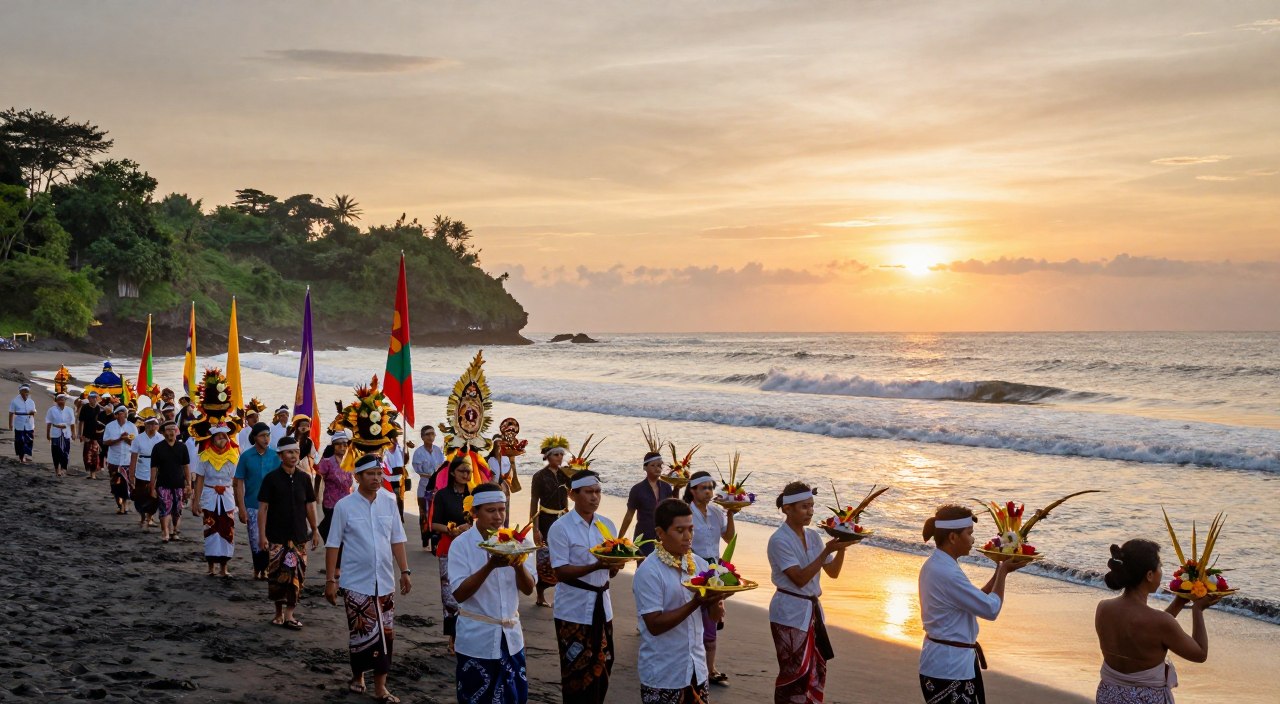
Every year, in the days leading up to Bali’s famed Day of Silence, a stunning visual spectacle unfolds as thousands of participants form vibrant processions towards the island’s shores. This massive event is the Melasti purification ceremony before Nyepi, a cornerstone of Balinese Hindu tradition.
The melasti ceremony is a deeply sacred ritual. It prepares both individuals and the entire community for the introspection of Nyepi, the Saka new year. Its timing, just a few days prior, is spiritually significant.
This observance focuses on cleansing through the power of natural water sources. Participants gather at beaches or rivers, believing these elements wash away negative energies. The goal is to enter the new year with a renewed spirit.
Beyond the colorful attire and offerings, the event carries profound religious meaning. It sets the stage for a full reset—spiritually, physically, and mentally.
This article will explore the historical context, detailed ritual processes, and practical guidelines for visitors wishing to respectfully witness this powerful tradition.
Key Takeaways
- The Melasti event is a key Balinese Hindu observance held shortly before the Day of Silence (Nyepi).
- Its primary purpose is spiritual and communal cleansing before the Saka new year begins.
- The ritual takes place at coastal areas or rivers, highlighting the sacred role of water.
- It involves vibrant processions with traditional attire and elaborate offerings.
- The ceremony prepares participants for a day of complete quiet, reflection, and renewal.
- Understanding its significance offers a deeper appreciation of Balinese culture beyond its visual beauty.
Insights into Melasti Purification Ceremony Before Nyepi
As the Saka new year approaches, Balinese Hindus undertake a significant observance to cleanse their environment and spirits. This event functions as both a communal gathering and a deep spiritual practice.
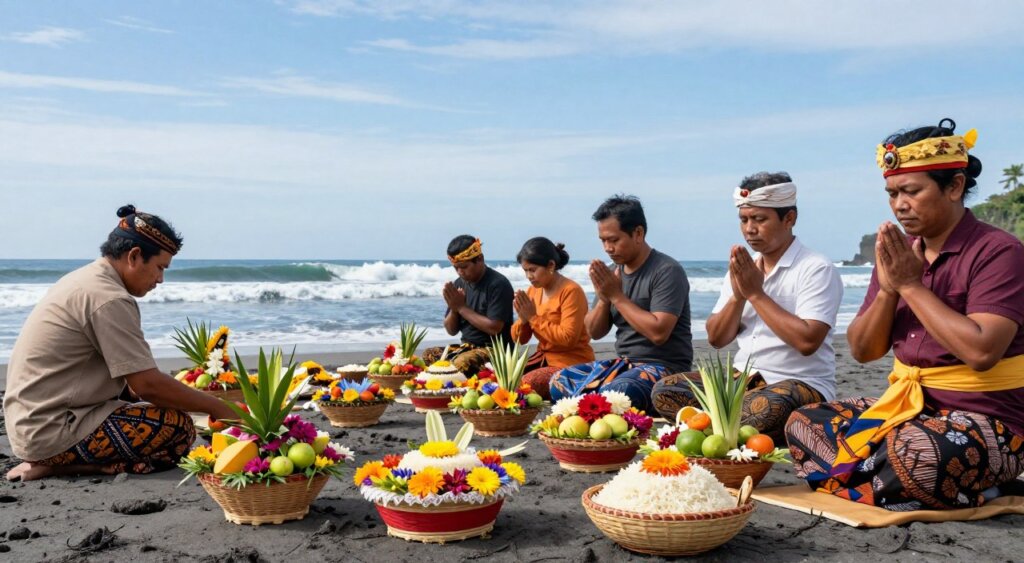
The practice takes place over several days. Different communities and temples schedule their processions according to local traditions. This staggered timing allows each group to focus on their own preparations.
The observance bridges the physical and spiritual realms. Cleansing here serves practical and metaphysical purposes. It removes negative energies while renewing participants’ inner selves.
Various sources of water are used for this process. The sea is most common, but rivers, sacred springs, and lakes are also chosen. Geography and temple affiliations determine the location.
Balinese Hindus view this element as sacred. It possesses inherent cleansing properties that wash away spiritual impurities. This belief is central to the practice’s power.
Entire communities walk from their local temples to the chosen source. They carry sacred objects and offerings in a vibrant procession. This journey symbolizes a collective movement toward renewal.
The table below highlights the primary water sources used:
| Water Source | Common Usage | Symbolic Meaning |
|---|---|---|
| Sea | Most frequent, especially in coastal areas | Vastness, source of life, connection to deities |
| River | Inland communities, flowing water sites | Movement, carrying away impurities |
| Lake | Mountainous or plateau regions | Stillness, reflection, depth of spirit |
| Sacred Spring | Specific holy sites with historical significance | Purity, origin, direct spiritual channel |
This preparation creates spiritual readiness for the upcoming Day of Silence. It sets the stage for a full reset of mind and community.
Historical and Cultural Context
The origins of this pre-Nyepi ritual are found in the sacred texts and ancestral wisdom of the island. This practice is far more than a single event. It is a living expression of a worldview centered on interconnectedness.
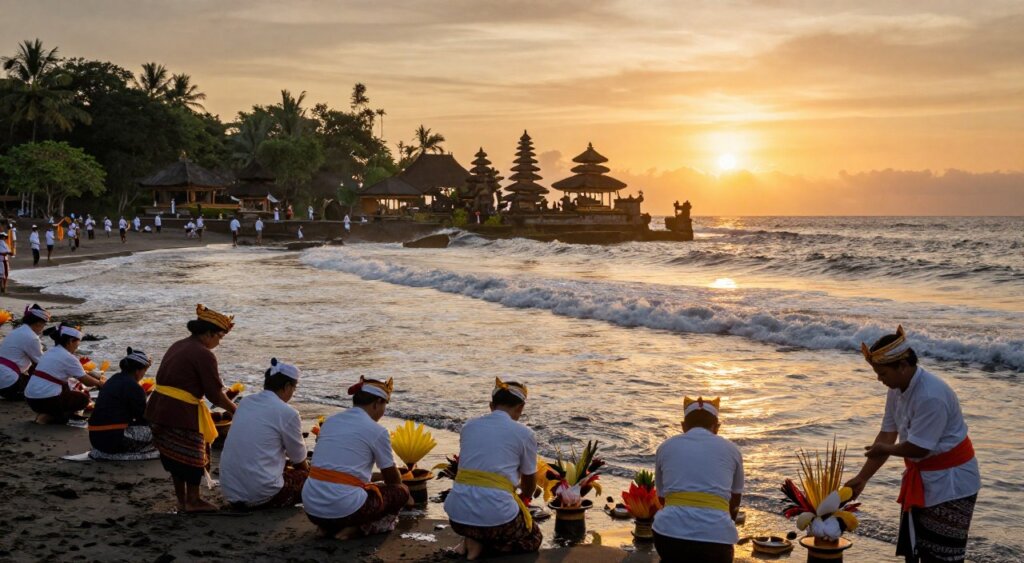
Origins and Traditional Beliefs
Ancient teachings position water as the ultimate source of life. This belief underpins the entire melasti ceremony. Sacred objects from village temples are carried to the sea. Their spiritual potency is believed to require regular renewal.
This act maintains a vital connection to the divine. The rituals performed are designed to restore cosmic order.
Cultural Significance in Balinese Hinduism
For Balinese Hindus, the event strengthens community identity. It is a powerful reaffirmation of shared values passed through generations. Each local temple organizes its own procession, following specific traditions.
The sound of gamelan music fills the air, creating a sacred atmosphere. This pursuit of harmony and balance between the human and spiritual world is central. Cleansing the soul through this collective action prepares everyone for renewal.
Preparations and Ritual Procession
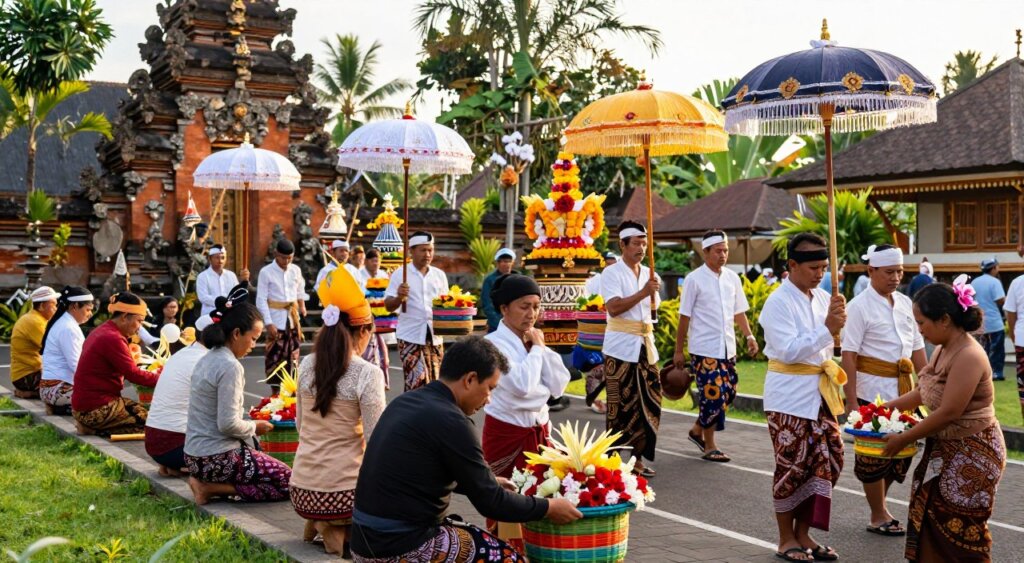
The streets of Bali transform as residents embark on a carefully coordinated spiritual march. This preparation phase takes place with every member of the local banjar, or community, involved. Their collective work ensures the melasti ceremony succeeds.
Community Involvement and Pre-Ceremony Cleaning
In the days leading up, people thoroughly clean their homes and temples. This physical cleansing is a vital part of spiritual readiness. The community organizes all activities.
The banjar coordinates the procession and prepares sacred objects. These objects include statues and ritual implements. Each requires specific handling protocols.
Traditional Attire and Offerings
Participants wear their finest ceremonial attire. These garments, like white kebaya and gold sashes, show deep respect. Elaborate offerings include fruit, flowers, and rice arranged in intricate designs.
| Attire Item | Description | Symbolic Meaning |
|---|---|---|
| White Kebaya | Traditional blouse and skirt | Purity and spiritual readiness |
| Ceremonial Sash (Selendang) | Colorful cloth worn over shoulder | Connection to divine blessings |
| Headpiece | Ornate hair decoration | Focus and elevated intention |
| Offerings Tray (Canang Sari) | Small palm-leaf basket with flowers | Daily gratitude and devotion |
The atmosphere is both festive and reverent. Gamelan music fills the air as the procession moves. This blend of devotion and celebration highlights the rituals dual role. Gamelan ensembles create a sacred soundscape.
Spiritual Significance and Purification Process
The core of this profound observance is a holistic cleansing that targets physical, mental, and spiritual dimensions. It represents a complete reset for both people and the sacred objects they revere.
Cleansing the Body, Mind, and Soul
This ritual operates on three interconnected levels. The body is purified through physical immersion in the water. The mind is cleared via focused prayers and meditation.
The soul undergoes renewal by connecting with divine energy. This triple approach ensures every part of a person is prepared.
Role of Holy Water and Sacred Objects
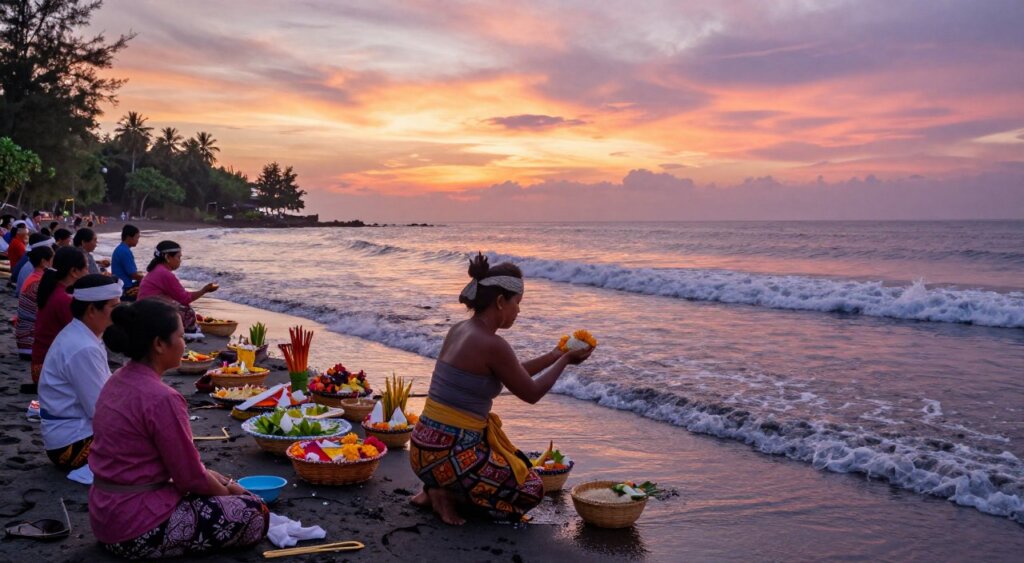
Priests lead the gathering at the water’s edge. They chant specific mantras to invoke blessings. Holy water is collected from the sea or other sacred sources.
Participants then enter the water, submerging themselves while reciting prayers. This act is believed to wash away negative energy.
The collected holy water is also used to cleanse temple objects. Statues and ritual implements receive this purification to remove spiritual impurities.
| Aspect of Self | Ritual Action | Intended Purpose |
|---|---|---|
| Body | Physical bathing and immersion | Cleanse the physical form and senses |
| Mind | Focused prayer and meditation | Purify thoughts and release attachments |
| Soul | Spiritual connection through ritual | Renew the inner essence and divine link |
Emerging from the water, individuals feel symbolically renewed. This transformative cleansing prepares them for the quiet days of reflection ahead. The sacred objects, now also purified, are returned to their place in the temple.
Environmental and Sustainability Considerations
Modern environmental awareness is shaping how traditional spiritual practices interact with the natural world. This perspective adds a crucial layer to understanding the ritual’s full impact.
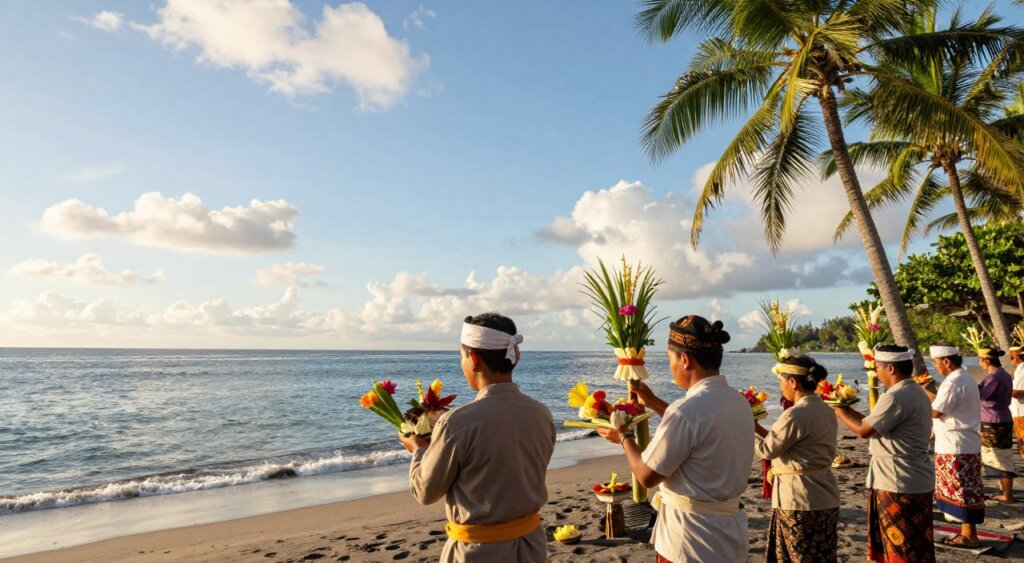
The growing focus on sustainability ensures these sacred acts honor, rather than harm, the environment. Communities actively protect the water sources they hold dear.
Respecting Natural Water Sources
The sea, rivers, and lakes are not just backdrops. They are living, sacred entities. Protecting them is a direct spiritual duty.
This respect translates into practical stewardship. Many groups organize beach clean-ups before and after events. The goal is to leave these natural spaces pristine.
This effort maintains the harmony between human activity and the world around us. It is a vital part of the practice’s future.
Plastic-Free Offerings and Waste Management
A significant shift is toward plastic-free offerings. Traditional materials like banana leaves and flowers are making a strong comeback.
These biodegradable items replace synthetic decorations. They ensure no pollution reaches the water or land.
Effective waste management systems are now common. Volunteers ensure all materials are properly disposed of or composted. This commitment reflects a deep balance between tradition and care for nature.
These actions protect the environment and reinforce the ceremony’s core message of harmony.
Visitor Guidelines and Respectful Observation
Observing a sacred Balinese Hindu event requires both curiosity and cultural sensitivity from guests. This is a living religious practice, not a performance. Tourists have a unique chance to witness its beauty without interfering.
Appropriate Dress Code and Behavior
Modest attire shows deep respect for the local culture. Shoulders and knees should be covered, especially near temples. A ceremonial sash, or selendang, is ideal when you are close to the action.
Maintain a respectful distance from the procession. Never walk into it or block pathways. Your quiet presence allows visitors to appreciate the rituals without disruption.
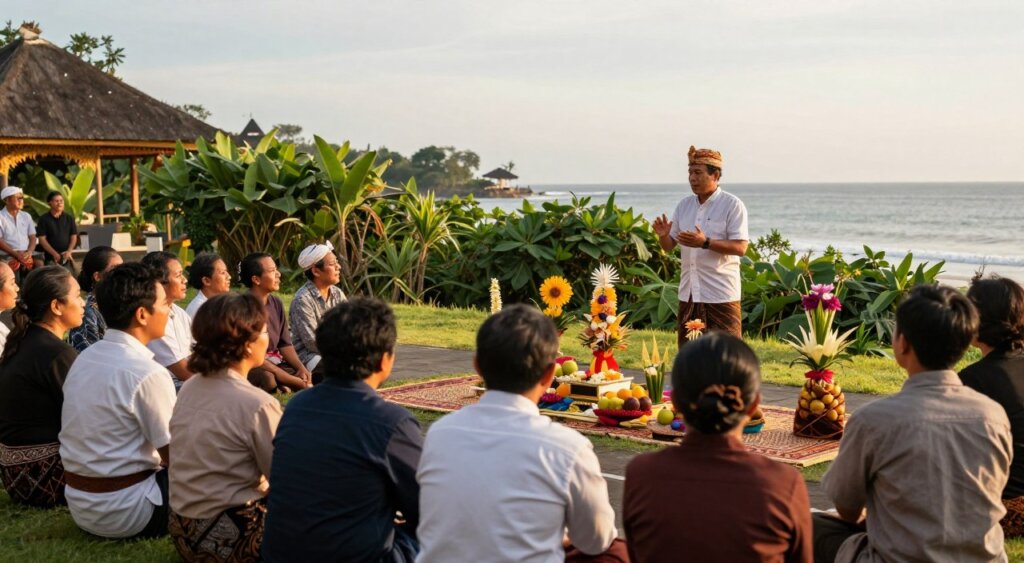
Dos and Don’ts for Photography and Participation
Flash photography can break the concentration during prayers. Avoid using it at any time. Drones are typically prohibited unless you have explicit permission.
Never step on offerings placed on the ground. These items are a sacred part of devotion. Also, avoid crowding around holy objects for selfies.
Always follow instructions from local authorities. They know the proper protocols for each place. The purpose is to ensure the ceremony flows smoothly for all.
By observing thoughtfully, tourists honor the spiritual time. This allows everyone to focus on the deeper meaning of the melasti ceremony.
Conclusion
In essence, this profound tradition weaves together spiritual devotion, community action, and environmental care. The melasti ceremony is an essential part of Balinese Hindu life. It prepares people for the new year and the deep silence of the following day.
This event takes place as a sacred time of transition. Balinese Hindus cleanse negative energy through the sea or other water sources. The vibrant procession from temple to shore creates a powerful moment of collective renewal.
The ritual’s broader purpose is a full reset. It fosters harmony with the natural world and the divine. For visitors, understanding this deeper meaning transforms observation into respectful appreciation.
Ultimately, the ceremony offers lasting lessons about cleansing, reflection, and our connection to nature. It invites us all to approach such traditions with curiosity and respect.