On a single day across Bali, families and communities focus their gratitude on the inanimate helpers of modern life, in a sacred Tumpek Landep metal objects blessing that honors everything from kitchen knives to motorbikes.
This unique Hindu observance occurs every 210 days. It is dedicated to Sang Hyang Pasupati, the divine force believed to govern all forged implements. The name itself holds deep meaning. “Tumpek” marks a specific week in the local calendar, while “Landep” translates to “sharp.”
The ritual is far more than a simple cleaning day. It represents a profound cultural philosophy. This philosophy sees the spiritual essence within the tools that facilitate daily work, safety, and creativity.
Participants express thanks for their instruments’ service. They also seek continued functionality and protection. This practice highlights a beautiful relationship between people, their craftsmanship, and the divine.
Key Takeaways
- Tumpek Landep is a Balinese Hindu ceremony focused on showing gratitude to tools and vehicles.
- It takes place on a specific day that recurs every 210 days in the Balinese calendar.
- The event is dedicated to Sang Hyang Pasupati, the deity associated with forged items.
- The term “Landep” means “sharp,” symbolizing both physical and spiritual sharpness.
- This practice reflects a worldview that sees sacred value in everyday objects.
- It serves the dual purpose of giving thanks and asking for future safety and utility.
- The observance is a unique example of how culture blends spiritual belief with daily practical life.
Understanding Tumpek Landep in Balinese Culture
This festival’s timing is governed by a complex calendar that operates on a 210-day cycle, distinct from the Western year. This system, called the Pawukon, dictates the rhythm of ceremonial time in Bali.
The observance occurs on a specific Saturday known as Saniscara Kliwon Landep. It is a day deeply woven into the island’s cultural fabric.
Historical Context and Origins
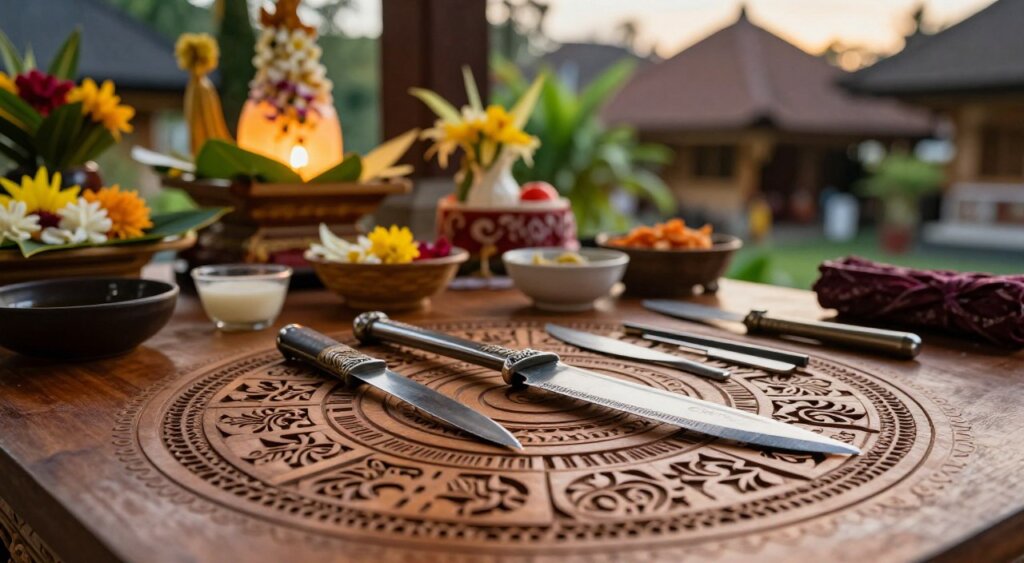
Centuries ago, this day focused on ancestral heirlooms like the keris (dagger) and spears. These items were vital for community protection and symbolized noble craftsmanship.
The ceremony honored the artisans and warriors of the past. Its core purpose was to maintain the potency and integrity of these important tools.
Spiritual Significance and Symbolism
The term “Landep” means sharp. This idea applies to both physical edges and the mind.
Participants seek clarity, wisdom, and moral discernment. The ritual acknowledges that sharp intellect is as crucial as a reliable tool.
This view sees a sacred essence within well-crafted items. It celebrates the profound connection between people and the instruments that support daily life and growth.
Tumpek Landep Metal Objects Blessing: Rituals and Practices
Central to the day’s events are a series of carefully performed rituals that blend household devotion with community celebration. These practices honor the divine support behind human creativity and craftsmanship.
Offerings, Blessings, and Cleansing Rituals
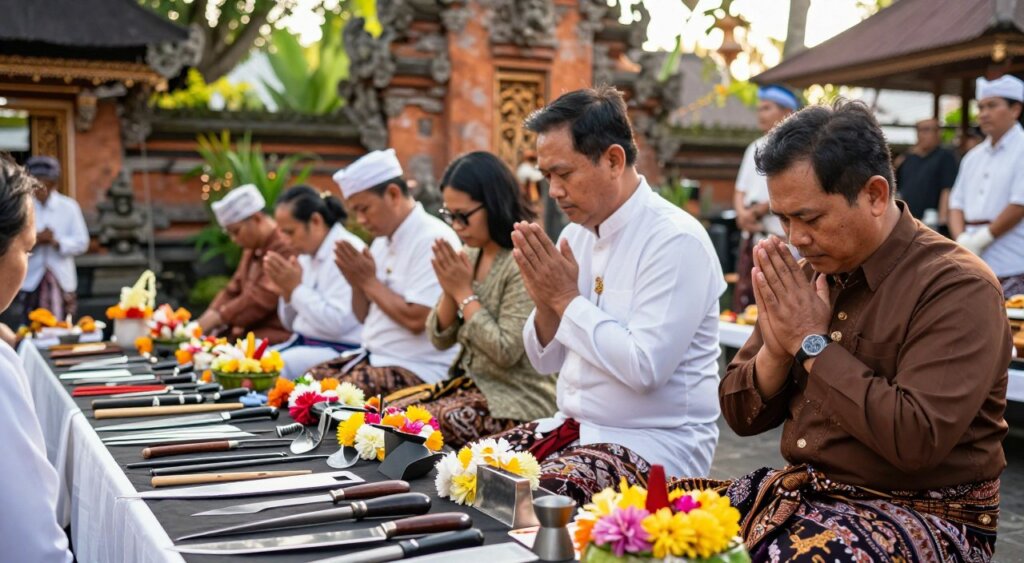
Elaborate offerings called canang sari and banten form the ceremonial foundation. Families construct these from flowers, rice, and incense on palm-leaf trays.
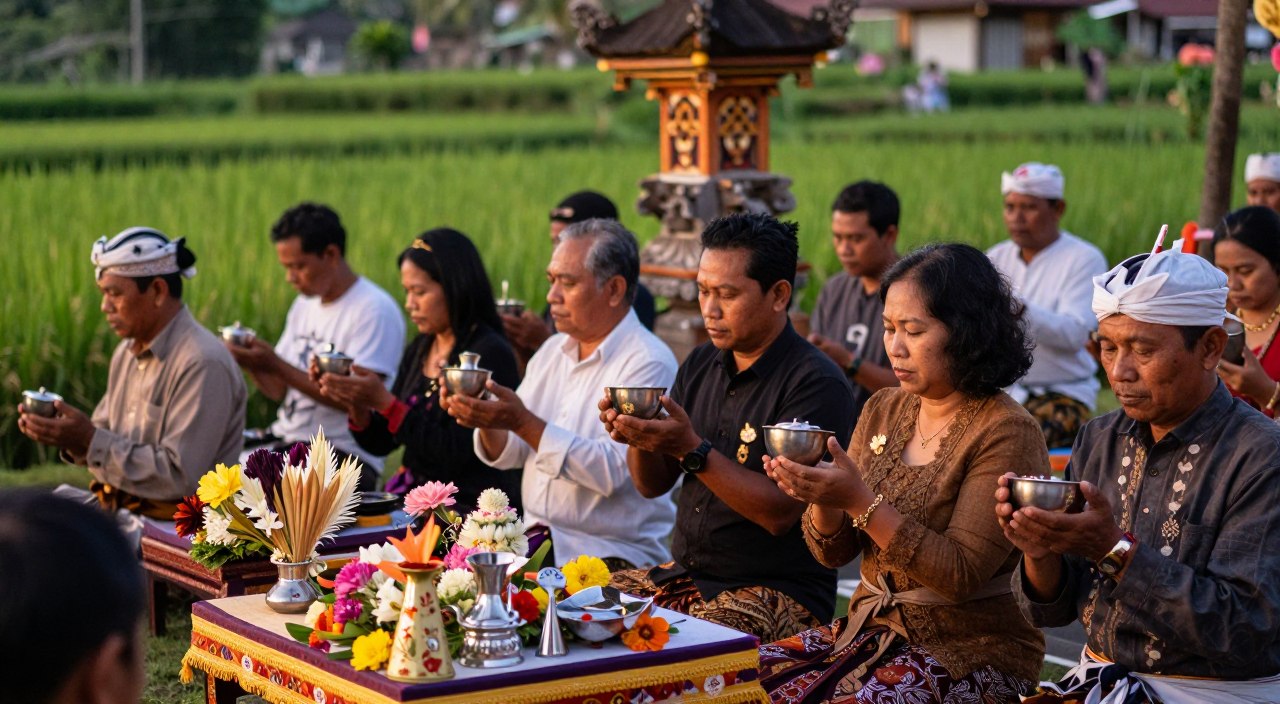
They are placed on tools, vehicles, and household items. Artisans and families gather for prayers, expressing gratitude for their skills and the implements that support their livelihoods.
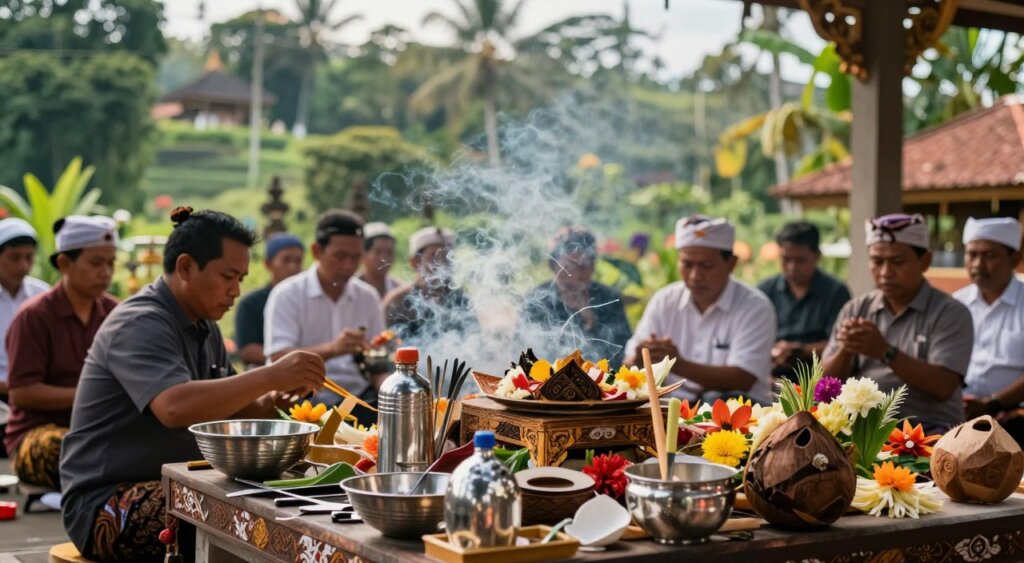
Holy water is then sprinkled on each item. This act purifies and infuses them with renewed spiritual energy for continued safe use.
Each implement is meticulously cleaned, polished, and sharpened. This physical care signifies a renewal of purpose and effectiveness.
Ceremonial Performances and Community Involvement
The observances extend beyond individual homes. Traditional dances and gamelan music create a festive atmosphere.
These performances honor cultural heritage and add joy to the proceedings. Communities come together at temples and workshops.
This collective participation strengthens social bonds and reinforces shared values. The blessing of items, from ancestral daggers to modern vehicles, becomes a unifying event.
Modern Interpretations and Significance of Tumpek Landep
From forged daggers to family sedans, the essence of gratitude remains constant even as the tools of daily life change. This day has dynamically evolved to honor the implements of the present era.
Evolution from Traditional Artisanship to Modern Tools
The scope of blessed items has expanded dramatically. Where once only artisan blades and weapons received attention, now vehicles and digital devices are central.
Families now bring their cars and motorbikes for the same reverent treatment. Office workers include computers and smartphones in the observances.
Integration with Contemporary Life and Technology
This integration reflects practical needs for safety and functionality. Drivers seek protection for the vehicles that carry their families.
The ceremony acknowledges that modern tools are just as vital for livelihoods. Cars, motorbikes, and machinery now receive palm-leaf decorations and holy water.
The spiritual core of honoring helpful instruments remains untouched. Tumpek Landep shows how tradition adapts while preserving its sacred heart.
Conclusion
The true power of Tumpek Landep lies in weaving spiritual awareness into daily routines. This festival is a living philosophy, not just a single day.
It cultivates deep gratitude for the tools that support family life and work. The focus on sharpness also hones the mind and moral judgment.
This dual practice strengthens bonds within families and the wider community. The ceremony honors both ancestral skill and modern technology.
Ultimately, it offers a timeless lesson on valuing the instruments of our life and time. It reminds us to care for both our creations and our inner clarity.