
Many Australian travellers are surprised to learn that this cultural heartland sits 3-5 degrees cooler than Bali’s coastal hotspots. This refreshing temperature difference makes the region an ideal escape from tropical heat.
The area’s unique position in Bali’s central highlands creates this distinct microclimate. At 200-300 metres above sea level, the elevation brings cooler evenings and more comfortable daytime conditions.
Surrounded by lush rice fields and tropical forests, the location enjoys a rainforest climate. Higher rainfall contributes to the incredibly verdant environment that defines this special part of Bali.
Understanding these seasonal patterns helps you plan the perfect holiday. You’ll know when to pack a light jacket for cooler nights and how to schedule outdoor activities around typical rainfall times.
The surrounding landscape of Gianyar regency enhances the fresh, clean atmosphere. Rivers and dense vegetation create a noticeably different feel from the beach destinations just 90 minutes away.
Key Takeaways
- The central highlands location creates temperatures several degrees cooler than coastal areas
- Higher elevation results in more rainfall and lush, green surroundings
- Evenings and nights are noticeably fresher, perfect for comfortable sleeping
- Plan activities around the tropical climate patterns for the best experience
- The area offers a refreshing alternative to Bali’s hotter beach regions
- Understanding seasonal variations helps with packing and itinerary planning
- The microclimate supports the region’s famous rice terraces and tropical forests
Understanding Ubud Weather Patterns

Travellers to this popular Indonesian region will encounter two primary weather periods that alternate throughout the calendar. Knowing these seasonal differences helps you choose the ideal time for your visit.
The climate follows a predictable rhythm of dry and wet months. Each season offers unique advantages for different types of activities and experiences.
Dry Season Overview (April to October)
The dry season from April to October brings optimal conditions for exploration. Daytime temperatures typically range between 27°C to 30°C with comfortable evenings around 20°C to 22°C.
Humidity levels sit at 65-80% during these months. Rainfall is minimal with only occasional brief afternoon showers.
This period features generally clear skies and warm weather. It’s perfect for outdoor adventures and cultural sightseeing.
Rainy Season Overview (November to March)
November to March marks the rainy season with increased precipitation. Temperatures remain warm at 26°C to 29°C during the day.
Evening temperatures stay pleasant around 21°C to 23°C. Humidity rises significantly to 80-95% during this wet season.
Rain typically comes as heavy but short-lived tropical downpours. These showers often occur in the afternoon or evening hours.
Mornings usually start sunny before clouds develop later. January sees the most frequent rainfall of all the months.
| Season | Temperature Range | Humidity | Rainfall Pattern | Best For |
|---|---|---|---|---|
| Dry Season (April-October) | 27°C-30°C day / 20°C-22°C night | 65-80% | Minimal, brief showers | Outdoor activities, hiking |
| Rainy Season (November-March) | 26°C-29°C day / 21°C-23°C night | 80-95% | Heavy afternoon downpours | Indoor cultural experiences |
Seasonal Changes in Ubud
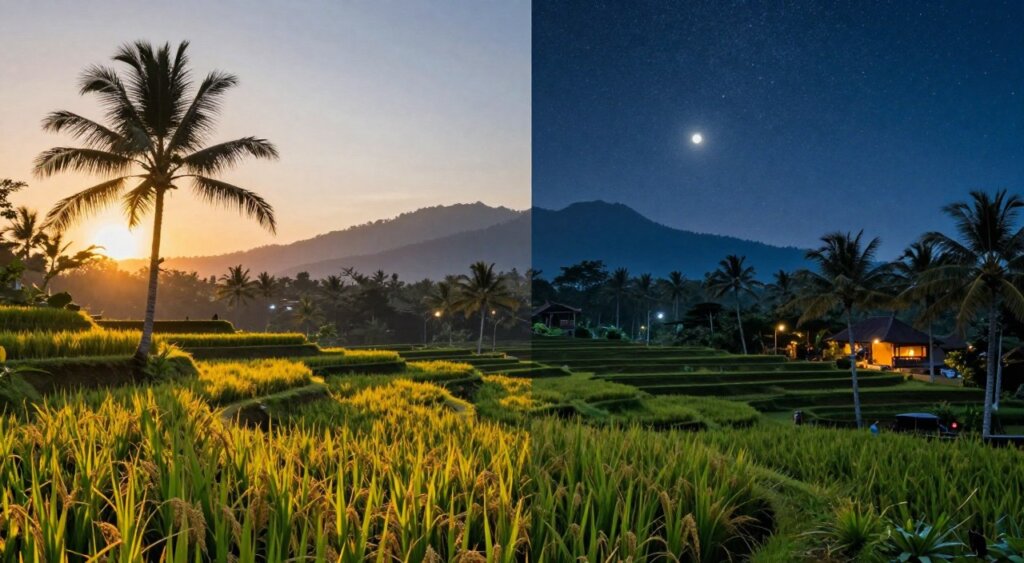
Daily temperature cycles create a rhythm that shapes visitor experiences throughout the year. The highland location ensures noticeable differences between daylight and darkness hours.
Mornings typically begin warm and sunny with temperatures around 26-30°C. This creates ideal conditions for early outdoor activities and exploration.
Day and Night Temperature Variations
As the day progresses, humidity can make the air feel warmer than the actual temperature reading. However, evenings bring welcome relief as temperatures drop to 20-23°C.
This cooler evening air makes outdoor dining and strolls particularly pleasant. The dry season from June to August sees the most significant nighttime cooling.
Rainy season nights may feel damper but offer comfortable sleeping conditions. The consistent morning warmth ensures great starts to each day regardless of when you visit.
Understanding these daily patterns helps you plan activities effectively. Schedule outdoor adventures for mornings and cultural experiences for cooler evenings.
Local Highlights and Outdoor Activities

Visitors to this tropical destination can enjoy diverse activities throughout the day by understanding optimal timing. The region’s climate patterns create perfect conditions for different types of experiences.
Popular Daytime Adventures
Mornings offer ideal conditions for outdoor exploration. The Campuhan Ridge Walk provides stunning views during cooler hours.
Exploring the famous rice terraces becomes more enjoyable before midday heat. Tegalalang’s iconic landscapes shine in morning light.
Waterfall visits to Tegenungan or Tibumana work best during dry periods. These activities like hiking and cycling suit the daytime perfectly.
Evening and Cultural Experiences
As temperatures cool, cultural activities take center stage. Traditional Balinese dance performances create magical evening experiences.
Rainy afternoons are perfect for indoor workshops. Try batik making or wood carving classes during wetter weather.
Cooking classes and spa sessions offer enriching alternatives. Planning your time visit around these patterns ensures maximum enjoyment.
Navigating Ubud Weather for Your Bali Adventure

Planning your Bali getaway requires smart timing to match your travel preferences with the region’s climate patterns. Understanding seasonal variations helps you choose the perfect time visit for your desired experience.
Forecast Insights and Temperature Trends
June to September offers the best time visit for ideal conditions. These months provide comfortably warm temperatures with minimal rainfall.
The dry season brings lower humidity and perfect conditions for outdoor exploration. April, May, and October also offer excellent weather with fewer crowds.
Visiting during the rainy season from November to March has its advantages. Lush greenery emerges, accommodation rates improve, and tourist numbers drop significantly.
Heavy rain typically creates temporary puddles rather than major flooding. Checking local forecasts helps you stay flexible with daily plans.
| Time Period | Weather Conditions | Visitor Experience | Recommended Activities |
|---|---|---|---|
| June-September | Dry, comfortable temperatures | Peak season crowds | Outdoor adventures, temple visits |
| April, May, October | Moderate rainfall | Fewer tourists | Cultural experiences, relaxed exploration |
| November-March | Regular rainfall, lush scenery | Intimate, budget-friendly | Indoor workshops, spa treatments |
Flexibility remains key regardless of when you choose to visit. The region offers rewarding experiences throughout all seasons.
Tips for Organising Your Bali Getaway

Smart packing makes all the difference when preparing for Bali’s unique climate conditions. The right choices ensure comfort throughout your adventure.
Packing Essentials and What to Wear
During the dry season, light and breathable clothing works best for warm days. Clear skies make perfect conditions for exploration.
Pack a light jacket for cooler evenings when dining outdoors. This simple addition keeps you comfortable after dark.
The rainy season requires different preparation. An umbrella or light rain jacket handles frequent afternoon showers effectively.
Choose quick-dry fabrics that handle humidity well. These materials stay comfortable in moist air and dry quickly.
Mosquito repellent is essential year-round. Evening outdoor activities near water require extra protection.
| Season | Essential Clothing | Accessories | Footwear |
|---|---|---|---|
| Dry Season | Light, breathable fabrics | Light jacket, sunscreen | Comfortable walking shoes |
| Rainy Season | Quick-dry materials | Umbrella, rain jacket | Water-resistant shoes |
Select accommodations with good ventilation or air conditioning. This ensures restful nights despite humidity levels.
July and August bring larger crowds and higher prices. Consider alternative months for a more relaxed experience.
Layering works well for changing temperatures throughout the day. Keep rain gear accessible for sudden weather changes.
Conclusion
The unique atmospheric conditions in this highland region create memorable holiday experiences year-round. The higher elevation ensures comfortable daytime temperatures while cooler nights provide perfect sleeping conditions.
Choosing the best time to visit depends on your travel preferences. The dry season from April to October offers ideal conditions for outdoor adventures with sunny skies. Meanwhile, the rainy months from November to March provide lush scenery and excellent indoor cultural experiences.
Each season brings distinct advantages for different types of activities. Proper planning ensures you’ll make the most of your time in this enchanting destination.
Understanding the local climate patterns helps you pack appropriately and schedule activities strategically. Embrace the atmospheric charm as part of what makes this cultural heartland so special.
Whether you prefer active exploration or peaceful retreats, there’s always a perfect time to experience Bali’s elevated paradise.