The Philippines and Cambodia aren’t just opening their doors to Chinese tourists, they’re revealing how desperate the post-pandemic tourism race has become.
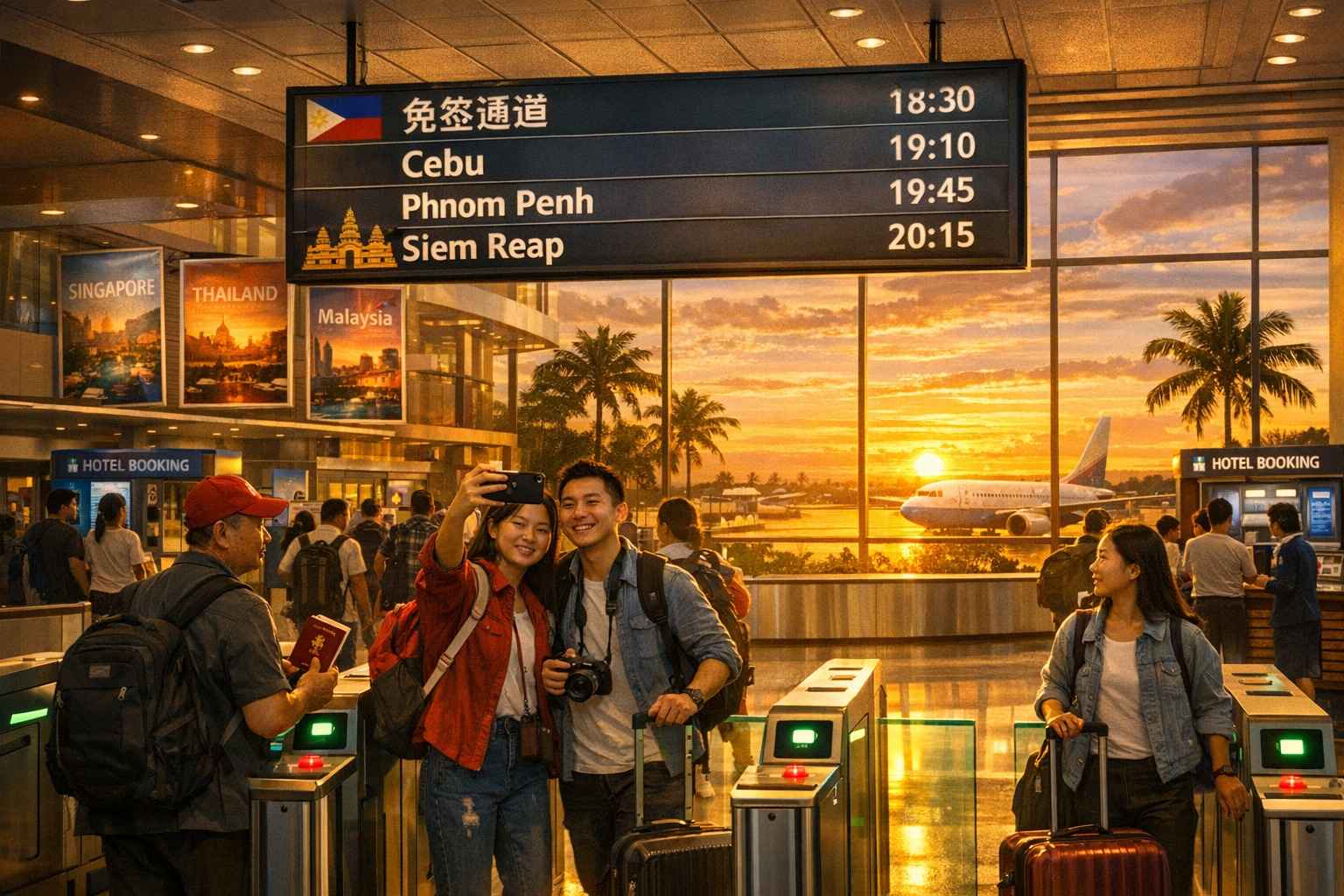
When Manila announced 14-day visa-free entry for Chinese nationals starting June 16, 2026, followed by Phnom Penh’s five-month pilot program beginning June 15, the message was clear: Southeast Asia is locked in a high-stakes competition where Chinese travelers have become the ultimate prize.
The Numbers Tell a Sobering Story
The Philippines welcomed 5.6 million foreign visitors in 2025, a figure that sounds impressive until you realize it’s still 2.66 million short of their 2019 numbers. That’s roughly a 32% gap that hasn’t closed despite years of recovery efforts. Cambodia faces an even sharper reality, recording a 13% visitor decline in the first eleven months of 2025, with only 5.17 million arrivals.
These aren’t just statistics. Each missing tourist represents lost revenue for hotels, restaurants, tour operators, and countless small businesses that depend on international visitors. The visa exemptions are less about hospitality and more about economic survival.
The Regional Arms Race Nobody’s Talking About
Singapore, Thailand, and Malaysia have already been offering visa-free access to Chinese nationals, creating a fascinating dynamic where countries are essentially bidding for the same customer base. The Philippines and Cambodia aren’t innovating, they’re catching up to a standard that their neighbors set years ago.
This raises an uncomfortable question: what happens when everyone offers the same incentive? When visa-free entry becomes the baseline rather than the competitive advantage, these nations will need to find new ways to differentiate themselves. Infrastructure improvements, unique cultural experiences, and competitive pricing will likely become the next battlegrounds.
What the Fine Print Actually Reveals
The Philippines’ restriction to Manila and Cebu airports only, paired with the strict 14-day limit, suggests cautious optimism rather than open-armed enthusiasm. Similarly, Cambodia’s temporary pilot program running from June to October, conveniently targeting their low season, indicates they’re testing the waters before committing fully.
Both approaches reflect governments trying to balance economic opportunity against concerns about overtourism, security screening, and immigration control. The temporary nature of Cambodia’s program, in particular, gives officials an exit strategy if the results don’t meet expectations or if unforeseen complications arise.
The Unspoken Geopolitical Dimension
Chinese outbound tourism isn’t just about leisure travel, it represents soft power and economic influence. When Southeast Asian nations compete for Chinese tourists, they’re also signaling their diplomatic priorities and economic dependencies. China’s massive outbound tourism market gives Beijing considerable leverage in regional relationships, a dynamic that extends far beyond tourism ministries and hotel bookings.
What Actually Changes for Travelers
For Chinese tourists, these policies remove bureaucratic friction but don’t fundamentally transform the travel experience. The real test will be whether the Philippines and Cambodia can deliver memorable experiences that justify return visits and positive word-of-mouth recommendations. A visa exemption gets tourists through the door, but quality accommodations, authentic cultural experiences, efficient transportation, and good value determine whether they come back or recommend the destination to friends.
The Road Ahead
The 2026 visa exemptions represent a calculated bet that Chinese tourism will rebound to pre-pandemic levels and that capturing even a modest percentage of that market will meaningfully impact national economies. Whether that bet pays off depends on factors these governments can’t control, including China’s domestic economic health, yuan exchange rates, and shifting Chinese consumer preferences.
What remains certain is that Southeast Asia’s tourism landscape has fundamentally changed. The days when countries could rely on organic growth and word-of-mouth are over. Today’s tourism requires active competition, strategic policy-making, and constant adaptation to shifting market demands. The Philippines and Cambodia have made their move. Now they’ll need to prove they can deliver experiences worthy of the invitation.