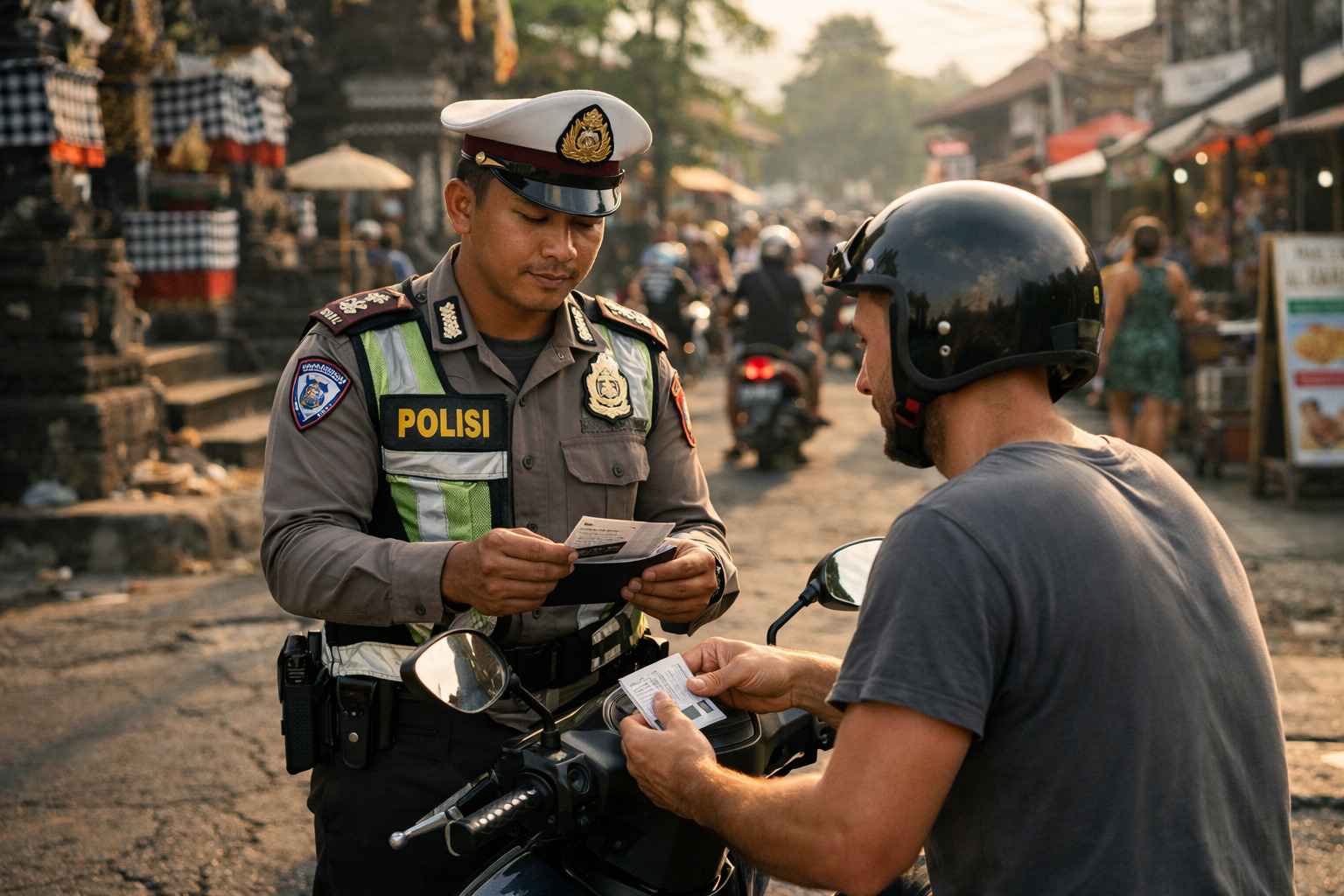

When a German backpacker fractured her ankle while hiking Mount Rinjani last year, the bill reached $8,000, more than her entire three-month Southeast Asian budget. She had no travel insurance. Stories like hers are precisely what Indonesia’s Financial Services Authority (OJK) cites when defending their controversial proposal: mandatory travel insurance for tourism arriving in the archipelago.
But this isn’t just about protecting tourists from medical bills. Behind the policy discussions lies a calculated bet on Indonesia’s insurance market, a contentious debate about accessibility versus protection, and questions about whether the country is about to price out the very backpackers and budget travelers who’ve made Bali and Lombok legendary destinations.
Why Indonesia Is Requiring International Travel Insurance for Tourism
The proposal emerged from OJK in early 2024, though its roots trace back further. Indonesia’s Financial Services Authority has watched the nation’s travel insurance market grow modestly, from approximately 146 billion rupiah in premiums in 2019 to 223 billion by 2023. Yet this represents barely 0.3% of total insurance premiums nationally, a figure OJK considers dramatically underdeveloped.
The authority sees mandatory coverage as a dual solution: protecting foreign visitors while catalyzing a dormant market sector. With Indonesia targeting 17-20 million international arrivals annually by 2026, even basic coverage requirements could inject hundreds of millions of dollars into the domestic insurance industry.
The timing isn’t coincidental. Thailand’s “Thailand Pass” system during COVID-19 required visitors to show $50,000 in medical coverage, a policy that, despite complaints, normalized the concept of mandatory travel insurance across Southeast Asia. The UAE, Schengen zone countries, and others have similar requirements. Indonesia is following a well-worn path, but with unique complications.
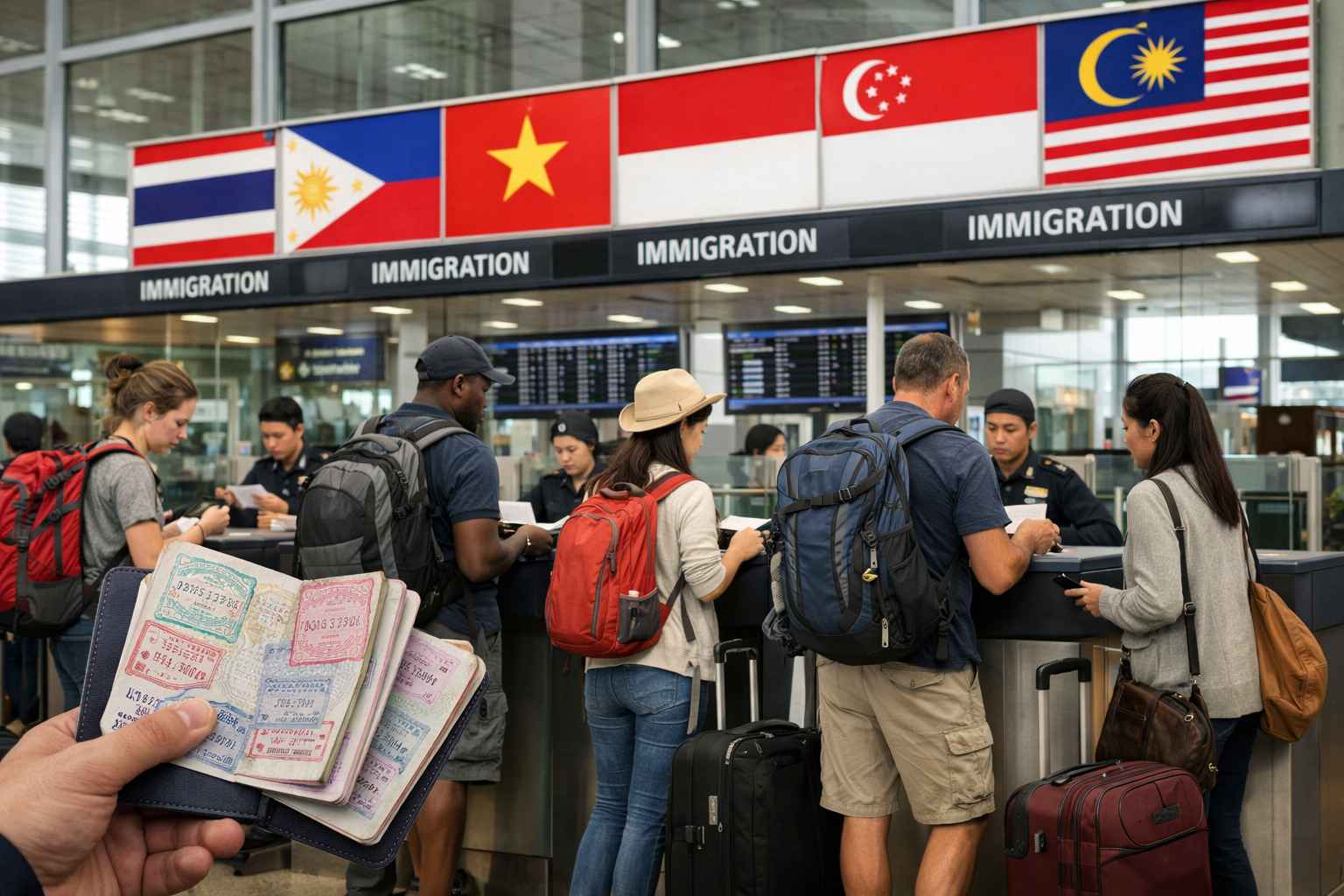
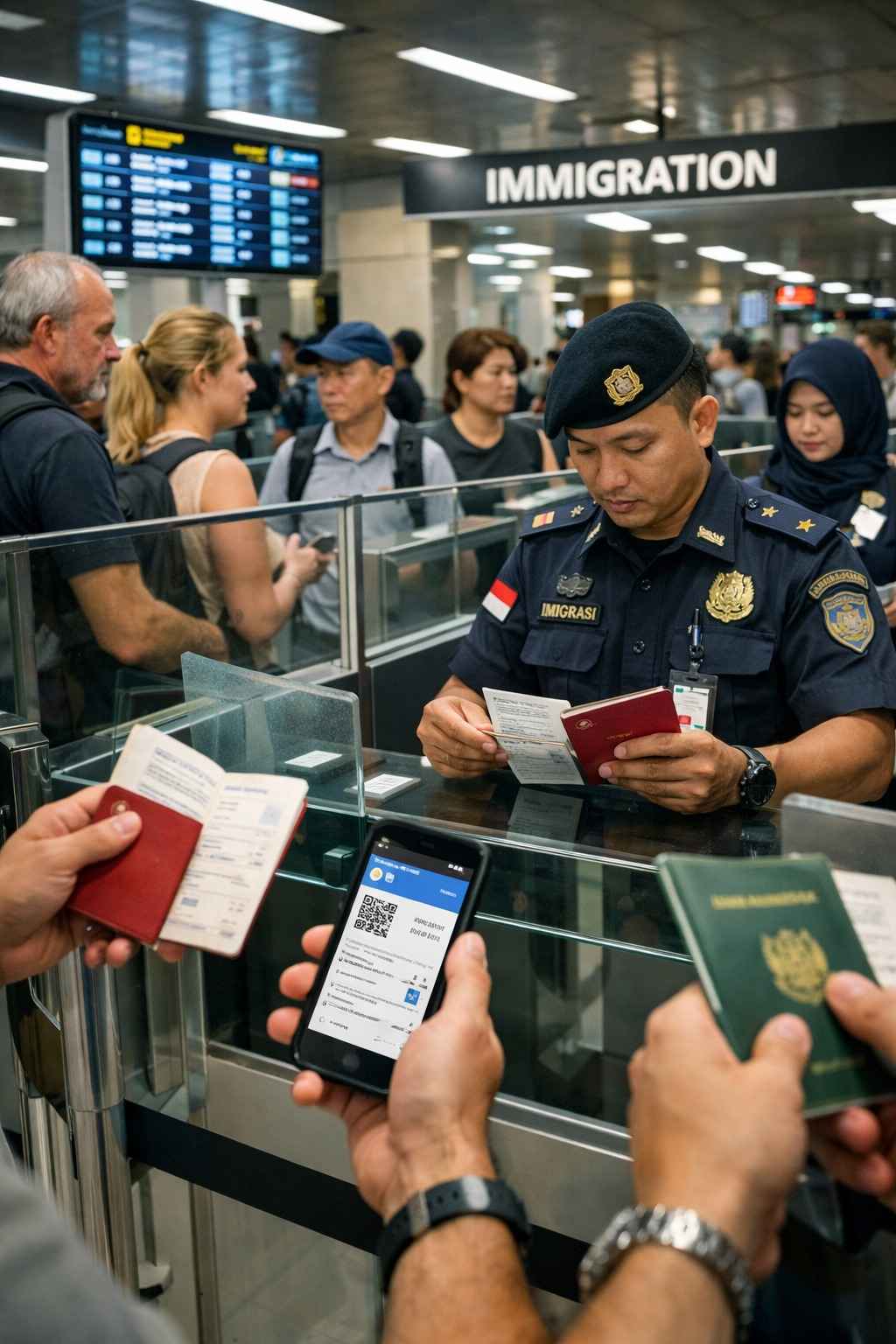
Unlike visa-on-arrival programs that collect fees at immigration counters, travel insurance verification requires infrastructure Indonesia may not yet possess. Will tourists need to upload proof during online visa applications? Show digital certificates at airport immigration? The Ministry of Tourism and Immigration Directorate have offered no concrete implementation timeline, leaving the policy suspended between announcement and enforcement.
The Economic Calculation Behind the Mandate
Strip away the safety rhetoric, and OJK’s motivation becomes clearer: market development. Indonesia’s insurance penetration rate hovers around 3.6% of GDP, well behind Malaysia (5.1%) and Singapore (8.9%). Travel insurance represents an accessible entry point, a product line that practically sells itself once mandated.
The numbers are compelling. If Indonesia captures even 12 million insured tourist arrivals annually at an average premium of $30 per trip, that’s $360 million flowing into the insurance sector. OJK projects the travel insurance market could grow 300-400% within five years of mandate implementation, reaching nearly 900 billion rupiah by 2028.
But economic development through regulatory fiat carries risks. Vietnam and Malaysia, Indonesia’s primary regional competitors for tourism dollars, have no such requirements. A Australian family choosing between Bali and Phuket now faces an additional $150-200 in mandatory insurance costs for Indonesia, enough to swing decisions toward Thailand, where coverage remains optional.
The mandate also assumes tourists will purchase insurance from Indonesian providers or internationally recognized companies with local partnerships. Yet nothing in current proposals prevents a gray market of non-compliant “certificate mills” selling worthless policies that satisfy paperwork requirements but provide no actual coverage. Thailand encountered exactly this problem before tightening enforcement mechanisms.
What This Means for Your Indonesia Trip Budget
The practical question every potential visitor asks: how much will this actually cost?
For a typical one-week Bali vacation, comprehensive travel insurance for tourism in Indonesia runs between $40-80 per person through major international providers. That covers medical emergencies up to $50,000, trip cancellation, lost luggage, and emergency evacuation. Extend the trip to three weeks, and costs rise to $90-150. Month-long backpackers might pay $120-200.
Adventure travelers face steeper premiums. Want to dive in Raja Ampat or trek through Sumatra’s jungles? Policies with adventure sports riders add 30-60% to base rates. A two-week trip including scuba diving could require $150-180 in coverage per person, suddenly a significant line item for budget-conscious travelers.
The enforcement mechanism matters enormously here. If Indonesia requires proof at visa application, tourists must purchase coverage weeks or months before departure, eating cancellation costs if plans change. If verification happens at airport arrival, last-minute digital purchases could theoretically suffice, though with obvious risks if technical problems arise.
Indonesia hasn’t clarified minimum coverage amounts, another critical gap. Thailand required $50,000 in medical coverage under their system. The EU Schengen visa demands €30,000 (roughly $33,000). If Indonesia sets a $100,000 threshold, not unreasonable given medical evacuation costs from remote islands, premiums could double the estimates above.
The demographic impact skews heavily against budget travelers. A luxury couple spending $8,000 on a Bali resort stay barely notices an extra $150 in insurance. A backpacker on a $30/day budget sees insurance consume nearly a week’s spending. Youth hostels and local warungs across Indonesia built entire businesses on low-budget, long-stay travelers. Mandatory insurance obligations risk hollowing out that market segment.
Is Travel Insurance Mandatory for Indonesia Yet? Implementation Uncertainties
Here’s the confusing reality: as of late 2025, the answer is “not yet, but maybe soon.”
OJK floated the proposal in early 2024 with initial implementation suggested for 2025. That deadline passed without enforcement. Ministry of Tourism officials now suggest a 2026 rollout, but no formal regulations have been published. The policy exists in a bureaucratic limbo, widely discussed, tentatively planned, but not legally binding.
This uncertainty paralyzes planning. Travel insurance providers can’t design Indonesia-specific products without knowing coverage minimums. Tourism businesses can’t advise clients whether to purchase policies. Government officials can’t build verification systems without finalized requirements.
The delay likely reflects genuine implementation challenges. Indonesia processes tourist arrivals through dozens of international airports, hundreds of smaller airfields, and countless sea ports. Creating a unified verification system across that infrastructure is genuinely complex. Add language barriers, varying insurance certificate formats from different countries, and fraud prevention concerns, the operational puzzle is substantial.
Thailand’s experience offers a cautionary tale. Their insurance requirement launched with significant confusion, website crashes, and enforcement inconsistencies. Some airports checked certificates rigorously; others waved tourists through. The policy worked only after months of adjustment and significant investment in digital infrastructure.
Indonesia may be wisely taking more time to prepare, or simply struggling with bureaucratic coordination between OJK, Tourism Ministry, Immigration, and provincial authorities. The outcome matters less than the limbo itself, which creates planning uncertainty for an industry that depends on advance bookings.
The Innovation Opportunity: And Its Limits
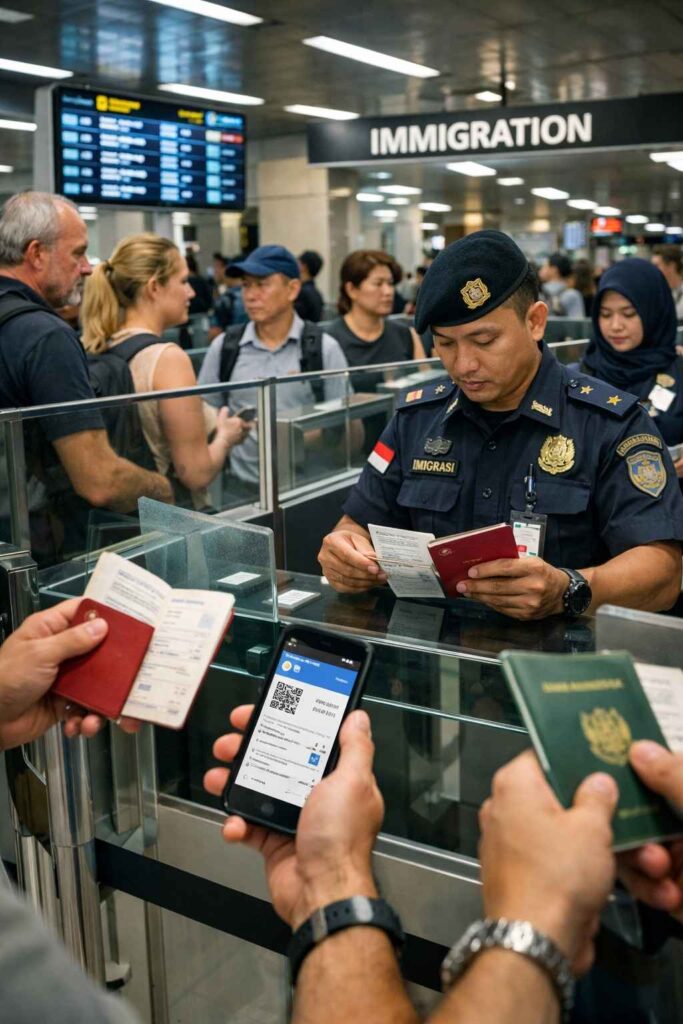
OJK emphasizes that mandatory coverage will drive insurance innovation. They envision digital-native products where tourists select coverage by activity, purchase policies instantly via smartphone apps, and file claims through automated systems without visiting physical offices.
The potential is real. Current travel insurance for Indonesia operates like most insurance: complex terms, manual underwriting for anything beyond basic coverage, opaque pricing, and claims processes requiring extensive documentation. A tourist whose luggage disappears in Jakarta might wait weeks for reimbursement, navigating claims forms in a foreign bureaucracy.
Technology could transform that experience. Imagine purchasing a micro-insurance policy specifically for your three-day Komodo Islands tour—coverage starts when you board the boat, ends when you return, costs exactly what you need and nothing more. Your phone GPS confirms location, blockchain records proof of coverage, and claims trigger automatically if your flight home is cancelled.
Some insurtech startups in Southeast Asia already offer pieces of this vision. Indonesian companies could theoretically leapfrog established players by building mobile-first products without legacy system constraints.
But innovation requires competition, and mandatory insurance mandates historically reduce it. Why innovate on price or features when customers have no choice but to buy your product? Thailand’s insurance market showed limited innovation despite mandatory coverage, most tourists still purchased traditional policies with excess coverage they didn’t need because those were easiest to verify at immigration.
Consumer trust presents another barrier. Would Australian or Japanese tourists trust an unknown Indonesian insurance app with their medical emergencies, or default to established brands like Allianz and World Nomads? Building that trust takes years, particularly for products people hope never to use.
The best travel insurance for tourism in Indonesia may ultimately look like existing international products with added Indonesia-specific features, local language support, partnerships with Indonesian hospitals, specialized coverage for volcanic or tsunami risks unique to the archipelago. Useful improvements, but hardly revolutionary innovation.
What Smart Travelers Should Do Now

Even without formal enforcement, the mandate’s direction seems clear. Indonesia will likely implement some form of mandatory travel insurance within the next 12-24 months. Tourists planning trips should adapt now rather than scramble later.
First, purchase comprehensive coverage regardless of requirements. Indonesia’s healthcare infrastructure varies dramatically between major cities and remote islands. Medical evacuation from Raja Ampat or Flores to adequate facilities in Jakarta or Bali can cost $20,000-50,000. Trip cancellation coverage protects deposits on flights and hotels. The mandate simply makes wise practice legally required.
Second, verify coverage geography. Many travel insurance policies include Indonesia, but confirm your specific policy explicitly lists it and covers planned activities. Scuba diving, volcano treks, and surfing may require sports riders that cost extra.
Third, save digital proof. Even before formal requirements, keep insurance certificates, policy numbers, and emergency contact information accessible on your phone. If verification systems launch suddenly, you’re prepared. Apps like TripIt or specialized insurance apps keep these documents organized.
Fourth, budget appropriately. Add $50-100 per person per week to trip cost estimates when planning Indonesia vacations. Better to overestimate and enjoy surplus spending money than face sticker shock at visa application.
Finally, monitor official sources. OJK and Indonesia’s Ministry of Tourism will eventually publish formal requirements on government websites. Follow those announcements rather than relying on travel forums or outdated blog posts. Requirements could include specific minimum coverage amounts, approved provider lists, or standardized certificate formats.
Travel agents specializing in Indonesia should already be tracking these developments and incorporating insurance into standard package pricing. If booking through agents, confirm they’re aware of upcoming requirements and factoring them into quotes.
The Bigger Picture: Tourism’s Insurance Future
Indonesia’s proposal reflects a broader global trend toward regulated tourist preparedness. The COVID-19 pandemic accelerated this shift, countries that previously welcomed any visitor now calculate fiscal risks of uninsured travelers requiring emergency services.
Japan is considering similar mandates. Popular destinations in Europe already require proof of coverage for visa applications. Travel insurance, once a personal choice, is becoming as standard as passports and visas.
This shift protects both tourists and destinations, but it also raises philosophical questions about tourism accessibility. Does mandatory insurance create a tiered system where wealthier travelers enjoy seamless entry while budget backpackers face additional barriers? Does it protect vulnerable travelers or simply protect governments from bearing their costs?
Indonesia’s massive archipelago depends heavily on tourism income — roughly 6% of GDP pre-pandemic. Policies that reduce visitor numbers or alter tourist demographics carry economic consequences. If mandatory insurance obligation in Indonesia pushes budget travelers toward Vietnam or the Philippines, coastal villages and small guesthouses suffer while luxury resorts remain unaffected.
The mandate might also encourage more responsible tourism. Travelers with insurance behave differently, they seek proper medical care rather than “toughing out” injuries, they report accidents to authorities, they’re less likely to overstay visas because they can’t afford to leave. Insurance correlates with lower-risk tourist profiles.
Regional competition may ultimately force policy adjustments. If Indonesia’s mandate significantly hurts arrival numbers compared to neighbors, authorities might relax requirements or reduce minimum coverage amounts to stay competitive. Tourism markets are brutally efficient, even well-intentioned policies face pushback when tourists vote with their wallets.
The Unresolved Questions
Several critical unknowns will determine this policy’s real-world impact:
Coverage minimums remain undefined. A $25,000 requirement differs dramatically from $100,000 in terms of premium costs and market impact.
Approved provider lists haven’t been published. Will Indonesia accept any legitimate international travel insurance, or restrict coverage to domestic companies and their partners? That decision has massive implications for market competition and pricing.
Enforcement mechanisms are theoretical. Physical certificate checks at airports? Digital verification during online visa applications? Spot checks at hotels? Each approach carries different costs, effectiveness, and traveler inconvenience.
Exemption categories remain unclear. Will Indonesian diaspora visiting family be exempt? What about business travelers whose companies self-insure? Children covered under parental policies? Transit passengers not leaving airports? These details matter enormously for implementation complexity.
Long-term pricing effects are unpredictable. Mandatory markets can depress innovation and inflate prices, or they can enable economies of scale and bring down costs. Indonesia’s insurance market could go either direction.
Until OJK and relevant ministries publish detailed regulations, the travel insurance requirement for Indonesia exists more as concept than reality, a policy direction without teeth, widely discussed but practically unenforceable.
The Bottom Line

Indonesia’s push toward mandatory travel insurance for tourism reflects valid concerns about tourist welfare and legitimate economic development goals. The policy will almost certainly be implemented in some form within the next two years.
For international travelers, this means adjusting trip budgets, purchasing comprehensive coverage, and monitoring official announcements. The costs are manageable for most, an extra $50-150 per person that provides genuine protection in a country where medical evacuations from remote areas can cost tens of thousands.
For Indonesia, the challenge is implementing requirements without damaging tourism competitiveness or creating verification nightmares at entry points. Done well, the mandate protects both visitors and local healthcare systems while growing a underdeveloped insurance sector. Done poorly, it creates bureaucratic hassles that push tourists toward Indonesia’s neighbors.
The coming months will reveal which outcome prevails. What remains certain is that the era of flying to Bali with just a passport and return ticket is ending. How much will travel insurance for Indonesia cost? Probably less than your first day’s hotel, but unlike the hotel, it’s coverage you’ll hope never to use.
Last Updated: December 2025 | Policy Status: Proposed but not yet legally enforced