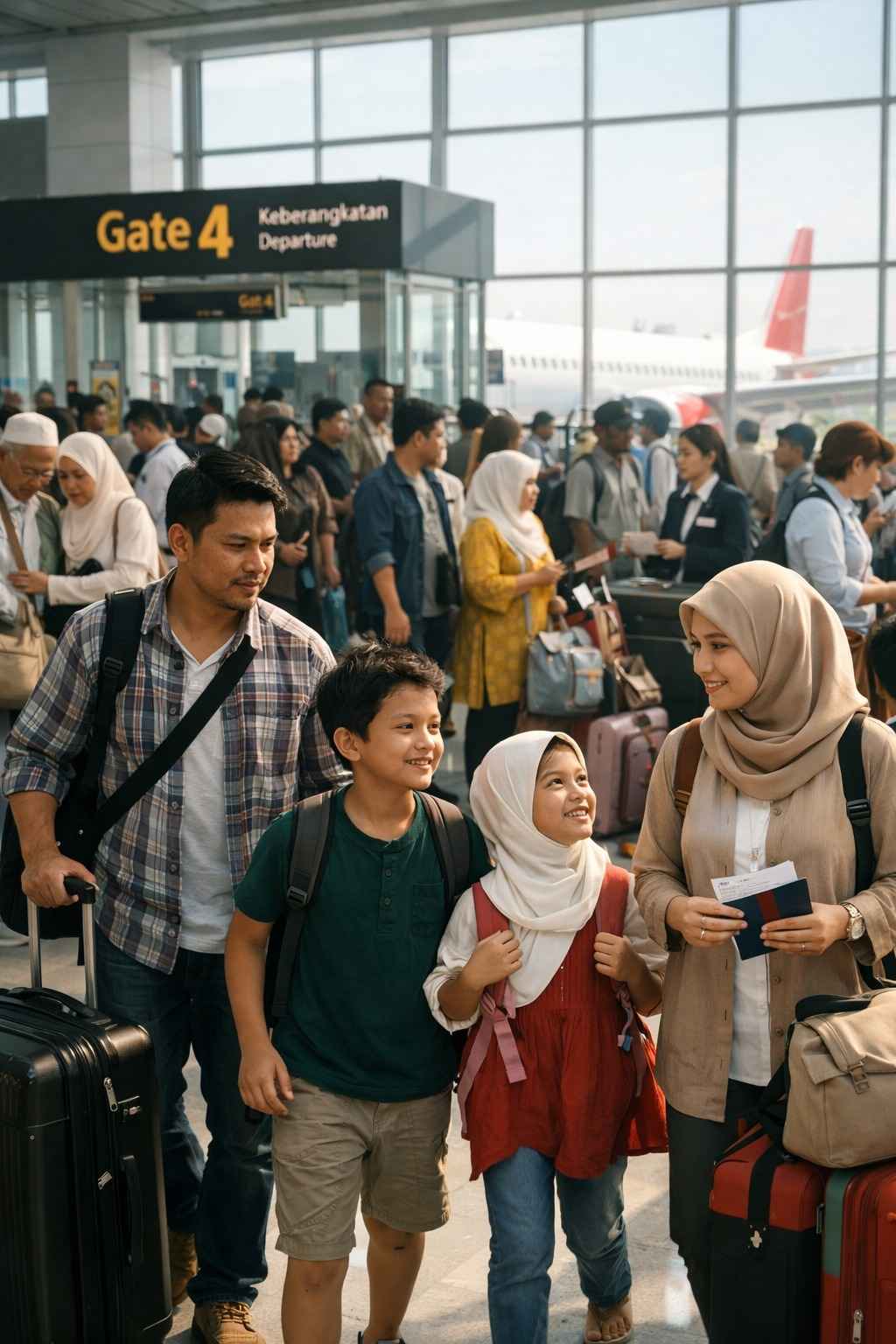
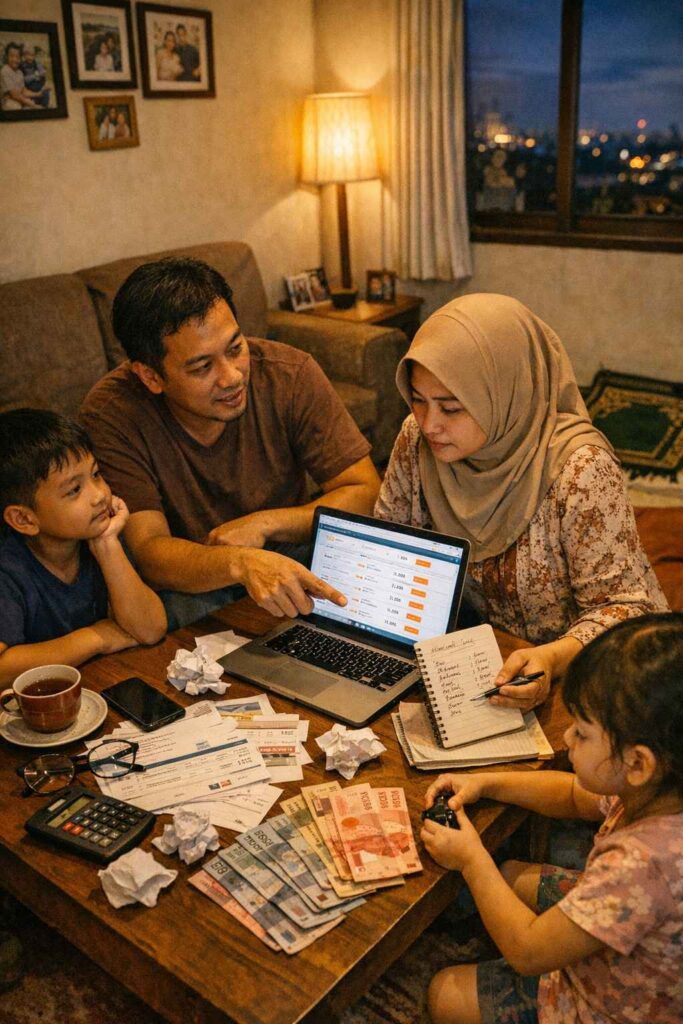
The government will subsidize 6.2 million airline tickets this Eid season, a number that sounds generous until you realize it represents barely 15% of the estimated 42 million people expected to travel during the mudik homecoming period. For Transportation Minister Dudy Purwagandhi, announcing an 820 billion rupiah spending package two months before Lebaran probably feels like good politics. For economists trying to calculate whether taxpayers get adequate returns on holiday travel subsidies, the math gets considerably more complicated.
Consider what 820 billion rupiah actually buys. That’s roughly $54 million at current exchange rates, distributed across routes the ministry has deemed economically strategic or underserved. A family of four flying from Jakarta to Makassar during the March 28-April 8 subsidy window could save between 1.8 and 2.4 million rupiah, depending on the route’s designated discount tier. That’s meaningful money, approximately equivalent to one month of minimum wage in many Indonesian provinces. But it’s also a fraction of what middle-class families spend on the entire mudik experience, transportation, gifts, special foods, new clothes, which can easily exceed 10 million rupiah for a week-long homecoming.
The bigger question isn’t whether subsidies help individual families. Obviously, cheaper tickets mean more disposable income for other spending. The question is whether this particular intervention, at this particular scale, generates sufficient economic velocity to justify pulling 820 billion rupiah from other potential uses.
The GDP Multiplier Nobody Wants to Calculate
Tourism economists use a metric called the multiplier effect to assess how tourist spending ripples through an economy. When a family spends money at a destination, that money recirculates through hotels, restaurants, transportation services, and eventually reaches taxi drivers, food vendors, and souvenir sellers. In mature tourism markets like Bali, studies suggest every tourism dollar generates between $1.80 and $2.20 in total economic activity.
But Eid mudik doesn’t follow typical tourism patterns. Most travelers stay with relatives rather than booking hotels. Meals happen in family homes, not restaurants. The economic footprint concentrates heavily in transportation and retail goods, gifts and new clothes, rather than distributed hospitality spending. This fundamentally changes the multiplier calculation.
Dr. Heru Sutomo from Universitas Indonesia’s economics faculty, whose research on domestic tourism appears frequently in regional policy discussions, has argued that mudik generates multiplier effects closer to 1.3 or 1.4, substantially lower than leisure tourism. If accurate, that means 820 billion rupiah in subsidies might generate between 1.07 trillion and 1.15 trillion rupiah in total economic activity. Respectable, but hardly transformative for an economy that generated approximately 21,000 trillion rupiah in GDP during 2024.
The government’s own projections suggest tourism contributed roughly 4.1% to national GDP in 2024, recovering from pandemic lows but still below the 5.5% recorded in 2019. What those aggregate figures obscure is the extreme geographic concentration of tourism value. Bali, Jakarta, and Yogyakarta capture disproportionate shares, while dozens of regional airports operate at 30-40% capacity even during peak seasons.
Route Selection and the Airlines That Benefit
The Ministry of Transportation hasn’t published the complete list of subsidized routes, a transparency gap that makes independent analysis difficult. What officials have disclosed is that subsidies target routes to eastern Indonesia and underserved regional destinations, with explicit mentions of cities like Makassar, Manado, and Balikpapan. Presumably, this means Jakarta-Bali and other highly profitable trunk routes won’t receive subsidies, though confirmation remains scarce.
This matters because route selection determines which airlines benefit most. Garuda Indonesia and its subsidiary Citilink operate extensively in eastern Indonesia, regions where load factors, the percentage of seats filled, often run 15-20 percentage points below western routes. Subsidies that fill those empty seats provide pure margin expansion. The airline collects government money for seats that would have flown empty anyway, or at deeply discounted distress fares.
Budget carriers like AirAsia Indonesia and Lion Air group airlines, which dominate high-traffic routes, likely gain less unless subsidies extend to secondary cities where they’ve recently added capacity. Lion Air has aggressively expanded to cities like Palembang, Pekanbaru, and Pontianak, betting that Indonesia’s emerging middle class will increasingly choose flights over grueling 12-hour bus journeys. Subsidies that accelerate this behavioral shift could reshape domestic aviation economics for years.
But here’s the uncomfortable reality that airline executives won’t articulate publicly: subsidies can become addictive. Once consumers experience a 300,000 rupiah Jakarta-Makassar ticket, convincing them to pay 750,000 rupiah in June becomes harder. Airlines risk training passengers to wait for government-subsidized windows, dampening demand during non-subsidy periods. Malaysia experimented with year-round domestic tourism vouchers between 2021-2023, and budget carriers reported that full-price bookings declined measurably in months immediately following voucher expiration.
Infrastructure Readiness and the Bottleneck Problem
The government can subsidize 6.2 million tickets, but can Indonesia’s aviation infrastructure actually handle that concentrated surge? Soekarno-Hatta International Airport, which processed approximately 66 million passengers in 2024, operates near capacity during peak periods. Adding even 500,000 subsidized passengers during the already-congested Eid window risks cascading delays.
Regional airports face different constraints. Many destinations the ministry wants to promote, Labuan Bajo, Wakatobi, Raja Ampat, have airports designed for 200-300 passengers per flight wave. Sudden demand spikes create ground handling bottlenecks: insufficient check-in counters, limited baggage systems, inadequate shuttle bus capacity between terminal and aircraft. These aren’t problems money solves quickly. Infrastructure scales slowly while subsidies create demand shocks instantly.
Then there’s the question of what happens when subsidized passengers arrive. Makassar’s hotel capacity has grown substantially, approximately 12,000 rooms across all categories by late 2024. But if most mudik travelers stay with family, that capacity remains underutilized. Meanwhile, cities like Manado, which the ministry actively promotes, face acute shortages of mid-range accommodation. Three-star hotels that would appeal to middle-class families traveling with children remain scarce outside provincial capitals.
The second-order effects deserve scrutiny too. Increased flight frequency to smaller cities requires more pilots, cabin crew, and ground staff. Indonesia’s aviation sector already faces persistent labor shortages, particularly for qualified technicians and pilots. Airlines have resorted to recruiting expats and accelerating cadet training programs, raising questions about whether rapid capacity expansion compromises safety margins.
The Equity Question: Who Actually Gets Subsidized?
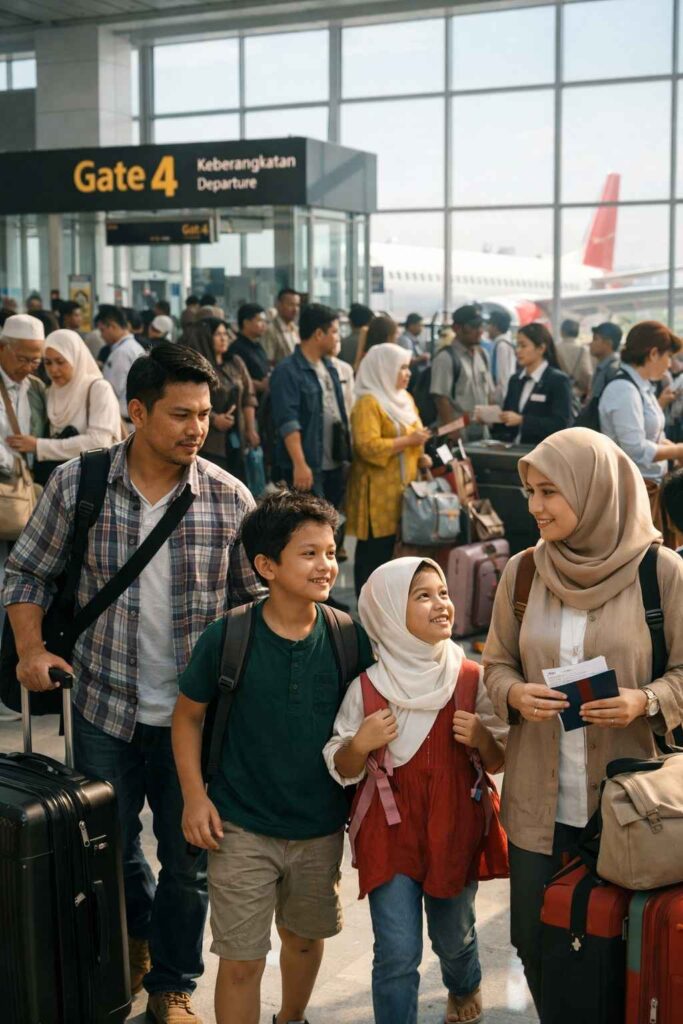
Government officials frame airline subsidies as democratizing travel, making homecoming accessible for families who otherwise couldn’t afford tickets. The reality is more nuanced. Even with subsidies, flying remains beyond reach for Indonesia’s lower-income households.
A subsidized ticket might cost 300,000 rupiah instead of 550,000 rupiah. For an urban family earning 8-10 million rupiah monthly, that’s a meaningful but not transformative savings. For a rural family earning 3.5 million rupiah monthly, four tickets at 1.2 million rupiah total, even subsidized, still represents a devastating expense when combined with baggage fees, airport transportation, and foregone work days.
The actual beneficiaries are Indonesia’s expanding middle class: civil servants, corporate employees, small business owners who were already predisposed to fly but might have chosen budget carriers over full-service airlines, or might have traveled during off-peak periods to save money. Subsidies don’t create new travelers so much as they redistribute when and how existing travelers book.
This isn’t necessarily bad policy. Middle-class consumption drives economic growth, and anything that frees up household budgets for other spending generates positive externalities. But calling it inclusive transportation policy requires overlooking whom the subsidies actually reach.
A more progressive approach might involve means-tested vouchers, larger subsidies for lower-income families, smaller ones for wealthier households. But means-testing adds administrative complexity that Indonesia’s bureaucratic infrastructure struggles to manage. The government has chosen simplicity over precision, a trade-off with distributional consequences officials rarely acknowledge.
Environmental Costs Nobody Wants to Discuss
Aviation generates approximately 2.5% of global carbon emissions, a figure that sounds modest until you realize how few people actually fly regularly. In Indonesia, probably fewer than 15% of the population has ever boarded an airplane. Government subsidies that encourage 6.2 million additional flights, or flights that wouldn’t have occurred otherwise, carry meaningful environmental costs.
A Jakarta-Makassar round trip generates roughly 0.4-0.5 metric tons of CO2 per passenger. Multiply that by 6.2 million subsidized tickets, and you’re adding approximately 2.5-3 million metric tons of emissions during a two-week period. That’s equivalent to taking about 550,000 cars off the road for a full year, except in reverse.
Indonesia committed to reducing emissions 29% by 2030 under its Nationally Determined Contributions to the Paris Agreement, with conditional targets reaching 41% if international support materializes. Aviation subsidies that stimulate demand growth run counter to those commitments, a contradiction the Ministry of Transportation and the Ministry of Environment rarely coordinate on.
Alternative approaches exist. The government could subsidize intercity rail or improved bus services, options with far lower carbon footprints. But Indonesia’s rail network remains limited, essentially confined to Java and parts of Sumatra. Bus services, while extensive, suffer from safety concerns and journey times that make them unappealing for families traveling with children or elderly relatives.
This creates a policy trap: aviation offers the only practical option for many routes, subsidizing it conflicts with climate goals, and alternatives don’t exist at scale. Threading that needle requires long-term infrastructure investment in sustainable transportation modes, the kind of politically unsexy, decade-long projects that don’t generate ministerial headlines two months before Eid.
What Previous Subsidy Programs Reveal
This isn’t Indonesia’s first experiment with travel subsidies. The government implemented similar programs during Eid 2023 and 2024, though at smaller scales and with less publicity. Outcome data remains frustratingly scarce, a transparency gap that should trouble anyone trying to assess program effectiveness.
What limited information exists suggests mixed results. Airlines reported load factor increases of 8-12 percentage points on subsidized routes during subsidy windows, indicating genuine demand stimulation. However, post-subsidy periods showed corresponding declines, suggesting some demand shifting rather than pure creation. Regional tourism boards in cities like Makassar and Manado reported modest visitor increases, though parsing subsidy effects from broader post-pandemic recovery trends proves difficult.
The Malaysian comparison offers instructive contrasts. Malaysia’s domestic tourism voucher program, which ran from 2021-2023 and distributed approximately 3.6 billion ringgit in total subsidies, generated measurable tourism activity increases, particularly to states like Sabah and Sarawak. But post-program analysis revealed that roughly 40% of voucher recipients would have traveled anyway, meaning subsidies simply reduced their costs without changing behavior. The effective cost per incremental tourist reached nearly 2,000 ringgit, substantially higher than initial projections.
Thailand’s approach emphasizes infrastructure over subsidies. Rather than discounting tickets, the government has invested heavily in airport upgrades and route development support, co-marketing agreements where tourism authorities partner with airlines to promote secondary destinations. This generates more sustainable demand growth, though it requires patience and produces fewer immediate political dividends.
The Fiscal Sustainability Question
Indonesia’s 2026 state budget allocates approximately 3,600 trillion rupiah across all functions. Transportation Ministry spending represents roughly 2.3% of that total. Within transportation allocations, 820 billion rupiah for airline subsidies constitutes about 1% of the ministry’s budget, not nothing, but not catastrophic either.
The concern isn’t this year’s spending in isolation. It’s whether subsidies become entrenched expectations. If passengers grow accustomed to discounted Eid travel, political pressure to continue or expand programs intensifies. Malaysia discovered this when attempting to phase out tourism vouchers in 2023. Public backlash forced the government to extend programs another year despite fiscal pressures.
Indonesia’s fiscal position has strengthened post-pandemic, but pressures remain. Debt-to-GDP ratios, while manageable, tick upward. Infrastructure needs dwarf available resources. Education and healthcare chronically require more funding. Every rupiah spent subsidizing middle-class airline tickets is a rupiah unavailable for rural schools or public health clinics.
Cost-benefit analysis requires comparing this 820 billion rupiah expenditure against alternative uses. Would investing that same amount in vocational training programs generate more economic value? What about small business lending facilities or agricultural extension services? These questions lack satisfying answers because rigorous comparative analysis rarely happens in policy-making processes driven by political calendars and ministerial ambitions.
What Success Actually Looks Like
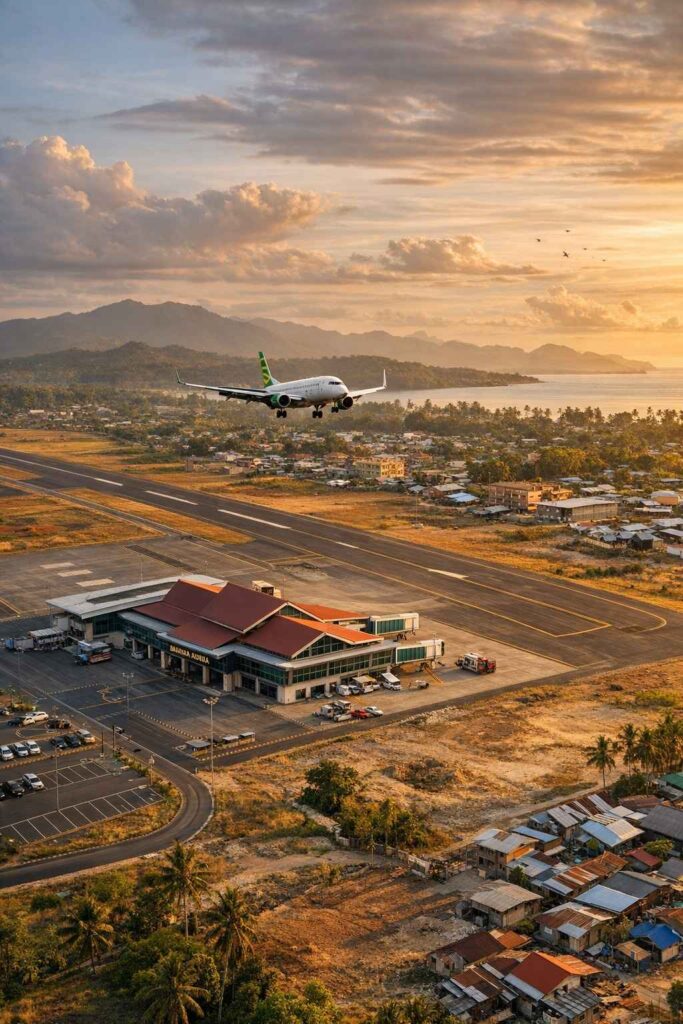
If airline subsidies succeed, what does that success look like tangibly? Presumably, more families reconnect during Eid, strengthening social bonds that matter in Indonesian culture. Regional economies receive modest activity boosts, hotels, restaurants, and transportation services in secondary cities see revenue increases. Airlines improve load factors, potentially justifying continued service to underserved routes.
But success might also look like shifting public expectations about transportation access, building political pressure for sustained government intervention in markets that should eventually operate independently. It might look like environmental costs that compound over years, contributing to climate vulnerabilities that hit Indonesia’s coastal and agricultural communities hardest. It might look like fiscal commitments that constrain future policy flexibility when unexpected challenges emerge.
The honest answer is that nobody knows yet because the government hasn’t established clear success metrics or committed to transparent outcome reporting. Without baseline data on route performance, passenger demographics, and economic impact, assessing program effectiveness becomes impossible. That might be intentional, policies that resist measurement also resist accountability.
For Indonesia’s 6.2 million subsidized travelers this Eid, the program succeeds if it enables homecoming that might otherwise not happen. For taxpayers funding the program, success requires demonstrating economic returns that justify the expenditure. For policymakers, success means generating positive headlines without creating unsustainable expectations. These definitions don’t necessarily align, and that tension reveals the fundamental complexity of using public resources to shape private consumption decisions.
The flights will take off regardless. Whether they represent smart economic policy or expensive political theater depends on questions the government seems reluctant to answer comprehensively.