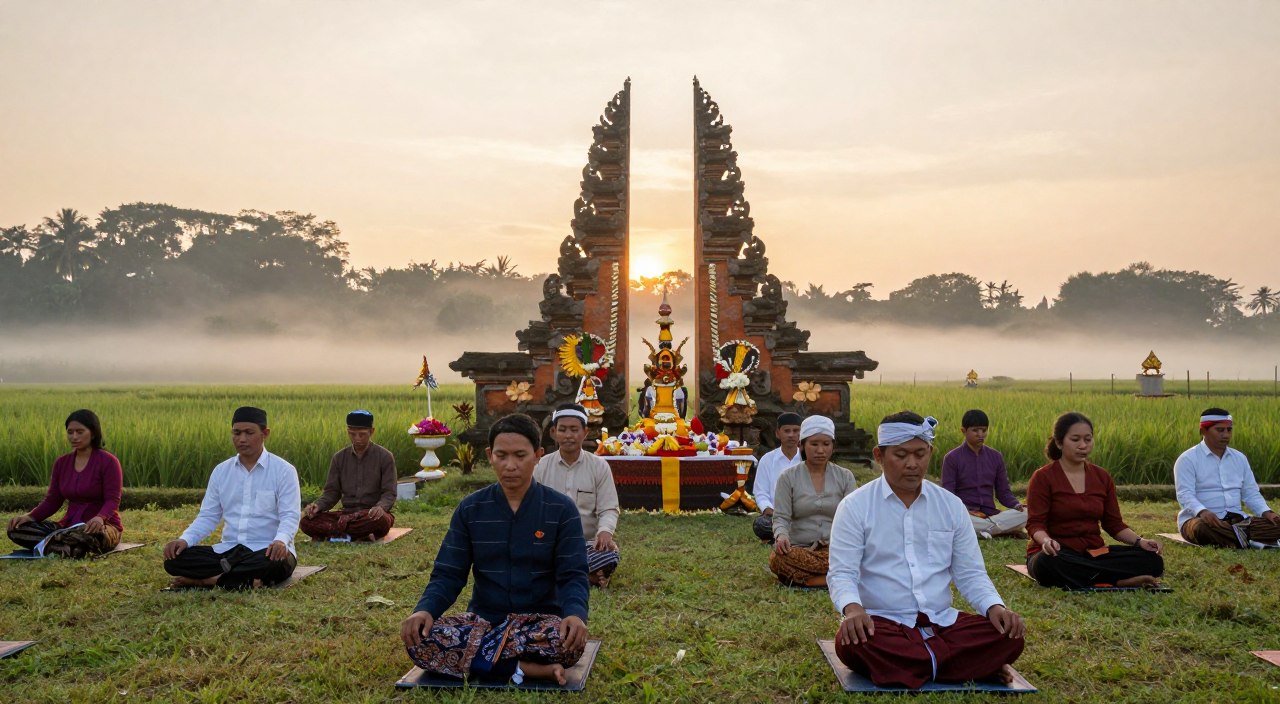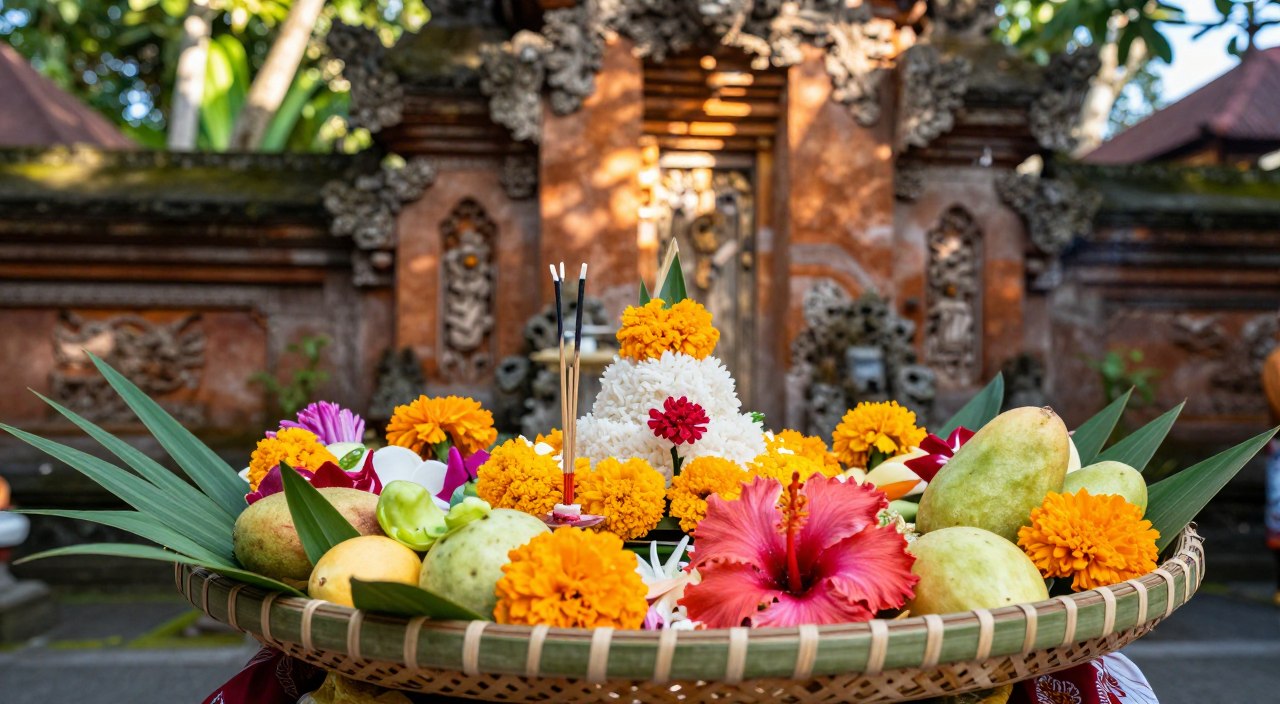
Bali is a unique anomaly in Indonesia where approximately 87% of the population practices Balinese Hinduism, a stark contrast to the rest of this majority-Muslim country. The daily practice of offerings forms the spiritual heartbeat of the island.
Here, religion is not just a part of life; it is the framework around which everything else is built. This distinct spiritual culture blends Hinduism with native animist traditions.
A verse from the ancient Bhagavad-Gita states: “Whosoever offers to me with devotion a leaf, a flower, a fruit, or water, that offering of love, of the pure heart I accept (ix:26).” This scriptural ideal remains vividly alive today.
You see these beautiful arrangements everywhere. They appear on streets, in temples, and at homes. For the local people, this act is a profound connection to the divine, their community, and the natural world.
Key Takeaways
- Bali stands out in Indonesia, with about 87% of its people following a unique form of Hinduism.
- Daily devotional acts are the central framework for the island’s culture and daily rhythm.
- This spiritual tradition incorporates ancient Hindu scripture with local animist beliefs.
- Small, handmade creations are visible in almost every public and private space.
- The practice is rooted in a sacred text that values simple, heartfelt gifts from nature.
- These acts create a continuous link between the individual, the community, and the environment.
Introduction to Balinese Offerings and Sacred Rituals
The rhythm of life in Bali is punctuated by small, handmade creations placed with intention throughout the day. These acts form a continuous dialogue between the people and the unseen world.
Overview of Daily Devotional Practices
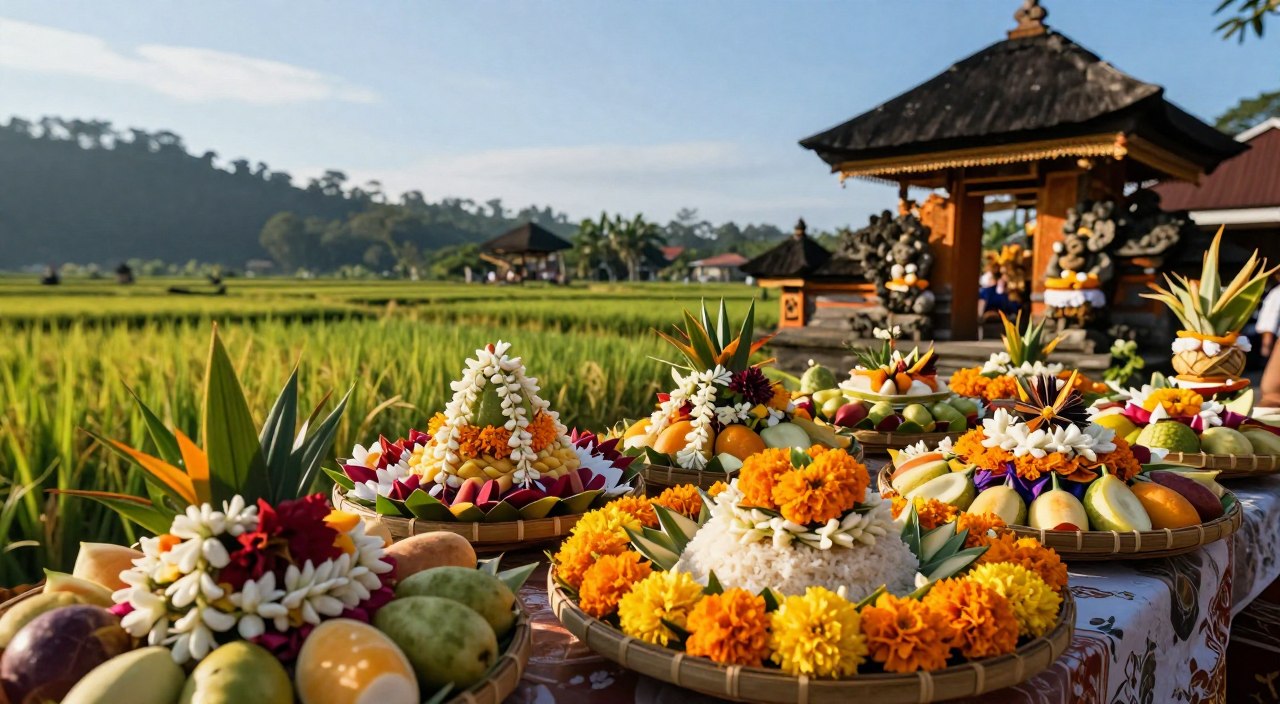
This practice happens multiple times each morning and afternoon. Families prepare beautiful trays called canang sari. They are woven from palm leaves and filled with fresh flowers, rice, and incense.
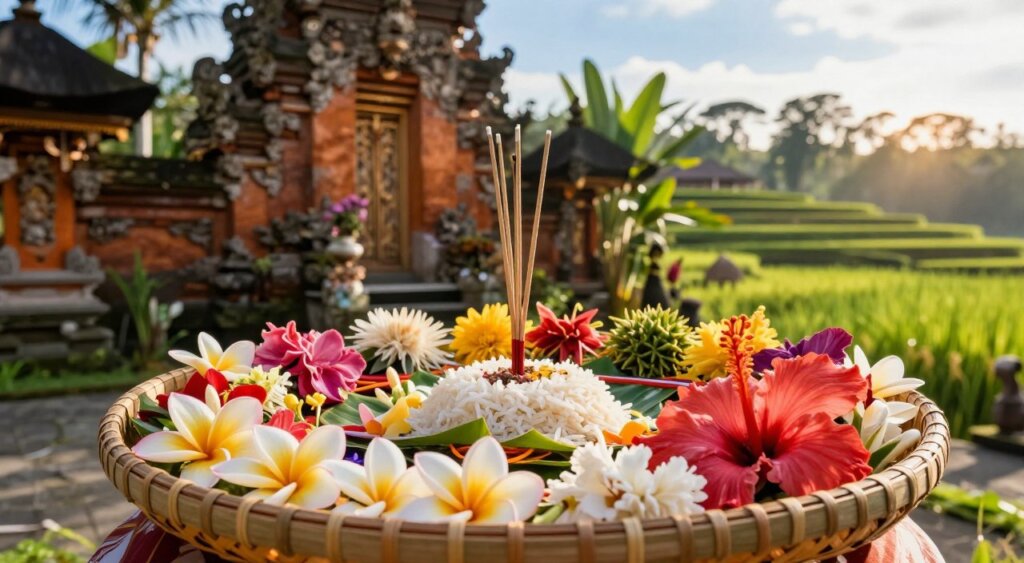
You find these items on doorsteps, shop fronts, and temple stairs. This repetition is a core act of devotion. It is similar to saying prayers in other faiths.
| Component | Symbolic Purpose | Common Placement |
|---|---|---|
| Flowers | Beauty and sincerity | Center of the tray |
| Rice | Life and sustenance | Base layer |
| Incense | Carries prayers upward | Lit and placed on top |
| Sweet Items | Gratitude and offering | Small side portions |
Key Cultural Beliefs Behind the Offerings
A central belief holds that all things possess a spirit. This includes objects, tools, and natural features. The daily offerings show respect to these spirits.
This respect maintains balance and harmony in everyday life. It is a fundamental part of cultural identity. The act seeks protection and expresses thanks for blessings received.
Historical and Cultural Context of Balinese Rituals
Centuries ago, Bali became a sanctuary for Hindu culture during a period of great change across the Indonesian archipelago. Between the 13th and 16th centuries, as Islam spread through Java and Sumatra, Hindu and Buddhist nobles sought refuge on this island.
This influx created a unique cultural haven. The relative isolation and tight-knit community helped preserve ancient traditions.
Evolution of Balinese Hinduism
Over time, the imported beliefs blended with indigenous animistic forms. This created a syncretic religion distinct from Indian Hinduism.
It integrates worship of Hindu deities with reverence for the natural world and ancestral spirits. This fusion emphasizes maintaining balance between opposing forces.
| Aspect | Balinese Hinduism | Indian Hinduism |
|---|---|---|
| Primary Influence | Vedic texts + Animism | Vedic texts + Philosophical schools |
| Community Role | Central to social life | Often more individual or caste-based |
| Place of Worship | Village temples (Pura) | Home shrines & large temples |
| Spiritual Focus | Harmony with local spirits & ancestors | Moksha (liberation) |
Ancient Traditions and Their Modern Adaptations
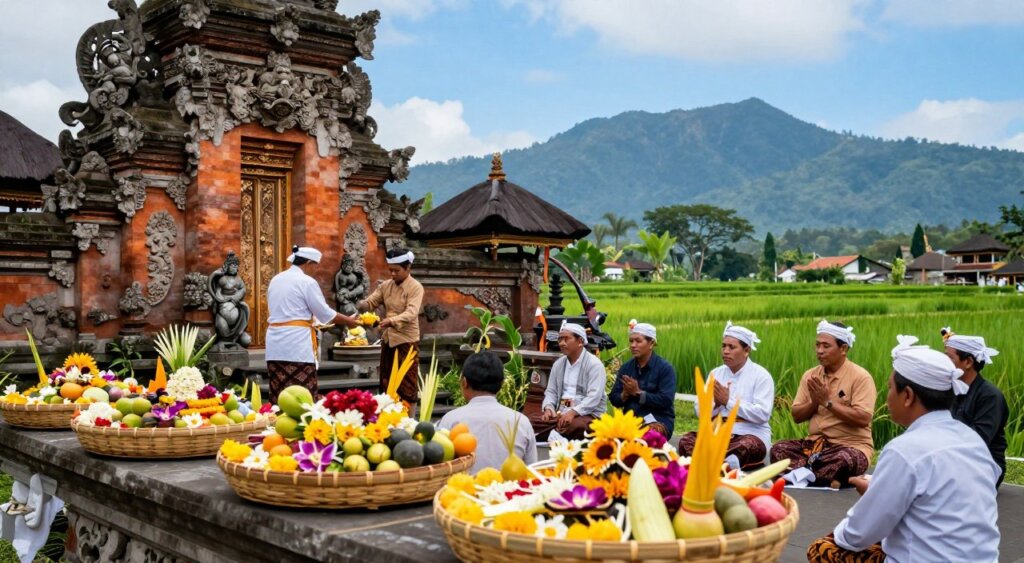
For local people, temples are the epicenters of daily existence. Every village has three main ones.
These are Pura Desa (communal affairs), Pura Dalem (the afterlife), and Pura Puseh (village founders).
Ancient practices remain vibrant through festivals like Galungan and Nyepi. These events demonstrate how old sacred customs adapt to contemporary life.
“Tradition is not the worship of ashes, but the preservation of fire.”
Components and Construction of Canang Sari Offerings
Every canang sari is a miniature universe, woven from palm leaves and filled with symbolic elements. This small square container holds a complete spiritual philosophy.
Its construction is a deliberate process of devotion. Each item placed inside carries specific meaning.
Materials, Flowers, and Sacred Elements
The base is a three-inch square woven from a fresh palm leaf. Common materials are pandan or coconut leaves.
Colored flowers are not random. Each hue represents a Hindu deity and points in a cardinal direction.
| Flower Color | Direction | Represents |
|---|---|---|
| White | East | Iswara (Shiva) |
| Red | South | Brahma |
| Yellow | West | Mahadeva |
| Blue/Green | North | Vishnu |
A jepun flower (frangipani) is dipped in holy water. This water is sprinkled to fuse the four elements.
Other ingredients include Betel Leaves, Lime, and Areca Nuts. Their colors—green, white, and red—symbolize the Hindu Trinity.
Inside every canang sari sits a sampian. This small triangular item is often a child’s first lesson in crafting.
The Step-by-Step Ritual Process
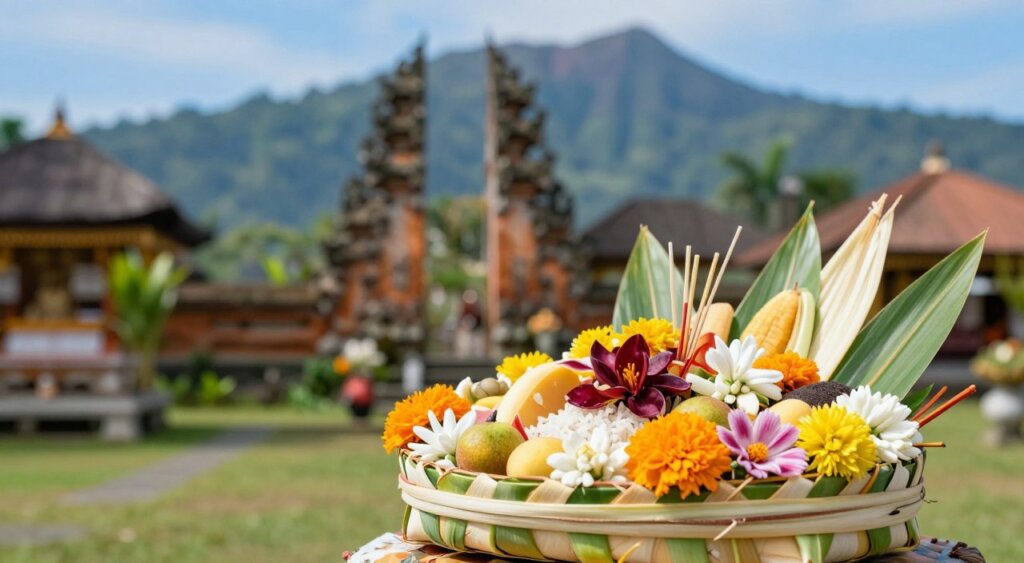
First, artisans weave the palm leaf base. Then, they add a base layer of uncooked rice for sustenance.
Next, flowers are carefully arranged by color and direction. The betel nut trio is placed with intention.
Finally, a stick of incense is lit and positioned on top. Its smoke carries the essence of the offering upward.
The completed offering is then placed in its designated spot. This daily act maintains spiritual harmony.
Balinese Offerings and Sacred Rituals in Daily Community Life
Before the sun rises over Bali, a quiet transformation sweeps across the island’s streets and doorsteps. Locals are already busy, sweeping up yesterday’s devotional items from around their homes and businesses. They wash the sidewalks and gutters with water, making every surface spotless.
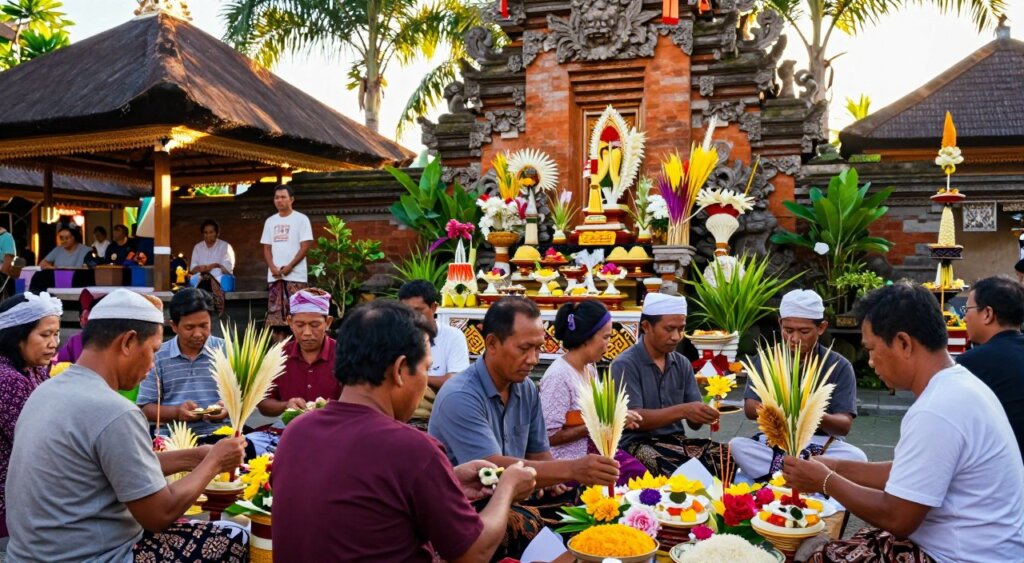
This preparation creates a clean slate for the day’s spiritual gifts. Fresh items are then positioned throughout the community.
Overview of Everyday Practices
You find these devotional creations everywhere. Some are simple, like a single frangipani flower on a step. Others are elaborate canang sari trays guarding a doorway.
Common placement spots include:
- The front of shops and restaurants
- Household shrines and family compounds
- Government offices and temple entrances
- Statues, sidewalks, and even individual steps
A typical offering stays in place for one full day and night. It is then removed and replaced with a new one the next morning. This cycle of renewal is a core part of the local rhythm.
Role of Women in Crafting Offerings
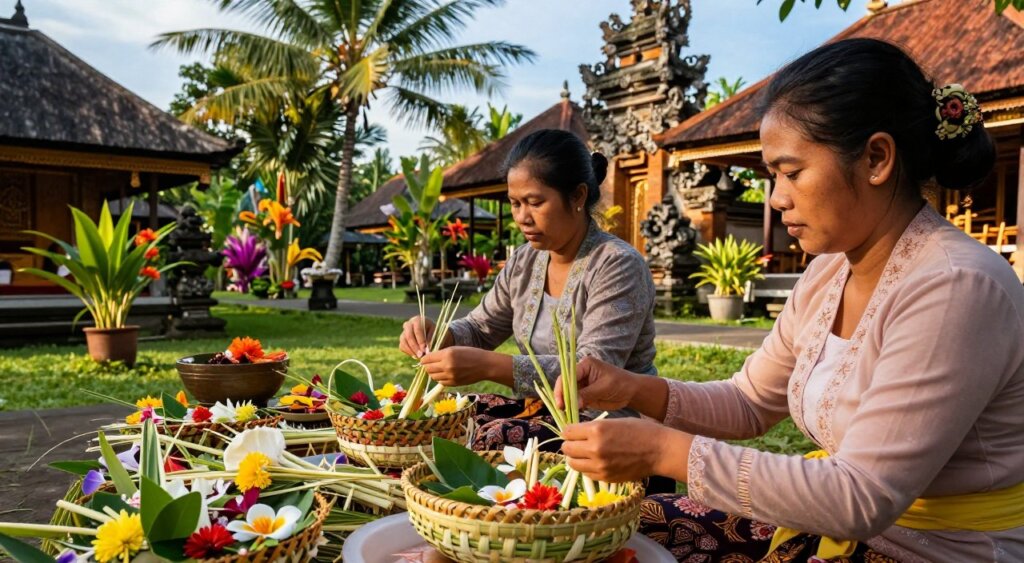
The creation of spiritual gifts is a domain almost exclusively managed by female hands. This responsibility defines a core aspect of their cultural identity.
Mastery of this art, known as mejejaitan, is an essential skill. Without it, a woman would struggle to find her proper place in society.
The Art of Mejejaitan and Skill Development
Every item must be as beautiful as possible. This beauty is meant to delight the divine and ensure acceptance.
The process is viewed as an act of self-sacrifice. Women invest their time, money, and creative energy into each piece.
They are directly investing a part of themselves. Young girls learn within the family, starting with simple designs.
| Learning Stage | Typical Item | Purpose |
|---|---|---|
| Beginner | Sampian (small triangle) | Decoration for home shrines |
| Intermediate | Canang Sari (small tray) | Daily devotional offering |
| Advanced | Banten Tegeh (towering stack) | Major temple ceremonies |
Women as Cultural Custodians of Tradition
Women pass down intricate knowledge through generations. This hands-on teaching happens in homes.
They dedicate large portions of their daily lives to this cycle of creation. This reflects their deep devotion.
A remarkable physical skill is also required. During ceremonies, they balance large stacks of fruit and food on their heads.
This duty as custodians ensures the tradition’s continuity. The pressure to create perfect items is significant, linking beauty to spiritual efficacy.
Symbolism, Etiquette, and Honoring the Deities
Color-coded flowers, grains of rice, and rising incense smoke each tell a part of a larger story about balance and respect. Every item in a canang sari holds specific meaning. Proper conduct around these devotional objects is essential for visitors.
Understanding Offering Etiquette and Do’s and Don’ts
A core principle seeks balance between opposing forces. Devotional items are made for positive gods (Bethara and Bethari) and negative ones (Butha and Kala). This way maintains harmony.
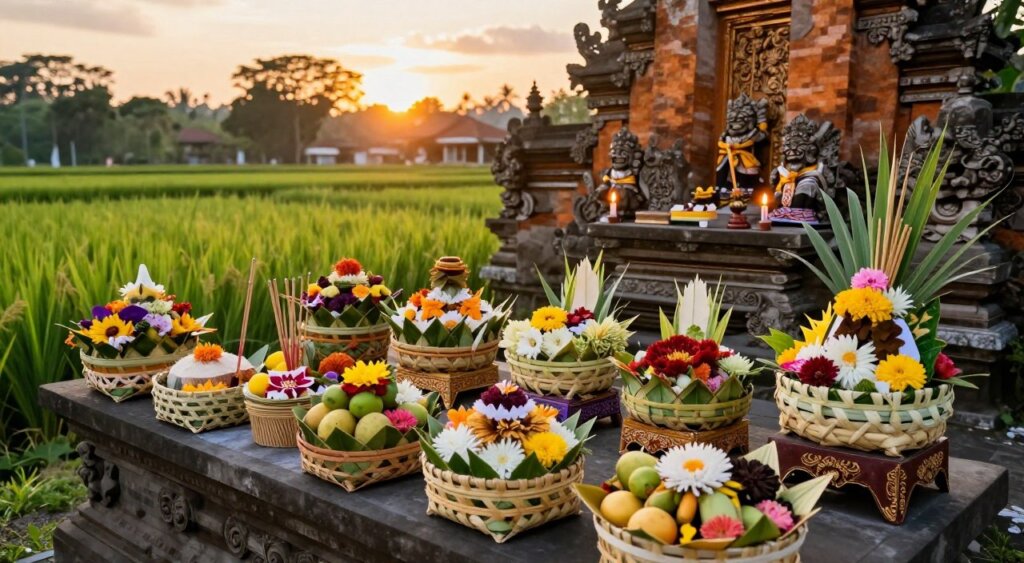
Items for benevolent gods go on high platforms. Those for malevolent forces are placed on the ground. Never step over a canang sari with burning incense.
Essential rules include not touching or disturbing the items. Do not photograph them without asking. Avoid making your own, as this could offend. Always dress modestly at temples.
Interpreting the Symbolism of Flowers, Rice, and Incense
Each component is a symbolic language. Specific colored flowers represent different gods and directions.
| Element | Symbolic Meaning | Placement/Note |
|---|---|---|
| Flowers | Specific deities & beauty | Arranged by color & direction |
| Rice | Life & sustenance | Base layer of the sari |
| Incense | Carries prayers upward | Lit last; smoke is essential |
| Water | Purity & blessing | Sprinkled to unite elements |
| Food | Gratitude & abundance | Small sweet items often included |
Rice symbolizes the staple of life. Burning incense transforms the physical into spiritual communication. Understanding this symbolism deepens appreciation for these sacred acts.
Modern Adaptations and Global Influences on Balinese Rituals
The influx of global visitors to Bali presents both an opportunity and a test for its ancient spiritual customs. Millions arrive each year, drawn by the island‘s unique culture.
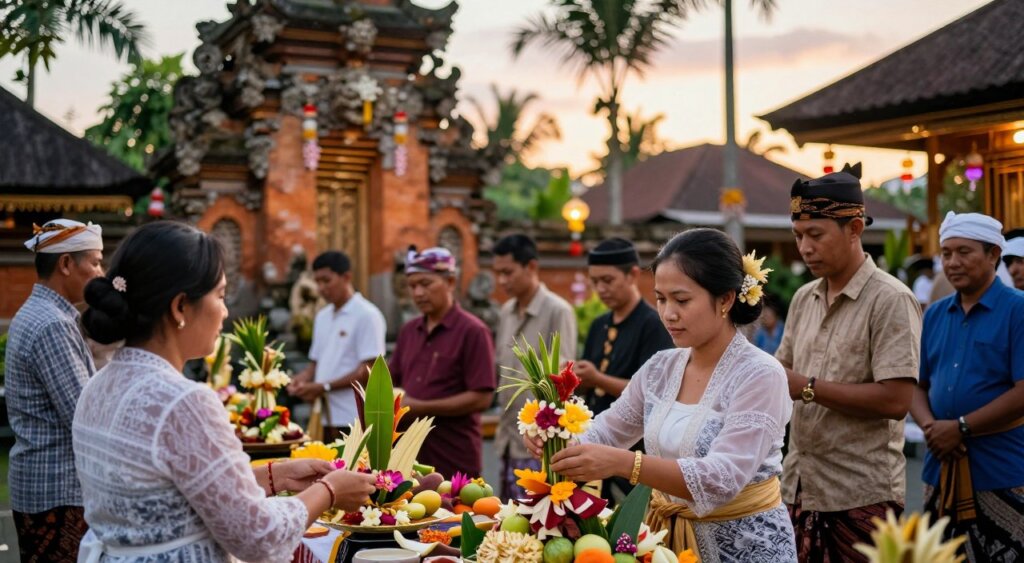
This exposure brings economic support but also pressures daily practice. The local people navigate this new reality with remarkable adaptability.
Impact of Tourism on Traditional Practices
Tourism’s footprint is visible on busy streets. Small devotional items placed on the ground are often stepped on throughout the days.
Many locals view this as part of their ephemeral nature. The world of spirits and the physical life coexist in this way.
To educate visitors, some communities now offer respectful workshops. These classes teach the traditional method of crafting canang sari.
| Positive Influence | Challenge | Adaptive Response |
|---|---|---|
| Economic support for communities | Foot traffic disturbing items | Philosophical acceptance of transience |
| Global cultural appreciation | Risk of commercialization | Educational workshops for tourists |
| Intercultural exchange | Time pressures on younger generations | Integration of practice into modern schedules |
Despite these changes, the core of these rituals remains unshaken. The daily cycle of creation and placement continues as a resilient thread in Balinese life.
Conclusion
From simple palm leaf creations to towering ceremonial stacks, these devotional acts form the living heart of Balinese culture. They connect people to their gods, community, and identity throughout everyday life.
The common canang sari appears multiple times each day. More elaborate forms include Banten Tegeh stacks carried on heads and ceremonial Daksina baskets.
All contain essential elements: a leaf, flower, fruit, or water. These are offered with sincere devotion. Items for positive forces go on high shrines, while those for negative ones are placed on the ground.
Women dedicate significant skill to this art, passing knowledge through generations. Visitors should never step on or disturb these items.
These are living traditions, not tourist displays. Each act maintains balance, expresses gratitude, and preserves cultural identity across the island.