Bali Islands most common scams catch thousands of visitors off guard every year, not because tourists are careless, but because these schemes are deliberately engineered to exploit the confusion that comes with stepping into a new culture, a new currency, and an unfamiliar city. Understanding how these traps work, before you even board your flight, is one of the most practical things you can do to protect your trip. Bali Travel Safety Tips For First-time Visitors

A Paradise With a Pickpocket Problem
Bali remains one of the most beloved travel destinations in Southeast Asia, and for good reason. The island scores an 82 out of 100 on the Traveler Safety Index, a real-time sentiment tool developed in partnership between The Bali Sun and Travel Off Path. That’s a strong, stable reading, the kind that tells most visitors to relax and enjoy themselves. But buried within that number is a recurring pattern that the island simply cannot seem to shake: scams.
Violent crime in Bali is rare. Harassment is far less common than in many other tourist destinations. What persists, year after year, is a softer form of criminal activity, one that relies on confusion, distraction, and the psychological pressure of being in an unfamiliar place. The scams here don’t usually involve threats. They involve sleight of hand, social manipulation, and the assumption that a tourist is too embarrassed, or too disoriented, to push back.
The Money Exchange Trap
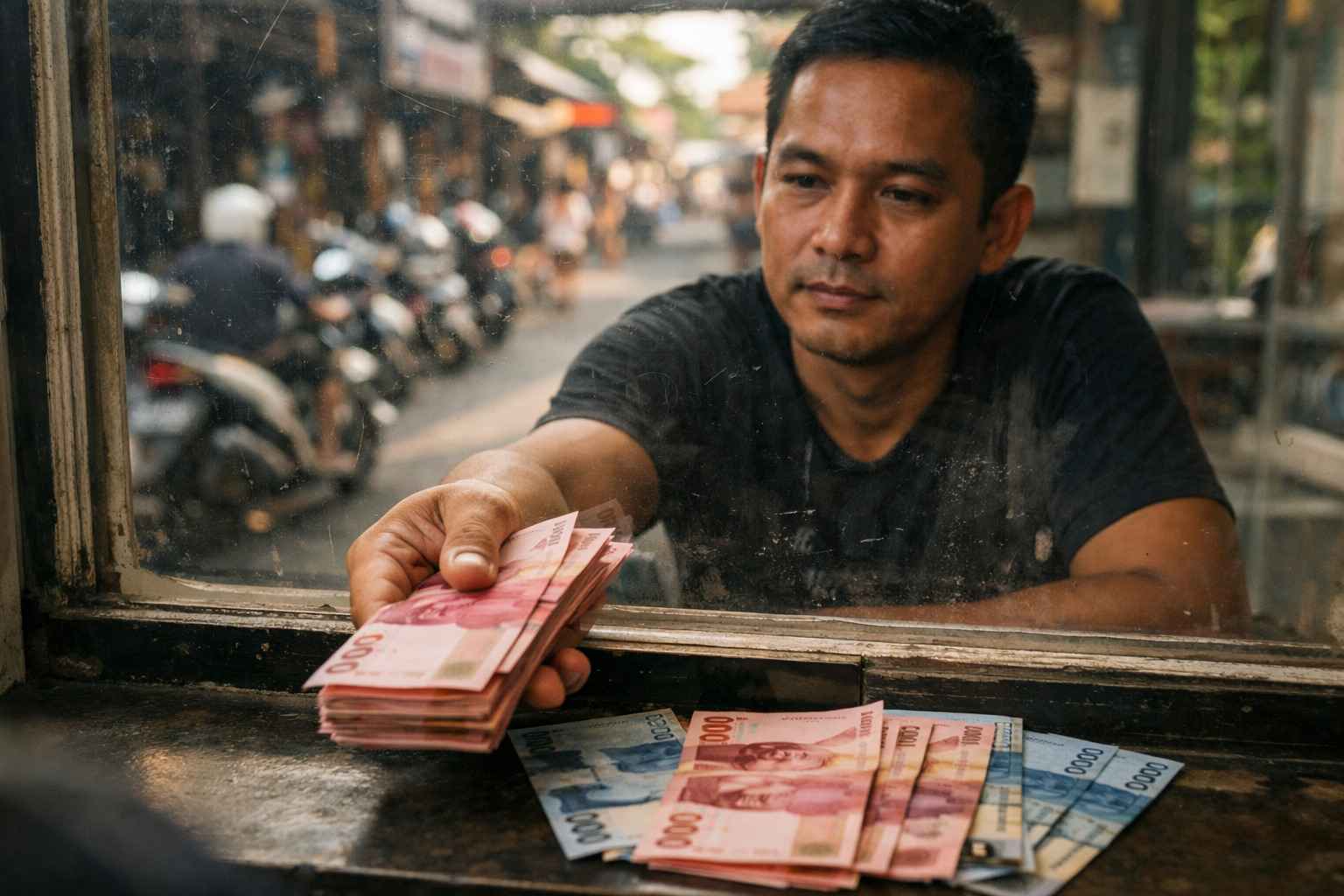
Among the Bali islands most common scams, the currency exchange trick stands out for its sheer audacity and its longevity. It has been running for years, reported by hundreds of visitors, and it still works, because it exploits something that can’t be trained away: the unfamiliarity of a new currency.
Indonesia’s rupiah operates in large denominations. Transactions routinely involve numbers in the hundreds of thousands. For a first-time visitor, the sight of two million rupiah, worth roughly 130 US dollars, can feel disorienting in a way that’s hard to prepare for. Scammers count on exactly that disorientation.
Here’s how it typically plays out. The teller at an unofficial exchange counter quotes a fair rate, then counts out the correct sum in full view of the customer. The tourist watches, satisfied. Then, as the teller gathers the notes to hand them over, a practiced sweep of the hand quietly removes a portion of the cash behind the counter, out of sight. The tourist walks away believing they received the full amount. They usually don’t realize the shortfall until much later.
The fix is straightforward. Exchange currency at your hotel or a reputable bank. If you do use a street-facing counter, count every note yourself before leaving the premises. A legitimate teller will not take offense at this. In fact, any teller who discourages you from counting your own money is giving you all the information you need.
Taxi and Ride-App Pressure
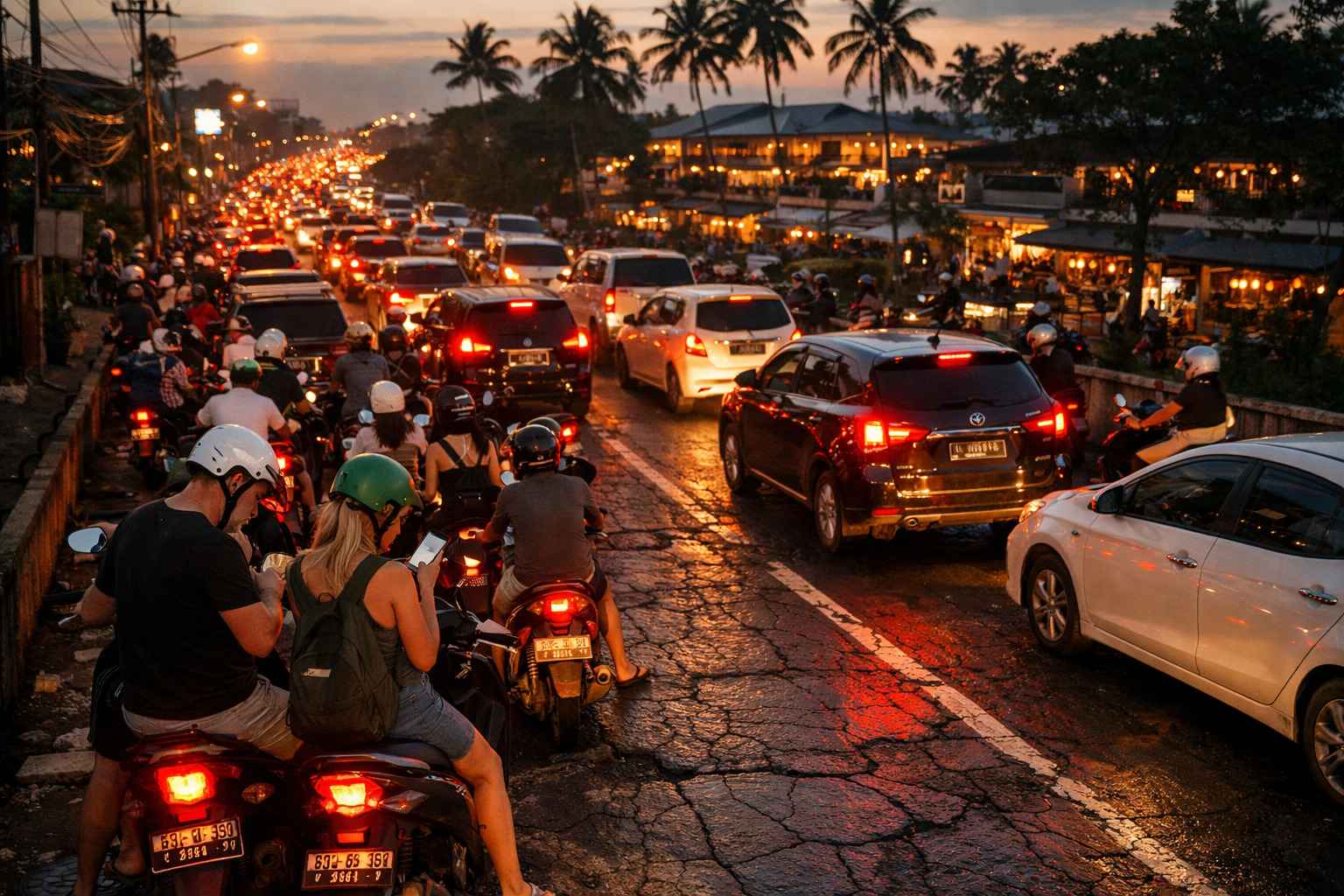
Transportation scams represent another entry in the Bali islands most common scams that travelers encounter on arrival. Traditional taxi drivers quoting one price at the start of a journey and demanding a higher fare at the end remain a documented problem. The dynamic is awkward by design, because disputing a price on the side of a road in a foreign country, at night, often feels like the wrong moment to dig in.
Increasingly, the scam has adapted to the digital age. Grab and GoJek, the two dominant ride-hailing apps in Bali, are generally reliable and transparent about pricing. But some drivers have reportedly asked for more than the in-app fare, or proposed completing the trip off-platform to avoid accountability. Both approaches should be declined. These apps exist precisely to provide a paper trail and a dispute mechanism. Use them, and report any driver who pressures you to circumvent them.
Why This Matters More Than It Seems
The reason Bali islands most common scams deserve serious attention isn’t just about protecting a few dollars. It’s about what these experiences do to the broader travel relationship between visitors and locals. The vast majority of people working in Bali’s tourism economy are welcoming, honest, and proud of what their island offers. When scams become normalized, they erode trust on both sides and create an atmosphere of suspicion that no one benefits from.
Local authorities appear to understand this. Increased police presence in Canggu, Uluwatu, and Seminyak, particularly on weekends and during peak travel periods, signals a genuine effort to keep tourist areas safe and accountable.
That said, enforcement can only do so much. The most effective protection is an informed traveler.
Sources & References
- The Bali Sun, Bali Tourists Must Be Aware Of Island’s Most Common Scams
- Travel Off Path, Traveler Safety Index
- U.S. Department of State, Indonesia Travel Advisory
- Grab, Grab Safety Features Overview
- GoJek, GoJek Safety Center
About the Author
This article was written by a senior journalist and regional travel expert at Things To Do In Kuta Bali with over a decade of experience covering Southeast Asia. Specializing in traveler safety, cultural dynamics, and responsible tourism, the author has reported from across Indonesia and works closely with local tourism agencies and safety organizations to provide accurate, grounded reporting for international audiences.