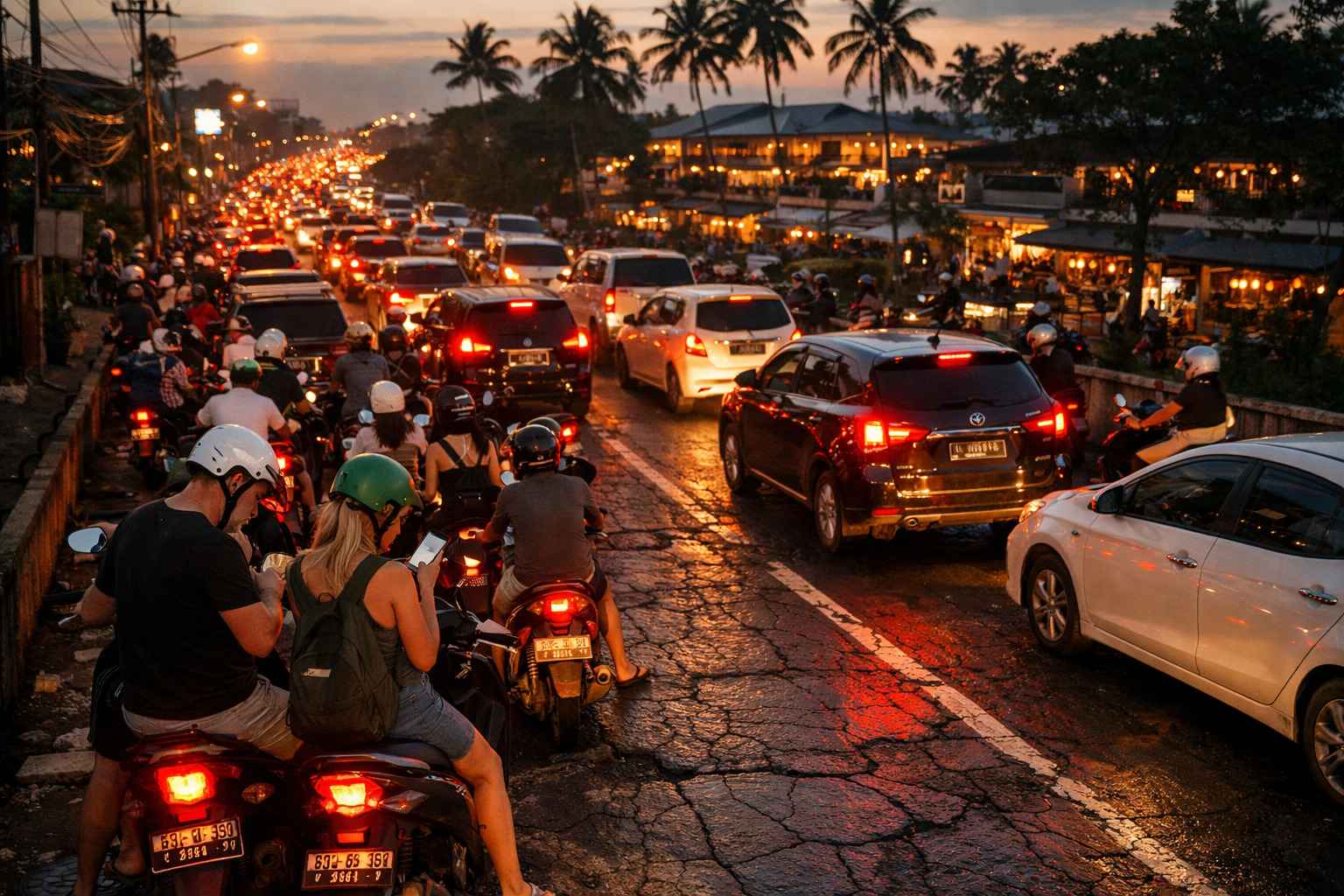
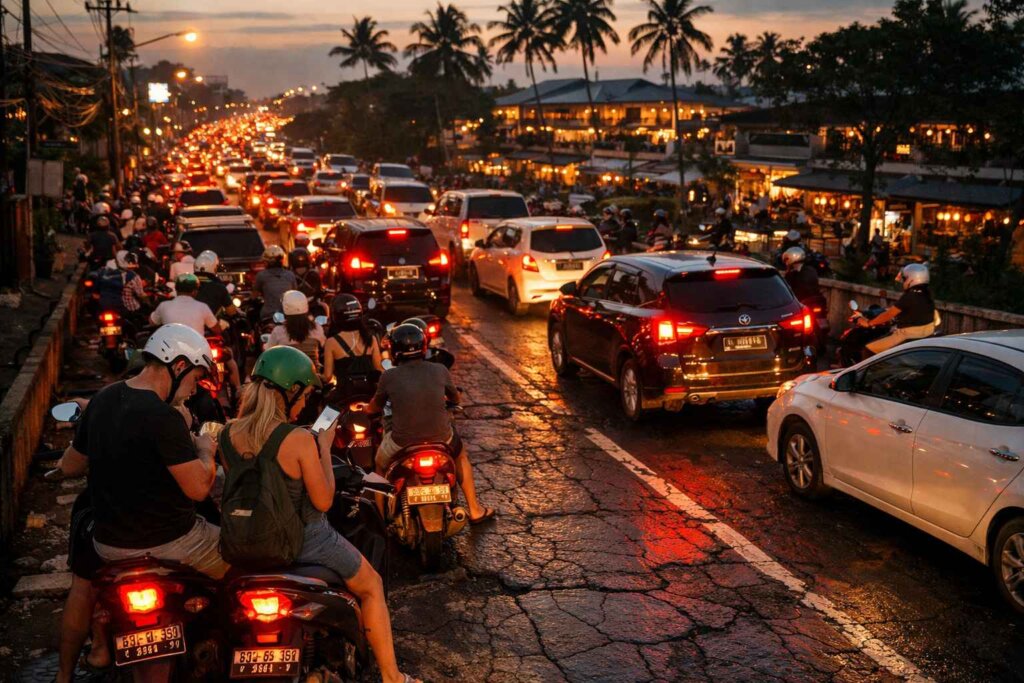
The island paradise is caught in a painful paradox. While tourists crawl through Canggu at bicycle speed during rush hour, the multi-billion dollar solution meant to save them sits frozen in bureaucratic limbo.
Bali’s ambitious urban railway network, announced with fanfare at a September 2024 groundbreaking ceremony, has produced virtually nothing beyond ceremonial photos. No tracks, no stations, no visible signs that Southeast Asia’s most congested tourist destination is any closer to modern mass transit.
When Investors Go Silent
The project’s $20 billion price tag always demanded serious financial backing. Initial commitments from Chinese and South Korean investors seemed to provide that foundation. But when those funding streams apparently shifted or stalled, so did everything else.
PT Sarana Bali Dwipa Jaya and PT Bumi Indah Permai, the government-backed and private entities jointly steering this initiative, have gone conspicuously quiet. No progress reports. No revised timelines. No explanation for why a project supposedly reaching completion in 2028 shows no evidence of actual construction.
Dr. Efatha Filomeno Borromeu Duarte, a public policy expert based in Bali, didn’t mince words about what this silence reveals. The gap between policy announcements and technical execution, he argues, exposes fundamental weakness in how the project was structured. Depending on private consortium funding creates inherent vulnerability when those partners aren’t operationally robust.
The Technology Question Nobody’s Answering
Behind closed doors, another complication has emerged. Senator Nyoman Suyasa revealed that the project may be pivoting from Light Rail Transit technology to Autonomous Rail Transit, a significant redesign that could explain the current paralysis.
Changing core technology after groundbreaking isn’t just a minor adjustment. It potentially means reworking routes, station designs, power systems, and safety protocols. If true, this shift represents either smart adaptation or catastrophic planning failure, depending on when and why the decision was made.
The senator’s admission that Bali’s council hasn’t received official reporting on this potential change is itself concerning. Major infrastructure pivots typically require legislative oversight and public consultation, not rumors filtering through political channels.
Meanwhile, the Roads Keep Choking
Every month of delay has real consequences. Bali’s roads currently support 3.5 million vehicles across just 3,118 kilometers of pavement. That ratio was already unsustainable in 2024 and has only worsened since.
In high-traffic corridors like Sunset Road or central Canggu, vehicles regularly move at 15 to 40 kilometers per hour during peak times. That’s not commuting, it’s collective punishment for an island that grew too fast without the infrastructure to support it.
Seven million annual international visitors compound the problem, but they’re not its source. Bali’s transportation crisis is fundamentally about inadequate public transit options for both residents and tourists, a problem that predates the current tourism boom.
The Short-Term Pain Nobody Wants to Discuss
Even if construction resumed tomorrow, the first years would make congestion worse, not better. Building above-ground and below-ground rail infrastructure through Bali’s most densely developed areas means torn-up roads, rerouted traffic, and construction chaos across the island’s southern corridor.
That short-term disruption was always part of the deal, the price of long-term mobility solutions. But it only makes sense if people believe the project will actually finish. Right now, confidence in that outcome is evaporating.
The proposed $40 minimum ticket price hasn’t helped public enthusiasm either. While that fare might work for airport transfers or tourist routes, it prices out many local commuters who need affordable daily transportation.
What Comes Next
The 2028 target for Phase One completion, connecting the airport to Kuta, Seminyak, Canggu, Jimbaran, and Nusa Dua, now seems wildly optimistic. Without visible construction progress more than a year after groundbreaking, meeting that deadline would require an acceleration of work that shows no signs of materializing.
The broader vision, a four-phase network operational by 2031, feels even more distant. Infrastructure megaprojects routinely face delays, but they typically show some forward momentum between announcement and stagnation.
Bali faces a choice, though it may not realize it yet. The island can continue pursuing this particular metro vision, working through whatever financial, technological, and political obstacles have frozen progress. Or it can acknowledge that this approach isn’t working and explore alternatives before another year passes without results.
What it cannot afford is the current status quo, where traffic worsens monthly while a theoretical solution exists only on paper and in press releases. Paradise has a carrying capacity, and Bali is testing its limits.