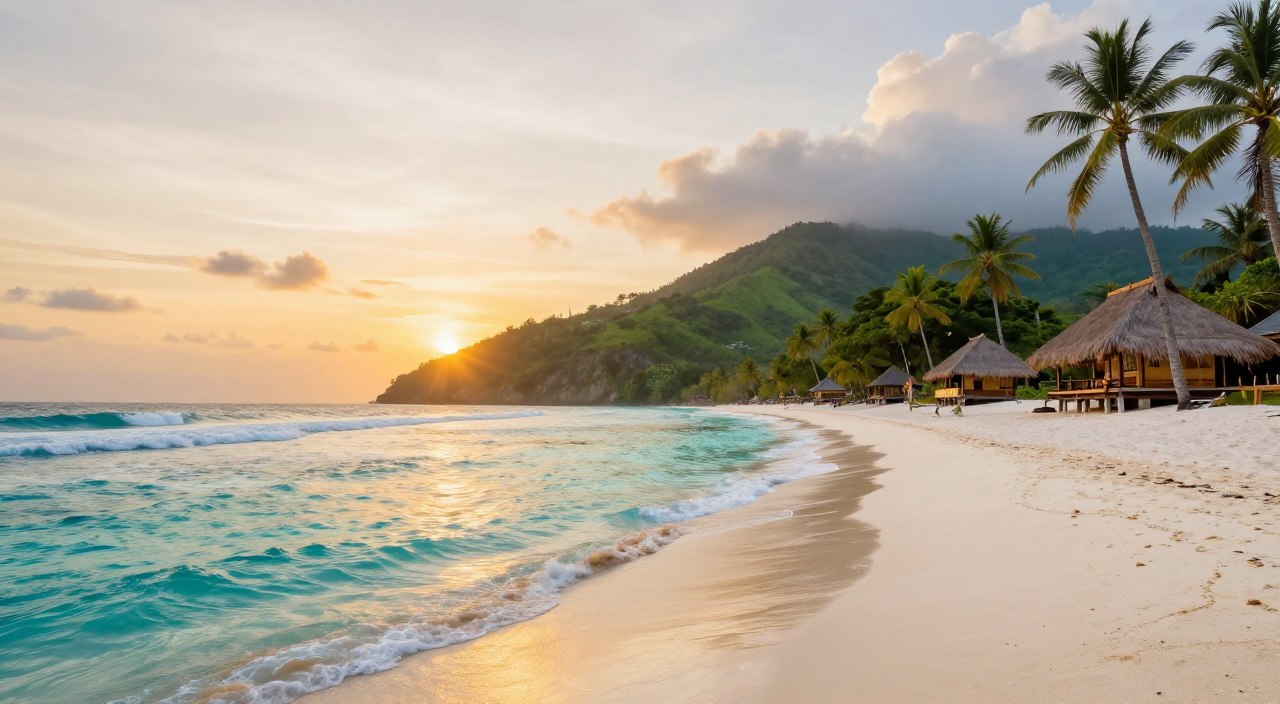
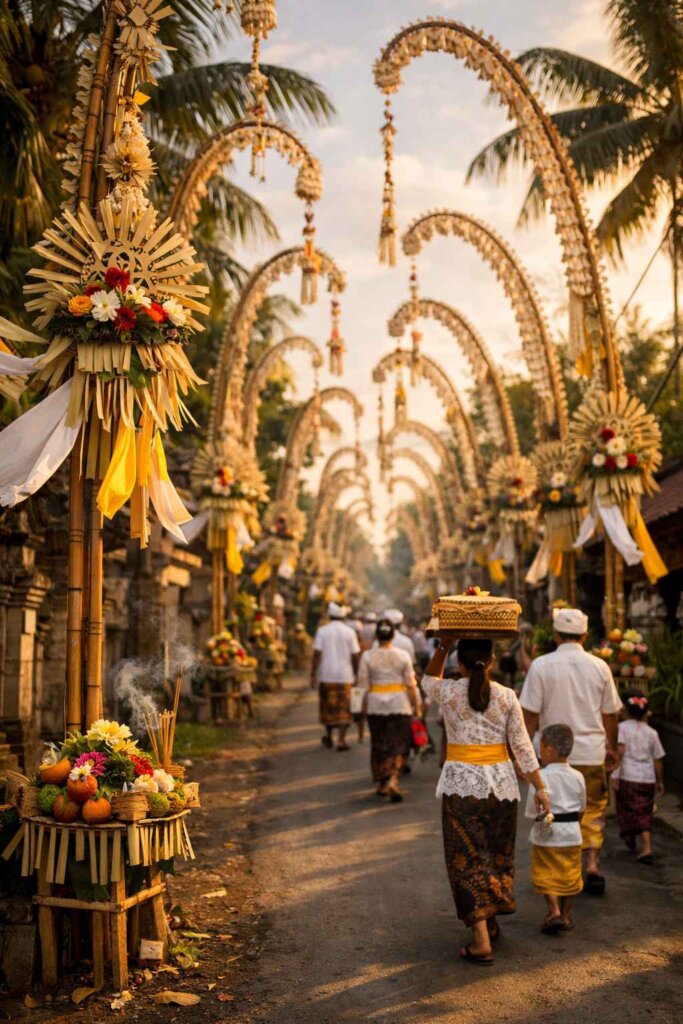
Major Balinese Hindu holidays transform the island of Bali into a living tapestry of devotion, where the sacred and everyday interweave with breathtaking beauty. I’ll never forget my first Galungan morning in Denpasar, watching the sun rise over streets lined with towering penjor bamboo poles, their curved tips heavy with offerings, as gamelan music drifted from every temple compound. The air was thick with incense and frangipani, and every family wore their finest ceremonial sarongs, carrying towers of rice cakes and tropical fruits to ancestral shrines.
Unlike Hinduism practiced elsewhere in the world, Balinese Hinduism follows its own sacred rhythm, a 210-day calendar cycle that creates a constant pulse of ceremony and celebration. These aren’t mere cultural performances for tourists. They’re living expressions of a worldview where gods, ancestors, and demons walk among the living, where every full moon demands worship, and where silence can be more powerful than any festival.
This comprehensive guide will walk you through the major Balinese Hindu holidays, explaining their spiritual significance, practical timing for 2026, and how you can respectfully witness these sacred celebrations. Whether you’re planning a trip around these festivals or simply seeking deeper understanding of Balinese culture, you’ll find everything you need to know about the island’s most important Hindu celebrations every 210 days and beyond.
Quick Reference: Major Balinese Hindu Holidays 2026
| Holiday | 2026 Date(s) | Brief Description |
|---|---|---|
| Nyepi (Balinese New Year) | March 22 | 24-hour silence, no lights, no activity |
| Galungan | April 22 | Victory of dharma over adharma, 10-day celebration |
| Kuningan | May 2 | Ancestral spirits return to heaven |
| Saraswati | February 7 | Honoring the goddess of knowledge |
| Pagerwesi | March 4 | Spiritual protection and inner strength |
| Siwaratri | February 20 | Day of meditation honoring Lord Shiva |
| Full Moon (Purnama) | Monthly | Temple celebrations and offerings |
| Dark Moon (Tilem) | Monthly | Spiritual cleansing rituals |
Understanding the Balinese Hindu Calendar System
Before diving into specific major Balinese Hindu holidays, you need to understand that the Balinese people operate on two parallel calendar systems. The Balinese saka calendar is a lunar calendar similar to the Indian Hindu calendar, determining when Nyepi falls each year. Meanwhile, the pawukon calendar runs on a 210-day cycle, dictating when Galungan, Kuningan, and many other Balinese Hindu holy day celebrations occur.
This means major Balinese Hindu holidays don’t align with Western calendar dates the way Christmas or New Year’s do. Galungan, for instance, arrives roughly every seven months, creating multiple celebration cycles each year. The 210-day rhythm means you might experience the same festival twice in one calendar year, though the dates shift constantly.
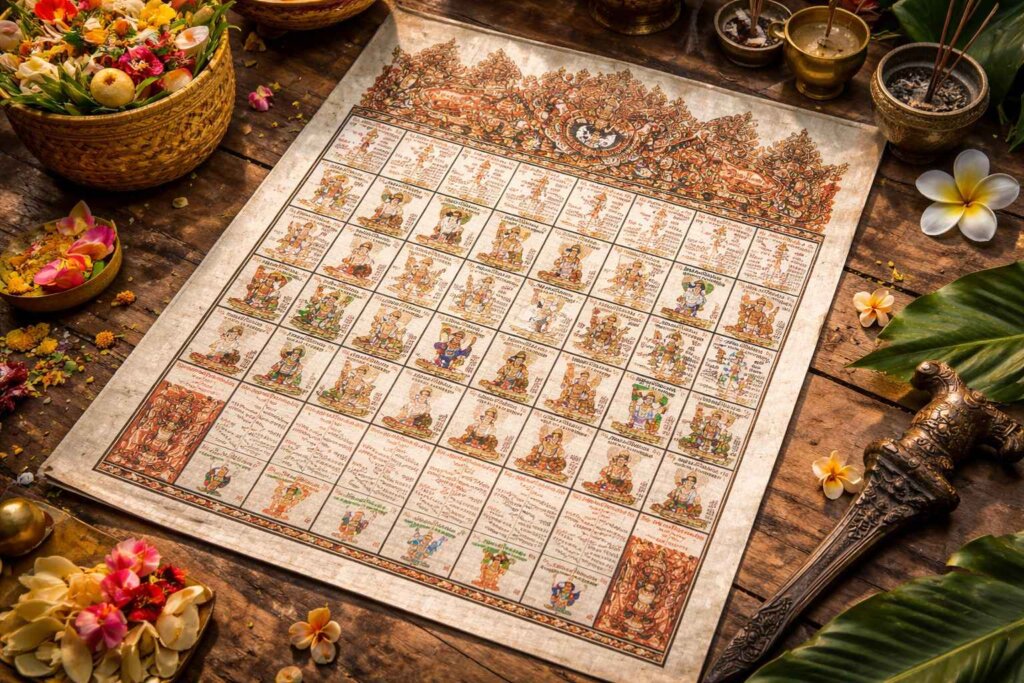
The complexity doesn’t end there. Each temple in Bali (there are over 20,000) celebrates its own anniversary called Odalan, a temple anniversary ceremony that occurs every 210 days. Full moon and new moon ceremonies happen monthly. The Tumpek blessing ceremonies, including Tumpek Landep metal objects blessing, rotate through different focuses every 35 days. This creates a near-constant state of celebration somewhere on the island.
Understanding this calendar system is essential for planning your visit around major Balinese Hindu holidays. Unlike predictable Western holidays, these sacred days require checking specific Hindu festival dates Bali 2026 calendars. Local Balinese communities publish these dates annually, and most hotels can provide updated festival schedules.
Nyepi: The Day of Silence and Balinese New Year
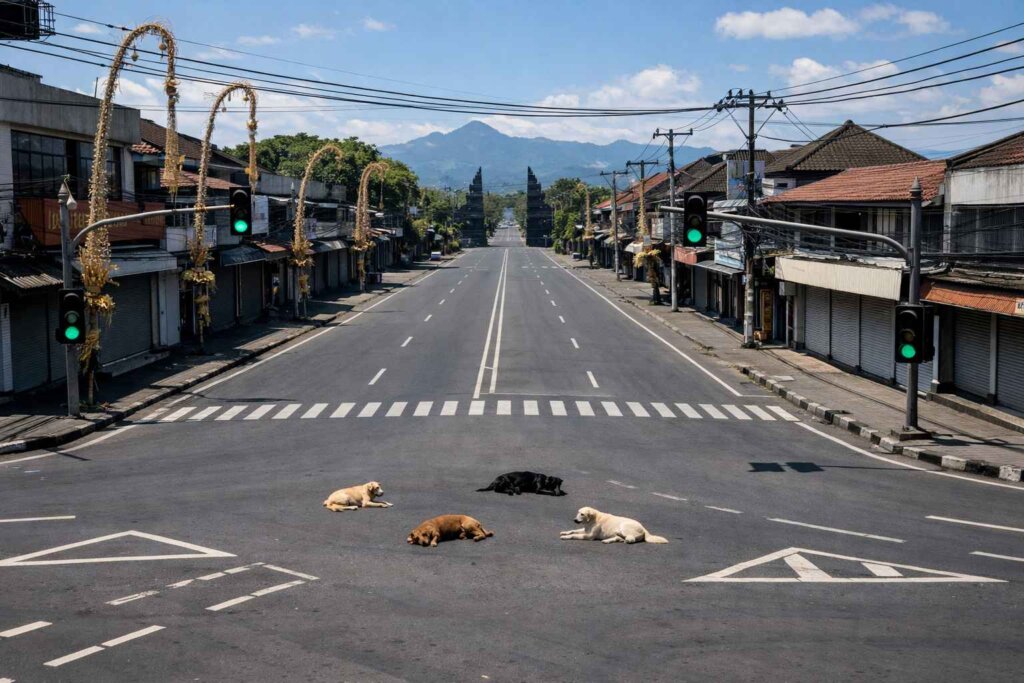
Nyepi, falling on March 22 in 2026, stands as perhaps the most unique among major Balinese Hindu holidays. While other cultures celebrate new years with fireworks and parties, the Balinese New Year traditions demand complete silence. For 24 hours, the entire island shuts down. No lights, no work, no travel, no entertainment, not even speaking above a whisper.
The Day of Silence isn’t arbitrary strictness. It’s based on the belief that evil spirits roam the island on New Year’s Eve. By making Bali appear completely uninhabited and uninteresting, these demons pass over and leave the island in peace for another year. Security patrols enforce the restrictions, even keeping tourists confined to their hotels with no beach access, no pool use, and no outdoor lighting.
But Nyepi Day of Silence Bali actually represents the culmination of days of intense activity. The preceding days burst with some of the most spectacular Balinese offerings and sacred rituals you’ll ever witness.
Melasti Purification Ceremony Before Nyepi
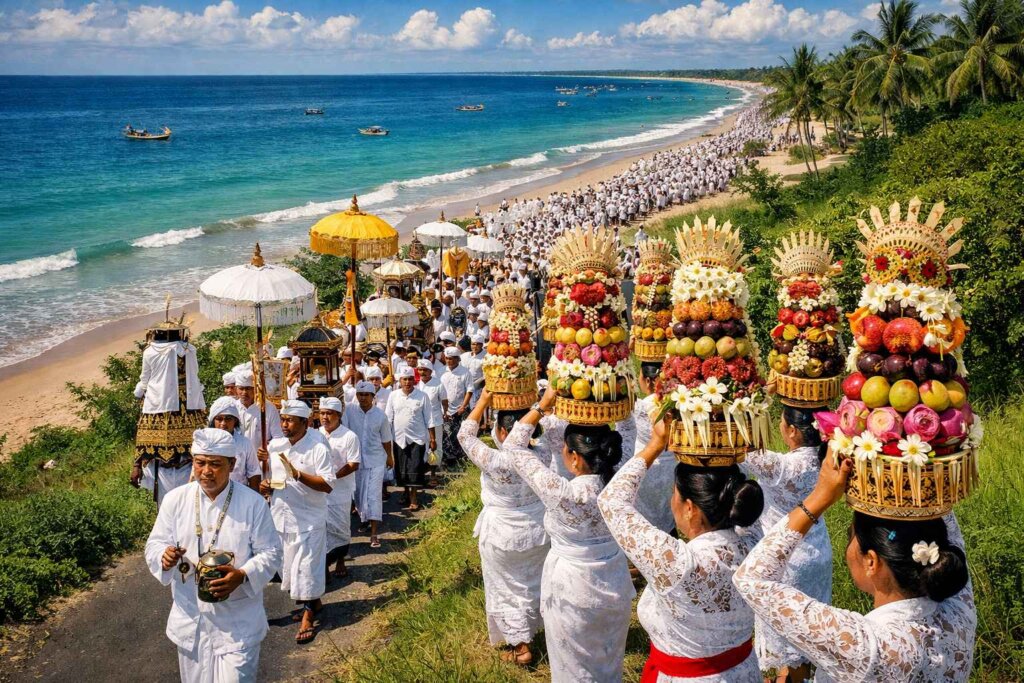
Two to three days before Nyepi, the Melasti purification ceremony before Nyepi brings entire villages to the sea. This major Balinese Hindu holiday preparation involves carrying sacred temple objects, shrines, and religious icons in massive processions to the ocean. Thousands of Balinese people dress in pristine white ceremonial clothing, creating rivers of white along every road leading to the coast.
At the beach, priests perform ritual purification of sacred objects in the saltwater waves. The ocean, in Balinese Hinduism, represents the source of life and purity. Melasti cleanses not just physical objects but the entire island’s spiritual energy, preparing for the reset that Nyepi brings. The sea itself is believed to absorb negative energy, carrying it away from Bali.
Witnessing Melasti gives you access to one of the most photogenic major Balinese Hindu holidays ceremonies. The white-clad processions, ornate umbrellas, offerings carried on heads, and gamelan orchestras create unforgettable scenes. Popular beaches like Kuta and Sanur become packed with processions from multiple villages simultaneously.
Ogoh-Ogoh Parade and Evil Spirit Cleansing
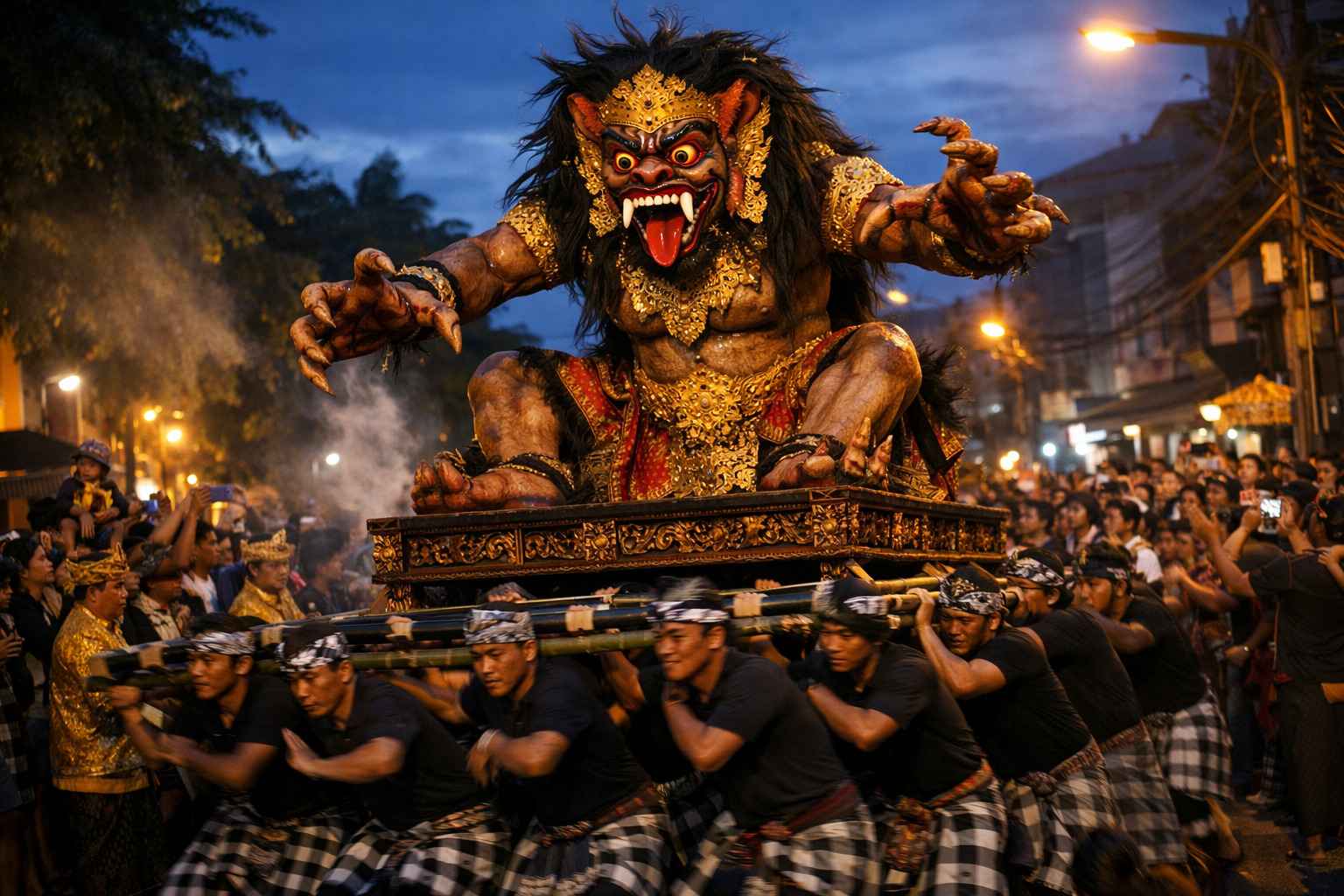
The night before Nyepi explodes with the Ogoh-Ogoh parade before Nyepi, when giant demon effigies parade through every town and village. These elaborate papier-mâché monsters, some reaching 15 feet tall, represent evil spirits and negative forces. Balinese communities, especially youth groups, spend months constructing these impressive figures.
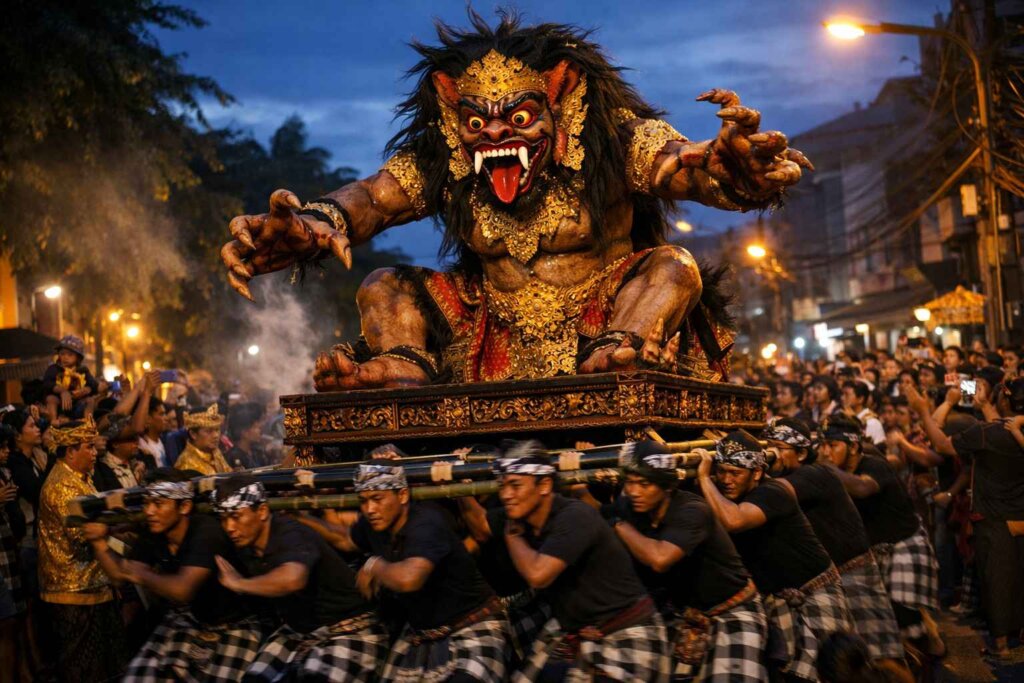
As darkness falls, the ogoh-ogoh take to the streets, carried by dozens of men who shake and spin them violently. This chaotic energy, accompanied by deafening gamelan music and shouting, creates controlled mayhem. The belief holds that all this noise and movement draws out evil spirits, concentrating them in the demon figures.
At designated intersections, carriers spin the ogoh-ogoh three times counterclockwise, confusing the spirits about direction. Some communities then burn their ogoh-ogoh, destroying the evil forces symbolically. Others preserve particularly beautiful figures for display. Either way, this major Balinese Hindu holiday event represents the island’s last burst of noise before absolute silence descends at 6 AM.
What Happens During the 24-Hour Silence
From sunrise to sunrise, Nyepi transforms Bali into an island frozen in time. The airport closes completely, the only day all year this happens. No flights arrive or depart. Roads empty entirely. Even the ocean seems quieter without boats.
For the Balinese people, Nyepi offers rare time for deep meditation and self-reflection. The four prohibitions, amati geni (no fire or light), amati karya (no work), amati lelungan (no travel), and amati lelanguan (no entertainment), create conditions for spiritual introspection. Families stay home, children whisper instead of play, and the elderly meditate for hours.
Tourists experience this major Balinese Hindu holiday confined to hotel grounds. Most resorts prepare special quiet activities, meditation sessions, and silent brunches. While initially frustrating for some visitors, many report that Nyepi becomes a highlight, a forced digital detox and pause that modern life rarely offers. The star-filled sky without light pollution alone makes it memorable.
Cultural Insider Tip: Book accommodation well in advance for Nyepi. Hotels fill up quickly, and you cannot change hotels during the silence. Choose your location carefully, as you’ll be there for 24 hours straight.
Best Hotels in Kuta Bali: Your Complete Guide to Paradise Stays
Galungan: Victory of Dharma Over Adharma
Galungan, occurring April 22, 2026 (and again in mid-November due to the 210-day cycle), celebrates the victory of dharma over adharma, good defeating evil. This ten-day festival represents one of the most important major Balinese Hindu holidays, when ancestral spirits descend to earth to visit their former homes and shrines.
The Galungan victory of dharma over adharma story parallels the triumph of good over evil found in many Hindu traditions, but the Balinese interpretation adds unique local elements. According to legend, this day commemorates when the Balinese king Mayadenawa was defeated for forbidding religious worship. The victory restored dharma, righteousness and cosmic order, allowing the Balinese people to practice their faith freely.
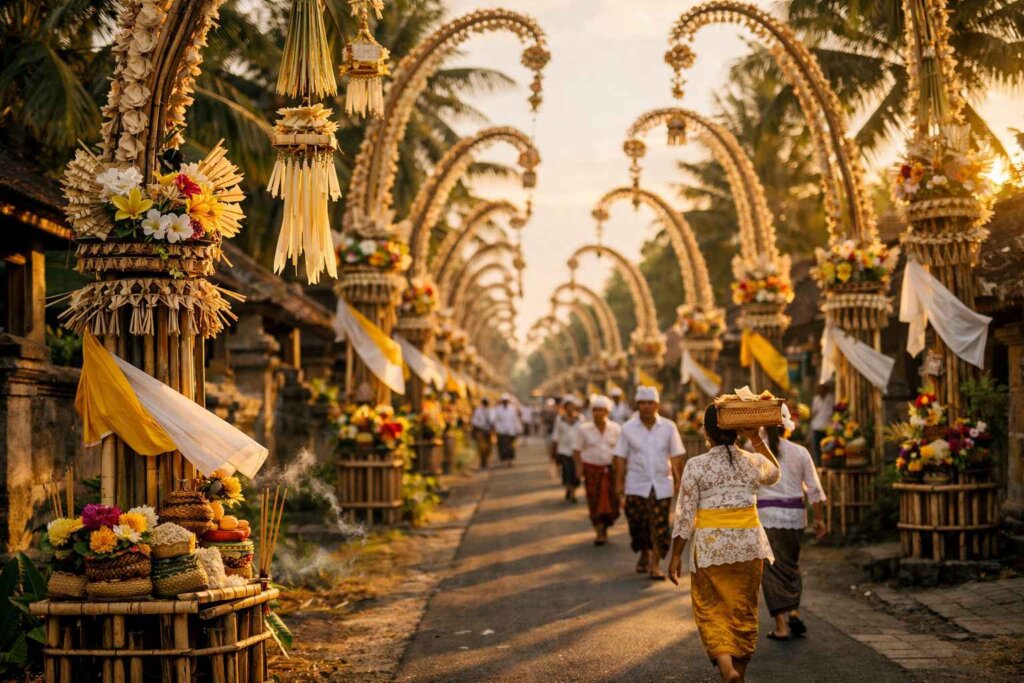
Unlike Nyepi‘s silence, Galungan bursts with color, sound, and activity. Every home prepares elaborate offerings, families cook traditional foods for days, and temples overflow with worshippers in silk and gold. The gamelan never stops. The smell of incense and grilled satay fills every village.
The Meaning Behind Penjor Bamboo Poles
The most visible symbol of Galungan is the penjor, tall curved bamboo poles erected outside every family compound. These penjor bamboo poles Galungan can reach 20 feet or more, their tips gracefully arching over streets and creating natural archways throughout Bali.
Each penjor is meticulously decorated with young coconut leaves woven into intricate patterns, flower arrangements, rice cakes, and symbolic elements representing prosperity and gratitude. At the tip hangs a white or yellow cloth, while the base features a small shrine with daily offerings of rice, flowers, and incense.
The penjor symbolizes Mount Agung, Bali‘s sacred volcano and home of the gods. Its curve represents the tail of Ananta Wijaya, the cosmic dragon who, in Balinese Hinduism, stabilizes the universe. The decorations signify agricultural abundance and gratitude for harvest. Creating a beautiful penjor honors ancestors and invites their spirits to enter the family compound.
Entire villages transform during Galungan, with penjor lining both sides of every street. Driving through rural areas becomes like passing through living tunnels of bamboo and palm fronds, one of the most photogenic aspects of this major Balinese Hindu holiday.
How Families Celebrate Over 10 Days
Galungan actually spans ten days, each with specific rituals and significance. Preparation begins three days before Galungan proper, with families making traditional rice cakes called jaja, including the distinctive diamond-shaped jaja batun bedil. Women spend hours cooking these labor-intensive treats.
On Galungan day itself, families rise before dawn to place offerings at family shrines and visit their temple for communal prayer. The offerings for this major Balinese Hindu holiday are extraordinarily elaborate, towering structures of fruit, rice cakes, flowers, and even roasted pork or chicken. Women balance these on their heads while walking to temples, a skill developed from childhood.
After temple ceremonies, Galungan becomes family time. Extended families gather for feasts featuring traditional dishes like lawar (mixed vegetables with spices and blood), satay, and special rice preparations. Ancestral spirits are believed to join these meals, so extra portions are set aside at the family shrine.
The following days involve visiting relatives, attending temple festivals, and maintaining daily offerings to honor visiting ancestors. Markets explode with activity as everyone shops for ingredients and ceremonial supplies. Traditional dance performances and gamelan concerts fill evening hours.
What to Wear to Balinese Temples
Kuningan: Ancestral Spirits Return to Heaven
Kuningan, falling on May 2, 2026 (ten days after Galungan), marks the conclusion of the Galungan cycle. This major Balinese Hindu holiday celebrates the return of ancestral spirits to heaven after their earthly visit. While less visually dramatic than Galungan, Kuningan holds deep emotional and spiritual significance for the Balinese people.
The Kuningan ancestral spirits ceremony centers on bidding farewell to deceased family members who have been spiritually present during the past ten days. It’s simultaneously joyful, celebrating the ancestral visit, and melancholic, acknowledging the separation until the next Galungan cycle. This bittersweet quality makes Kuningan particularly moving to witness.
Yellow Rice Offerings and Their Significance
The distinctive feature of Kuningan is nasi kuning, yellow rice offered to ancestors and deities. These yellow rice offerings Kuningan aren’t just colored rice. They’re turmeric-infused preparations made according to strict traditional methods, steamed in special woven containers that create cone shapes.
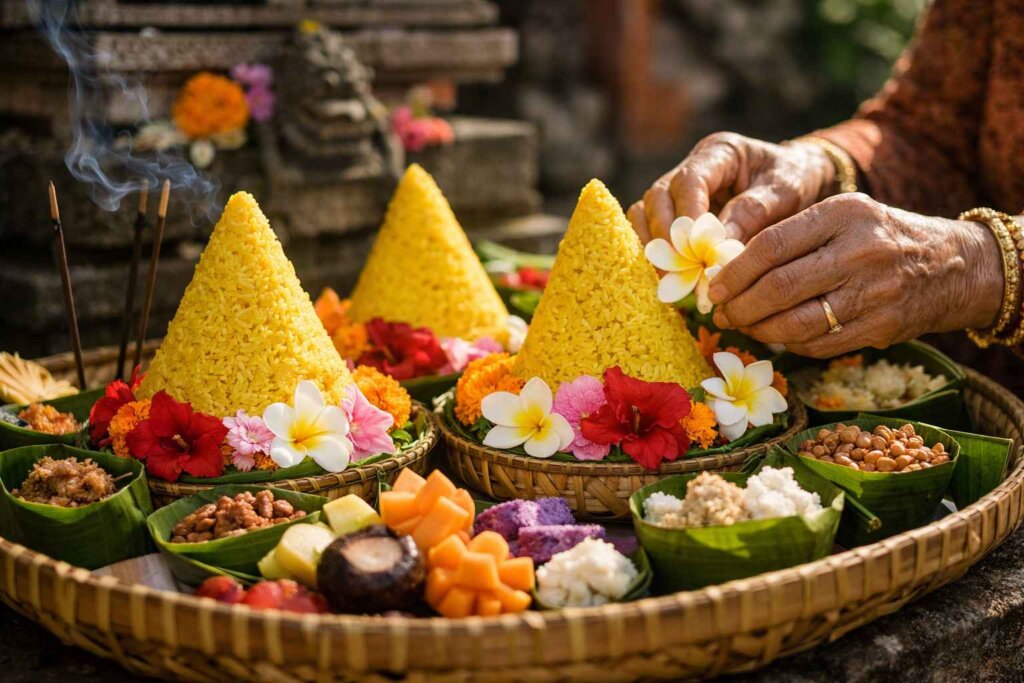
Yellow symbolizes prosperity, glory, and divine energy in Balinese Hinduism. The turmeric used isn’t just colorant but carries purifying properties. Families prepare dozens of these yellow rice cones, arranging them with flowers, fruits, and other offerings at family shrines and temples.
The Kuningan offerings specifically thank ancestors for their visit and provide spiritual sustenance for their journey back to heaven. Balinese belief holds that spirits require these offerings as “provisions” for the return trip. The act of preparing and presenting them demonstrates gratitude and maintains the reciprocal relationship between living and deceased family members.
Beyond family shrines, Kuningan sees major temple ceremonies, especially at important temples like Besakih Temple, Bali‘s mother temple on Mount Agung’s slopes. Thousands of pilgrims arrive bearing offerings, creating spectacular processions of color and devotion.
The penjor from Galungan come down after Kuningan, marking the end of this major Balinese Hindu holiday cycle. Streets transform overnight from canopied archways back to normal, though the spiritual impact lingers. Many Balinese people report feeling simultaneously relieved and wistful as the intensity of the ten-day period concludes.
Saraswati: Goddess of Knowledge and Wisdom
Saraswati, scheduled for February 7, 2026, honors the goddess of knowledge, wisdom, arts, and learning. This major Balinese Hindu holiday holds special importance for students, teachers, artists, and anyone engaged in intellectual or creative pursuits. In a culture that values both spiritual and practical knowledge, Saraswati goddess of knowledge Bali receives profound reverence.
Unlike the multi-day celebrations of Galungan or the dramatic silence of Nyepi, Saraswati focuses on a single day of dedication to books, learning materials, and musical instruments. The Balinese people believe that all knowledge, whether sacred texts or modern science, comes under Saraswati‘s divine domain.
On Saraswati day, books and lontar (traditional palm-leaf manuscripts) cannot be read. Instead, they’re wrapped in cloth and decorated with flowers, receiving offerings as if they were sacred objects. School libraries, university collections, even home bookshelves become temporary shrines. Musical instruments, computers, and tools of trade receive similar treatment, acknowledging that all knowledge and skill ultimately come from divine sources.
Students dress in traditional ceremonial clothing to bring offerings to their schools’ Saraswati shrines. Teachers lead prayers honoring the goddess, asking for wisdom in both teaching and learning. It’s common to see even modern Indonesian universities in Bali holding traditional ceremonies, blending contemporary education with ancient Hindu reverence for knowledge.
The day after Saraswati is called Banyu Pinaruh, when people traditionally visit springs, rivers, or the sea for spiritual cleansing and to absorb the knowledge blessed by the goddess. This makes Saraswati a two-day observance among major Balinese Hindu holidays, though the second day is less formal.
Expert Insight: “When we honor Saraswati, we acknowledge that true knowledge requires humility,” explains Ida Pedanda Made Gunung, a Brahmin priest from Ubud. “The goddess teaches us that wisdom isn’t just information, but understanding our place in cosmic order and using knowledge to serve dharma.”
Pagerwesi: Spiritual Protection and Inner Strength
Pagerwesi, occurring March 4, 2026, translates literally to “iron fence,” referring to spiritual protection. This major Balinese Hindu holiday focuses on strengthening one’s inner defenses against negative influences, temptations, and evil forces. The Pagerwesi spiritual protection ceremony emphasizes self-discipline, meditation, and fortification of moral character.
In Balinese Hinduism, maintaining spiritual protection is considered essential personal responsibility. Pagerwesi provides a dedicated day for reinforcing these defenses through ritual, prayer, and offerings specifically designed to strengthen the spiritual self. The concept parallels wearing armor before battle, except the battle is against one’s own negative tendencies and external negative energies.
Temples throughout Bali hold special ceremonies on Pagerwesi, but much of the observance happens in family compounds. Offerings emphasize protective elements like iron objects (traditional keris daggers often feature prominently), sacred ash, and specific flowers believed to ward off evil. The ritual bathing and meditation practices on Pagerwesi focus on centering one’s spiritual core.
This major Balinese Hindu holiday especially appeals to those interested in the mystical aspects of Balinese Hinduism. While less visually spectacular than Galungan or the Ogoh-ogoh parade, Pagerwesi offers deeper insight into the personal spiritual practices that underlie Balinese religious life. The emphasis on inner work over external display makes it particularly meaningful.
Other Important Celebrations
Beyond the major Balinese Hindu holidays already discussed, the Balinese sacred calendar includes numerous other significant observances that create the island’s rich ceremonial tapestry.
Siwaratri, falling February 20, 2026, is the Balinese version of Maha Shivaratri, dedicated to Lord Shiva’s meditation. Unlike Indian Hindu celebrations that might feature fasting and all-night vigils, the Siwaratri day meditation Bali version emphasizes quiet temple ceremonies and contemplative practices. Besakih Temple and other major Shiva temples see devoted worshippers arriving throughout the night.
The Tumpek ceremonies occur every 35 days, each blessing different aspects of life. Tumpek Landep blesses metal objects, tools, weapons, and vehicles. Farmers bring their plows, mechanics their tools, drivers their cars, all to receive temple blessings and offerings. Tumpek Uduh blesses plants and gardens. Tumpek Kandang blesses animals. These rotating celebrations ensure every aspect of daily life receives regular spiritual attention.
Odalan ceremonies celebrate individual temple anniversaries, occurring every 210 days at each of Bali‘s thousands of temples. These temple anniversary ceremony Odalan events transform neighborhood temples into festivals, with elaborate offerings, traditional dances, gamelan concerts, and community feasting. Visiting Bali, you’ll almost certainly encounter at least one Odalan, as statistically several happen somewhere on the island daily.
Full Moon (Purnama) ceremonies happen monthly at major temples. The full moon is considered particularly auspicious for worship and meditation. Temple compounds fill with offerings, and many Balinese people visit temples specifically on full moon nights. The Full Moon Tilem spiritual cleansing actually refers to the new moon (dark moon), when spiritual cleansing rituals are performed to clear negative energy before the moon’s renewal.
Ngaben, the cremation ceremony in Bali, doesn’t follow the calendar like other major Balinese Hindu holidays, but it deserves mention as one of the most important Balinese rituals. These elaborate funeral ceremonies can cost families years of savings, featuring tower cremation structures, animal-shaped sarcophagi, and massive processions. Ngaben cremation ceremony Bali events demonstrate the Balinese belief that death isn’t an end but a transformation releasing the soul for reincarnation.
Planning Your Visit Around Balinese Hindu Holidays
Experiencing major Balinese Hindu holidays firsthand offers unparalleled cultural immersion, but it requires careful planning. The timing, crowds, and cultural sensitivities demand more preparation than typical tourism.
Best Holidays for Visitors to Experience
For first-time visitors wanting to witness major Balinese Hindu holidays, Galungan offers the most accessible and visually rewarding experience. The penjor decorations transform the entire island, temple ceremonies welcome respectful observers, and the festive atmosphere creates infectious joy. The ten-day duration also gives you flexibility to witness various aspects without rigid scheduling.
The Ogoh-ogoh parade before Nyepi provides spectacular photo opportunities and dramatic cultural theater. However, you must accept that the following day brings complete lockdown. Many travelers specifically book Bali trips around Nyepi for the unique experience of a silent, dark island, though it’s definitely not for everyone.
Galungan and Nyepi represent the most tourist-friendly major Balinese Hindu holidays. Saraswati and Pagerwesi, while significant, offer less visual spectacle and require more cultural knowledge to fully appreciate. Kuningan works best if you’ve already experienced Galungan, providing context for the conclusion.
Kuta Survival Guide for First-Timers: Everything You Need to Know Before You Go
What to Expect and Cultural Etiquette
Witnessing major Balinese Hindu holidays requires cultural sensitivity and respect. These aren’t performances staged for tourists. They’re living religious practices where the Balinese people connect with the divine and their ancestors.
CULTURAL DO’S AND DON’T’S FOR VISITORS
DO:
- Dress modestly with covered shoulders and knees, especially at temples
- Wear a sarong and sash (temples often provide rentals)
- Maintain respectful silence during prayers and ceremonies
- Ask permission before photographing people or offerings
- Stand or sit at the back, allowing Balinese worshippers priority access
- Remove shoes before entering temple compounds
- Follow any instructions from temple staff or locals
DON’T:
- Step on or over offerings placed on the ground
- Touch sacred objects, shrines, or temple structures
- Enter temples during menstruation (traditional restriction)
- Point feet toward shrines or people while sitting
- Use flash photography during ceremonies
- Consume alcohol or display intoxication near temples
- Touch priests’ heads or stand higher than them
During Nyepi, expect complete compliance with restrictions. Even tourists must remain in hotels with minimal lighting and no outdoor access. Walking on the street can result in confrontation with security patrols. Plan ahead with food, entertainment, and patience for the 24-hour period.
For Galungan and other celebratory major Balinese Hindu holidays, expect traffic congestion, fully booked accommodations, and limited restaurant availability as Balinese staff take time off to celebrate with families. Book everything in advance. Embrace the slower pace and recognize you’re witnessing something far more significant than a festival, you’re seeing an entire culture renew its sacred bonds.
Seasonal Timing Tip: The best months for experiencing multiple major Balinese Hindu holidays are typically March-May and September-November when the 210-day cycle often aligns with pleasant weather. The Balinese calendar religious festivals don’t follow seasons, but timing your trip during dry season (April-October) generally makes ceremony attendance more comfortable. Bali Weather Guide: Complete Climate & Season Planning 2026
Conclusion
The major Balinese Hindu holidays offer windows into a living spiritual tradition that has survived and thrived for over a thousand years in Indonesia. From the profound silence of Nyepi to the joyful decorations of Galungan, from the intellectual reverence of Saraswati to the protective focus of Pagerwesi, each celebration reflects core Balinese values of balance, reciprocity, and cosmic order.
These Balinese Hindu holy day celebrations aren’t museum pieces or tourist attractions. They’re active expressions of faith practiced by millions of Balinese people who genuinely believe in the gods, ancestors, and cosmic forces these rituals honor. The offerings placed daily at every doorstep, the incense burned at household shrines, the prayers whispered at temples, all demonstrate a worldview where spiritual and material realities constantly intersect.
For visitors, experiencing major Balinese Hindu holidays provides transformation beyond typical tourism. You witness devotion, artistic mastery, community cohesion, and spiritual depth that challenge modern secular assumptions. You see how dharma can structure an entire society, how daily life can integrate the sacred, and how ancient traditions remain vibrantly relevant in the contemporary world.
Whether you’re planning your first trip to Bali or returning for deeper cultural engagement, timing your visit around these major Balinese Hindu holidays elevates the experience from beautiful beaches and rice terraces to genuine cultural exchange. Approach with respect, openness, and humility, and the Balinese people will welcome you into celebrations that have defined their identity for generations.
Frequently Asked Questions
What is the Hindu holiday in Bali?
Bali celebrates numerous Hindu holidays throughout the year, with major Balinese Hindu holidays including Nyepi (Day of Silence and New Year), Galungan (victory of good over evil), Kuningan (ancestral spirits’ departure), Saraswati (goddess of knowledge day), and Pagerwesi (spiritual protection day). These follow the unique Balinese saka calendar and pawukon calendar systems, creating a 210-day cycle for many celebrations. Each major Balinese Hindu holiday has distinct rituals, offerings, and meanings that reflect Balinese Hinduism‘s unique interpretation of Hindu tradition.
What are the most important holidays in Hinduism?
In Bali specifically, the most important Hindu holidays are Nyepi (Balinese New Year), Galungan and its conclusion Kuningan (celebrating dharma‘s victory over adharma and ancestral visitation), and Saraswati (honoring knowledge and wisdom). These major Balinese Hindu holidays differ from Indian Hinduism‘s major festivals like Diwali or Holi, reflecting how Balinese Hinduism evolved with distinct local characteristics while maintaining core Hindu philosophical principles of dharma, karma, and reincarnation.
What is the most important holiday in Bali?
Nyepi, the Balinese New Year and Day of Silence, is arguably the most important major Balinese Hindu holiday. It’s the only celebration requiring complete island-wide participation, including tourists, with 24 hours of silence, no lights, no travel, and no work. Nyepi holds unique cultural significance as the day Bali‘s airport closes, all businesses shut down, and the entire island practices collective meditation and renewal. The Nyepi Day of Silence Bali represents the island’s commitment to spiritual reset and cosmic balance.
What day is everything closed in Bali?
Everything closes in Bali on Nyepi, the Day of Silence (March 22, 2026). This major Balinese Hindu holiday requires complete shutdown, the airport cancels all flights, roads empty completely, businesses close, no electricity can be used for lighting, and even tourists must remain confined to hotels. The 24-hour silence runs from 6 AM to 6 AM the following day. Security patrols enforce restrictions. It’s the only day annually when Bali becomes completely still and dark.
How often do Galungan and Kuningan occur?
Galungan and Kuningan occur every 210 days according to the pawukon calendar, meaning these major Balinese Hindu holidays happen slightly more than twice per Western calendar year. In 2026, Galungan falls on April 22 and again in mid-November. The 210-day cycle creates a rhythm distinct from annual celebrations, making dates shift significantly year to year. This frequency means Bali experiences these major Hindu celebrations every 210 days, creating regular spiritual renewal cycles.
Can tourists participate in Balinese Hindu ceremonies?
Tourists can respectfully observe most major Balinese Hindu holidays ceremonies, but participation depends on the specific ritual and temple. Generally, visitors are welcome to watch from designated areas, especially at larger temple festivals and public ceremonies like the Ogoh-ogoh parade or Melasti beach processions. However, certain sacred inner temple areas remain restricted to Hindu Balinese people only. Always dress appropriately with sarong and sash, ask permission before photographing, and follow instructions from temple staff.
What should I wear to ceremonies during major Balinese Hindu holidays?
For major Balinese Hindu holidays temple visits, men and women should wear traditional Balinese attire: a sarong (kamen) wrapped around the waist extending to ankles, a sash (selendang) tied around the waist, and a modest top covering shoulders. Women typically wear lace kebaya tops. Men wear udeng head cloths for formal ceremonies. Most temples rent sarongs and sashes if you don’t have your own. Clean, respectful appearance matters, showing reverence for sacred space and Balinese custom.
What are penjor and why are they important during Galungan?
Penjor are tall curved bamboo poles erected outside family compounds during Galungan, one of the most visually distinctive major Balinese Hindu holidays. These penjor bamboo poles Galungan symbolize Mount Agung, Bali‘s sacred mountain and the cosmic dragon’s tail that stabilizes the universe. Decorated with woven coconut leaves, rice cakes, flowers, and offerings, penjor honor ancestors and invite their spirits home. They also represent gratitude for agricultural abundance and demonstrate family devotion during this celebration of dharma‘s victory.
How do I find accurate dates for Balinese Hindu holidays?
Major Balinese Hindu holidays dates change yearly because they follow the Balinese saka calendar (lunar) and pawukon (210-day) systems rather than the Gregorian calendar. For accurate Hindu festival dates Bali 2026 and beyond, consult official Balinese calendar publications available at tourist information centers, check with your hotel concierge, or search online for updated “Bali calendar 2026” resources from government or cultural organizations. Many Balinese businesses and temples post annual calendars showing all major Balinese Hindu holidays.
What is the difference between Balinese Hinduism and Indian Hinduism?
Balinese Hinduism and Indian Hinduism share fundamental concepts like dharma, karma, and reincarnation, but differ significantly in practice. Balinese Hinduism blends Hindu philosophy with pre-existing animistic beliefs, ancestor worship, and Javanese Buddhist influences. The major Balinese Hindu holidays follow unique calendar systems (210-day pawukon cycle), emphasize different deities (with Brahma, Vishnu, and Shiva as Ida Sang Hyang Widhi Wasa), and feature distinct rituals like Nyepi‘s silence and Galungan‘s penjor. The prominence of offerings, temple architecture, and community-based worship also distinguish Bali‘s practices from mainland Indian Hindu traditions.