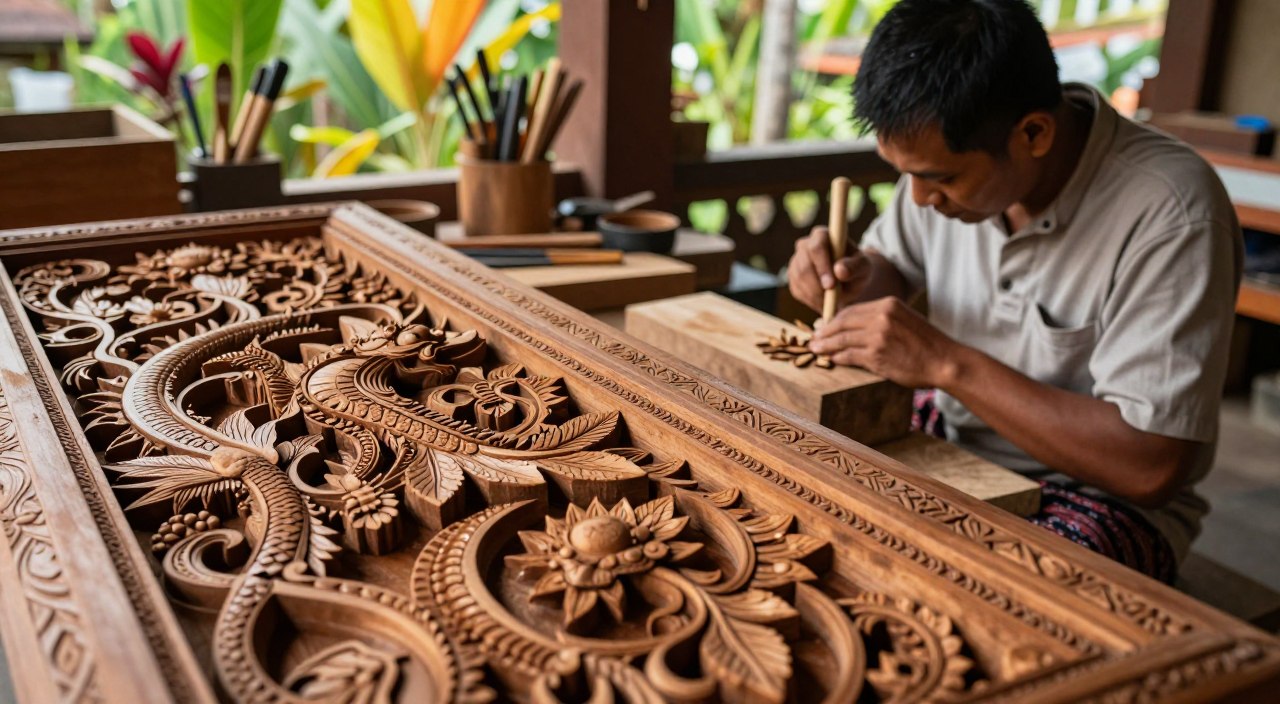
Did you know that over 90% of traditional Balinese homes feature at least one piece of hand-carved woodwork? This stunning fact reveals how deeply this artistic tradition is woven into the island’s daily life.
This intricate craft, known as ukiran bali, is far more than simple decoration. For centuries, it has expressed the philosophy and spiritual beliefs of the local masyarakat (community). The carvings adorn everything from sacred temples to family dwellings, serving both decorative and profound sacred purposes.
What makes this seni (art) truly khas bali (characteristic of Bali) are its unique motifs and symbolic meanings. These elements distinguish it from other Indonesian carving styles. The art form has beautifully evolved, embracing contemporary design while honouring its roots.
Today, you can find a wide jenis (variety) of pieces. These range from traditional religious artefacts to modern furniture and sculptures. This versatility makes ukiran highly sought after by collectors and interior designers worldwide, including here in Australia.
Key Takeaways
- Ukiran Bali is a centuries-old art form central to Balinese culture and spirituality.
- The carvings are distinctive for their unique, symbolic motifs that are characteristic of the island.
- This craft serves both decorative and sacred purposes in temples and homes.
- It has evolved to include contemporary pieces, making it versatile for modern interiors.
- Authentic Balinese wood carvings are increasingly appreciated in Australian markets for their craftsmanship.
Cultural Significance and Historical Roots
The flowing curves of Balinese woodwork tell stories older than the temples they adorn. This seni ukir represents more than decoration—it’s a spiritual language.
Carvers express Hindu devotion through symbolic patterns. The masyarakat views each piece as sacred communication.
Timeless Traditions and Mythology
Mythological tokoh from epics like the Ramayana appear throughout the carvings. Figures like Rama and Sinta symbolize ideal love. Protective beings Barong and Rangda represent eternal struggles.
The distinctive ciri khas includes elegant benangan lines that spiral into curled ends. Natural motifs of flowers and leaves create harmonious bentuk.
“Each curve carries centuries of tradition, connecting the carver to ancient wisdom.”
Regional Influences and Artistic Styles
Different villages developed unique approaches to seni ukir. Bali memiliki several internationally recognized carving centers.
| Village | Specialization | Distinctive Feature |
|---|---|---|
| Desa Mas, Ubud | Figurative sculptures | Detailed character work |
| Desa Peken Belayu | Stone padas carvings | Architectural elements |
| Desa Guwang | Traditional motifs | Mythological themes |
Ancient kingdoms like Majapahit influenced this evolving seni. Today’s artisans honor tradition while creating contemporary interpretations.
Step-by-Step Guide to Crafting Balinese Wood Carvings
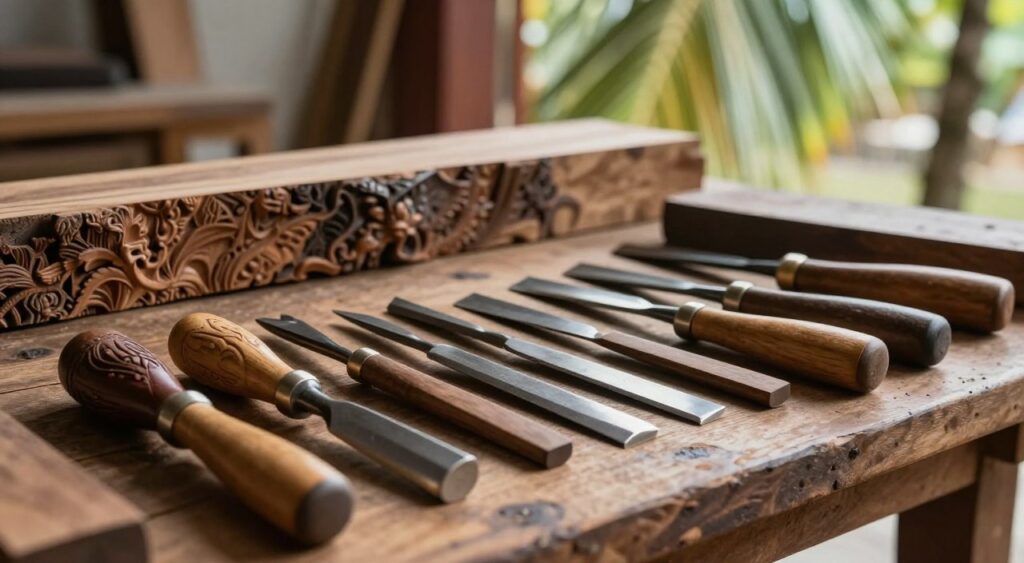
The journey into Balinese carving artistry starts with understanding the fundamental tools and techniques passed down through generations. This practical guide helps beginners approach this beautiful craft with confidence.
Essential Materials and Tools
Selecting the right kayu is crucial for successful ukiran. Teak (kayu jati) offers excellent durability, while kayu moja gaung provides a smooth finish. Kayu cempaka is prized for its aromatic qualities.
For architectural pieces, artisans sometimes use batu padas (sandstone). This material requires specialized skills found in villages like Desa Belayu.
| Wood Type | Best For | Key Properties |
|---|---|---|
| Kayu Jati (Teak) | Outdoor pieces, furniture | Highly durable, weather-resistant |
| Kayu Moja Gaung | Detailed decorative work | Smooth grain, easy to carve |
| Kayu Cempaka | Small ornamental pieces | Aromatic, fine texture |
Basic Techniques and Practical Tips
Beginners should start with simple daun (leaf) patterns. These basic motif designs help develop control of the carving tools.
Master the fundamental cuts before attempting complex bentuk (shapes). Always keep tools sharp and work with the wood grain to prevent splitting.
Different jenis ukiran suit various skill levels. Geometric patterns are ideal for novices, while intricate openwork requires advanced technique.
Incorporating Ukiran Bali in Modern Interiors
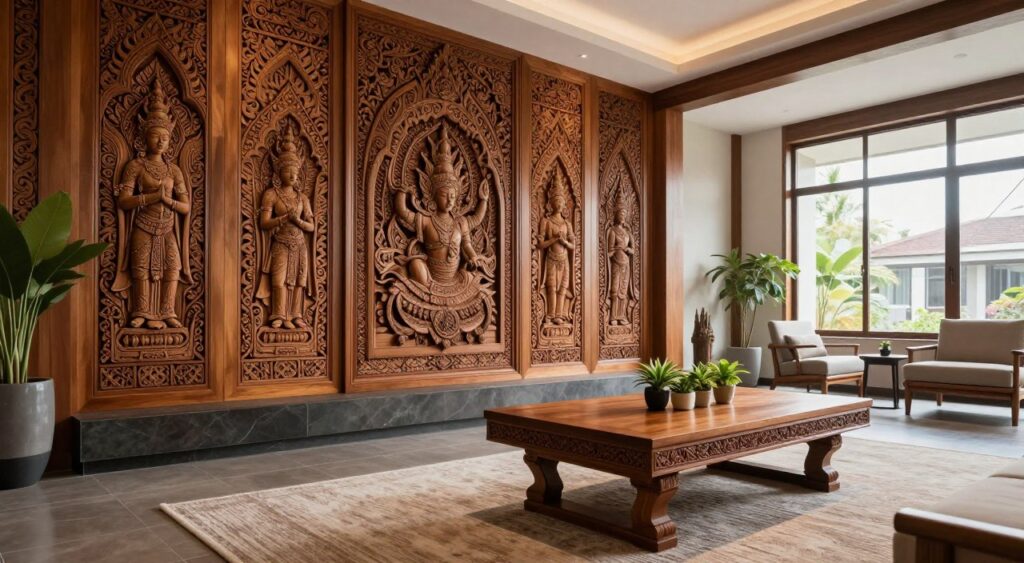
Contemporary interior design in Australia is embracing the warmth and craftsmanship of traditional Indonesian artistry. These handcrafted pieces bring unique character to modern homes while honouring cultural heritage.
Blending Traditional and Contemporary Design
Modern Australian homes can successfully integrate traditional carvings through thoughtful selection. Different jenis of pieces suit various design aesthetics.
Minimalist spaces benefit from subtle motif bunga patterns. These organic shapes add warmth without overwhelming clean lines. Industrial settings can handle bolder bentuk with more pronounced texture.
| Design Style | Suitable Carving Type | Recommended Placement |
|---|---|---|
| Minimalist | Subtle floral motifs | Feature walls, room dividers |
| Coastal | Natural wood pieces | Living areas, entryways |
| Industrial | Bold geometric patterns | Statement furniture, lighting |
| Eclectic | Mixed motif styles | Throughout the home |
Personalising Your Space with Custom Pieces
Custom commissions allow homeowners to create truly unique pieces. Artisans can incorporate personal symbols or family stories into the designs.
Building a meaningful koleksi takes time. Start with one statement piece that reflects your personal style. Consider the ukuran and material carefully for each room.
Proper care ensures these beautiful works last for generations. Regular dusting and occasional conditioning maintain the natural beauty of the kayu.
Conclusion
The true value of these handcrafted works extends far beyond their visual appeal. Each piece represents centuries of seni tradition and spiritual meaning.
Understanding the distinctive ciri helps you appreciate what makes this seni ukir truly khas bali. The flowing lines and symbolic bunga motifs carry deep cultural significance.
When selecting pieces for your rumah, consider both function and aesthetic harmony. Different jenis ukiran suit various spaces and design preferences.
Quality materials like durable kayu ensure longevity. The right jenis can transform any room while honoring traditional craftsmanship.
Acquiring authentic ukiran bali means supporting living artistic traditions. Bali memiliki a rich heritage worth preserving through thoughtful appreciation.
These creations bring more than beauty to Australian homes. They offer a meaningful connection to cultural philosophy through exquisite seni ukir.