Indonesia’s tourism sector recorded 13.98 million international arrivals in 2025, marking 10.44% growth over the previous year, but the distribution across five gateway airports reveals a strategic paradox that tourism officials rarely acknowledge. The concentration pattern exposes both Indonesia’s competitive advantages and its structural vulnerabilities in Southeast Asia’s increasingly fierce tourism battleground.
Jakarta’s Terminals vs. Bali’s Beaches: Indonesia’s Split Tourism Identity
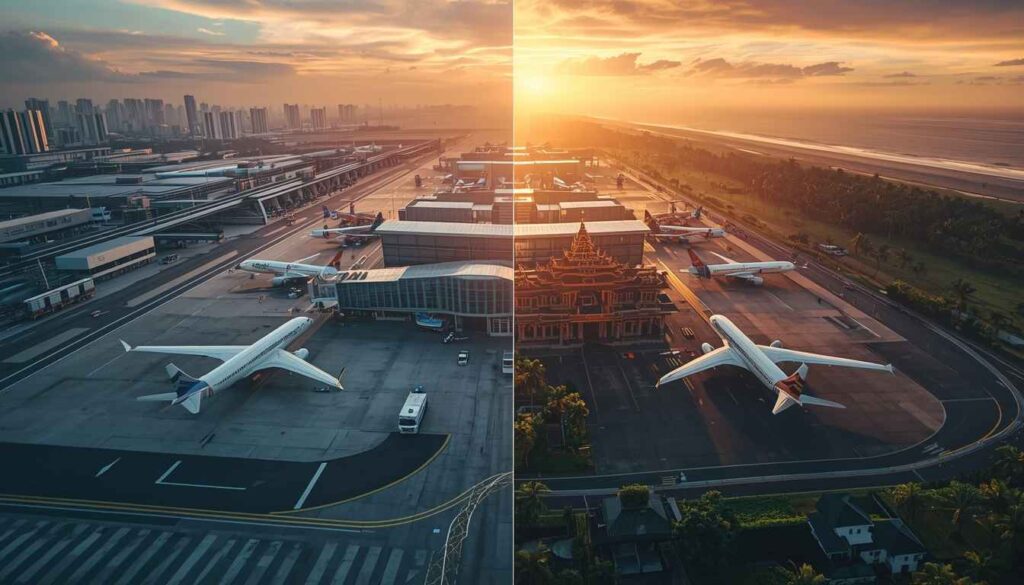
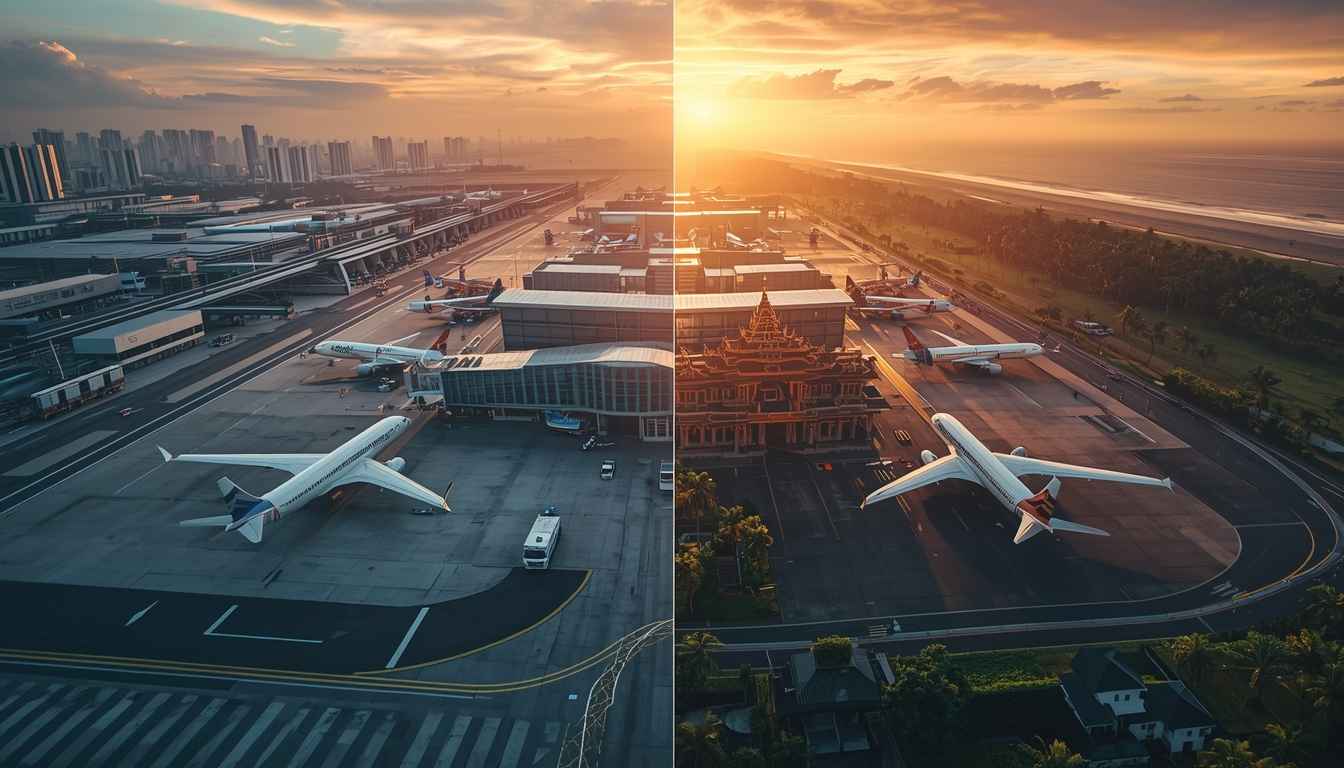
Soekarno-Hatta International Airport in Jakarta processes the highest passenger volume in Indonesia, yet most arrivals passing through its terminals represent business travelers, regional trade delegations, and transit passengers connecting to archipelago destinations. Bali’s Ngurah Rai Airport, by contrast, captures an estimated 40-50% of purely leisure-driven international arrivals despite serving a single island province. This divergence illustrates Indonesia’s fundamental challenge: the country markets itself as a cultural and natural paradise while its primary aviation gateway functions as a business hub for ASEAN’s fourth-largest economy.
The revenue implications deserve scrutiny. Business travelers flowing through Jakarta typically spend less per capita on tourism-specific services compared to leisure visitors heading directly to Bali’s beach resorts. If Indonesia truly attracted 13.98 million visitors in 2025, the critical question becomes how many were conference attendees booking three-night Jakarta stays versus beach holidaymakers spending two weeks island-hopping. The Ministry of Tourism’s aggregated figures obscure this crucial distinction, which determines whether Indonesia generates Thailand-level tourism receipts of $50-60 billion annually or falls short despite respectable arrival numbers.
Five Gateways, Unequal Infrastructure: What the Airport Hierarchy Reveals
Beyond Jakarta and Bali, three additional airports dominate Indonesia’s international connectivity: Kualanamu in Medan, Juanda in Surabaya, and Soekarno-Hatta’s secondary role as Batam’s gateway. Each reveals distinct economic priorities that tourism layers onto rather than drives.
Kualanamu serves North Sumatra’s palm oil and commodity export economy, with tourism to Lake Toba and Bukit Lawang representing secondary traffic. Juanda supports East Java’s manufacturing corridor, funneling arrivals toward Surabaya’s industrial parks as often as toward Mount Bromo’s volcanic landscapes. Batam functions primarily as Singapore’s manufacturing overflow zone, where tourism arrivals often blur with cross-border business travel.
This pattern exposes Indonesia’s infrastructure investment logic: aviation capacity follows existing economic activity rather than proactively developing tourism potential. Lombok’s international airport, positioned to relieve pressure on overcrowded Bali, handles a fraction of Ngurah Rai’s traffic despite aggressive marketing. Labuan Bajo, gateway to Komodo National Park and Indonesia’s premier eco-tourism product, remains underserved by international routes. Makassar, the historical trading hub of eastern Indonesia, lacks the connectivity to convert cultural assets into significant visitor flows.
The omission of these destinations from the top five reveals uncomfortable truths about Indonesia’s tourism development model. Without substantial infrastructure investment in secondary gateways, growth concentrates in already-saturated Bali or diverts to business-oriented Jakarta, neither outcome advancing the government’s stated goal of tourism diversification.
The Bali Dependency Trap: Strength or Strategic Liability?

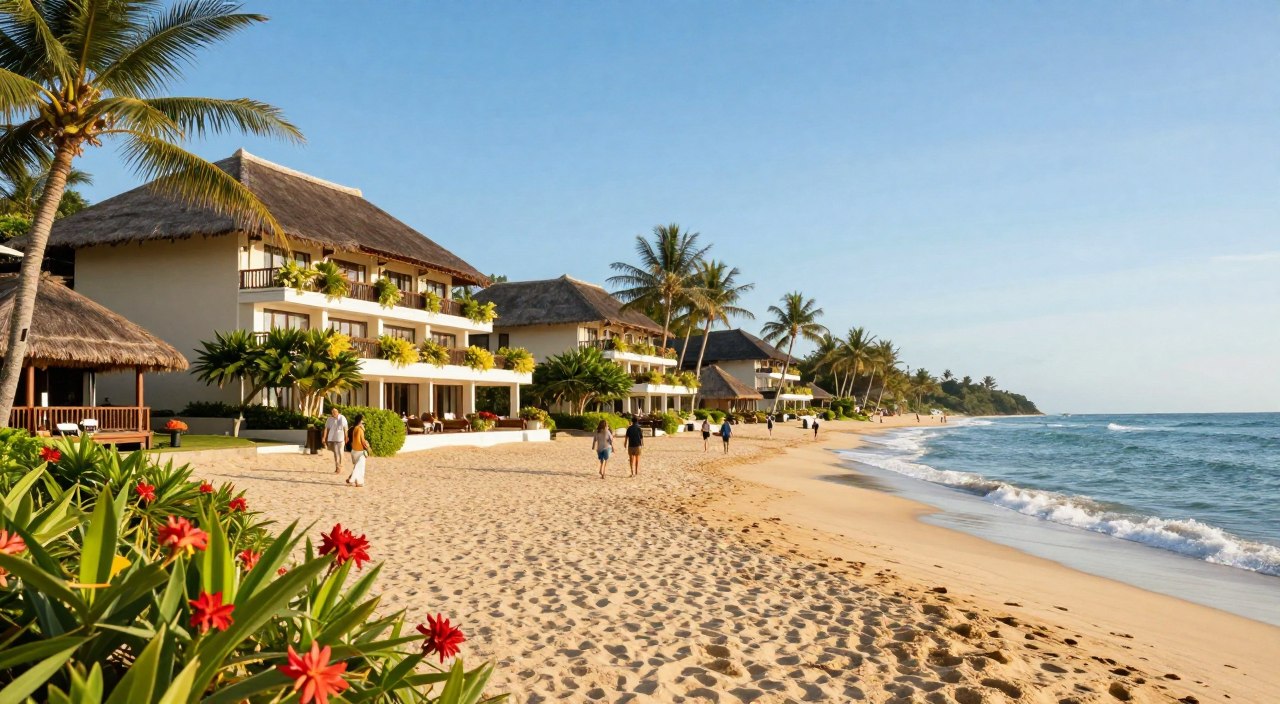
Ngurah Rai’s dominance in leisure arrivals creates escalating sustainability pressures that official growth statistics ignore. Bali’s permanent population of approximately 4.3 million residents now confronts annual tourist arrivals estimated at 6-7 million, producing a tourist-to-resident ratio that strains infrastructure built for far smaller populations. Water scarcity intensifies during dry seasons when hotel demand peaks. Waste management systems designed for residential loads buckle under tourism-generated refuse. Rice paddies yield to villa developments as land values skyrocket.
The airport itself approaches capacity constraints that could throttle future growth. Ngurah Rai’s single runway configuration limits movements during peak hours, creating bottlenecks that airlines factor into route planning. Terminal expansions provide temporary relief but cannot overcome fundamental airside limitations without constructing a second runway, a project complicated by Bali’s limited available land and environmental sensitivities.
Indonesia’s tourism growth, concentrated through this single gateway, resembles building economic strategy on a structural chokepoint. If Ngurah Rai reaches saturation, or if Bali’s environmental degradation damages its brand appeal, Indonesia lacks sufficient alternative gateways to absorb displaced demand. Thailand distributes arrivals across Bangkok, Phuket, Chiang Mai, and Krabi. Indonesia concentrates risk in one island’s overstressed infrastructure.
Regional Competitive Context: Growth Rate vs. Market Share
Indonesia’s 10.44% growth rate appears robust in isolation but requires regional benchmarking for meaningful assessment. Thailand likely welcomed 35-38 million international visitors in 2025, rebounding strongly from pandemic disruptions. Malaysia probably reached 26-28 million, Vietnam approximately 18-20 million. Singapore, despite its small size, processed 15-17 million arrivals through Changi Airport alone.
Indonesia’s 13.98 million positions it firmly in the second tier of Southeast Asian tourism destinations, trailing the regional leaders by substantial margins. The growth rate, while positive, must be evaluated against competitors’ trajectories. If Thailand and Vietnam are growing at similar or faster rates, Indonesia maintains its relative position without gaining market share in the expanding Southeast Asian tourism pie.
The composition of visitors matters enormously for revenue generation. Long-haul European and North American tourists typically spend $3,000-5,000 per trip across accommodation, activities, and transportation. Regional visitors from Malaysia, Singapore, and Australia often spend $800-1,500 for shorter stays. Chinese tourists, once Indonesia’s growth engine, have returned post-pandemic but in different patterns, favoring familiar Bali over exploratory travel to lesser-known islands.
Without granular data on visitor origin markets and average spending per arrival, Indonesia’s 13.98 million figure remains ambiguous. Are these high-value tourists generating substantial foreign exchange earnings, or budget travelers contributing modestly to local economies? The Ministry’s aggregated statistics prevent this essential analysis.

The 2026 Trajectory: Projections Without Targets
Official communications project Indonesia will “remain a top destination” in 2026 without specifying growth targets, arrival forecasts, or revenue goals. This vagueness suggests either cautious planning amid global economic uncertainty or reluctance to commit to measurable benchmarks.
Extrapolating mechanically from 10.44% growth produces approximately 15.4 million arrivals in 2026, but this assumes constant growth rates that tourism markets rarely deliver. More realistic scenarios account for capacity constraints at Ngurah Rai, potential economic slowdowns in source markets, and intensifying regional competition as destinations like Vietnam and Cambodia aggressively court tourists with visa liberalization and infrastructure investment.
Indonesia’s path to sustained tourism growth requires addressing the airport distribution paradox: either massively invest in secondary gateways to diversify beyond Bali, or accept that concentration at Ngurah Rai will eventually create a self-limiting ceiling. The current trajectory suggests neither strategy has achieved decisive implementation, leaving Indonesia to ride existing momentum without structural transformation of its tourism geography.
The 13.98 million arrivals represent genuine progress, but the airport map reveals an industry still dependent on Bali’s brand, still conflating business travel with leisure tourism, still underinvesting in the infrastructure required to convert natural and cultural assets across the archipelago into accessible tourism products. Growth at 10.44% impresses until you examine where that growth flows, and what happens when the primary channels reach saturation.