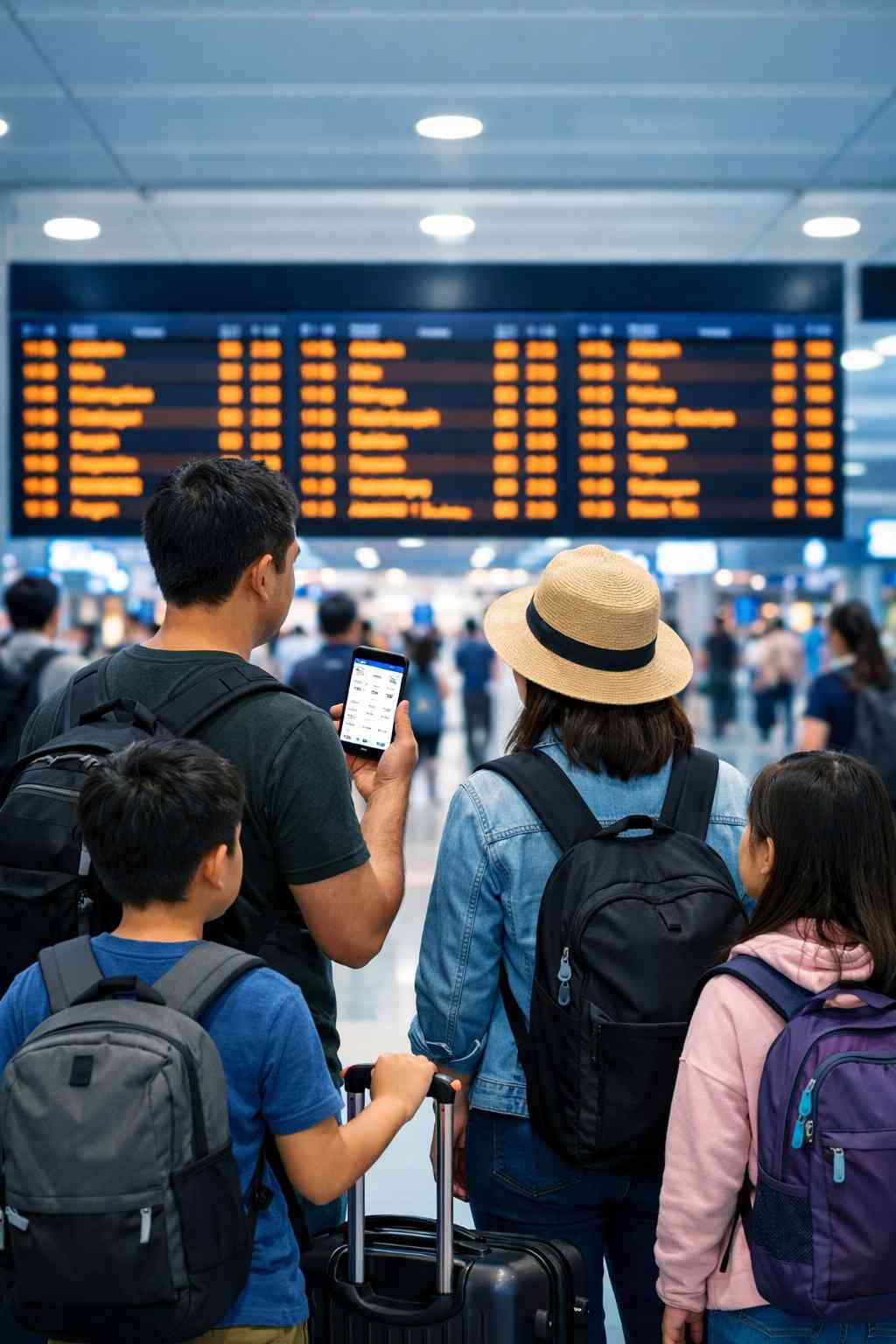
Bangkok will test visitor loyalty with sharp cost increases across airports and attractions, wagering that upgraded infrastructure justifies higher prices before regional competitors capture market share.
Thailand is implementing its most significant travel fee increases in over a decade, adding between $50 and $70 to the cost of visiting the kingdom starting in 2026. The timing raises questions: why burden tourists with higher costs just as Southeast Asia’s tourism war intensifies and travelers have more affordable alternatives than ever?
The answer reveals a calculated strategy by Thai authorities to fund infrastructure improvements while tourism demand remains strong, but the gamble carries real risks in a region where price-conscious travelers can easily redirect their plans to Bali, Da Nang, or Penang.
The Real Cost to Travelers
A family of four flying into Bangkok’s Suvarnabhumi Airport will now pay approximately $140 in airport fees alone, up from around $80 previously. The increases break down across multiple touchpoints: arrival card fees rising from 300 baht ($8.50) to 600 baht ($17), airport passenger service charges jumping from 700 baht ($20) to 1,200 baht ($34), and new environmental levies adding another 400 baht ($11) per person.
For budget travelers, this represents a meaningful shift in the value equation. A backpacker staying two weeks might spend $800 total, the additional $65 in fees now consumes 8% of their entire trip budget. For luxury travelers dropping $5,000 per person, it barely registers. This creates an uncomfortable reality: Thailand’s fee structure increasingly favors high-spending visitors while potentially pricing out the budget segment that historically filled hotels during shoulder seasons.
Infrastructure Investment or Revenue Grab?
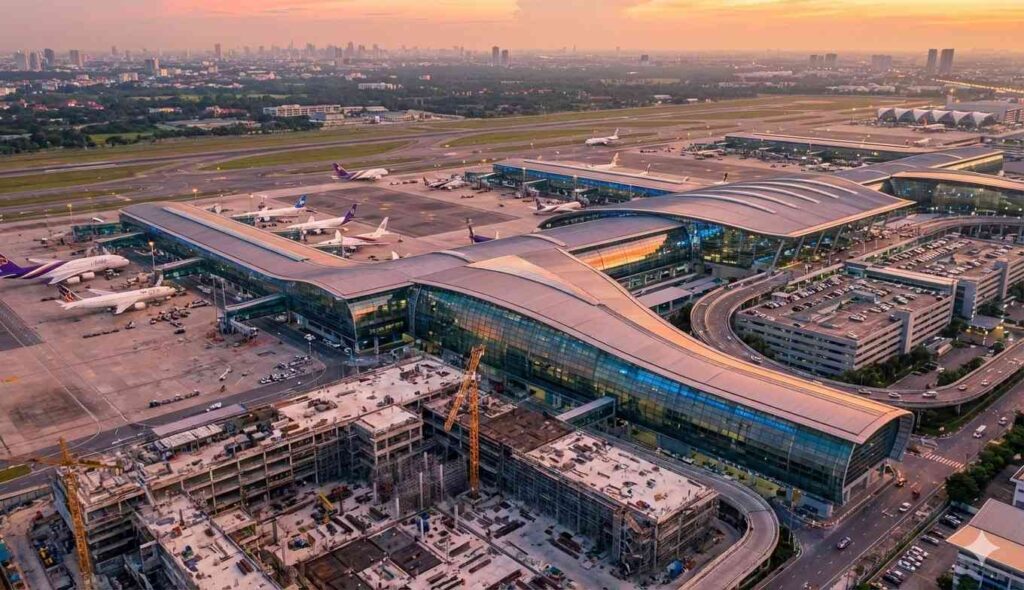
Thai officials frame the increases as essential for modernizing aging airport facilities and improving visitor services. Suvarnabhumi Airport, handling over 60 million passengers annually, operates above its designed capacity. Terminal expansions, runway improvements, and enhanced security screening require substantial capital investment, funds that traditional government budgets cannot easily accommodate.
Tourism economists note that user-pays models make sense when infrastructure directly benefits those users. Unlike general taxation, airport fees theoretically ensure that tourists fund the facilities they utilize. The challenge lies in transparency: will these revenues actually flow toward promised improvements, or disappear into general budgets as has occurred with similar fee increases across Southeast Asia?
Regional Price Competition Intensifies
Thailand’s move comes as regional competitors aggressively court the same tourist demographics. A cost comparison reveals the kingdom’s vulnerability:
Indonesia charges approximately $35 in combined airport and tourist fees for Bali arrivals. Vietnam’s total entry costs hover around $45 for most nationalities. Malaysia maintains some of the lowest fees in the region at roughly $25. The Philippines recently reduced tourist processing fees to $30 to boost arrivals.
Thailand’s new $70+ fee structure positions it as the most expensive entry point in mainland Southeast Asia. For price-sensitive markets, particularly India and China where group tours operate on thin margins, this differential could redirect bookings. A Chinese tour operator choosing between Bangkok and Ho Chi Minh City now faces a $40 per person cost advantage in Vietnam’s favor, multiplied across 30-passenger groups, that becomes a $1,200 swing in tour economics.
Timing the Market Peak
The implementation timing deserves scrutiny. Thailand welcomed 35 million international visitors in 2024, approaching pre-pandemic levels but still below the 39.8 million recorded in 2019. Tourism Authority of Thailand projects 40 million arrivals for 2026, banking on continued Chinese market recovery and strong European interest.
Industry analysts suggest Thailand is attempting to maximize revenue while demand remains robust, before potential economic headwinds in source markets or regional security concerns dampen enthusiasm. This represents a narrow window: raise fees while you can, but risk slowing momentum just as recovery gains traction.
The strategy assumes tourists view Thailand as irreplaceable, its beaches, culture, and cuisine justifying premium pricing. That assumption deserves examination. Vietnam offers comparable coastal experiences at lower cost. Malaysia provides similar cultural richness with better infrastructure in Kuala Lumpur. Indonesia’s tourism development in areas beyond Bali creates new alternatives.
Implementation Challenges Ahead
Rolling out coordinated fee increases across dozens of airports, border crossings, and attraction sites presents logistical complications. Payment systems must handle multiple currencies. Staff require training on new procedures. Tourist confusion and complaints will inevitably spike initially.
More fundamentally, Thailand must deliver visible improvements rapidly. Travelers paying 70% more in fees will expect faster immigration processing, cleaner facilities, and better services. If infrastructure upgrades lag behind fee collection, the reputational damage could prove more costly than the revenue gained.
The 2026-2027 Reckoning

Thailand’s tourism sector will face a definitive test through 2026 and into 2027. Either the fee increases prove manageable, absorbed by strong demand and justified by better experiences, or they accelerate the gradual shift of tourist flows toward cheaper alternatives.
The real question isn’t whether Thailand can afford to raise fees, it’s whether tourists will keep coming at higher prices while Bali and Vietnam stay cheaper. Thai authorities are betting their kingdom’s appeal transcends price sensitivity. Regional competitors are counting on the opposite.
That tension will define Southeast Asian tourism competition for years ahead, with billions in revenue and millions of jobs hanging in the balance.