Why Indonesia Is Rewriting Its Tourism Playbook When Regional Competition Has Never Been Fiercer
Indonesia confronts a paradox in 2025: Bali drowns in visitors while the archipelago’s 17,000 other islands languish in economic stagnation. As Chinese outbound tourism rebounds toward pre-pandemic volumes, industry reports project 130 million trips this year, Southeast Asian nations wage diplomatic and marketing warfare for this lucrative demographic. Jakarta’s response reveals calculated ambition: a 13-destination campaign designed to redistribute tourism revenue while capturing travelers whose preferences have fundamentally shifted since 2020.
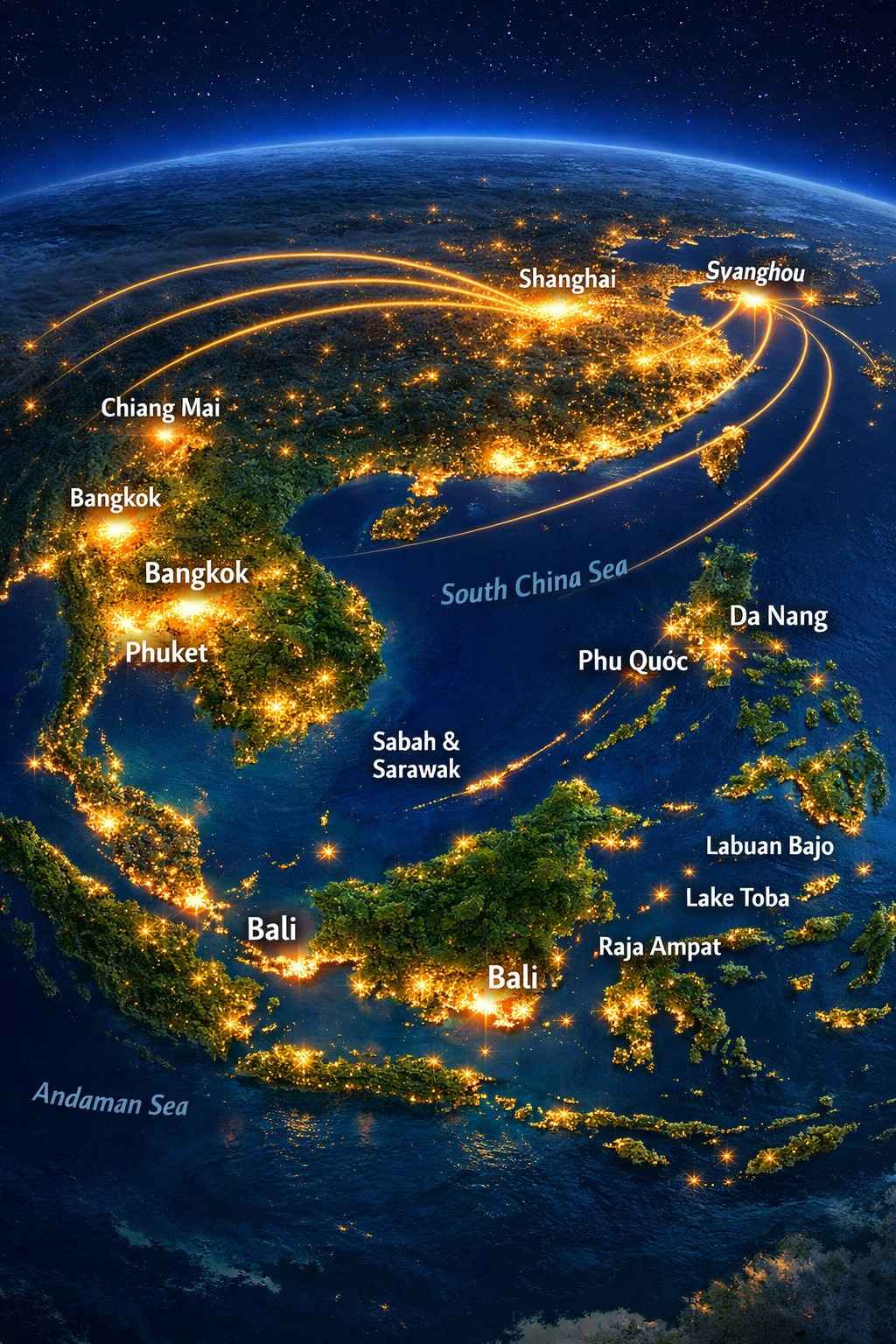
This pivot arrives at a strategic inflection point. Thailand already channels Chinese visitors toward Chiang Mai and Phuket alternatives. Malaysia aggressively markets Borneo’s wilderness experiences. Vietnam’s infrastructure investments in Phu Quoc and Da Nang directly challenge Indonesia’s coastal offerings. Tourism ministry projections estimate Chinese arrivals could reach 3.5 million by 2026, double pre-pandemic figures, but only if Indonesia solves the geographic concentration problem that threatens both environmental sustainability and economic equity.
The stakes extend beyond arrivals statistics. Tourism contributed $58 billion to Indonesia’s economy in 2019; regional governments outside Java and Bali captured barely 22 percent. Diversification doesn’t merely represent marketing strategy, it determines whether tourism revenue finances infrastructure in struggling provinces or further inflates property values in already-saturated destinations.
The Overcrowding Crisis That Forced Jakarta’s Hand
Bali’s tourism success has metastasized into existential threat. Ngurah Rai International Airport processed 6.3 million international passengers in 2019; projections suggested 9 million by 2024 before pandemic disruptions provided temporary reprieve. Rice terraces buckle under Instagram pilgrimages. Water tables drop as hotels proliferate. Traffic paralysis in Seminyak and Ubud costs the economy millions in lost productivity while degrading visitor satisfaction scores that tourism ministries monitor obsessively.
Economic theory identifies this as a classic tragedy of the commons, when individual tourism operators maximize short-term profit, collective long-term value collapses. Destination carrying capacity, the maximum visitor volume a location sustains without degradation, becomes not abstract environmental concern but imminent economic disaster. Industry reports indicate Bali exceeded sustainable thresholds by 2018.
Indonesia’s solution applies spatial economics principles: disperse demand across supply points to optimize resource utilization while reducing negative externalities. The 13 destinations, Labuan Bajo, Lake Toba, Borobudur, Mandalika, Likupang, Bunaken, Raja Ampat, Wakatobi, Morotai, Komodo, Belitung, Tanjung Kelayang, and Bromo-Tengger-Semeru, represent calculated geographic distribution. Four in Sumatra, three in Sulawesi, three in eastern archipelago, two in Java, one in Kalimantan. Each offers distinct value propositions: UNESCO heritage sites, marine biodiversity, volcanic landscapes, pristine beaches.
But infrastructure reality checks ambition. Labuan Bajo exemplifies both promise and peril.
Labuan Bajo: Microcosm of Indonesia’s High-Stakes Bet
This East Nusa Tenggara fishing village transformed into gateway to Komodo National Park, attracting 140,000 visitors in 2023, triple the 2018 figure. The government invested $300 million upgrading Komodo Airport to accommodate wide-body aircraft and constructed marina facilities for yacht tourism. Hotels proliferated from 23 in 2018 to 87 in 2024.
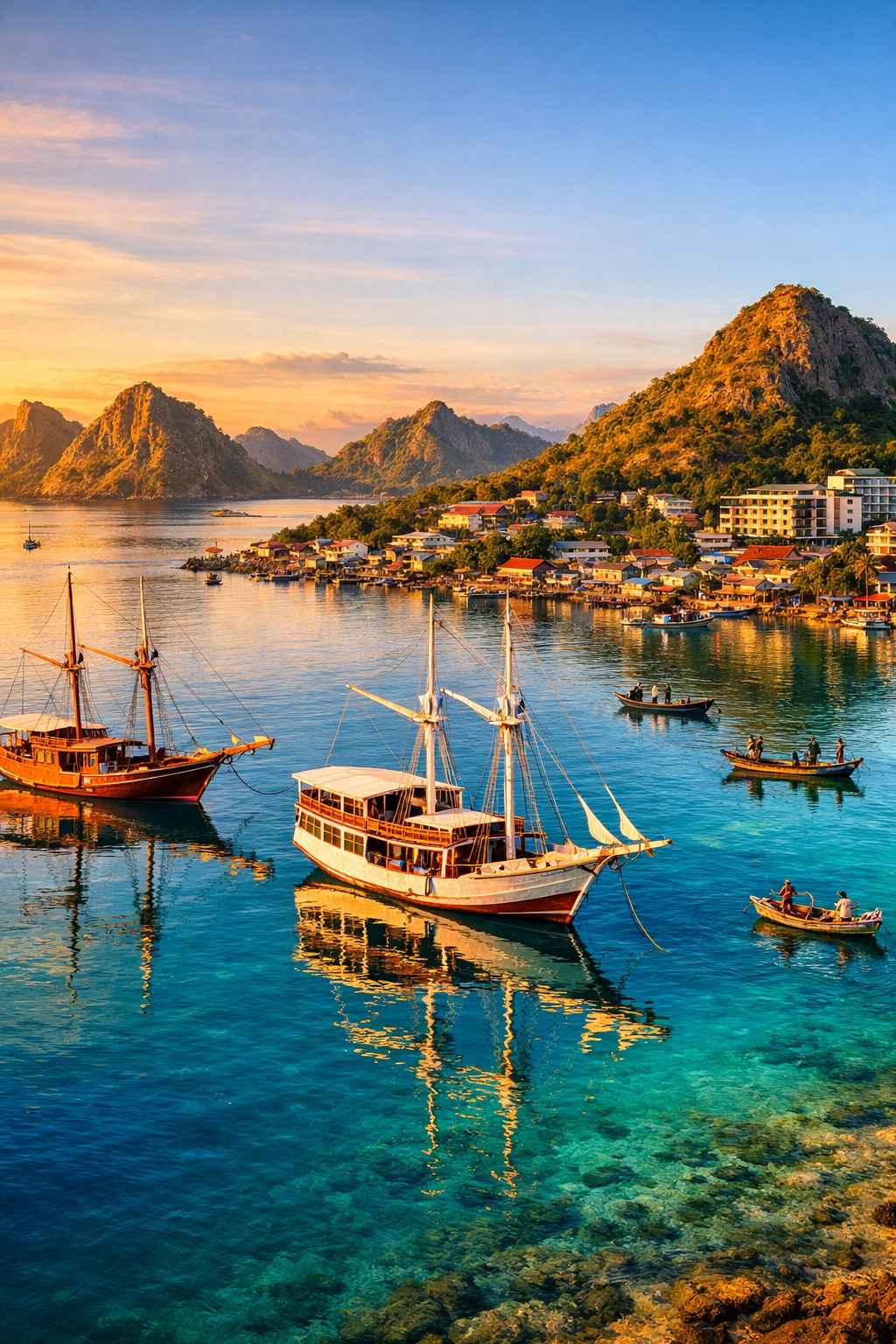
Yet Labuan Bajo reveals diversification’s double-edged sword. The town’s water treatment facilities, designed for 20,000 residents, now serve a transient population exceeding 50,000 during peak season. Waste management systems fail regularly. Local fishermen report declining catches as boat traffic increases and reef damage from inexperienced divers accumulates. Tourism ministry projections targeting 500,000 annual visitors by 2027 presume infrastructure expansion that funding commitments haven’t guaranteed.
The economic redistribution effects remain uneven. Property values surged 400 percent since 2019, pricing out long-term residents. While tourist dollars flow to hotels and tour operators, many Jakarta-based, traditional livelihoods atrophy. One tourism economist, analyzing similar patterns across emerging Southeast Asian destinations, notes: “Rapid tourism development without robust local ownership mechanisms and skills training typically concentrates wealth among external investors while disrupting existing economic structures. Communities end up servicing tourism rather than benefiting from it.”
Labuan Bajo’s experience foreshadows challenges awaiting Likupang, Morotai, and other remote designations. Can airports, roads, and utilities materialize before visitor volumes strain nascent infrastructure? Indonesia’s track record suggests bureaucratic delays and budget constraints slow implementation.
Decoding China’s Post-Pandemic Travel Psychology
Chinese tourist preferences have evolved in ways that both favor and complicate Indonesia’s strategy. Post-pandemic travelers prioritize nature experiences over urban shopping circuits. Demand for outdoor activities, diving, trekking, wildlife observation, aligns precisely with Indonesia’s 13 destinations’ offerings. Industry reports indicate Chinese travelers under 35 now constitute 58 percent of outbound tourism, bringing different spending patterns and experience expectations than previous generations.
Yet Chinese tourists demand infrastructure that many Indonesian destinations lack: reliable mobile connectivity, Chinese-language signage, payment system integration with Alipay and WeChat Pay, and crucially, direct flight access. Indonesia’s visa-on-arrival policy helps, but flight economics determine feasibility. Airlines won’t establish routes without passenger volume guarantees; tourists won’t visit without convenient flights. This chicken-and-egg dilemma strangles many promising destinations.
Thailand solved this equation through government subsidies incentivizing Chinese carriers to serve secondary cities. Malaysia’s state investment fund partnered with airlines on route development. Indonesia’s approach remains unclear, with tourism ministry promotional budgets dwarfed by competitors’ expenditures.
Environmental Reckoning: When Paradise Becomes Product
The environmental calculus grows more troubling as tourism scales. Komodo National Park already restricts daily visitor numbers after marine biologists documented coral reef degradation. Bunaken National Marine Park faces similar pressures. Raja Ampat’s extraordinary biodiversity, over 1,500 fish species, 700 coral species, draws divers worldwide, but each visitor footprint compounds cumulative impact.
Indonesia confronts the authenticity versus commercialization tension inherent in mass tourism promotion. Local communities in Lake Toba and Borobudur regions express ambivalence about tourism expansion. Economic opportunity attracts support, but fears about cultural commodification, environmental degradation, and social disruption foster resistance. Tourism development absent genuine community consultation and benefit-sharing mechanisms generates resentment that ultimately undermines destination appeal.
Regional competition intensifies these pressures. Thailand’s “Second Cities” initiative explicitly positions Chiang Rai and Udon Thani as less-crowded Bali alternatives. Malaysia markets Sabah and Sarawak using near-identical “unspoiled paradise” language Indonesia deploys for eastern destinations. Vietnam’s aggressive infrastructure investments and streamlined visa policies create competitive advantages Indonesia struggles matching.
Geopolitical Wildcards That Tourism Ministers Can’t Control
US-China relations cast long shadows over tourism flows. Previous tensions triggered Chinese government guidance discouraging travel to specific countries. While Indonesia maintains strategic ambiguity between Washington and Beijing, any deterioration in China-Indonesia bilateral relations or ASEAN regional dynamics could abruptly redirect Chinese tourists toward more politically favored destinations. Tourism ministry projections rarely account for geopolitical volatility, yet it remains perhaps the greatest variable affecting Chinese outbound tourism patterns.
Indonesia’s success depends on variables beyond marketing campaigns: airline economics, infrastructure financing, environmental management, community development, visa facilitation, and geopolitical stability. Each represents potential failure point.
What Success Looks Like, and What Failure Costs
Optimistic scenarios see Chinese visitor distribution shifting from 70 percent Bali concentration in 2023 to 45 percent by 2027, with emerging destinations capturing growth. Regional airports achieve profitability. Local communities develop tourism enterprises. Environmental management systems prevent ecosystem collapse.
Pessimistic scenarios see infrastructure lagging demand, environmental degradation accelerating, local resentment building, and tourists defaulting back to established destinations offering superior services and reliability. The 13-destination campaign becomes promotional rhetoric divorced from operational reality.
Indonesia’s challenge isn’t identifying attractive destinations, the archipelago overflows with natural and cultural assets. The challenge lies in coordinating infrastructure investment, environmental protection, community development, and marketing execution across fragmented bureaucracies and resource constraints while competitors move faster with clearer strategies and bigger budgets.
Can Indonesia transform tourism from Bali’s burden into the archipelago’s broadly-shared prosperity, or will diversification remain aspiration rather than achievement, another development plan filed beside countless predecessors? The answer determines not just tourism statistics but economic futures for millions across Indonesia’s neglected regions.