Unlike annual holidays in the Gregorian calendar, the day honoring Saraswati, the goddess of knowledge Bali reveres, occurs roughly every seven months according to the island’s unique Pawukon cycle. This frequent celebration highlights how deeply learning and creativity are woven into the spiritual fabric of life there.
This principal Hindu deity embodies far more than just academic study. She is the patron of music, poetry, speech, and all artistic expression. Her influence represents the complete journey of wisdom, from learning to creative application.
On the Indonesian island, veneration for this revered figure exists within the distinct tradition of Balinese Hinduism. Ancient Vedic beliefs merged with local customs, creating a unique cultural expression. Here, her worship inspires students, artists, and entire communities.
The observance is not merely a religious ritual. It is a core societal value that champions education and the transmission of culture across generations. This deep respect shapes daily life, from temple ceremonies to classroom activities.
Key Takeaways
- Saraswati is a central Hindu deity representing knowledge, arts, music, and creative wisdom.
- In Balinese Hinduism, her worship is adapted to local spiritual practices and calendar systems.
- Saraswati Day is celebrated frequently, approximately every 210 days according to the Pawukon calendar.
- Her influence extends beyond religion into education, arts, and community values in Balinese society.
- The celebration honors the preservation and passing down of wisdom through generations.
- This tradition illustrates the fusion of ancient Vedic beliefs with unique island customs.
Introduction to Saraswati and Her Significance in Bali
The pursuit of wisdom finds its celestial champion in a revered figure central to island life. This Hindu goddess is the divine source of all learning and artistic inspiration.
She guides devotees toward truth and spiritual clarity. Her influence extends across faiths, holding importance in Jainism and Buddhism throughout Southeast Asia.
In Balinese culture, her significance shapes core values. It impacts educational philosophy and the preservation of traditional arts.
This deep respect culminates in Saraswati Day, or Knowledge Day. Ceremonies focus on temples and natural water sources for spiritual purification.
Honoring this deity is essential for anyone engaged in learning or creation. This explains the profound community devotion seen during celebrations.
History and Origins of the Goddess
The roots of this revered deity stretch back millennia to the ancient Rigveda, where she first appeared as a mighty river. Her very name reveals this aquatic origin.
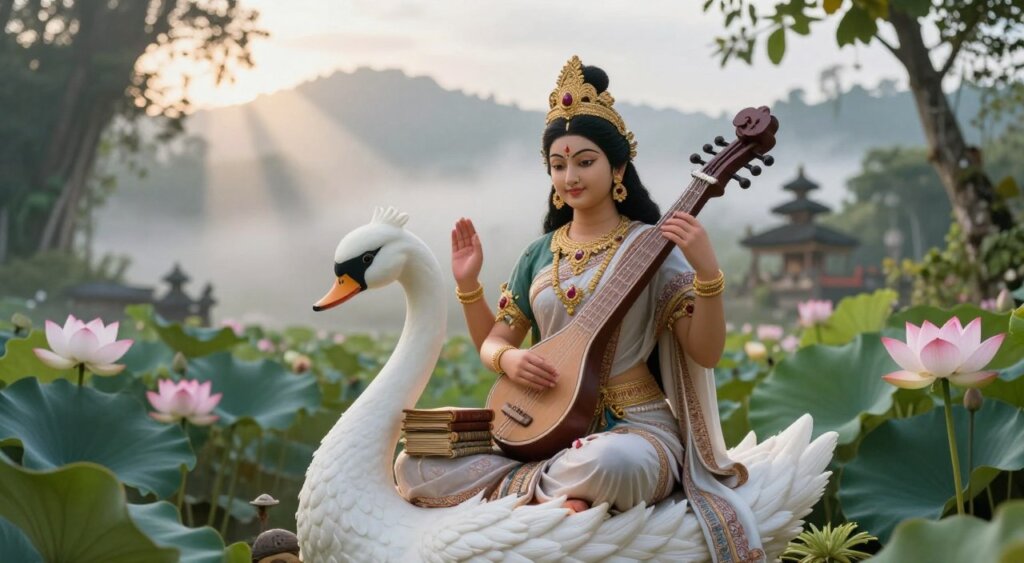
It combines Sanskrit words for “pooling water” and “she who possesses.” This original meaning connects her to fertility and purification long before her association with wisdom.
Vedic Influences and Early Traditions
In early Vedic texts from 1500-1000 BCE, she was a powerful flood deity. She roared alongside storm gods and represented celestial waters.
A crucial shift occurred in later Brahmana texts. Here, she merged with Vac, the goddess of sacred speech.
This fusion marked her transformation. She began embodying creative expression and divine knowledge.
Puranic Myths and Cultural Transformation
Medieval Puranic literature fully developed her modern identity. She became the consort of Brahma and mother of the Vedas.
Complex origin stories describe her as a manifestation of primordial creative power. Her evolution reflects broader changes in Hindu practice over time.
| Period | Primary Role | Key Attributes | Associated Elements |
|---|---|---|---|
| Vedic Era | River Deity | Purification, Fertility, Natural Power | Water, Storms, Milky Way |
| Puranic Era | Goddess of Knowledge | Speech, Music, Science, Arts | Books, Veena (instrument), Swan |
The Symbolism of Wisdom, Arts, and Purity
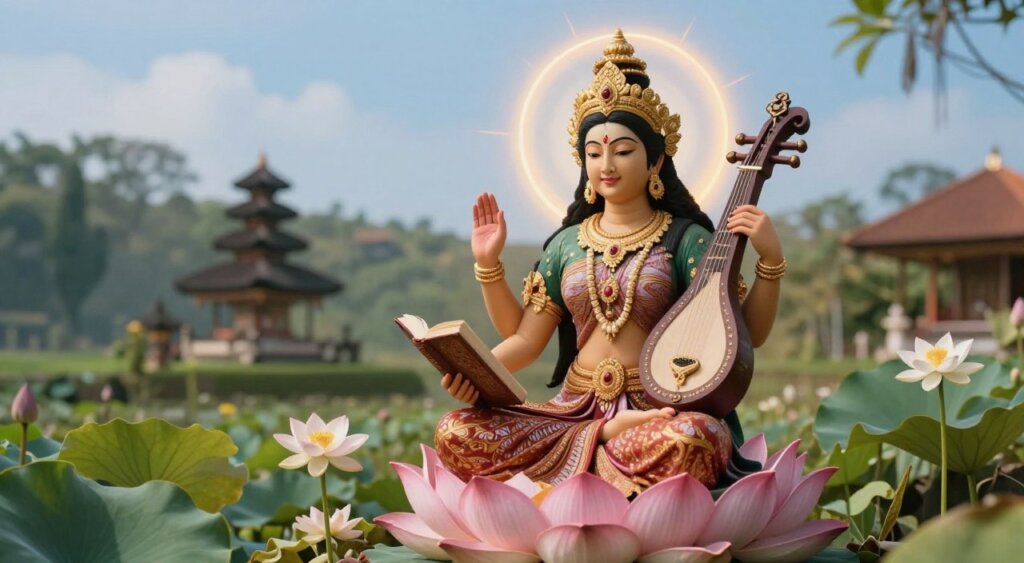
The visual representation of Saraswati is a profound tapestry of symbols. Each element conveys deep philosophical truths about goddess wisdom and creative expression.
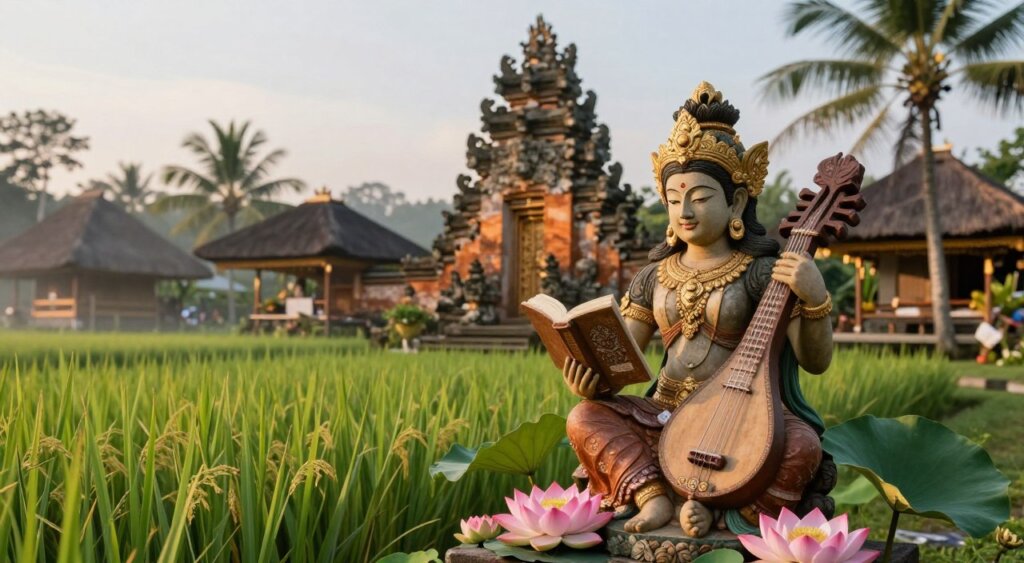
She is often depicted as a beautiful woman dressed in white, seated on a white lotus. This imagery symbolizes supreme purity, spiritual clarity, and the quality of goodness known as sattva.
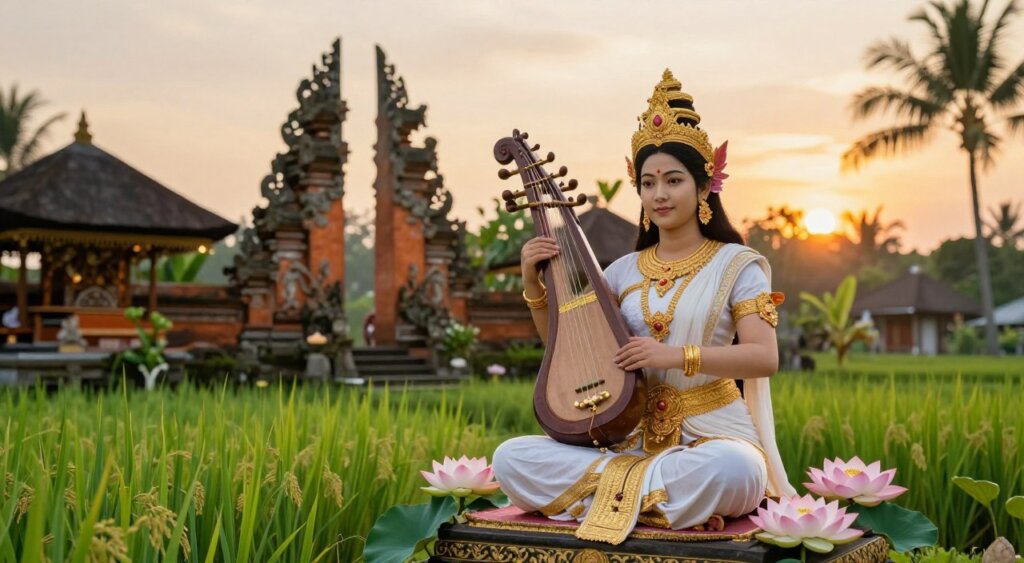
Her four hands represent the four aspects of human personality. These are the mind, intellect, consciousness, and ego. Complete learning requires integrating all these dimensions.
Each object she holds carries profound meaning. The book represents all sacred and secular knowledge. The rosary signifies meditation and spiritual science.
The water pot symbolizes purification of the mind and spirit. The veena, a traditional stringed musical instrument, embodies the harmony of the arts and creative expression.
Her mount, the swan, is celebrated for its legendary ability to separate milk from water. This is a metaphor for discriminating wisdom. It distinguishes truth from falsehood and essence from illusion.
| Symbol | Meaning |
|---|---|
| White Attire & Lotus | Purity, Spiritual Clarity, Sattva |
| Four Hands | Mind, Intellect, Consciousness, Ego |
| Book | Sacred and Secular Knowledge |
| Rosary | Meditation, Spiritual Science |
| Water Pot | Purification |
| Veena (Instrument) | Harmony of Arts and Music |
| Swan | Discriminating Wisdom |
Together, these symbols communicate that true wisdom blends intellect, artistic sensitivity, and spiritual purity. Understanding this iconography helps devotees connect more deeply with her teachings.
Understanding the Balinese Pawukon Calendar
The rhythm of life in Bali is governed by a unique and ancient timekeeping system known as the Pawukon calendar. This traditional framework creates a completely different experience of time compared to the Gregorian solar year.
It operates on a sacred 210-day cycle. This cycle is deeply connected to spiritual and agricultural rhythms rather than astronomical seasons.
The 210-Day Cycle Explained
The Pawukon calendar divides its cycle into multiple overlapping weeks. Each day carries specific spiritual qualities that influence ceremonies.
Important festivals, like the one honoring Saraswati, always fall on designated periods. This day occurs on Wuku Watugunung, a period considered highly favorable for learning and purification.
It specifically lands on a Saturday of the Umanis week as the cycle concludes. Because this calendar uses a 210-day cycle, the festival happens roughly every seven months on the Gregorian calendar.
For visitors, this means consulting local Balinese calendars is essential. The system reveals how closely spirituality and daily life are intertwined on the island.
Celebrating Saraswati Day in Balinese Culture
Across the island, a unique festival transforms ordinary Saturday mornings into vibrant displays of devotion to learning and the arts. This special saraswati day sees entire communities unite in a shared reverence for wisdom.
The atmosphere is one of deep gratitude and spiritual focus. It reinforces the cultural value placed on education and creative expression.
Traditional Rituals and Offerings
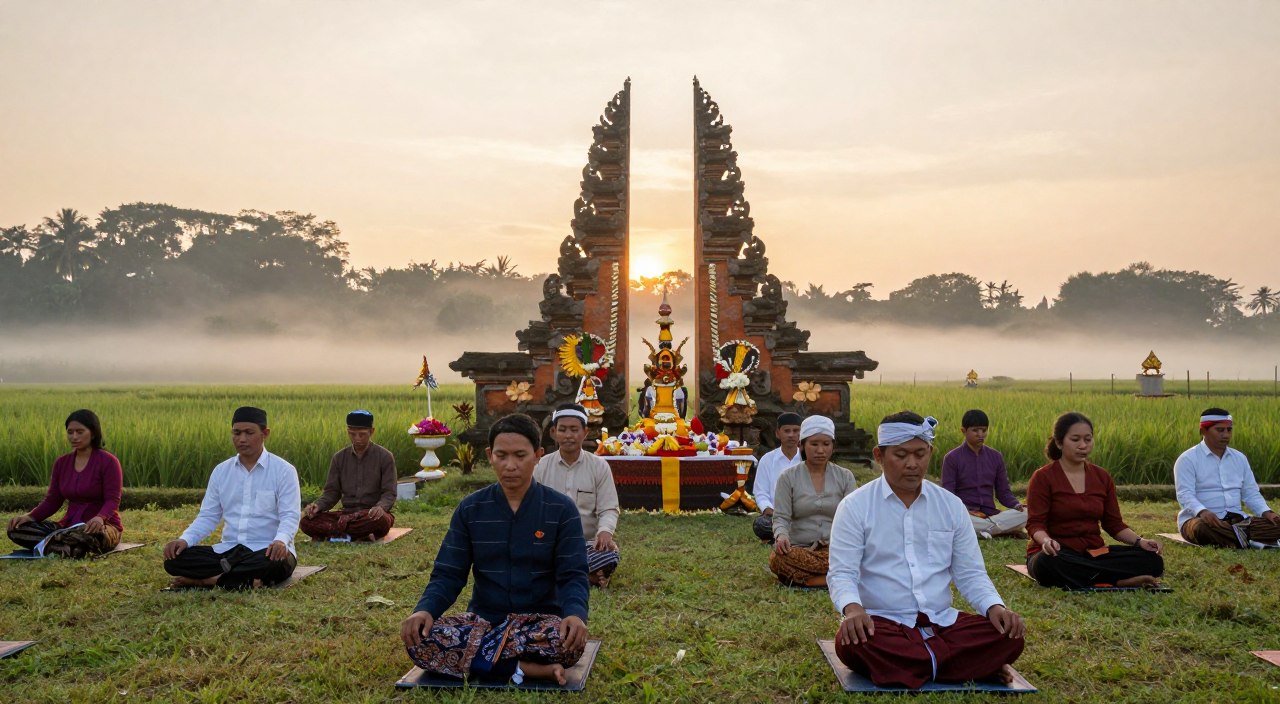
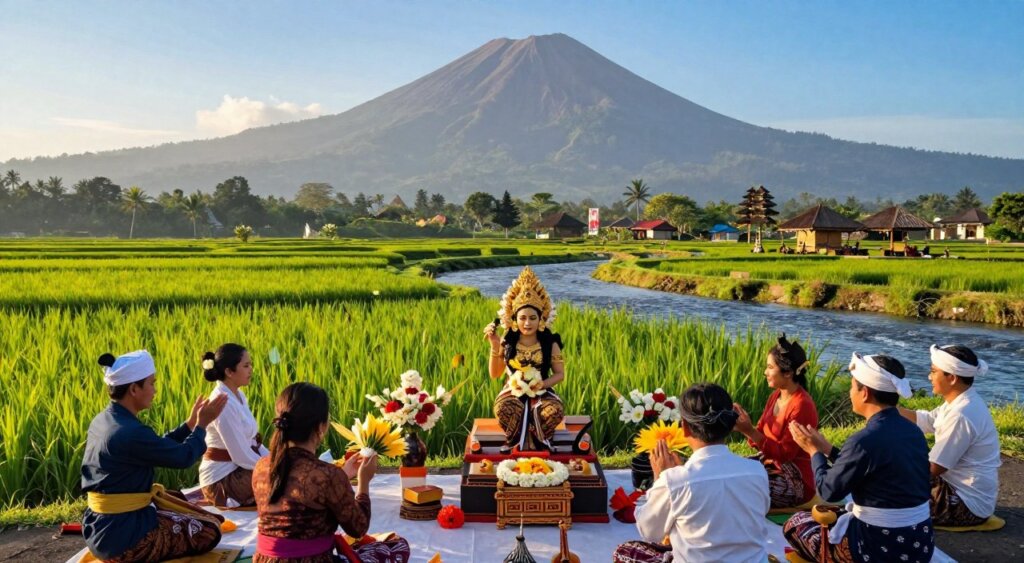
Celebrations begin at dawn with visits to family and public temples. Devotees dress in traditional attire to offer sincere prayer and thanks.
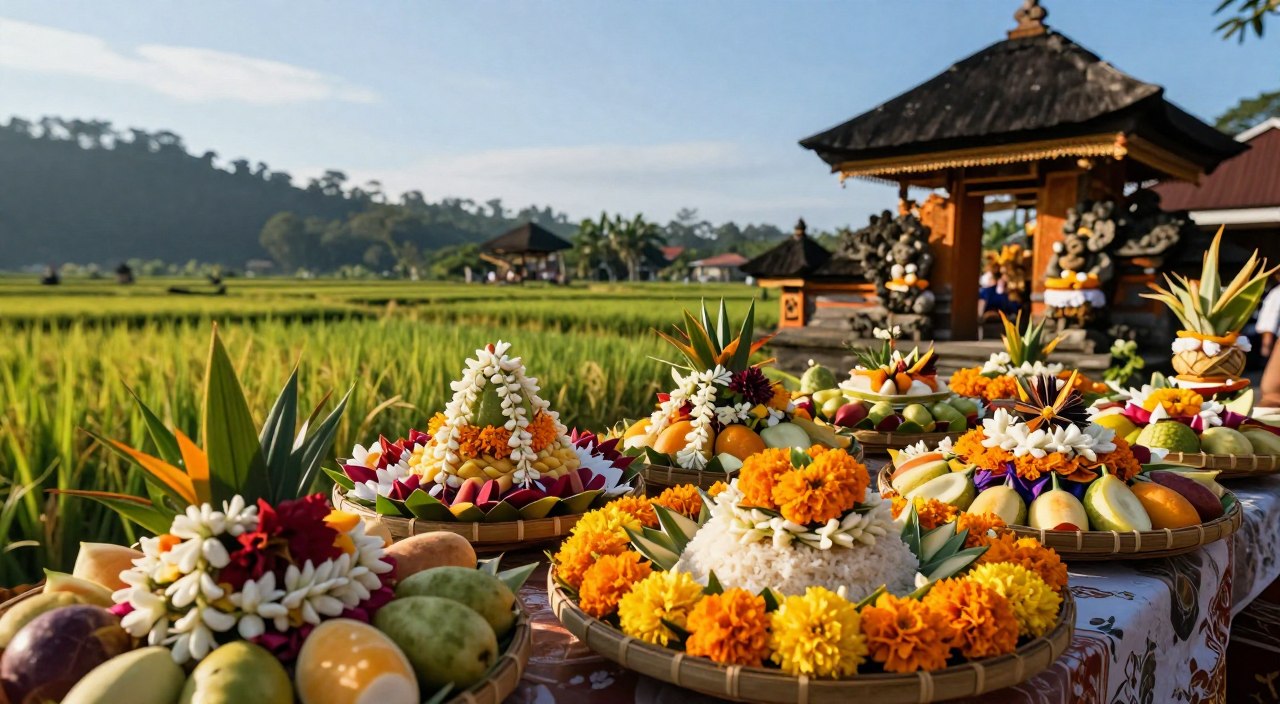
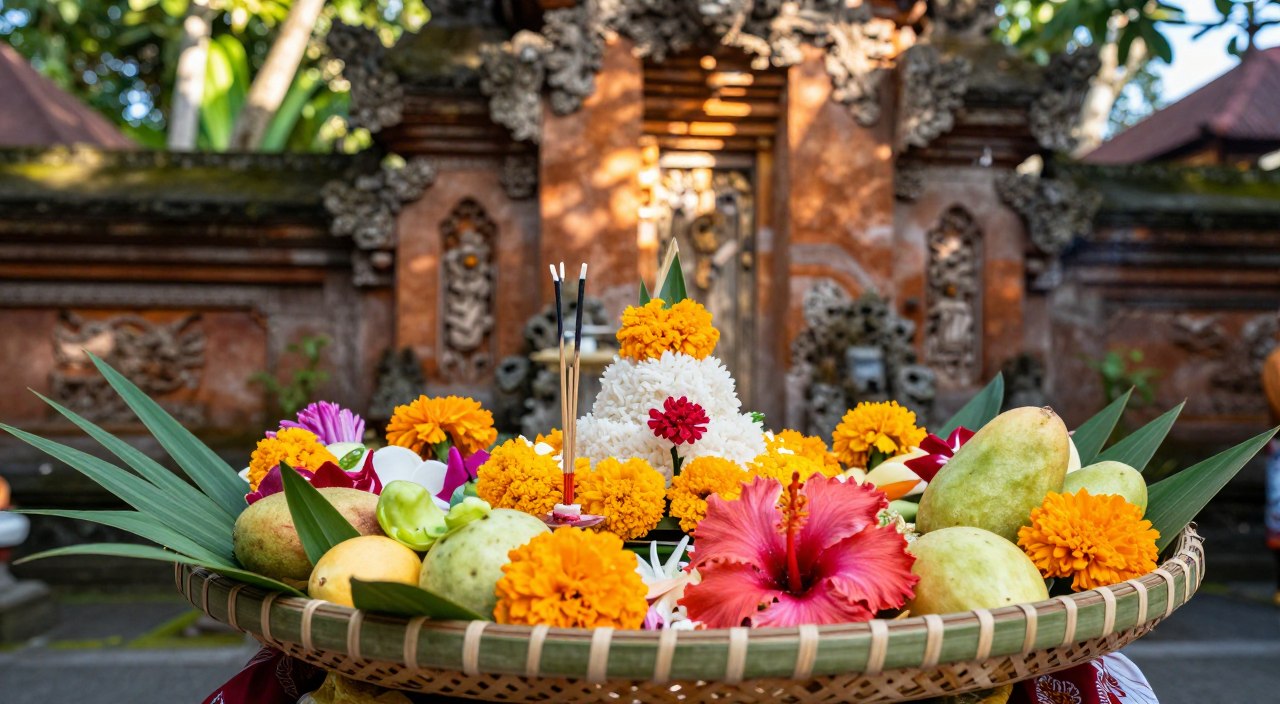
Elaborate offerings, known as banten, are carefully prepared. These include fresh flowers, fragrant incense, fruits, and symbolic palm leaf manuscripts called lontar.
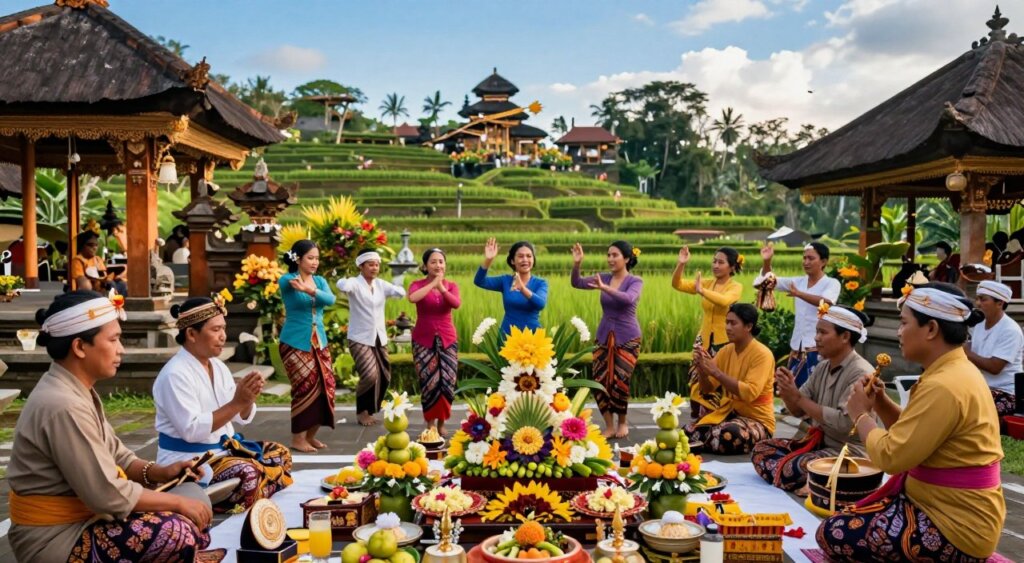
Each item in the offering carries meaning. Together, they represent the sacred nature of all knowledge and the importance of preserving it.
Blessing of Books and Sacred Texts
A central ritual involves the blessing of all sources of wisdom. Ancient manuscripts, modern textbooks, and even electronic devices are gathered on special altars.
A priest then sprinkles them with holy water. This act sanctifies the tools of learning and honors their divine source.
Following the ceremony, a unique tradition is observed. People abstain from reading or writing, allowing the blessed books to rest.
Students and teachers play a prominent role in these school-based ceremonies. The day creates a powerful, communal atmosphere that underscores the island’s devotion to intellectual growth.
The Iconography of Saraswati: Imagery and Meaning
Artistic representations across centuries have codified a distinct set of attributes for the patroness of wisdom. This goddess saraswati is often depicted in a highly consistent manner.
She appears as a serene woman dressed in white, symbolizing supreme purity. Her four hands hold specific symbolic objects that represent different facets of true wisdom.
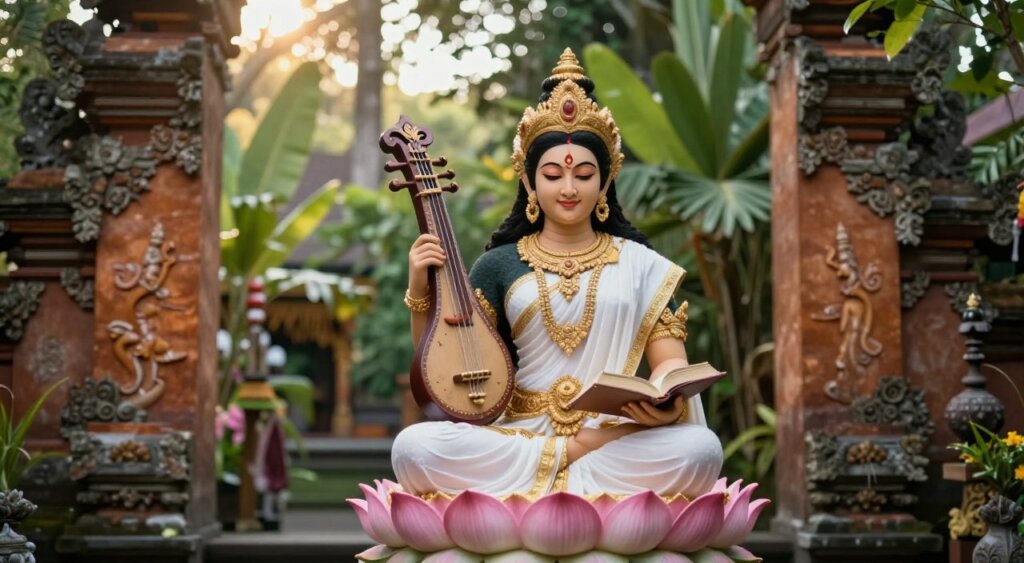
Ancient texts like the Matsya Purana established this classic form. She holds a book (the Vedas), a rosary, a musical instrument called the veena, and a water pot.
| Object Held | Meaning |
|---|---|
| Book (Vedas) | Sacred and intellectual knowledge |
| Rosary (Mala) | Meditation and spiritual science |
| Veena (Instrument) | Harmony of arts and music |
| Water Pot | Purification of mind and spirit |
Each item conveys a core concept. The book is sacred knowledge. The rosary means spiritual practice. The instrument stands for artistic harmony. The pot signifies purification.
Her mount, a white swan, represents the ability to separate truth from illusion. This complete iconography allows devotees to instantly recognize her in temples and art.
It also guides meditation and explains why specific offerings are made during her holy day. Flowers honor her purity, while books acknowledge her role as the source of learning.
How Saraswati Inspires Knowledge and Education
From the first strokes of a child’s pen to the advanced studies of university scholars, a divine inspiration guides the path of learning. This deity’s influence makes the pursuit of education a sacred act within the island’s culture.
On her special day, a beautiful tradition unfolds. Elders often help young children learn how to write the letters of the alphabet for the very first time.
This act honors the source of all knowledge and marks the beginning of a lifelong journey. It instills a deep reverence for learning from the earliest age.
Influence on Schools and Traditional Manuscripts
Educational institutions at every level become ceremonial centers. Students and teachers gather to participate in rituals that reinforce the sacred nature of their work.
A key focus is on traditional palm leaf manuscripts, known as lontar. These handcrafted documents connect contemporary learners with ancient wisdom.
The blessing of books and texts is a core practice. It is not just a religious ritual but a powerful pedagogical tool.
This ceremony teaches that knowledge is a gift requiring careful stewardship. It encourages respectful and diligent study habits in all schools.
Modern Reflections of Ancient Wisdom
Ancient traditions remain deeply relevant today. Learners seek blessings for success in modern subjects like science and technology.
They simultaneously maintain a vital connection to traditional forms of understanding. This balance enriches the modern mind.
The inspiration extends far beyond academic facts. It fosters a complete intellect capable of creativity, ethical reasoning, and discernment.
This holistic approach to education prepares individuals to apply wisdom beneficially in their life. The goddess Saraswati thus inspires a timeless and practical devotion to knowledge across all schools of thought.
Relationship Between Saraswati Day and Pagerwesi Day
True spiritual development requires both learning and protection. This is shown by two closely linked festivals in the Balinese calendar.
Saraswati day is followed about four days later by Pagerwesi day. This sequential timing is deeply intentional.
Pagerwesi translates to “iron fence.” This festival focuses on building spiritual power and defense. It aims to protect the wisdom gained during the earlier celebration.
The pairing reveals a sophisticated theology. Knowledge alone is insufficient. It must be guarded by disciplined consciousness and ethical practice.
| Aspect | Saraswati Day | Pagerwesi Day |
|---|---|---|
| Primary Focus | Acquisition of knowledge & arts | Spiritual strength & protection |
| Core Symbolism | Books, veena, white lotus | Iron fence, spiritual fortification |
| Key Practices | Blessing books, prayers for learning | Protective rituals, family ceremonies |
| Intended Outcome | Enlightened mind | Guarded and resilient spirit |
This structure creates a complete spiritual path. First, the mind is filled with sacred insight. Then, inner defenses are reinforced.
Meditation and protective rituals help devotees apply their learning correctly. The two observances together ensure a balanced and grounded spiritual life.
Cultural Significance of Rituals: Water, Music, and Dance
Balinese devotion to knowledge manifests through three powerful channels: purifying water, harmonious music, and expressive dance. These elements create a holistic ritual experience that engages all senses.
A central ritual involves sprinkling holy water, or tirta. This act symbolizes cleansing the mind, body, and spirit. It connects to the ancient belief that wisdom purifies ignorance.
The water ritual often occurs at sacred natural sites. Rivers, lakes, and temple springs serve as fonts for this holy water. The following day, known as Banyu Pinaruh, sees communities bathing in these sources to wash away mental fog.
Music plays a vital role, reflecting the deity’s patronage of the arts. Traditional gamelan orchestras and devotional songs fill the air. The sounds honor her inspiration of all melodious expression.
Dance serves as a moving offering and prayer. Performers execute sacred choreography that tells stories. Their movements embody the grace and artistic excellence she represents.
Together, these practices show how Balinese culture integrates sensory dimensions. Touch, sound, and movement unite to honor the source of knowledge. This creates ceremonies that fully engage body, mind, and spirit.
Spiritual Journeys and Pilgrimage in Bali
Across Bali, ancient stone gateways mark the threshold between the everyday world and realms of spiritual wisdom. Pilgrimage to sacred sites is a core practice, especially on days honoring divine inspiration. These journeys are physical acts with deep metaphysical meaning.
Visiting a holy place, or tirtha, is believed to confer great spiritual merit. It is a tradition rooted in ancient Vedic customs. The act of travel itself becomes a moving meditation.
Temple Visits and Sacred Sites
On special holy days, devotees travel to various temples. Major public temples like Pura Jagatnatha become focal points for community worship. Smaller village shrines and school altars also host intimate ceremonies.
These consecrated spaces are often built near natural water sources. This location symbolizes purity and the flow of life. The architecture creates an environment perfect for quiet contemplation.
Elders guide younger generations through proper rituals during these visits. This ensures traditional wisdom continues flowing through communal life. The shared experience strengthens cultural bonds.
Each step toward a sacred temple symbolizes progress from ignorance to enlightenment. The physical journey mirrors an inner quest. Sacred geography provides the essential context for encountering the divine.
Exploring Saraswati Goddess of Knowledge Bali Rituals
A profound silence descends across the island as a unique post-ceremony tradition takes hold. This practice distinguishes Balinese observances from those in other regions. After the blessing of books and texts, reading and writing are intentionally set aside.
This rest period honors the belief that wisdom itself requires sanctification. The festival thus creates a powerful, reflective pause in community life.
Altars showcase a blend of ancient and modern tools for learning. Traditional palm-leaf manuscripts sit beside laptops and tablets. This inclusion shows the sacred nature of all knowledge, old and new.
These saraswati day rituals reveal sophisticated theological thinking. Balinese culture views wisdom as dynamic, not static. It needs periodic renewal through prayer and ritual to maintain its beneficial power.
- The prohibition on study after blessings teaches respect for the source of learning.
- Blessing electronic devices extends sanctity to contemporary technology.
- Ceremonies act as cultural pedagogy, shaping students’ consciousness.
These practices are far more than formalities. They actively shape how people on the island conceptualize education. The rituals instill a deep reverence that guides the mind throughout life.
This day reinforces community bonds through shared participation. It ensures the distinctive identity of the local tradition endures in a globalized world. Every saraswati day is a living lesson in the sacred duty of learning.
Conclusion
Ultimately, the traditions explored here celebrate a profound integration of learning into the spiritual heart of a community. This special day is far more than a religious festival; it is a powerful cultural statement about the sacred nature of education.
The unique calendar, the blessing of books, and the ritual use of water are distinctive features. These practices actively shape consciousness and maintain a strong cultural identity in a changing world.
Honoring the goddess of knowledge brings together students, teachers, artists, and families. It shows a shared commitment to transmitting wisdom across generations. This balance between ancient tradition and modern life is key to its enduring power.
The vibrant rituals in temples and schools across Bali offer a window into a living culture. They remind us of the universal human quest for wisdom, creativity, and meaning.