What does it truly take to shield a world heritage site from the mounting pressures of the modern world? This report examines how Komodo National Park Conservation Funding and strategy stack up against other UNESCO sites facing similar threats.
This Indonesian archipelago was set up in 1980 to protect the famous Komodo dragon. It earned its UNESCO badge in 1991. Today, fewer than 3,500 of these iconic reptiles remain, classified as Endangered.
They face serious dangers from human activity and climate change. The area also battles poaching, illegal fishing, and the impacts of mass tourism.
This industry analysis digs into the unique challenges here. It explores how protection efforts balance safeguarding biodiversity with generating vital tourism revenue.
The framework involves partnerships between global groups and local authorities. By comparing this model to others, we can see what works and where gaps remain.
Key Takeaways
- This report compares the financial and strategic approaches used at this iconic Indonesian site with other UNESCO locations under pressure.
- It highlights the unique challenge of protecting a flagship endangered species while managing sustainable tourism.
- Readers will gain insights into the conservation framework built through international and local partnerships.
- The analysis places Komodo’s model within the wider context of global heritage site management.
- It provides valuable perspectives for conservation professionals and policymakers.
- Findings are grounded in recent operational data, showing real outcomes and ongoing needs.
- Understanding this evolution helps assess how similar sites might adapt their own strategies.
Introduction to Komodo National Park Conservation Funding
The financial backbone supporting any major protected area is its most critical, yet often most fragile, component. For this iconic Indonesian archipelago, the economic model reveals a telling gap.
Core financial support comes from the Indonesian government. These public resources are, however, insufficient to meet all operational and protective needs.
Revenue generated from visitor fees and related tourism does not cycle back into site management. This disconnect removes a key incentive to improve facilities for a growing eco-tourist market.
Recognising this systemic flaw, the Ministry of Finance has designated the location as a pilot site. It will test novel financing methods and the privatisation of visitor services.
Over 20,000 local residents depend economically on the visitor industry. This creates complex interdependencies between sustainable livelihoods and environmental care.
Overview of Conservation Strategies at Komodo National Park
The protection blueprint for this Indonesian archipelago has transformed from a single-species focus to a holistic ecosystem defence.
Historical Evolution and UNESCO Status
Initial efforts, starting in 1980, centred on safeguarding the Komodo dragon. This iconic reptile can grow over three metres long and detect prey from kilometres away.
In 1991, the area’s dedication to preserving its land and rich marine life earned it UNESCO heritage site status. This recognised the exceptional biodiversity across its hills, savannas, and coral reefs.
Key Objectives and Milestones
A primary goal remains reversing the dragon’s decline, with fewer than 3,500 now classified as Endangered. The strategy now guards the entire interconnected ecosystems, from deer populations to coral systems.
Milestones show a major shift. Work moved from basic ranger patrols to technology-led surveillance and SMART patrol methods. The comprehensive Global Park Defense programme was a key step.
Recent advances include the 2022-2025 management plan and the 2025 launch of the Loh Wenci ranger station. This evolution marks a move to proactive, intelligence-led protection.
Historical Context and UNESCO Designation
Earning a place on the UNESCO list fundamentally altered the trajectory of this iconic location. The designation in 1991 granted it formal international recognition as a site of outstanding universal value.
This status was awarded for its dedication to protecting both land and rich marine life. The area’s beauty and impressive biodiversity made it an ideal destination.
The world heritage label brought new opportunities and serious obligations. It provided access to global conservation networks and potential funds.
It also placed the site under greater scrutiny for its management of threats. This reflected the growing global awareness about biodiversity loss in the early 1990s.
| UNESCO Designation Criteria | Description | Significance |
|---|---|---|
| Geological Features | Volcanic archipelago formation with unique landscapes | Shows Earth’s history and geological processes |
| Terrestrial Biodiversity | Home to the endemic Komodo dragon and other species | Exceptional natural phenomena and habitats |
| Marine Ecosystems | Supports over 1,000 fish species and coral reefs | Critical for biological diversity conservation |
“World Heritage status is not just an award; it is a commitment to safeguard irreplaceable treasures for future generations.”
This heritage site status positioned it within a global network facing similar challenges. It enabled valuable comparisons of strategies across different nations.
The recognition also intensified tourism interest. This created financial opportunities but added environmental pressures that shape management today.
Comparing Funding Mechanisms Across UNESCO Sites
A comparative look at how global heritage sites generate and manage money reveals starkly different approaches. Financial models range from full government support to complex partnerships.
One innovative model being assessed is a Tourism Concession. A dedicated entity would handle finances, marketing, and infrastructure. Visitor fees would then flow directly into site management.
Many world heritage locations in wealthy nations rely on stable budgets and donations. Sites in developing countries often depend heavily on tourism revenue and international grants.
A common challenge is the need for upfront investment. Improving facilities and protection justifies later increases in user fees. External funding, potentially from a global environmental fund, can kickstart this cycle.
| Funding Model | Typical Locations | Key Features |
|---|---|---|
| Government-Dependent | Many European & North American sites | Stable annual appropriations; supplemented by philanthropy. |
| Tourism-Led | Galápagos (Ecuador), Serengeti (Tanzania) | High visitor fees directly fund conservation; gate fee reforms critical. |
| Hybrid/Concession | Proposed for Komodo; used in parts of Africa & Latin America | Private entity manages operations; revenues are ring-fenced for the national park. |
Financially self-sustaining sites usually combine high-value travel, effective reinvestment, and strong policy support. This mix is essential for long-term sustainability.
Funding Challenges and Government Support Models
A critical issue facing iconic sites worldwide is the misalignment between income generation and conservation spending. This structural problem creates a fundamental challenge for long-term protection.
At this Indonesian location, basic government support exists but falls short. Essential management needs, from ranger patrols to research, operate under tight resources.

Visitor fees flow to central coffers instead of being reinvested locally. This disconnect removes the incentive to upgrade infrastructure for a growing eco-tourist market.
International partnerships have become vital. Groups like Global Conservation provide technology and capacity building that state budgets cannot.
The proposed Tourism Concession model offers a potential fix. It would create a dedicated revenue stream with legal mandates for reinvestment. This could fund expanded enforcement and sustainable community development initiatives.
“Financial sustainability requires closing the loop between the visitor experience and the health of the park.”
Successful models elsewhere show that political will and transparent governance are key. Initial investment can kickstart a virtuous cycle where tourism funds directly safeguard the natural assets.
Infrastructure Improvements in Komodo National Park
Tangible upgrades to physical assets are proving to be a game-changer for on-ground protection efforts. Significant investments have transformed the operational capacity of this World Heritage site.
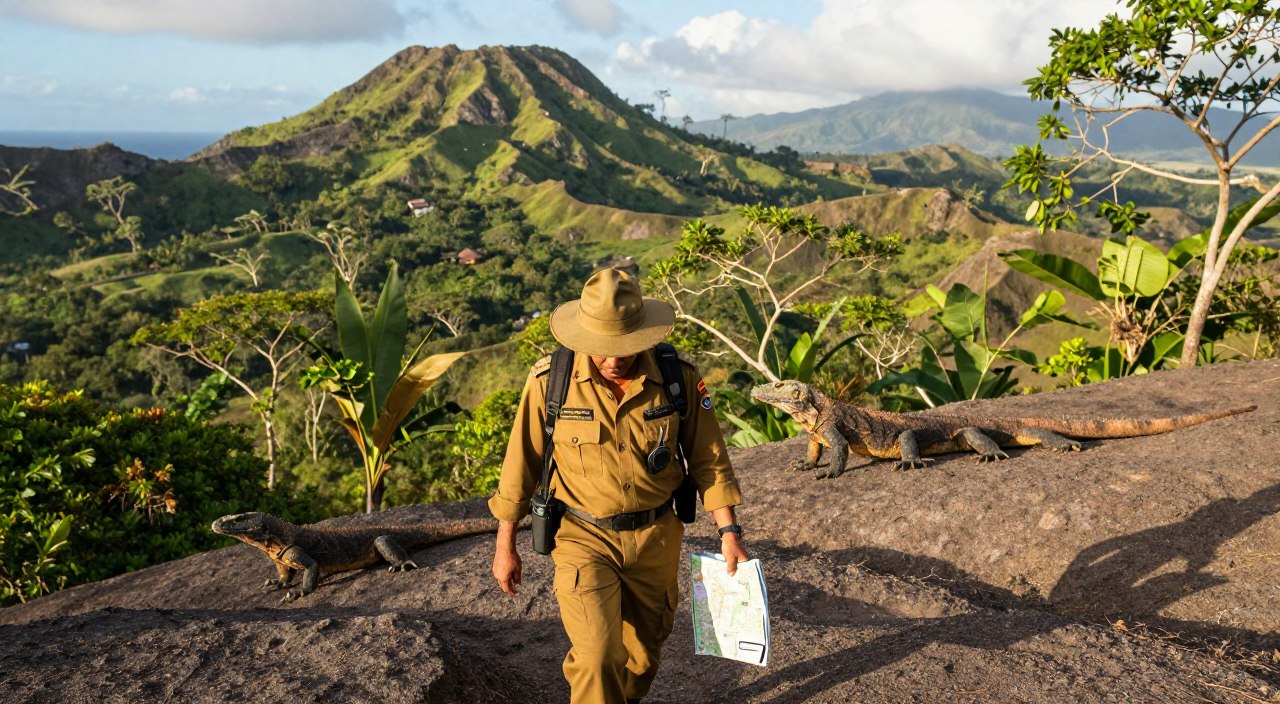
The centrepiece is the upgraded Loh Wenci ranger station on Komodo Island’s west coast. This facility provides permanent accommodation for fourteen personnel.
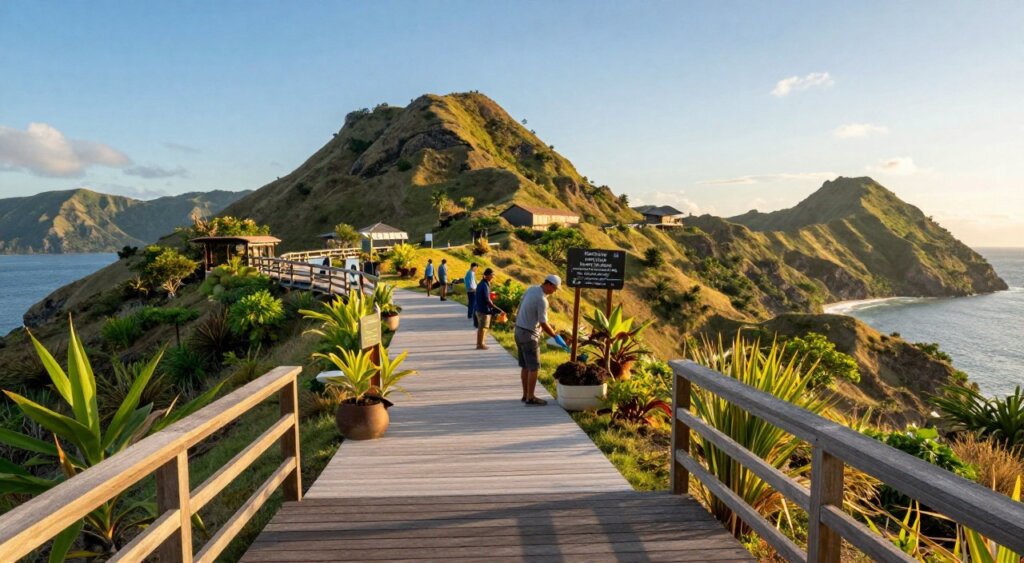
It eliminates lengthy rotations, enabling a sustained ranger presence. The station features specialised rooms for planning, control, and secure storage.
This strategic development acts as a forward base for rapid response. It targets areas with historically high illegal activity.
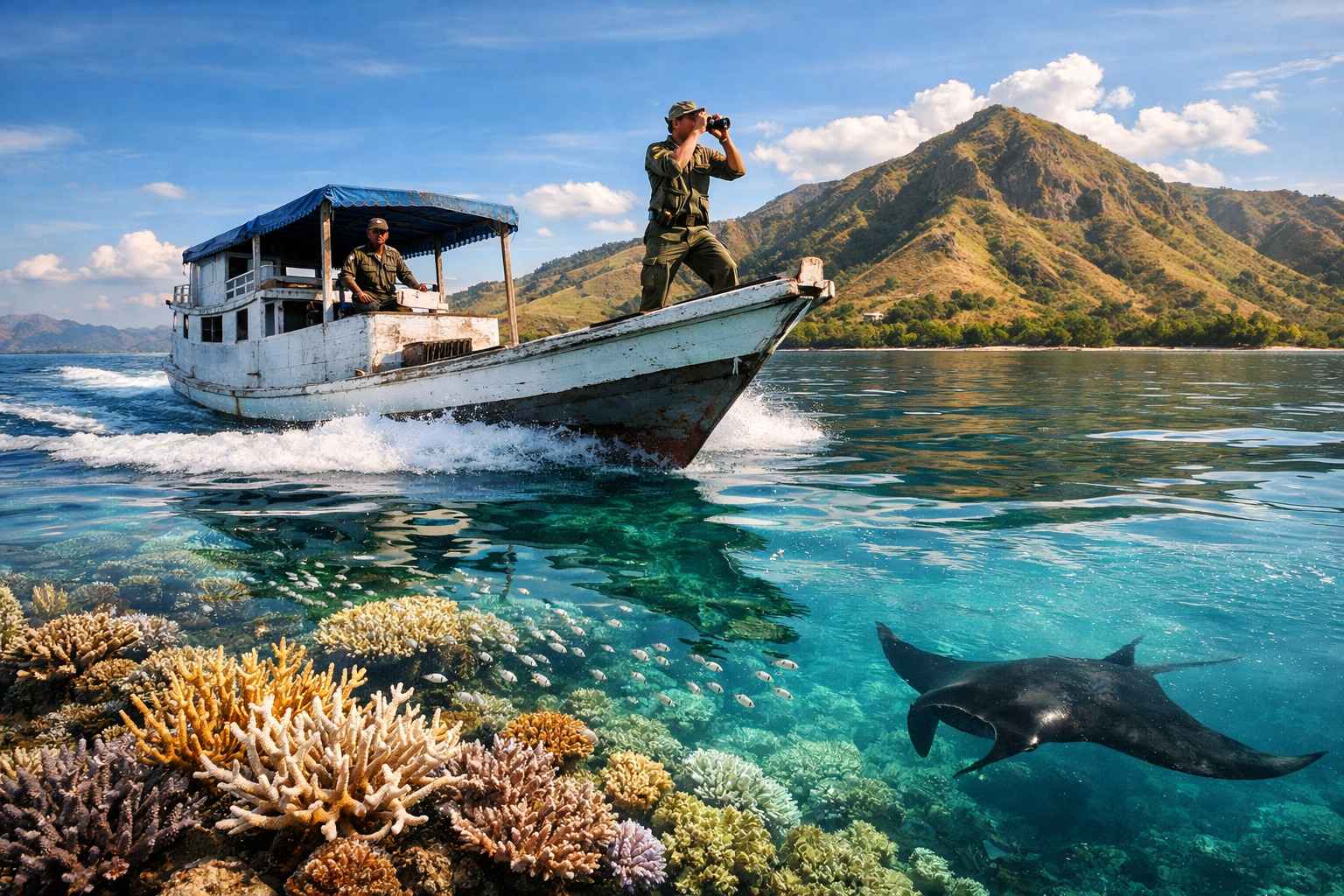
Infrastructure work extends beyond buildings. A Rapid Sea Patrol Vessel is now stationed full-time on the western coast.
Marine radar systems detect vessels approaching at night. This technology addresses a critical past vulnerability.
Solar power installations provide reliable, sustainable energy for remote facilities. They cut costs and support environmental goals.
These capital developments create the physical foundation needed for advanced tech and enforcement. They show how direct infrastructure spending boosts protection operations.
Critical Initiatives for Enhancing Park Protection
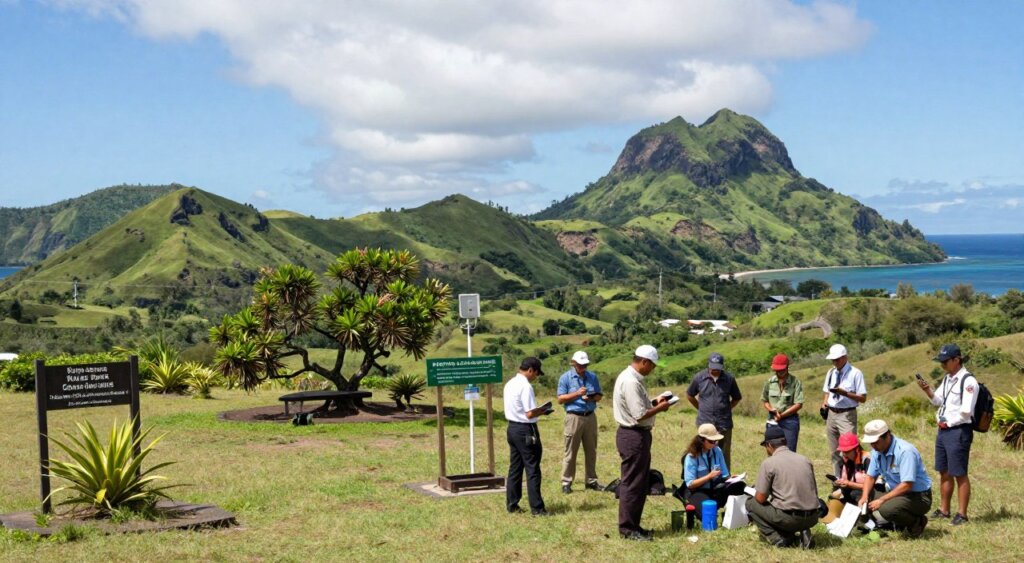
Cutting-edge technology combined with upgraded infrastructure marks a new era in proactive environmental guardianship. A dedicated three-year program is systematically boosting defence capabilities across both land and sea zones.
Global Park Defense Implementation
This holistic initiative addresses past enforcement gaps that allowed illegal activities to persist. It integrates physical assets, surveillance tech, and improved patrol methodologies.
The strategy ensures a continuous presence in high-threat areas. Marine radar now detects vessels at night for rapid interdiction.
Upgraded Ranger Stations and Supporting Facilities
Renovations to the western ranger station enable extended law operations. A rapid sea patrol vessel provides immediate response to marine threats.
These critical initiatives strengthen protection across Komodo’s terrestrial marine environments. They have already led to poacher arrests and fewer illegal incidents in the national park.
Management Practices and Long-Term Sustainability
The true test of any conservation model is its ability to sustain itself financially and ecologically over decades. For this UNESCO site, long-term sustainability hinges on management practices that harmonise economic needs with environmental care.

Tourism development must be compatible with the surroundings. Economic success depends entirely on maintaining high environmental quality. This principle guides all planning.
In 2025, the area independently intensified its SMART Patrol operations using internal resources. This move demonstrates a commitment to evidence-based management. Systematic data collection now informs strategic decisions.
The vision for long-term sustainability centres on a proposed Tourism Concession. This model aims to create a self-funding cycle. Visitor fees would directly support protection activities and community projects.
This approach addresses the core tension. Tourism generates essential revenue, but it must not degrade the very assets visitors come to see. Adaptive management, using real-time data, allows strategies to evolve with new threats.
The goal is financial self-sufficiency within years. Achieving this requires effective reinvestment and continued visitor growth. It represents the future of resilient sustainability for Komodo National Park.
Wildlife Protection Measures and Anti-Poaching Strategies
Modern wildlife protection demands a direct and tactical response to immediate, violent threats. The iconic komodo dragon faces endangerment, with fewer than 3,500 left.
Historical burning of dragon habitat and illegal hunting of their prey, mainly Timor deer, created this crisis. Depleting deer stocks threatens the entire ecosystem.
Today’s protection strategy uses intelligence-led enforcement. The Loh Wenci surveillance system, operational since March 2025, has detected seven real-time poaching incidents.
This enables rapid interdiction, stopping crimes before wildlife is lost. Operations are high-risk, as shown by a June 2025 confrontation involving an exchange of gunfire.
Persistent intelligence gathering is key. In December 2025, a GPS-tracked boat led to the successful arrest of a primary deer poaching suspect.
| Operation Date | Method | Outcome |
|---|---|---|
| March – Ongoing 2025 | Real-time surveillance at Loh Wenci | 7 incidents detected for immediate response |
| June 2025 | Direct interdiction patrol | Confrontation with armed suspects; deterrence achieved |
| December 2025 | GPS tracking & intelligence operation | Primary suspect apprehended |
This evolved approach shows measurable success. It protects the komodo dragon by safeguarding its prey, securing the wildlife web for the future.
Data-Driven Surveillance and Monitoring Systems
Moving beyond traditional patrols, a network of electronic eyes now provides constant vigilance across remote landscapes. This shift to data-driven surveillance represents a fundamental transformation in protection. It moves operations from intuition to evidence-based strategy.
Utilisation of Camera Traps and Real-Time Data
The core of these systems is a strategic network of thirty camera traps. They are placed in high-risk areas identified for illegal activity. This monitoring setup captures frequent human movements.
Data reveals activities like non-timber harvesting and poaching from nearby islands. Analysis has uncovered distinct patterns of illegal hunting. It pinpointed remote hotspots that were previously unknown.
The blend of offline and online camera units is key. Online traps enable immediate response, while offline ones cover areas without connectivity. This technological mix maximises coverage and effectiveness.
Real-time data availability has revolutionised ranger work. It allows for proactive interdiction instead of discovering evidence later. This intelligence-led approach dramatically improves enforcement systems.
Continuous monitoring also supports vital scientific research. It helps manage the site adaptively based on solid surveillance insights.
Community Engagement and Capacity Building Initiatives
Beyond cameras and drones, the most critical asset for protecting a world heritage site is the people tasked with its daily defence and the communities that surround it.
An effective training program ensures rangers can expertly manage sophisticated surveillance systems. This hands-on capacity building covers camera traps, CCTV, drones, and network operations.
Rangers already skilled in wildlife monitoring require expanded technical knowledge. Drone training begins with commercial models before advancing to complex VTOL systems.
This progressive method builds confidence and operational skill. It transforms routine patrols into intelligence-led activities.
Local community engagement is equally vital. Over 20,000 residents in and around the site depend on tourism for their livelihoods.
Awareness activities help people see how protection supports the natural assets that generate income. Inclusive approaches build local ownership of conservation outcomes.
Long-term success requires building institutional capacity. The goal is to maintain enhanced protection standards independently. This secures the site’s future.
Comparative Analysis with Other World Heritage Sites
Benchmarking a site’s strategy against global peers offers a powerful lens to assess its effectiveness. Looking at other UNESCO locations reveals common challenges and diverse solutions.
This global research provides valuable insights for evaluating local efforts. For instance, the Galápagos uses tiered entry fees to boost conservation revenue.
African sites highlight the critical link between ranger welfare and protection success. Well-supported teams show higher motivation and integrity.
| Site | Key Strategy | Insight for Komodo |
|---|---|---|
| Galápagos Islands | Differential visitor pricing | Potential model for increasing dedicated revenue |
| Serengeti / Virunga | Investment in ranger safety & compensation | Directly improves enforcement outcomes |
| Great Barrier Reef | Sophisticated activity zoning | Balances tourism with marine protection |
Many successful world heritage areas operate with independent management authorities. This avoids the pitfalls of centralised budget allocation.
Strong community engagement programmes also prove vital. Where locals see tangible benefits, illegal activities often decrease.
Komodo’s tech-led planning is a leading-edge example. International funding remains crucial for long-term success in this national park.
Long-Term Impact on Biodiversity and Mitigating Threats
Concrete data is beginning to reveal the positive trajectory for species and habitats under enhanced guard. In 2025, patrol coverage expanded to 125,000 hectares across the terrestrial marine zones.
This marked a 9.65% growth from the previous year. It systematically reduces areas where illegal acts once thrived.
The strategic impact is clear. A shift to proactive enforcement has led to fewer poaching incidents. Three suspected deer poachers were arrested, creating a strong deterrent.
These efforts directly mitigate threats to wildlife. Protecting prey species like deer supports the entire food web. This secures the habitat for iconic reptiles.
Marine biodiversity also benefits. Reduced illegal fishing helps coral reefs and fish populations recover. Healthy ecosystems are more resilient.
The long-term impact on biodiversity is measurable. However, sustained efforts are needed to maintain this progress. Climate change remains an emerging threat that requires adaptive strategies.
Overall, the data shows that integrated protection impact is positive for Komodo’s land and sea. It proves that focused threat mitigation can safeguard biodiversity for the future.
Conclusion
2025 marks a pivotal chapter, demonstrating how targeted investment can reshape the defence of a global landmark. The efforts at Komodo National Park reveal a powerful blueprint for other world heritage sites.
This model blends advanced technology with sustainable financing. It shows that smart management practices deliver real benefits for biodiversity.
The journey highlights a critical lesson. Long-term success requires adaptable strategies and dedicated revenue. With continued innovation, this area can secure its future as a beacon for global conservation.