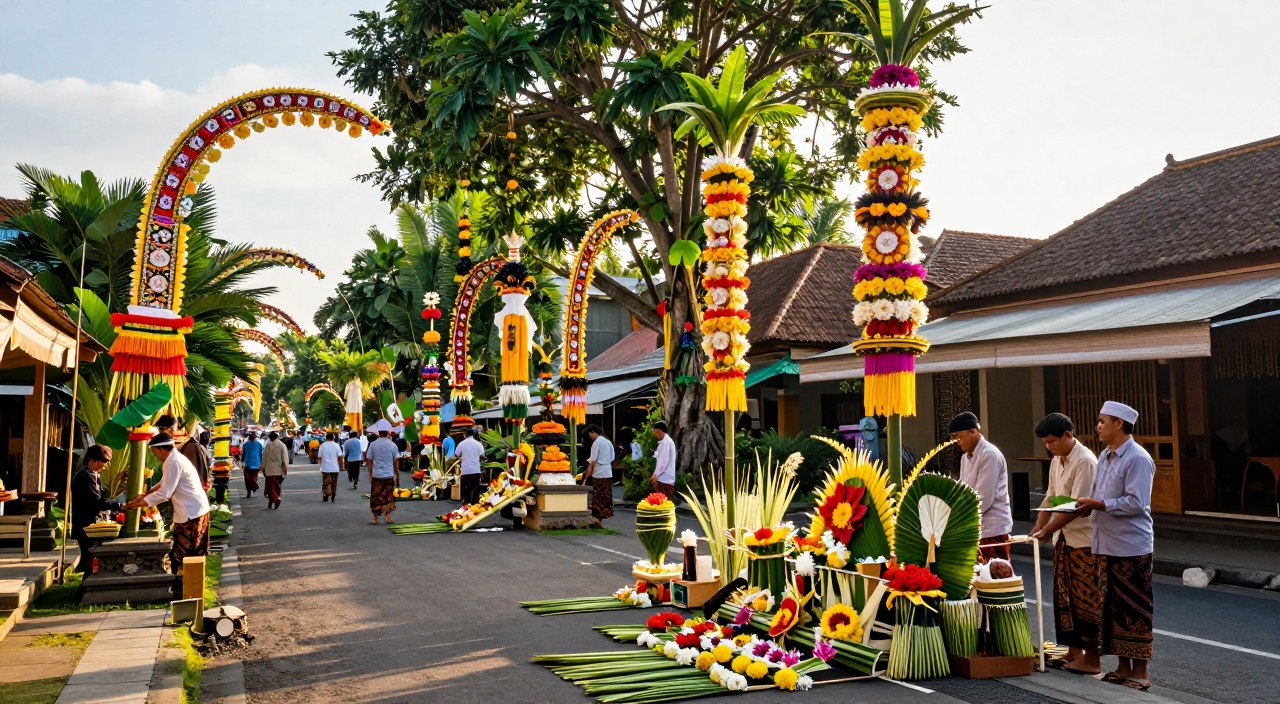
I remember my first Galungan on the island. The morning air hummed with a different energy. Every family compound I passed was adorned with intricate penjor—tall, curved bamboo poles decorated with coconut leaves and offerings. The streets, normally buzzing with scooters, felt like a moving gallery of devotion. It was my first real glimpse into Bali’s spiritual heart.
This celebration is one of the most important in Balinese Hinduism. It happens every 210 days. In 2025, it falls on Wednesday, April 23 and again on Wednesday, November 19. The festival marks the victory of good (dharma) over evil (adharma).
For ancestral spirits, this is a sacred time to return home. For visitors, it’s a unique window into living traditions. The entire island transforms. Temples overflow with ceremony. Homes become centres of prayer and family gathering.
This a traveler’s guide to galungan is designed for Australian travellers. It helps you navigate the festival with respect. You’ll learn how to witness this profound culture without intruding. Your experience will be richer for understanding what you see.
Key Takeaways
- Galungan is Bali’s most significant religious festival, celebrating the triumph of good over evil.
- In 2025, the celebration occurs on Wednesday, April 23 and Wednesday, November 19.
- The island transforms with decorations, ceremonies, and a deeply spiritual atmosphere.
- It’s a unique opportunity for visitors to witness authentic Balinese Hindu traditions.
- Understanding the festival’s meaning enhances your experience and shows cultural respect.
- This guide provides essential tips for navigating the celebrations thoughtfully.
Understanding the Spiritual Significance of Galungan
The spiritual heartbeat of Galungan pulses with themes of ancestral reverence and cosmic balance. This festival marks a key victory in Balinese Hindu belief. It celebrates dharma’s triumph over adharma.
Historical Roots and Ancestral Spirits
This victory is not just a story. It is a living truth. During this time, ancestral spirits are believed to return to their family homes.
Families prepare meticulously. They clean shrines and create spaces of welcome. This creates a sacred bridge between the living and the departed spirits.
The entire community focuses on purification and honour. It is a profound moment of connection that shapes all other rituals.
Rituals, Offerings, and Temple Ceremonies
Daily life transforms into a sequence of sacred acts. Elaborate offerings, called banten, are made with deep gratitude.
These offerings honour both deities and ancestral spirits. They range from simple flowers to intricate baskets of rice and fruit.
Sacred prayers and blessings are conducted by priests at family shrines and major temples. Ceremonies invoke protection and prosperity for all.
| Offering Type | Primary Components | Symbolic Meaning |
|---|---|---|
| Canang Sari | Flowers, rice, betel nut | Daily gratitude and devotion |
| Banten Suci | Fruits, cakes, woven leaves | Purification for temple ceremonies |
| Banten Tebu | Sugar cane, sweets, coins | Welcoming ancestral spirits home |
These rituals create a powerful rhythm. From dawn to dusk, the sound of prayers and gamelan music fills the air.
“Galungan is when the seen and unseen worlds draw closest. Our ceremonies are our language of love for those who came before us.”
Visiting temples during this time, you witness collective devotion. Families gather to seek blessings and strengthen their spiritual bonds.
Planning Your Visit During Galungan Season
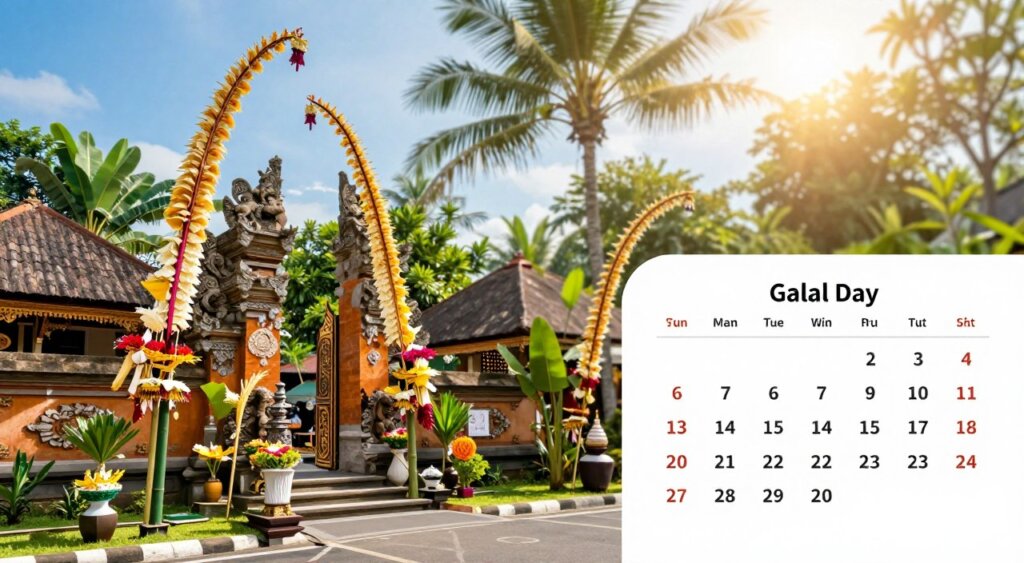
Galungan transforms Bali, making advance planning essential for a smooth visit. This sacred holiday alters the island‘s normal pace. Visitors can enjoy a richer time by understanding key dates and local rhythms.
Key Festival Dates and Timelines
In 2025, Galungan Day falls on Wednesday, April 23 and Wednesday, November 19. Each celebration starts a ten-day festive period.
This period concludes with Kuningan, ten days later. The festival occurs every 210 days in the Balinese pawukon calendar.
Marking these days helps tourists plan their island itinerary around the main holiday.
Impact on Daily Life and Local Transport
Daily life shifts significantly. Many offices and schools close or operate with reduced hours.
While major resorts and restaurants stay open, some local businesses may shorten their day. Expect increased traffic near temples during ceremony time.
It is wise to book transport and accommodations ahead. Taxis and ride apps can be slower on Galungan Day. Maintaining a flexible schedule ensures you respect the local rhythm.
A Traveler’s Guide to Galungan: Participating Respectfully
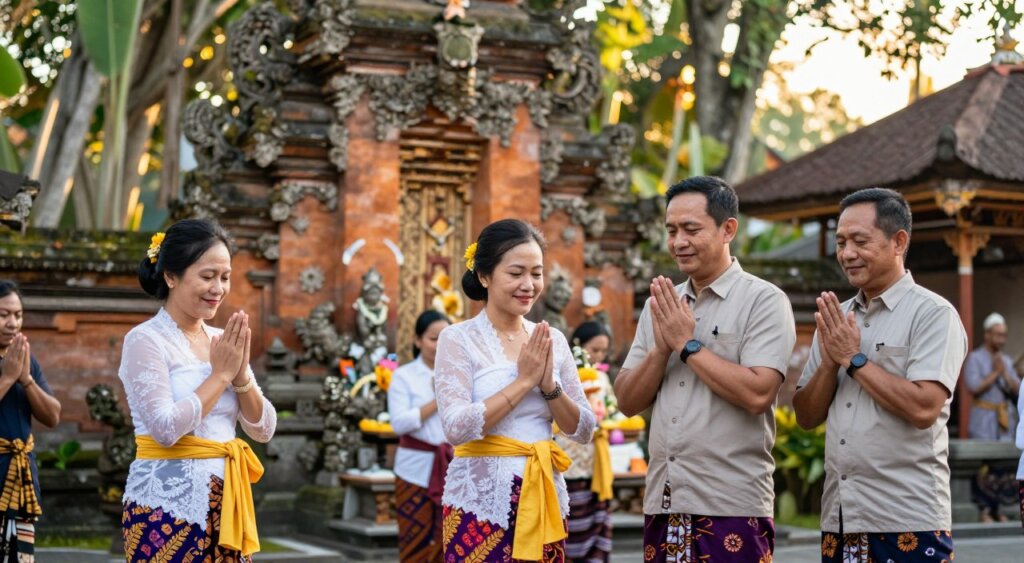
Navigating temple visits during this festival hinges on understanding local etiquette. Your respectful conduct ensures a meaningful experience and honours sacred traditions.
Dos and Don’ts for Observing the Ceremonies
Tourists are welcome to observe ceremonies. Full participation in rituals is typically reserved for Hindus.
Always ask permission before entering a temple or approaching a ceremony. Maintain a quiet demeanour during prayers.
Avoid loud noises or intrusive photography. Sacred offerings are not to be touched or stepped over.
“When guests show respect for our ceremonies, they see the true beauty of our culture. It is a shared moment of understanding.”
| Do | Don’t | Reason |
|---|---|---|
| Ask for permission to enter | Assume all areas are open | Some ceremonies are private |
| Observe quietly from a distance | Use flash photography during prayers | Preserves the solemn atmosphere |
| Walk around offerings on the ground | Step over or touch offerings | They are sacred objects |
Appropriate Attire and Temple Etiquette
You must dress modestly when visiting temples. Shoulders and knees must be covered.
The standard attire is a sarong and sash. This rule applies to both men and women.
A simple shirt complements the sarong for men. The sash is worn around the waist.
Most major temples rent this sarong sash combination at the entrance. Wearing it shows deep respect for the space.
Following these rules for visiting temples allows you to witness events respectfully. Your considerate attire and behaviour are always appreciated.
Exploring Galungan Celebrations Across Bali
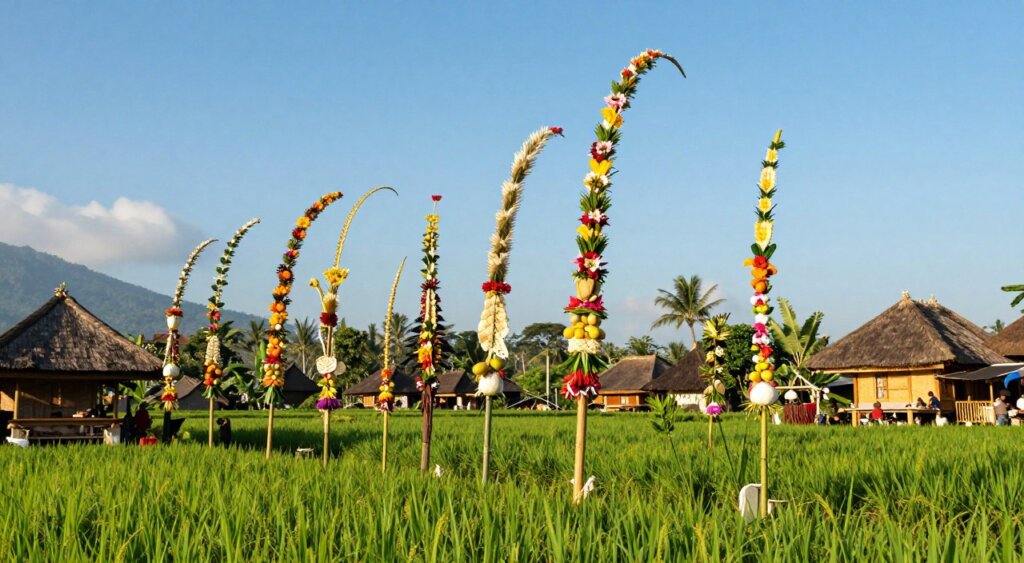
From bustling Denpasar to tranquil mountain villages, each community celebrates in its own way. The island offers diverse settings to witness this vibrant celebration.
Immersive Experiences in Ubud, Denpasar, and Rural Villages
In Ubud, you’ll see streets lined with beautiful penjor. Families dressed in traditional attire head to temples for day-long prayers.
Denpasar presents a unique urban experience. Ancient traditions thrive alongside modern life. Visitors can see how city families maintain their spiritual practices.
For deeper culture immersion, rural villages like Penglipuran are exceptional. The community atmosphere here feels incredibly authentic. Families gather for feasts and sometimes host cooking classes.
Witnessing Penjor Displays and Traditional Festivities
The iconic penjor are tall bamboo poles decorated with coconut leaves, flowers, and offerings. They symbolise prosperity and gratitude.
You’ll see these poles outside virtually every family home. They transform ordinary streets into sacred corridors. The effect is a graceful canopy of leaves and colour.
In Penglipuran, uniform traditional homes each display a penjor, creating stunning visual rows. For large-scale ceremonies, Besakih Temple on the slopes of Mount Agung is a focal point on Galungan Day.
The festive atmosphere is palpable. Villages come alive with the sounds of celebration, welcoming ancestral spirits into contemporary life.
Conclusion
For the curious visitor, Galungan provides a rare window into the island’s soul. Over ten sacred days, the entire celebration transforms daily life into a moving tapestry of devotion.
Your time here during this period offers a uniquely meaningful experience. You witness ancient spirits honoured through intricate offerings and serene temple ceremonies.
Respectful tourists and visitors are welcomed observers. By approaching this special day with openness, you share in a profound cultural moment.
This understanding will profoundly enrich your memories of Bali. It connects you to the island’s living heart long after you leave.