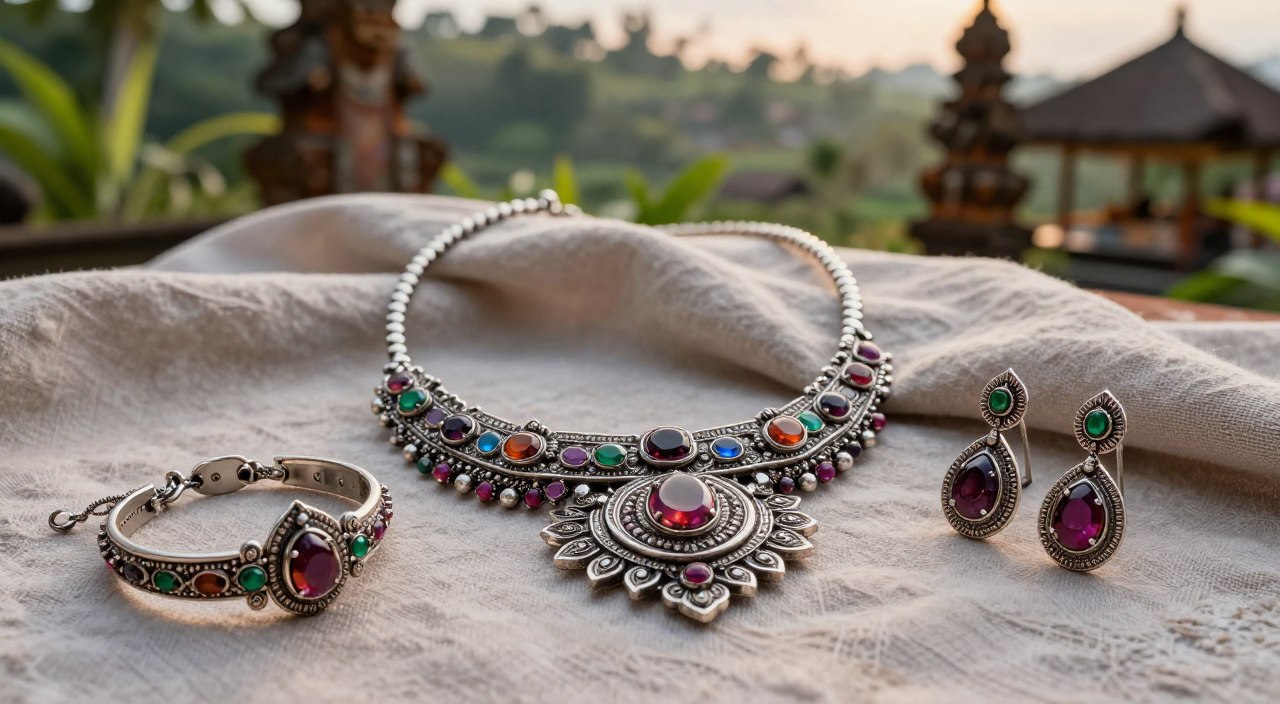
Imagine wearing a piece that tells a story from centuries ago. Bali jewellery is more than just something to wear. It’s a treasure of artistry, born from ancient traditions.
Every ring, necklace, and bracelet is a piece of culture. Skilled artisans put their heart and soul into their work. They draw from generations of knowledge.
This heritage turns silver and stone into wearable art. The designs hold deep spiritual meaning. They connect us to the island.
Let’s dive into this captivating world together. We’ll explore its history, the artisans, and how to find genuine pieces.
Key Takeaways
- Balinese pieces are cultural artefacts with deep spiritual meaning.
- Craftsmanship techniques are passed down through many generations.
- Common materials include sterling silver and semi-precious stones.
- Designs often symbolise elements of nature and Hindu mythology.
- Identifying authentic work supports local artisans and communities.
- Proper care is essential to preserve these handmade treasures.
The Allure of Bali Jewellery
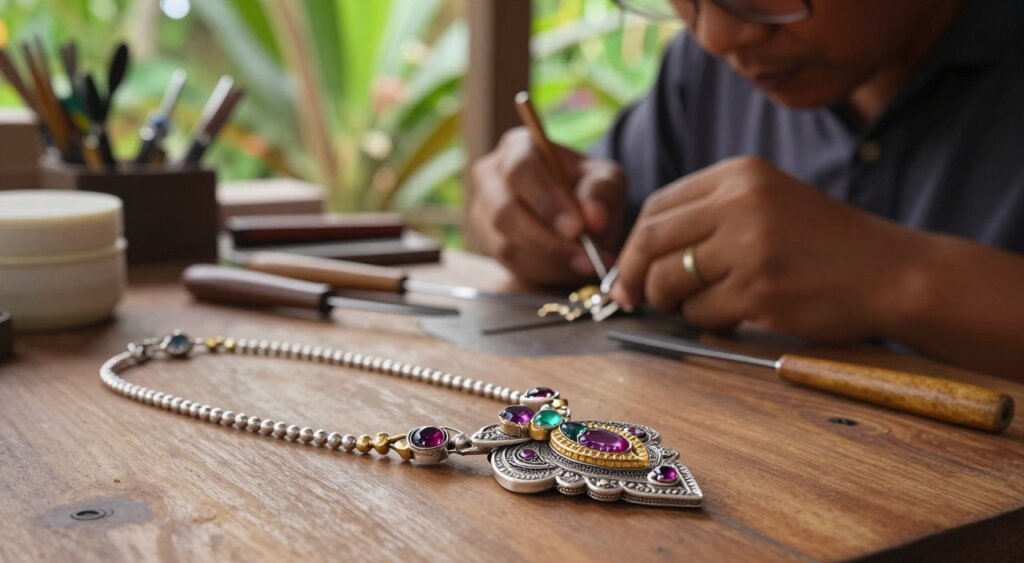
Bali jewellery is special because it mixes sacred symbols with skilled craftsmanship. It’s more than just something to wear. Each piece connects us to Bali’s rich art and spiritual history. This makes it appealing to people everywhere.
Unique Designs and Craftsmanship
Unique Bali jewelry is known for its detailed designs. Artisans use old techniques that are hard to find. Three methods are key.
- Granulation: This method uses tiny metal spheres to create detailed patterns.
- Filigree: It involves twisting silver or gold threads into designs.
- Repoussé: This technique uses hammering to create three-dimensional designs.
These methods make the jewelry look alive. It’s made almost entirely by hand. This means each piece is unique.
The designs often feature nature and myths. You’ll see flowers, waves, and the Barong creature. This connection to nature and stories is what makes traditional Balinese jewelry special.
Cultural Significance in Balinese Society
In Bali, jewelry is more than just decoration. It’s part of everyday life and spiritual practices. For the Balinese, who follow Hinduism, jewelry is important in ceremonies.
Some pieces are seen as talismans, believed to protect and bring good energy. Heirloom jewelry shows family status and history. At big events like weddings, gold and silver jewelry is key.
Jewelry is a way to honor the gods and make sacred spaces beautiful.
Buying traditional Balinese jewelry is more than getting something pretty. It’s about connecting with a culture where art and faith are one. This deep meaning is why it’s loved worldwide.
Types of Bali Jewellery
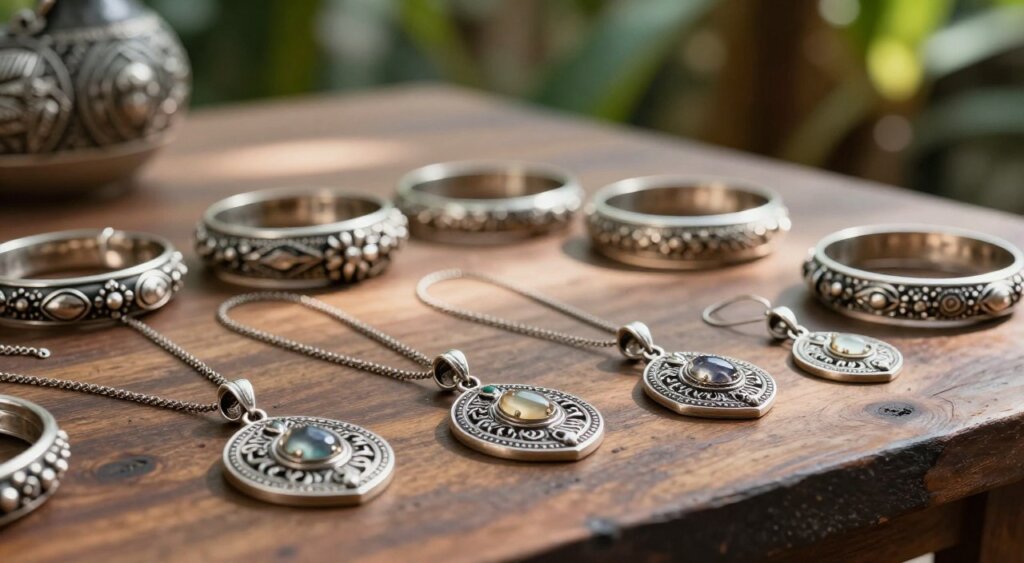
Choosing the metal and stone for Bali jewellery is a personal choice. It’s influenced by looks and cultural significance. Understanding the basics helps pick a piece that suits your style and values.
Silver vs. Gold: What’s the Difference?
Silver bali jewelry has a cool shine. It often comes from Celuk, known for its detailed designs. Silver is more affordable and suits everyday wear.
Gold jewellery has a warm feel and deep cultural meaning. It’s used in special pieces and family treasures. Gold is pricier but keeps its colour with proper care.
Choosing between silver and gold depends on your style and budget. Silver is modern and light. Gold is timeless and rich in culture.
Popular Gemstones Used
Balinese designs shine with local gemstones. Each adds colour and meaning. Here are some favourites:
- Freshwater Pearls: They glow softly, symbolising purity. Often paired with silver for a balanced look.
- Black Onyx: This dark stone grounds and protects. It looks striking with silver or gold.
- Jasper: Found in earthy tones, jasper connects to nature. It’s used in bold pieces for stability.
- Lapis Lazuli: This blue stone with gold flecks is highly valued. It adds a regal touch to designs.
These gems do more than decorate. Artisans pick them for their energy and story. Whether you want calm, strength, or earth connection, there’s a stone for you.
The Artisan Community Behind Bali Jewellery
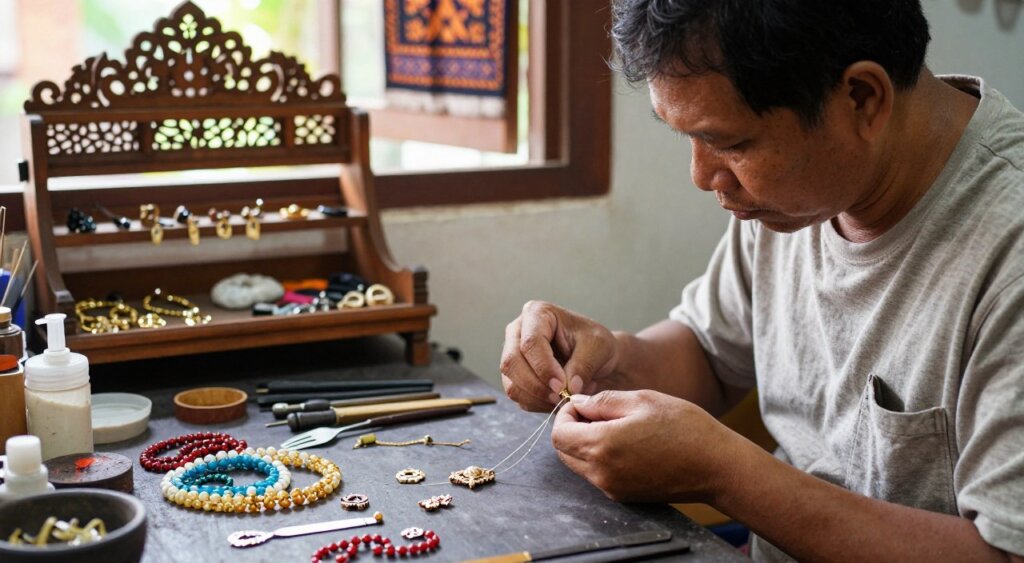
Every piece of Bali jewellery has a story. Artisans in Bali work hard to keep their culture alive. They turn metals and stones into art, passing down traditions for generations.
Stories of Local Artisans
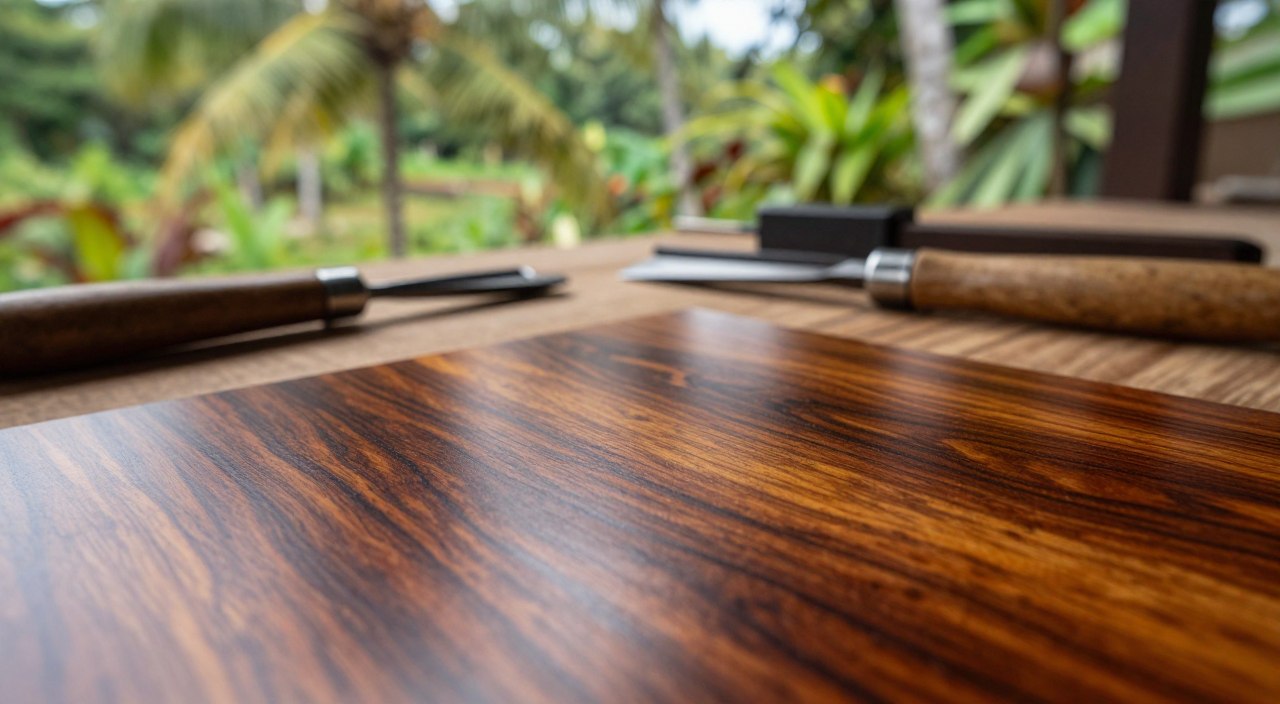
In places like Celuk and Mas, making jewellery is a family tradition. Workshops are often in homes, where skills are shared from one generation to the next. A silversmith might spend decades mastering their craft, then teach their family.
Youngsters start learning jewellery making early, doing simple tasks first. As they get better, they move on to more complex designs. This way, their skills are kept alive through the years.
“My grandfather taught me that each piece should tell a story. When I create jewellery, I’m not just shaping silver—I’m sharing part of our culture with the world.”
Knowing who made your jewellery makes it special. It adds a personal touch beyond its beauty. Australian visitors often feel a deeper connection when they meet the maker.
Supporting Sustainable Practices
The Bali jewellery industry is now more focused on being green and fair. Artisans and groups work hard to protect their craft and island. This change is thanks to more people wanting to know where their things come from.
Ethical sourcing is key now. Workshops use recycled silver and check the origin of gemstones. This helps families and keeps traditions alive.
Environmental efforts have grown too. Old methods used harsh chemicals, but now natural options are preferred. Water recycling in bigger workshops helps save resources. These steps show Bali’s commitment to its beauty.
| Aspect | Traditional Practice | Sustainable/Ethical Practice |
|---|---|---|
| Materials Sourcing | Newly mined metals, unknown gemstone origins | Recycled silver & gold, traceable conflict-free stones |
| Community Impact | Variable income, limited market access | Fair trade wages, direct-to-consumer opportunities |
| Environmental Approach | Chemical-intensive processes, waste discharge | Natural cleaning solutions, water recycling systems |
| Cultural Preservation | Skills at risk from economic pressures | Youth training programs, cultural tourism support |
Looking for fair trade labels or asking about supply chains helps. Buying from cooperatives that support the community makes a big difference. Your choices help decide what practices grow.
Choosing ethical Bali jewellery does more than just look good. It supports culture, the environment, and fair pay for artisans. It’s a way to make a positive impact.
How to Care for Your Bali Jewellery
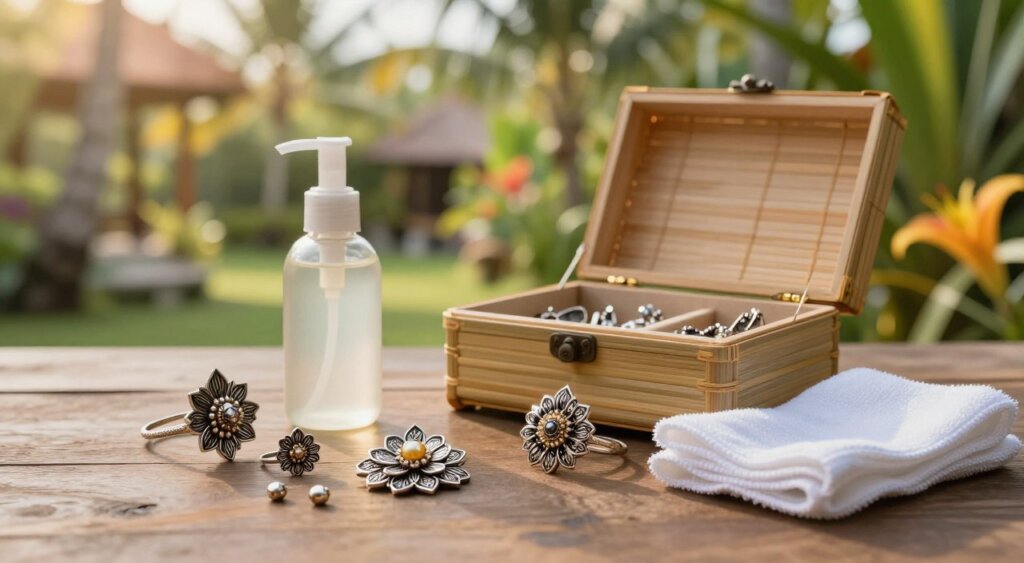
Keeping your Balinese jewellery looking great is easy. You don’t need special tools, just some basic knowledge. With the right care, your jewellery will stay vibrant and detailed for years. This prevents tarnish on silver and keeps delicate parts safe.
Cleaning Tips for Silver
Silver jewellery, like the popular sterling silver from Bali, can tarnish over time. This happens due to air and moisture. But, you can easily make it shine again with items from your kitchen.
To clean, use baking soda, aluminium foil, and hot water. Place your jewellery on the foil, add baking soda, and cover with hot water. Let it sit for five to ten minutes. Then, rinse and dry it with a soft cloth.
For everyday care, a mild soap and lukewarm water are best. Use a soft-bristled toothbrush for detailed areas. Avoid harsh chemicals and abrasive cleaners, as they can harm the metal.
How to Store Your Pieces
Storing your Bali jewellery correctly is as important as cleaning it. Proper storage prevents scratches, tangles, and tarnish.
Keep pieces separate. Necklaces can knot, and hard gemstones can scratch soft metals. Use soft pouches, jewellery box compartments, or zip-lock bags. An anti-tarnish strip can also help by absorbing harmful sulphur.
Store your jewellery in a cool, dry place, away from sunlight and humidity. Bathrooms are not good due to steam and temperature changes. A dedicated jewellery box with a lined interior can offer extra protection.
By following these simple steps, you can keep your Bali jewellery beautiful. This way, you can enjoy its unique craftsmanship every day.
Bali Jewellery Trends to Watch
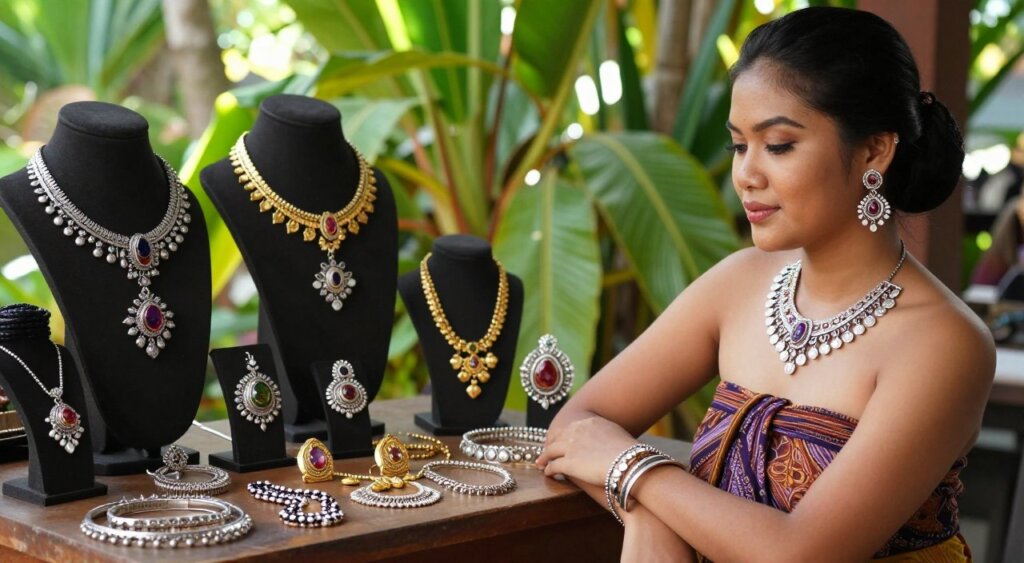
Keeping up with accessory fashion means knowing about Bali’s jewellery trends. The island’s jewellery scene is where old techniques meet today’s style. This mix creates pieces that are both cultural and modern.
For those who love unique, artistic pieces, knowing these trends is key. We’ll look at the two main styles and the colours that define modern Balinese jewellery.
Minimalist vs. Statement Pieces
Bali jewellery trends split into two main styles. There’s a push for clean, subtle designs for everyday wear. At the same time, bold, eye-catching pieces are also popular.
Minimalist Bali jewellery is all about simplicity. Think delicate silver chains, small stud earrings, or slim bangles. These pieces are versatile and elegant.
They let you add a touch of Balinese style to any outfit. The focus is on the craftsmanship, not on being too flashy.
On the other hand, statement jewellery is all about drama. This includes big necklaces, wide cuffs, and large rings. These pieces are meant to stand out.
They often tell stories from Balinese mythology. Wearing a statement piece is a way to express yourself and celebrate the artisan’s skill.
The table below shows the main differences between minimalist and statement jewellery. It helps you choose what fits your style.
| Feature | Minimalist Bali Jewellery | Statement Bali Jewellery |
|---|---|---|
| Primary Design Ethos | Subtlety, simplicity, and wearability | Boldness, intricacy, and artistic impact |
| Typical Occasions | Everyday wear, work, layering | Special events, evenings out, making an impression |
| Craftsmanship Focus | Precision in small details, fine finishing | Complex assembly, narrative carving, stone setting |
| Metal & Stone Use | Lighter weight, smaller or no gemstones | Substantial metalwork, larger or multiple gemstones |
| Cultural Expression | A single, refined symbol | A tapestry of traditional motifs and stories |
Colour Trends for the Year
Designers are experimenting with colours in new ways while keeping traditional styles. Sterling silver and yellow gold are timeless. But, modern designs are adding new colours to Balinese jewellery.
Warm, earthy tones are big this year. Think of carnelian, moss agate, and rose quartz. These colours connect the jewellery to Bali’s landscapes.
In metals, rose gold plating over silver is trendy. It adds a modern twist to designs. Oxidised or blackened silver finishes also create contrast. This makes traditional designs look modern and edgy.
For those who love bright colours, sapphire blue and amethyst purple are in. They might be small cabochons or beads in a chain. These colours add a fresh twist to classic designs.
Where to Buy Authentic Bali Jewellery
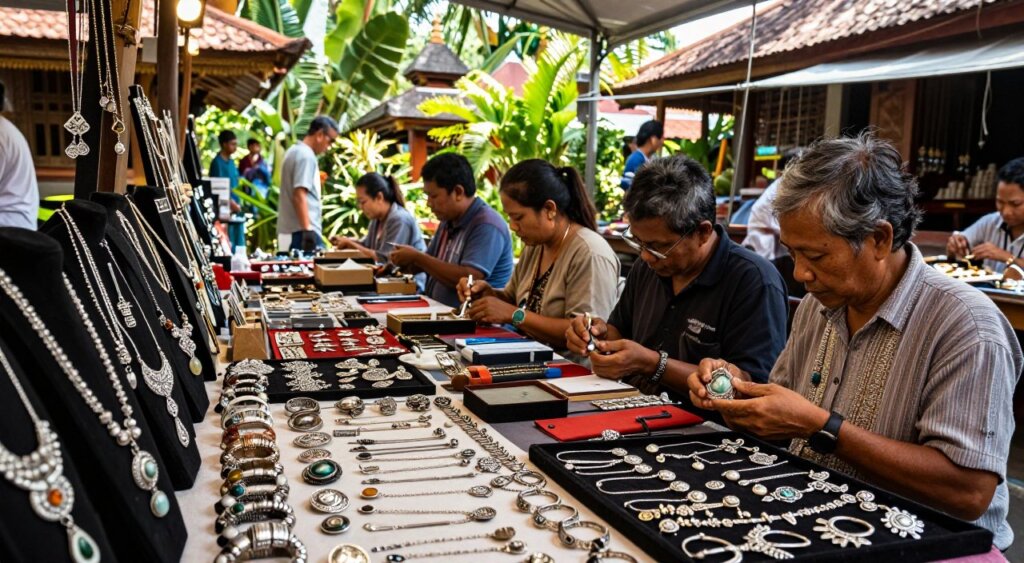
Starting your journey to own authentic Balinese artistry means finding trustworthy sellers. Knowing where to shop is key to getting real, handcrafted treasures. This guide will help you find the best places online and in markets.
Online Retailers You Can Trust
Buying authentic Bali jewellery online is easy but needs careful checking. Good retailers work directly with artisans in places like Celuk and Ubud. They share stories about the makers and their skills.
Choose sites that are open and honest. Look for detailed product info and clear images. Customer feedback and a fair return policy show a seller’s trustworthiness.
Many online stores in Australia sell genuine Balinese pieces. Etsy is full of real artisans selling their work. Bali Silver Shop and Ubud Silver are also known for their quality and fair trade.
“When you buy from a true artisan partner, you’re supporting a family and preserving a centuries-old craft.”
Before buying Bali jewellery online, check for hallmarks and read the ‘About Us’ section. A true seller will proudly talk about their Bali connections.
Local Markets and Boutiques
Choosing jewellery in person is unbeatable. Bali’s markets, like Ubud and Sukawati, offer a wide range. But, quality can vary.
To find the best Bali jewelry, talk to sellers. Ask about the piece’s origin and how it was made. Look for ‘925’ or other quality marks on sterling silver.
Bargaining is common, but be respectful. Start with a lower offer and meet in the middle. This shows respect for the craftsmanship while getting a fair price.
If you can’t visit Indonesia, many Australian boutiques sell Balinese crafts. Look for shops in cultural areas like Sydney’s Paddington or Melbourne’s Fitzroy. They might be pricier, but you’re sure to get authentic pieces.
Whether at a market or a boutique, patience and attention to detail are key. The right piece will tell a story you’ll love for years.
Bali Jewellery as Meaningful Gifts
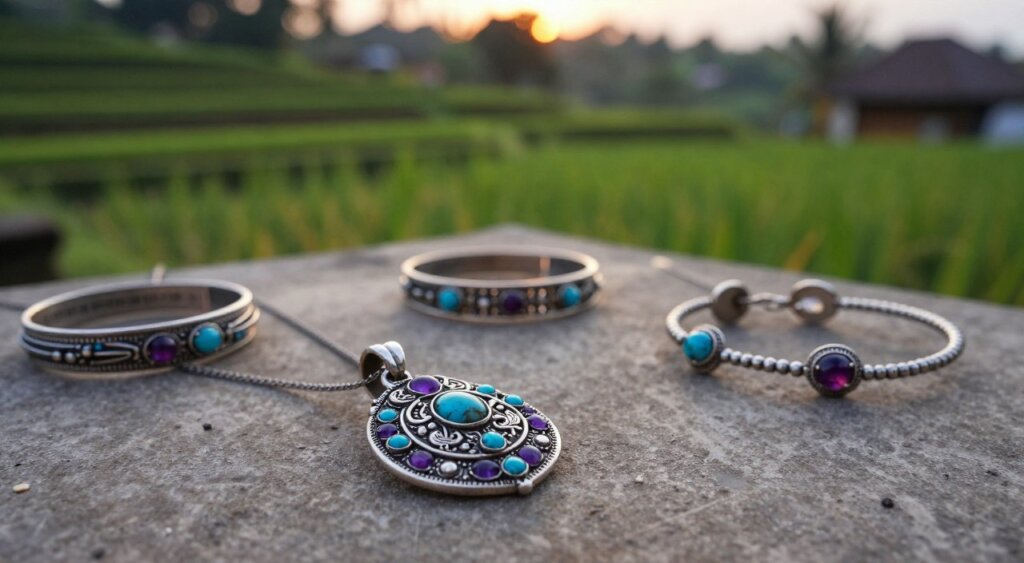
Bali jewellery is special because it’s made with care and carries deep meaning. Each piece tells a story, making it more than just a gift. It’s a symbol of thoughtful intention and cultural connection.
Symbolism Behind Certain Designs
The beauty of Bali jewellery comes from its spiritual meanings. Artisans put centuries of philosophy into their designs. This turns jewellery into wearable talismans.
The Tree of Life symbolises growth, strength, and our connection to nature. Giving this design wishes for stability and flourishing.
Mandalas represent the universe, unity, and harmony. A mandala piece is a gift of balance and peace, perfect for someone seeking calm.
Dragons in Balinese culture are guardians, not fearsome beasts. Dragon motifs symbolise protection, power, and good fortune. They’re a great gift for someone starting a new venture.
The lotus flower is a symbol of purity, enlightenment, and rebirth. A lotus design celebrates resilience and new beginnings.
Best Occasions for Gifting
Bali jewellery is perfect for many celebrations. Choosing the right motif adds personal significance. The recipient will treasure it.
Here’s a guide to pairing beautiful Bali jewellery with meaningful moments:
| Occasion | Recommended Jewellery Type | Symbolic Meaning |
|---|---|---|
| Birthday | Tree of Life pendant or ring | Celebrates personal growth and wishes for strength in the year ahead. |
| Wedding or Engagement | Matching mandala earrings or a lotus-inspired bracelet | Represents the unity of a couple and the pure, new journey they begin together. |
| Anniversary | Dragon motif cufflinks or a statement necklace | Symbolises the protective, powerful bond that has been nurtured over years. |
| Graduation or New Career | A dragon or geometric mandala ring | Offers protection and balance for the exciting challenges and new path ahead. |
| Souvenir of a Personal Journey | A custom piece featuring a lotus or a favourite motif | Commemorates personal transformation and serves as a lasting reminder of the experience. |
Giving Bali jewellery is about sharing a piece of vibrant culture and craftsmanship. It’s a gesture that says you’ve chosen something with heart and history. It makes any occasion more memorable.
The Evolution of Bali Jewellery
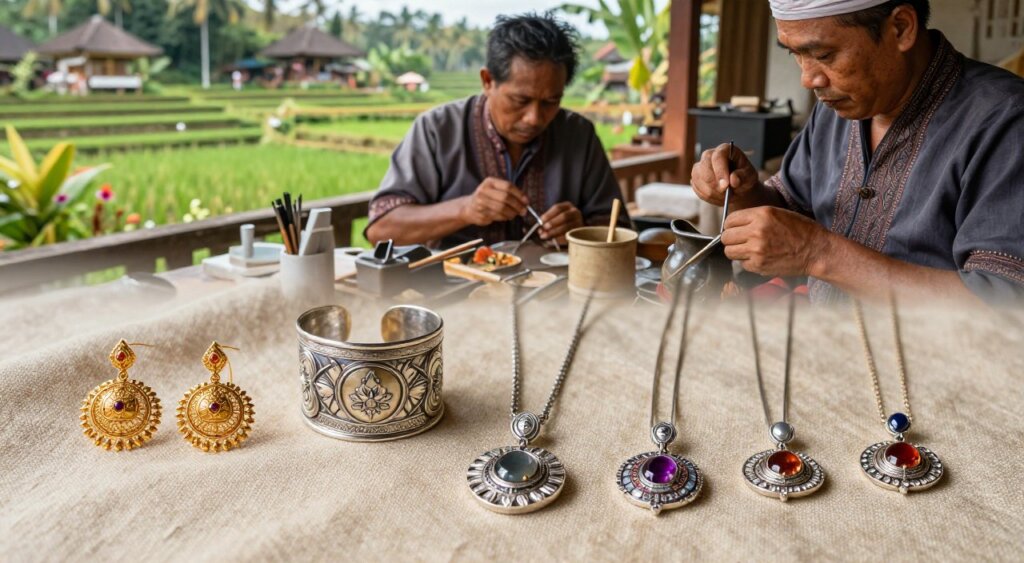
Bali’s jewellery scene is a mix of old and new. It blends traditional methods with fresh ideas from young designers. This evolution keeps the craft exciting and relevant. It shows how Balinese adornment stays vibrant in the global market.
Traditional Techniques vs. Modern Styles
Real Bali jewellery comes from ancient family traditions. Techniques like granulation and hand-filigree need patience and skill. These methods are slow and deeply rooted in culture.
Now, a new trend is emerging. Young designers, trained locally and abroad, use these techniques in contemporary designs. They turn classic filigree into modern rings and earrings. The craft’s essence stays, but its look changes.
This mix creates jewellery that’s both meaningful and modern. A necklace might have a traditional kawung design but in a new, simple way. This contrast makes the evolution so interesting.
Influences from Global Trends
Balinese artisans watch the world closely. International influences shape their work, keeping Balinese identity central. They love minimalist and custom jewellery trends.
Now, Bali jewellery includes:
- Clean lines and organic shapes from Scandinavian and Japanese designs.
- Personalised elements like initials or birthstones, for a global audience.
- Sustainable practices and ethical sourcing, matching global values.
This isn’t copying. It’s choosing what works. A designer might add a Barong mask to a global trend. This keeps the jewellery uniquely Balinese.
This way, Bali jewellery talks to everyone without losing its Balinese touch. It’s not just a keepsake but a fashion statement worldwide. Its evolution shows the creativity and strength of its makers.
Traveling to Bali: A Jewellery Experience
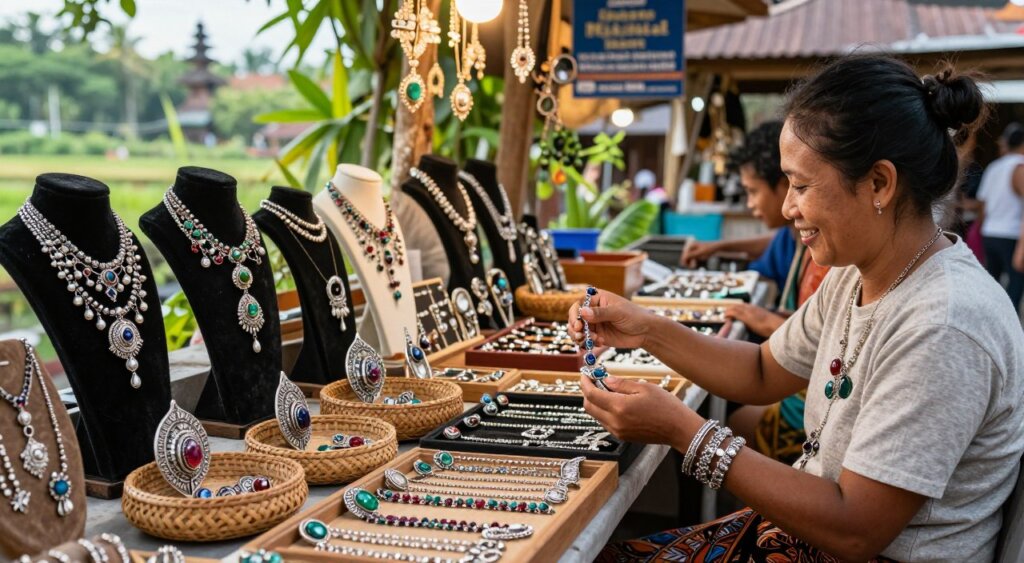
Planning your Bali trip? Make sure to include time for a special jewellery adventure. Finding that perfect piece is a highlight for many. It connects you deeply with Balinese culture.
This journey is more than just buying something. You meet the makers, learn their techniques, and find items with real soul. Knowing where to go and how to engage respectfully is key.
Best Areas to Shop for Jewellery
Bali has special villages and districts for jewellery. Knowing these spots helps you find what you’re looking for. From markets to gallery studios, the variety is impressive.
Here is a quick guide to the top locations to shop bali jewelry:
| Area | Speciality | Vibe & Shopping Experience | Best For |
|---|---|---|---|
| Celuk Village | Intricate silverwork, filigree, and hamsa motifs. | Concentrated streets of workshops and showrooms. Watch artisans at work. | Serious silver collectors and those wanting to see craftsmanship firsthand. |
| Ubud | Unique, artistic pieces from boutique galleries and designer studios. | Elegant and relaxed. Often features one-of-a-kind, modern interpretations. | Finding a statement piece or contemporary design with a story. |
| Seminyak | High-end, fashion-forward gold and gemstone jewellery. | Upscale boutiques alongside chic cafes and restaurants. | Luxury purchases and trendy, polished designs. |
| Sukawati Art Market | Affordable silver-plated and brass jewellery, great for gifts. | Lively, traditional market atmosphere with lots of bargaining. | Budget-friendly souvenirs and experiencing a classic Balinese market. |
Celuk is the heart of Balinese silver. Skills have been passed down for generations. In Ubud, look for smaller galleries with renowned local designers.
Cultural Etiquette When Buying
Buying with respect makes the experience better for everyone. Balinese artisans take pride in their work, often tied to spiritual beliefs. A little cultural awareness goes a long way.
Follow these simple guidelines for a positive interaction:
- Bargain with a smile. Haggling is expected in markets, but do it politely. Start around 60-70% of the asking price and meet in the middle. In fixed-price boutiques, bargaining is not appropriate.
- Ask before touching. This shows respect for the craft, which is important in workshops.
- Show genuine interest. Asking an artisan about their technique or the story behind a design is welcomed. It honours their skill.
- Understand the symbolism. Many designs have religious or protective meanings. Appreciating this context adds value to your piece.
- Support authentic sources. Buy directly from workshops or reputable stores. This ensures your money supports the local artisan community.
Remember, when you shop bali jewelry thoughtfully, you’re not just buying an accessory. You’re participating in a living cultural tradition and creating a meaningful souvenir of your journey.
Conclusion: Embrace the Spirit of Bali Jewellery
The journey into Bali jewellery shows a rich story of art and heritage. Each piece tells of generations of skill.
Wearing Bali jewellery is more than fashion. It’s about holding a piece of a living culture.
Why It’s More Than Just an Accessory
Real Bali jewellery tells the story of its maker. The detailed silverwork or the choice of gemstones like jade or freshwater pearls reflect Balinese values. These pieces become personal talismans, filled with meaning from their origin.
They stand against mass-produced fashion. You wear a story of dedication and spiritual symbolism.
Making a Connection with Balinese Culture
Choosing genuine Bali jewellery supports artisan communities in places like Celuk or Ubud. Your purchase helps keep traditional families and their sustainable practices alive.
It links you to the island’s philosophy of balance and beauty. This connection turns a beautiful object into a meaningful keepsake.
Let your Bali jewellery remind you of craftsmanship and culture every day. It’s a lasting piece of art that invites you to carry the spirit of Bali with you.