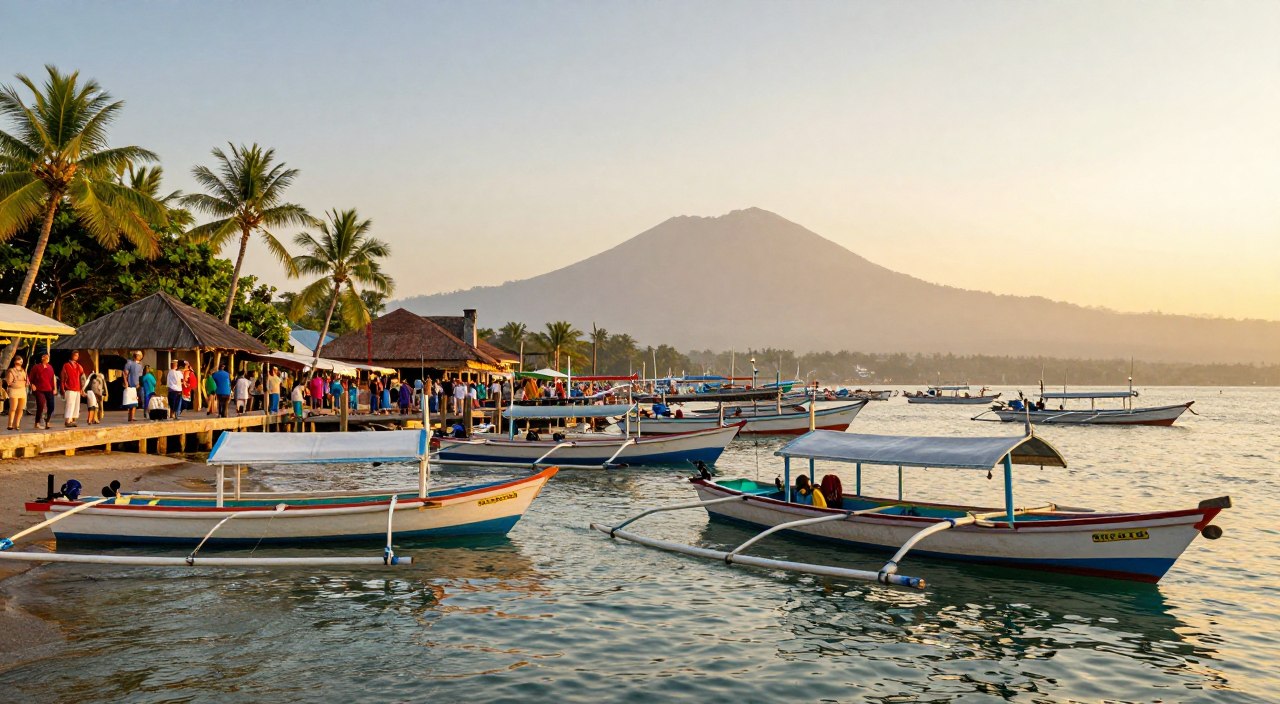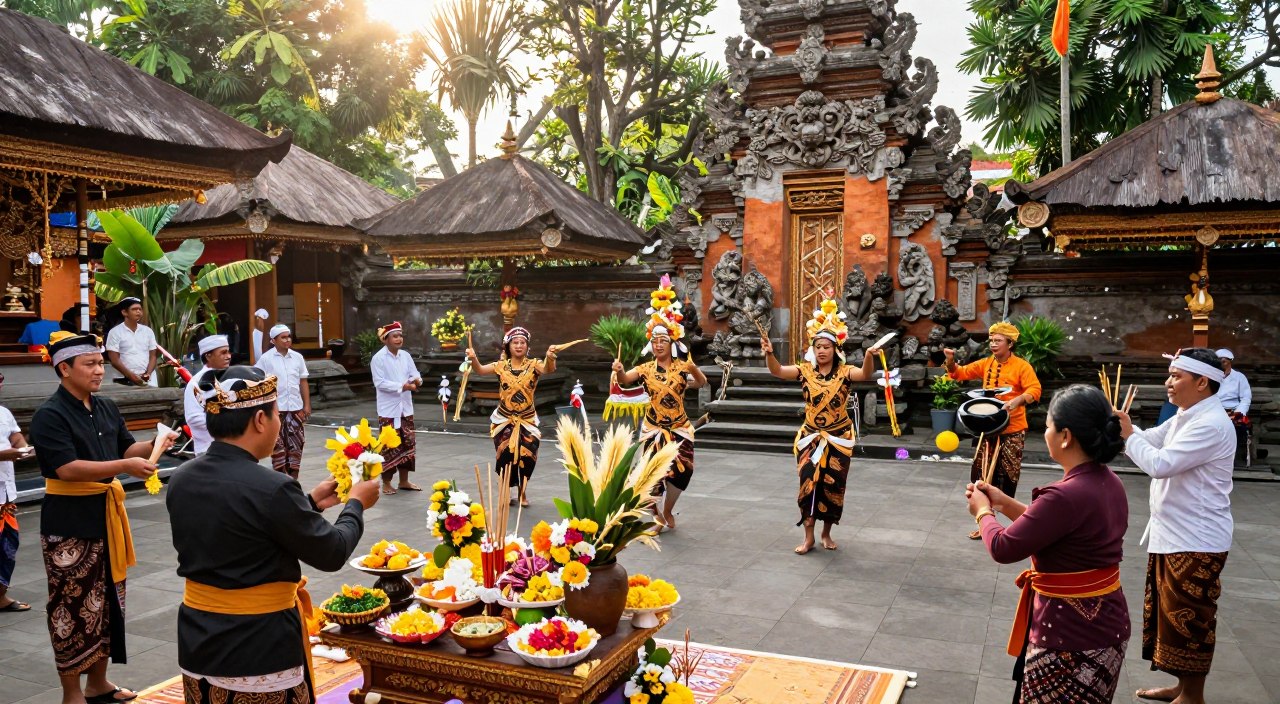
Imagine visiting Bali and discovering that on any given day, a vibrant sacred celebration is likely happening just around the corner. This is the reality due to the island’s countless spiritual sites, each marking its own special day.
The temple anniversary ceremony Odalan is a cornerstone of Balinese Hindu life. It’s a birthday for these sacred spaces, from humble family shrines to grand village complexes. The term itself comes from a word meaning “to arrive,” signifying the return of guardian deities.
The atmosphere is unforgettable. You’ll see brilliant decorations and locals in traditional attire. The air fills with the resonant sounds of gamelan music. This isn’t a show for tourists; it’s a genuine ritual deeply important to the community.
With each site following a unique 210-day calendar cycle, these observances create a continuous rhythm across the island. They can last from one day to over a week for major locations.
This guide helps visitors understand what they’re witnessing. It explains how to observe respectfully and why these events remain central to local culture.
Key Takeaways
- An Odalan is a Balinese Hindu temple’s birthday, a sacred event marking the return of guardian deities.
- These celebrations happen almost daily somewhere in Bali due to the island’s thousands of temples.
- Witnessing one offers an authentic glimpse into living spiritual culture, not a staged performance.
- The experience is sensory, filled with colorful decorations, traditional dress, and gamelan music.
- Events range from intimate one-day rituals to elaborate multi-day festivals.
- Understanding Odalan enhances appreciation for Balinese community and religious life.
- This article will guide you on what to expect and how to participate respectfully.
Understanding the Significance of Temple Anniversary Ceremony Odalan
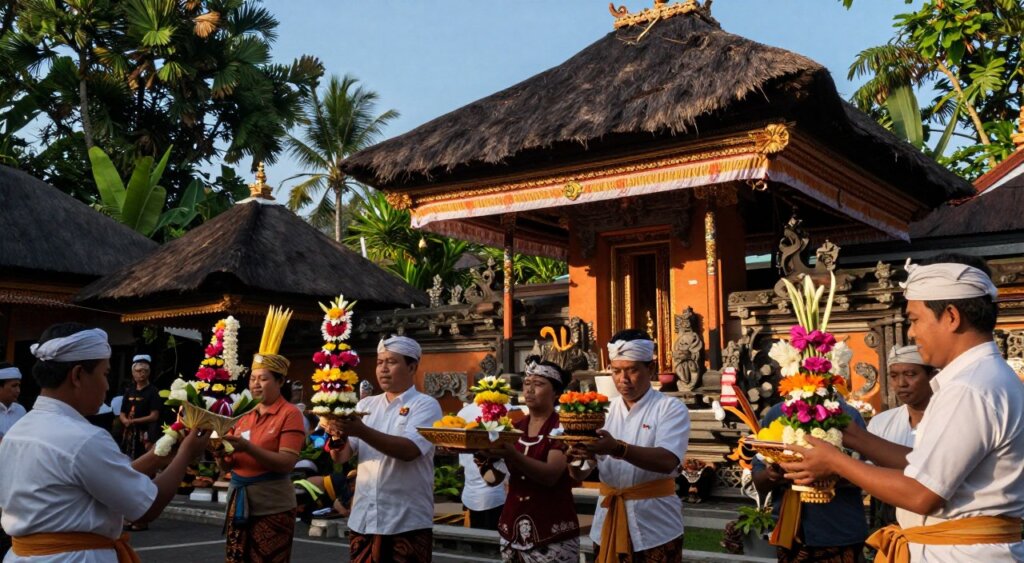
To truly grasp the essence of Bali’s spiritual landscape, one must look beyond the simple idea of a ‘temple birthday‘. This event marks a sacred homecoming.
Historical and Spiritual Context
Each observance commemorates a site’s founding. It is believed to be a special time when guardian spirits descend to be with the community.
Bali has over ten thousand sacred sites. They range from grand public temples to small family shrines. This network creates a living spiritual geography.
The schedule for odalan bali follows the unique 210-day Pawukon calendar. This ancient system means a site celebrates roughly twice a year, not on a fixed Western date.
Cultural Importance in Balinese Life
For Balinese people, this ceremony is vital. It serves to welcome the divine, purify the space, and give thanks for blessings.
It strengthens community bonds and connects generations. The practice upholds Tri Hita Karana, a core philosophy.
This principle seeks harmony between people, the gods, and nature. Participating is a key part of local culture and social life.
The Intrinsic Rituals and Ceremonies of Odalan
A closer look reveals a tapestry of rituals, prayers, and symbolic offerings that give the day its profound significance. The activities follow a sacred sequence, blending community action with deep spiritual intent.
Key Rituals and Prayers
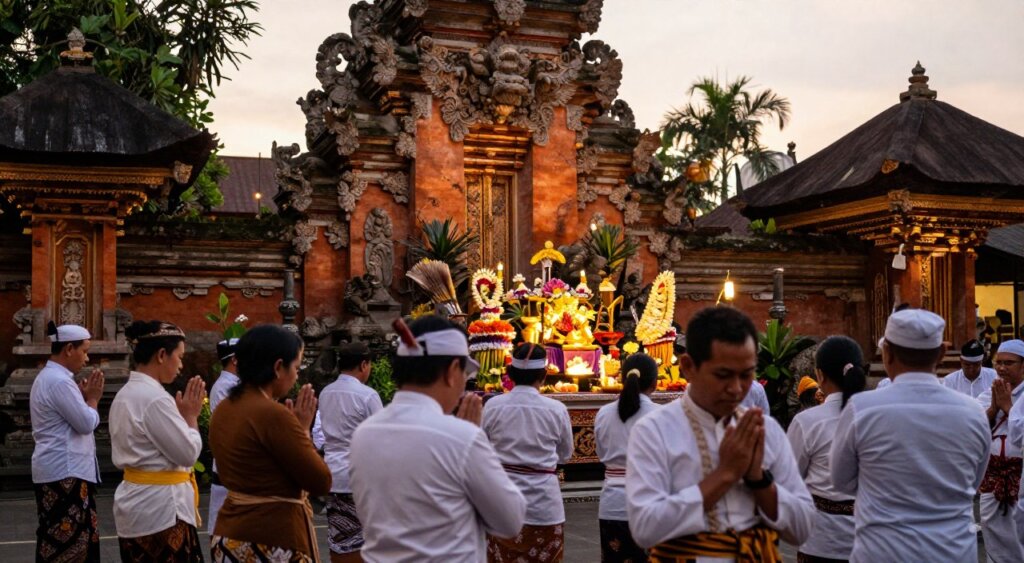
The event begins with purification. The space and sacred objects are cleansed to welcome divine presence. This prepares everyone for the main communal prayer session, known as muspa.
A local priest guides the congregation. Families sit on the ground with their canang sari offerings. These small palm-leaf baskets hold flowers, rice, and a stick of burning incense.
The priest recites holy prayers and rings a bell. Devotees perform specific gestures. They take flowers, wave them in the incense smoke, and tuck them behind their ears. This ritual is repeated with focus and devotion.
Offerings, Decorations, and Sacred Dances
The visual spectacle is breathtaking. Elaborate offerings, called banten, are everywhere. They are crafted from palm leaves, fruits, and colorful rice cakes.
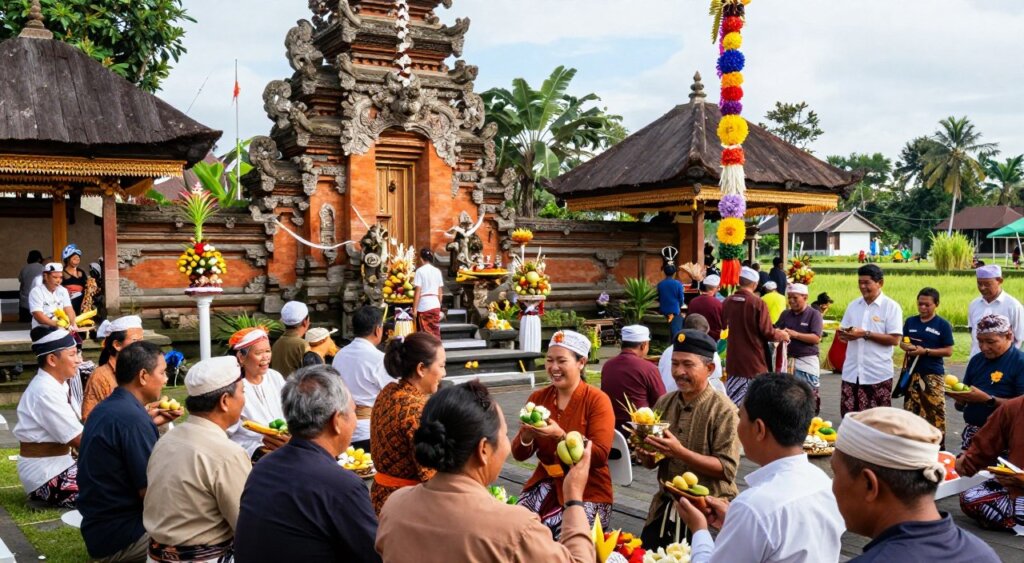
Tall, arching penjor bamboo poles line the streets. They are decorated with young coconut leaves and fruits. Intricate palm-leaf hangings called lamak display religious symbols.
A key moment follows the prayers. The priest distributes holy water. Worshippers drink it and splash it on their faces. They then receive a bit of wet rice to eat and apply to the forehead.
Finally, blessed food is shared. This act, called lungsuran, symbolizes community bonds and shared blessings. It turns the ritual into a tangible feast of togetherness.
| Aspect | Key Rituals & Prayers | Offerings & Decorations |
|---|---|---|
| Primary Focus | Spiritual purification and communal devotion | Visual symbolism and material gratitude |
| Key Elements | Muspa prayer, priest guidance, canang sari, flower gestures | Banten offerings, penjor poles, lamak, holy water ritual |
| Symbolic Meaning | Inviting divine presence, personal devotion | Prosperity, gratitude, and community sharing |
Experiencing the Festive Atmosphere of Bali’s Odalan
Stepping into the vicinity of an active observance, you are immediately enveloped by a symphony of sensory experiences. This is where solemn ritual meets vibrant community festival.
Vibrant Gamelan Music and Processions
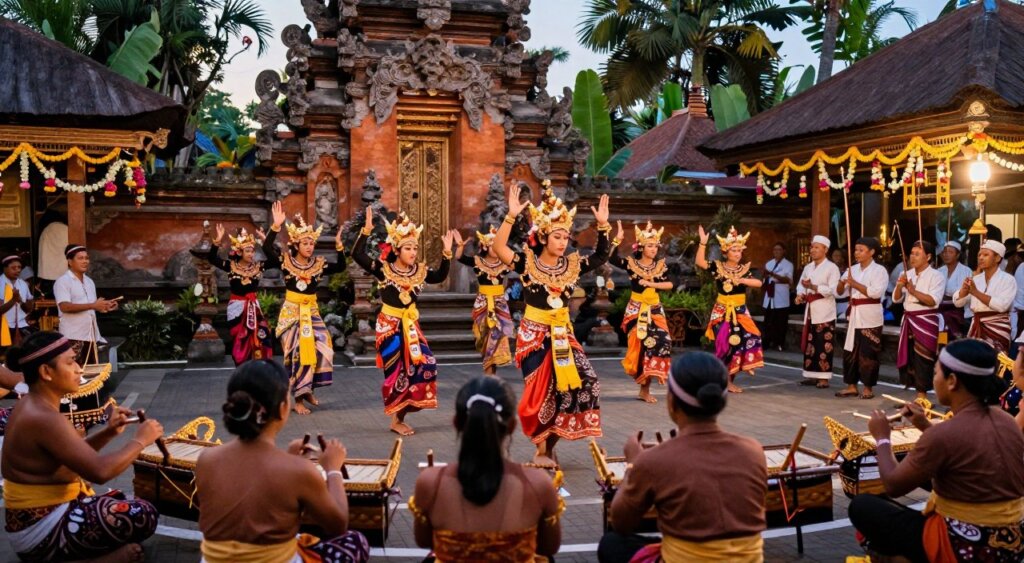
The air resonates with the intricate, metallic sound of the gamelan. This orchestra of gongs, drums, and flutes is not background music. It is a sacred call that guides each ritual phase.
Graceful Mapeed processions move toward the sacred space. Individuals in spectacular traditional attire balance towering offerings. Their synchronized walk is a beautiful display of devotion.
A Feast for the Senses: Color, Movement, and Scents
The visual spectacle is a kaleidoscope. Elaborate decorations and vibrant costumes create a stunning scene. Sweet incense and frangipani flowers perfume the air.
Special sacred dances are performed as ritual offerings. You might see the serene Rejang Dewa or a powerful Baris warrior dance. These performances differ greatly from tourist shows.
Other cultural events like Barong dance performances or shadow puppet shows often occur. The entire experience is a unique blend of deep reverence and joyful celebrations.
Visitor Guidelines for Attending an Odalan Ceremony
Visitors are often welcomed at local temple events, but following proper protocol is essential for a positive experience. Observing respectfully ensures you honor the sacred space and its community.
Proper Dress Code and Respectful Etiquette
Dress is a fundamental sign of respect. A sarong and sash (selendang) are mandatory for everyone. Shoulders must be covered; avoid tank tops and short shorts.
Many larger sites offer rentals for a small donation. Carrying your own is more thoughtful. Once on the temple grounds, keep your voice low and move slowly.
Never walk in front of praying people. Do not block pathways used for processions. Photography must be discreet—no flash, and always ask permission for close-ups.
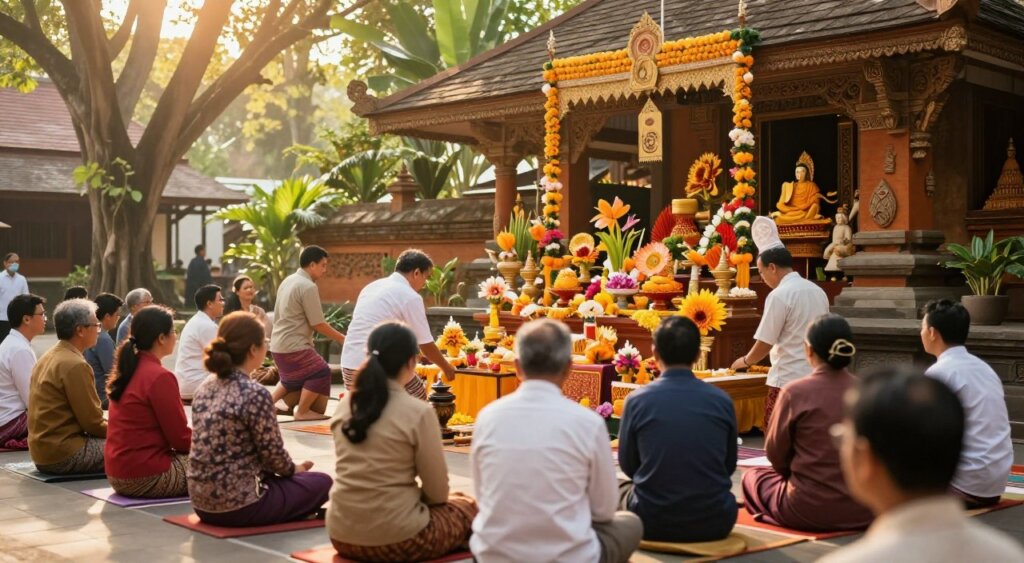
When seated, avoid pointing your feet toward shrines or priests. Sit cross-legged or with feet tucked behind. Never position yourself higher than a priest or important offerings.
Tips on Timing and Navigating Sacred Spaces
Visitors are generally welcome in outer courtyards (jaba sisi). The innermost area is typically reserved for active participants.
Temple guardians (pecalang) may guide you. Follow their instructions respectfully. Note that local tradition requests menstruating women refrain from entering.
While not mandatory, a small donation (dana punia) is a kind gesture. It helps with the significant costs of hosting these events.
| Aspect | Do’s | Don’ts |
|---|---|---|
| Attire | Wear sarong & sash; cover shoulders | Wear tank tops or very short shorts |
| Conduct | Speak softly; move slowly; ask before photos | Block pathways; use flash; interrupt prayers |
| Seating | Sit cross-legged; keep feet tucked | Point feet at shrines; sit higher than priest |
| Participation | Stay in outer areas; follow pecalang guidance | Enter innermost sacred space without invitation |
Exploring the Balinese Calendar and Community Bonds
The rhythm of life in Bali is deeply intertwined with an ancient timekeeping system that orchestrates its spiritual celebrations.
The Role of the Pawukon Calendar
This unique calendar operates on a 210-day cycle. It is completely separate from the Gregorian calendar. Each sacred site marks its special day roughly twice a year.
With thousands of temples across the island, this creates a continuous cycle. Virtually every single day features an odalan ceremony somewhere in Bali.
These events can last from one day to eleven days for major sites. The busiest times are mornings for prayers and evenings for performances.
Strengthening Family and Community Connections
Preparing for these events is a massive community effort. All generations, from family elders to children, work together harmoniously.
They build shelters, craft offerings, and prepare food. This part of village life strengthens bonds between families and the wider community.
Children learn traditions by watching and helping. Everyone wears their finest traditional attire. This creates a shared sense of purpose and community identity.
The perpetual rhythm of odalan ceremonies keeps villages spiritually engaged and socially connected year-round.
Conclusion
Beyond the postcard images lies the authentic pulse of Balinese culture, found in its ongoing cycle of devotional gatherings. These odalan ceremonies are far more than a colorful festival; they are the vibrant backbone of religious life on the island.
This living tradition offers visitors a profoundly authentic glimpse into spiritual practice. Unlike staged performances, these events are genuine rituals taken seriously by the local community.
If you have the chance to attend, do so with respect and humility. You will be rewarded with a rich sensory experience—the sight of elaborate offerings, the sound of gamelan, and the palpable shared devotion.
Such an experience fosters a deeper appreciation for Bali and its people. It connects you to the profoundly spiritual rhythm that shapes daily life here, long after you leave.