Vietnam stands at an inflection point. The country’s digital economy, currently valued at $39 billion, is projected to surge past $80 billion by 2030, according to Google’s e-Conomy SEA report. This isn’t just another growth statistic from emerging Asia. It represents a fundamental restructuring of how millions experience travel, transforming Vietnam from a price-competitive destination into a technology-driven tourism laboratory.
The implications extend far beyond Vietnam’s borders. As Southeast Asia’s sixth-largest economy pioneers integration of artificial intelligence, augmented reality, and consolidated digital platforms into its tourism infrastructure, it’s creating a blueprint that could reshape travel commerce across the region.
The Quiet Disruption of Legacy Players
Consider Vietravel, a tour operator that has navigated Vietnam’s tourism landscape since 1995. The company now targets 70% of revenue through digital channels within four years, a remarkable pivot for an enterprise built on physical retail and personal relationships. This strategic repositioning reflects broader market pressures, where traditional intermediaries must either evolve into technology platforms or risk irrelevance.
The company’s planned superapp signals recognition that today’s travelers expect unified experiences rather than fragmented services. This mirrors transformations seen in China’s travel sector a decade ago, where platforms like Ctrip (now Trip.com) consolidated formerly dispersed booking functions. Vietnam appears poised to compress this evolution into a shorter timeframe.
The AI Paradox: Enthusiasm Without Execution
Vietnamese consumers demonstrate remarkable receptiveness to AI-powered tools. Research from Booking.com reveals that 99% use AI-enhanced search in daily activities, with 95% already engaging generative AI systems. These adoption rates exceed many developed markets, suggesting Vietnam’s digital-native population has leapfrogged traditional technology curves.
Yet a critical gap persists. AI-integrated travel applications achieved only 78% revenue growth in Vietnam, the weakest performance across Southeast Asia. This disparity between stated interest and actual spending highlights incomplete product-market fit. Current offerings apparently fail to translate technological capability into tangible consumer value.
The opportunity lies in addressing practical friction points: language barriers for international travelers, complex multi-city itineraries combining trains, buses, and domestic flights, or real-time adjustments when weather disrupts coastal plans. AI systems that solve these concrete problems, rather than offering generic chatbot interactions, will capture the unrealized potential in this market.
Physical Heritage Meets Digital Layer
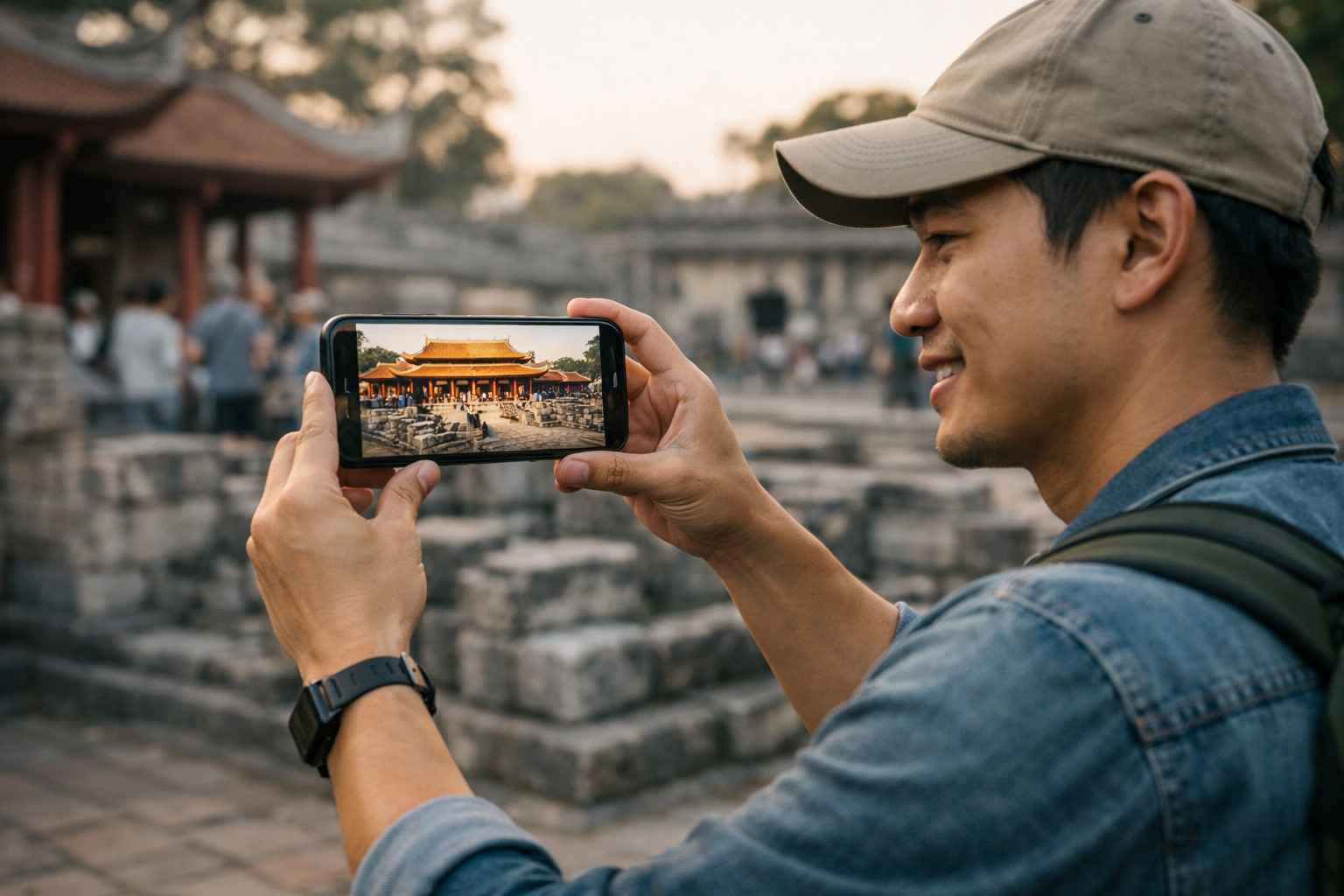
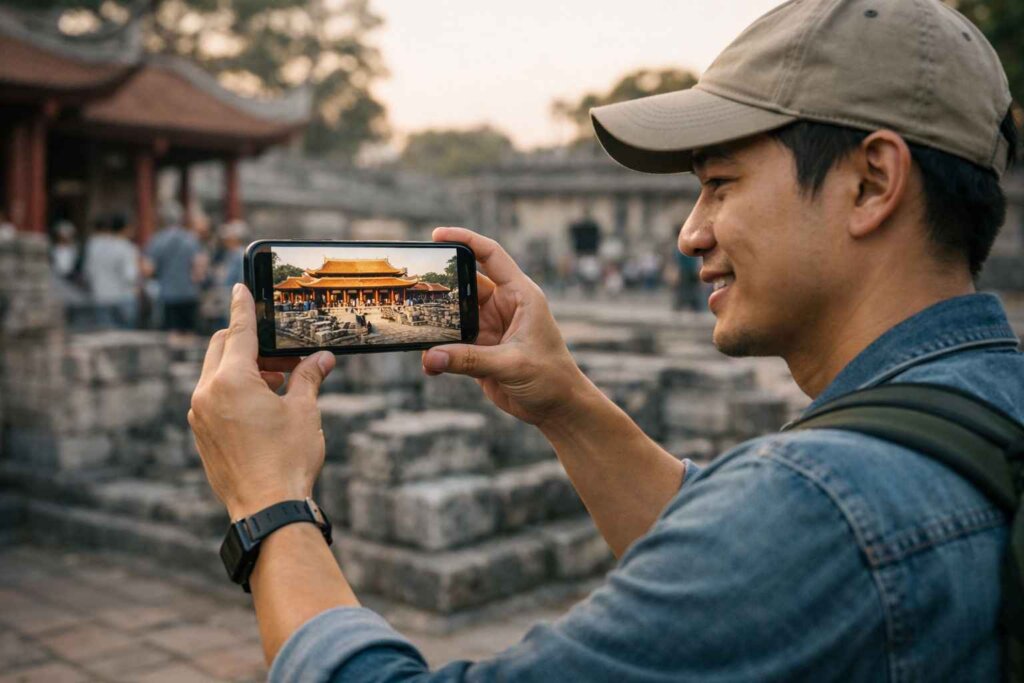
Vietnam’s cultural sites are becoming testing grounds for immersive technology. At Hanoi’s Temple of Literature and Thang Long Imperial Citadel, augmented reality overlays reconstruct vanished architecture, allowing visitors to witness historical structures as they appeared centuries ago. Virtual reality experiences transport users into ceremonial events and daily life from Vietnam’s imperial past.
These implementations serve dual purposes. They enhance visitor engagement while addressing conservation challenges. Physical tourism creates wear on delicate historical sites, but digital alternatives can satisfy curiosity and education without contributing to structural degradation. As climate pressures and overtourism threaten cultural assets globally, Vietnam’s approach offers a scalable preservation model.
The technology also addresses a persistent challenge in heritage tourism: making ancient history accessible to visitors without deep historical knowledge. AR-guided experiences can contextualize complex dynastic politics or architectural symbolism in ways that static plaques and audio guides cannot match.
Superapps: The Stealth Consolidators
While international online travel agencies compete for attention, domestic superapps are quietly capturing market share through embedded services. Zalo, originally a messaging platform launched in 2012, now facilitates hotel reservations, bus tickets, and airline partnerships. MoMo, the dominant e-wallet with 34 million active users, integrated a comprehensive Travel & Transport module directly into its payment infrastructure.
This bundling strategy exploits established user habits. Consumers already accessing these platforms for payments, messaging, or other services face minimal friction when booking travel through the same interface. The data advantages are substantial, allowing these platforms to offer personalized recommendations based on spending patterns, location history, and social connections.
The model resembles WeChat’s evolution in China, where a communication tool transformed into a comprehensive lifestyle platform. Vietnam’s digital ecosystem appears to be following a similar trajectory, with implications for standalone travel services that cannot match the convenience and integration of superapp environments.
National Ambitions: Visit Vietnam’s Coordinated Approach
Vietnam’s government is launching Visit Vietnam, a national tourism superapp planned for 2026. Unlike commercial platforms, this initiative aims to integrate data across the entire tourism ecosystem, linking accommodations, attractions, transportation providers, and government services into a unified system.
The platform promises real-time alerts about weather conditions, crowd densities at popular sites, and personalized itinerary creation based on comprehensive destination data. This represents a shift from fragmented tourism management toward coordinated national strategy, treating visitor experience as integrated infrastructure rather than individual transactions.
Success will depend on execution challenges that have derailed similar government digital initiatives elsewhere: ensuring private sector participation, maintaining data accuracy across distributed systems, and creating user experiences that compete with commercial alternatives. If implemented effectively, Visit Vietnam could establish new standards for destination management at national scale.
The Economic Architecture Behind Growth
The projected doubling of Vietnam’s online travel segment from $4 billion to $8 billion by 2030 reflects more than technology adoption. It signals structural changes in how Vietnamese consumers allocate resources and plan experiences.
Rising middle-class incomes, increasing smartphone penetration in rural areas, and generational shifts toward digital-first behaviors create expanding addressable markets. Simultaneously, improved digital payment infrastructure reduces transaction friction, while better logistics networks make previously remote destinations accessible.
For international tourism, these developments position Vietnam to capture higher-value travelers seeking technology-enhanced experiences. Luxury segments, eco-tourism, and cultural immersion travel all stand to benefit from improved digital infrastructure that enables more sophisticated itinerary planning and service delivery.
What This Means for Regional Tourism
Vietnam’s trajectory offers insights into broader Southeast Asian tourism evolution. As digital infrastructure improves across the region, expect similar patterns: consolidation around superapp platforms, integration of AI into planning and booking, and augmented experiences at cultural sites.
Countries that successfully navigate this transition will gain competitive advantages in attracting both regional and international visitors. Those that lag risk becoming price-driven commodities in markets increasingly differentiated by technological sophistication and integrated service delivery.
The ultimate question is whether technology enhancement can coexist with authentic cultural experiences, or if digital mediation fundamentally alters the nature of travel itself. Vietnam’s approach suggests a middle path: using technology to remove friction and add information layers while preserving the human interactions and discoveries that make travel meaningful.
As Vietnam builds toward 2030, it’s constructing more than tourism infrastructure. It’s prototyping how digital and physical experiences can merge in ways that serve both economic development and cultural preservation, a balance that will define travel’s future across emerging markets worldwide.
Southeast Asia’s New Tourism Chess Game: Why Chinese Tourists Holds the Winning Cards in 2026