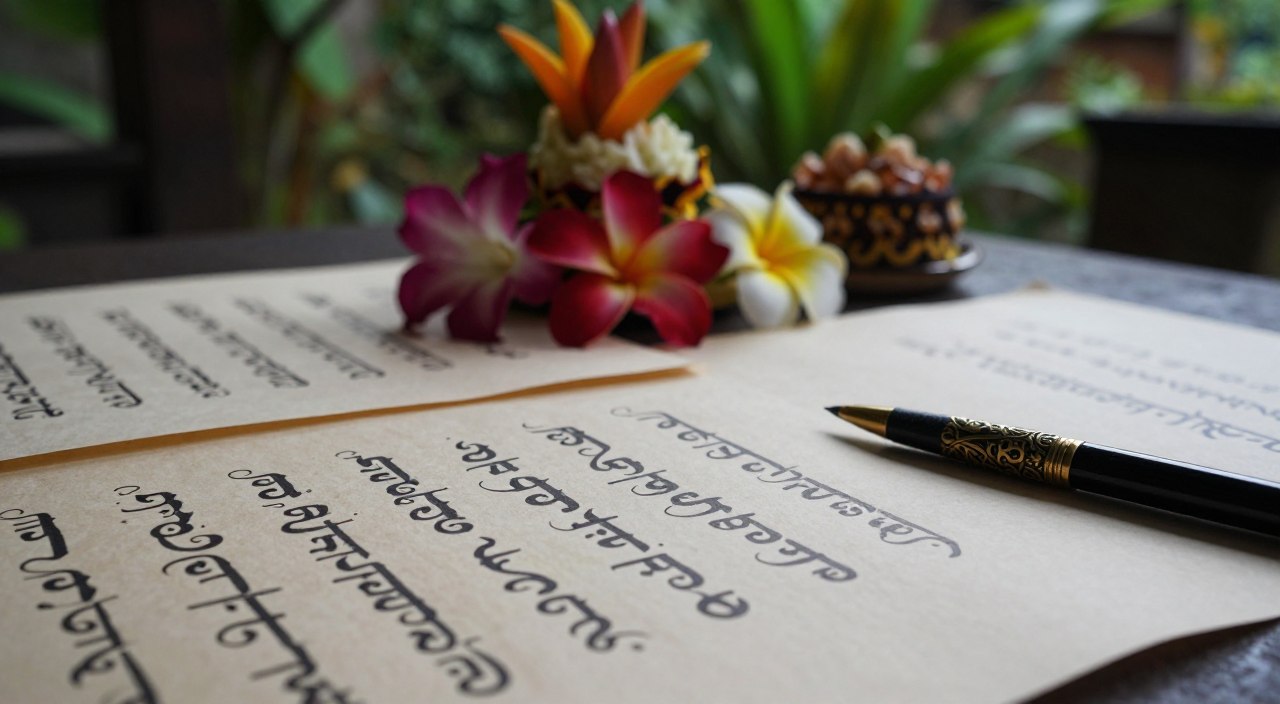
Few writing systems in Southeast Asia match the intricate beauty of this ancient alphabet. With 47 distinct characters, it stands as one of the most elaborate scripts in the region.
This traditional writing system operates as an abugida. Each consonant carries an inherent vowel sound. Diacritical marks modify these sounds to create different syllables.
The script serves multiple language communities throughout Indonesian history. It accommodates Old Javanese, Sanskrit, and local tongues. This versatility demonstrates its cultural importance.
Belonging to the Brahmic family, this alphabet connects to broader South Asian heritage. Its elegant, flowing characters reflect philosophical principles of balance. The visual harmony mirrors the Balinese concept of Tri Hita Karana.
Today, the Latin alphabet dominates everyday communication. However, this traditional script maintains strong cultural significance. It appears in religious ceremonies, temple inscriptions, and manuscript preservation.
Our exploration will examine the script’s historical development and structural components. We’ll also explore its cultural meaning and modern preservation efforts.
Key Takeaways
- This ancient writing system features 47 distinct characters
- It operates as an abugida where consonants have inherent vowels
- The script serves multiple languages including Sanskrit and Old Javanese
- It belongs to the broader Brahmic family of South Asian scripts
- The elegant design reflects philosophical principles of harmony
- While Latin script dominates daily use, the traditional alphabet maintains cultural importance
- It appears in religious ceremonies and temple inscriptions today
Introduction to Aksara Bali
This traditional writing system serves as a living bridge between ancient wisdom and modern Balinese identity. Often called hanacaraka, it connects contemporary communities with their rich heritage.
Definition and Overview of the Script
The aksara bali operates as an abugida, where each consonant carries an inherent vowel sound. Special marks called pangangge modify these basic sounds to create different syllables.
This versatile alphabet serves multiple languages across the Indonesian archipelago. It accommodates Balinese, Old Javanese, Sanskrit, and Sasak. This linguistic flexibility demonstrates its historical importance.
The script’s unique form distinguishes it from simple alphabetic systems. Each character represents a complete syllable rather than individual sounds.
Role of Aksara Bali in Balinese Culture
For the Balinese people, this writing system embodies much more than practical communication. It represents spiritual connection and cultural continuity.
The script appears prominently in religious ceremonies and temple inscriptions. It also features in protective talismans and ritual objects throughout the island.
Lontar manuscripts preserve ancient knowledge using this traditional language system. These palm leaf texts contain wisdom on medicine, ethics, and philosophy.
While Latin script dominates daily use, aksara bali maintains its sacred status. It continues to connect generations through ceremonial practices and cultural preservation.
Historical Development and Origins
Tracing the origins reveals a fascinating migration of writing across cultures. The Balinese script belongs to the extensive Brahmic family of writing systems that spread throughout Southeast Asia.
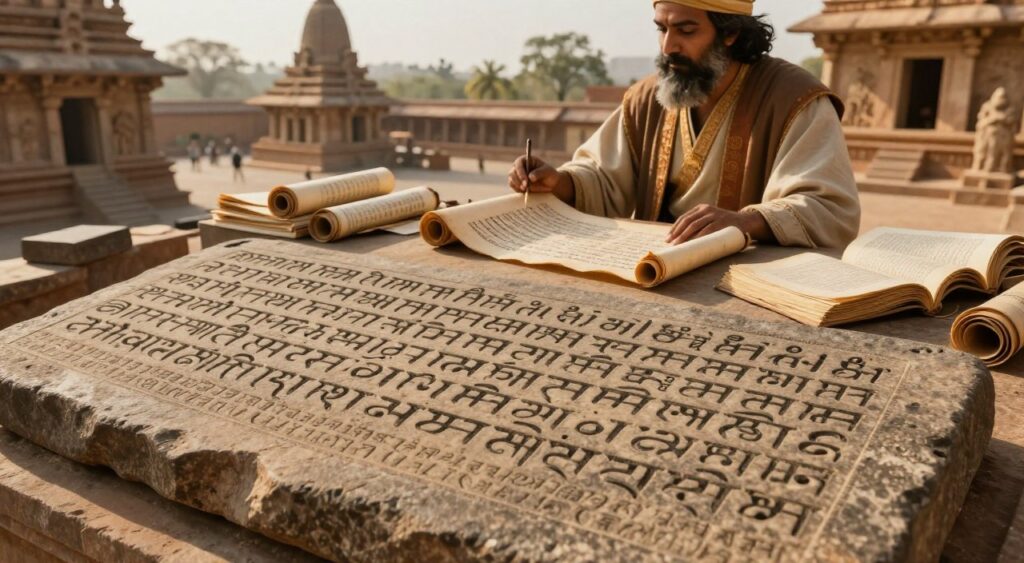
From Brahmi to the Kawi and Balinese Scripts
The evolutionary path began with the ancient brahmi script from India around 250 BCE. This foundation form traveled through maritime trade routes, adapting to local cultures.
Regional variations emerged, including Tamil-Brahmi and Pallava scripts. These served as templates for Southeast Asian writing systems. The transformation to Old Kawi occurred around 775-1300 CE.
Old Kawi became the primary script for old javanese literature. It maintained the abugida system where consonants carry inherent vowel sounds. This structural principle continued in later derivatives.
The distinctive Balinese script emerged around the 9th-10th centuries. It developed flowing, rounded characters while preserving core writing conventions. The system maintained its functional elegance through centuries.
Significance of the Belanjong Pillar
The Belanjong Pillar provides crucial archaeological evidence from 914 CE. This monument features bilingual inscriptions demonstrating complex multilingual traditions.
One side displays Old Balinese in pre-Nagari script. The other shows Sanskrit in Pallava-derived Old Javanese characters. This biscriptal nature reveals sophisticated cultural exchange.
Scholars calculated the precise date using the Indian Śaka calendar system. The pillar anchors the script’s documented existence to 4 February 914 CE. It represents the earliest confirmed evidence of this writing tradition.
This historical artifact confirms the script’s development within a broader family of Indonesian writing systems. Related scripts include Javanese, Sundanese, and Batak, all sharing common ancestry.
Features and Components of the Balinese Script
The structural design of this traditional script reveals remarkable linguistic precision. It contains 47 distinct letters, each representing a complete syllable rather than individual sounds.
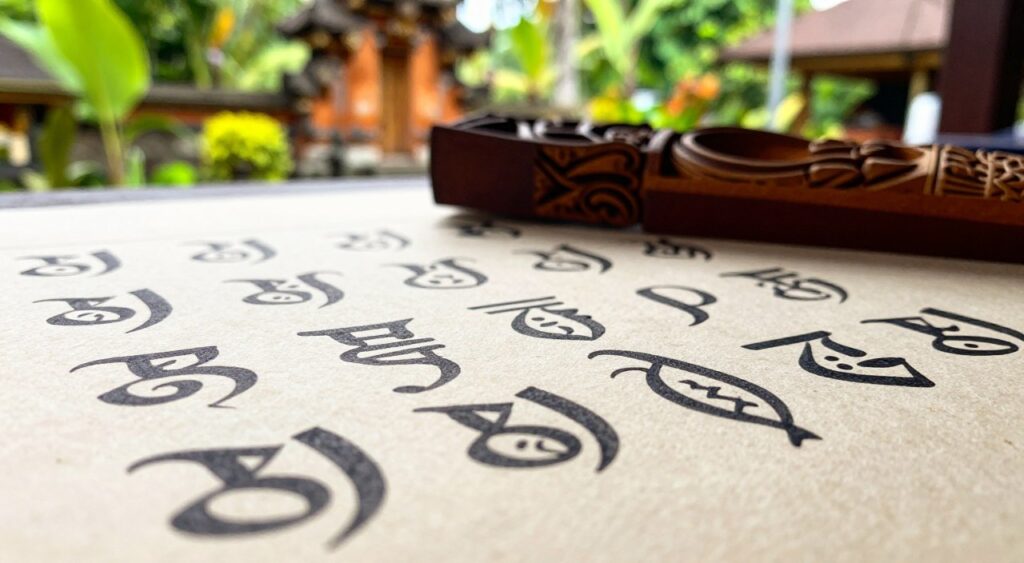
This writing system organizes its consonants into two functional groups. The 18 basic characters called wreṣāstra handle native vocabulary. Additional sualalita consonants accommodate Sanskrit and Old Javanese loanwords.
Consonants, Vowels, and Diacritics
Each consonant carries an inherent vowel sound, typically pronounced as a schwa. Diacritics called pangangge modify these basic sounds to create different syllables.
The system includes independent vowel characters for syllable-initial positions. Following consonants, vowels are indicated through diacritical marks that change the inherent vowel.
| Consonant Type | Quantity | Primary Use | Example Function |
|---|---|---|---|
| Wreṣāstra | 18 letters | Native vocabulary | Basic Balinese words |
| Sualalita | 15 letters | Loanwords | Sanskrit terms |
| Semivowels | 4 letters | Sound transitions | Consonant clusters |
| Additional consonants | 10 letters | Specialized sounds | Linguistic precision |
Punctuation, Numerals and Special Symbols
The script features distinctive punctuation marks including carik siki (comma) and carik kalih (full stop). Numerals from 0-9 follow Arabic numeral conventions but use unique characters.
Special symbols include religious markers like the sacred Om symbol. These elements maintain cultural significance in ceremonial contexts.
Preserving Aksara Bali in Modern Balinese Society
Despite the dominance of digital communication, traditional writing forms continue to thrive in ceremonial contexts. The script maintains its sacred status while adapting to contemporary needs.
This ancient writing system finds its most profound expression in religious and cultural preservation efforts. Community initiatives ensure its continued relevance across generations.
Rituals, Lontar Manuscripts, and Religious Traditions
Lontar manuscripts represent the heart of traditional knowledge preservation. These palm leaf texts contain centuries of wisdom on diverse subjects.
Creating these sacred texts requires meticulous craftsmanship. Scribes use a specialized knife called pengrupak to carve characters into prepared palm leaves.
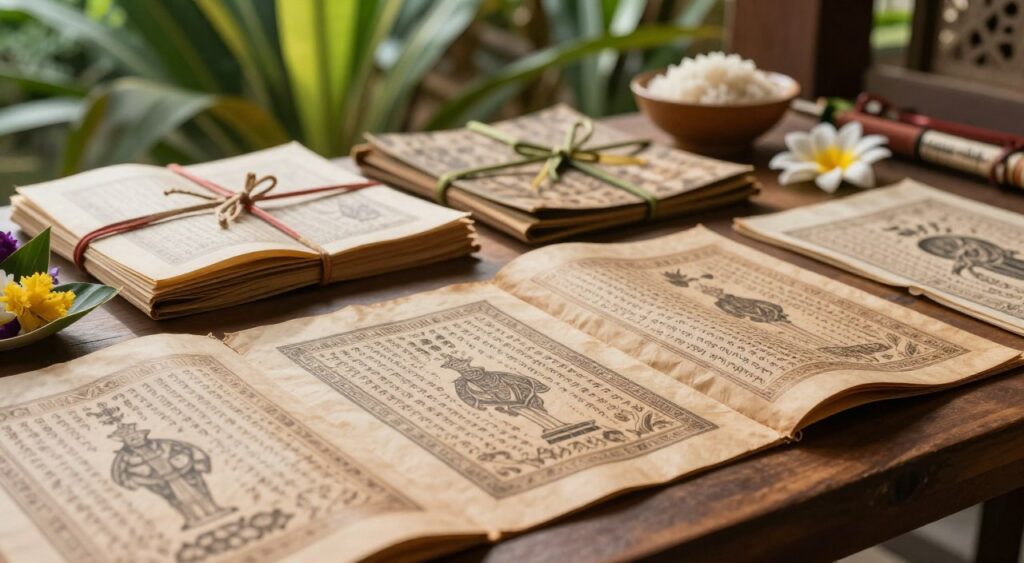
The writing process demands spiritual purity and focused concentration. Each incision becomes a meditative act connecting the scribe to ancestral traditions.
These precious manuscripts are guarded by temple priests and cultural custodians. They preserve the original forms of knowledge in family compounds and religious institutions.
Modern Usage in Public Spaces and Cultural Ceremonies
Government efforts have increased the script’s visibility throughout Bali. Bilingual street signs and building inscriptions showcase cultural pride.
The writing appears prominently in important life ceremonies. Wedding rituals, tooth-filing ceremonies, and temple festivals incorporate traditional texts.
While Latin script dominates daily communication, the Balinese people maintain their ancestral writing for spiritual authenticity. Its presence lends ceremonial events traditional credibility and cultural legitimacy.
Learning and Teaching Aksara Bali
Digital technology and classroom instruction are merging to preserve endangered writing systems. This comprehensive approach ensures the traditional script remains relevant for future generations.
Educational Initiatives and Curriculum Integration
Schools throughout the island now incorporate the traditional alphabet into their cultural education programs. Students learn to read and write the characters alongside modern Indonesian instruction.

Education extends beyond mechanical writing skills to include historical context and spiritual significance. This holistic approach helps students appreciate the language as a living tradition.
Digital Archives and Online E-learning Resources
Universities and cultural organisations have launched major digitisation projects. They convert fragile lontar manuscripts into searchable digital archives for research and translation.
Online platforms now offer interactive courses teaching the alphabet to global audiences. These resources make the writing system accessible to people worldwide interested in cultural immersion.
Cultural institutions like Museum Bali provide educational resources while protecting original artefacts. Community workshops in Ubud and Gianyar offer hands-on calligraphy instruction.
Conclusion
Balancing ancient heritage with contemporary relevance presents both challenges and opportunities for traditional scripts. The aksara bali demonstrates how cultural forms can adapt while maintaining spiritual significance.
This elegant writing system combines structural precision with artistic beauty. Its consonant letters carry inherent vowel sounds, modified by diacritics to create complete syllables. The graceful characters reflect deep philosophical principles.
Preservation efforts ensure this script remains a living tradition. Educational programs teach proper form, while digital projects archive precious manuscripts. Public signage increases visibility in modern spaces.
The aksara bali continues to serve multiple languages, including old javanese texts. It represents more than an alphabet—it embodies cultural identity. This article has explored how traditional writing maintains relevance through community commitment.